About this sheet
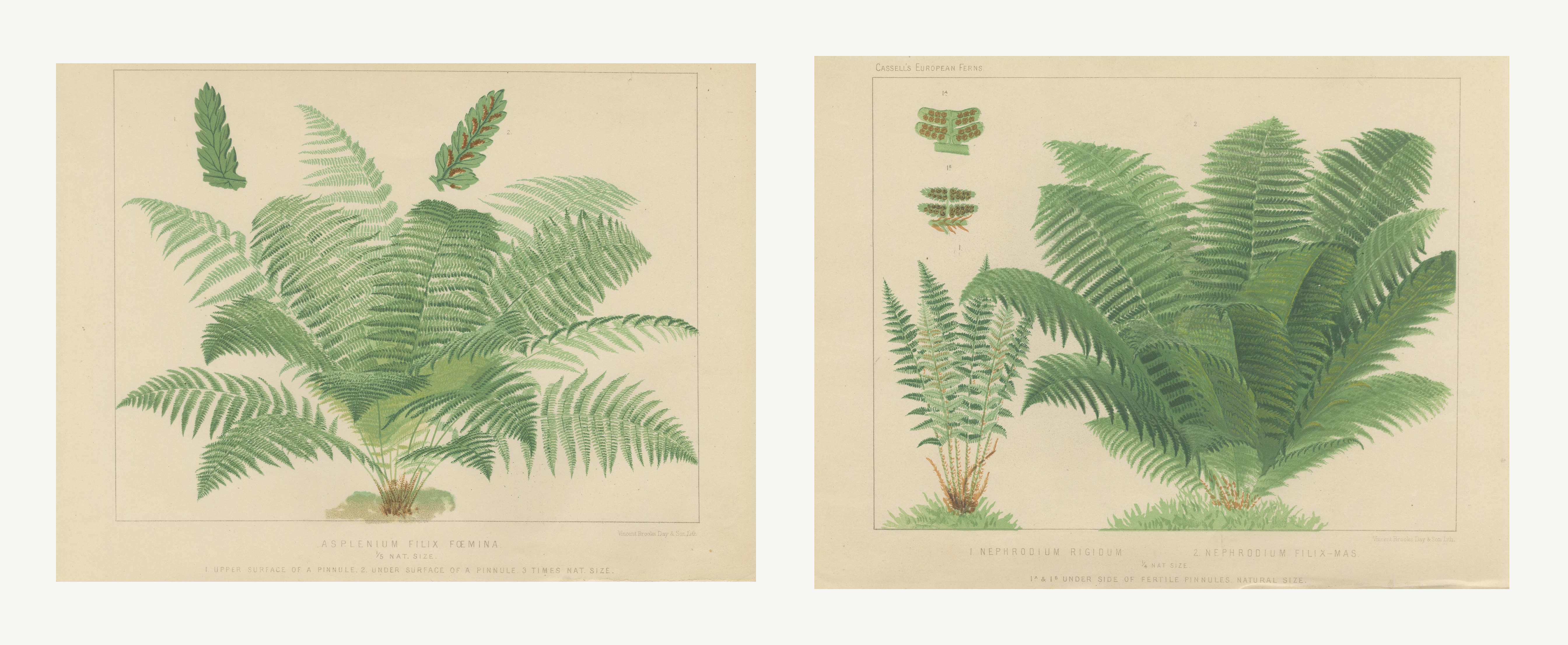
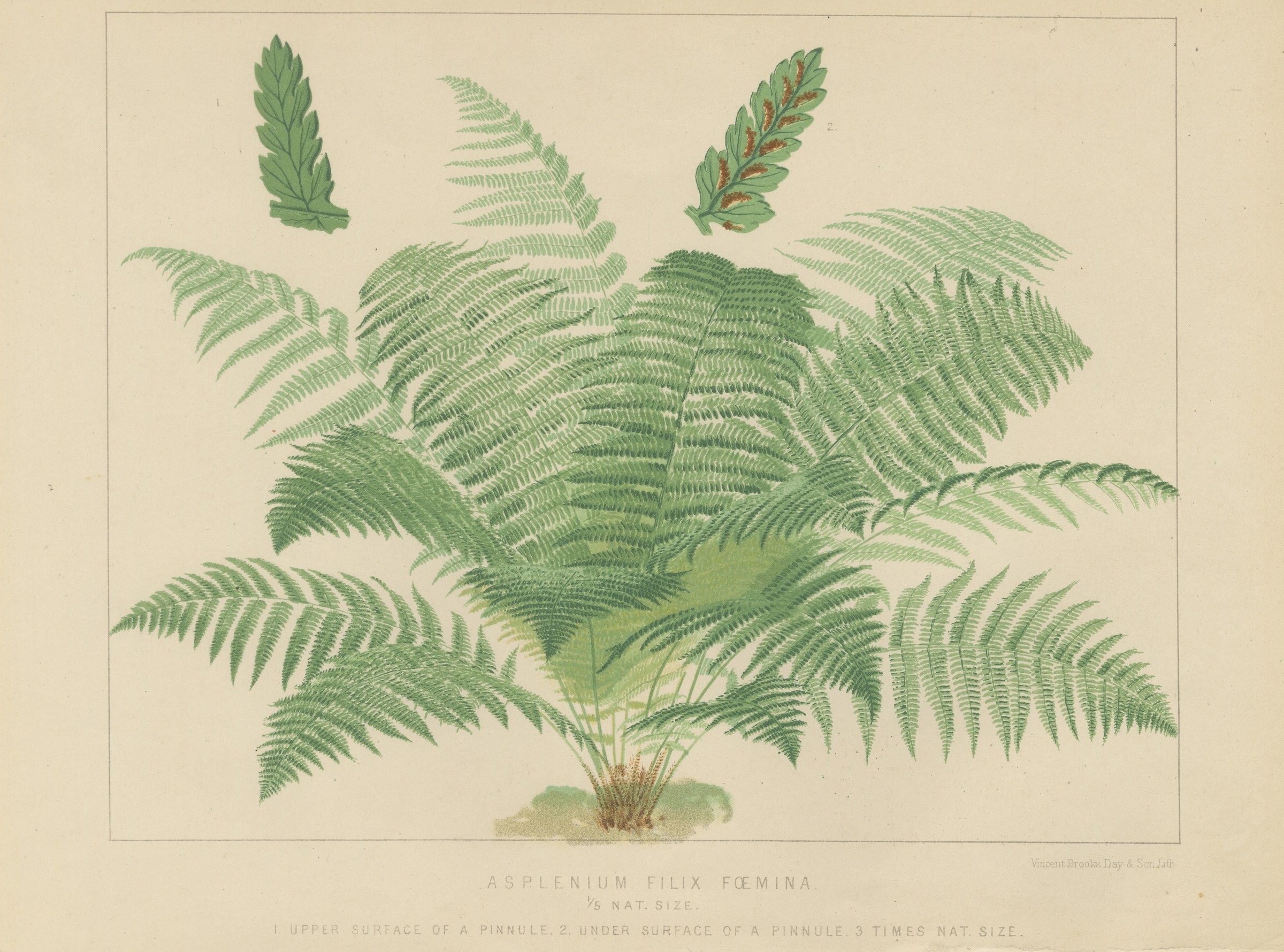
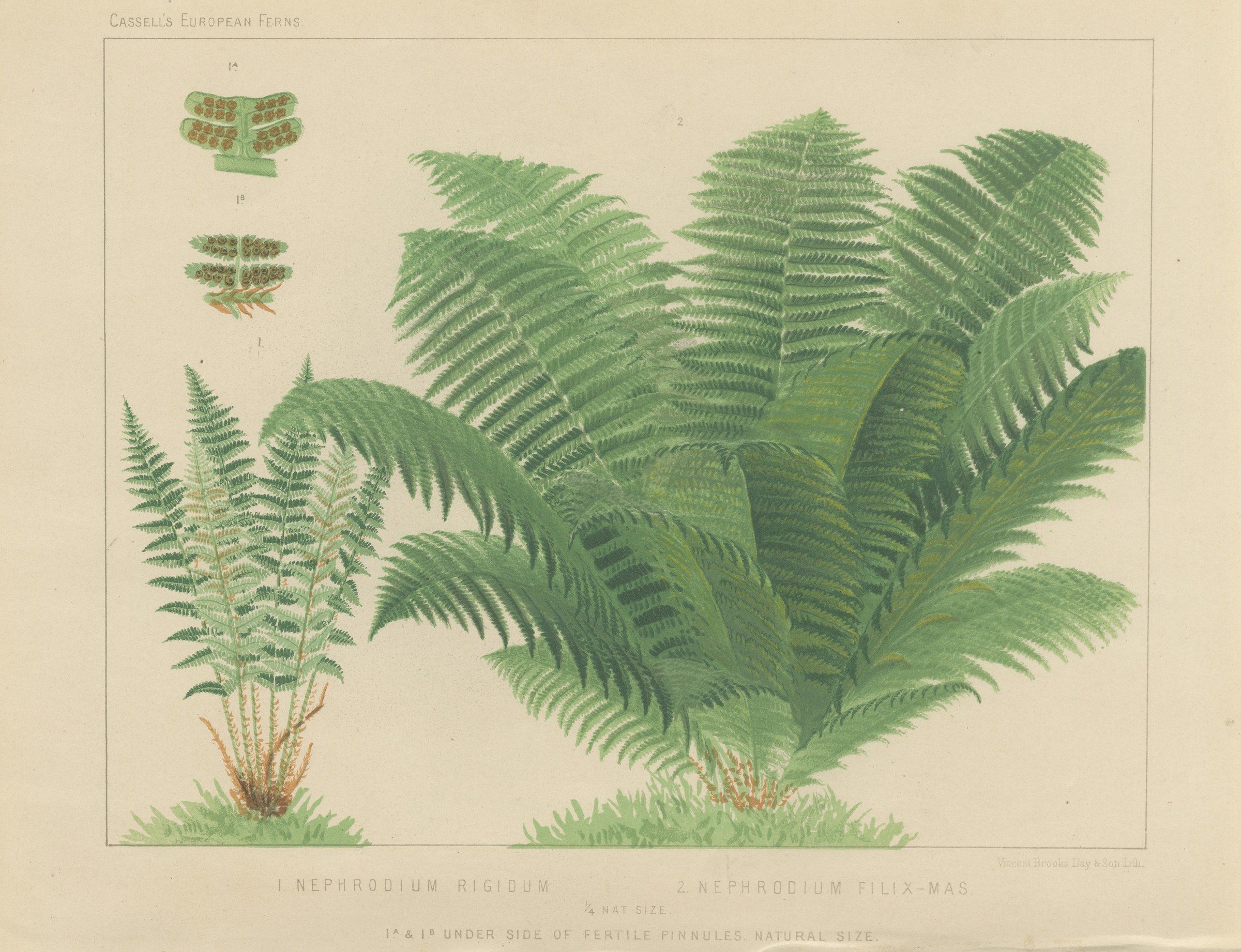
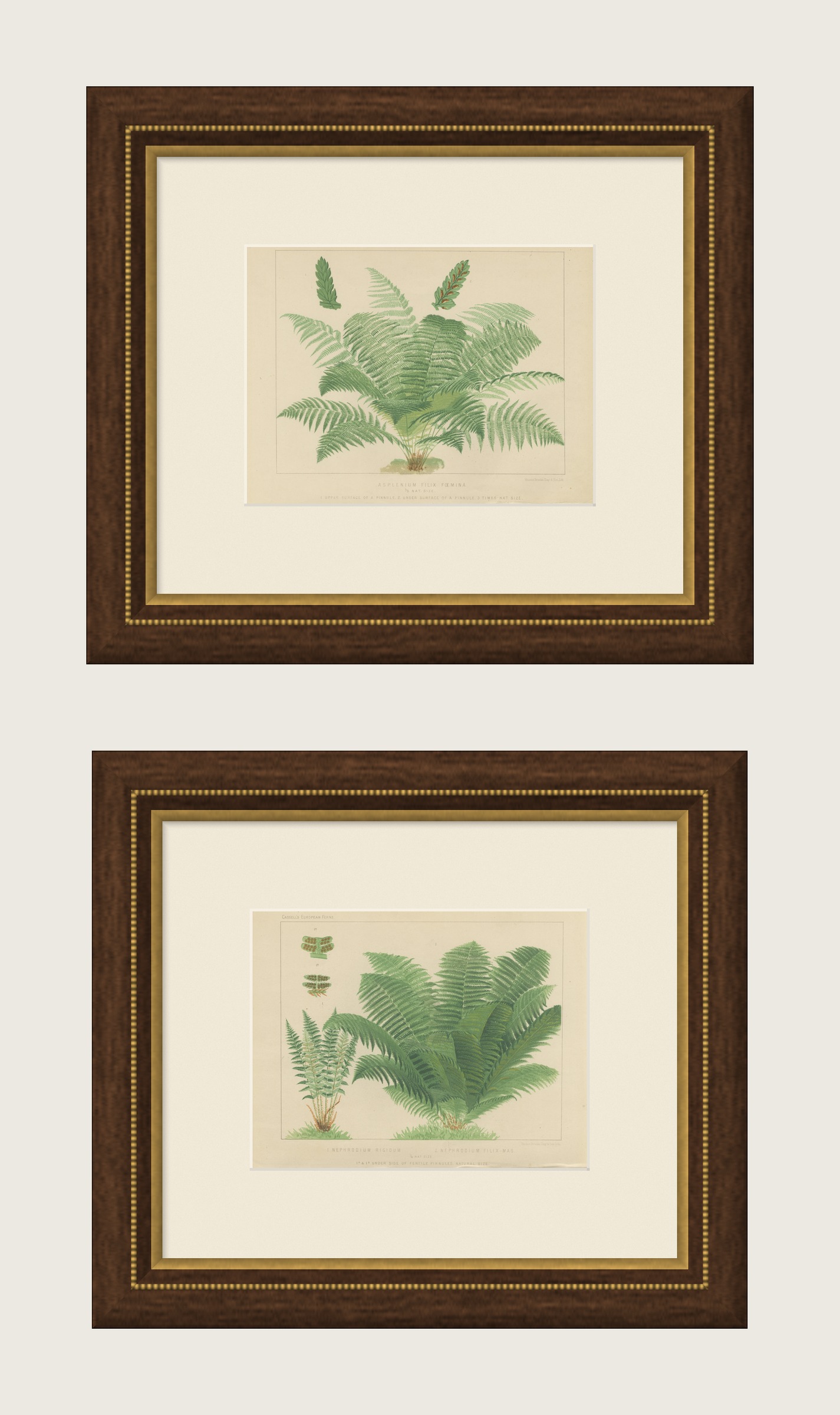
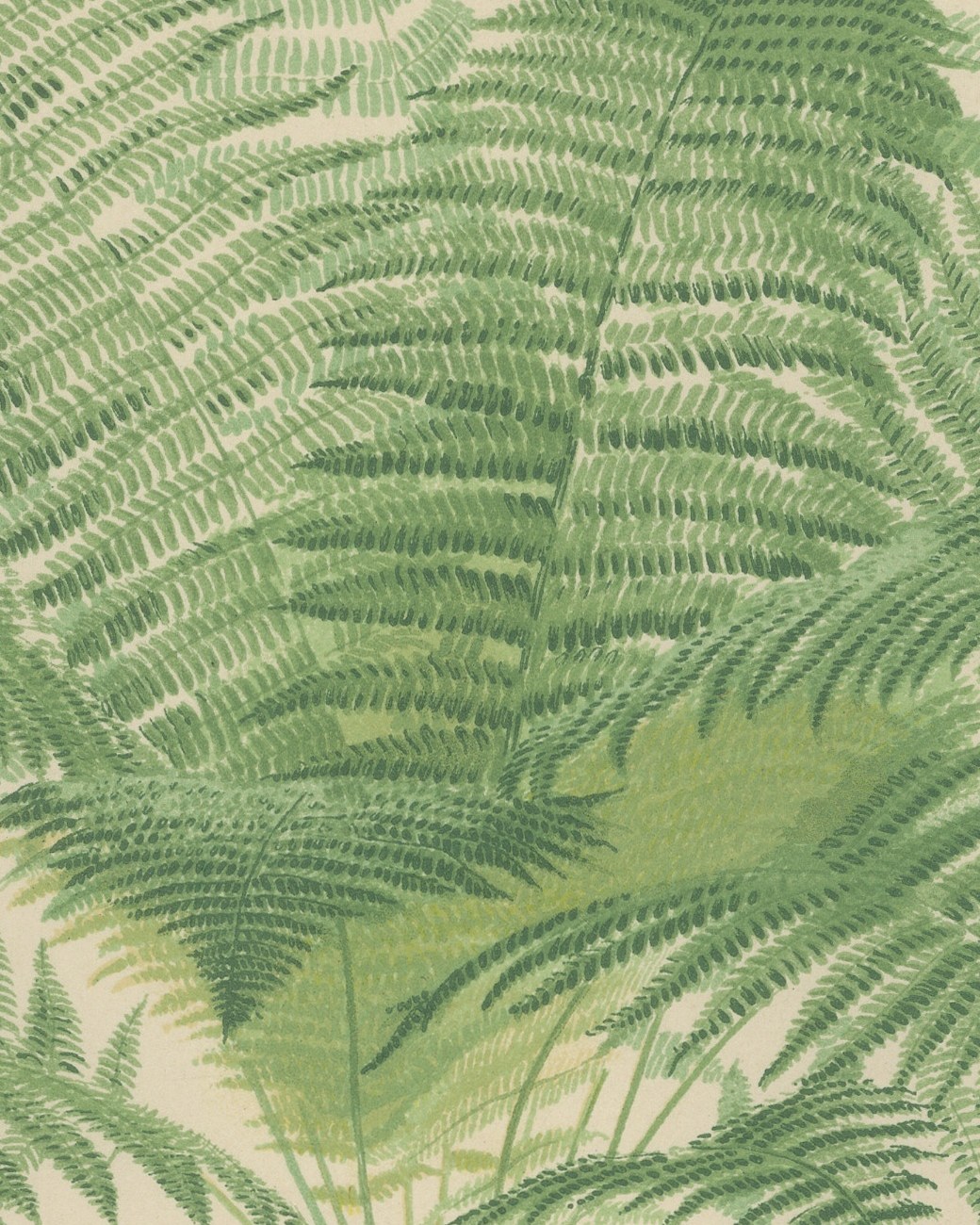
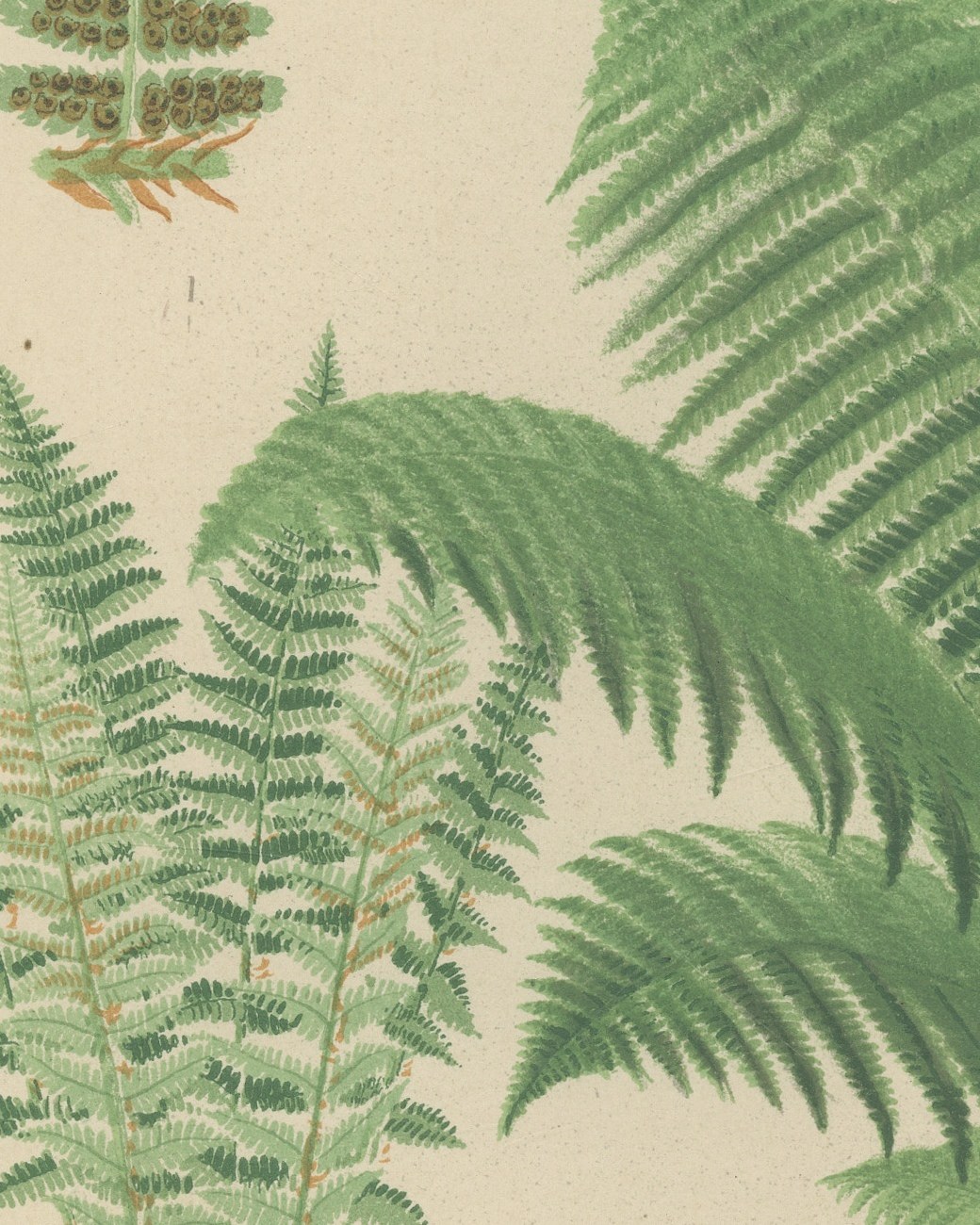
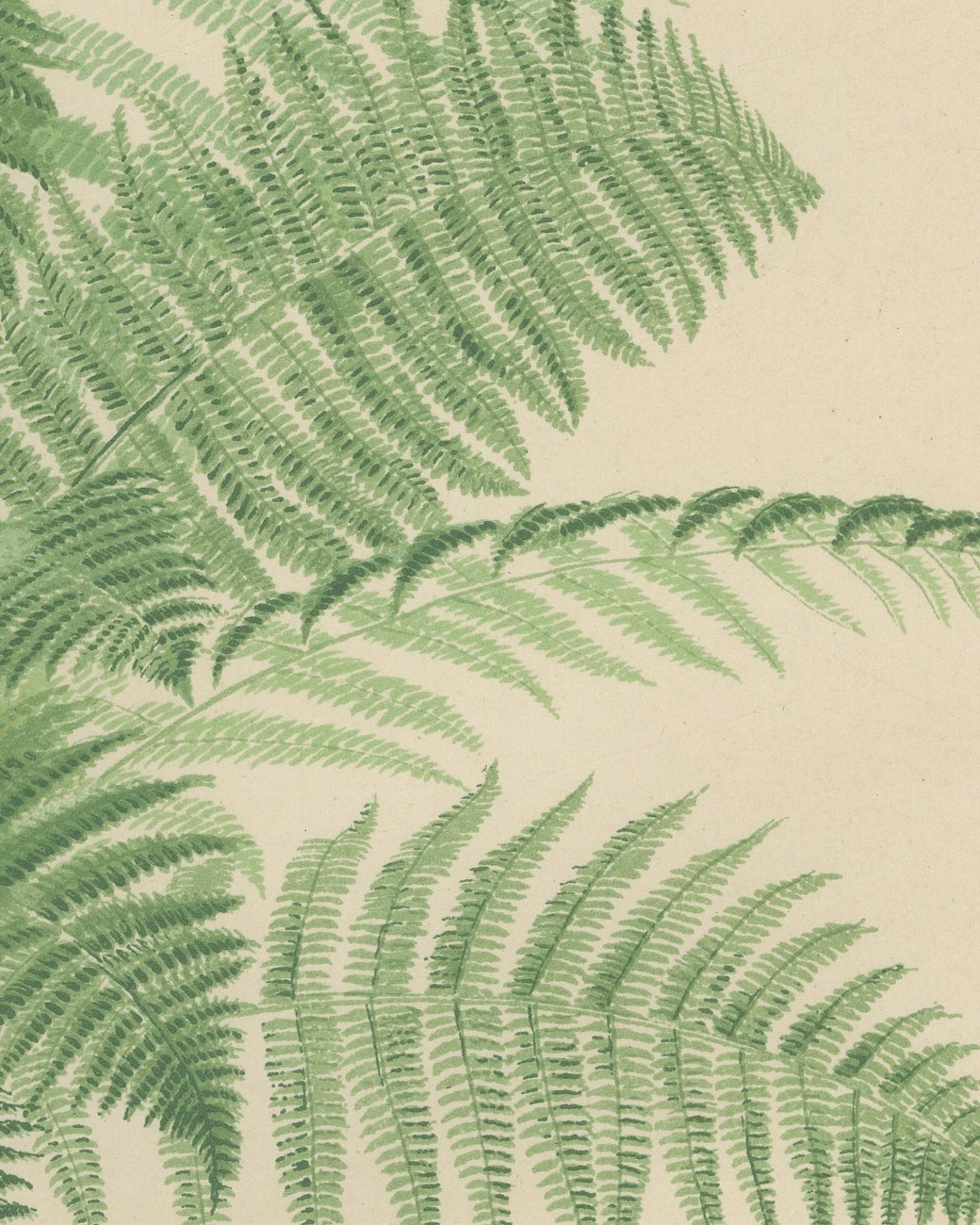
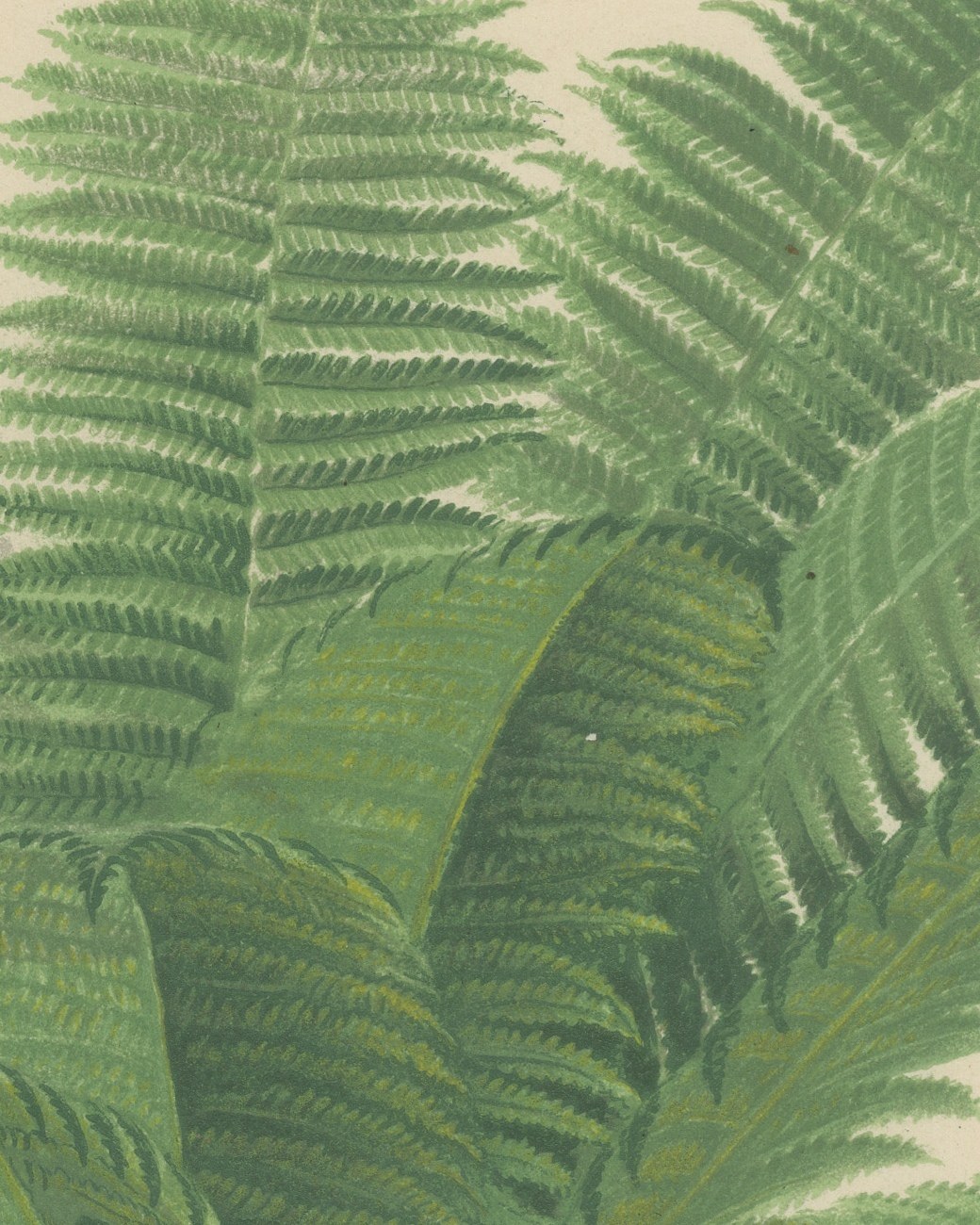
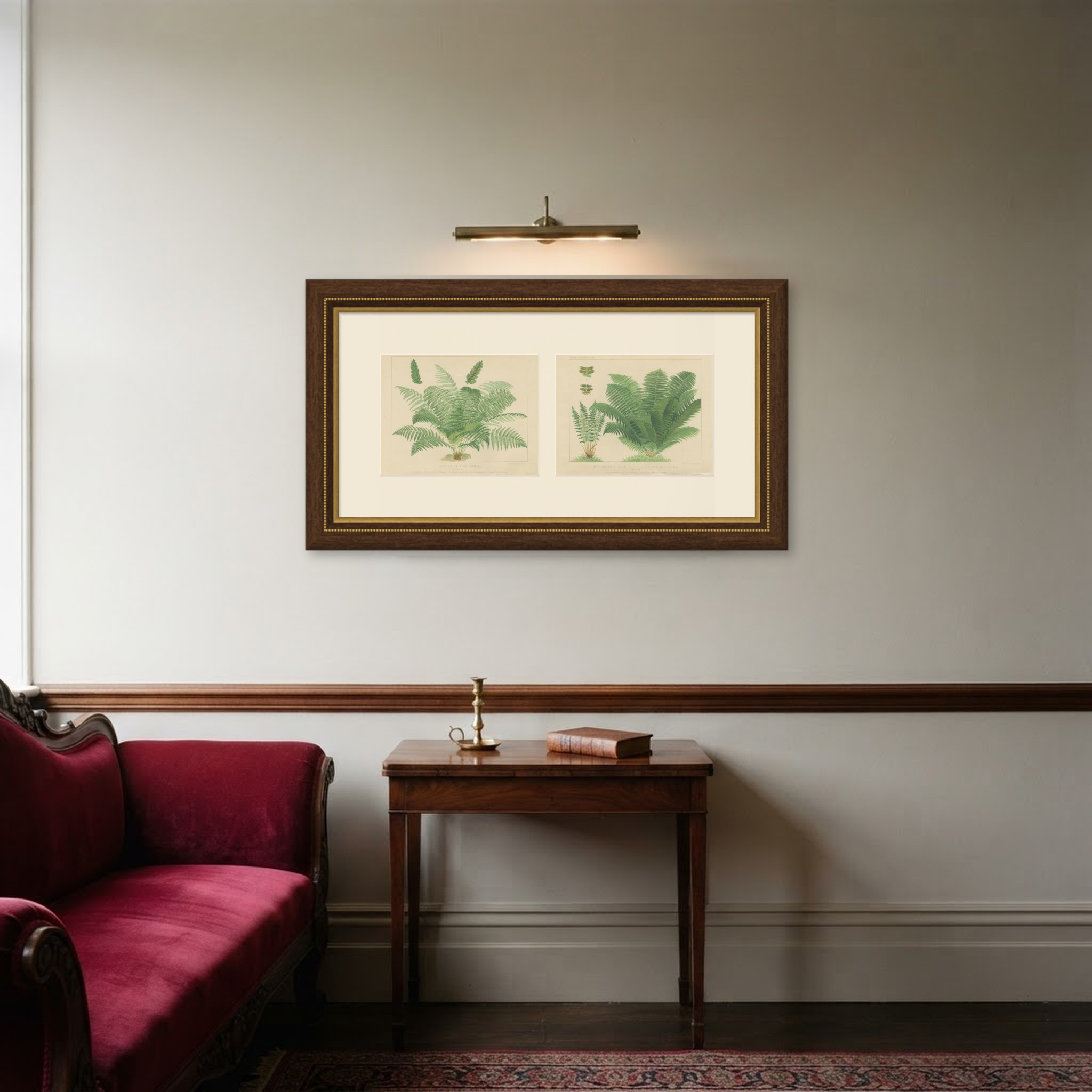
A set of two original antique chromolithographs of the lady fern and the male fern from James Britten's European Ferns, published in London by Cassell, circa 1885, and sold together as one set of two sheets. Plate 18 shows the lady fern, Asplenium filix-foemina, drawn as one open shuttlecock of feathery fronds filling almost the whole sheet, in layered pale and deep greens, from a small tuft of brown scales. Two pinnules, upper and fruiting under side, are enlarged at the top. Plate 22 shows the male fern, Nephrodium filix-mas, the commonest large fern of European woodland, as a great dark green crown of arching fronds, beside the smaller rigid buckler fern, Nephrodium rigidum, of limestone country. Two fertile pinnules with their round spore heaps are set at the upper left.
Published in London by Cassell, European Ferns was the work of the botanist James Britten, 1846 to 1924, of the British Museum, with thirty plates drawn from living plants by David Blair. The parts first came out between 1879 and 1881; this copy bears the Cassell and Company, Limited imprint used from 1883 onward, so it is a later issue of circa 1885. Unlike most fern books of the period, which kept to the British flora, Britten's covers species from Madeira to Scandinavia and the Caucasus. The plates were printed in color by Vincent Brooks, Day and Son of London, one of the foremost chromolithographic printers of Victorian England, and the lithographers' credit appears at the lower right of the image. The color is printed throughout, built up from separate stones, not applied by hand.
The lady fern and the male fern are the classic pair of European woodland ferns, and here each is drawn as a single full crown on a wide sheet. Fern collecting was a national passion in Victorian Britain, a craze contemporaries called pteridomania, and books like this one supplied the accurate pictures that collectors used to name the plants in their ferneries and glass cases. For a collector of botanical prints they are an easy way to add a whole group from one named Victorian book.
Even age toning throughout. Handling soiling along the edges of both sheets. Light foxing in the margins of one of the two sheets. Slight wear at the corners of one of the two sheets. Shallow nicks along an edge of one of the two sheets.
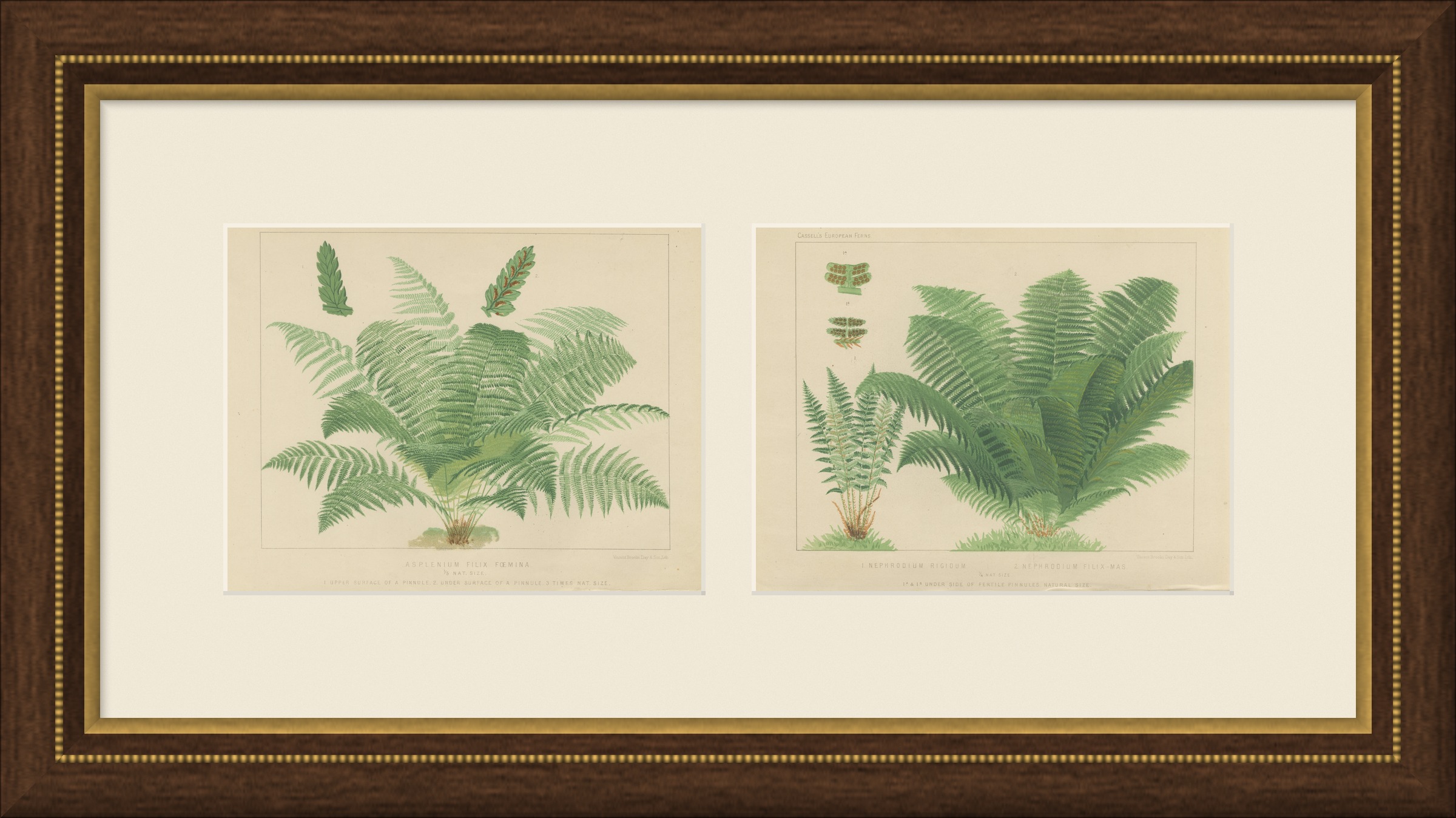
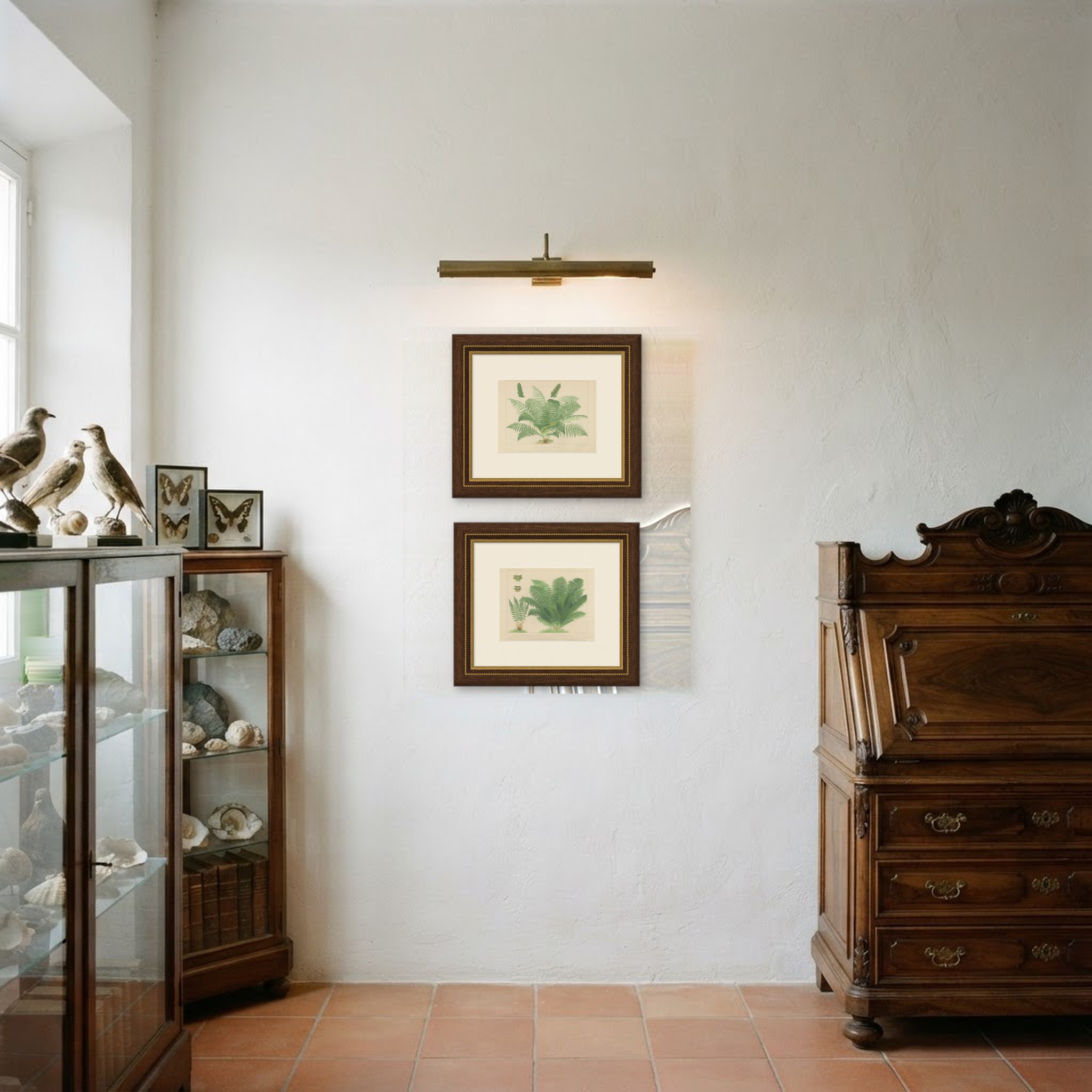
These are original antique prints, not modern reproductions. They are two original sheets sold together as one lot, and the set is never split. This item is sold unframed. Any framed or interior images are shown for presentation and inspiration only, unless the listing explicitly states that the item is sold framed.