About this sheet
Description of the Prints with Latin and English Names
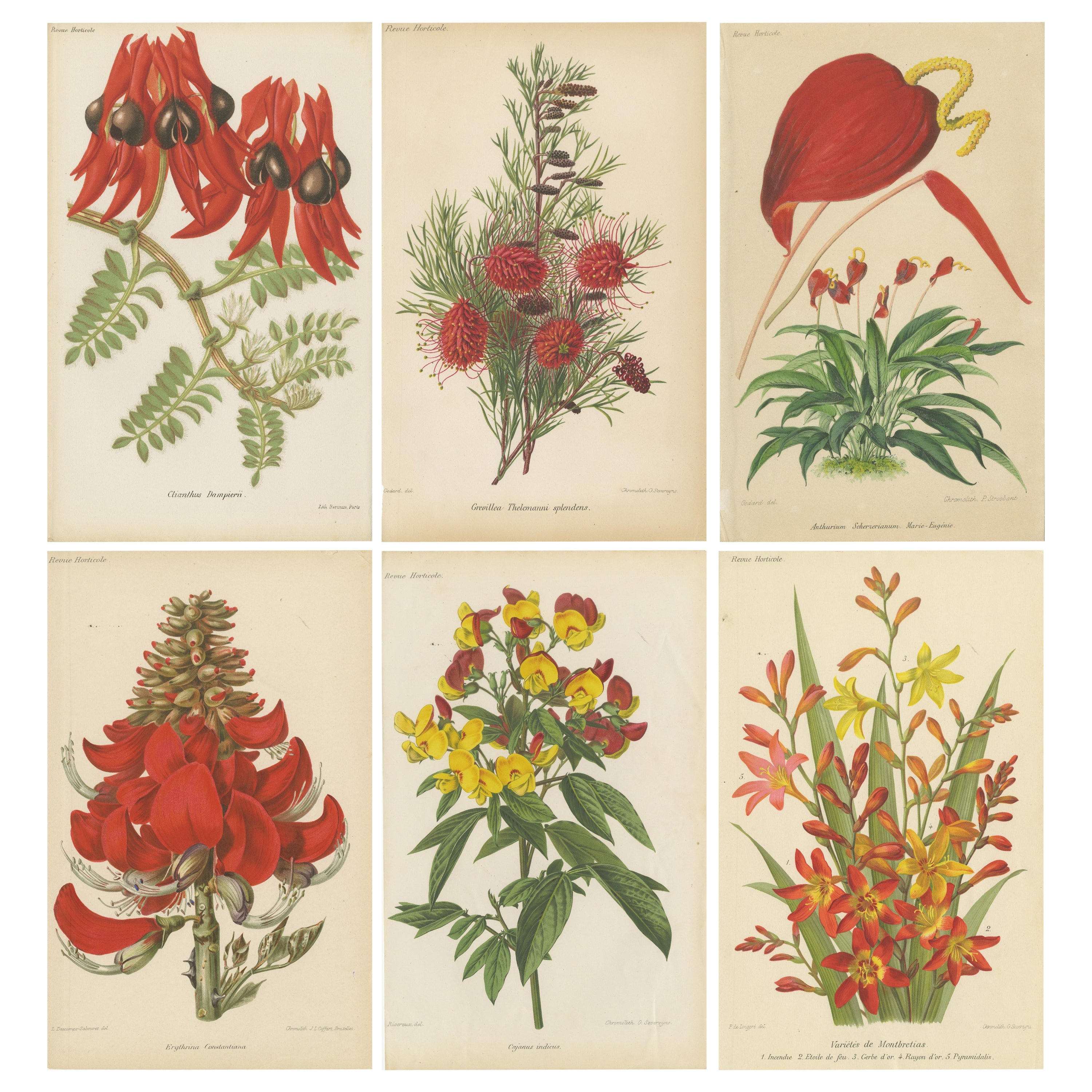
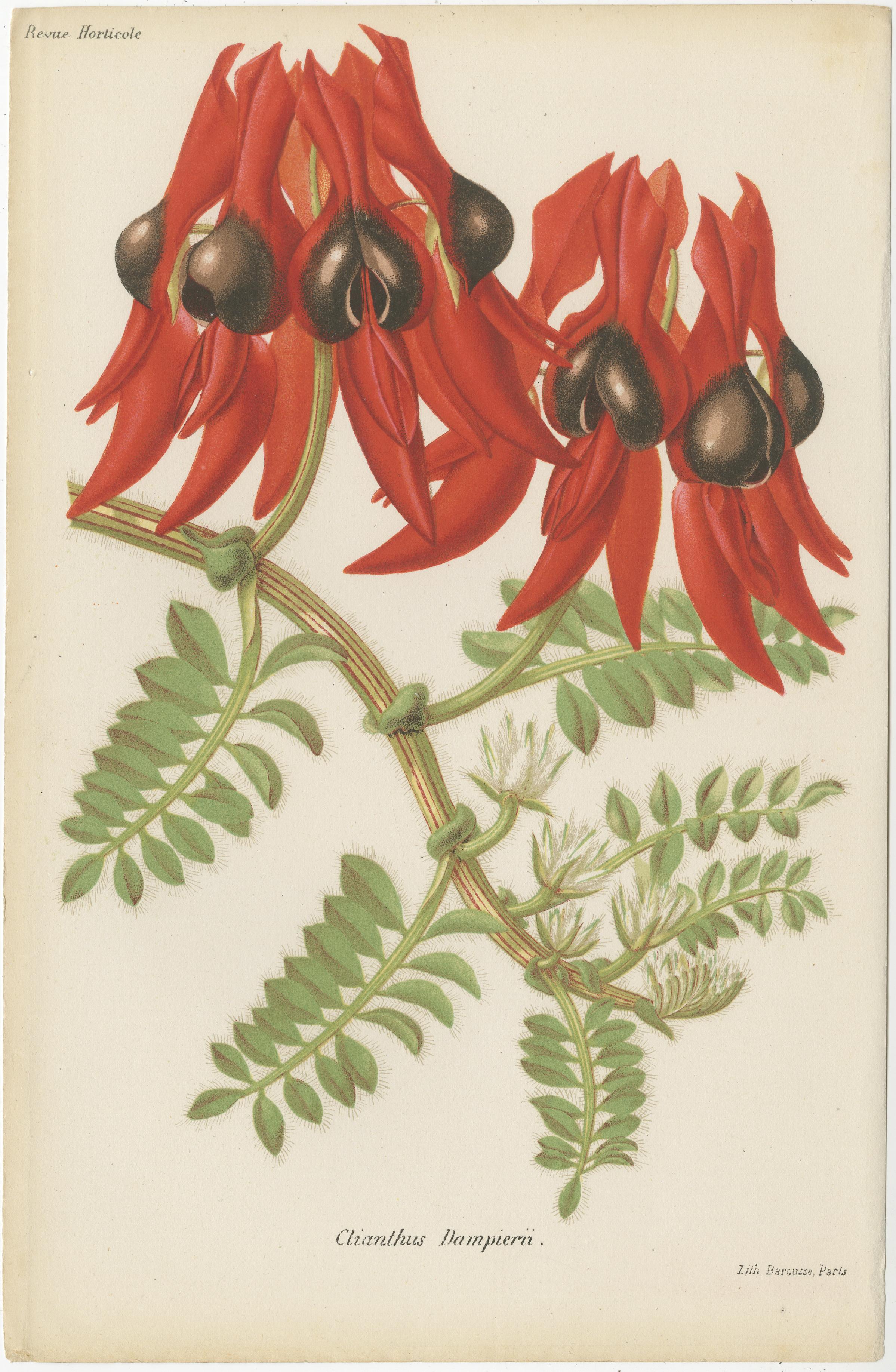
Clianthus Dampieri
English Name: Glory Pea or Dampier's Clianthus
This print features striking, bright red flowers resembling lobster claws, which contrast dramatically against dark, bean-like pods and lush green foliage.
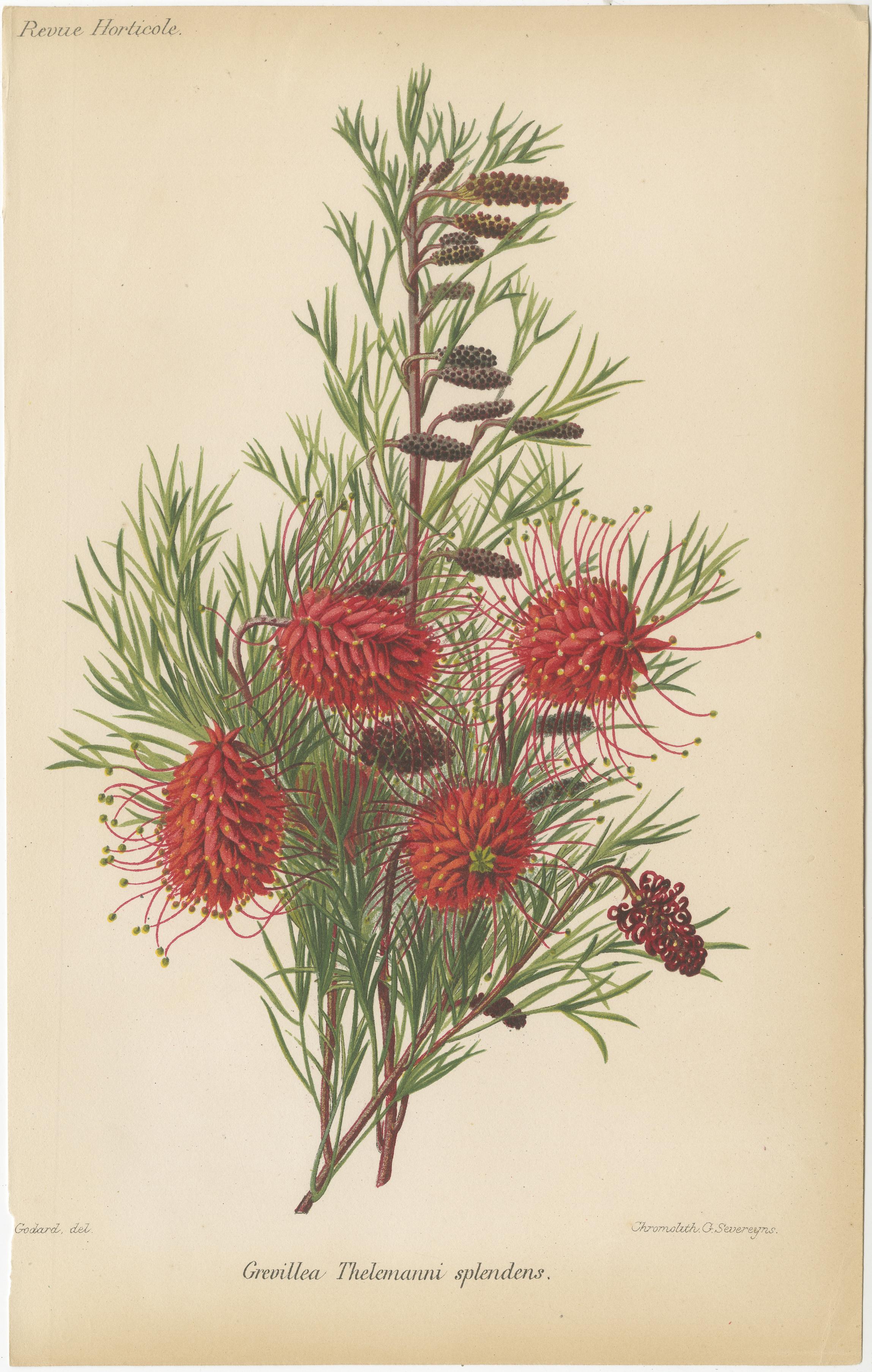
Grevillea Thelemannii splendens
English Name: Spider Net Grevillea
Description: Showcases vivid red and orange brush-like flowers, typical of the Grevillea genus, known for their unique, spidery appearance.
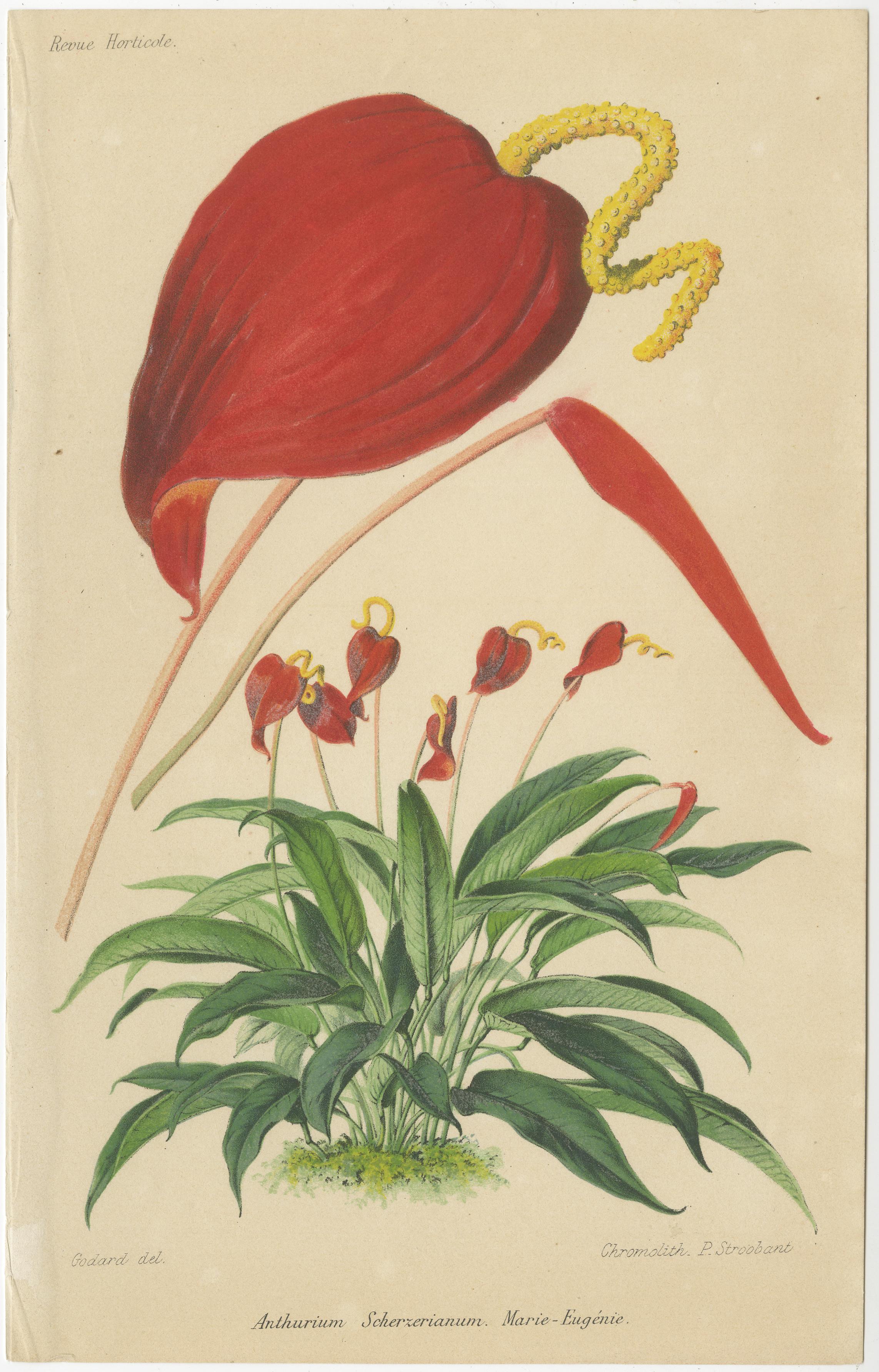
Anthurium Scherzerianum
English Name: Flamingo Flower
Description: Depicted with its distinctive bright red spathes and a spiraled spadix, surrounded by dark green, glossy leaves.
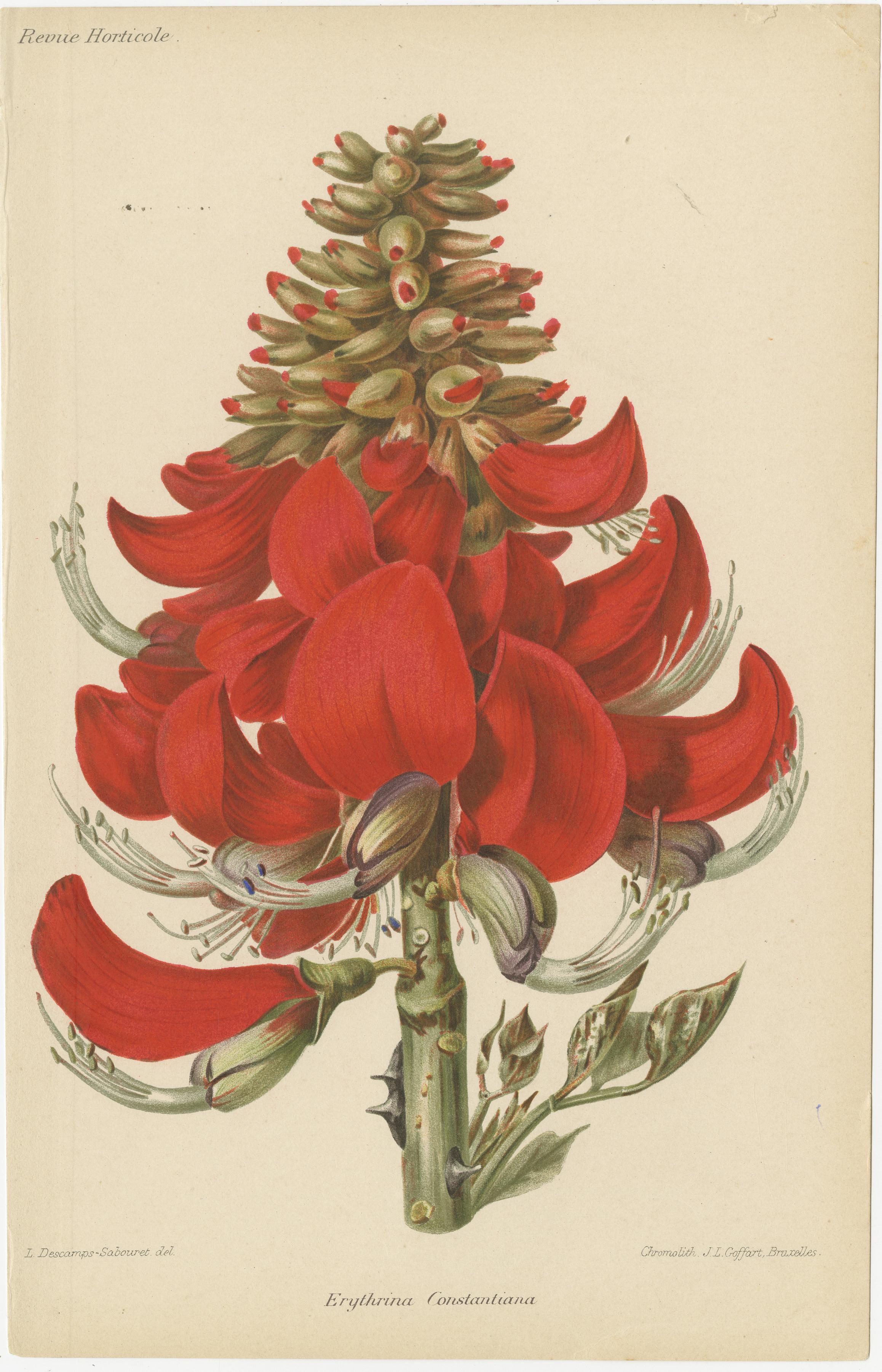
Erythrina Constantiana
English Name: Constantine Coral Tree
Description: Features vibrant red coral-like blooms, which are highlighted against the backdrop of large green leaves.
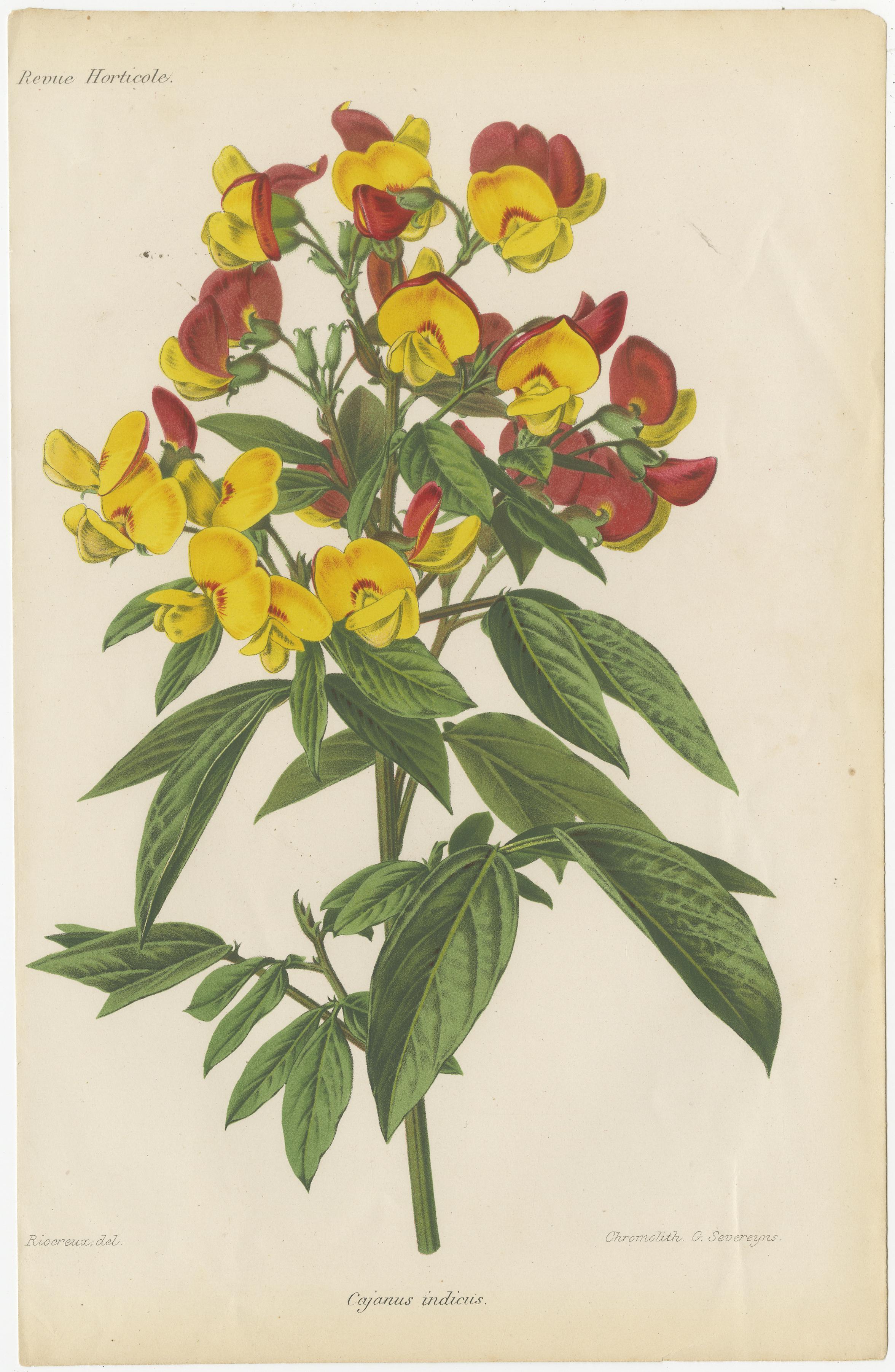
Cytisus Indicus
English Name: Indian Goldenthread
Description: This plant is shown with bright yellow flowers that cascade beautifully, giving it a lush, vibrant look.
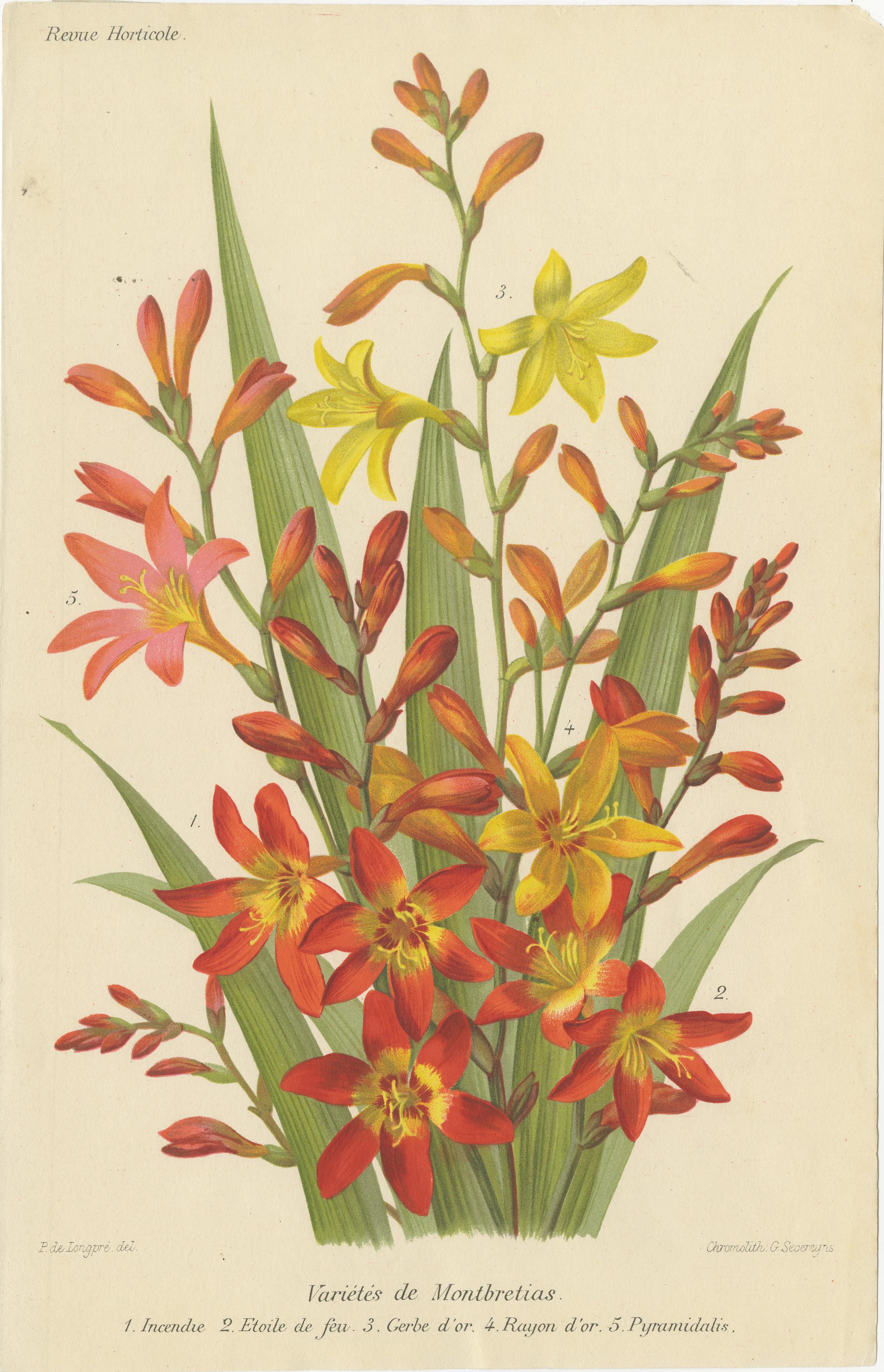
Montbretias Varieties
English Name: Montbretias
Description: Displays a variety of this species in multiple colors ranging from fiery red to golden yellow, all arranged on slender, arching stems.
Makers and Publication
Artists: The prints were illustrated by various artists including "Godard," known for detailed botanical drawings.
Chromolithographer: G. Severeyns, a prominent chromolithographer, worked on transferring these illustrations onto stone for printing.
Publication: These illustrations were published in "Revue Horticole," a French horticultural review that frequently featured detailed botanical artworks. This magazine was instrumental in disseminating knowledge about various plant species to a broader audience during the 19th century.
Explanation of Chromolithography
Chromolithography is a method for making multi-color prints. This process originated in the 19th century and involves using multiple lithographic stones, one for each color, and was a revolutionary technique at the time for producing vibrant, detailed images. Each stone is meticulously prepared so that when printed in succession, they create a complete, richly colored image. This method was particularly popular for producing high-quality illustrations of botanicals, where the accuracy of the color could enhance the scientific and aesthetic value of the work. The process was both labor-intensive and required significant skill, making chromolithographs prized for their beauty and precision.
These details about the plants, their illustration process, and the historical context of their publication underline the intersection of art, science, and technology during the height of the Victorian era's interest in natural sciences.