About this sheet
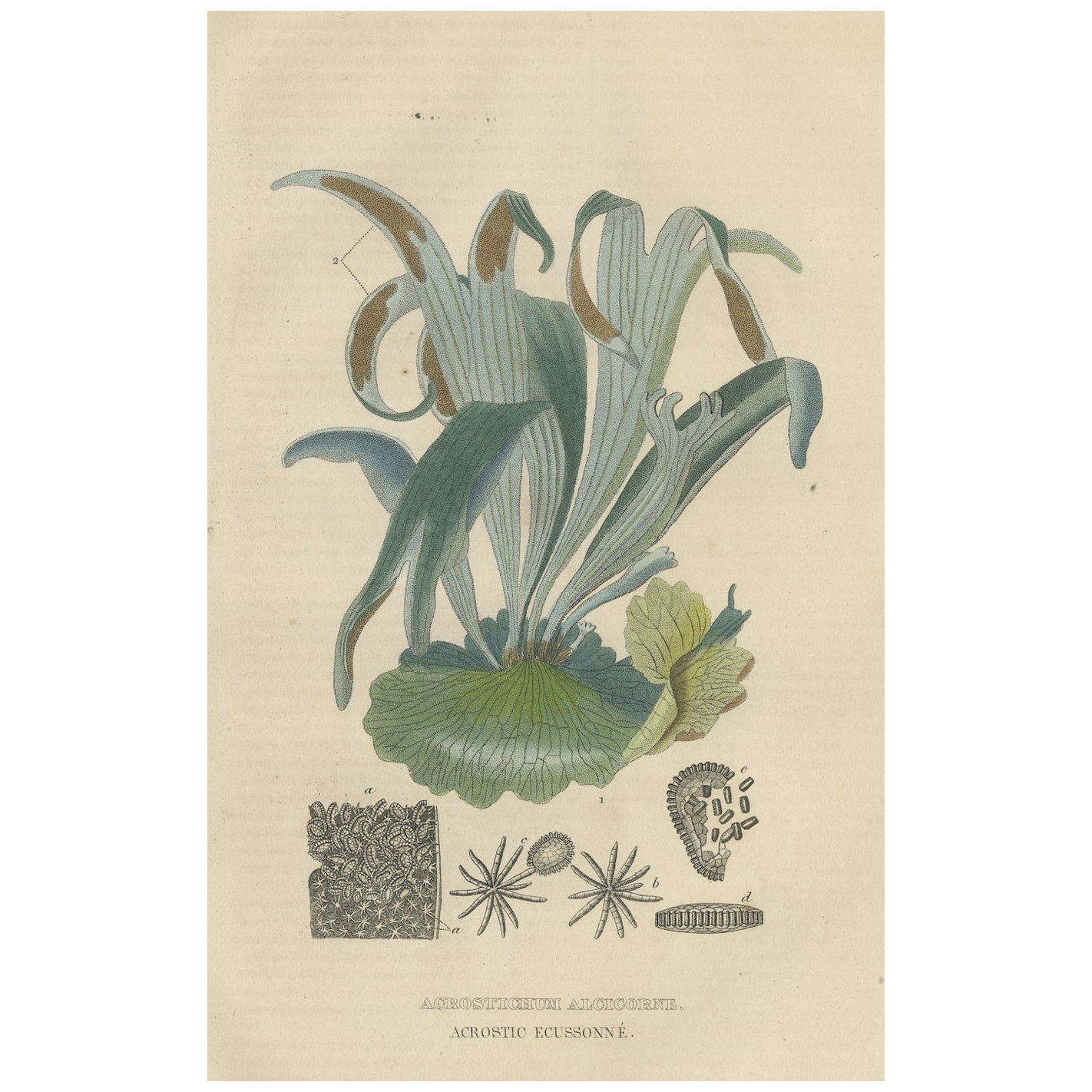
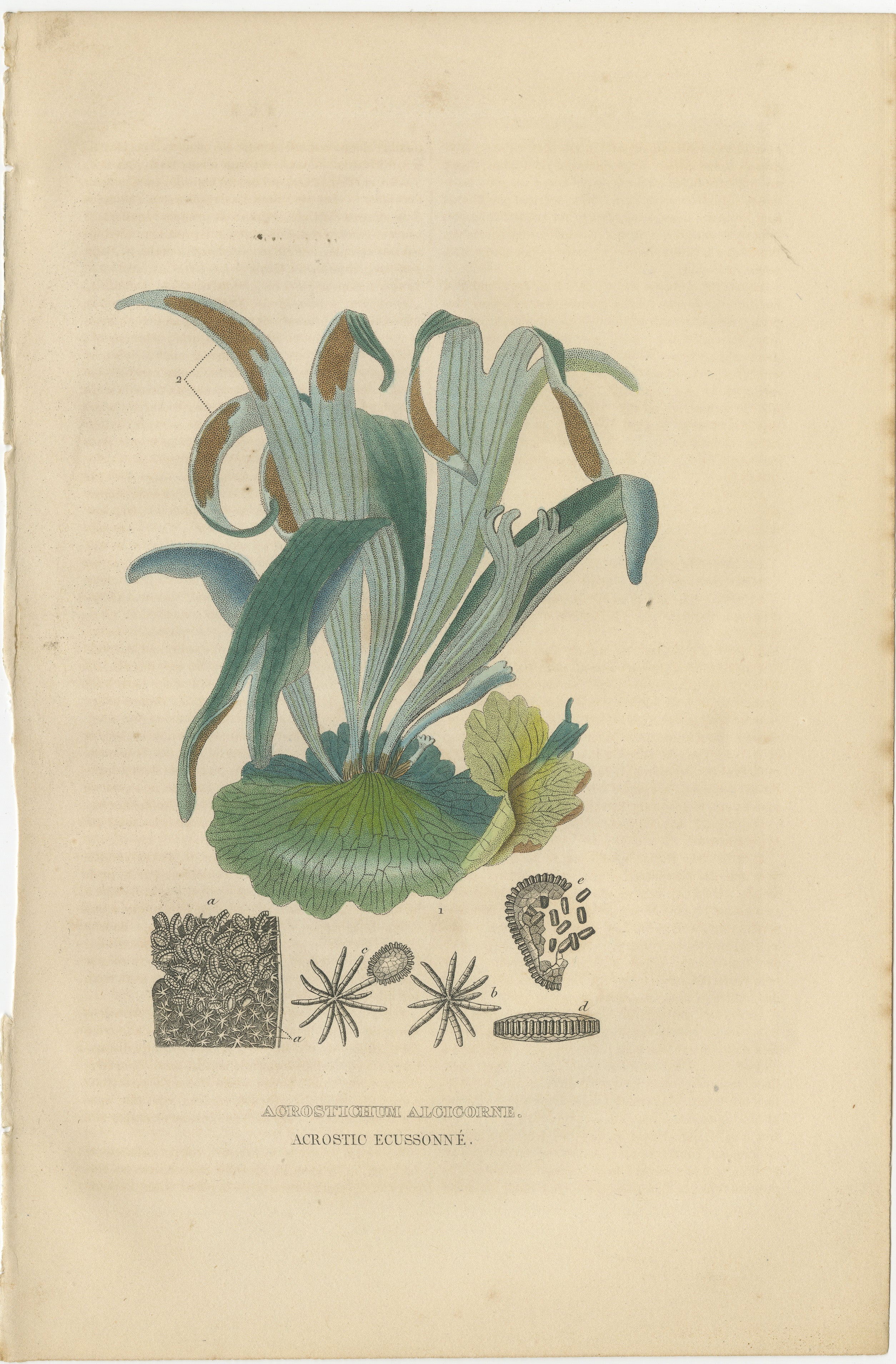
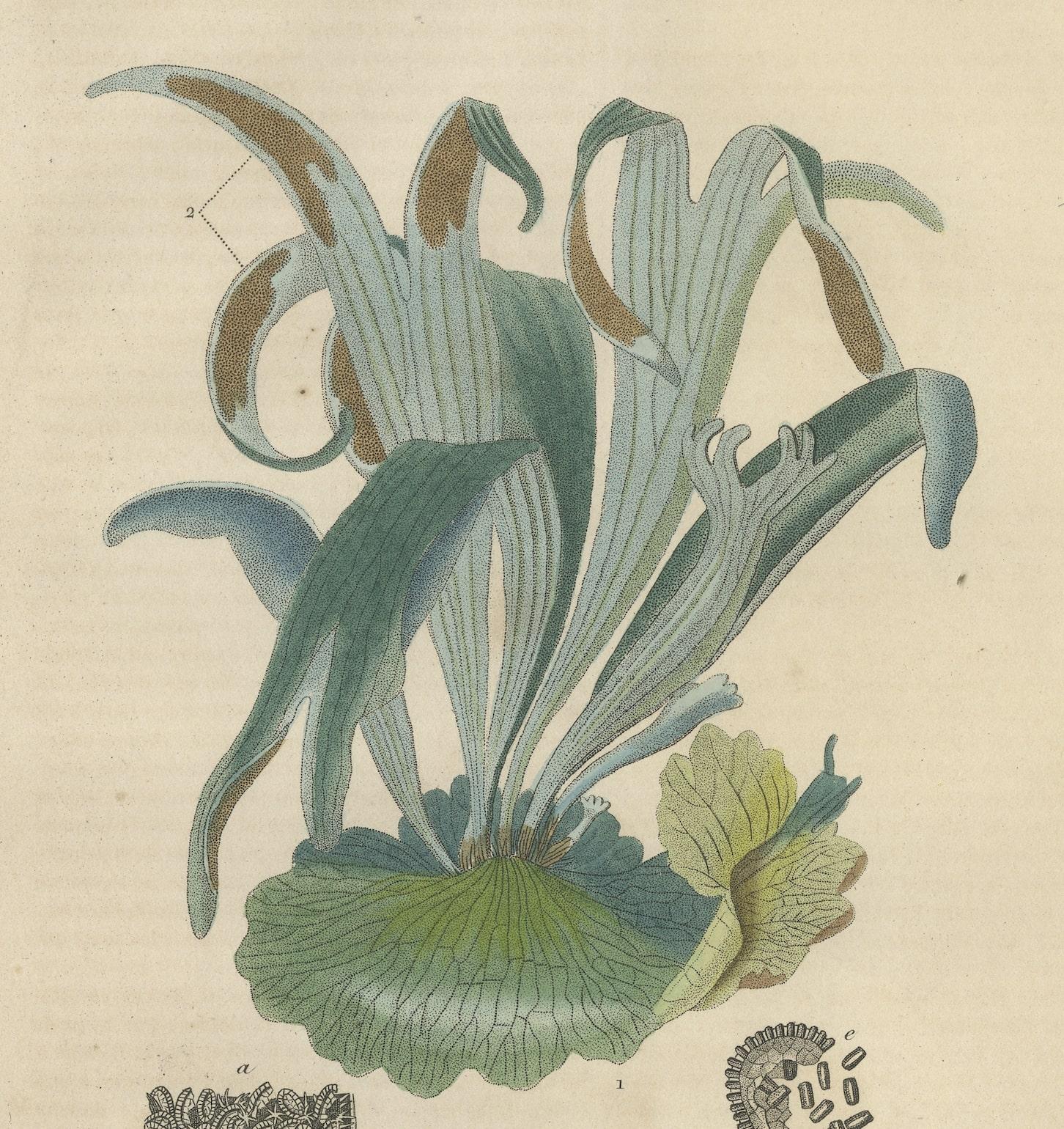
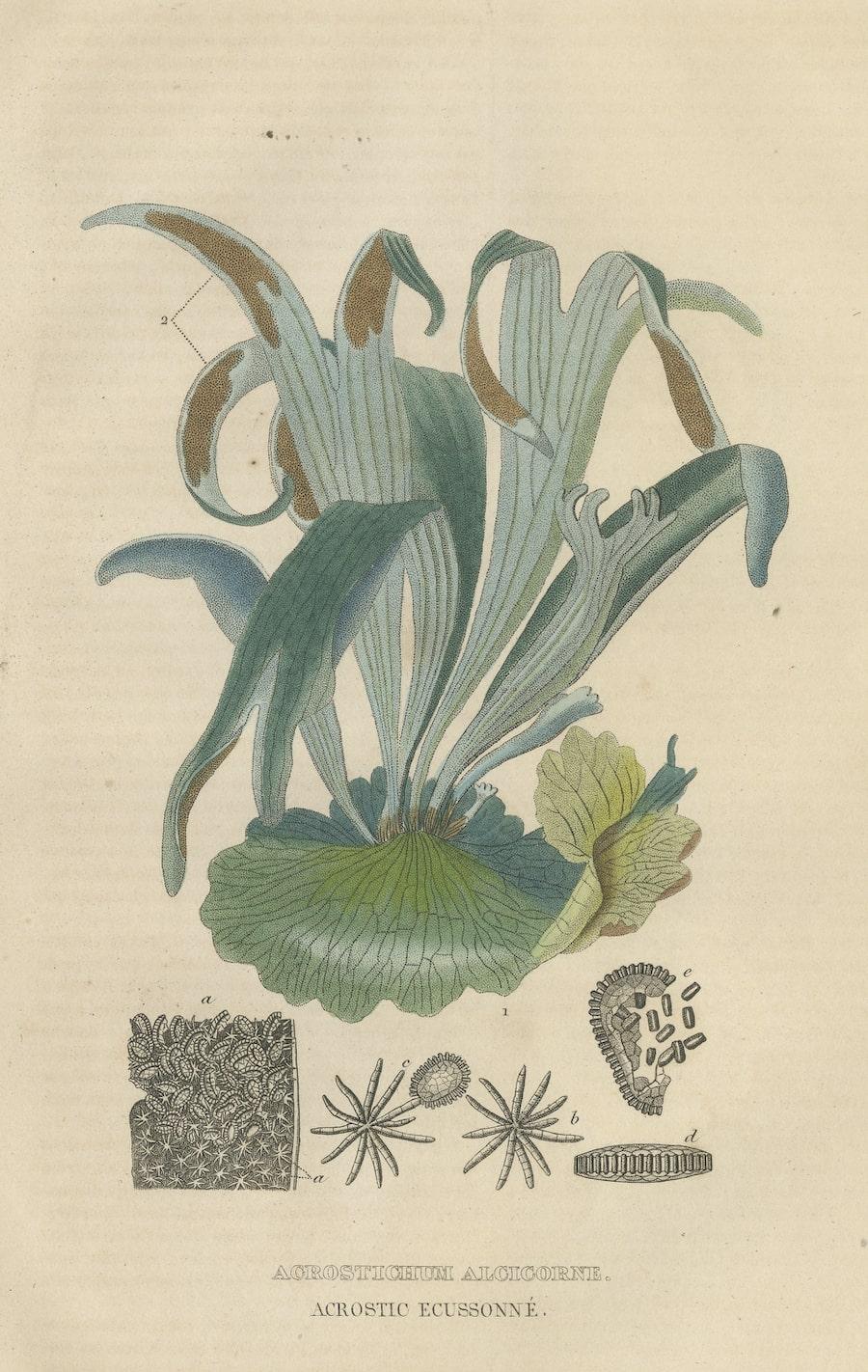
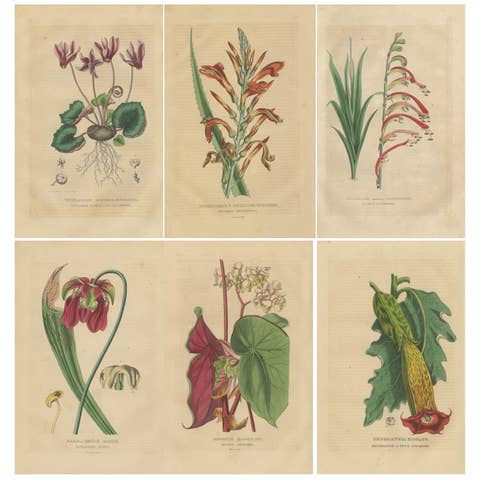
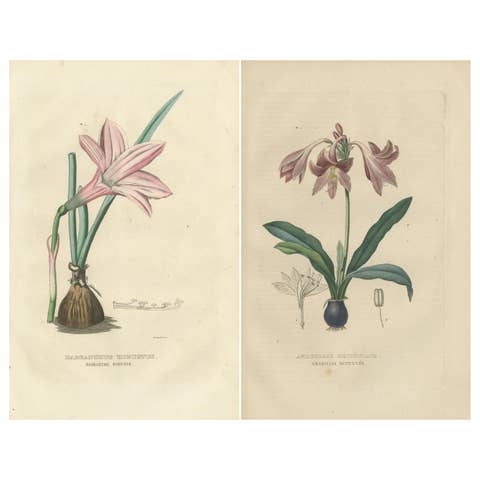
An antique botanical engraving of the Acrostichum Aureum, also known as the Golden Leather Fern, though the text "Acrostic ecussonne" may be a French historical or alternative name for this plant or a related species.
The central focus of the illustration is the plant itself, featuring large fronds with a golden hue and a robust, leafy base. The fronds are depicted in various stages of unfurling, which gives the image a dynamic feel. It's a detailed representation that highlights the fern's unique characteristics, such as the structure of the leaves and the pattern of the spores on the underside of the fronds.
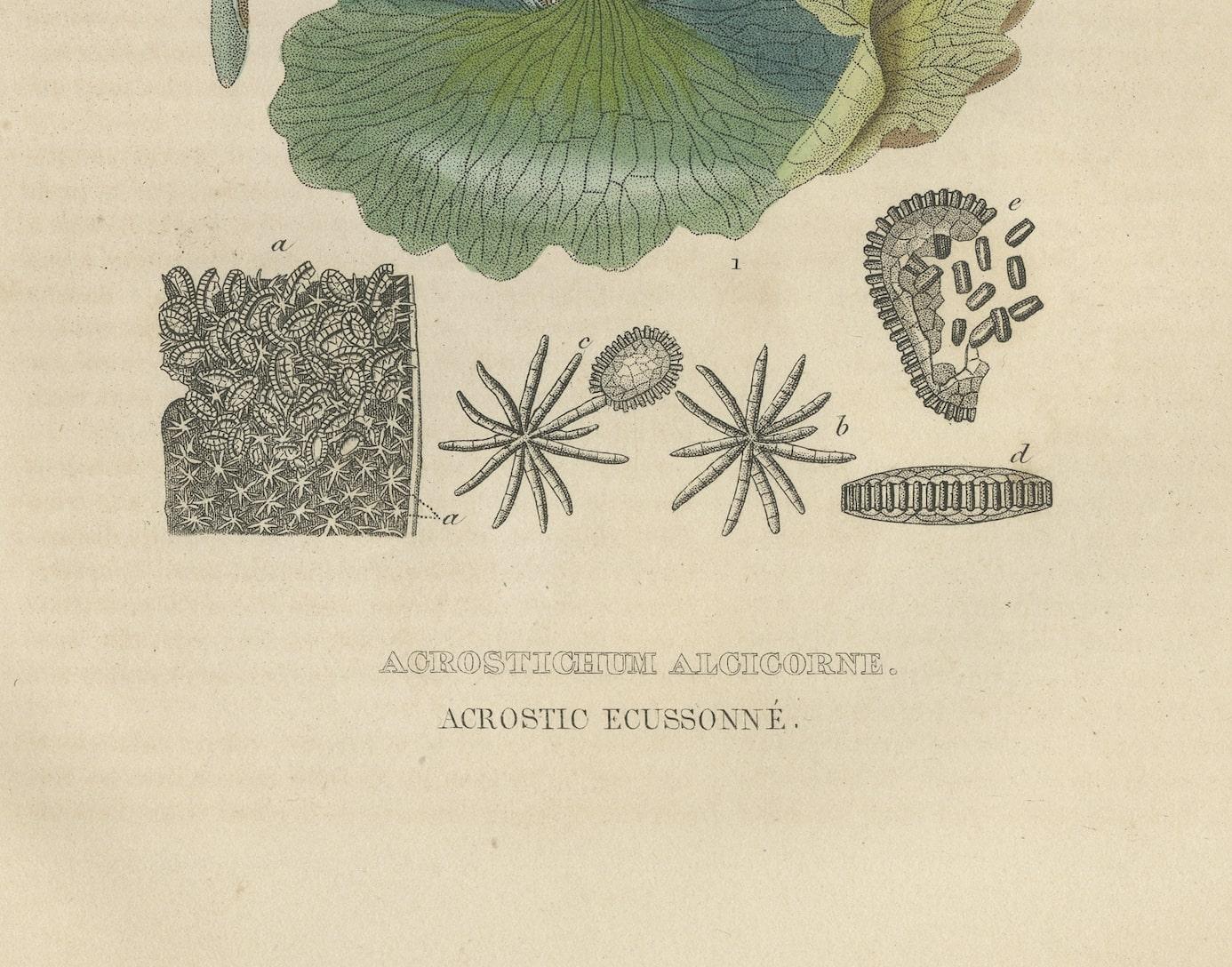
Below the main illustration, there are various insets labeled 'a', '1', and '2', which provide a closer look at different parts of the plant. These insets likely illustrate the plant's reproductive elements, such as spore cases ('a'), a cross-section of a spore case ('1'), and individual spores ('2'). These details are essential for botanical identification and study.
The text at the bottom refers to the specific species depicted or a particular variety of the plant. The quality of the engraving, with its fine lines and careful shading, speaks to the high level of craftsmanship that would have been required to produce such an image in the days before modern printing technology.
The artwork is highly detailed, with careful attention to the form and texture of each part of the plant, which would have been essential for botanical studies and plant identification before the advent of color photography.
More info on the book in which it was published:
The 'Dictionnaire Classique des Sciences Naturelles' by Pierre Auguste Joseph Drapiez stands as a remarkable testament to 19th-century natural sciences. Published in Brussels in 1845, this work represents an expansive collation of knowledge, building upon the pioneering works of Buffon, Daubenton, Lacepede, Cuvier, de Jussieu, and other influential naturalists.
The prints within this compendium likely showcase a rich amalgamation of artistic precision and scientific accuracy. Drapiez, himself a Belgian naturalist, would have aimed for detailed representations of flora, fauna, and scientific phenomena, mirroring the illustrative styles prevalent during his time. Given the era's emphasis on illustration, these prints were likely engraved meticulously, possibly portraying intricate anatomical details or lifelike depictions of the natural world.
With Drapiez's background in natural history, the prints might bear testament to his commitment to scientific authenticity, aiming to educate and inspire scholars and enthusiasts alike. These engravings would have complemented the text, offering visual aids that elucidate the concepts and specimens discussed in the volume.
Overall, the prints of 'Dictionnaire Classique des Sciences Naturelles' likely serve as both artistic representations and invaluable scientific resources, encapsulating the essence of 19th-century natural history exploration and documentation.