Brazilian Market Scene – Poultry Seller and Maize Vendor, c.1845
€ 240
Original antique · The actual sheet photographed · Certificate of authenticity on request · Sold unframed · Worldwide shipping from € 15 (rates)
Date
1845
Sheet size
23 × 30 cm (9.1 × 11.8 in)
Condition
Good
Reference
BG-13682-21
What the condition grades mean
Excellent
Bright and clean, with no faults worth mentioning.
Very good
Only light signs of age, such as faint toning.
Good
Normal signs of age for a sheet of this period: toning, some foxing, small marks or neat old repairs.
Fair
Clear faults such as staining, tears or repairs, priced to match.
Every fault we see is written in the condition note, and the whole sheet is shown uncropped in the photos.
Condition
Condition report: Strong, clean impression with bright original hand-coloring. Moderate foxing mainly in margins; image area clear and fresh. Wide margins preserved.
About this sheet
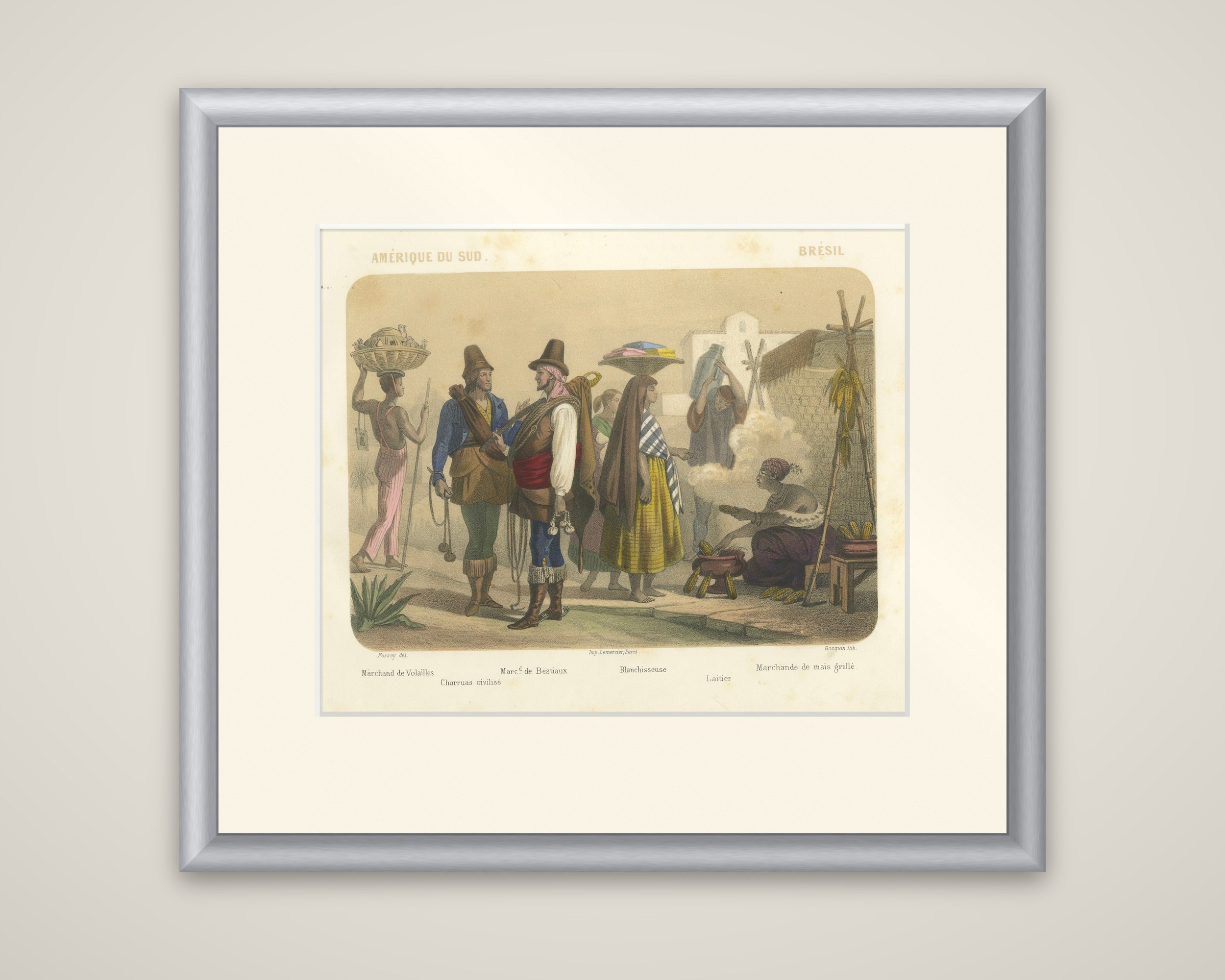
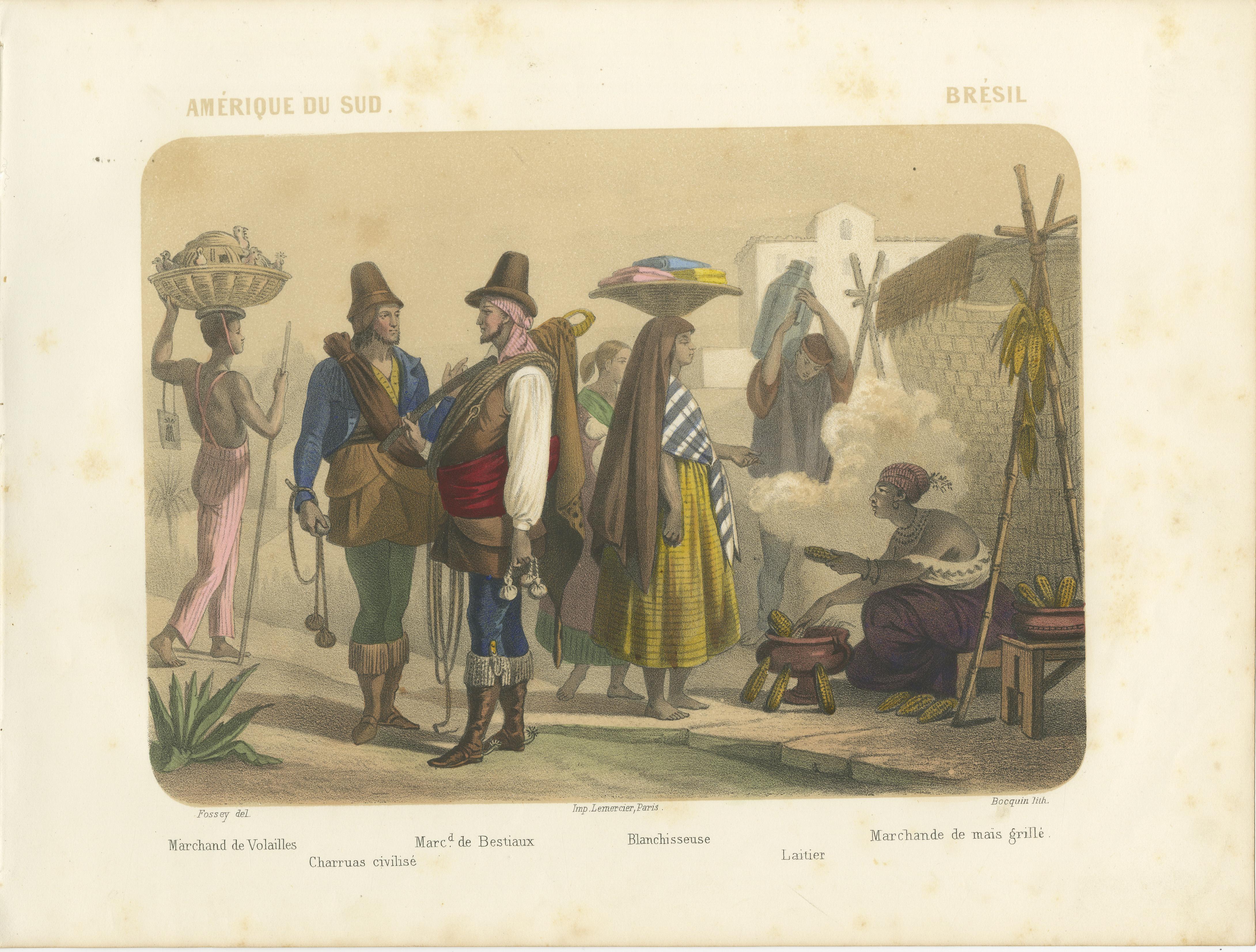
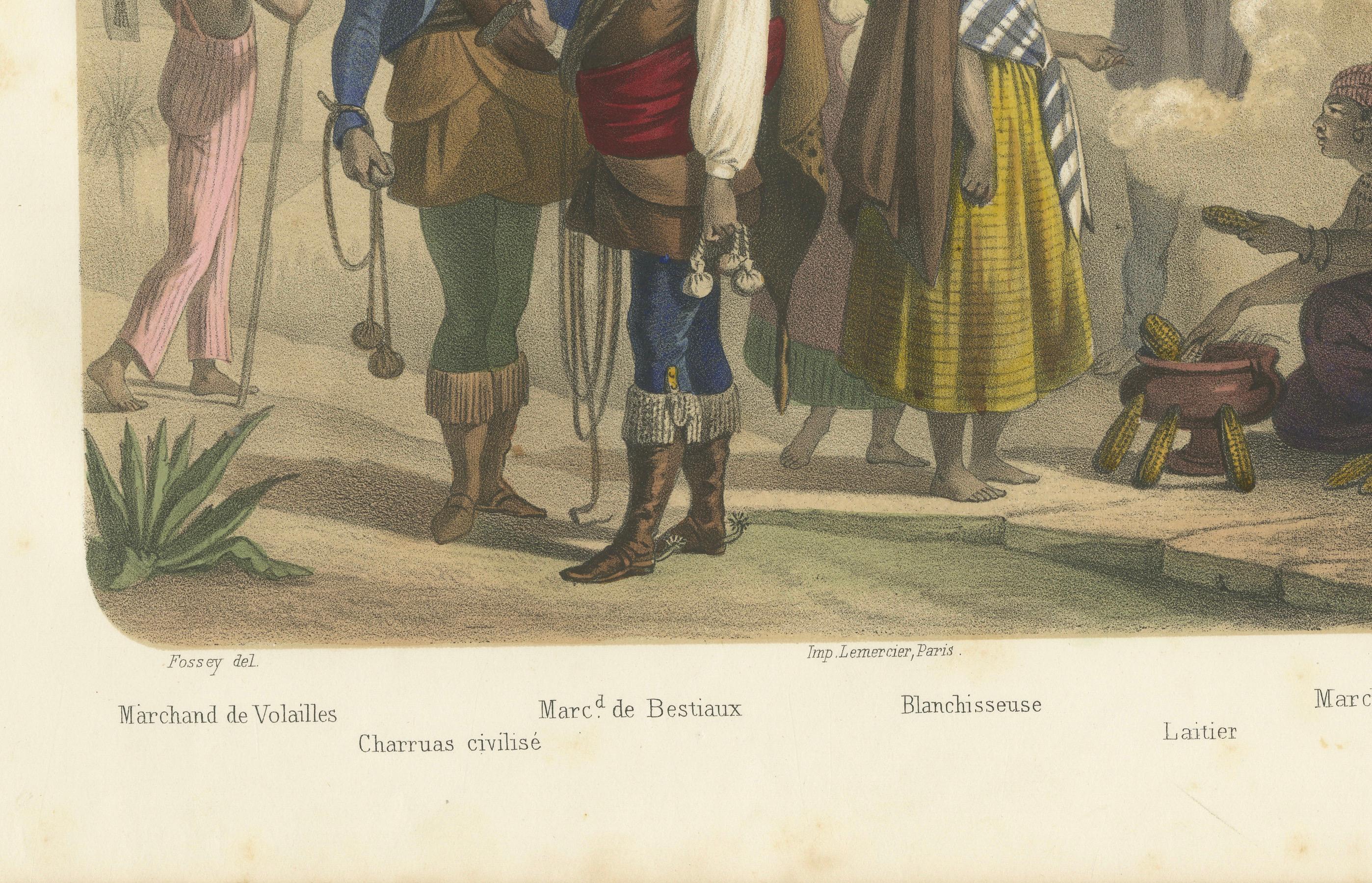
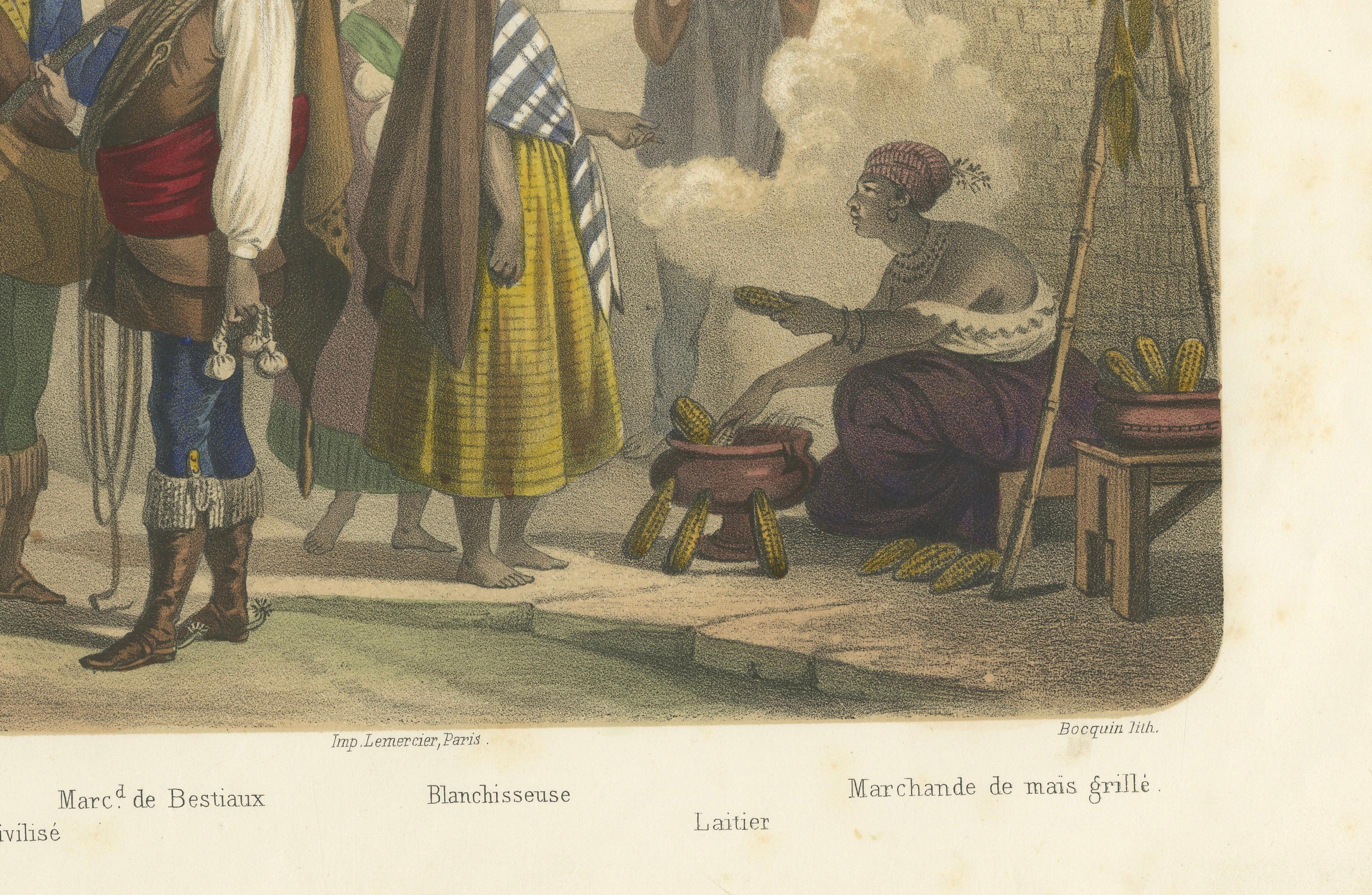
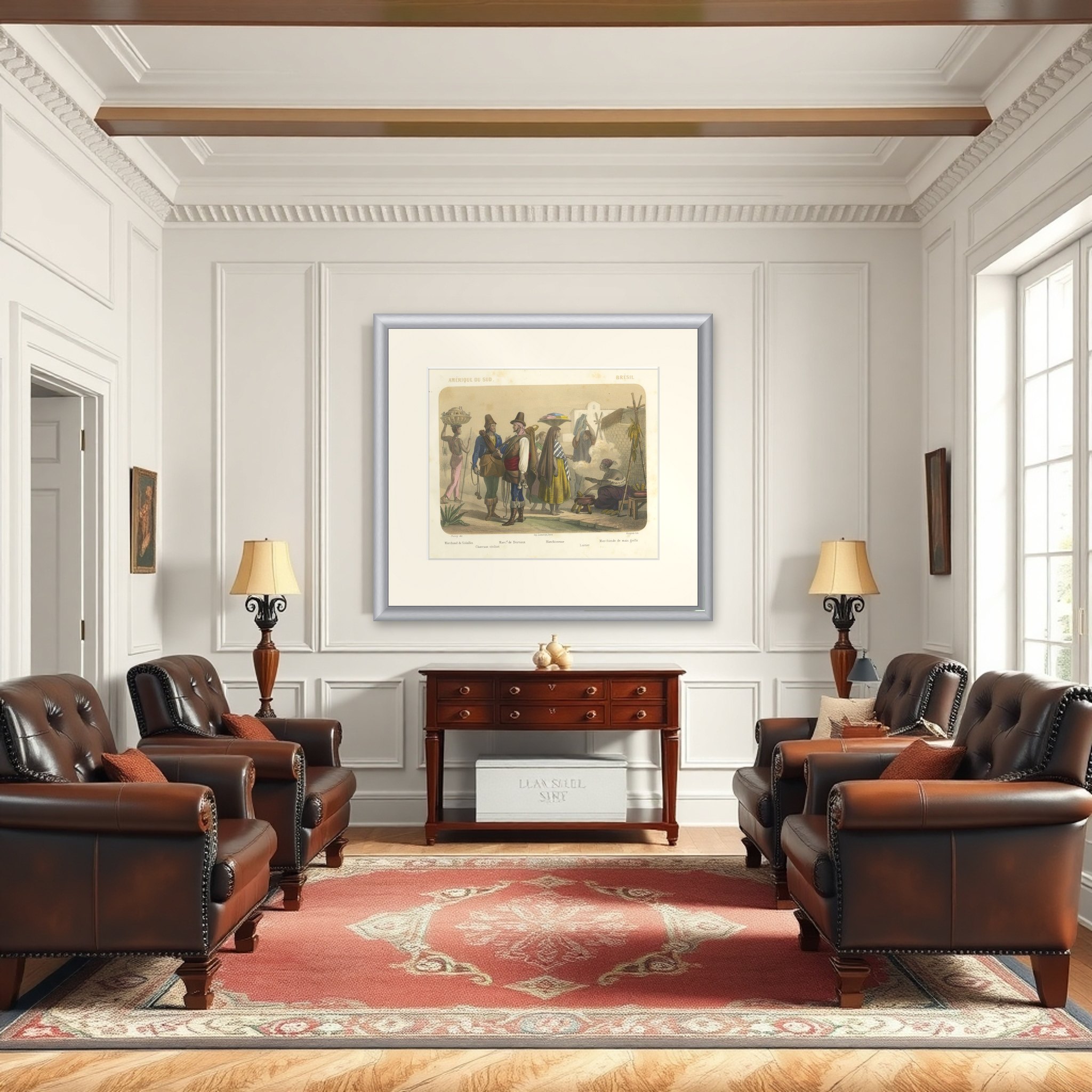
Market types of Brazil, an original hand-colored lithograph titled "Amerique du Sud, Bresil", from Le Monde en Estampes: Types et Costumes des Principaux Peuples de l'Univers, published in Paris around 1845-1850 by Amedee Bedelet. The sheet is lettered "Fossey del." and "Bocquin lith.", with the imprint "Imp. Lemercier Paris".
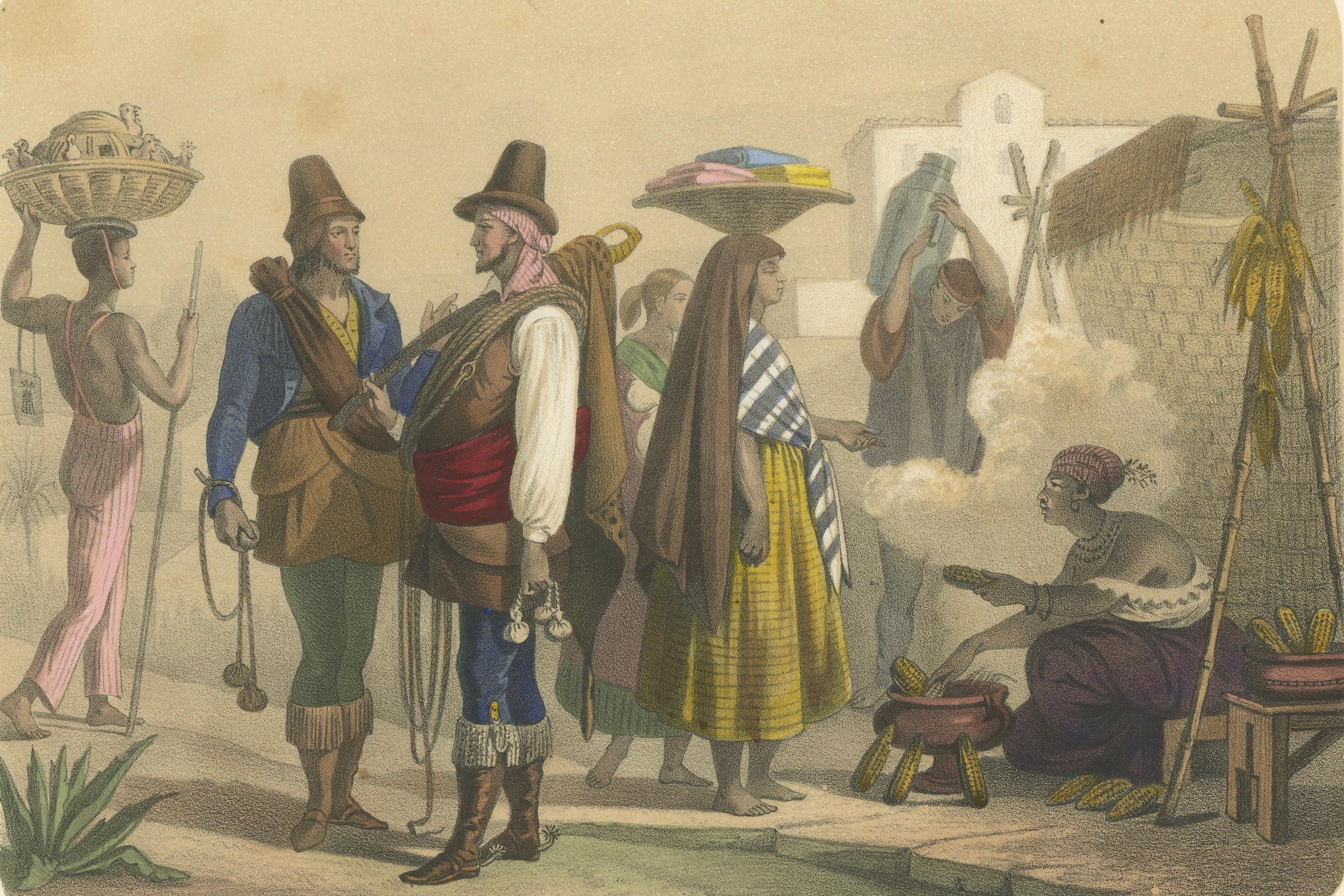
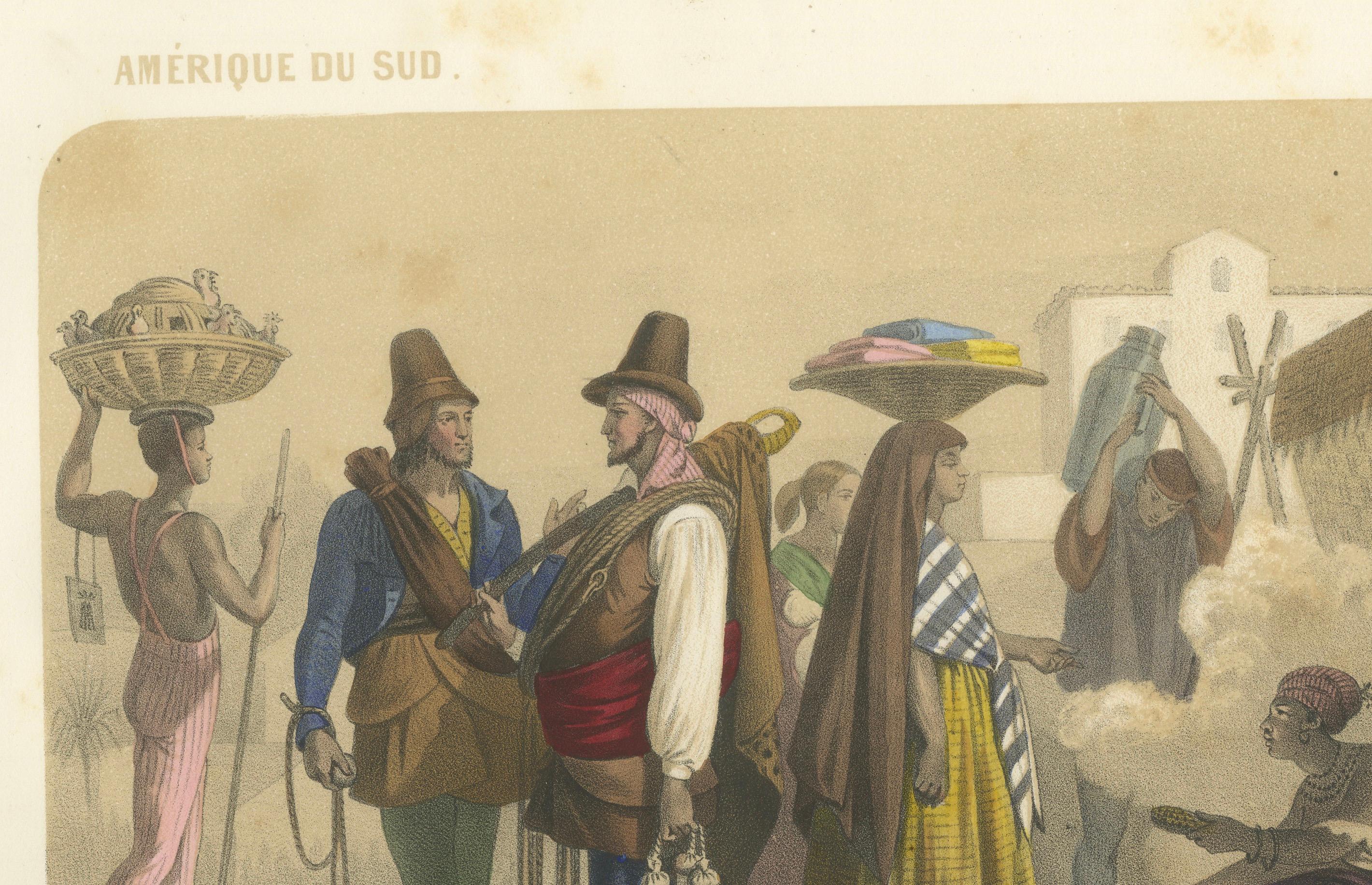
Six figures are captioned beneath the image: "Marchand de Volailles", "Charruas civilize", "Marc. de Bestiaux", "Blanchisseuse", "Laitier" and "Marchande de mais grille". At the left, the poultry seller walks with a basket of birds balanced on his head, beside a cattle dealer in a tall hat and red sash who talks with a Charrua man in European dress, with a coil of rope and bolas at his side. At the center a washerwoman in a yellow skirt and striped shawl carries folded linen on her head, and a milkman stands behind her. At the right a seated woman grills maize on a small charcoal stove, with cobs hanging from a pole and smoke rising against a whitewashed wall and a thatched screen. An agave plant grows in the left foreground.
The plate is one of the American types in this French series of costumes by country, and it records the street trades of a Brazilian town as they were pictured in the 1840s.