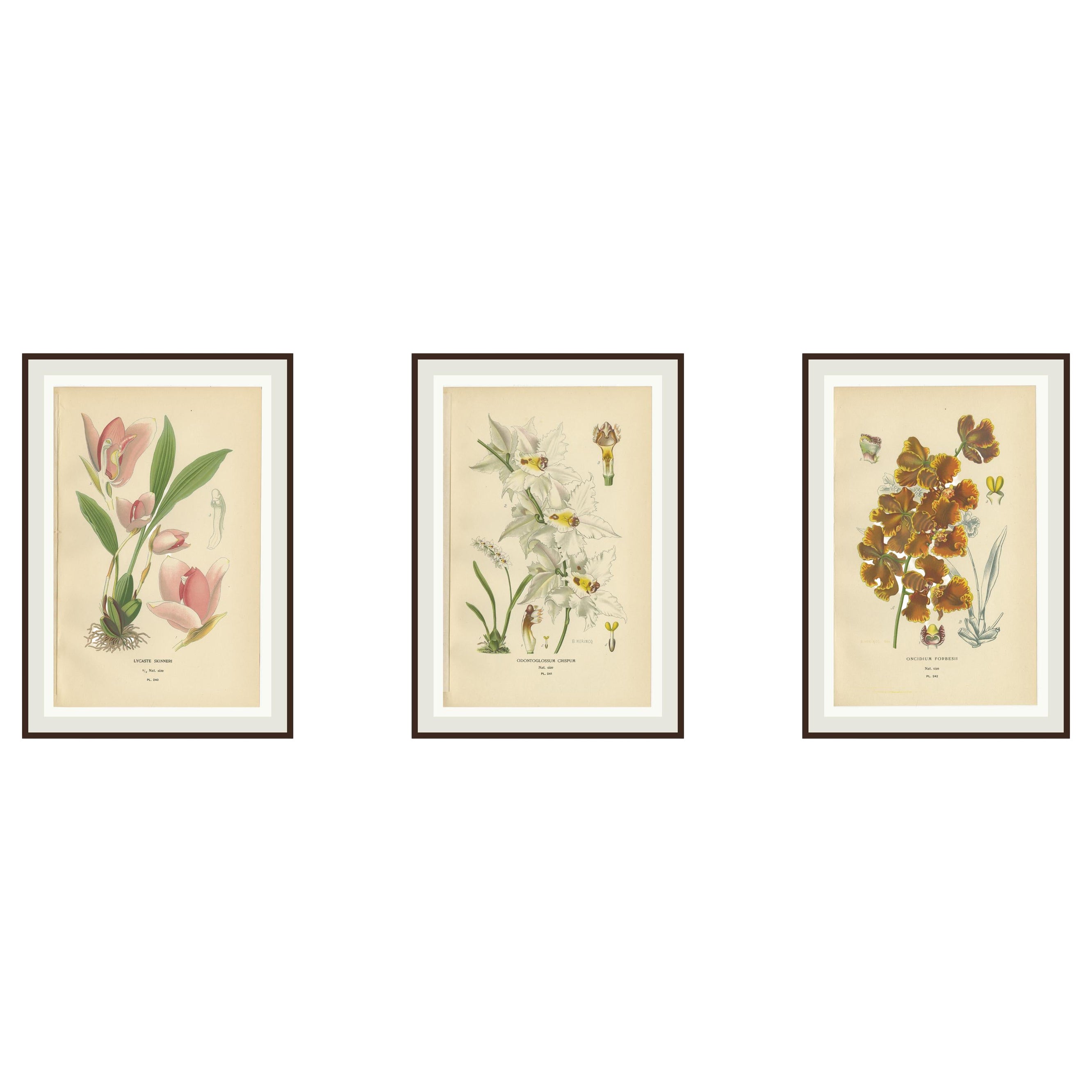
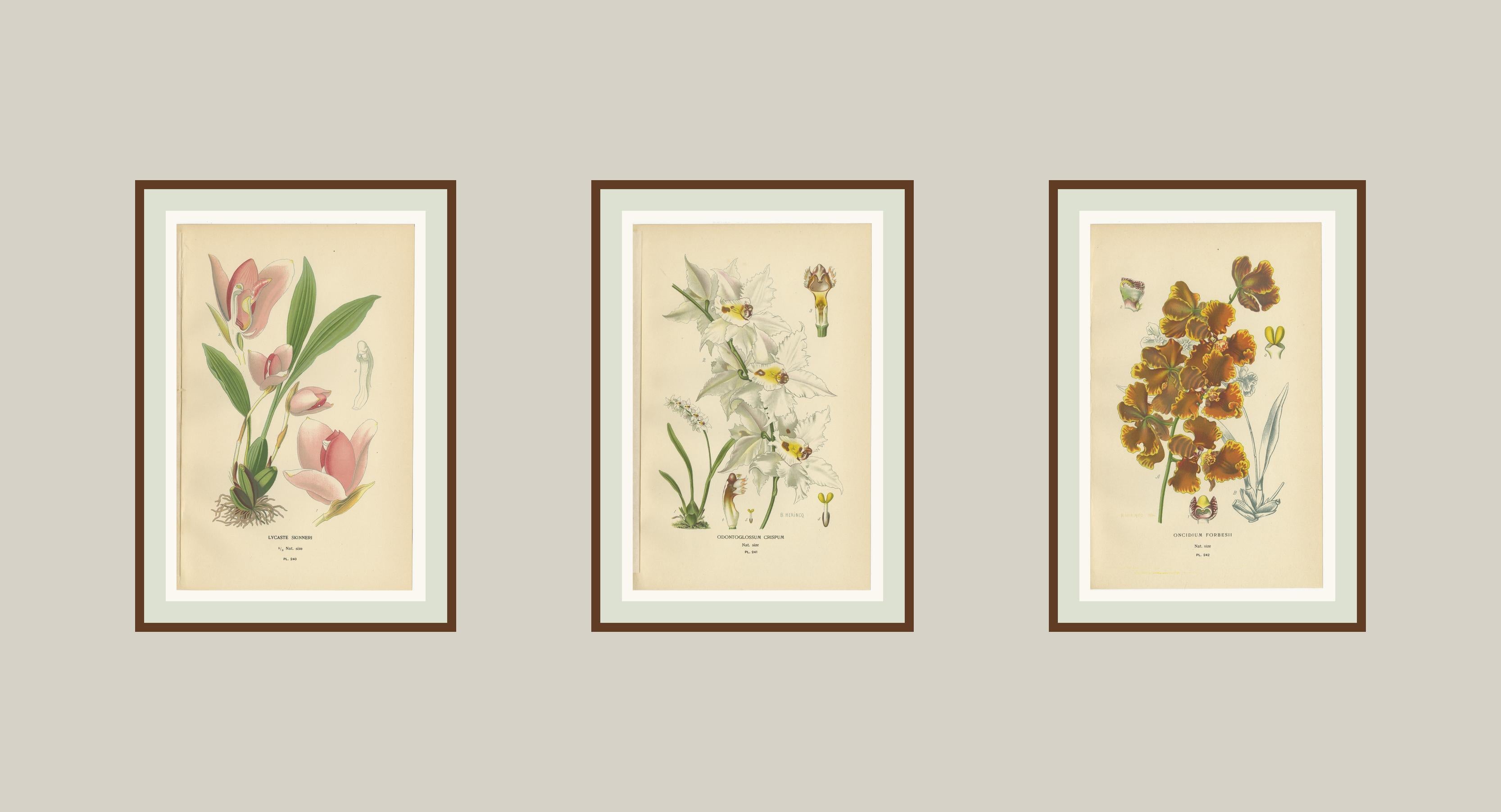
Set of 3 antique orchid lithographs – Lycaste, Odontoglossum & Oncidium, 1897
€ 340
One of a kind: this is the sheet in the photographs. Ships from Langweer, the Netherlands.
Date
1897
Sheet size
24 × 15.9 cm (9.4 × 6.3 in)
Condition
Good
Reference
BG-13692-4-7, -8,- 9
Condition
Very good condition overall. Fresh original hand-coloring with strong impressions. Some light age toning and minor foxing in the margins, typical for 19th-century paper, not affecting the images. Wide margins preserved. They are sold unframed.
About this sheet
Set of 3 antique orchid lithographs – Lycaste, Odontoglossum & Oncidium, 1897
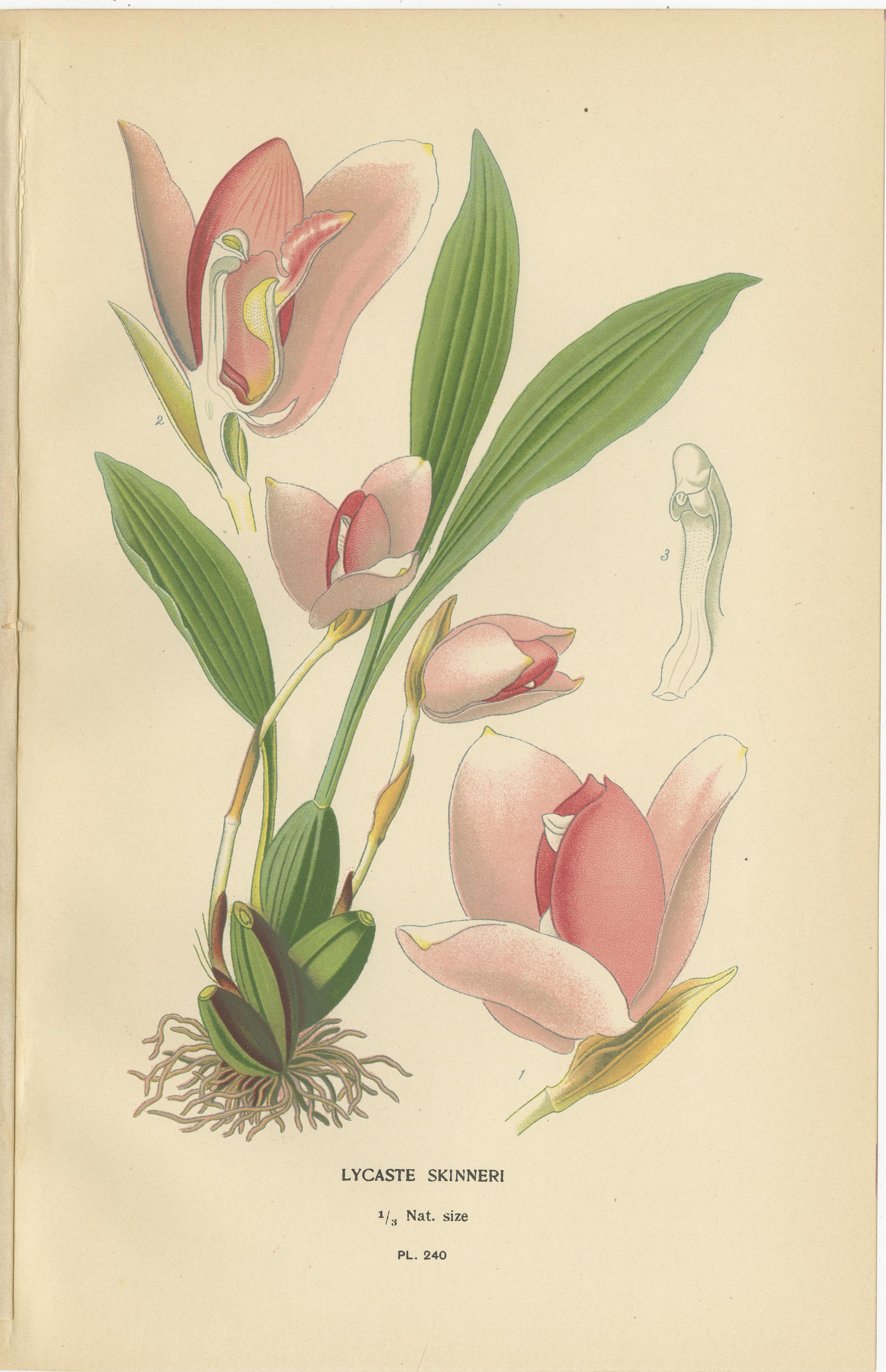
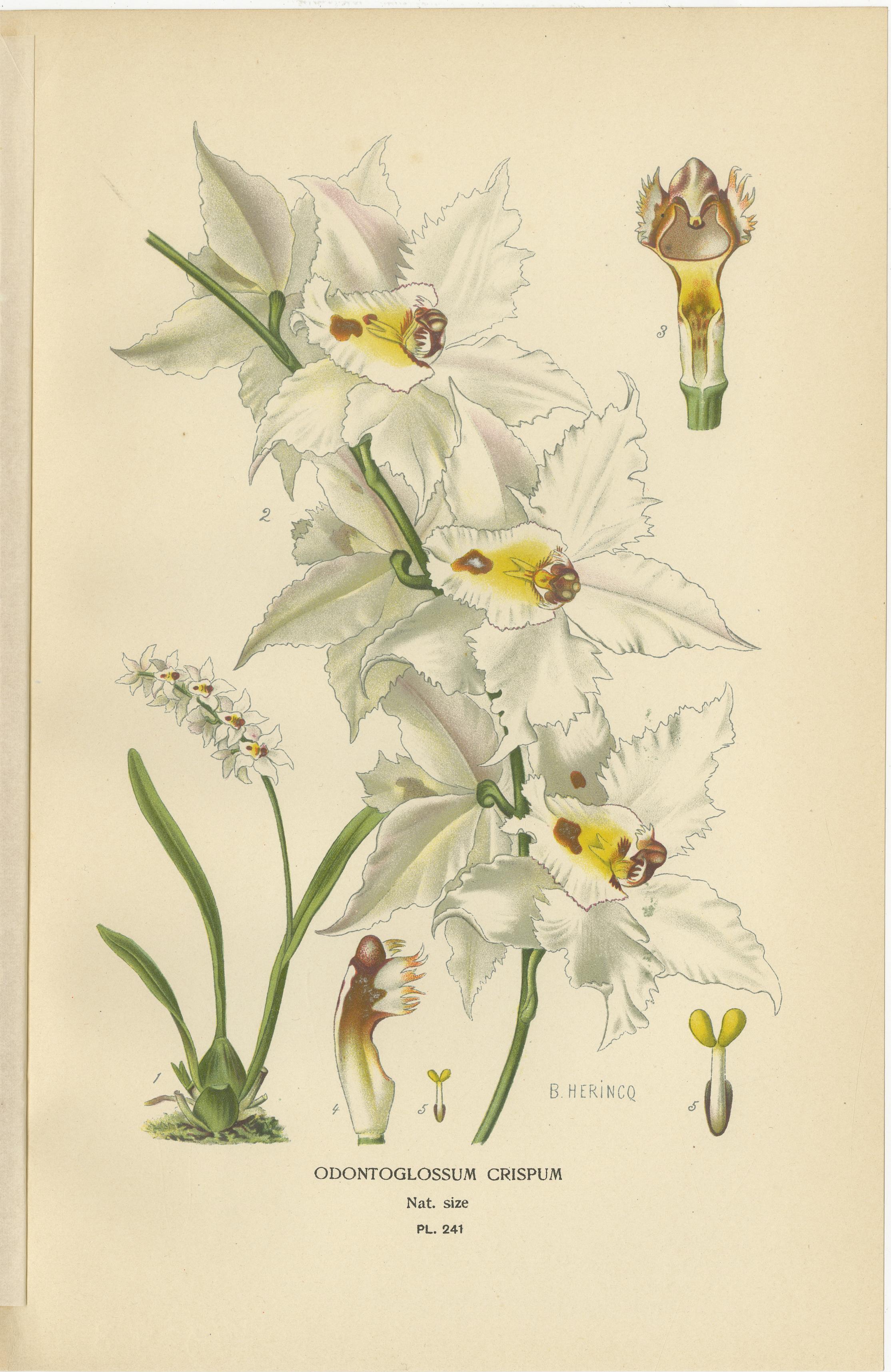
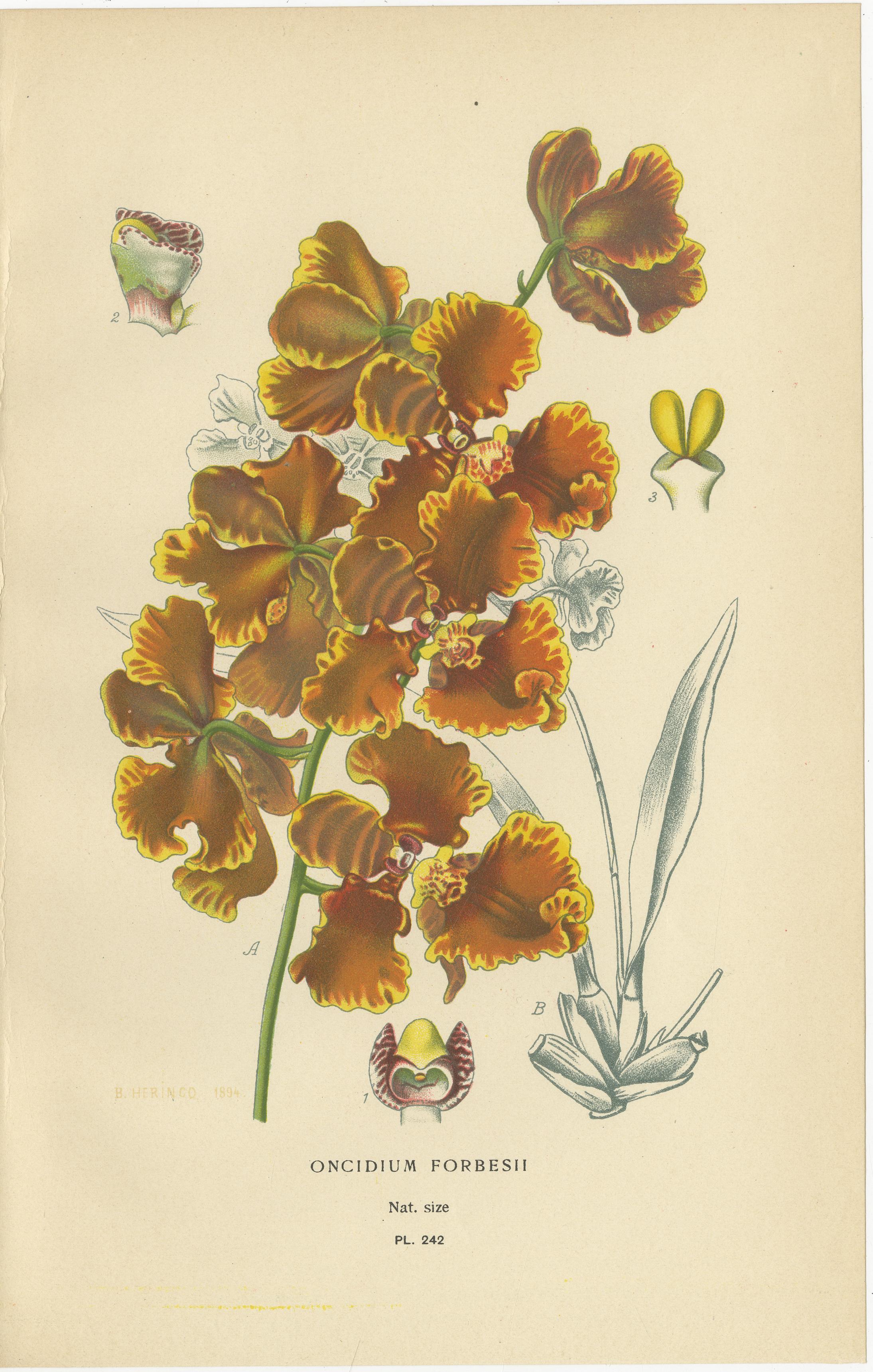
This set of three hand-colored lithographs captures some of the most admired orchid species of the late 19th century, published in Edward Step’s Favourite Flowers of Garden and Greenhouse (London, 1897). These finely printed plates combined botanical precision with rich coloration, making them both scientifically valuable and highly decorative. They are sold unframed as prints only.
The first plate shows *Lycaste skinneri*, also known as the Monja Blanca, a Guatemalan species celebrated for its large pink blossoms and symbolic importance as the national flower. The second plate illustrates *Odontoglossum crispum*, famed for its striking white petals often marked with yellow and purple, a high-altitude orchid from the Andes. The third plate depicts *Oncidium forbesii*, an exotic orchid with flamboyant, ruffled brown and yellow flowers, nicknamed “dancing ladies” for their lively appearance.
These plates reflect the Victorian fascination with orchids, a period when these exotic blooms were collected, cultivated, and admired across Europe. Today, they remain not only beautiful works of art but also valuable documents of botanical history. For collectors of antique prints or lovers of orchids, this set offers both decorative charm and historical depth.
Condition report: Very good condition overall. Fresh original hand-coloring with strong impressions. Some light age toning and minor foxing in the margins, typical for 19th-century paper, not affecting the images. Wide margins preserved, plate marks visible.
Framing tips: These prints work best as a trio, either hung vertically or side by side. Cream or ivory mats will accentuate the colors, while dark wooden or black frames add sophistication. For a vibrant effect, consider a double mat with a fine inner line in green or burgundy to echo the floral tones.
Technique: Hand-colored lithographs Maker: Edward Step, London, 1897