Rosersberg Palace in Sweden: Dual Perspectives by Willem Swidde, circa 1695
€ 450
One of a kind: this is the sheet in the photographs. Ships from Langweer, the Netherlands.
Date
1695
Sheet size
31.4 × 40 cm (12.4 × 15.7 in)
Condition
Good
Reference
BG-13670-8
Condition
Good. The handpressed paper has a brownish hue, especially around the borders, adding to its patina. Some small tears, creases and soiling due to handling, mostly outside the platemark. Folding line as issued.
About this sheet
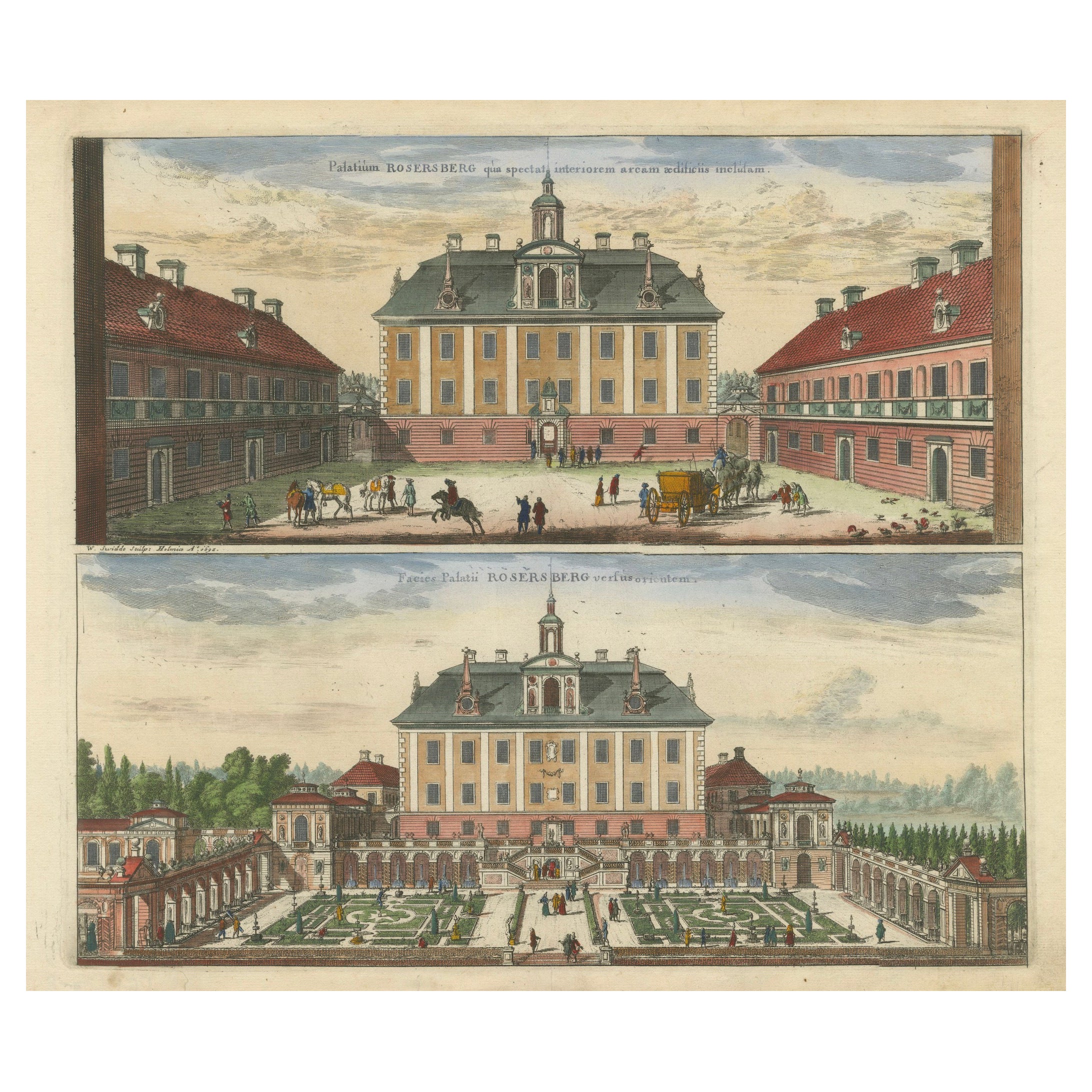
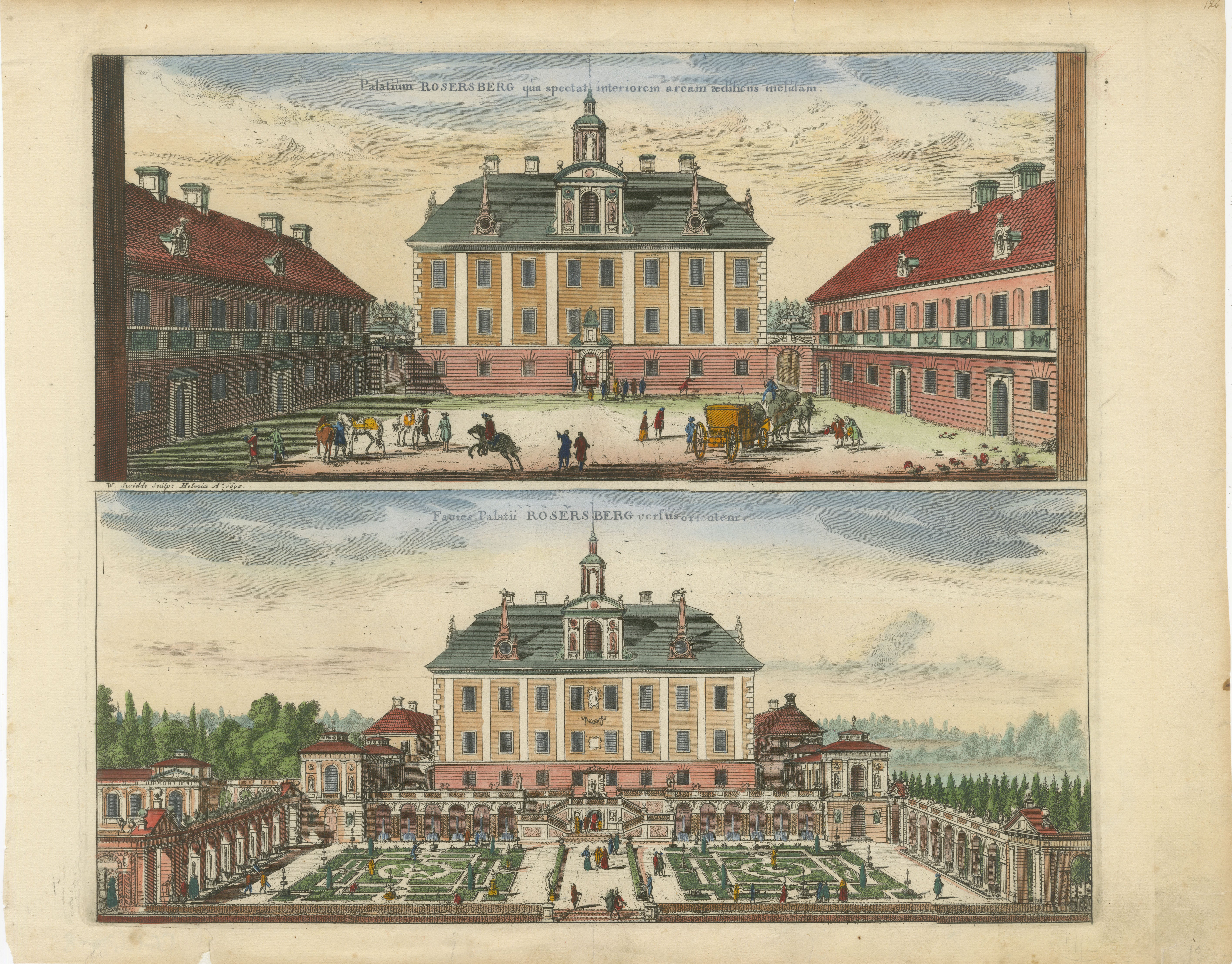
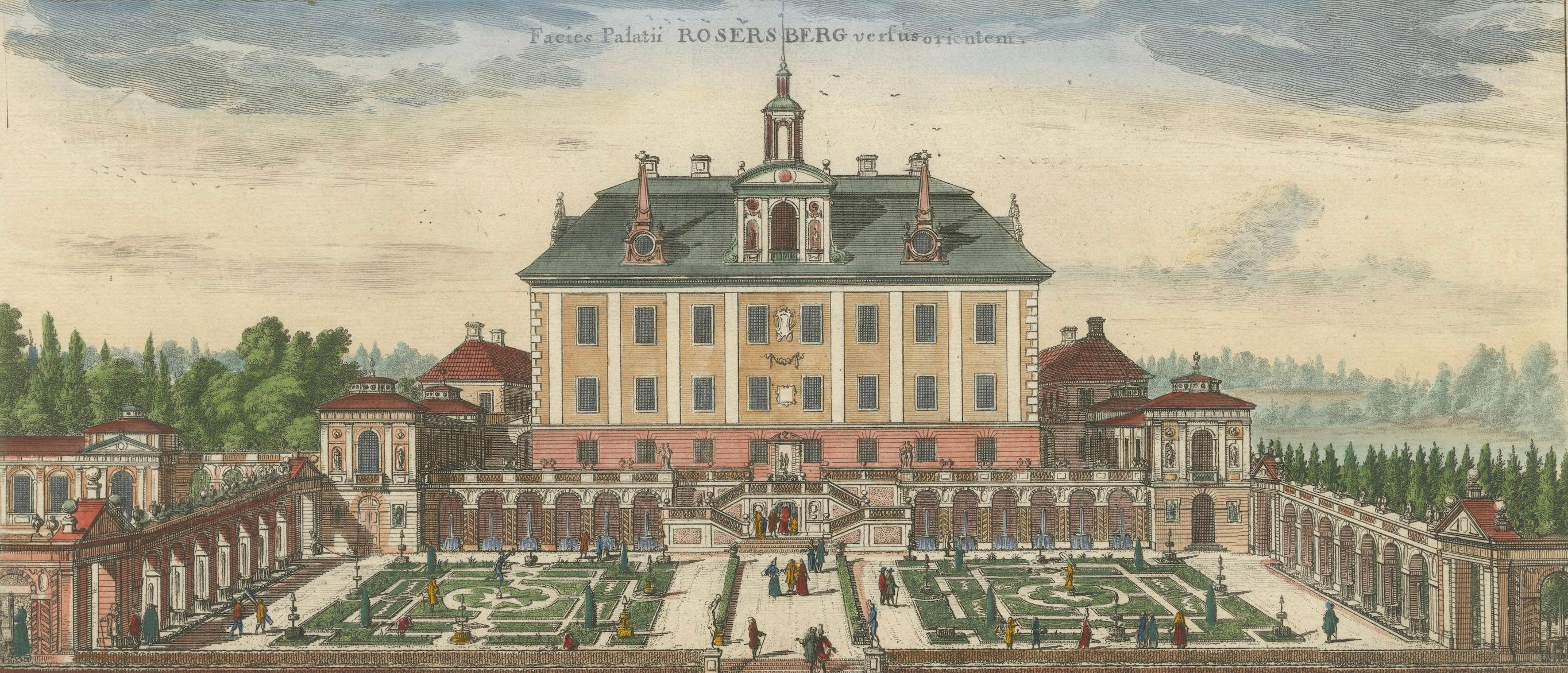
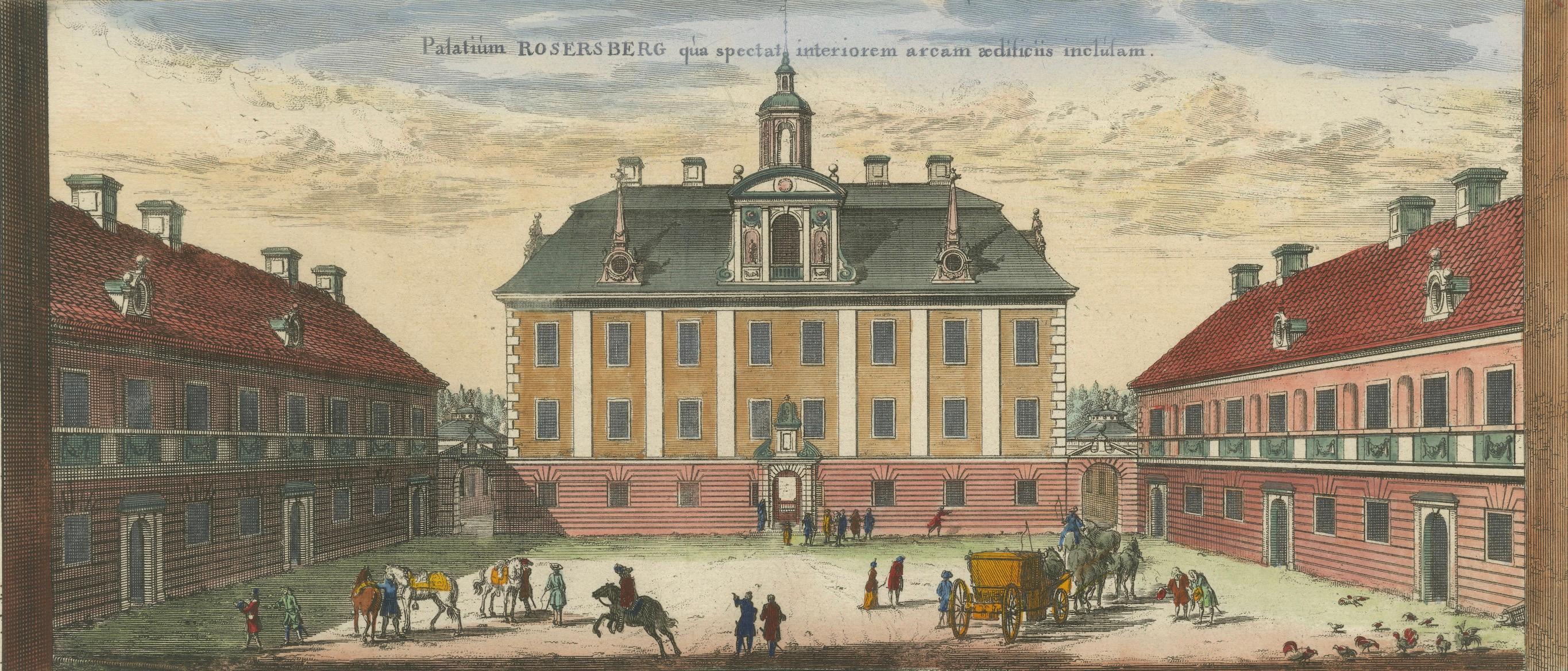
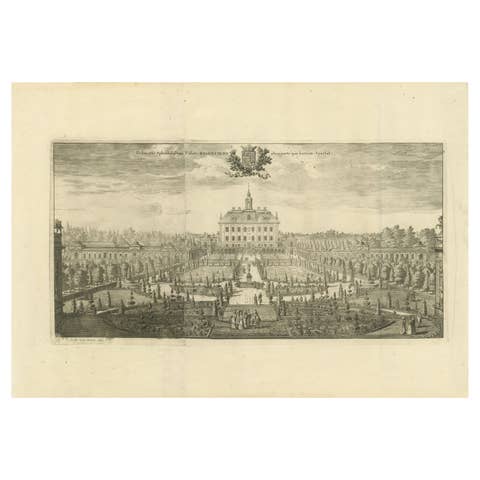
The featured antique engravings portray Rosersberg Palace in Sweden, captured from two distinct vantage points by the artist Willem Swidde, circa 1660-1697. These images are part of the seminal work "Suecia Antiqua et Hodierna," a collection that depicts the grandeur of Swedish landmarks during the age of Sweden as a great power.
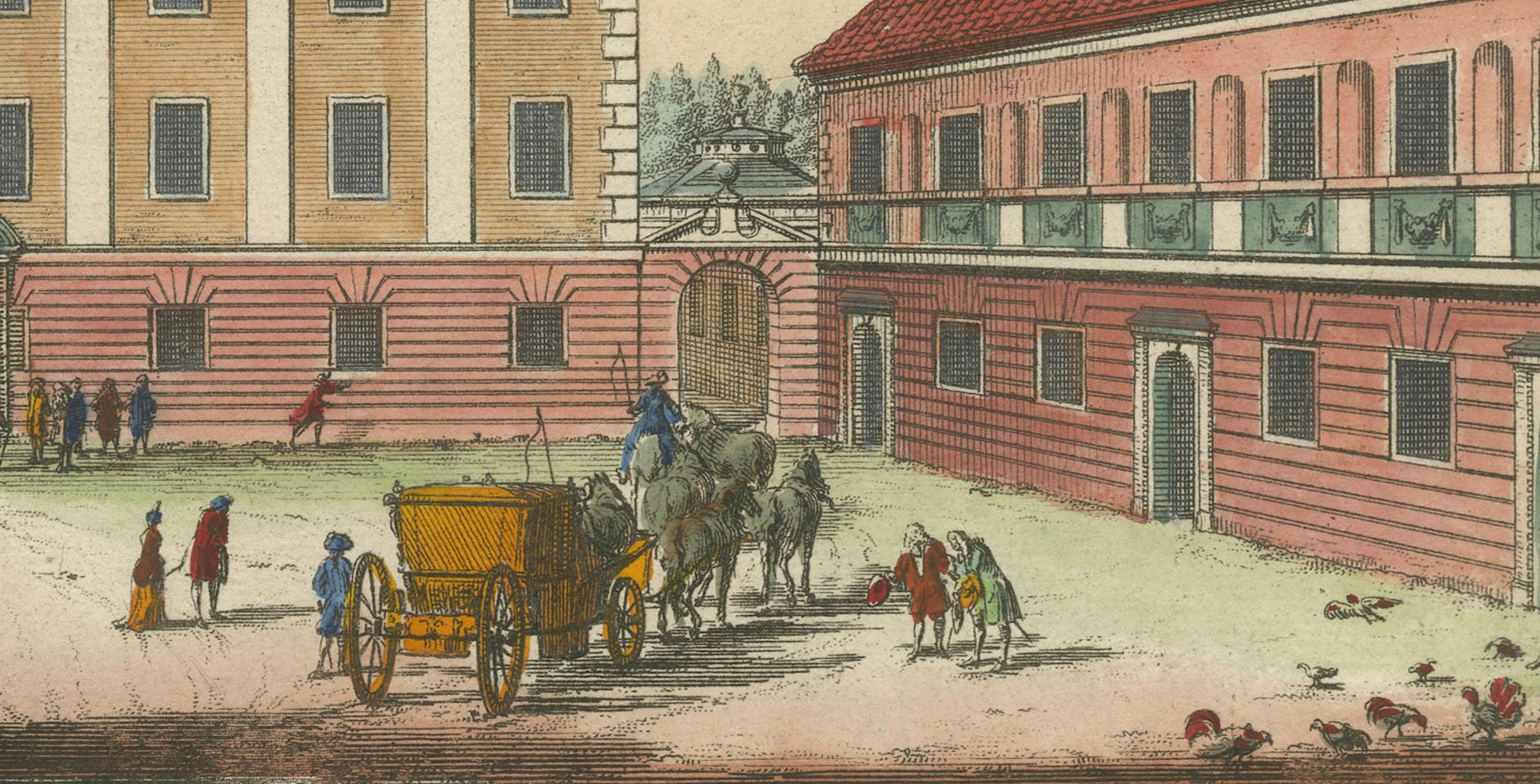
The upper image presents a view of Rosersberg Palace from the courtyard side, revealing the ornate architectural details and daily activities of the era. Figures on foot and in carriages move across the palace grounds, creating a vibrant scene set against the elegant backdrop of the estate's façade.
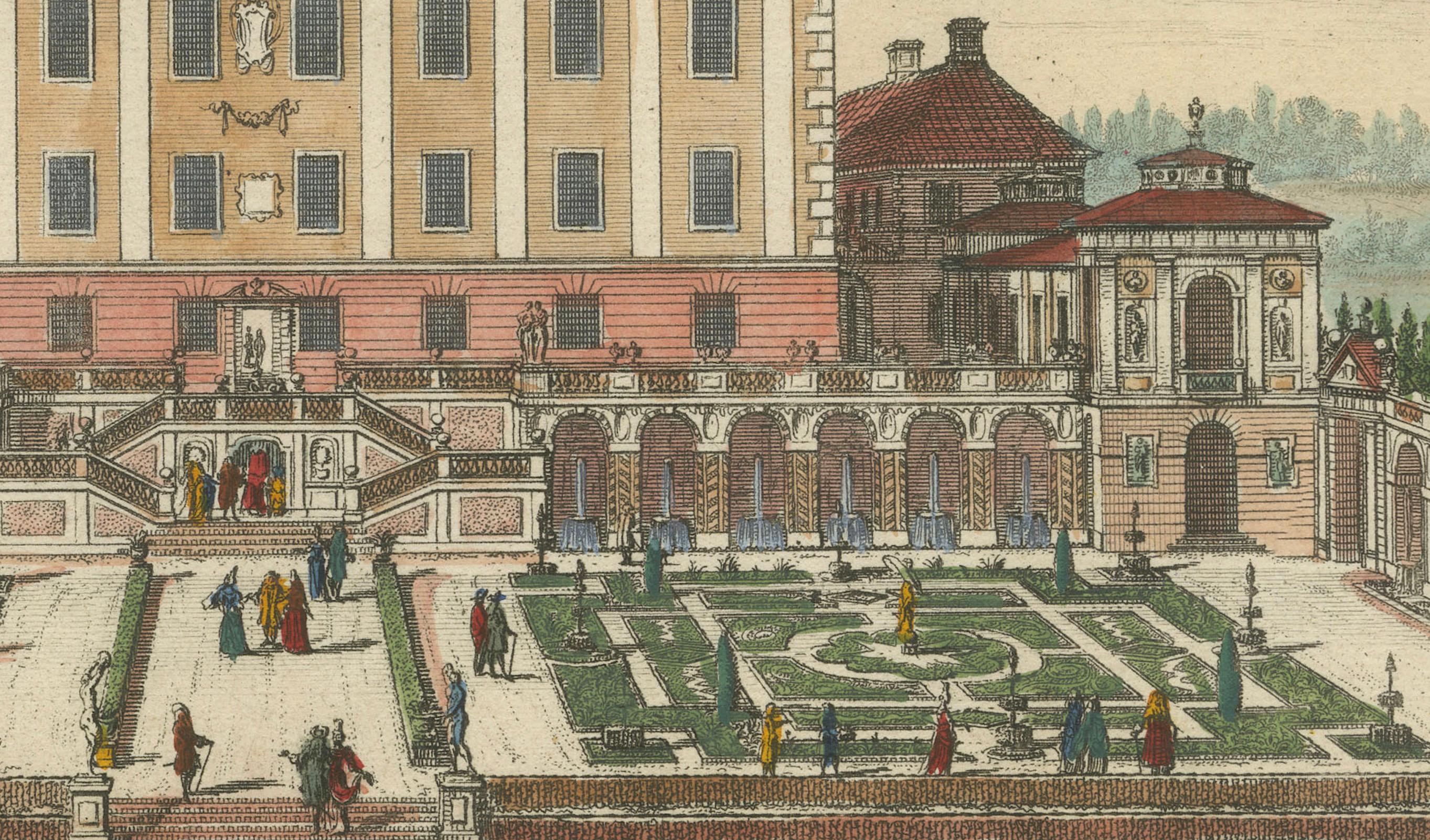
The lower image offers a perspective towards the eastern part of Rosersberg Palace, showcasing the palace's meticulously designed gardens and the symmetry of its formal layout. The engraving captures the grandeur of the baroque garden, with individuals strolling and enjoying the manicured landscape.
Created between 1661 and 1697, these engravings reflect the artistic and topographical interests of the period, as well as the skill of Swidde, who was a notable figure in the production of "Suecia Antiqua et Hodierna." These works were intended to celebrate and document the architectural achievements of Sweden, contributing to a national identity that was both regal and cultured.
Rosersberg Palace (Swedish: Rosersbergs slott) is one of the Royal Palaces of Sweden. Situated on the shores of Lake Mälaren, on the outskirts of Stockholm, it was built in the 1630s by the Oxenstierna family and became a royal palace in 1762, when the state gave it to Duke Karl (later Karl XIII), the younger brother of Gustav III of Sweden.
In the summer of 2008, Rosersberg Hotel and Conference opened a café and bed and breakfast.