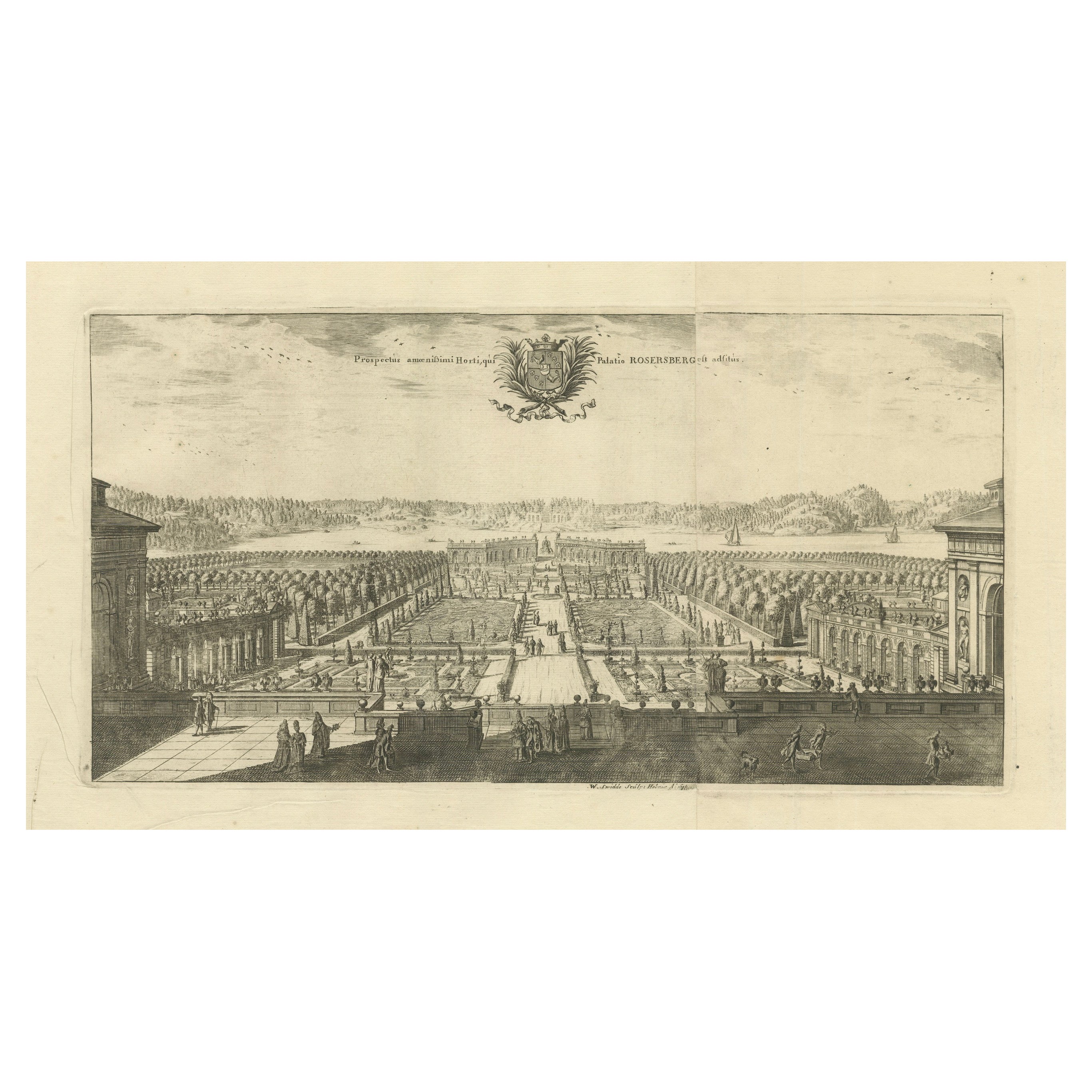
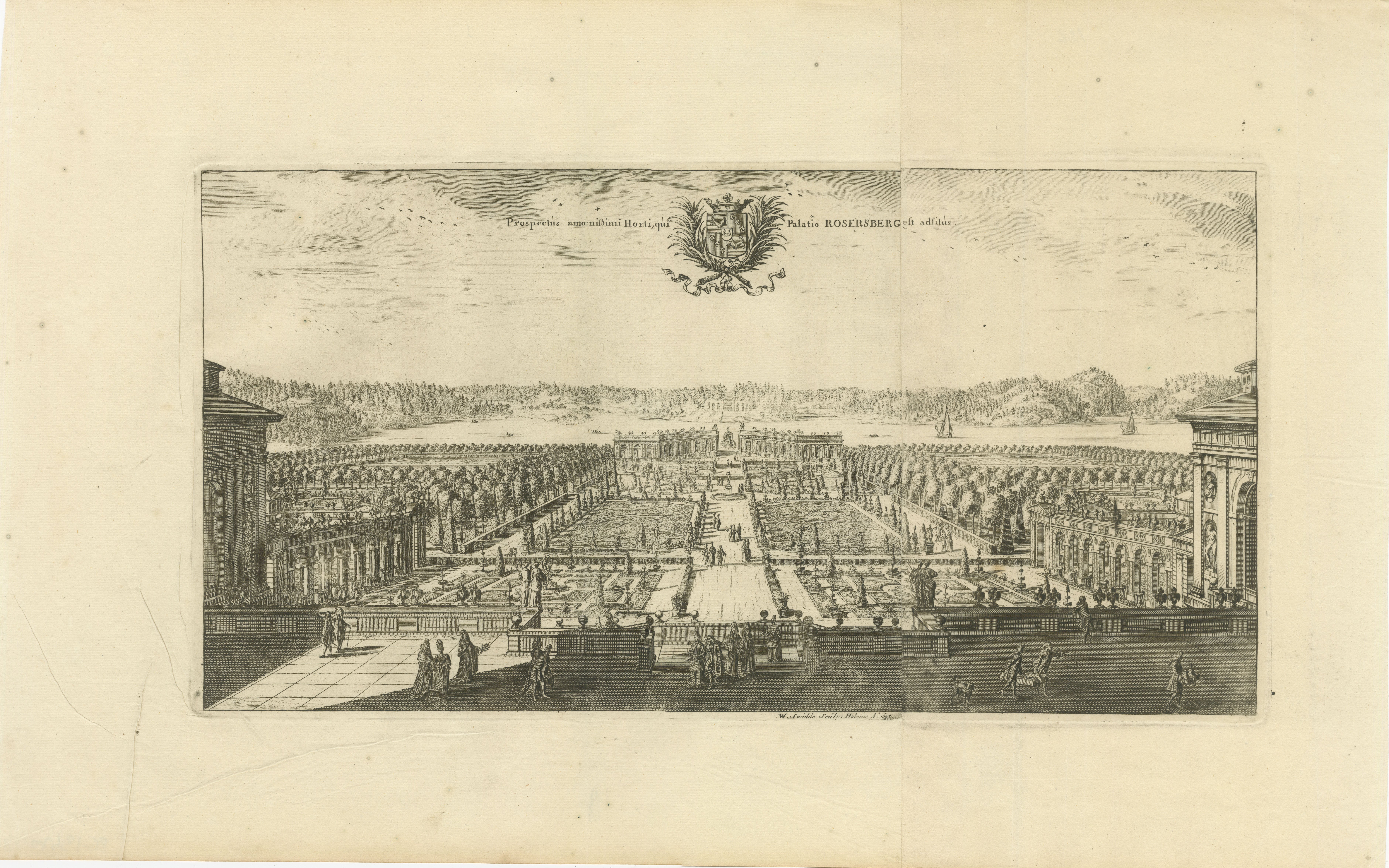
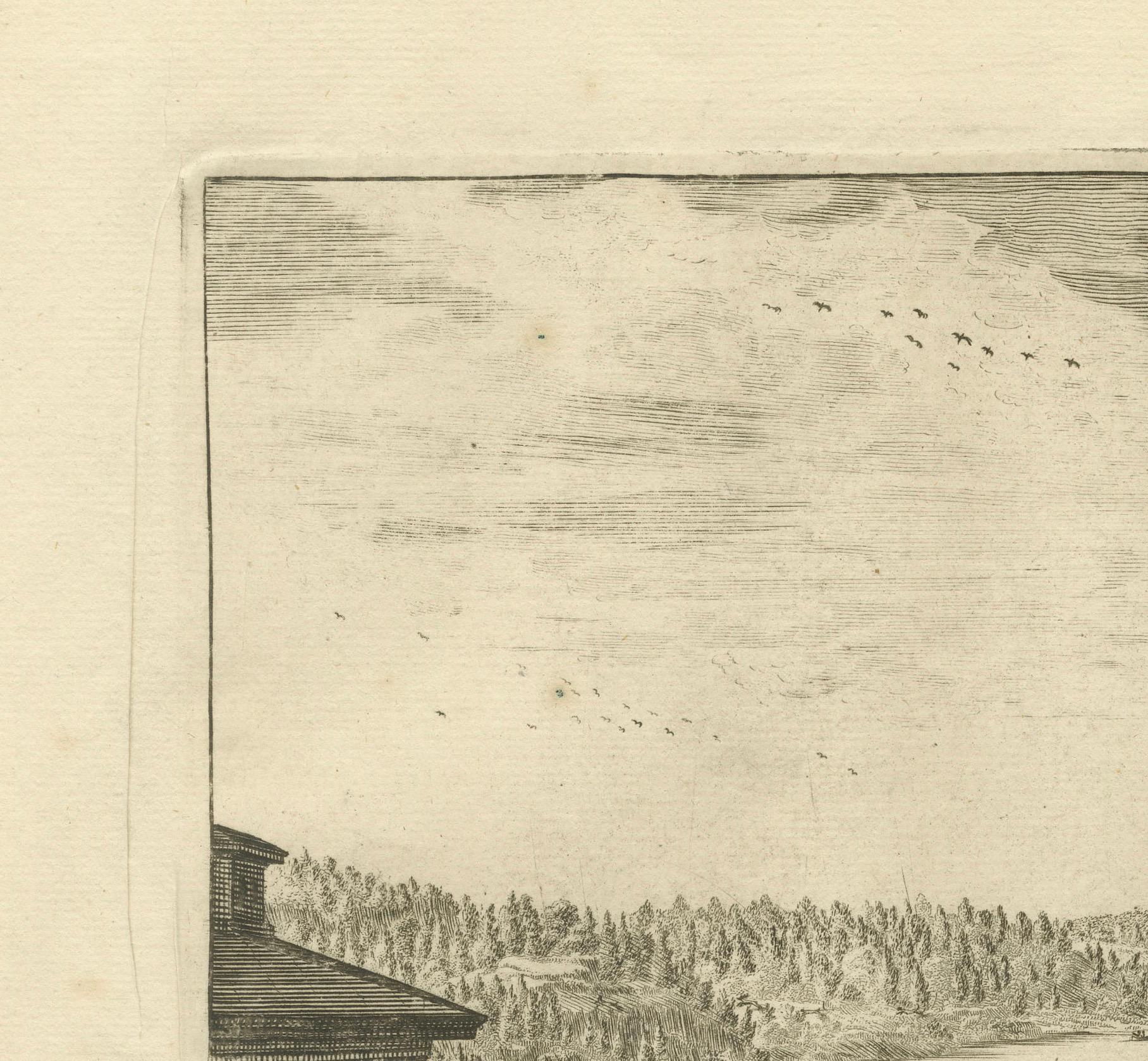
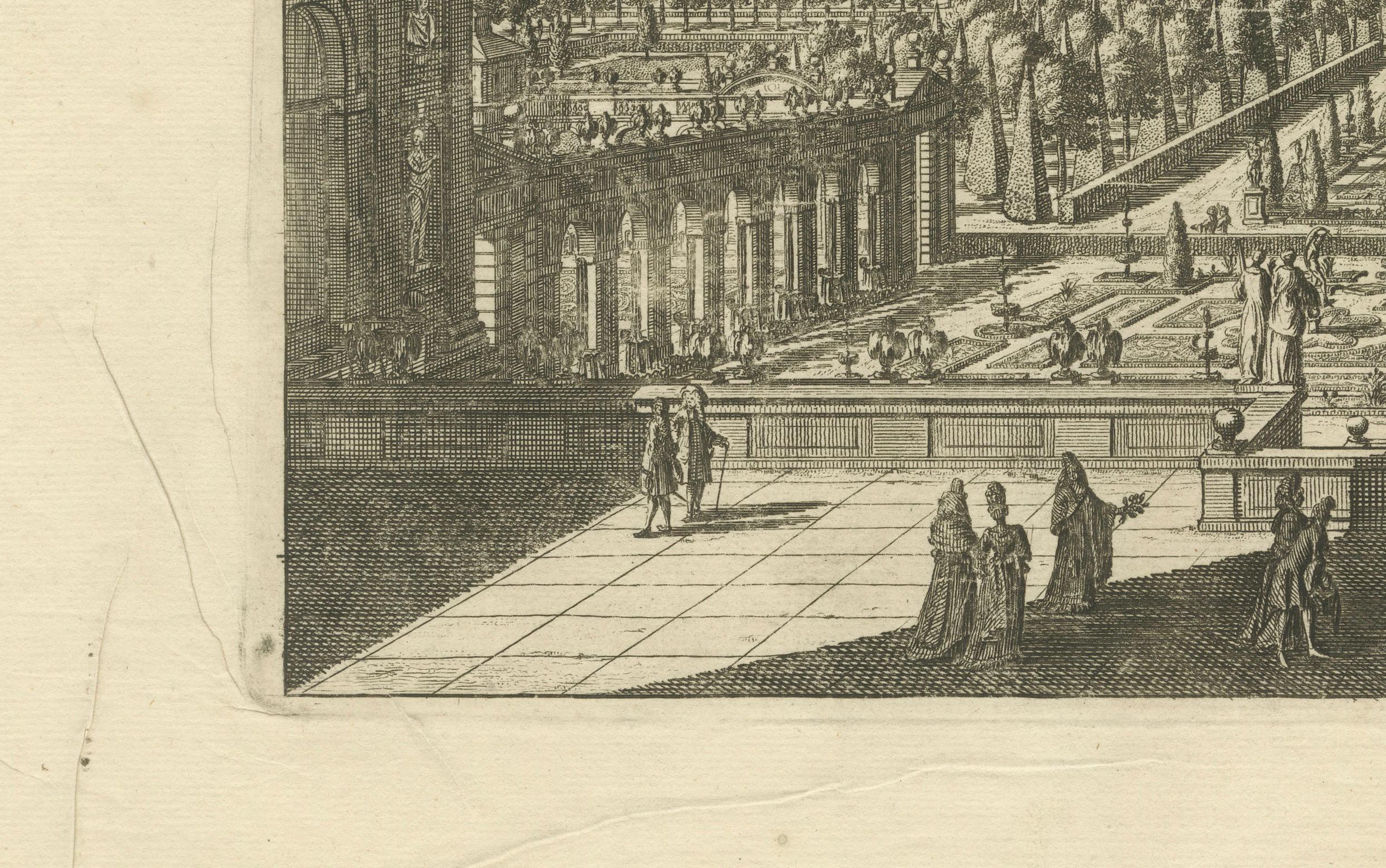
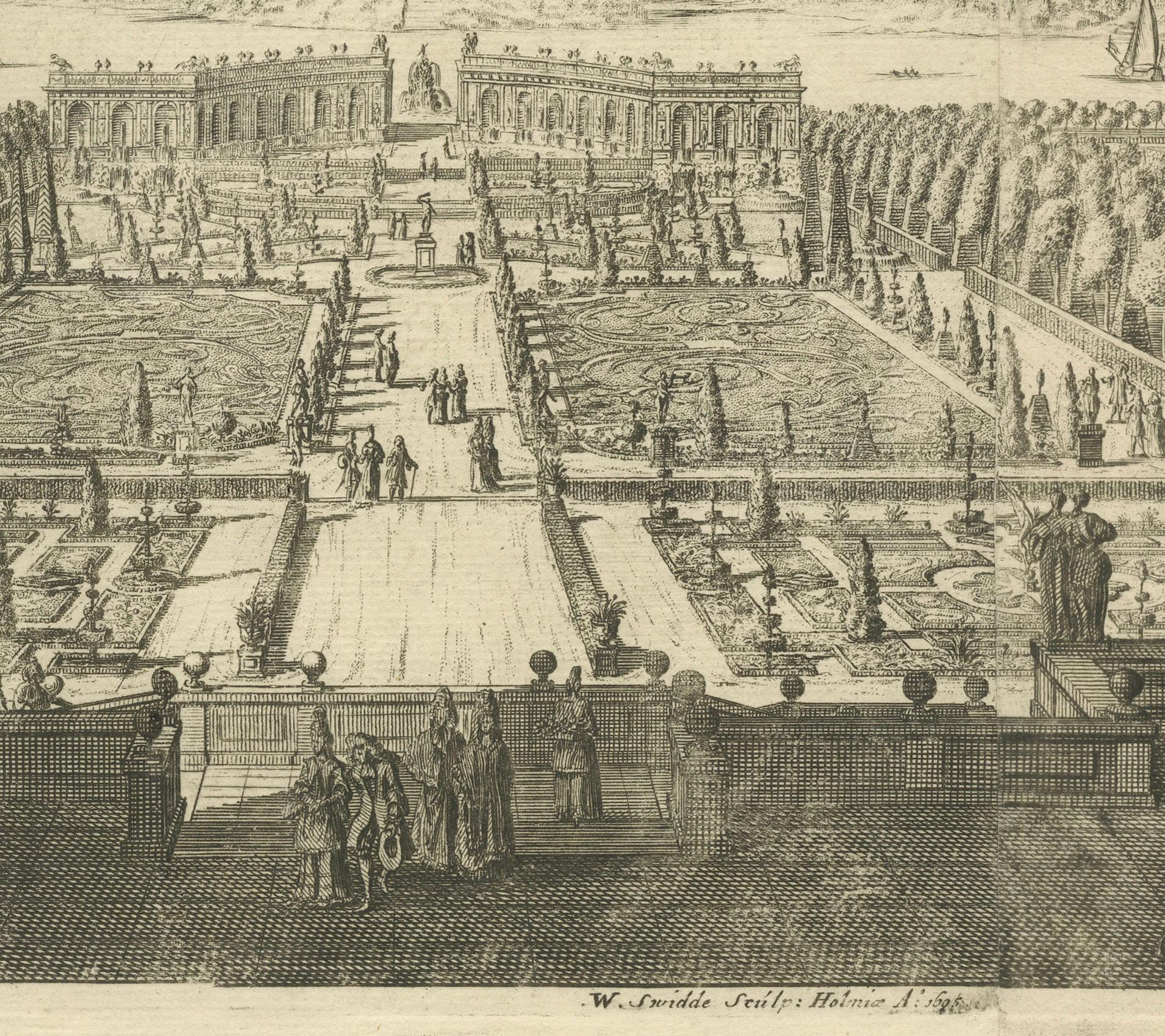
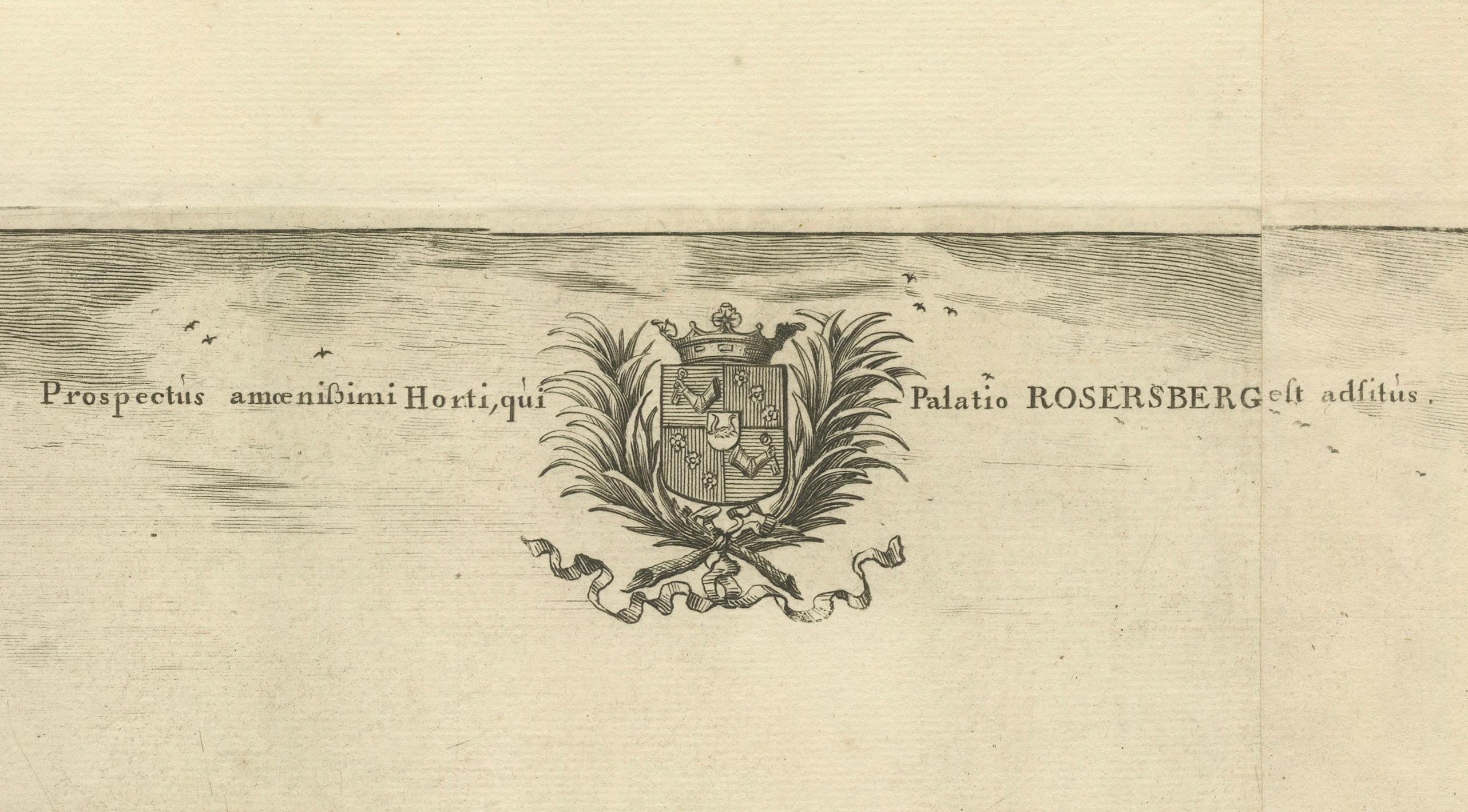
Rosersberg Palace and Gardens near Stockholm in the Baroque Splendor of 1695
€ 180
One of a kind: this is the sheet in the photographs. Ships from Langweer, the Netherlands.
Date
1695
Sheet size
33.3 × 53.5 cm (13.1 × 21.1 in)
Condition
Fair
Reference
Bg-13670-28
Condition
Good. Minor soiling. Very clean overall, especially considering its age. Two plates joined with the vertical line visible. A number of creases, mostly outside the image. Please study the images carefully.
About this sheet
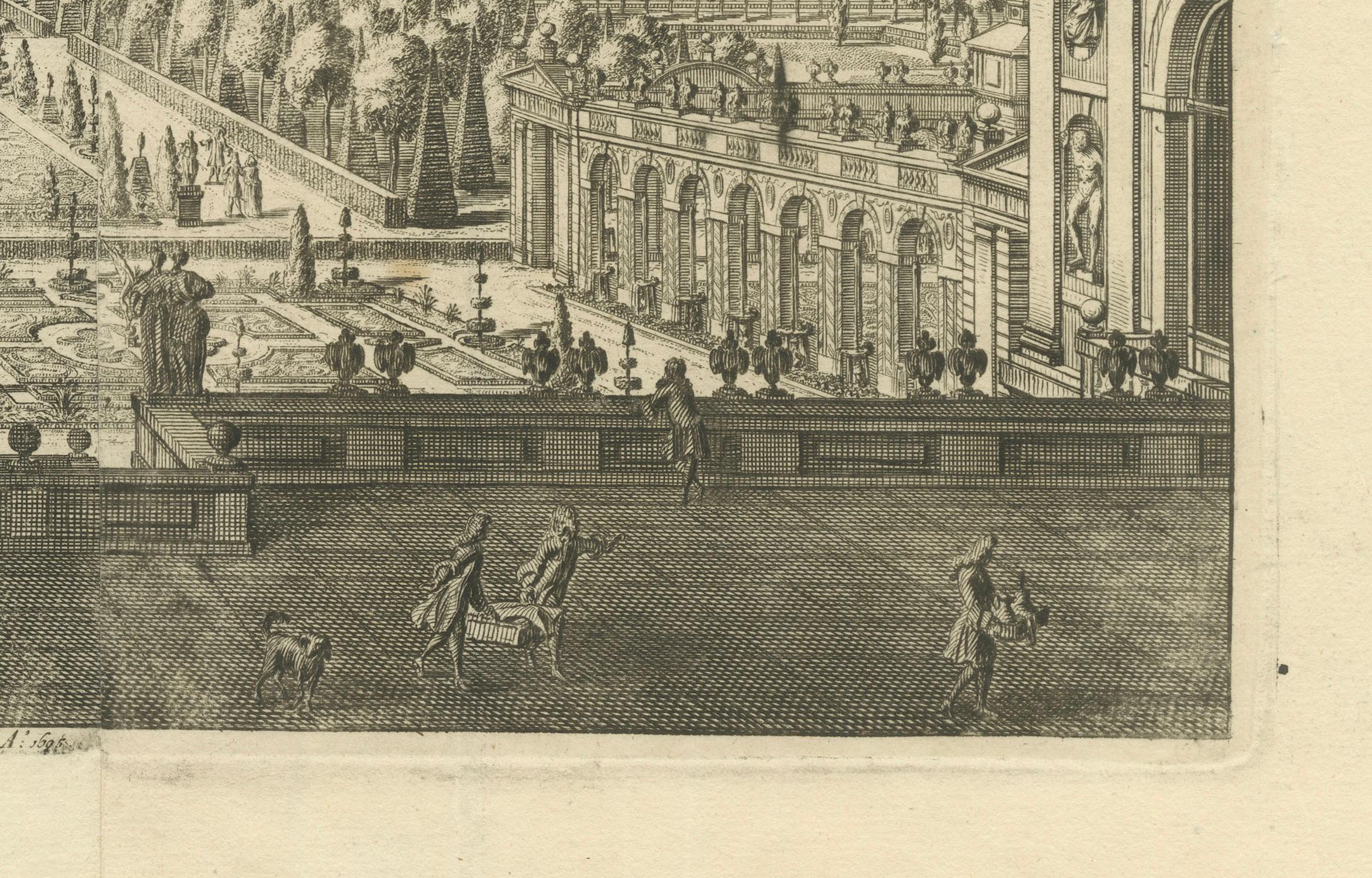
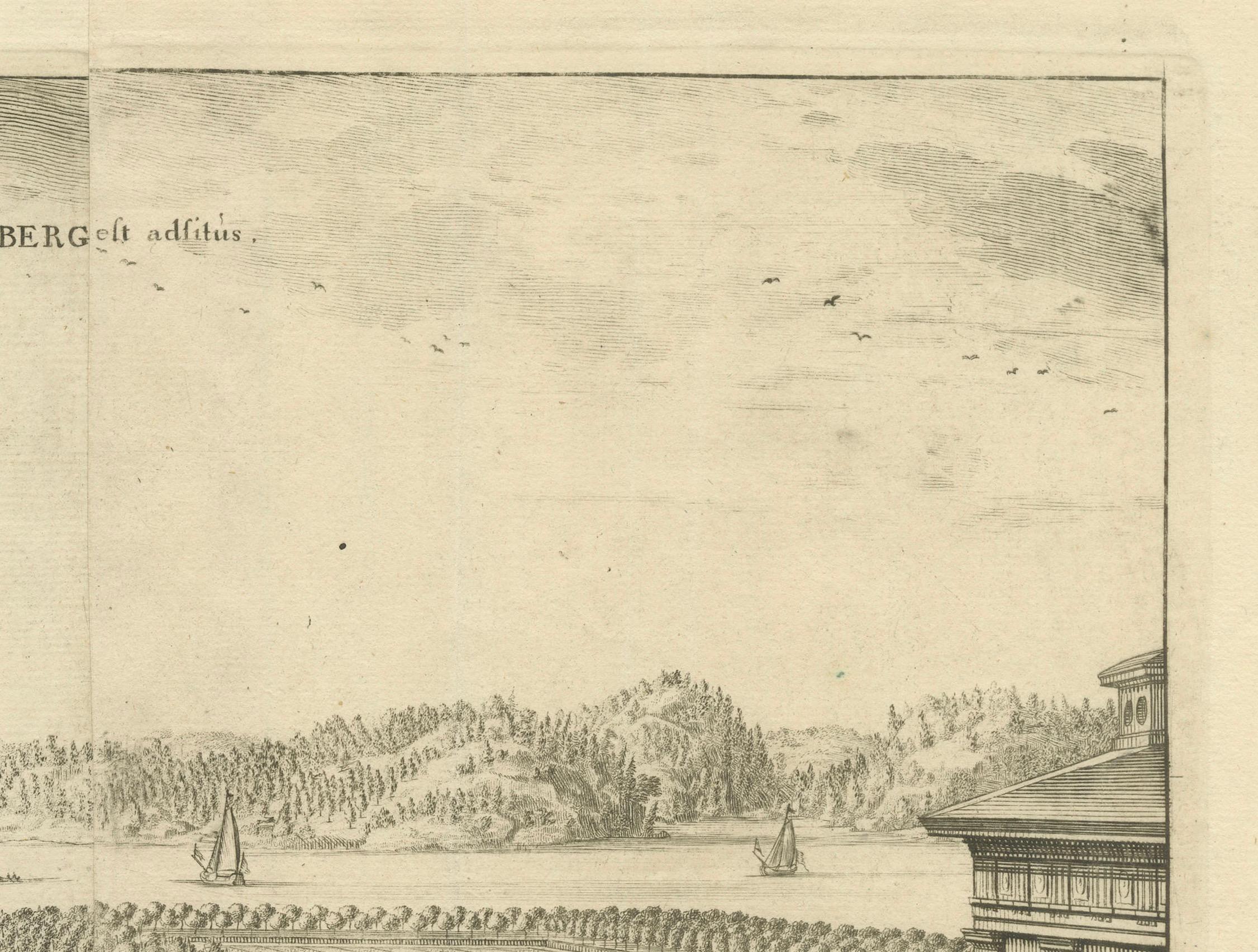
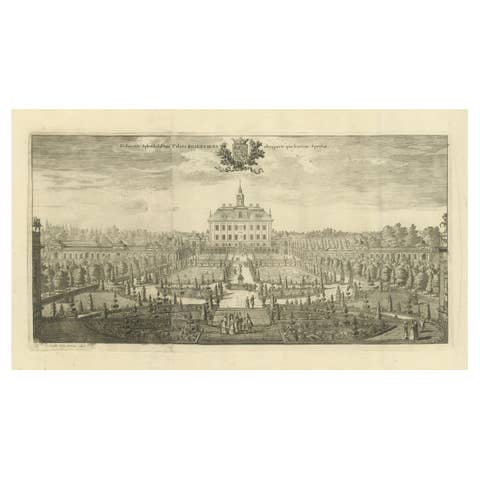
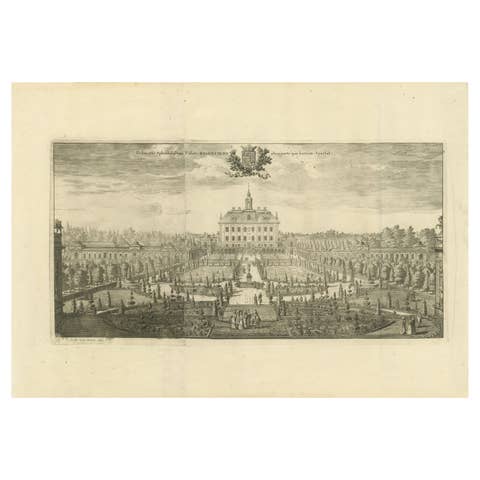
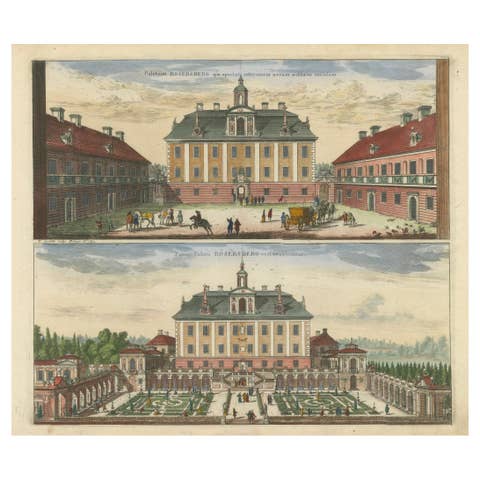
This is a historical etching from "Suecia Antiqua et Hodierna", which translates to "Ancient and Modern Sweden", a large work that includes a collection of engravings collected by Erik Dahlbergh during the late 17th century. This particular etching by Willem Swidde from 1695 showcases Rosersberg Palace and its formal gardens, offering a detailed representation of the palace's architecture and the structured layout of the garden, typical of the baroque style of the era.
Rosersberg Palace, located near Sigtuna and not far from Stockholm, Sweden, was built in the 1630s and has been a part of the Swedish royal heritage. The etching captures the grandeur of the palace at the time when Sweden was a significant European power, reflecting the ambition to document and glorify the nation's cultural and architectural achievements. The formal gardens, as seen in the etching, are meticulously laid out in a symmetrical pattern, which was a common feature in baroque landscape design.
The engraving provides a valuable historical insight into the appearance and surroundings of Rosersberg Palace during the time of its creation. The palace itself remains a well-preserved example of Swedish architecture from that period and is a testament to the ambitions of the Swedish Empire during its era of great power.
More about the engraver:
Willem Swidde (also spelled Swidde or Swiddes) was a Dutch draughtsman and engraver known for his work in Sweden during the late 17th century. His exact birth date is not well-documented, but it is generally accepted that he was active during the latter half of the 1600s until his death in 1697.
Swidde is most renowned for his contributions to Erik Dahlbergh's "Suecia Antiqua et Hodierna," a grand topographical work intended to glorify Sweden, which was a major European power at the time. He was one of the primary engravers for this project, creating a significant portion of the plates.
Swidde moved to Stockholm around 1688. His work for the "Suecia Antiqua et Hodierna" consisted of illustrations based on drawings by Dahlbergh, which he sometimes corrected and improved in collaboration with Dahlbergh. Despite the Swedish focus of his work, Swidde's style was influenced by his Dutch origins and the broader European baroque trends of the time.
His life in Sweden was predominantly dedicated to his work on "Suecia Antiqua et Hodierna." Unfortunately, details about his personal life, training, and early career in the Netherlands are scarce. Swidde's death in Stockholm in 1697 marked the end of a career that had a lasting impact on the visual documentation of Sweden's historical landscapes and architecture.