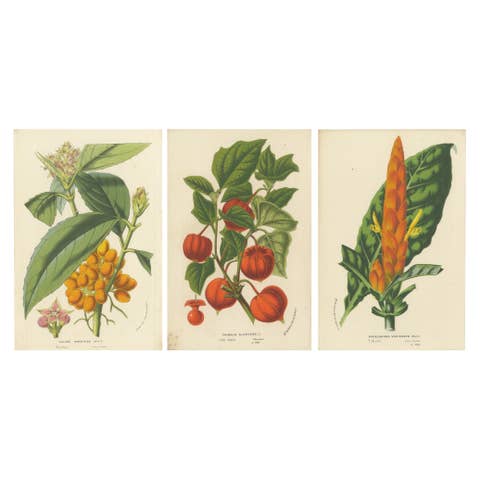
Fiery Elegance: The Fire Lily in Vintage Botanical Art, circa 1875
€ 120
One of a kind: this is the sheet in the photographs. Ships from Langweer, the Netherlands.
Date
1875
Sheet size
25 × 16.3 cm (9.8 × 6.4 in)
Reference
BG-13761-28
Condition
Very good, given age. General age-related toning and/or occasional minor defects from handling. Colors are vivid but with some browning mostly above the flower. Please study scan carefully.
About this sheet
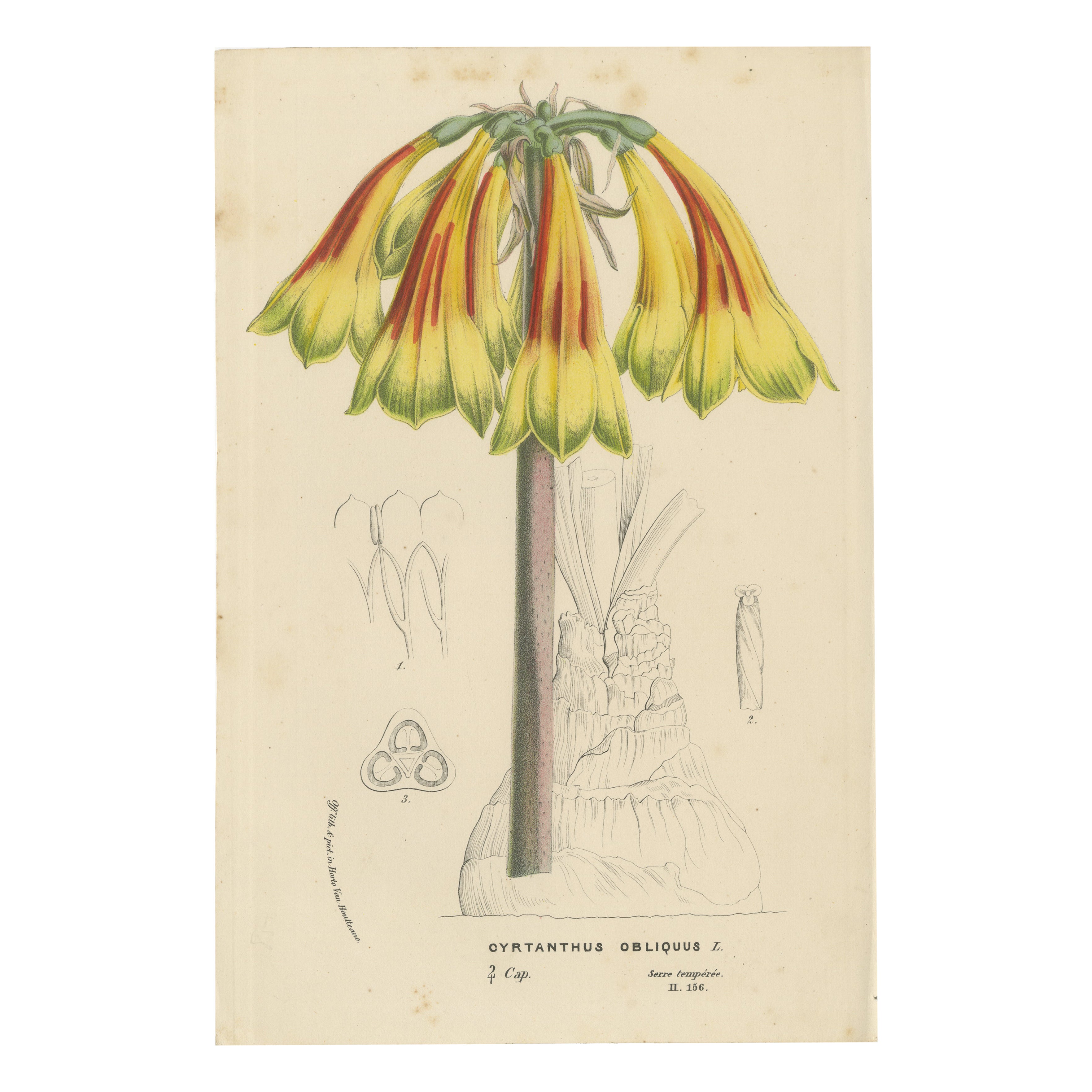
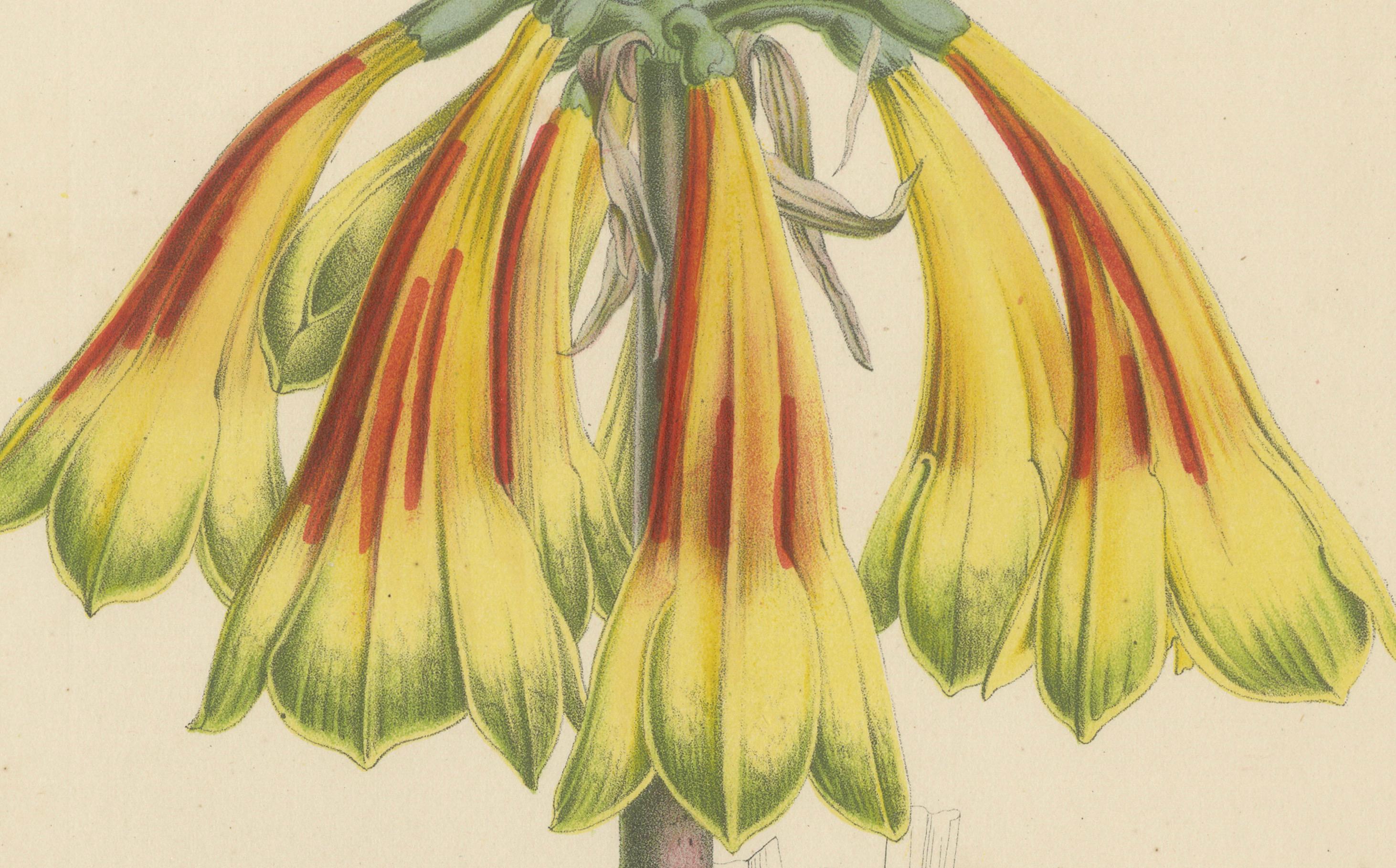
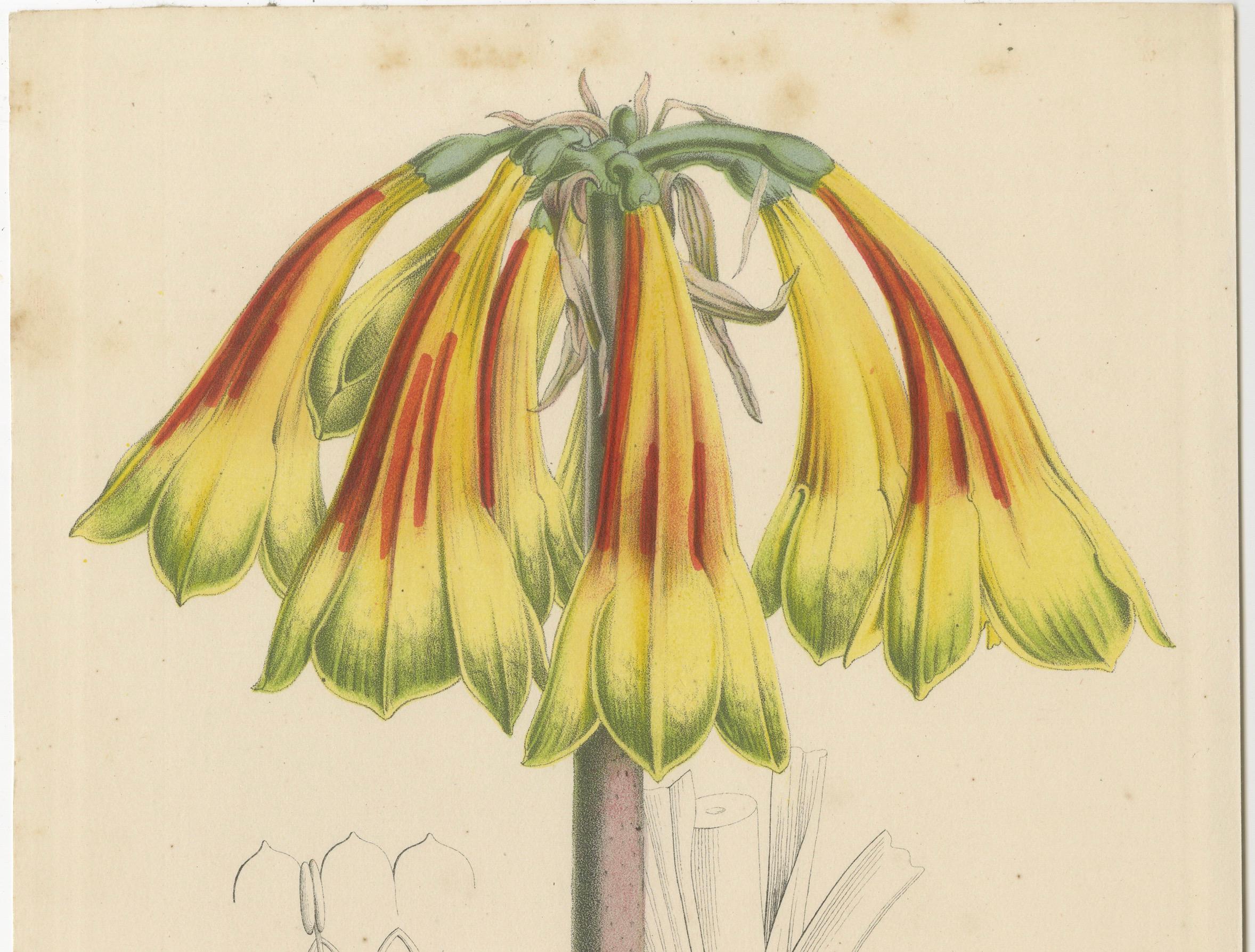
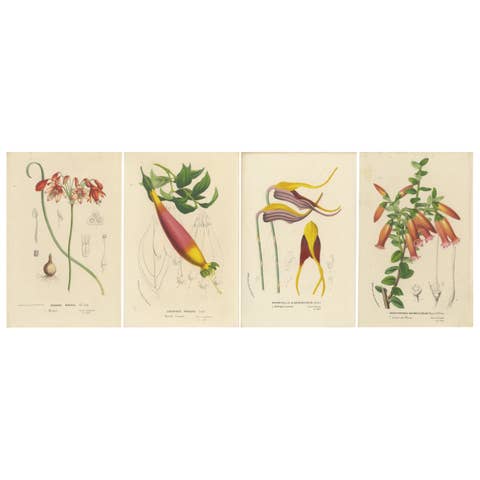
The plant illustrated in the print is Cyrtanthus obliquus, commonly known as the Fire Lily or Oblique Cyrtanthus.
Description of Cyrtanthus obliquus: - Botanical Characteristics: This plant is noted for its striking, tubular flowers that hang in a downward fashion from the top of a long, upright stalk. The flowers are predominantly yellow with vibrant red streaks, giving them a fiery appearance. - Flowering and Growth: Cyrtanthus obliquus is part of the Amaryllidaceae family, known for its resilient and long-lasting blooms. It typically flowers in a cluster from a bulbous base, which is adapted to survive in varying climates, often blooming after fire or rain.
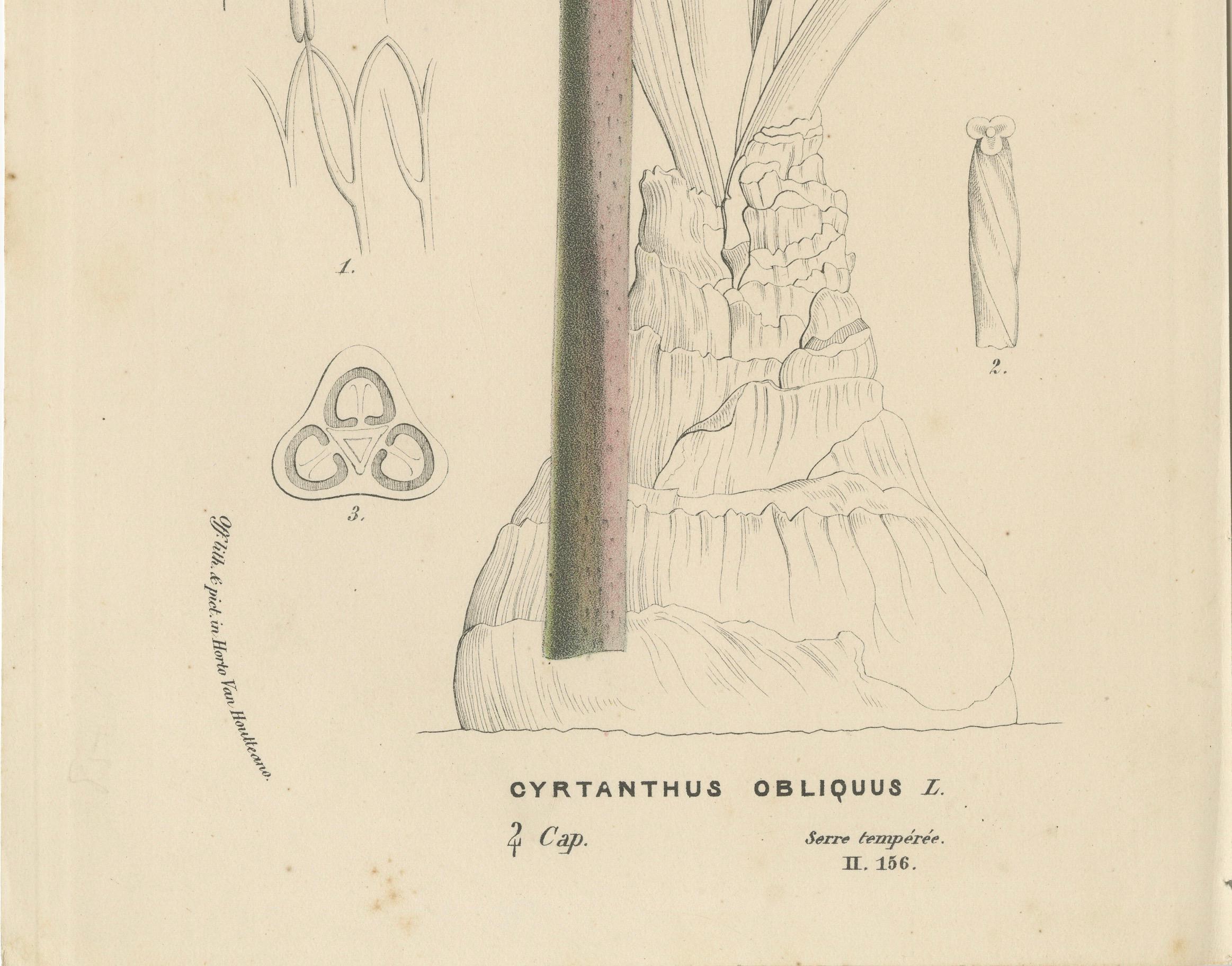
Text on the Print: - Original Text: "Cyrtanthus obliquus L. – ⅘ Cap. Serre tempérée. II.156." - Translation: Cyrtanthus obliquus Linnaeus – Approximately 4/5 from the Cape, suitable for temperate greenhouses, volume II, plate 156.
Significance: Cyrtanthus obliquus is highly valued for its distinctive and vivid flowers, which make it a popular choice for ornamental gardening. Its ability to bloom under adverse conditions, such as post-burn environments, has earned it the nickname "Fire Lily". This resilience, coupled with its dramatic appearance, makes it a fascinating subject for botanical studies and a beloved addition to gardens.
Botanical Illustration Insights: This print exemplifies the detailed and accurate botanical art typical of the 19th-century European fascination with exotic plants. The inclusion of detailed botanical parts in the print—such as cross-sections of the flower and the bulb—serves both educational purposes and aids in plant identification and cultivation.
This specific print, with its meticulous detailing and vibrant coloring, highlights the advanced techniques used in chromolithography, allowing for precise color replication essential for accurate botanical illustrations.