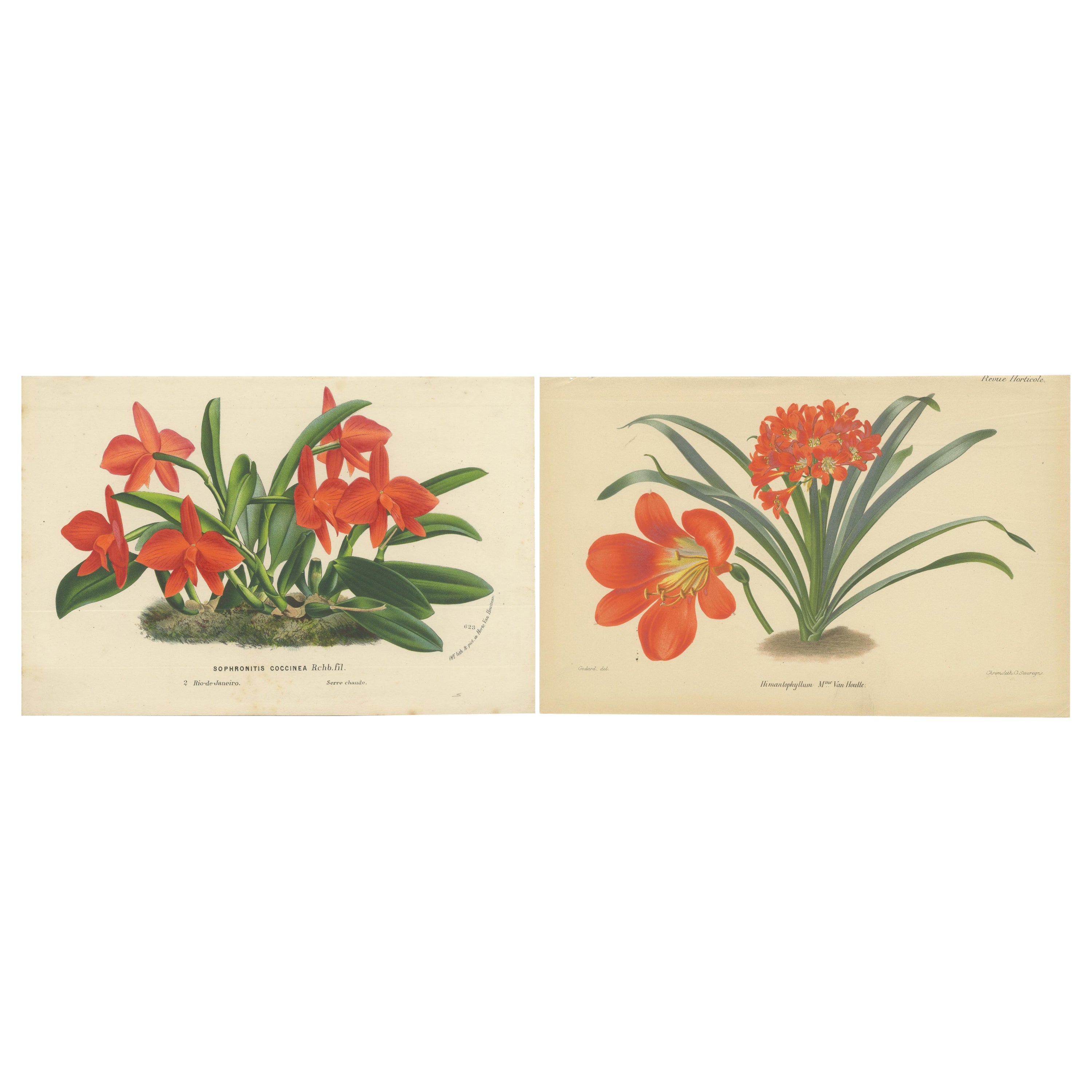
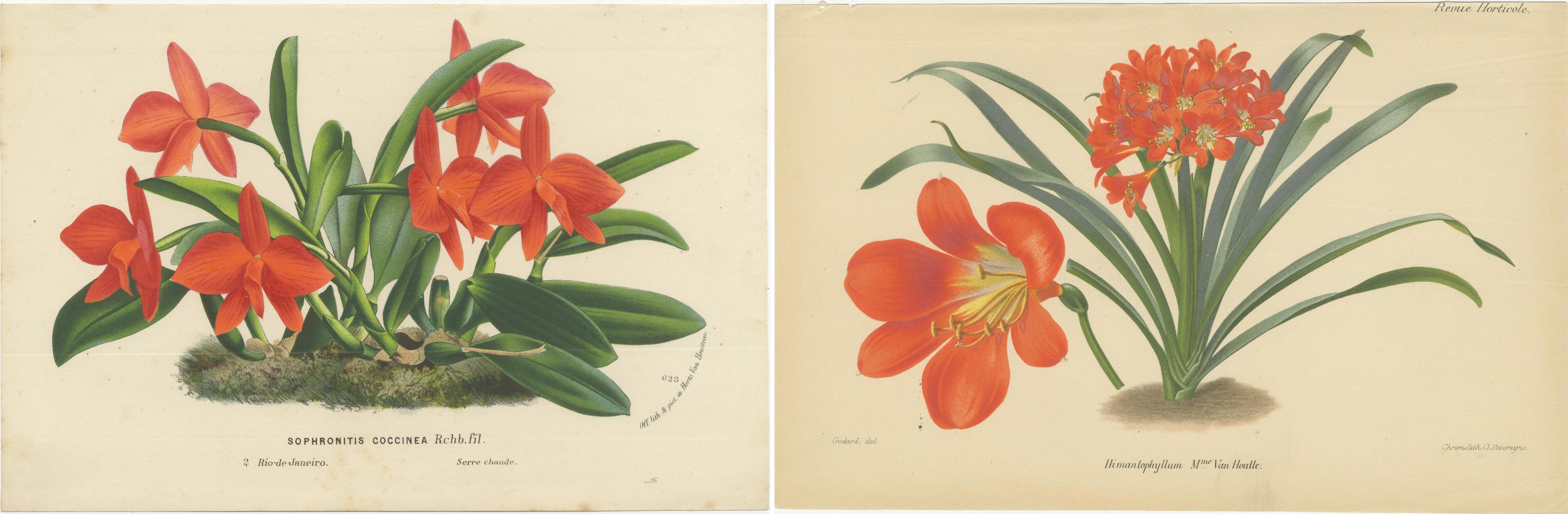
Vibrant Orchid and Clivia: A Botanical Duo from Van Houtte's Collection, c.1875
€ 240
One of a kind: this is the sheet in the photographs. Ships from Langweer, the Netherlands.
Date
1875
Sheet size
16.3 × 25 cm (6.4 × 9.8 in)
Condition
Good
Reference
BG-13761-10 and BG-13761-11
Condition
given age. General age-related toning and/or occasional minor defects from handling. Colors are vivid, lower border cut short. Please study scan carefully.
About this sheet
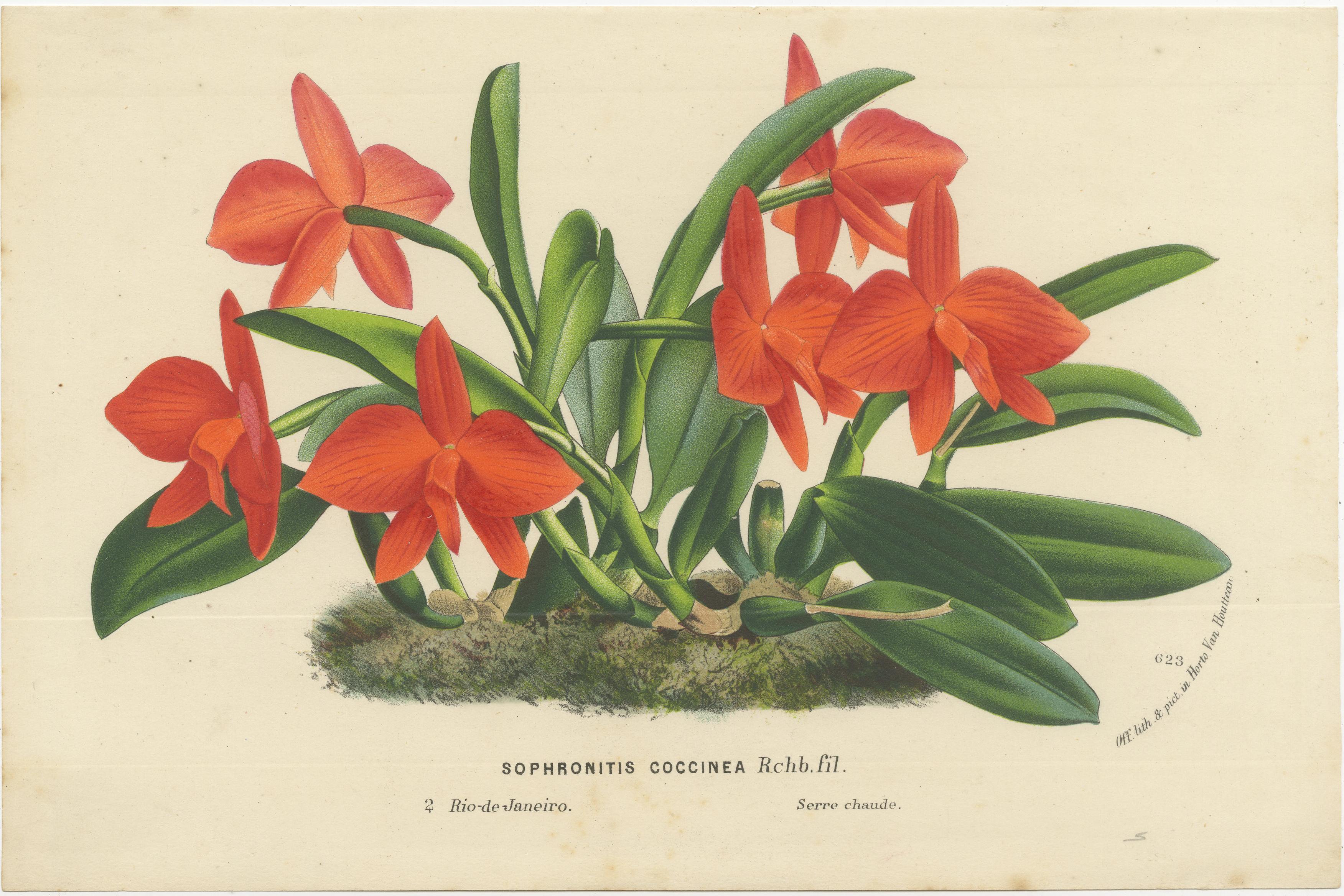
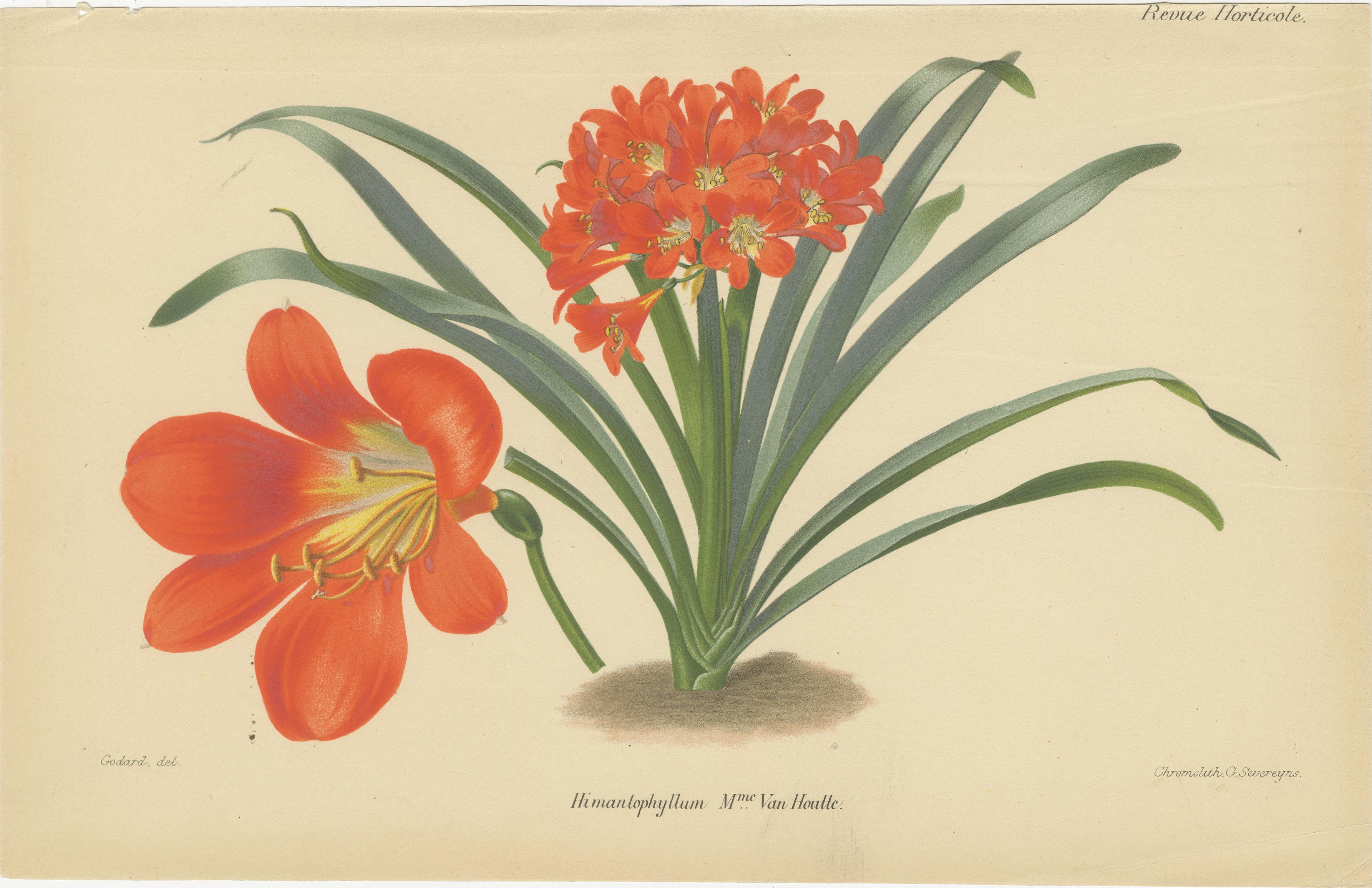
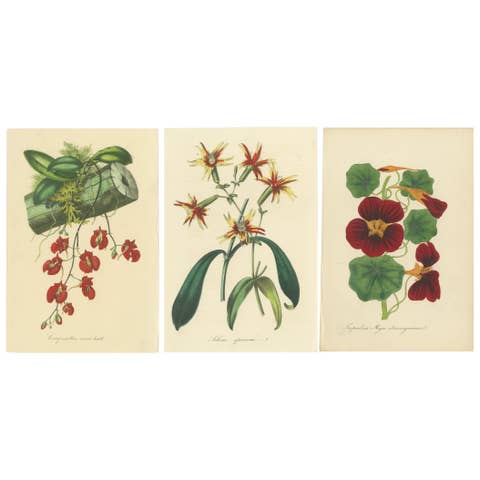
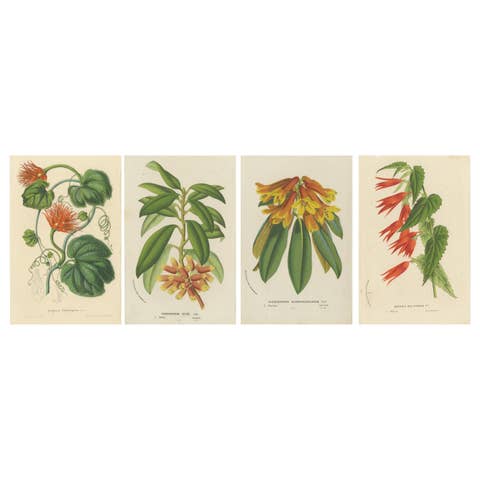
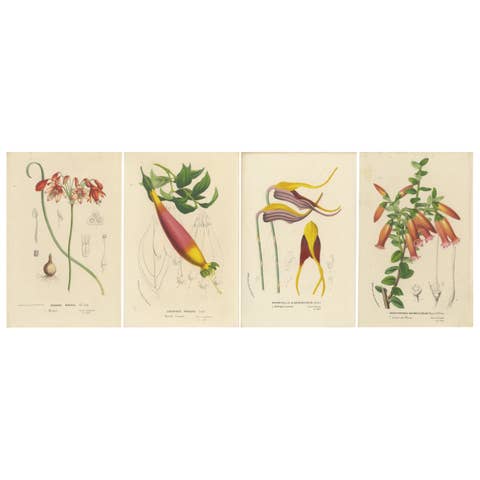
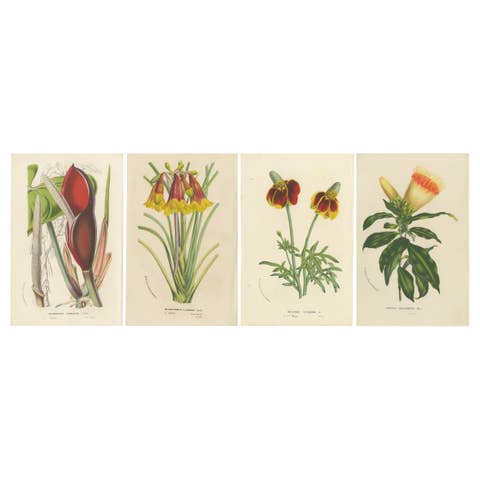
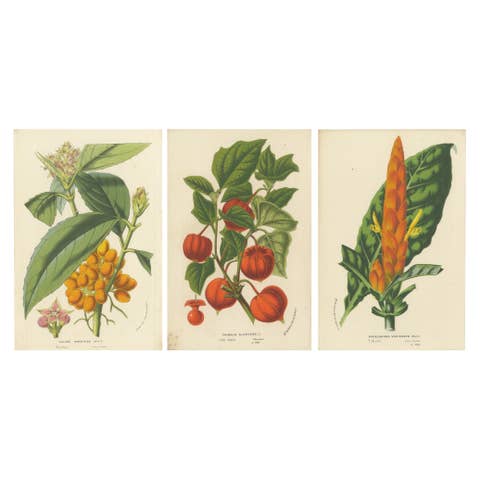
The two prints are from Louis Van Houtte's "Flore des Serres et des Jardins de l'Europe" and illustrate two different species:
1. Sophronitis coccinea: - Latin Name: Sophronitis coccinea - Common English Name: Scarlet Sophronitis - Description: This print shows the Scarlet Sophronitis, a vibrant, small-flowered orchid native to Brazil, particularly noted for its striking red blooms. It thrives in warm, humid conditions and is often grown in greenhouses. The plant is celebrated for its bright color and delicate structure, making it a popular choice among orchid enthusiasts.
2. Himanatophyllum miniatum (mislabelled in the print as "Himanatophyllum"): - Latin Name: Clivia miniata (correct taxonomic name; Himanatophyllum is an outdated genus name) - Common English Name: Bush Lily - Description: This print features the Bush Lily, a member of the Amaryllidaceae family, native to South Africa. Known for its robust, dark green leaves and bright orange-red flowers, it is a favorite in temperate to subtropical gardens. The Bush Lily is appreciated for its ability to flower under low light conditions and its striking appearance when in bloom.
Special Attributes: - Scarlet Sophronitis: Known for its exceptional beauty and rarity in the wild, contributing to its status as a highly prized specimen among orchid collectors. - Bush Lily (Clivia miniata): It is renowned for its tolerance to shade and its vibrant floral display, which makes it a valued ornamental plant both indoors and outdoors.
These plants were highlighted in Van Houtte's work due to their exotic appeal and the challenge they represented for horticulturists of the time, aiming to cultivate such foreign species in European climates. The precision of the chromolithographic process used for these prints allowed for detailed and vivid representations, capturing the natural beauty of these plants and contributing to their desirability among 19th-century botanical enthusiasts and gardeners.
The technique used for the botanical print is chromolithography. This method was a revolutionary form of color printing from the 19th century that allowed for vibrant, multi-color illustrations. Chromolithography involves using multiple lithographic stones, each inked with a different color, to produce the final print. Each color requires a separate stone, and the meticulous alignment of these stones was crucial for achieving the detailed and vivid results characteristic of Louis Van Houtte's botanical illustrations. This technique allowed for high-quality, artistically appealing reproductions of original botanical artwork, making it highly popular for the illustration of prestigious works like *Flore des Serres et des Jardins de l'Europe*.