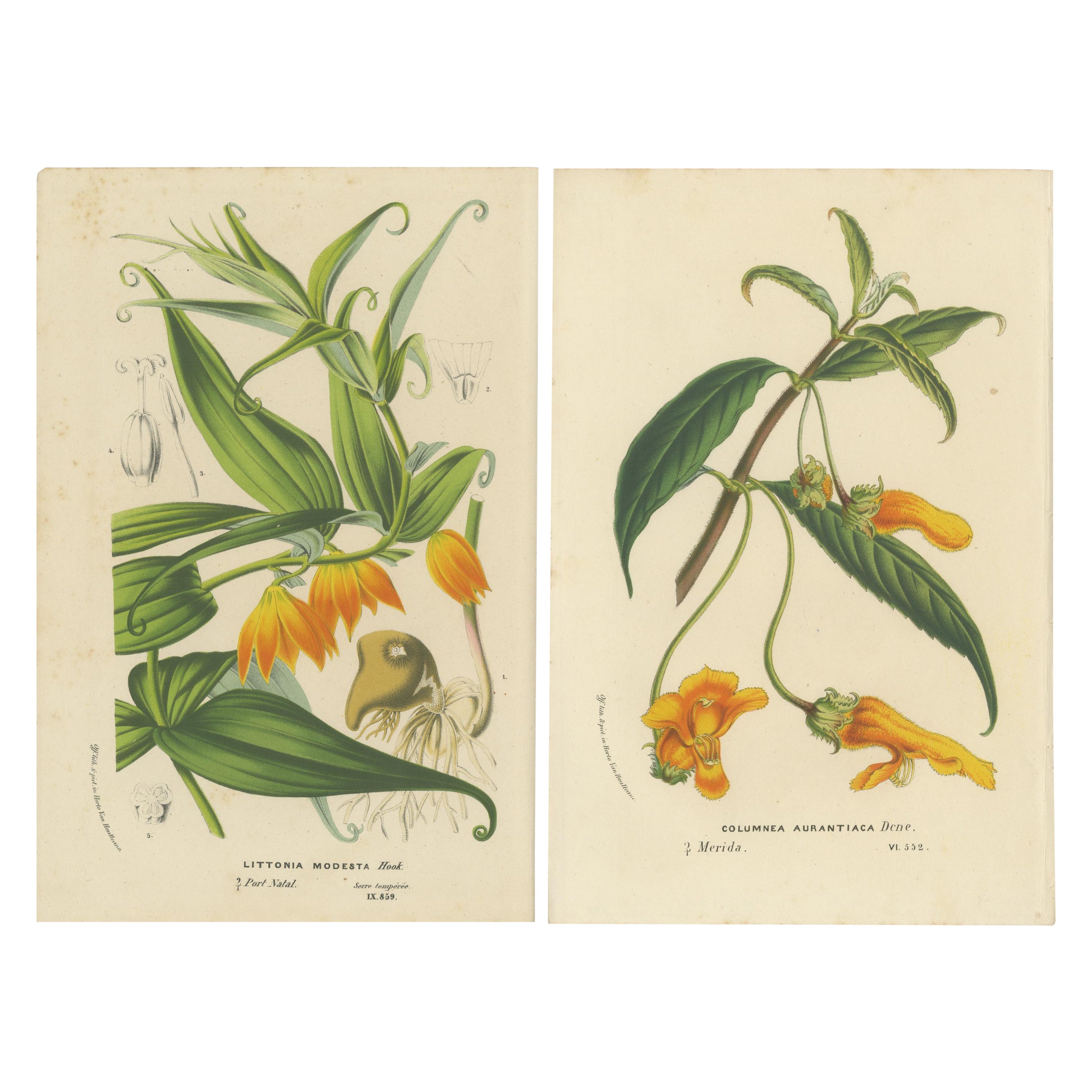
Exquisite Flora: Natal Lily and Golden Trumpet Vine in Artistic Display, c.1855
€ 240
One of a kind: this is the sheet in the photographs. Ships from Langweer, the Netherlands.
Date
1855
Sheet size
24.5 × 16.3 cm (9.6 × 6.4 in)
Condition
Good
Reference
BG-13761-25 BG-13761-26
Condition
given age. General age-related toning and/or occasional minor defects from handling. One of the two prints has a bit more browning or foxing. Please study scan carefully.
About this sheet
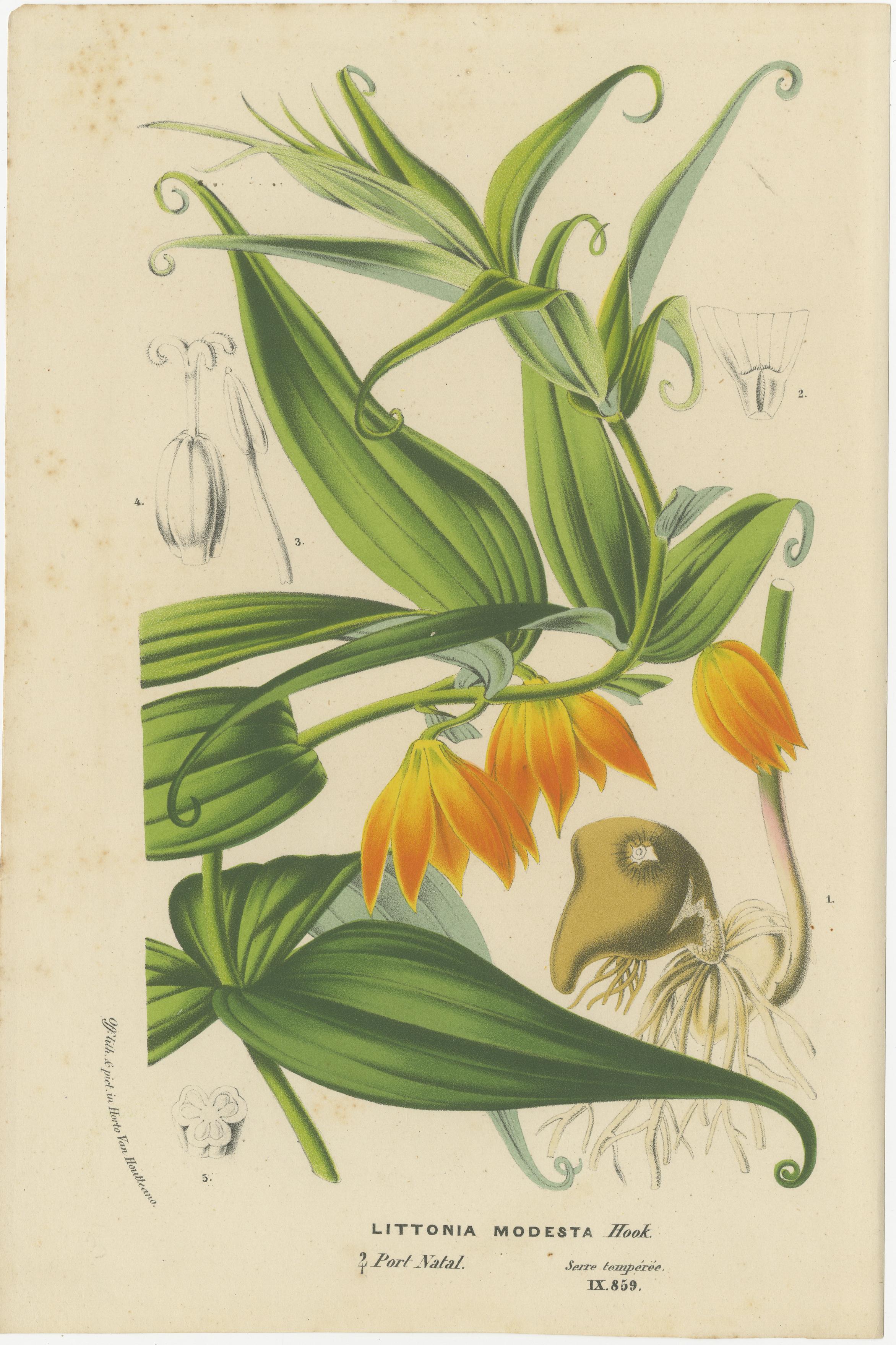
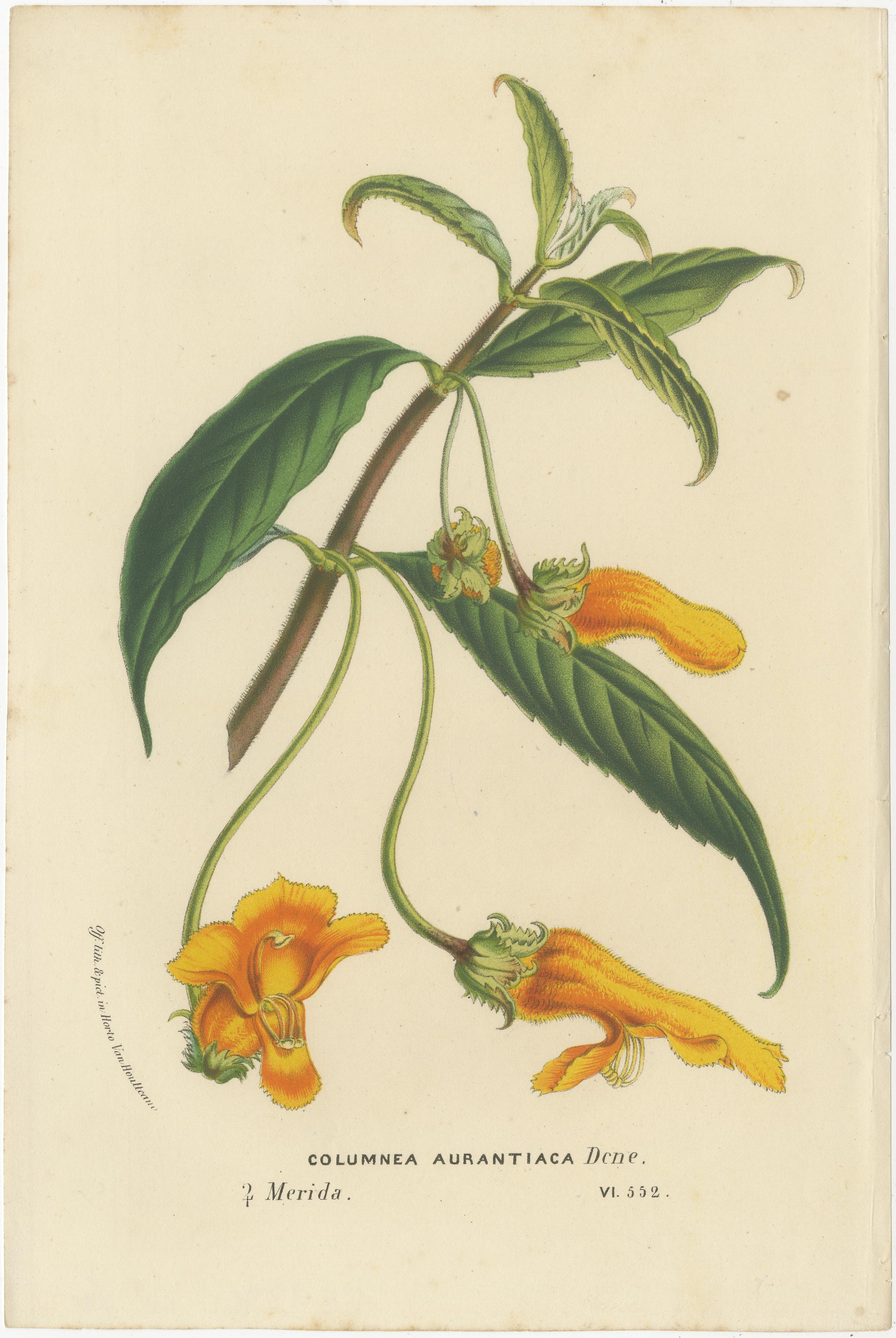
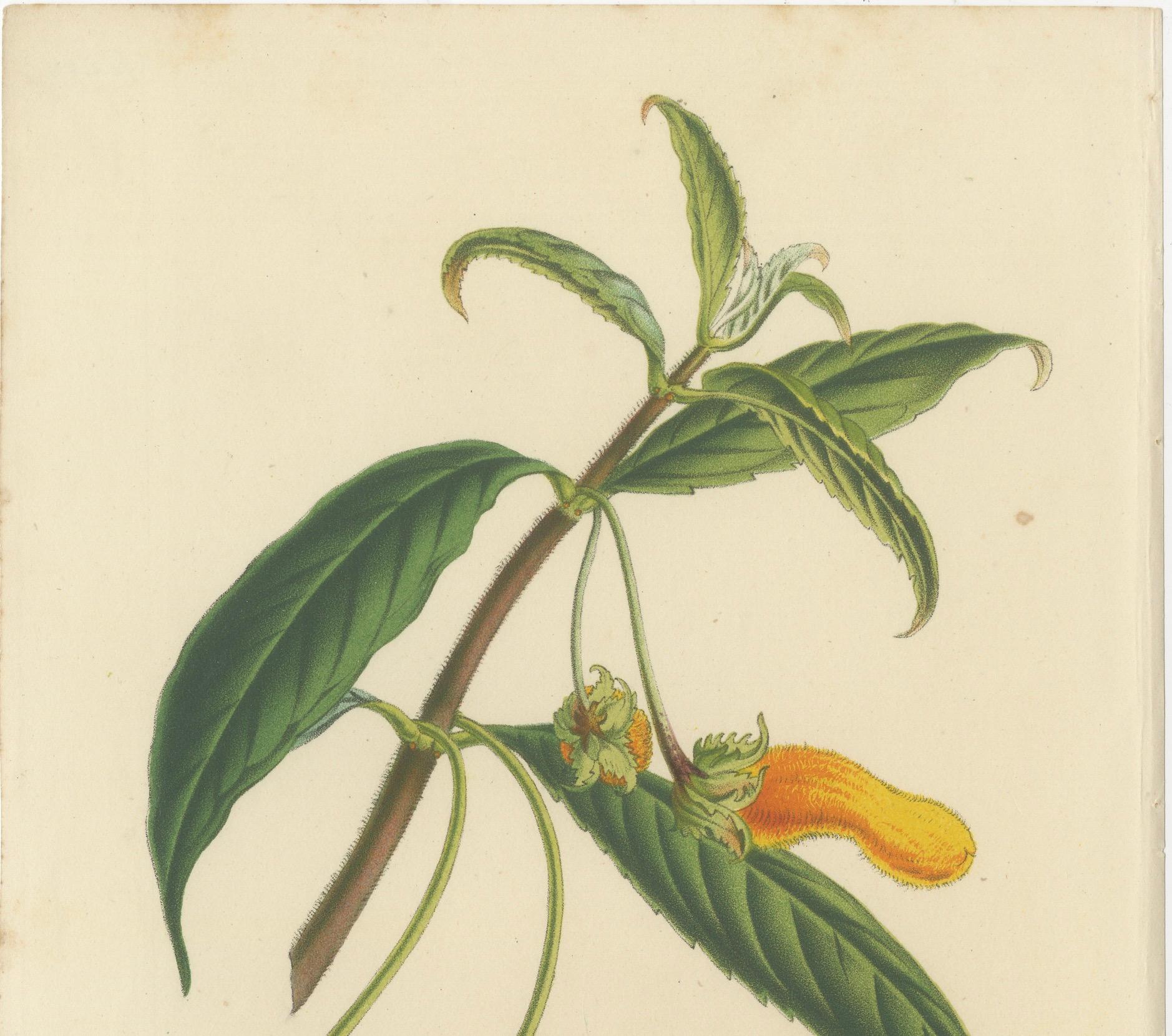
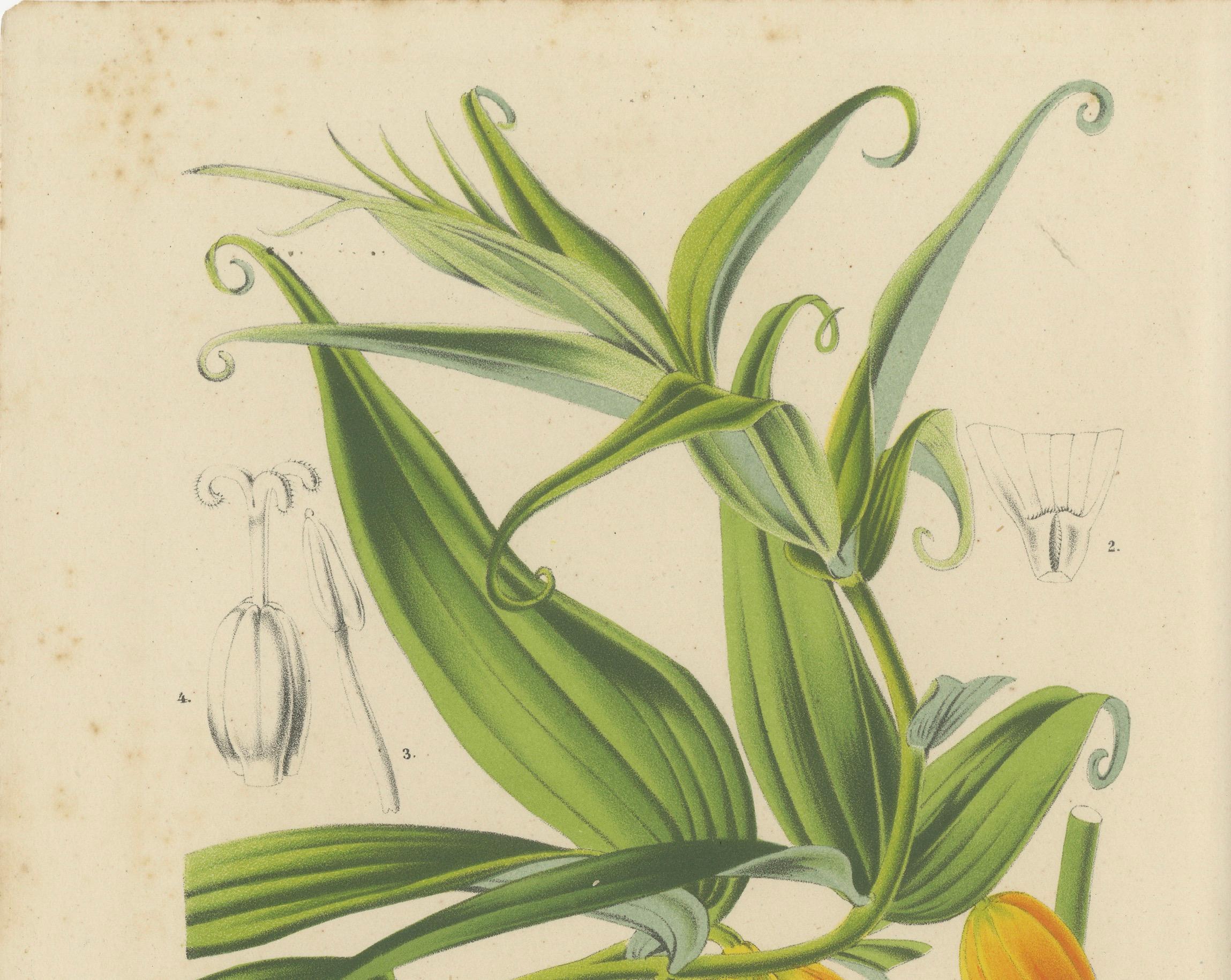
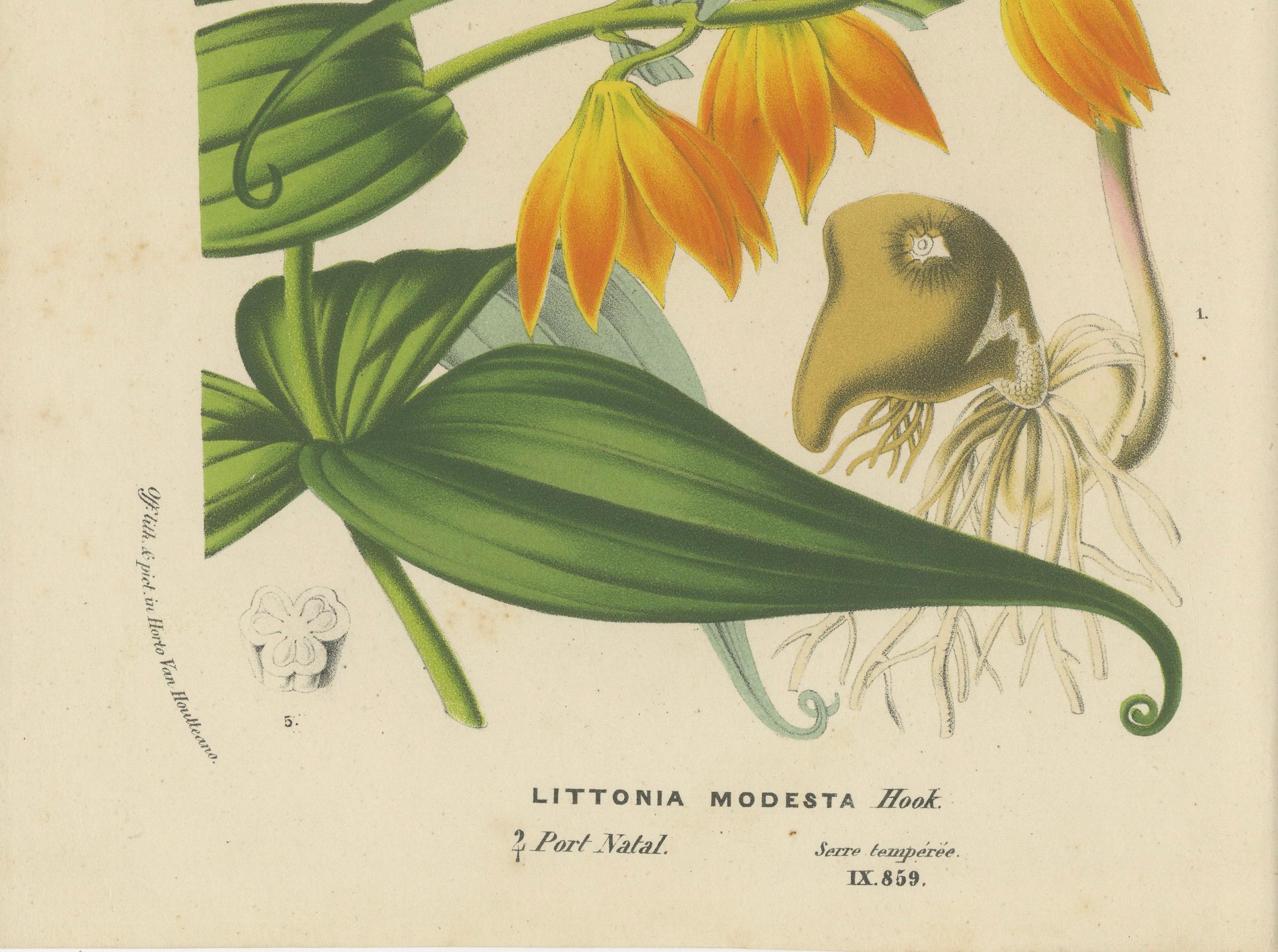
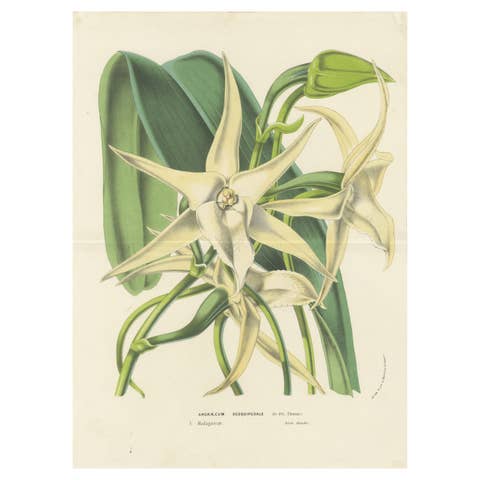
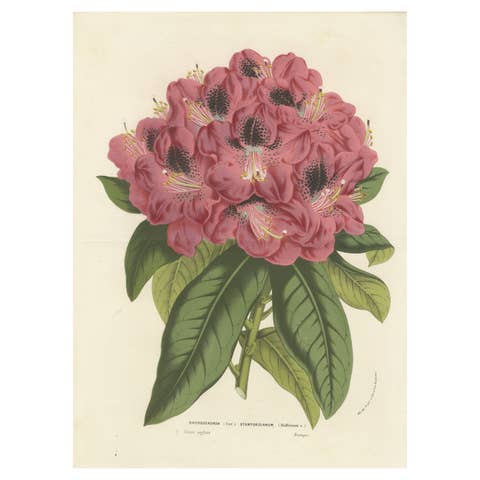
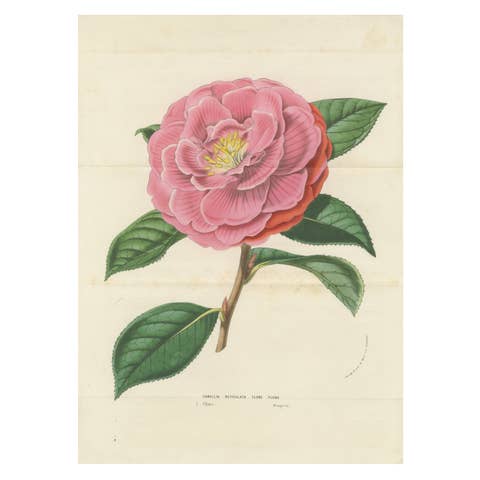
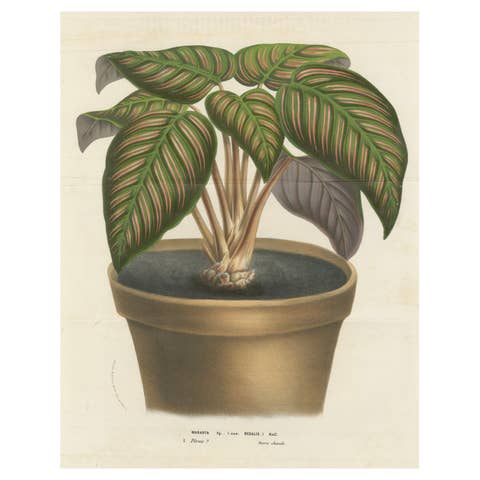
The two botanical prints are fine examples of the work from Louis Van Houtte's "Flore des Serres et des Jardins de l'Europe", which showcase the diversity and beauty of plants cultivated in European greenhouses during the 19th century. Here are the details about each plant and translations of the text:
1. Littonia Modesta - Scientific Name: Littonia modesta Hook. - Common Name: Climbing Lily - Description: This plant features long, slender green leaves with tendrils that assist in climbing, and striking yellow-orange, bell-shaped flowers that dangle downwards, adding an exotic touch to any setting. - Text on Print: "Littonia Modesta Hook. – Port Natal – Serre tempérée IX.859." - Translation: Littonia Modesta Hooker from Port Natal, suitable for a temperate greenhouse, plate number 859 from September 1859.
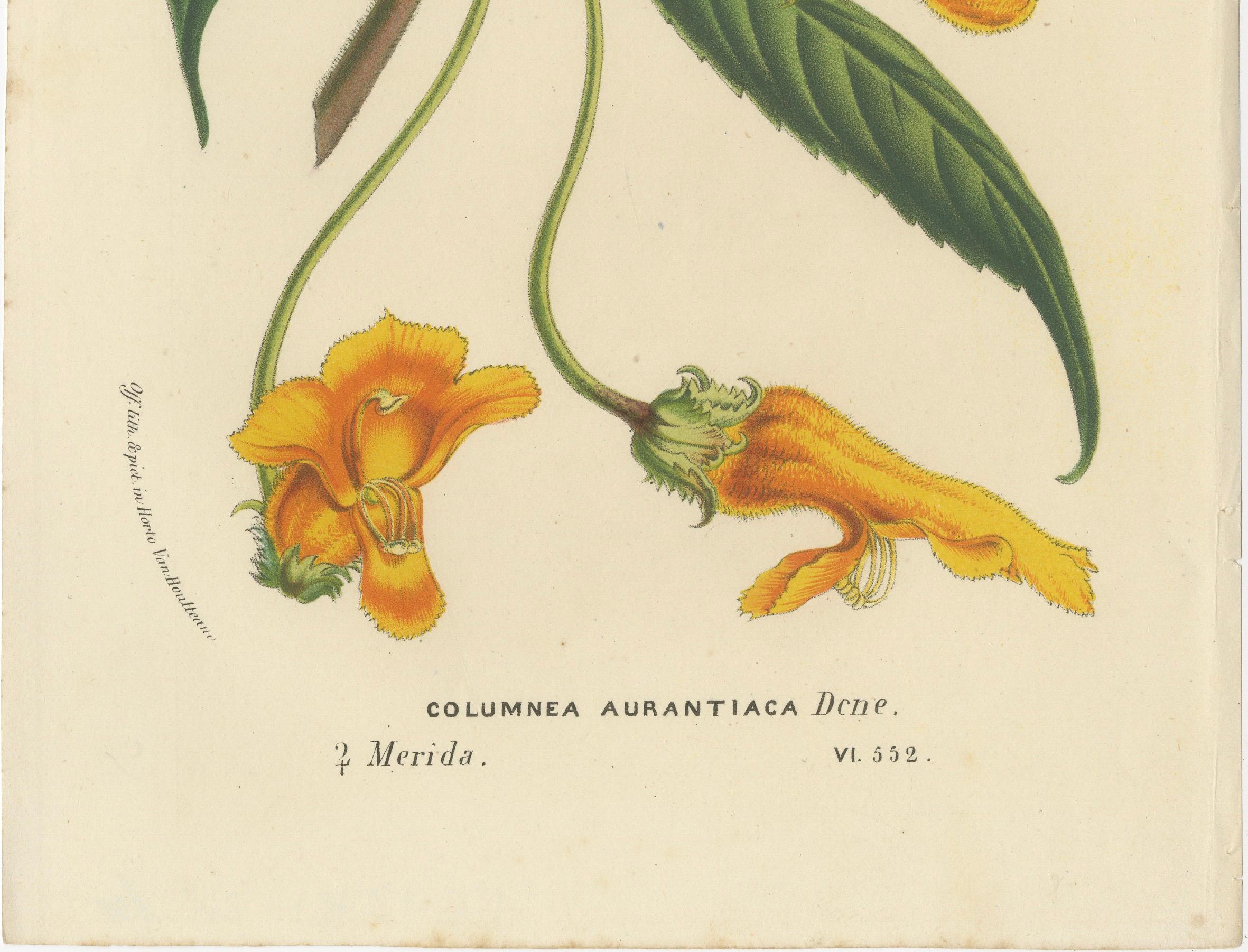
2. Columnea Aurantiaca - Scientific Name: Columnea aurantiaca Dcne. - Common Name: Goldfish Plant - Description: Columnea aurantiaca is recognized for its striking orange flowers which resemble leaping goldfish, making it highly ornamental. It typically grows with lush, dark green leaves that provide a perfect contrast to the vivid blooms. - Text on Print: "Columnea Aurantiaca Dcne. – Merida – VI.532." - Translation: Columnea Aurantiaca De Candolle from Mérida, plate number 532 from June.
Significance: - Littonia modesta is not only a visual spectacle but also intriguing due to its climbing nature, making it a unique specimen in a temperate greenhouse setting. - Columnea aurantiaca is particularly valued for its ornamental blooms that are highly attractive and its capability to thrive in hanging baskets, showcasing its drooping nature beautifully.
Print Technique: - Color Lithograph: These prints were created using chromolithography, a method for making multi-color prints. This technique involves applying different colors in separate runs, allowing for intricate and vibrant illustrations. Each color layer is meticulously aligned, and the process was particularly favored for the detailed and accurate depiction it allowed, making these prints not only scientifically valuable but also works of art.
These illustrations reflect Van Houtte’s dedication to bringing the beauty of exotic and domestic plant species to the European audience, serving both as a catalog for his nursery and an educational tool for the broader public interested in horticulture and botanical sciences.