About this sheet
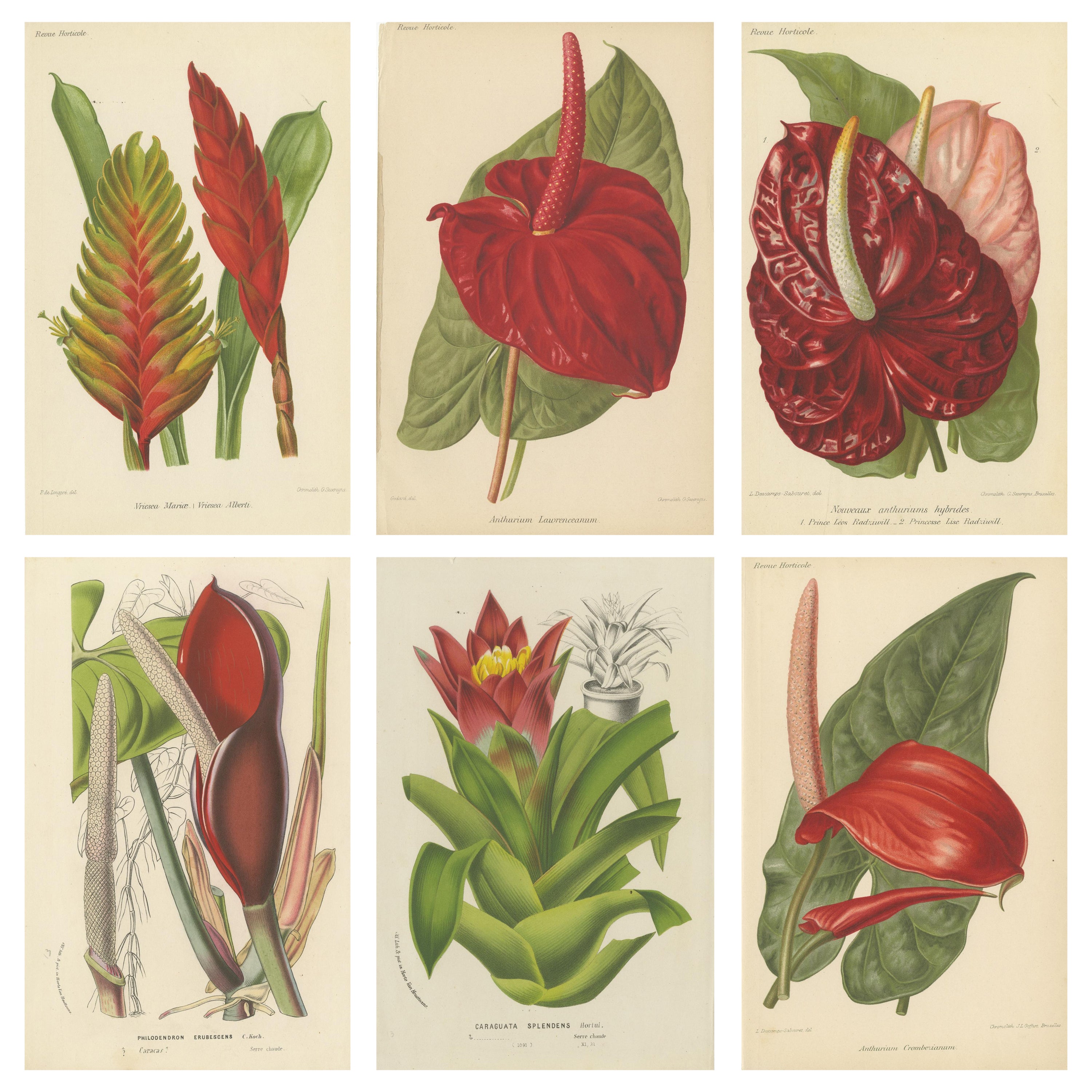
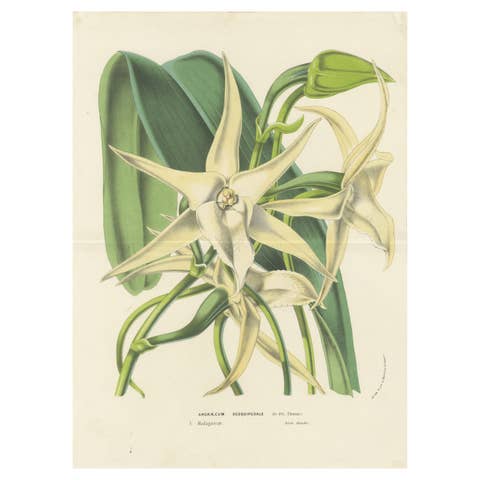
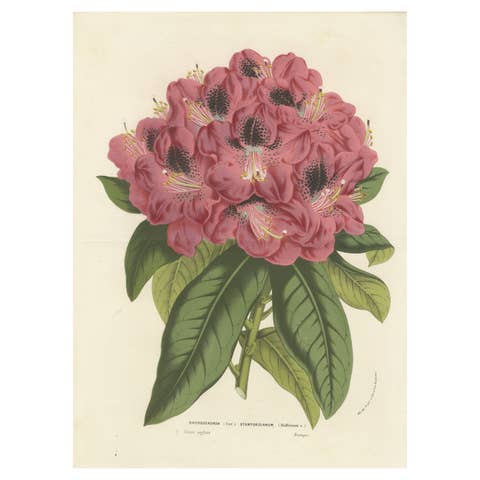
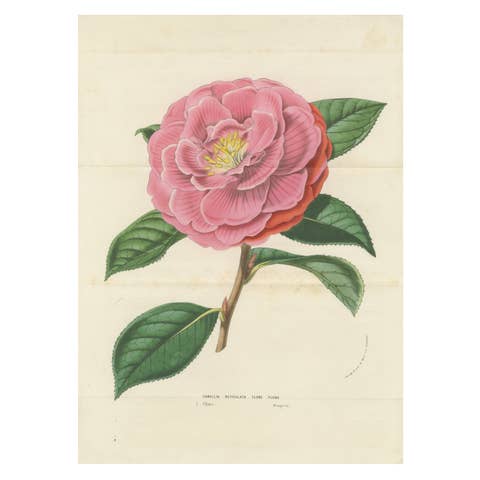
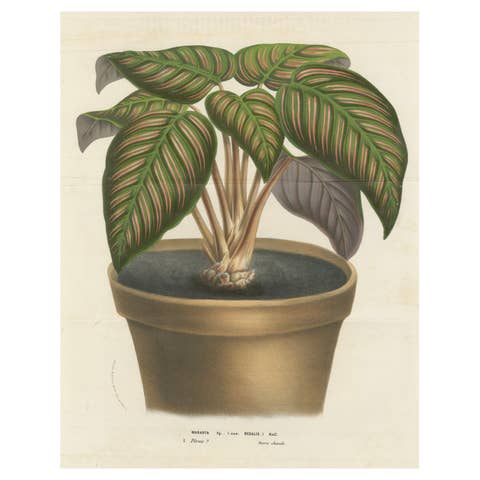
These original antique prints are beautiful examples of botanical illustrations featuring tropical plants, drawn with precise detail and coloration. The Latin and English names of the plants are provided in the prints themselves, along with additional botanical information.
Descriptions of the Prints:
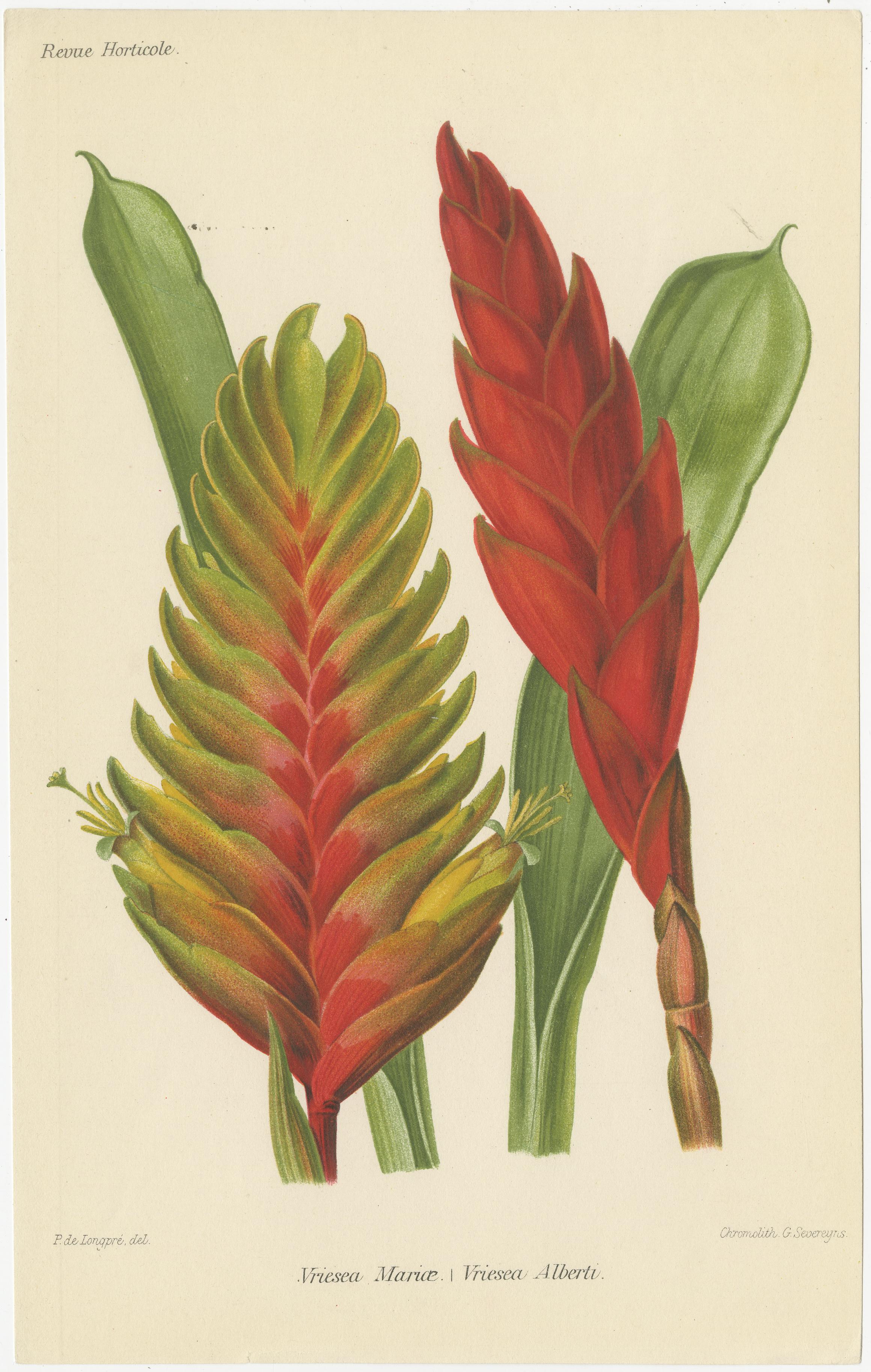
1. **Print 1: Vriesea Mariae and Vriesea Alberti**
- **Latin Name**: *Vriesea Mariae* and *Vriesea Alberti*
- **Common Name**: Vriesea (a genus within the Bromeliad family)
- **Special Features**: Vriesea plants are known for their vivid, ornamental foliage and striking floral displays. These particular species have a combination of red and green bracts, making them visually captivating. They are native to tropical rainforests, thriving in humid and shaded environments. Their unusual leaf arrangement helps collect water, which they use to sustain themselves.
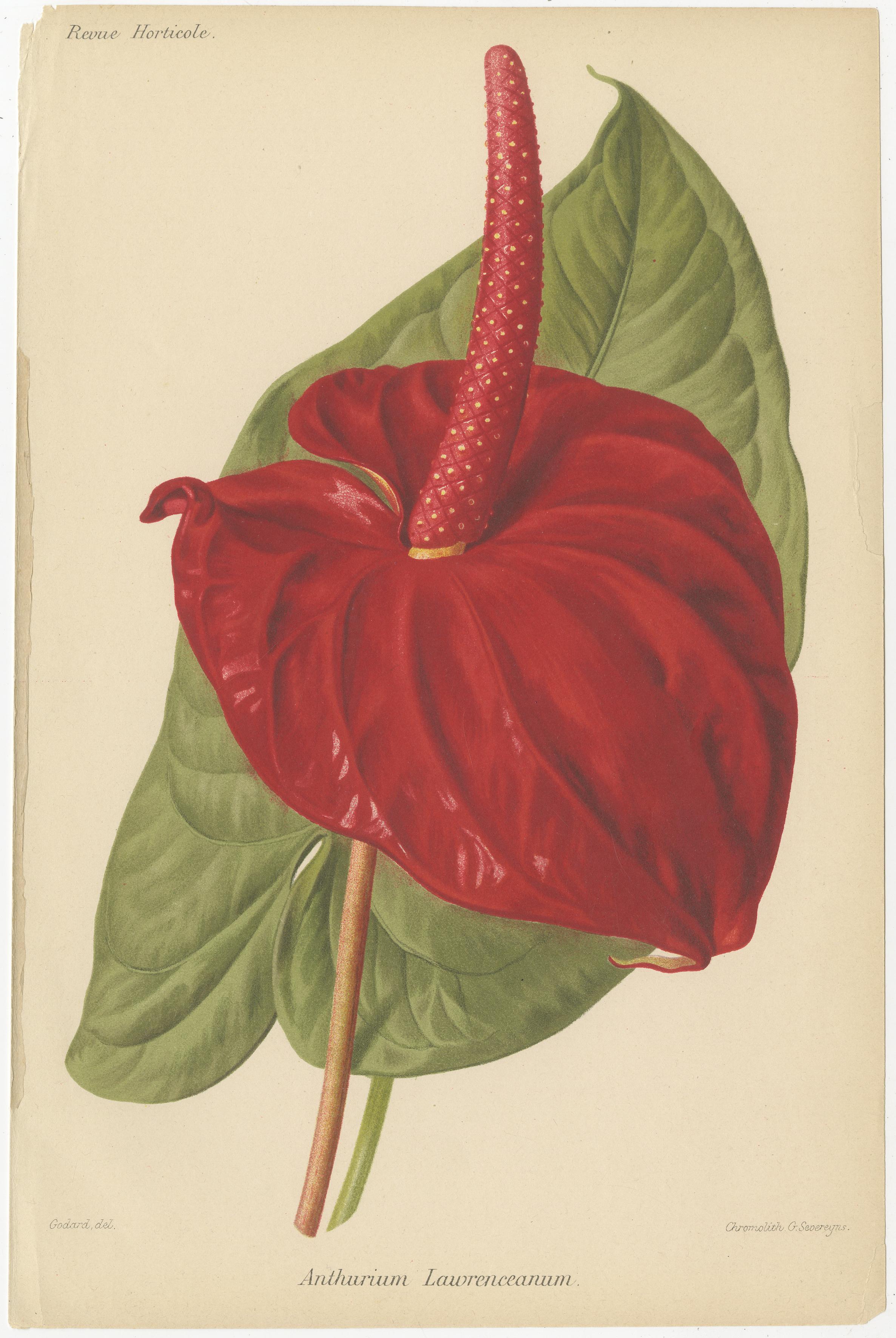
2. **Print 2: Anthurium Lawrenceanum**
- **Latin Name**: *Anthurium Lawrenceanum*
- **Common Name**: Anthurium or Flamingo Flower
- **Special Features**: The large, vibrant red spathe with a spadix makes this Anthurium variety a favorite ornamental plant. It is native to tropical regions in Central and South America. The plant is admired for its heart-shaped leaves and unique flowers that can bloom all year round, providing a lasting visual impact in any garden.
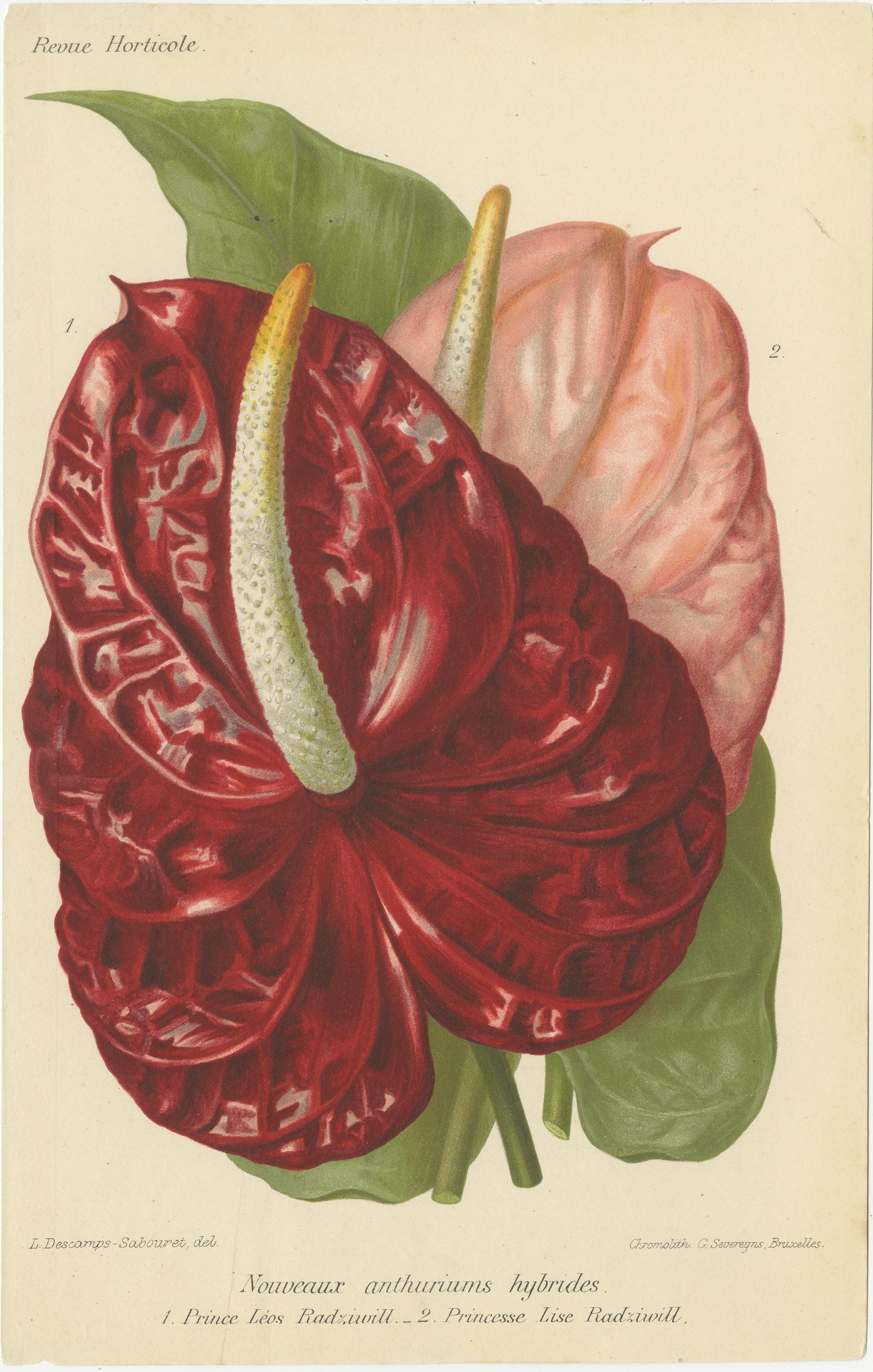
3. **Print 3: Nouveau Anthuriums Hybrides**
- **Latin Name**: *Anthurium hybrids* (featuring two varieties: *Prince Léos Radziwill* and *Princesse Lise Radziwill*)
- **Common Name**: Anthurium Hybrids
- **Special Features**: This print illustrates hybrid Anthurium varieties, displaying a rich red hue on one flower and a paler pink on the other. Hybrid Anthuriums have been selectively bred for more intense coloration and prolonged flowering. This makes them popular in floriculture and as indoor plants.
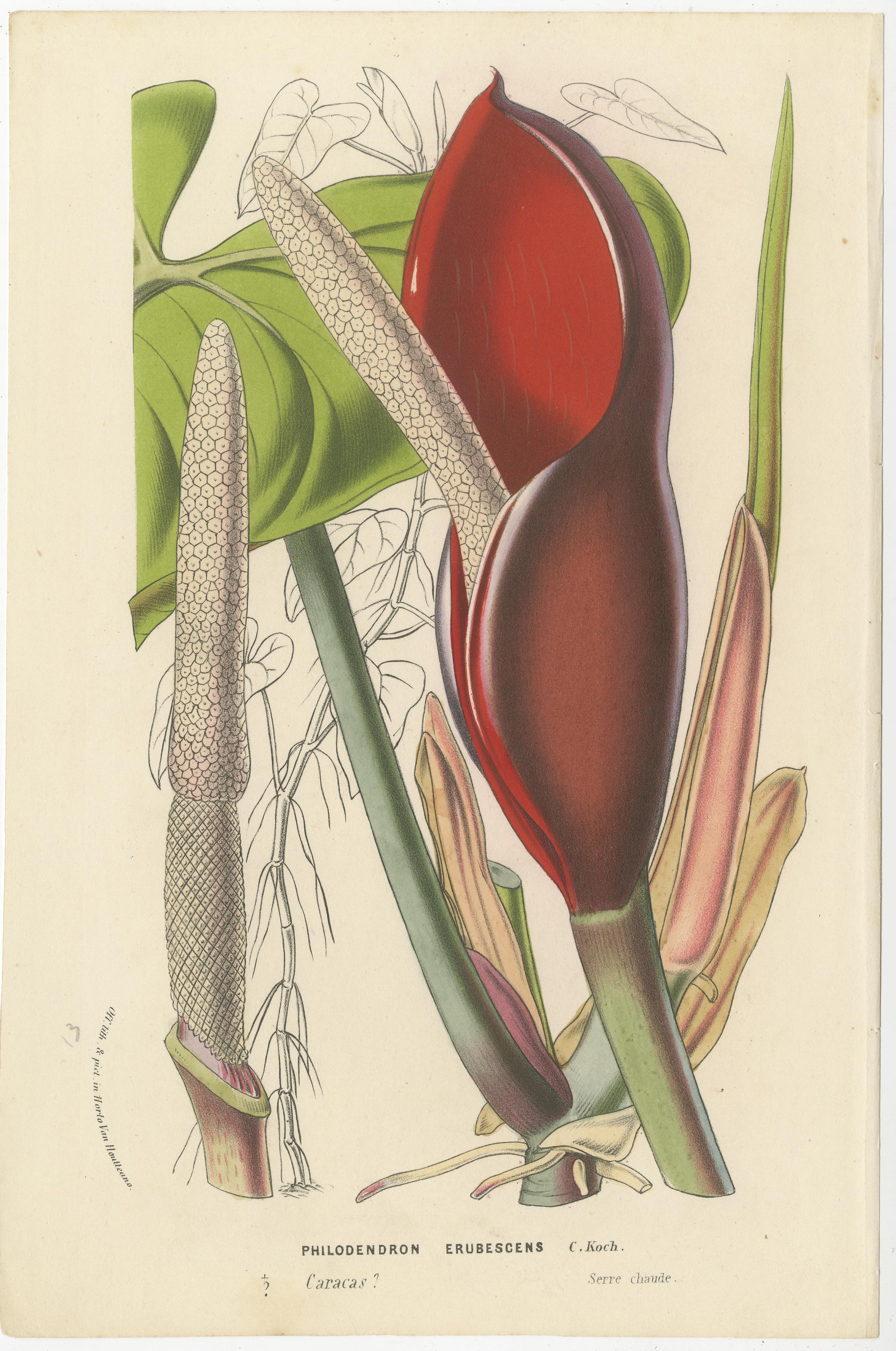
4. **Print 4: Philodendron Erubescens**
- **Latin Name**: *Philodendron Erubescens*
- **Common Name**: Red-leaf Philodendron
- **Special Features**: This species is a climbing plant with dark, glossy leaves and reddish stems. It is highly valued for its ability to thrive in low-light conditions, making it an ideal houseplant. The unusual coloration and structure of the flower add an exotic appeal to the plant, particularly its deep red spathe.
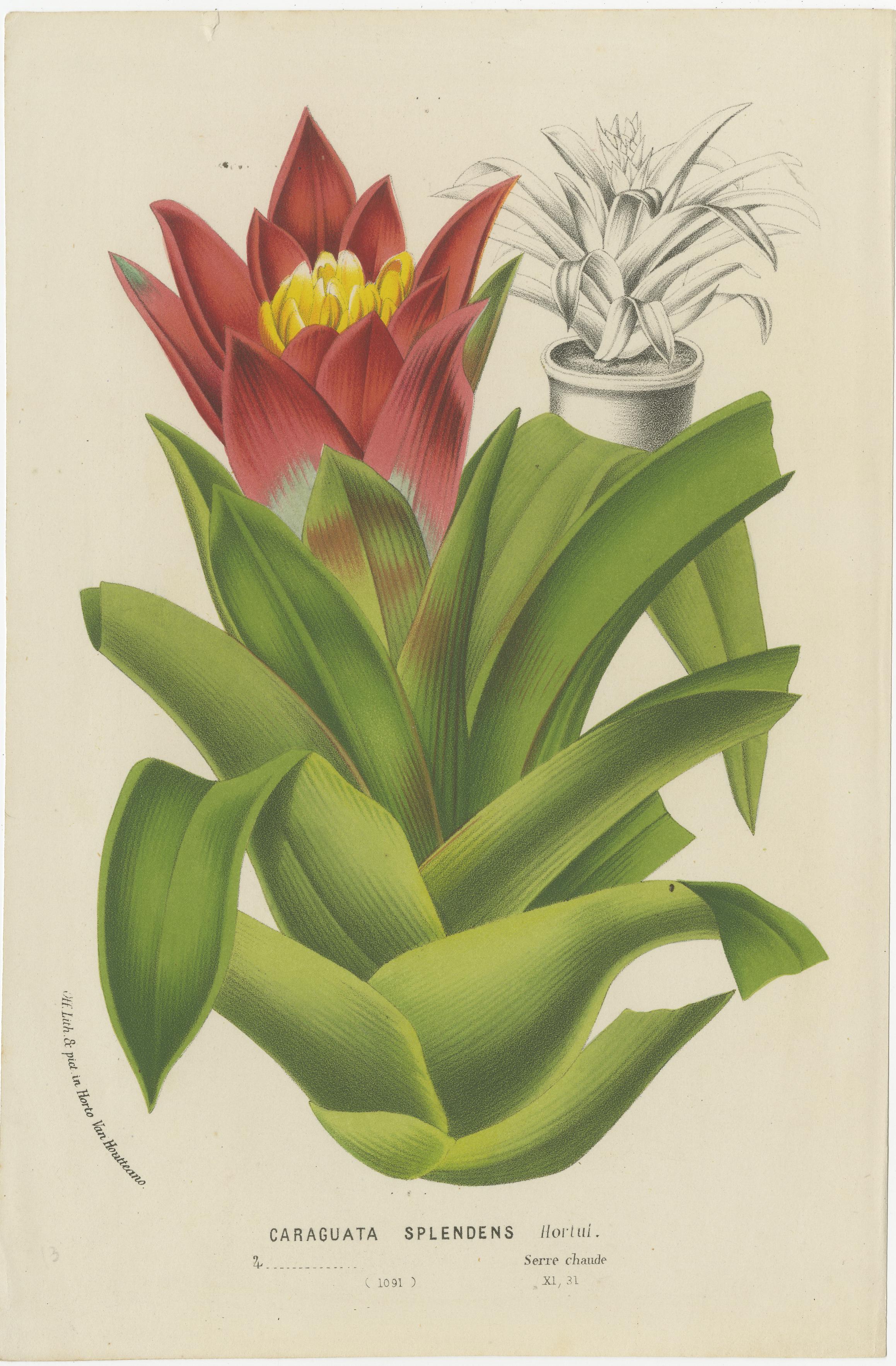
5. **Print 5: Caraguata Splendens**
- **Latin Name**: *Caraguata Splendens* (now more commonly referred to as *Vriesea splendens*)
- **Common Name**: Flaming Sword Plant
- **Special Features**: This Bromeliad is distinguished by its striking sword-like flower spike, which is fiery red with yellow accents. The plant also has banded leaves with a unique striped pattern, making it a popular ornamental in both gardens and as an indoor plant. Native to tropical regions of South America, it is a favorite among plant collectors for its hardiness and dramatic visual appeal.
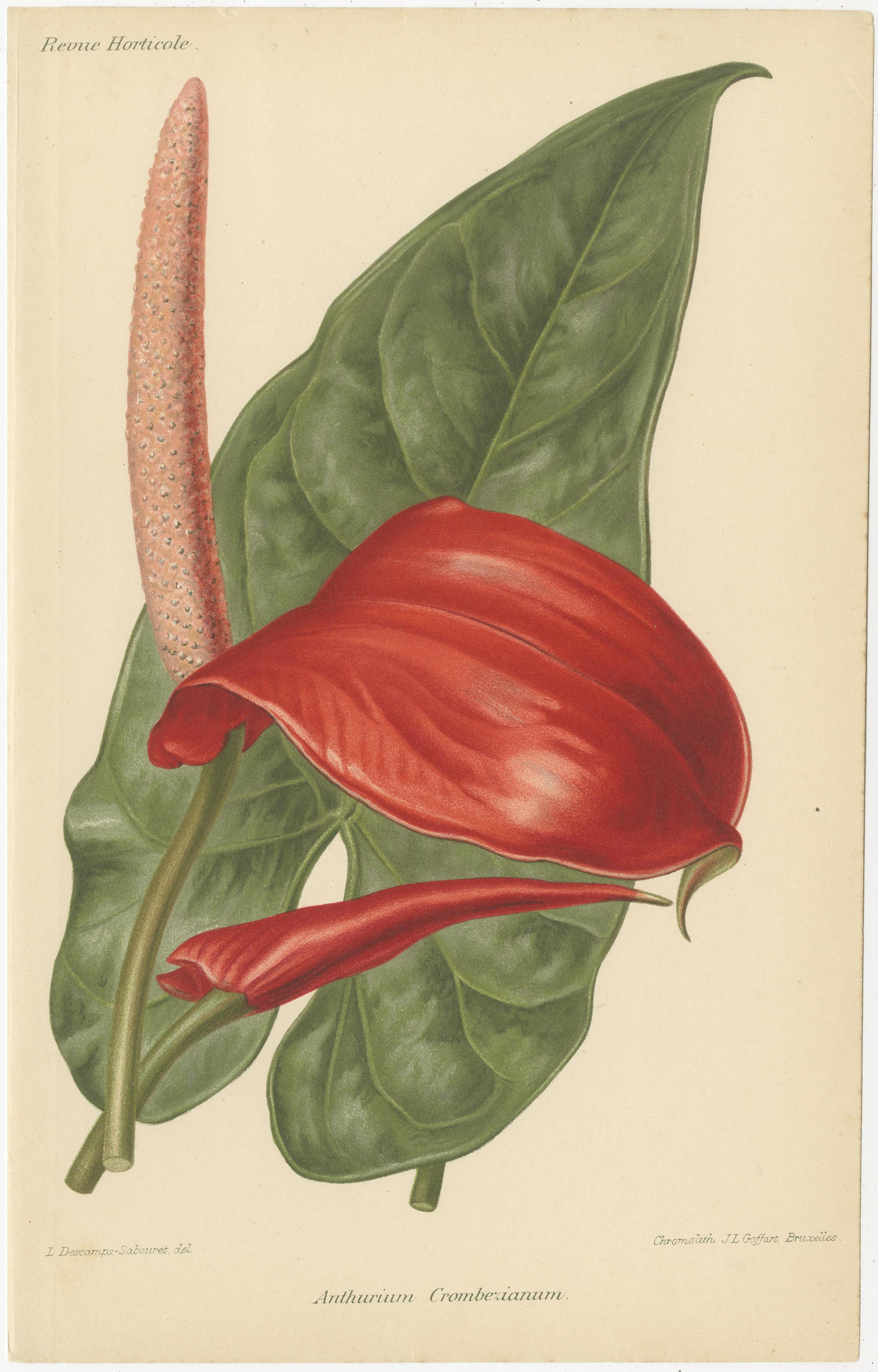
6. **Print 6: Anthurium Crombezianum**
- **Latin Name**: *Anthurium Crombezianum*
- **Common Name**: Anthurium (specific cultivar or species)
- **Special Features**: Like other Anthuriums, this species features bold, leathery leaves and a large spadix, surrounded by a vivid red spathe. These plants are valued for their air-purifying properties and long-lasting flowers, making them popular in floral arrangements.
Why These Plants Are Special or Interesting:
- **Aesthetic Appeal**: These tropical plants are often prized for their vivid colors, exotic shapes, and the unique way they flower, often forming long-lasting bracts or spathes.
- **Tropical Origin**: Most of these species come from tropical rainforests, making them a rarity in colder climates and a symbol of exotic beauty.
- **Ornamental Use**: They are extensively used in horticulture and interior decoration due to their vibrant appearance and relatively easy care. Many of these plants are epiphytes, meaning they grow on other plants and trees in their native habitats.
- **Botanical Importance**: The ability of these plants to survive in different environments has fascinated botanists and collectors alike, making them highly valued in both botanical studies and private collections.
Maker of the Prints:
The prints were made by renowned botanical illustrators **P. de Longpre**, **Godart**, **L. Descamps-Sabouret**, and **G. Severyns**, based on the chromolithographic process.
- **P. de Longpre**: A celebrated artist and botanical illustrator, known for his precision and detail in depicting flora.
- **Godart**: Another skilled botanical artist contributing to the field of scientific illustration during the same period.
- **L. Descamps-Sabouret**: A well-known illustrator, with a particular focus on hybrid plants and cultivars.
- **G. Severyns**: One of the foremost chromolithographers of his time, Severyns was instrumental in producing highly detailed, multi-colored prints.
Technique Used - Chromolithography:
These original antique prints were created using the...