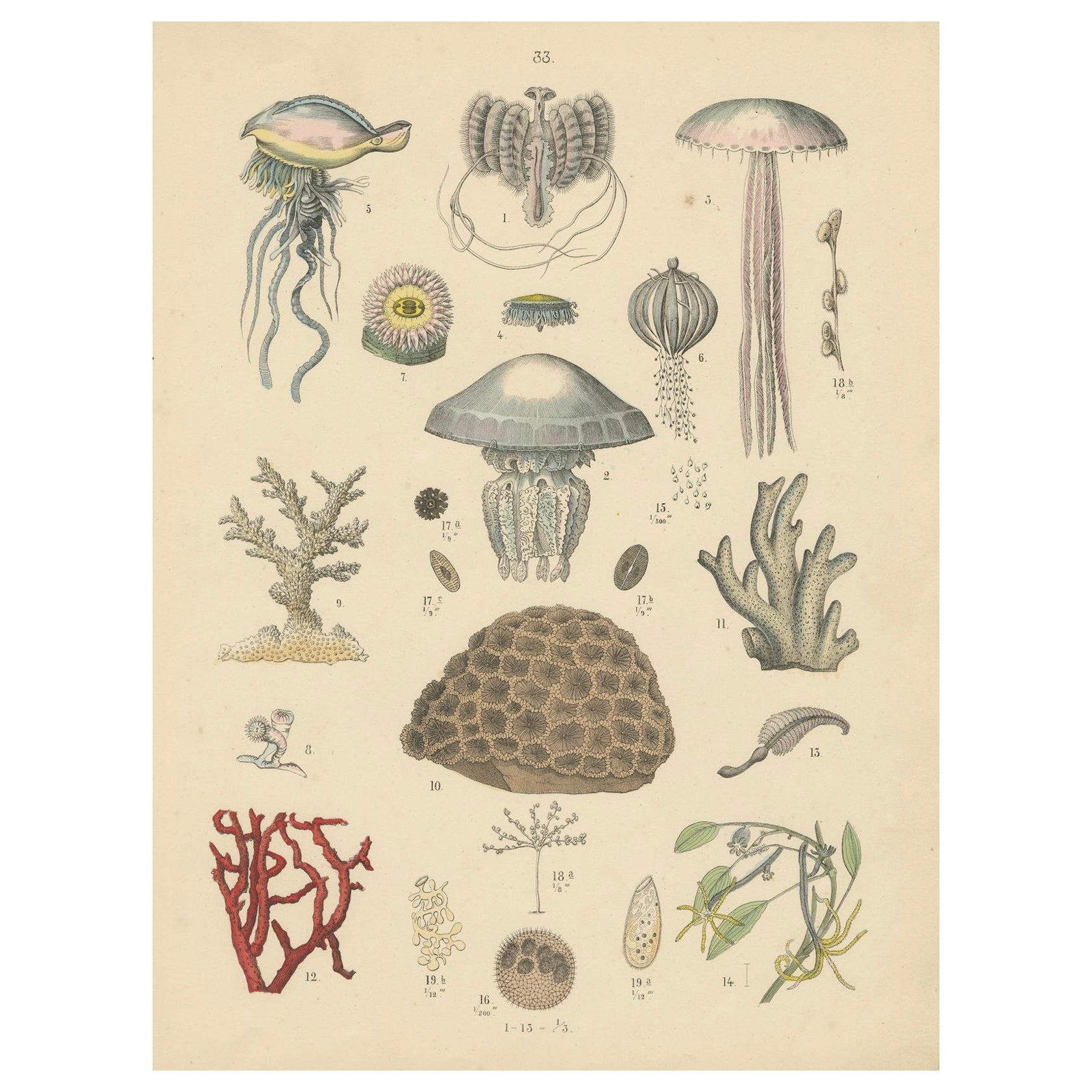
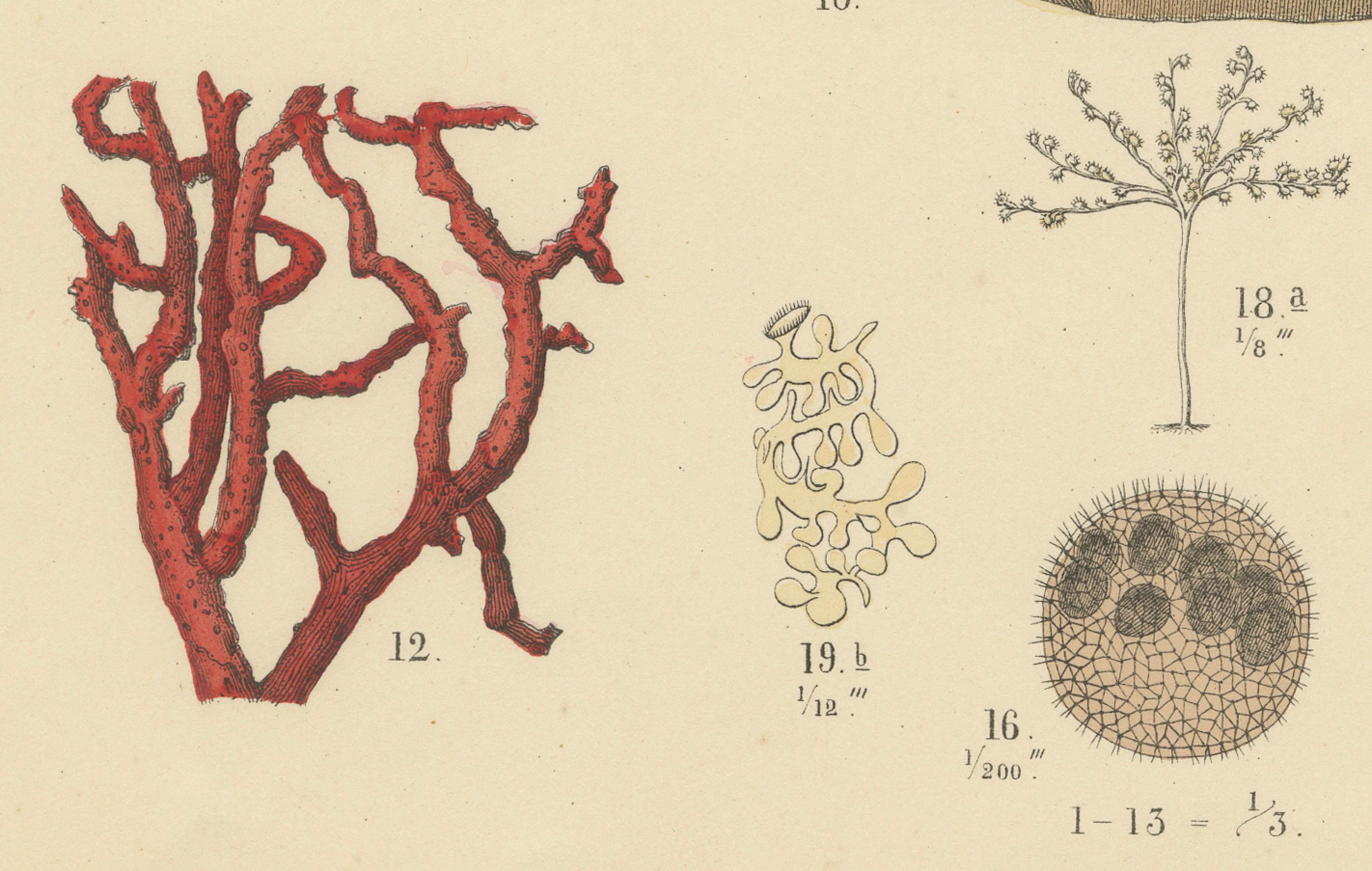
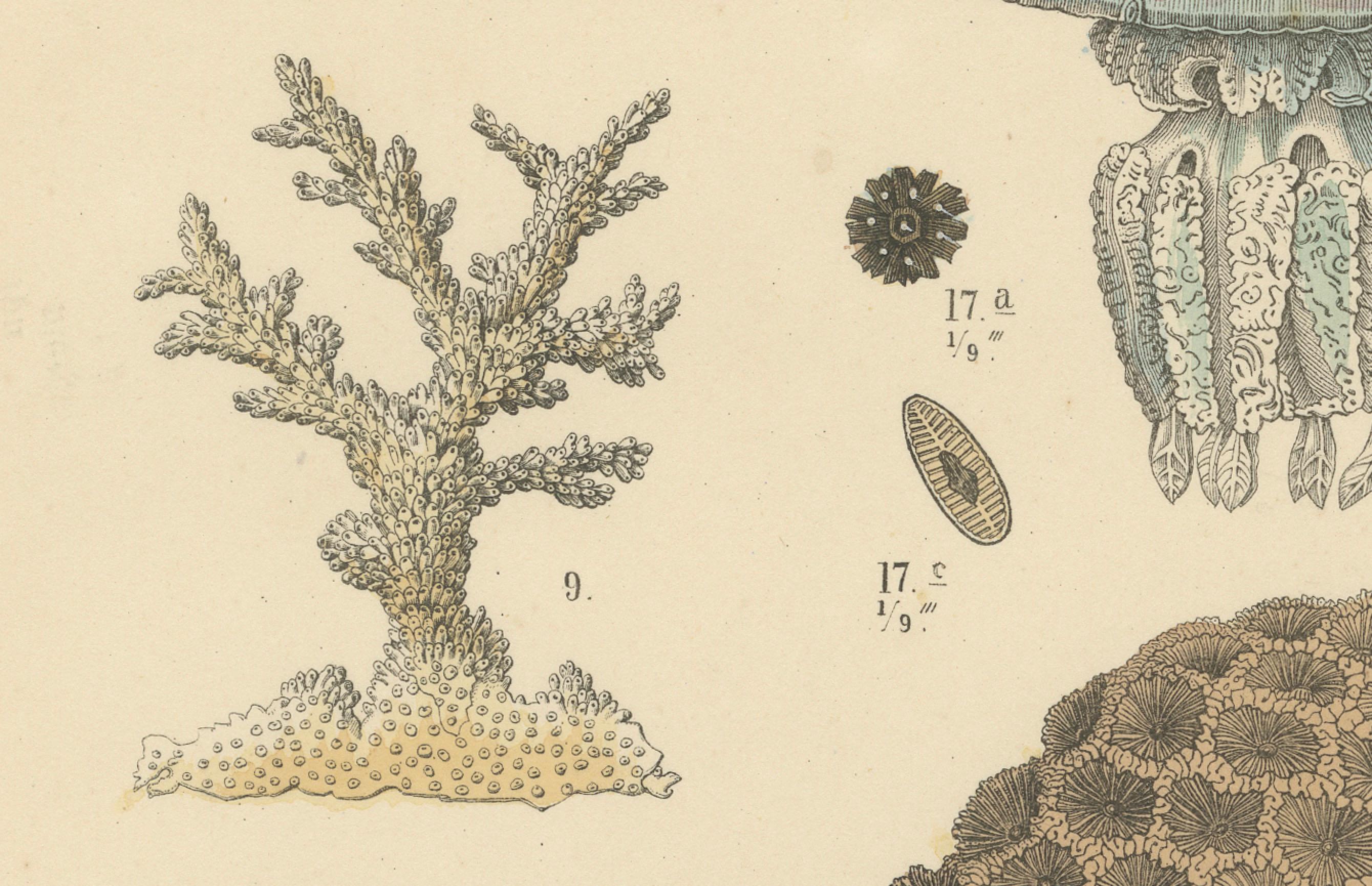
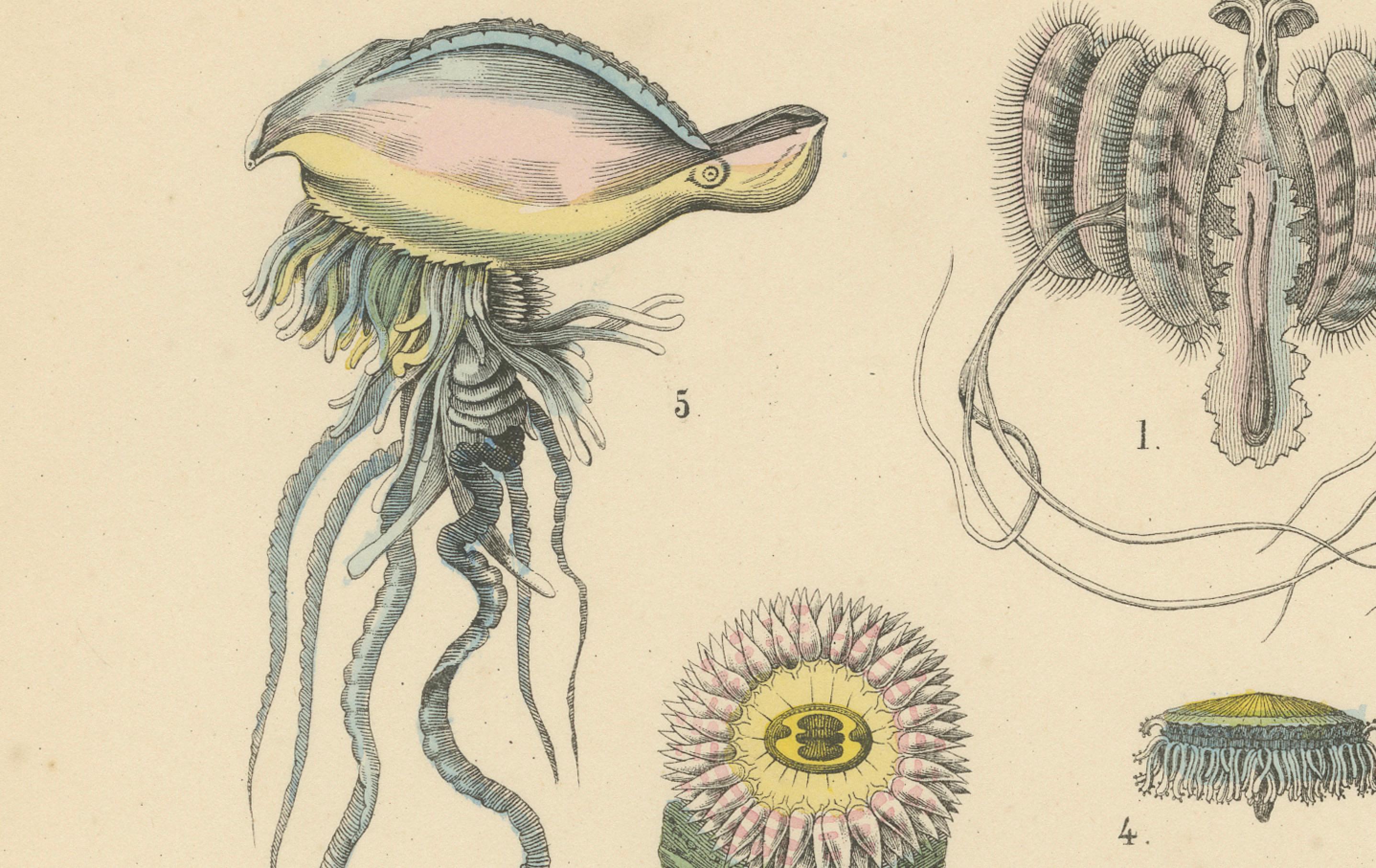
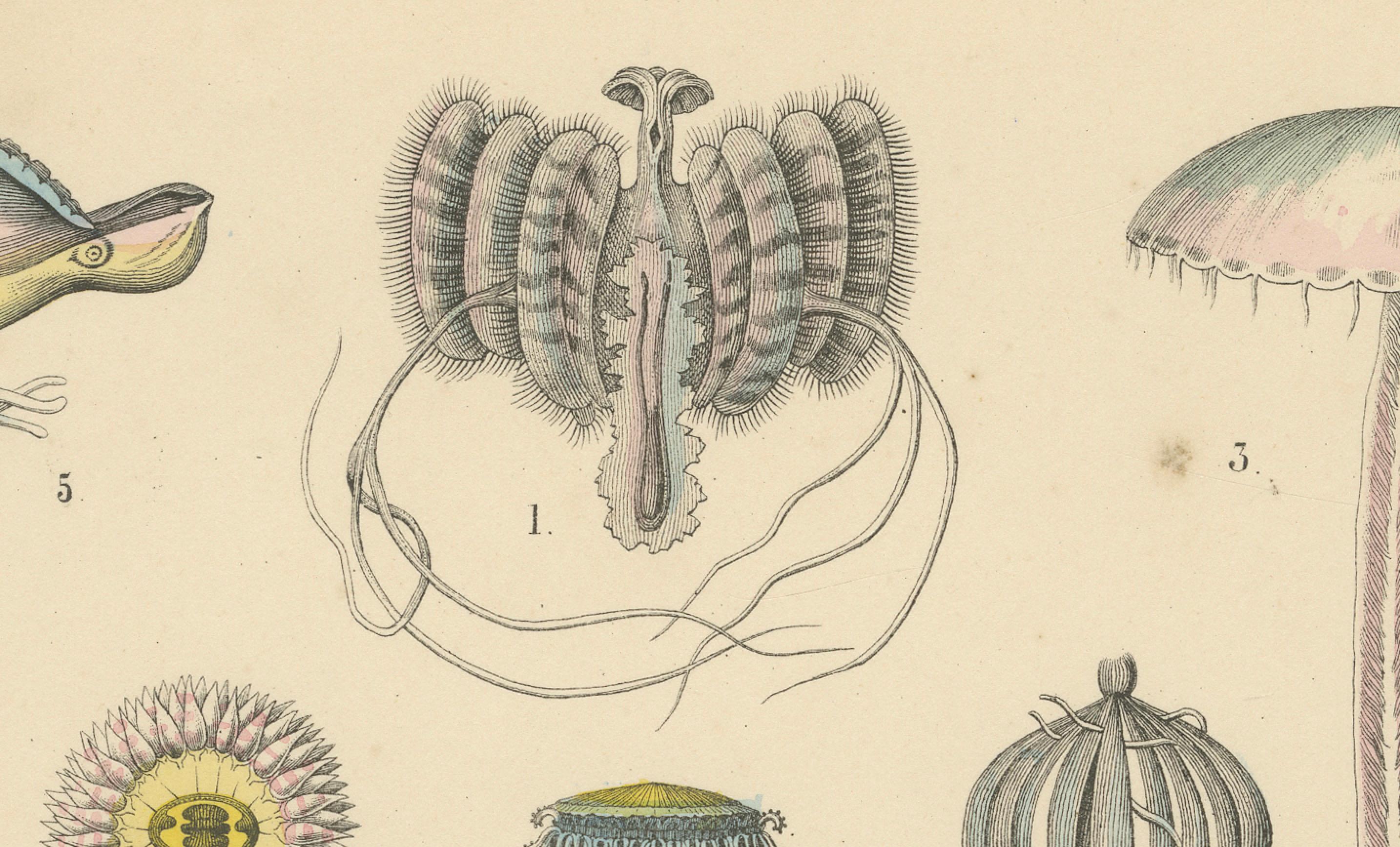
One of a kind: this is the sheet in the photographs. Ships from Langweer, the Netherlands.
Date
1867
Sheet size
28.5 × 22 cm (11.2 × 8.7 in)
Condition
Good
Reference
BG-12980-30
Condition
Good condition for its age, with slight overall toning and minor scattered foxing mainly in the margins. The paper remains strong with no tears or repairs, and the hand colouring is vivid and well-preserved.
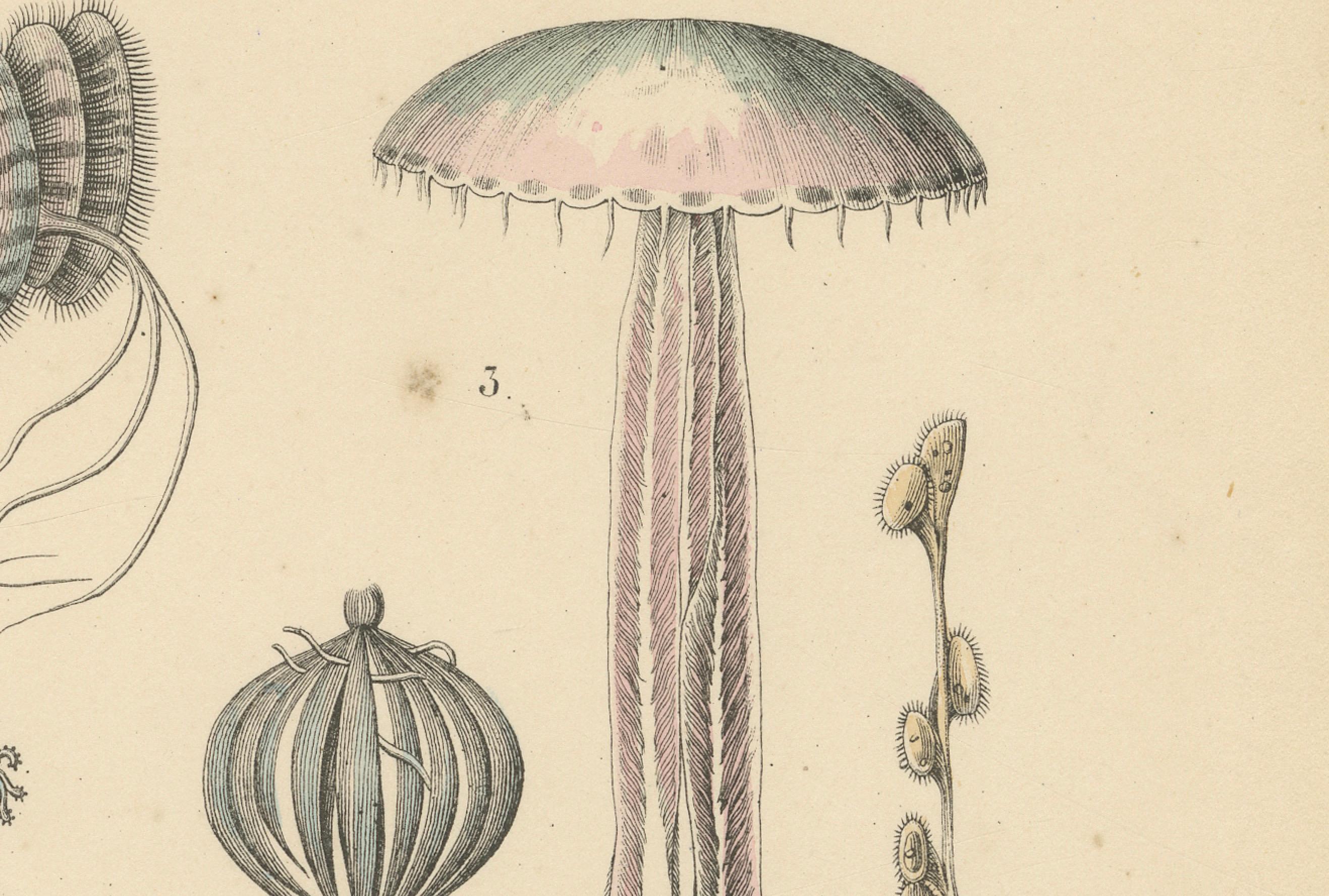
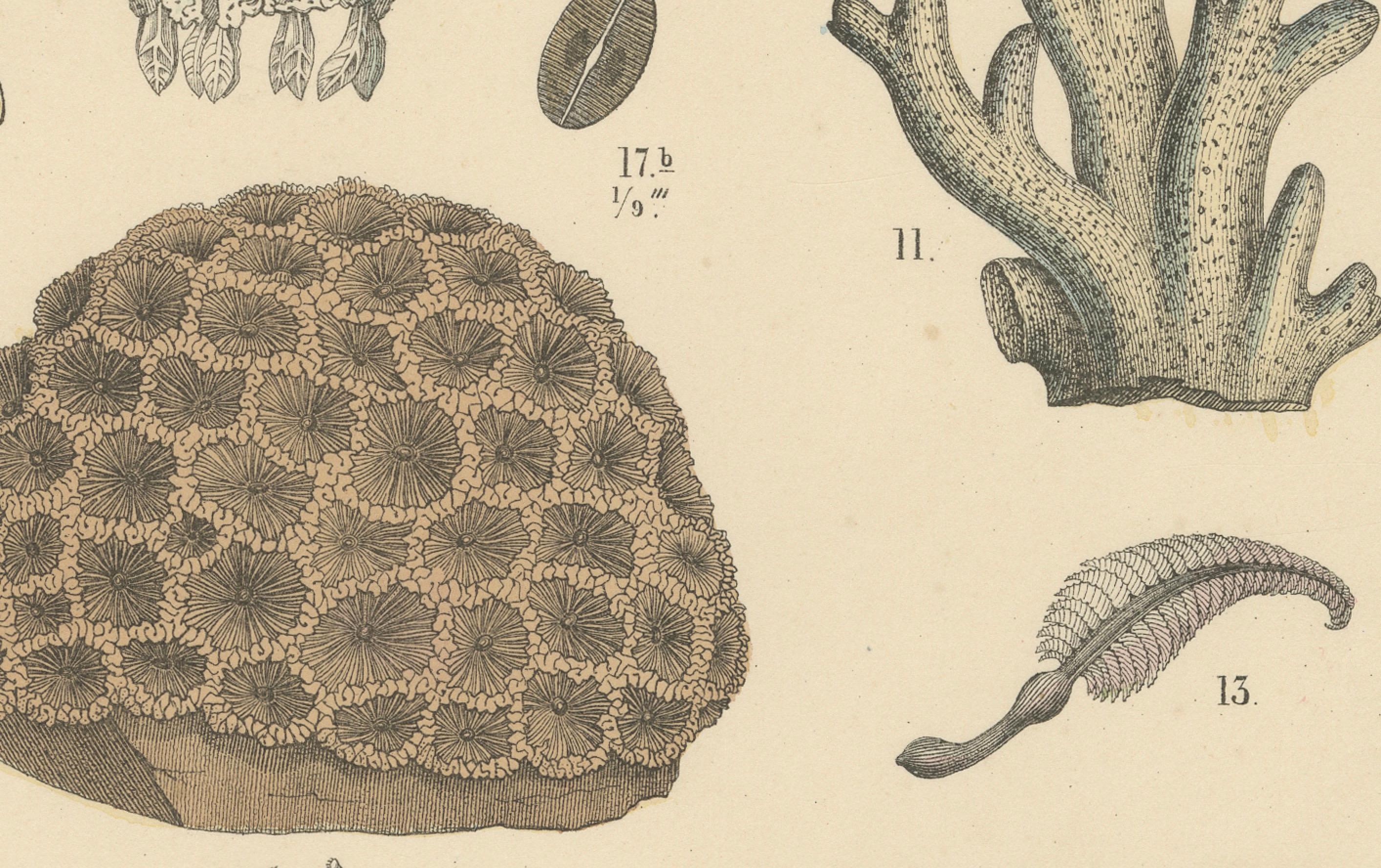
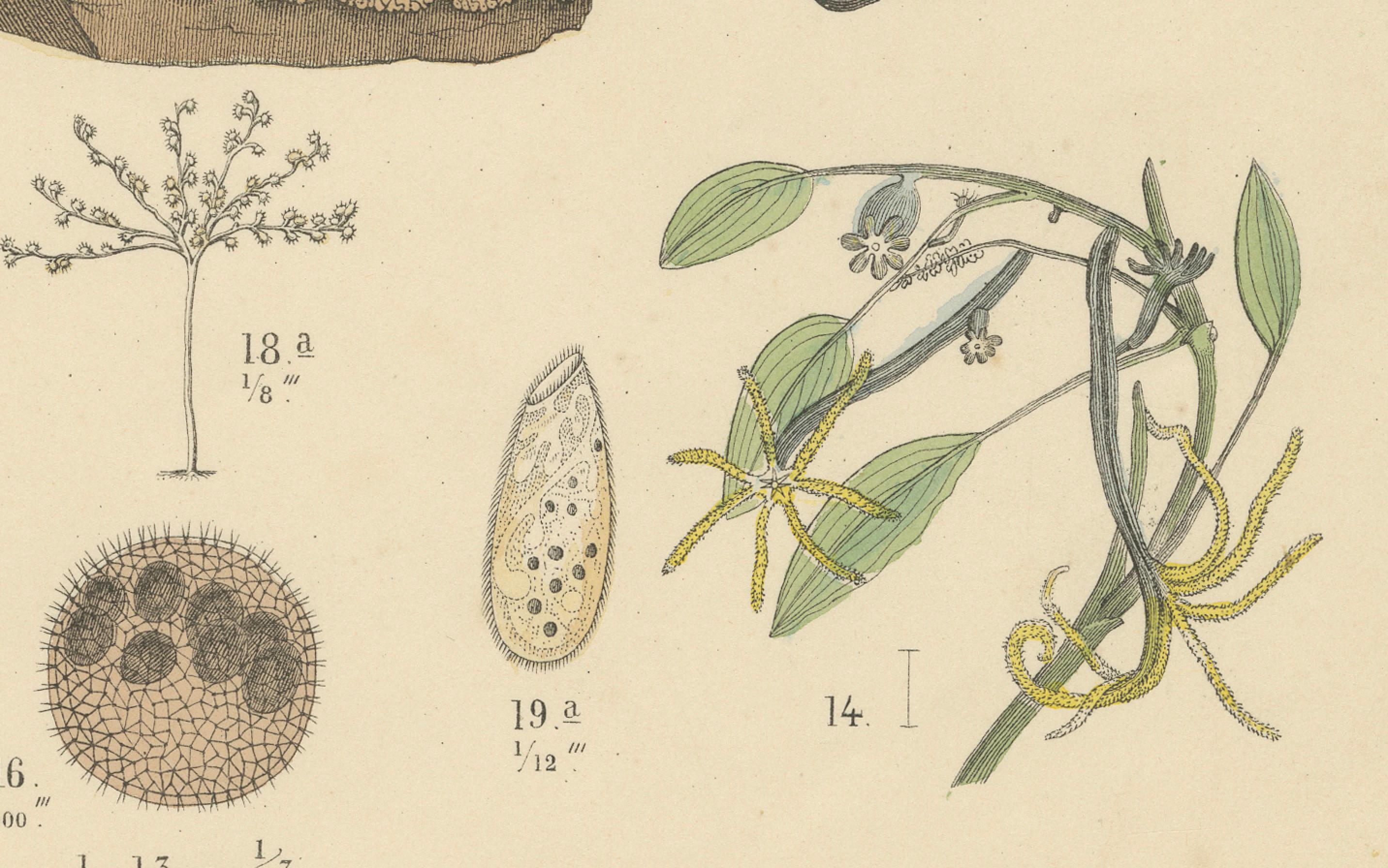
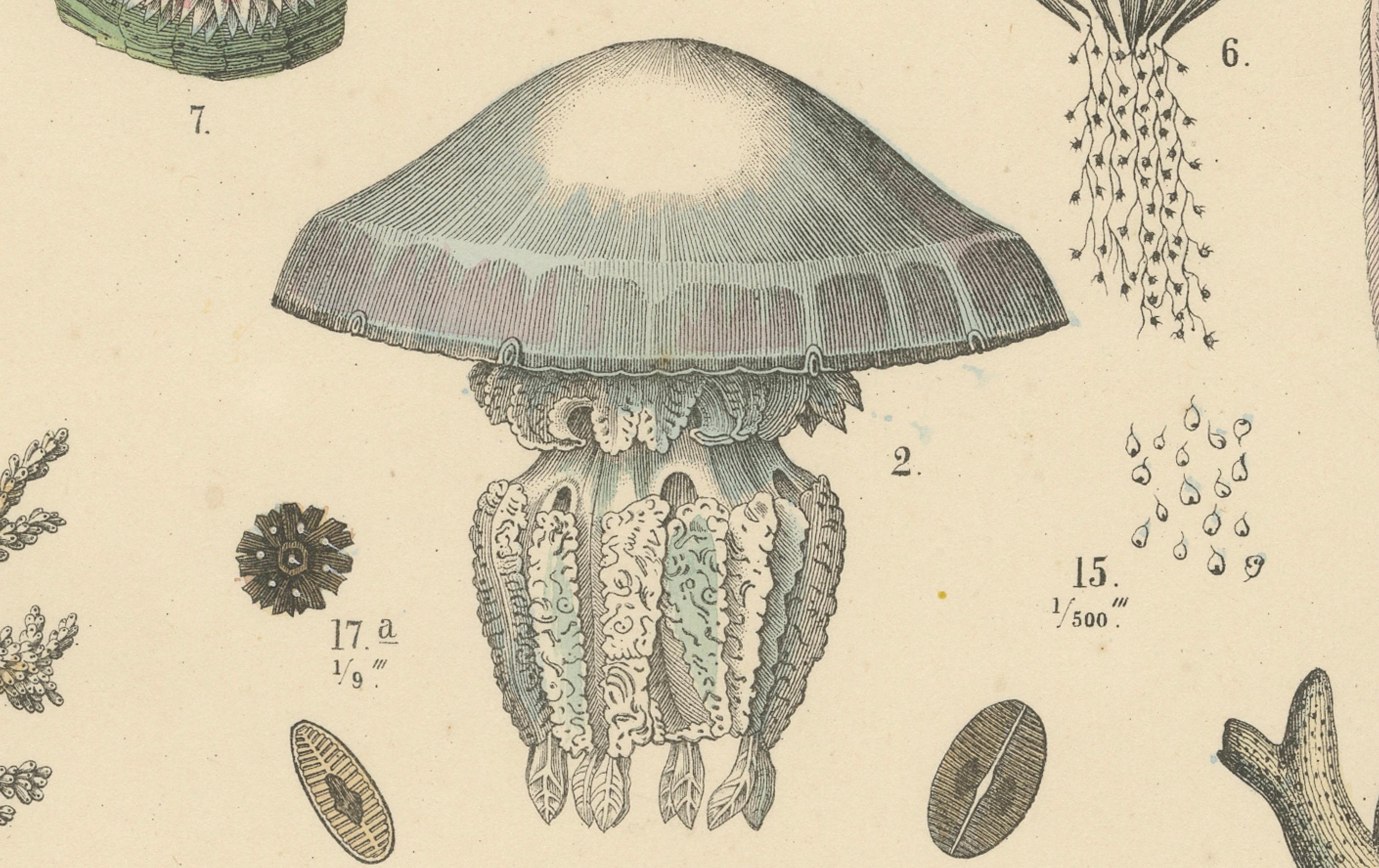
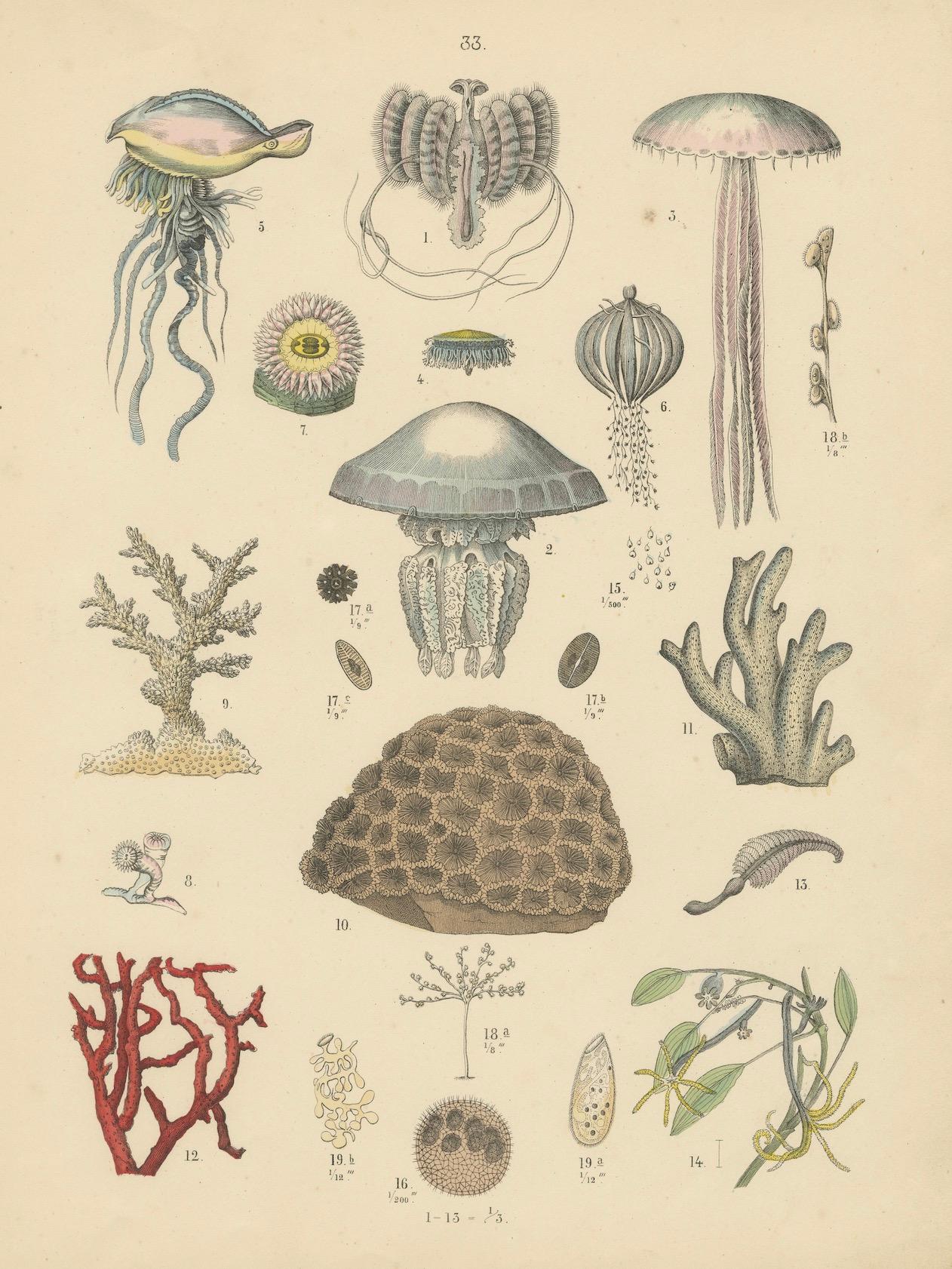
This detailed antique print depicts a range of marine invertebrates, including jellyfish, Portuguese man o’ war, corals, sea anemones, ctenophores (comb jellies), hydroids, and marine algae, rendered in fine hand-coloured engravings. It originates from the Atlas der Natuurlijke Geschiedenis voor scholen en huisgezinnen, adapted into Dutch by T.C. Winkler after Traugott Bromme, and published in Amsterdam by J.C. Loman in 1867. Designed for educational use, this plate introduced 19th-century students to marine biology, invertebrate diversity, and classification.
Produced using copper engraving with meticulous hand colouring, the print shows precise anatomical lines and delicate tonal gradations, capturing the forms and textures of marine invertebrates for scientific study. Such plates were essential teaching aids before photographic field guides became available.
Condition summary: Good condition for its age, with slight overall toning and minor scattered foxing mainly in the margins. The paper remains strong with no tears or repairs, and the hand colouring is vivid and well-preserved.
Framing tips: Frame this marine natural history print in a black, dark wood, or walnut frame with a cream or off-white mount to enhance its delicate engraved details and subtle marine colours. For traditional settings, a gold frame adds antique warmth and refinement. UV-protective glass is recommended to preserve colours and prevent further toning. This antique print will enrich any marine biology, coral art, or educational collection with timeless scientific beauty and decorative intrigue.