Mexican Indians Bringing Flowers and Fruits to Market, Lake Chalco, 1866
€ 170
One of a kind: this is the sheet in the photographs. Ships from Langweer, the Netherlands.
Date
1866
Sheet size
28.4 × 40.2 cm (11.2 × 15.8 in)
Reference
BG-13812-24
Condition
good, given age. Due to the printing the text on the rear of the print shows on the front. . General age-related toning and/or occasional minor defects from handling. Please study scan carefully.
About this sheet
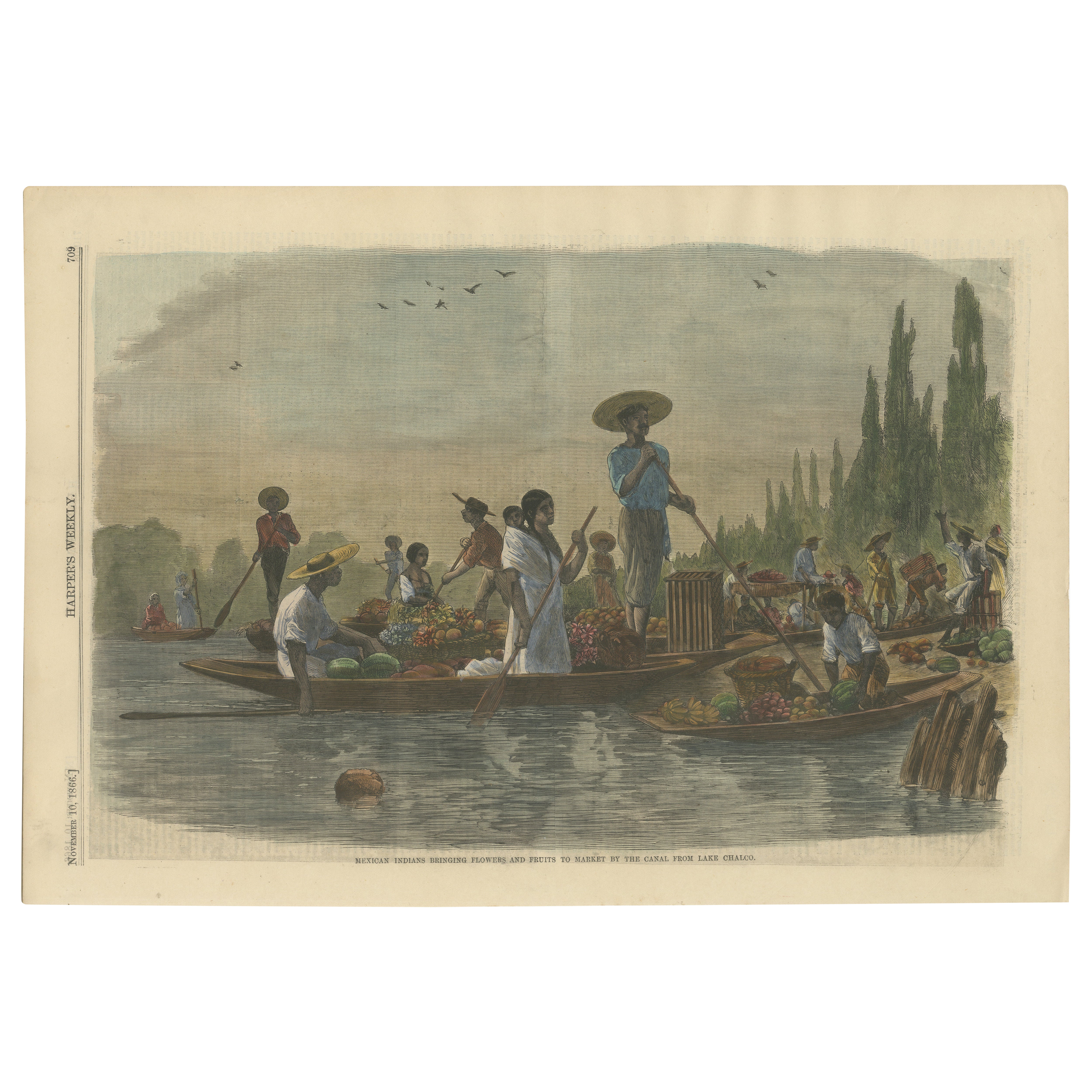
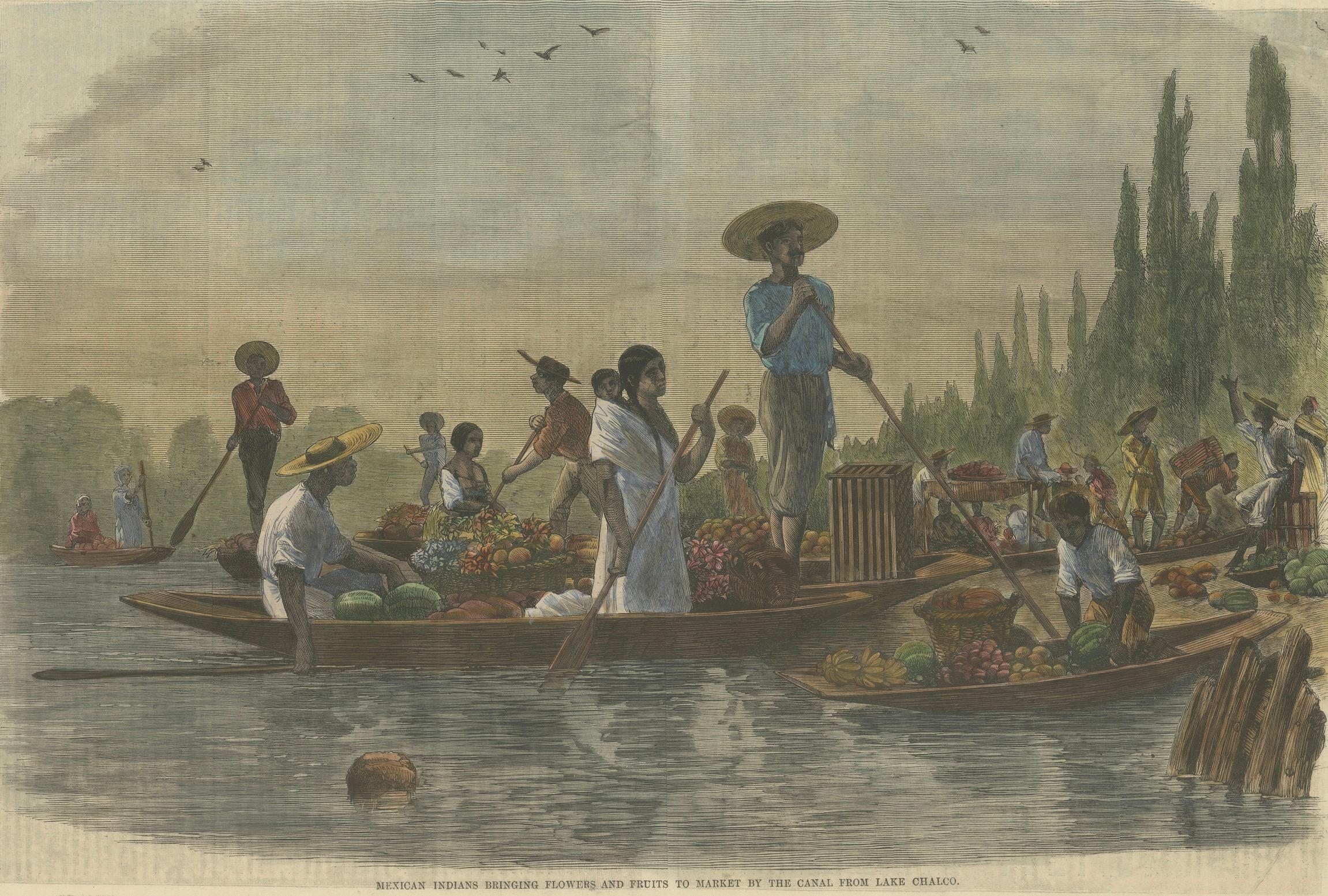
Mexican Indians Bringing Flowers and Fruits to Market, Lake Chalco, 1866
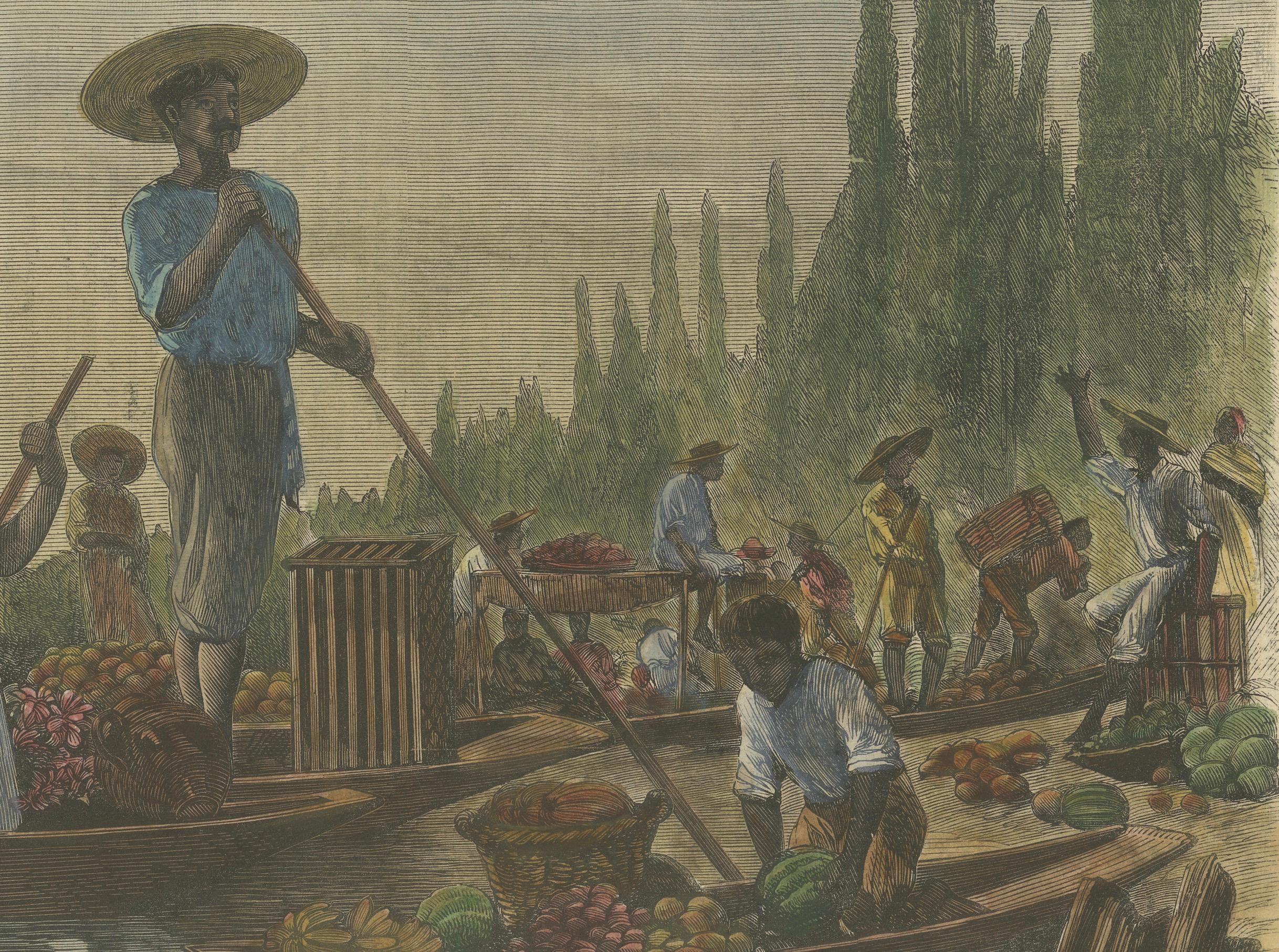
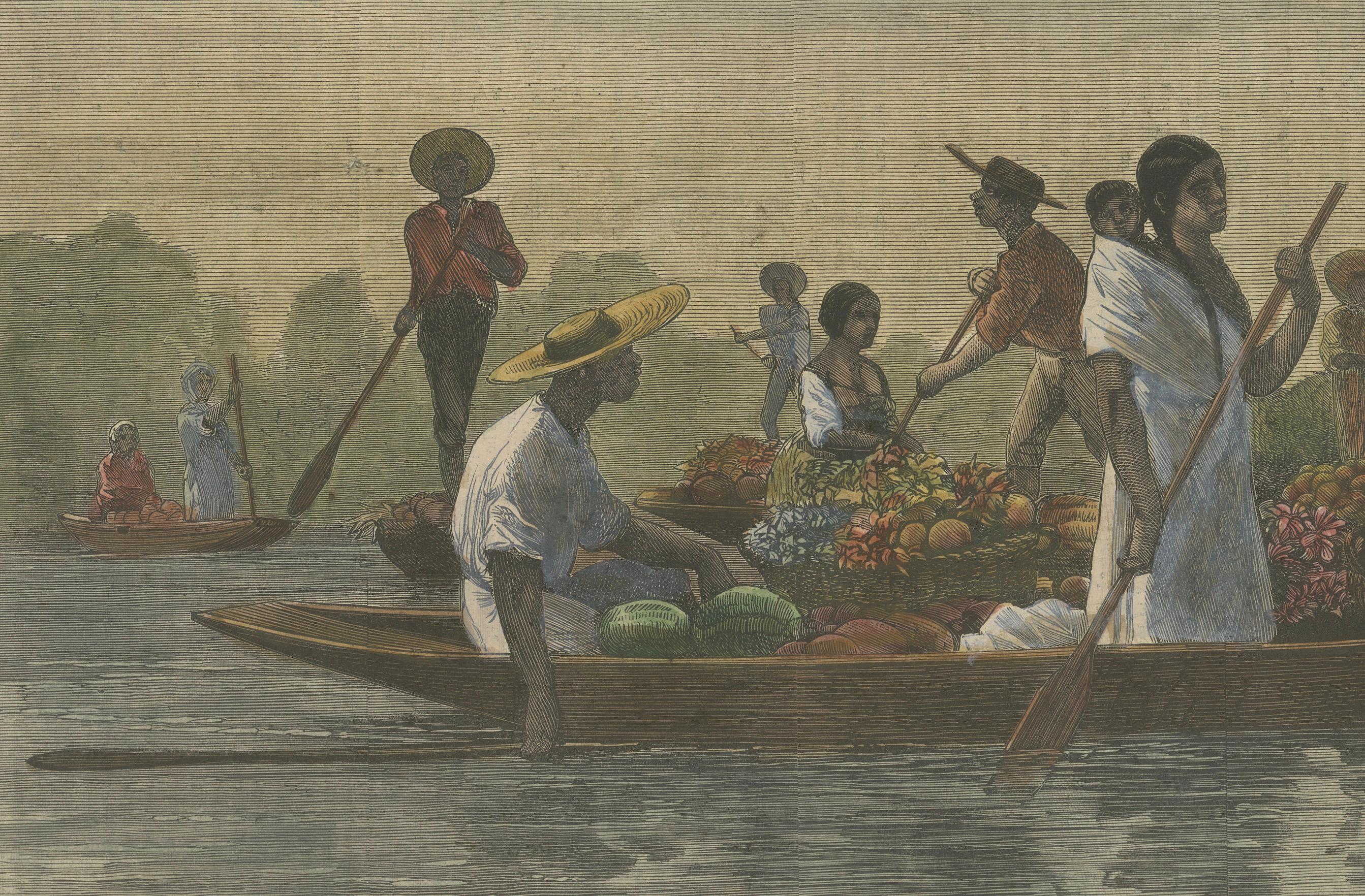
This vibrant hand-colored wood engraving, published in Harper's Weekly on November 10, 1866, beautifully illustrates the bustling activity of indigenous traders along the canals of Lake Chalco, Mexico. The scene captures a traditional way of life as men and women navigate their flat-bottomed boats, or "trajineras," filled with vibrant fruits, vegetables, and flowers destined for the local markets.
The illustration is rich in cultural detail, showcasing figures dressed in traditional attire. Men wear wide-brimmed hats as they skillfully pole their boats through the calm waters, while women wrapped in shawls tend to the produce. The interaction between the figures and their goods highlights the close relationship between the indigenous people and their environment. The lush greenery of the surrounding landscape and the tranquil waterway form a stunning backdrop for this moment of commerce and tradition.
The hand-coloring brings the scene to life, with vivid shades of green, yellow, and red emphasizing the abundance of produce. The artist’s meticulous attention to detail is evident in the reflections on the water, the textures of the boats, and the movement of the traders. Birds flying above and distant figures add depth and dynamism to the composition.
This engraving offers a glimpse into a vibrant, sustainable way of life practiced for generations along the canals of Lake Chalco. It is both a work of art and a historical document, preserving the legacy of Mexico’s indigenous cultures in the 19th century. Perfect for collectors of Mexican history, indigenous traditions, or Victorian-era illustrations, this piece provides a vivid and culturally rich snapshot of a bygone era.