About this sheet
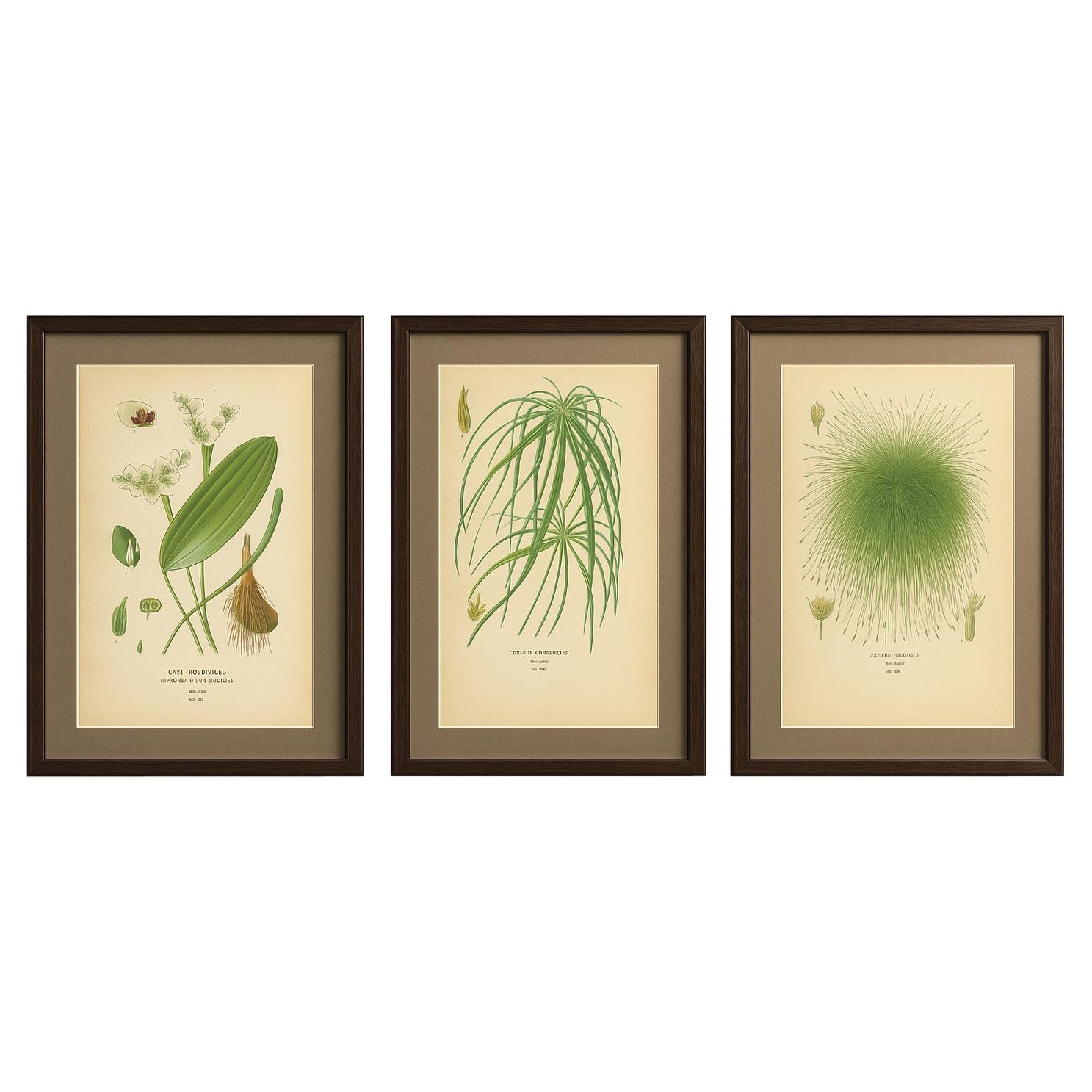
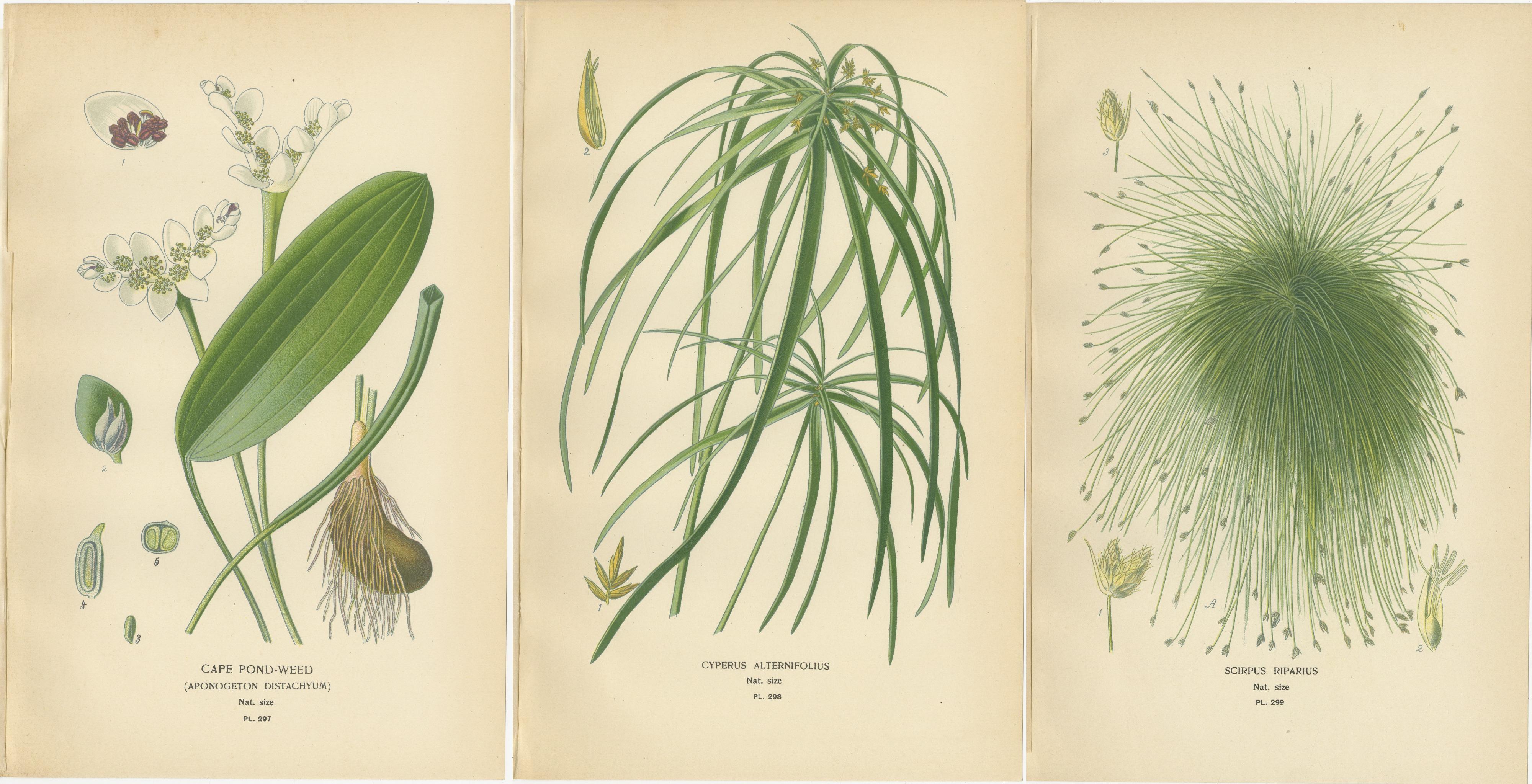
This exquisite set of three antique botanical chromolithographs, dating to around 1897, presents a study of aquatic and marshland plants, rendered with remarkable precision and color. The plates include:
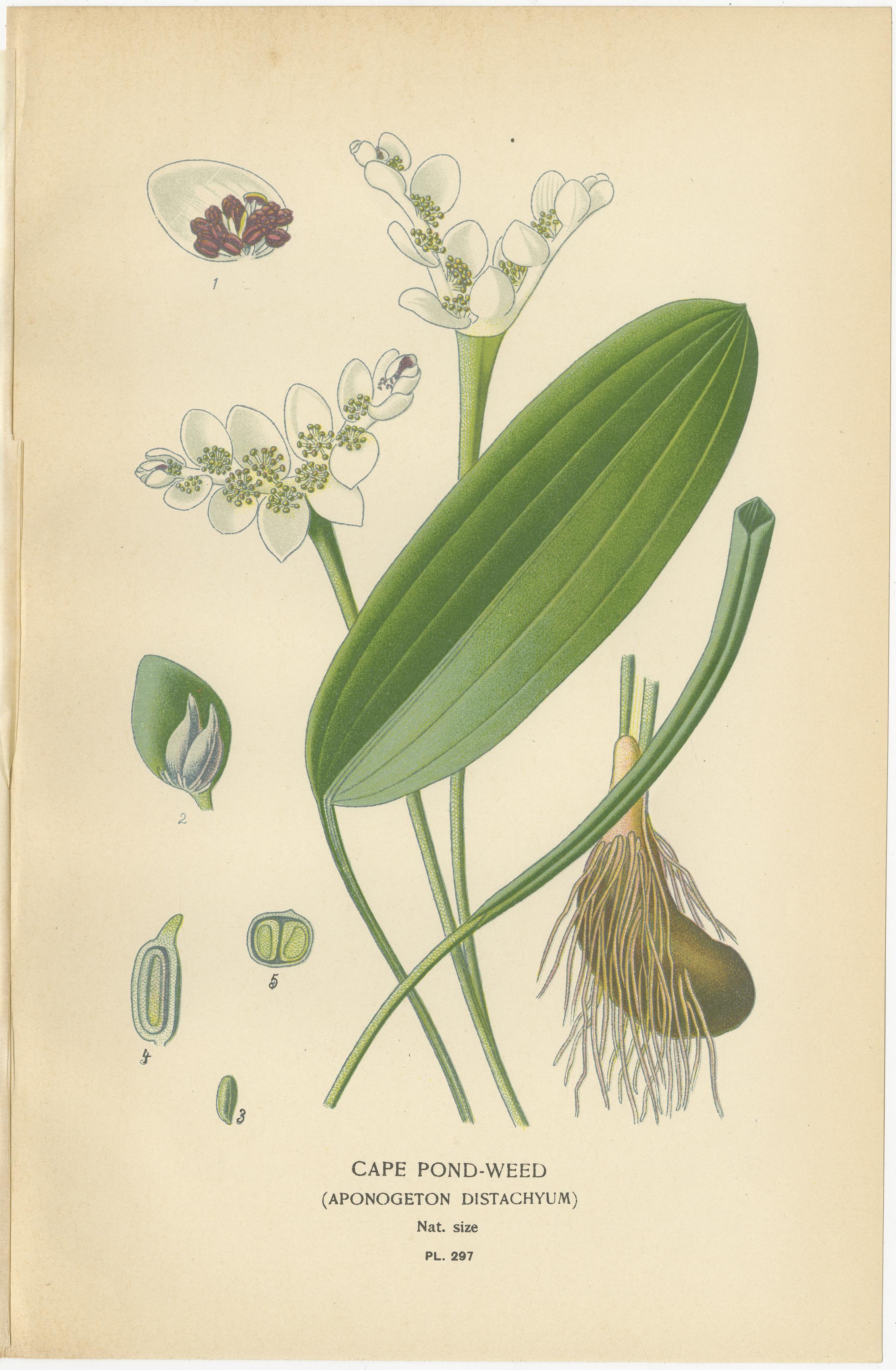
1. Cape Pond-weed (Aponogeton distachyum) – Plate 297
A striking depiction of the South African water plant, also known as Water Hawthorn. Its elegant floating leaves and delicate white flowers are shown in natural size, accompanied by fine details of its root structure and floral anatomy.
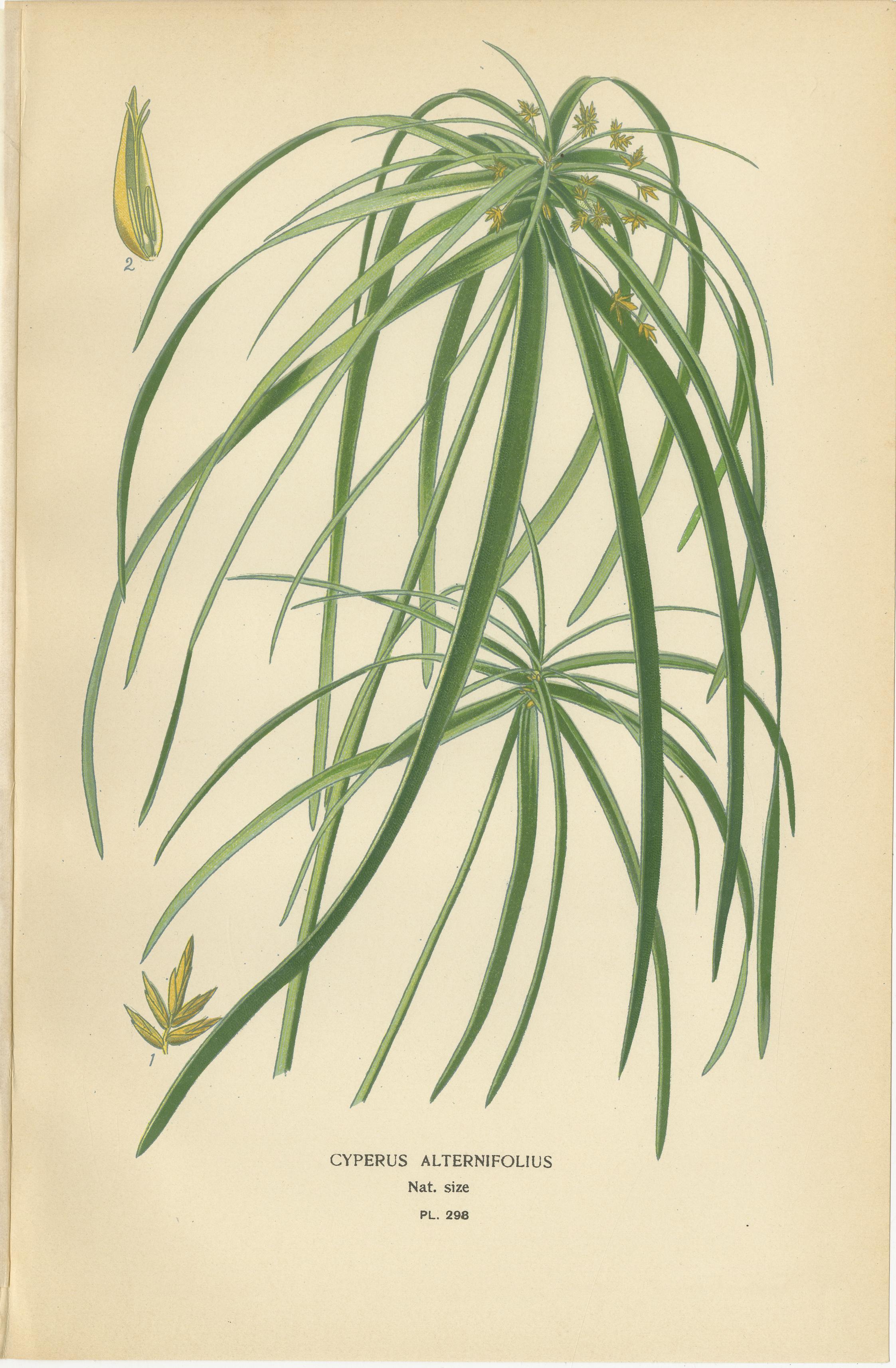
2. Cyperus alternifolius – Plate 298
Commonly referred to as the Umbrella Plant, this species is native to Madagascar and thrives in wetland habitats. The lithograph highlights its radiating whorls of leaves, used often as an ornamental aquatic plant.
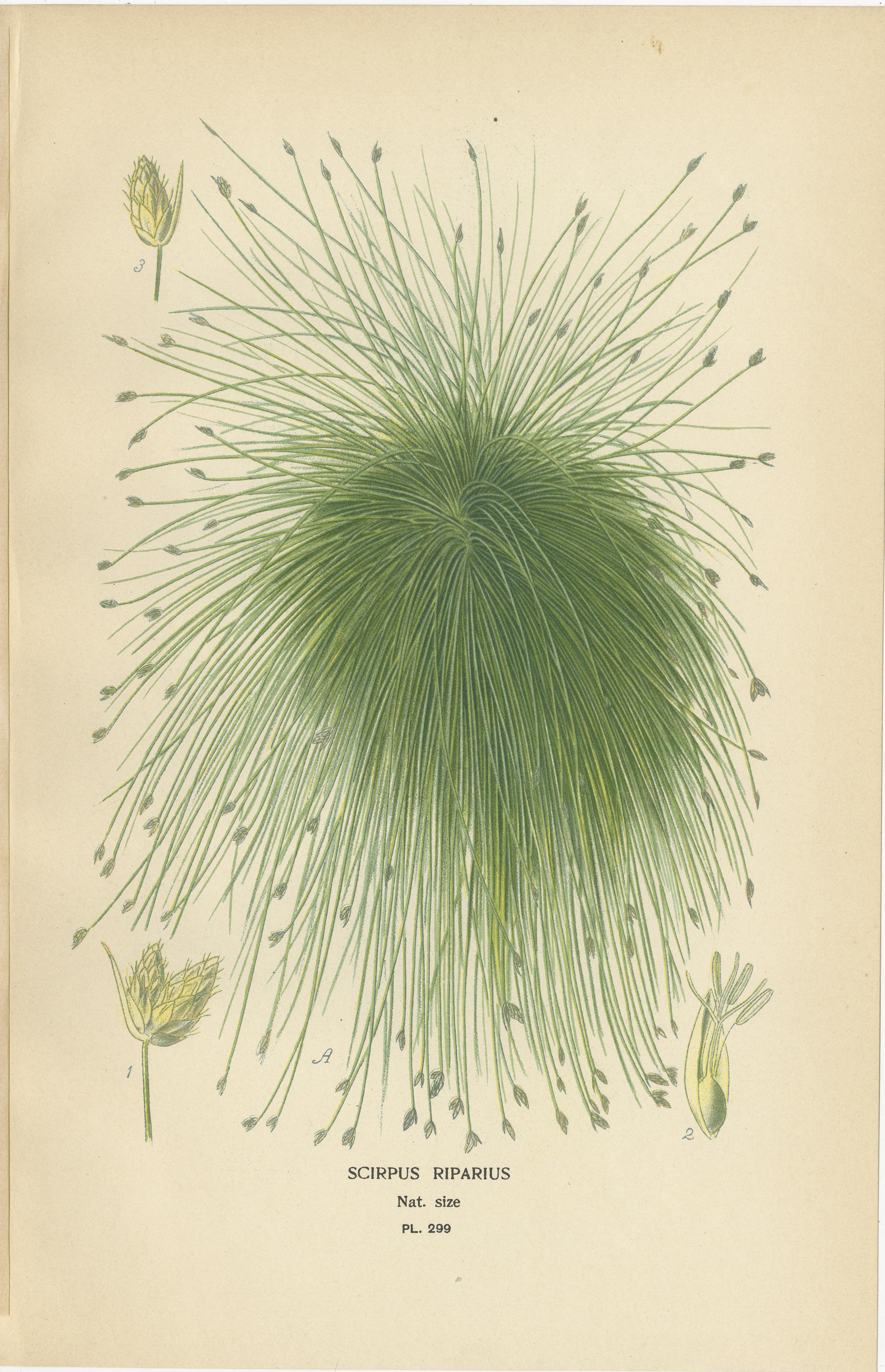
3. Scirpus riparius – Plate 299
A graceful portrayal of a riparian sedge, characterized by its dense tuft of slender, arching stems. The composition captures the plant’s textural elegance, with inset details of the seed head and floral elements.
Together, these plates demonstrate the late 19th-century fascination with both exotic and native flora, combining scientific accuracy with artistic beauty. Originally part of a botanical reference work, these prints reflect the golden era of chromolithography, when color printing achieved new levels of vibrancy and detail.
Condition report: Very good condition with rich coloration. Minor age toning consistent with age; wide margins preserved. Suitable for framing. Frame is not included.
Framing tips: A natural wood or light oak frame with a cream or soft green mat will harmonize with the organic subject, while a gilt frame with a double mat (ivory and pale green) will add a touch of elegance, ideal for a botanical collection wall.
Technique: Chromolithograph
Maker: Unknown, European, circa 1897