Heritage Blossoms: A Trio of 1845 Hand-Colored Botanical Engravings
€ 440
Original antique · The actual sheet photographed · Certificate of authenticity on request · Sold unframed · Worldwide shipping from € 15 (rates)
Date
1845
Sheet size
26.5 × 17.5 cm (10.4 × 6.9 in)
Condition
Good
Reference
BG-13261-33, BG-13261-47, BG-13261-39
What the condition grades mean
Excellent
Bright and clean, with no faults worth mentioning.
Very good
Only light signs of age, such as faint toning.
Good
Normal signs of age for a sheet of this period: toning, some foxing, small marks or neat old repairs.
Fair
Clear faults such as staining, tears or repairs, priced to match.
Every fault we see is written in the condition note, and the whole sheet is shown uncropped in the photos.
Condition
Good condition. Minor toning due to age and handling, especially around the edges. Please review the images for further condition details.
About this sheet
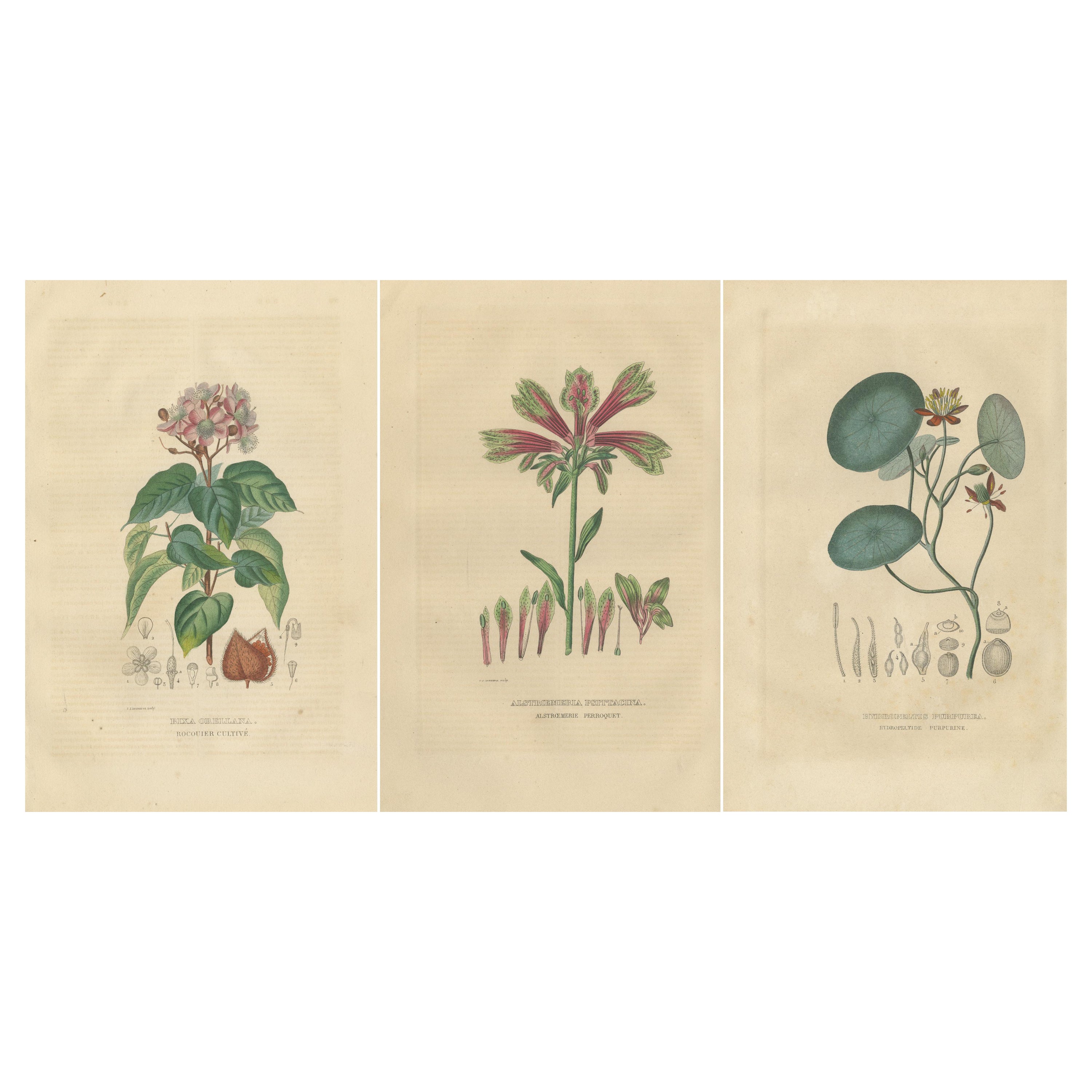
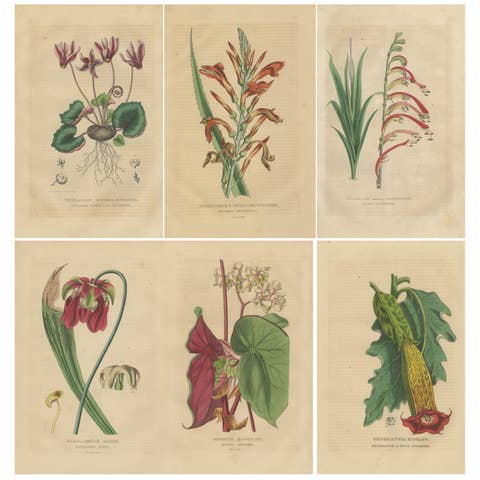
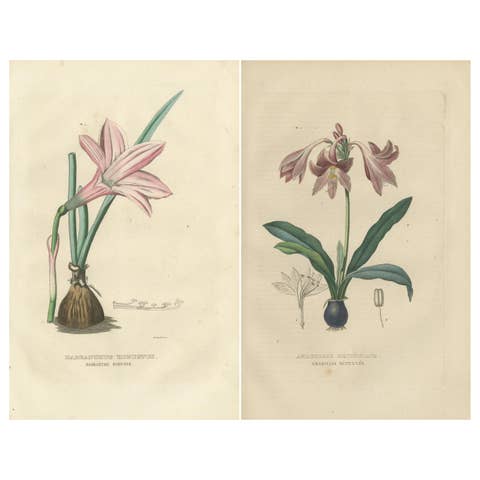
These exquisite engravings from the 'Dictionnaire Classique des Sciences Naturelles' epitomize the symbiosis of art and science in the mid-19th century. Authored by Pierre Auguste Joseph Drapiez and published in Brussels in 1845, the dictionary is a significant compilation of natural science knowledge that draws upon the foundational work of celebrated naturalists like Buffon, Daubenton, Lacepede, Cuvier, and de Jussieu.
The botanical representations featured here include:
1. "Bixa Orellana," commonly known as the annatto or achiote, prized for its seeds that produce a natural orange-red dye. 2. "Alstroemeria Psittacina," also known as the parrot lily or parrot flower, recognized for its strikingly patterned petals reminiscent of a parrot's plumage. 3. "Nymphaea Alba," the elegant white water lily, revered for its serene beauty and symbolic associations in various cultures.
These hand-colored engravings would have been crafted with painstaking detail, aiming to achieve a lifelike portrayal that was as scientifically accurate as it was aesthetically pleasing. Each plate likely captures the intricate botanical features of the plants, such as the fine texture of leaves, the delicate gradation of petal colors, and the specific structures of the flowers and fruits.
Drapiez's endeavor with these illustrations would have been to provide a visual companion to the textual content, thereby facilitating a deeper understanding of the natural world for scholars, botanists, and horticulturists of the era. By marrying meticulous artistry with rigorous scientific inquiry, these prints serve as educational tools and works of art that reflect the intellectual spirit of the time.
The 'Dictionnaire Classique des Sciences Naturelles' and its illustrations stand as a testament to the rich legacy of natural history and to Drapiez's dedication to capturing the wonder of the natural world, thereby providing an invaluable resource for both contemporary audiences and future generations to appreciate the history of botanical exploration and documentation.