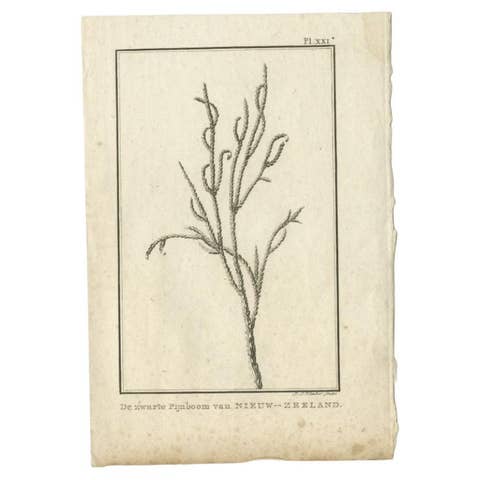
Botanical Study of Various Plant Structures in an Original Engraving, 1803
€ 140
Original antique · The actual sheet photographed · Certificate of authenticity on request · Sold unframed · Worldwide shipping from € 15 (rates)
Date
1803
Sheet size
24 × 15 cm (9.4 × 5.9 in)
Condition
Good
Reference
BG-13748-70
What the condition grades mean
Excellent
Bright and clean, with no faults worth mentioning.
Very good
Only light signs of age, such as faint toning.
Good
Normal signs of age for a sheet of this period: toning, some foxing, small marks or neat old repairs.
Fair
Clear faults such as staining, tears or repairs, priced to match.
Every fault we see is written in the condition note, and the whole sheet is shown uncropped in the photos.
Condition
The engraving is well-preserved, with clear lines and vibrant colors. Slight yellowing of the paper and minor edge wear are present, consistent with its age. The print remains in excellent condition for display or study.
About this sheet
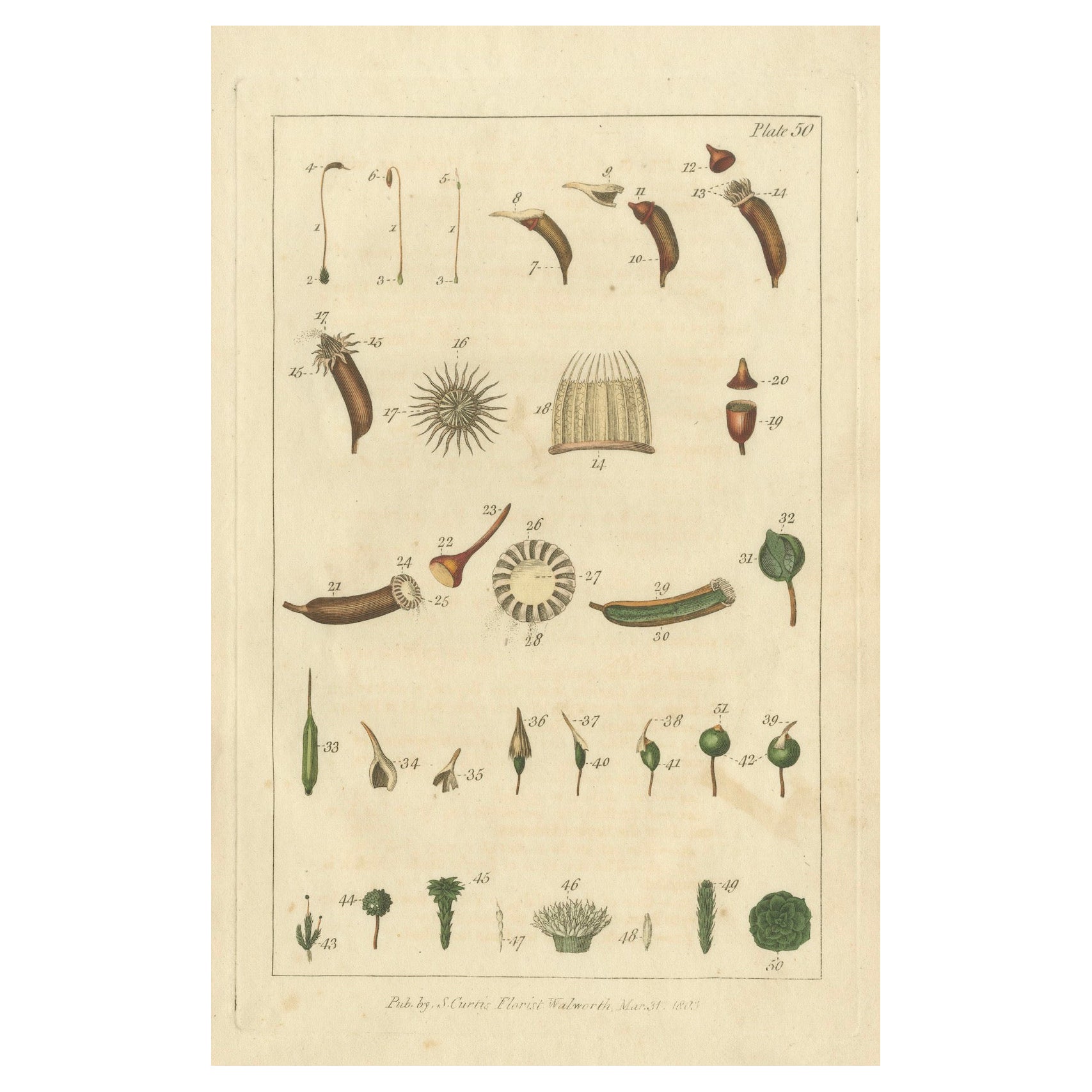
Botanical Study of Various Plant Structures
This engraving is from the publication "Flora Londinensis," an illustrated work detailing the flora found around London. The specific plate shown is "Plate 50," published in the year 1803.
Published by Samuel Curtis, a renowned florist and botanist, based in Walworth. The artist of this piece is likely William Kilburn, known for his intricate botanical illustrations. Kilburn was a notable textile designer and botanical illustrator, whose work greatly contributed to 18th-century botanical art. His attention to detail and ability to capture the essence of plant life made his illustrations highly valued.
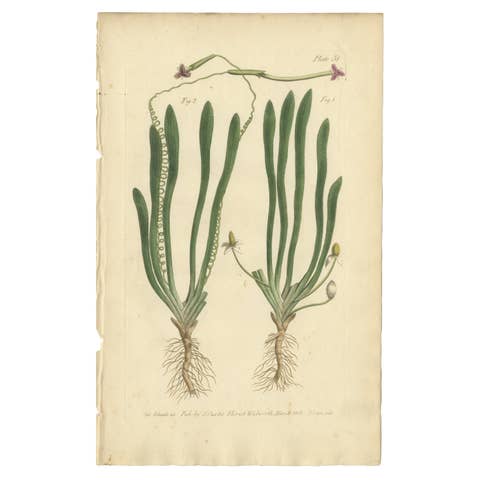
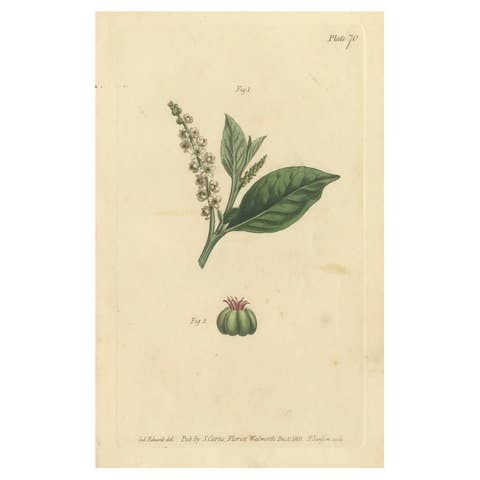
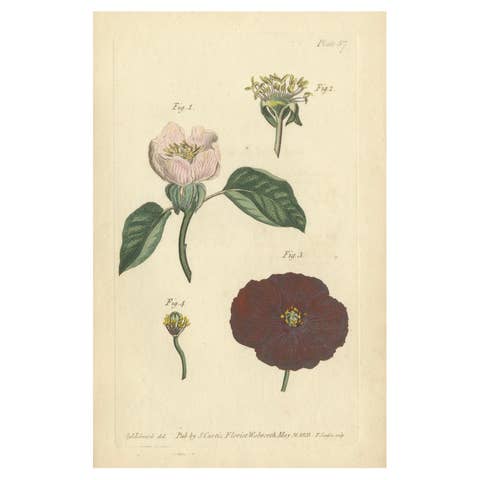
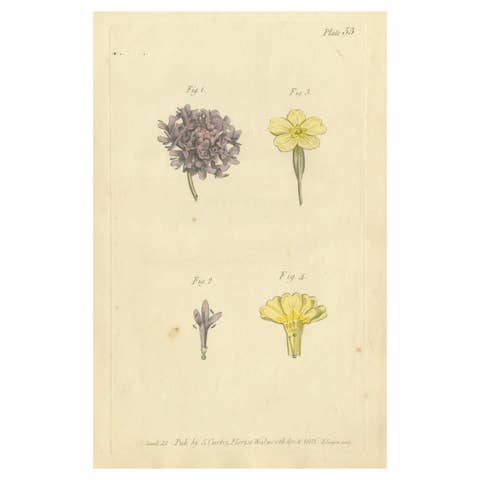
This engraving features a detailed botanical study, showing various parts of plants such as seeds, pods, and leaves. Each element is carefully labeled with numbers, indicating the diversity of forms found in nature. The precision in line work and subtle coloring demonstrates the artist's expertise in botanical illustration, making this engraving not only scientifically valuable but also aesthetically pleasing. Such works were critical in the early study of botany, aiding scientists and enthusiasts in plant identification and classification.
The engraving is well-preserved, with clear lines and vibrant colors. Slight yellowing of the paper and minor edge wear are present, consistent with its age. The print remains in excellent condition for display or study.