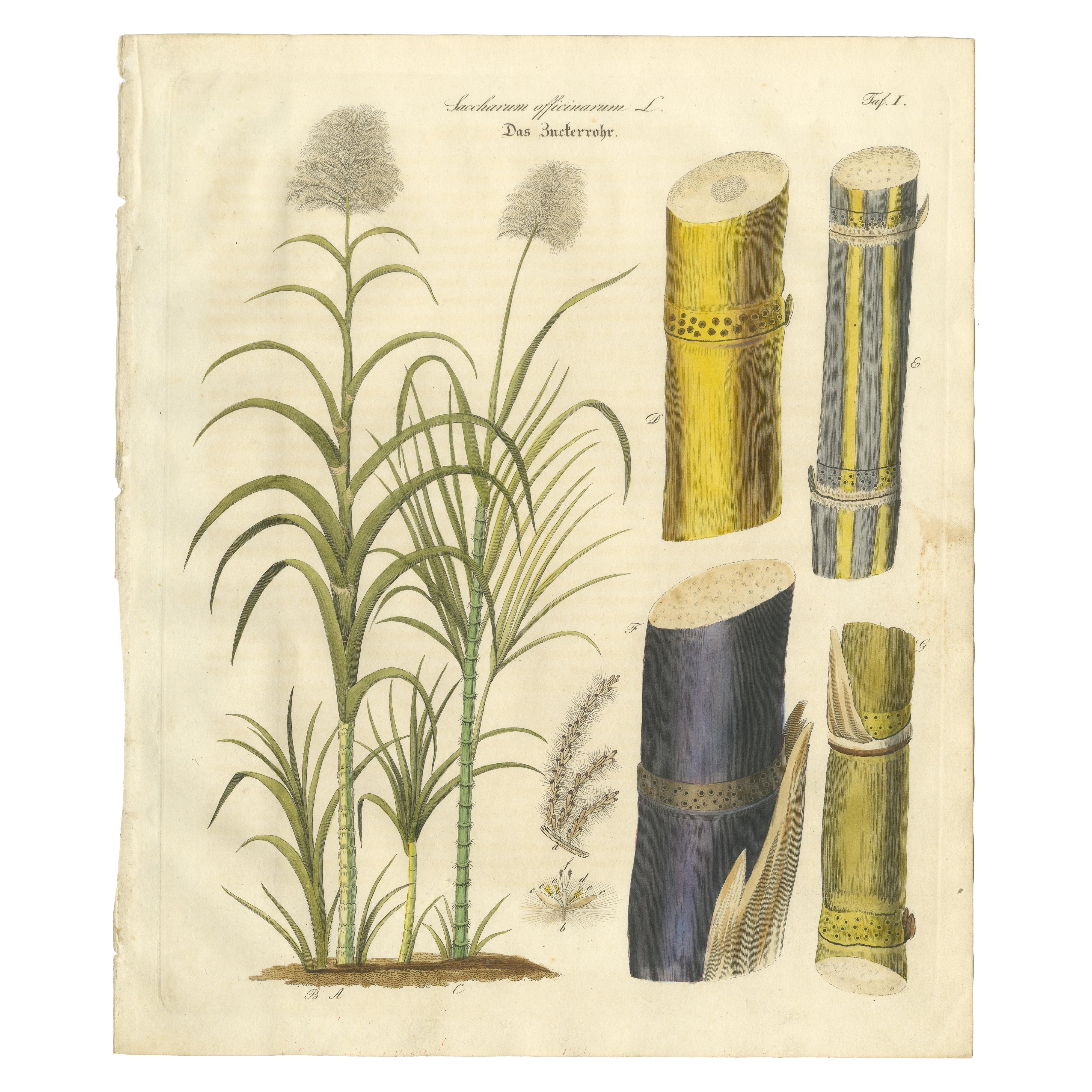
Antique Sugarcane Botanical Print, Saccharum officinarum, Hand Colored, c.1831
€ 880
One of a kind: this is the sheet in the photographs. Ships from Langweer, the Netherlands.
Date
1831
Sheet size
27.1 × 22.7 cm (10.7 × 8.9 in)
Condition
Good
Reference
BG-14181-1
Condition
Moderate age-related toning and light surface soiling, consistent with early 19th-century botanical plates. No losses or tears. Overall well preserved and visually appealing.
About this sheet
Antique Sugarcane Botanical Print, Saccharum officinarum, Hand Colored
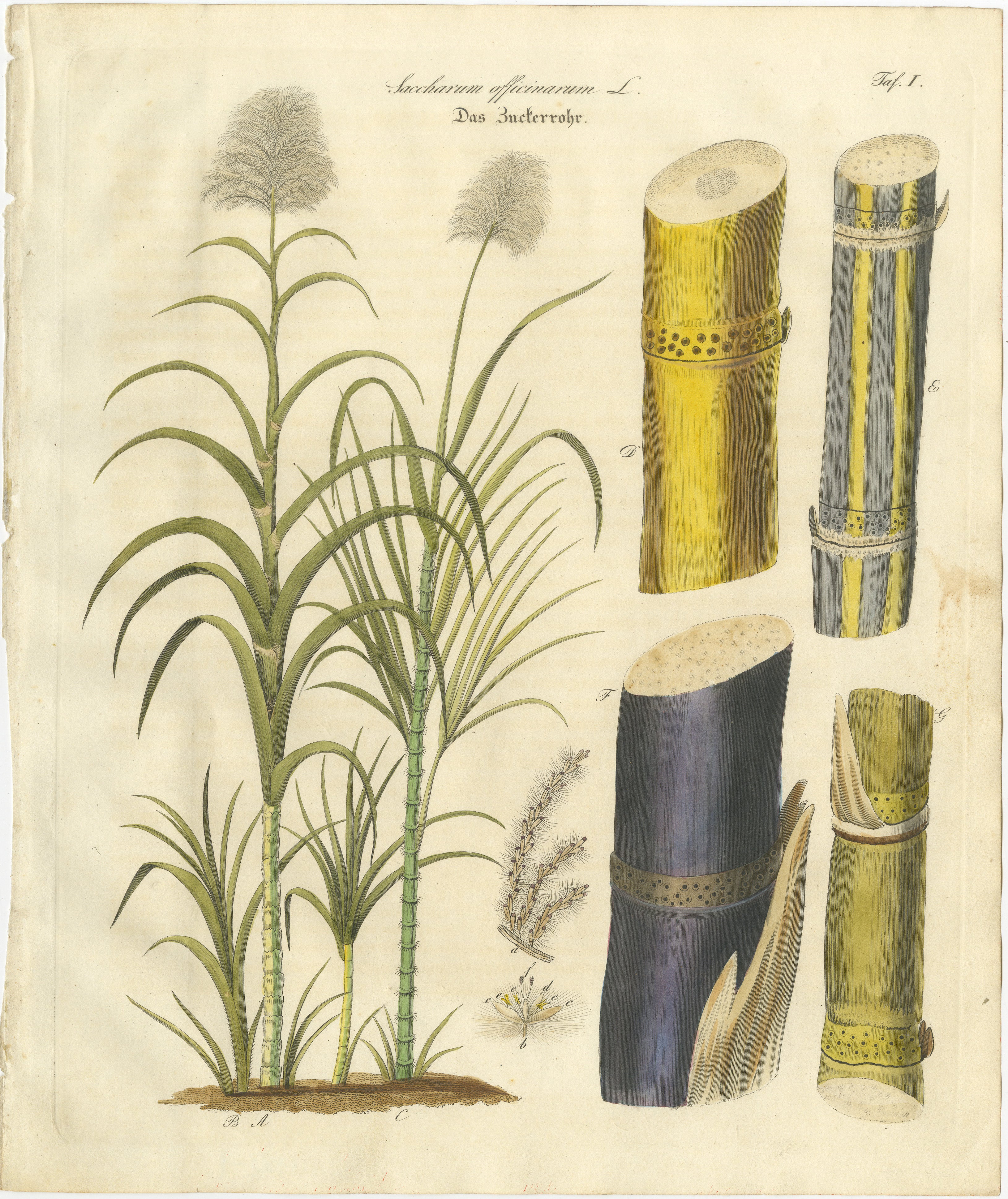
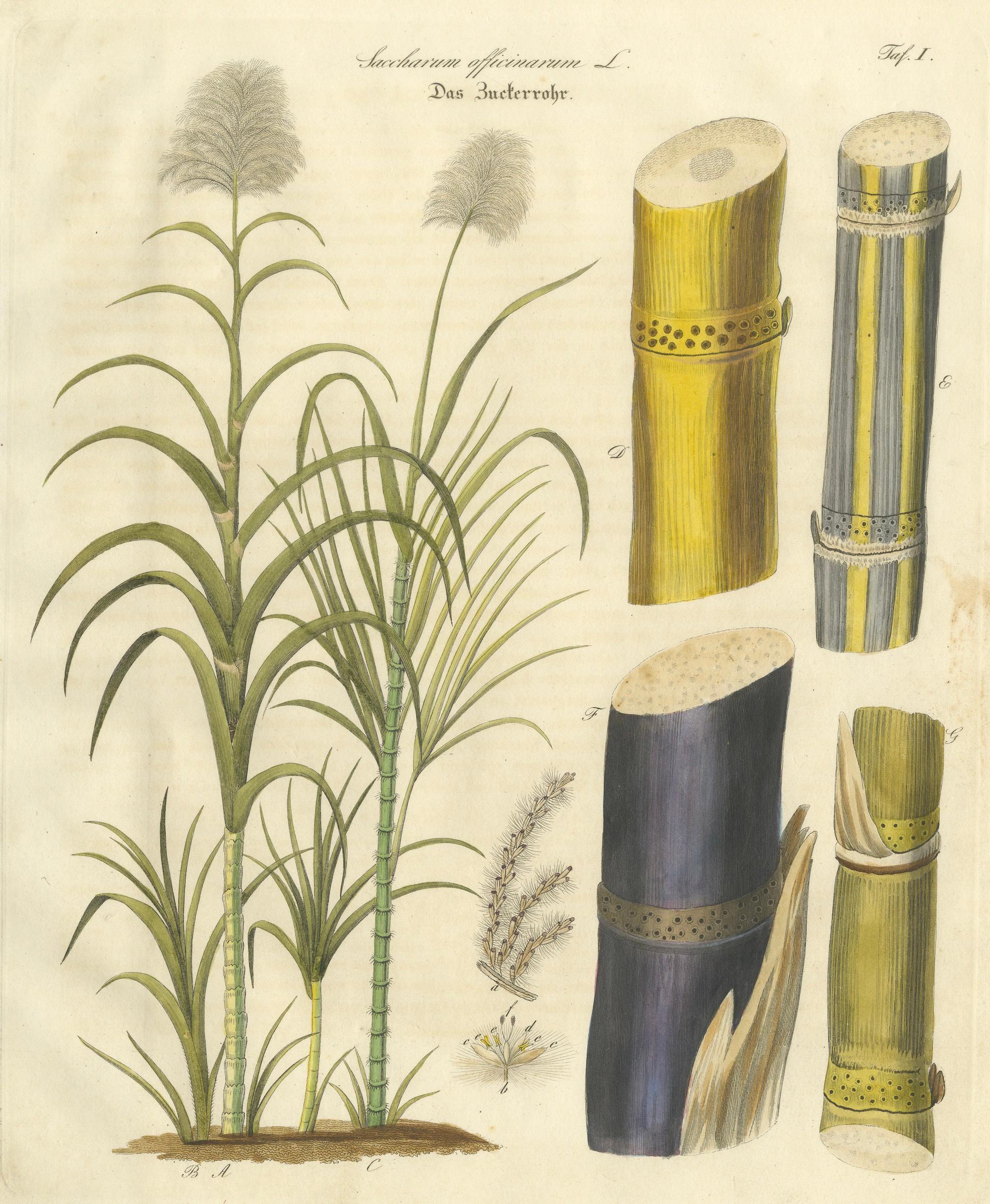
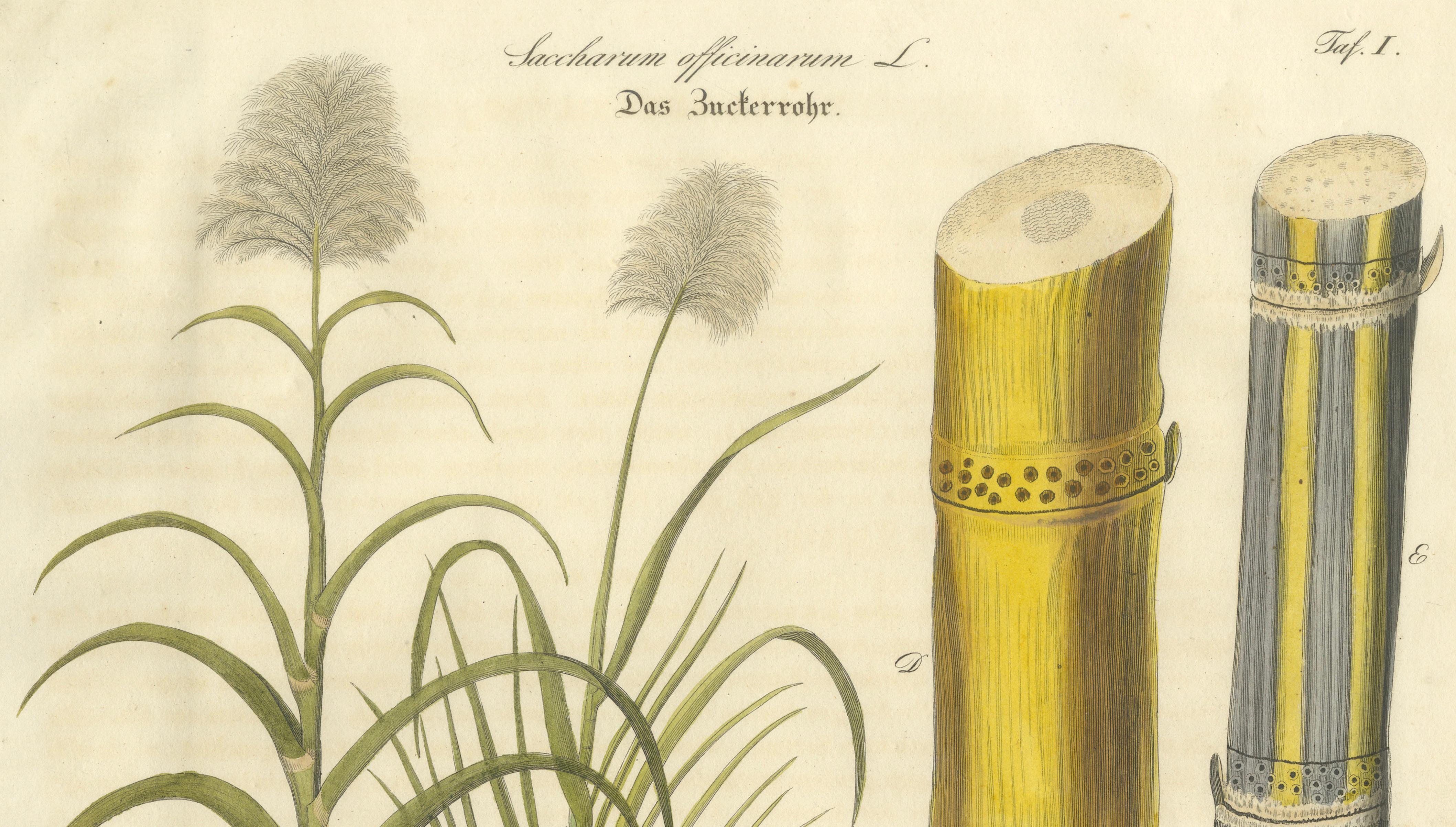
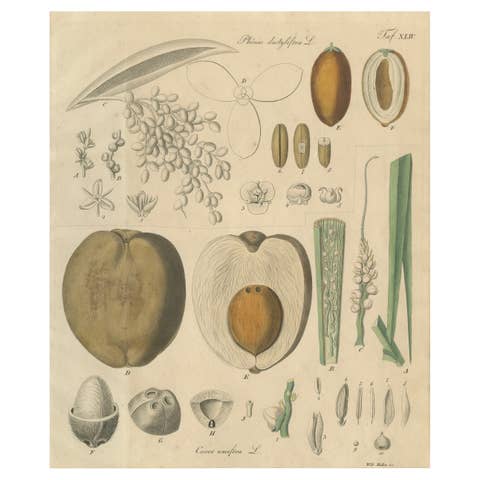
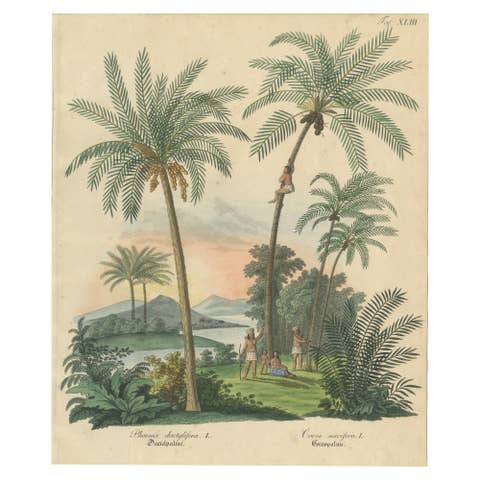
This finely executed botanical engraving depicts Saccharum officinarum, the sugarcane plant, one of the most important agricultural commodities of the early modern and industrial world. Shown here in full growth with carefully rendered leaves and segmented stalk, the composition is complemented by precise anatomical details of the cane and its structure, reflecting the scientific rigor of early 19th-century economic botany.
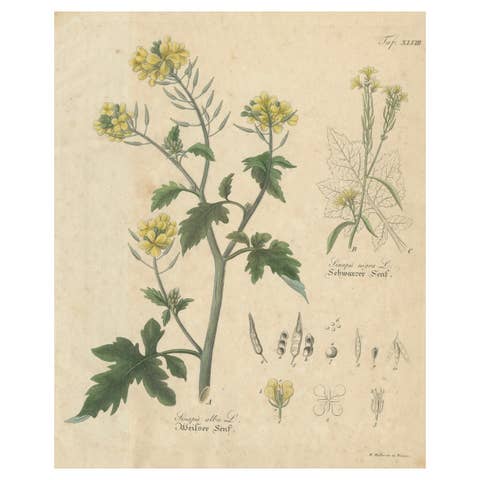
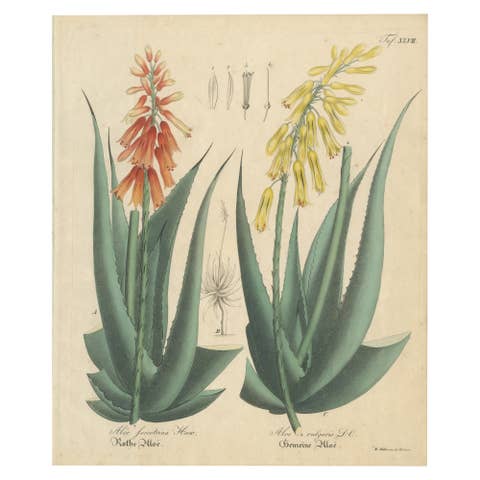
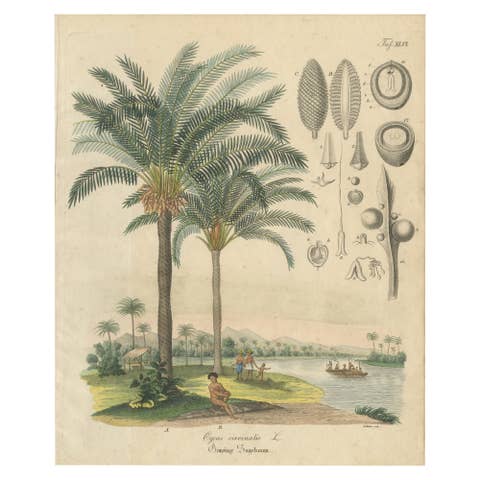
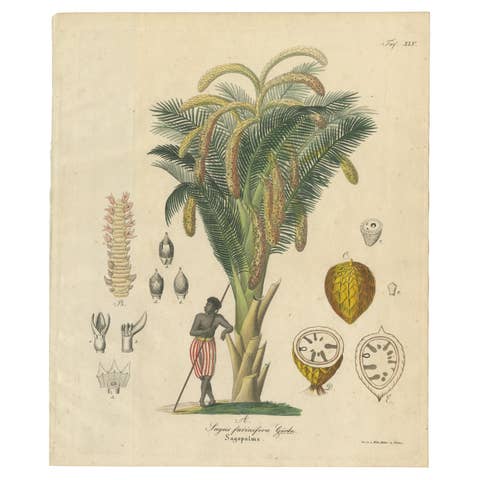
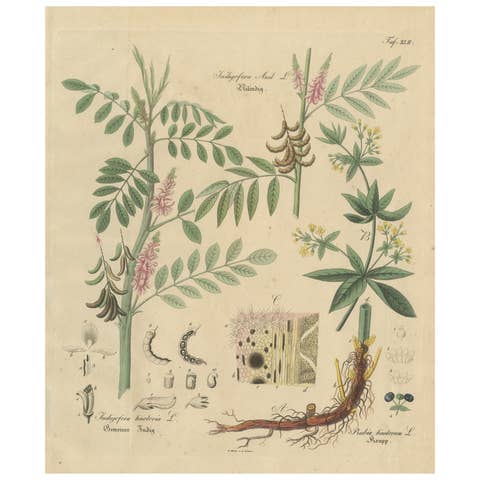
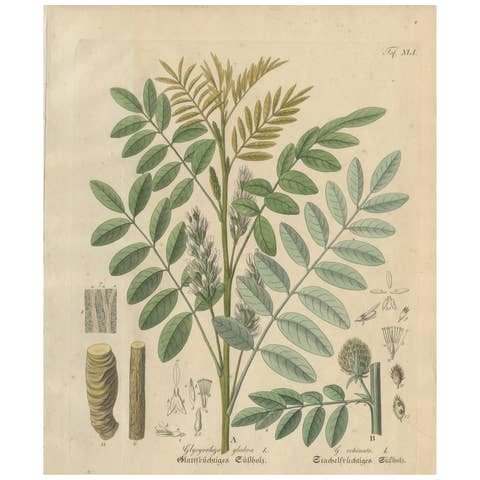
The plate originates from Jonathan Carl Zenker’s Merkantilische Waarenkunde, a landmark German publication devoted to the natural history of global trade goods. Works from this series were intended not merely for botanists, but for merchants, manufacturers, and administrators involved in colonial and international commerce. Sugarcane, central to global sugar production and closely tied to Caribbean and Asian plantation economies, was among the most commercially significant plants of its time.
The engraving is printed on laid paper and finished with original hand coloring. The greens of the foliage and the subtle tonal shifts of the stalk have been applied with restraint, producing a refined and balanced image well suited for both scholarly and decorative settings. This plate works particularly well as a standalone statement piece in a kitchen, dining room, or library, and also pairs naturally with other colonial crop subjects such as coffee, cacao, or tea.
Condition report: Moderate age-related toning and light surface soiling, consistent with early 19th-century botanical plates. No losses or tears. Overall well preserved and visually appealing.
Framing tips: A warm ivory or soft cream mat enhances the original paper tone. A walnut or dark oak frame reinforces the historical and material character of the subject.
Technique: Copper engraving with original hand coloring Maker: Jonathan Carl Zenker, Germany, 1831–1832