About this sheet
Original antique hand-colored copper engraving depicting a spectacular large grasshopper or locust, published in Friedrich Justin Bertuch’s celebrated “Bilderbuch für Kinder” around the turn of the 19th century.
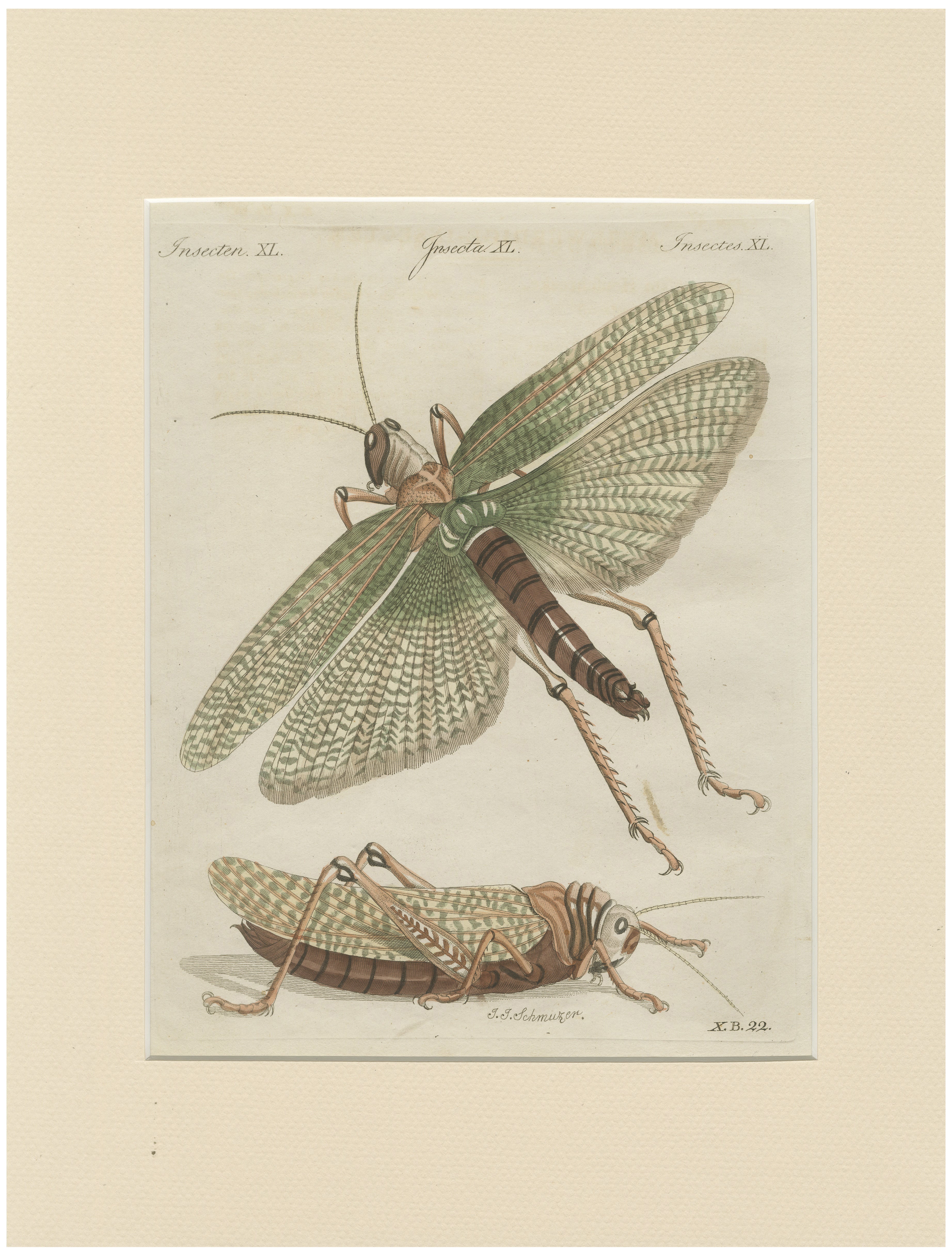
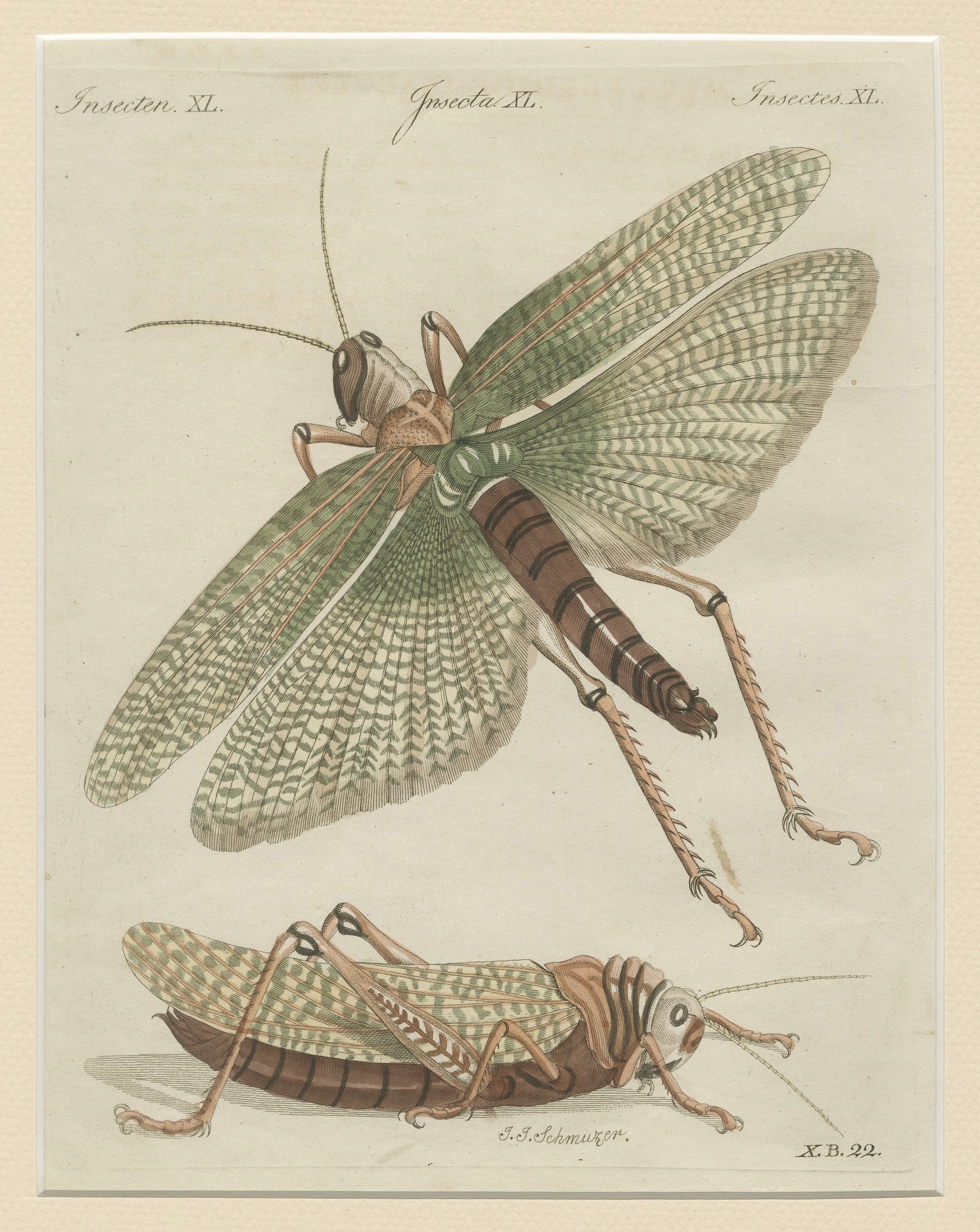
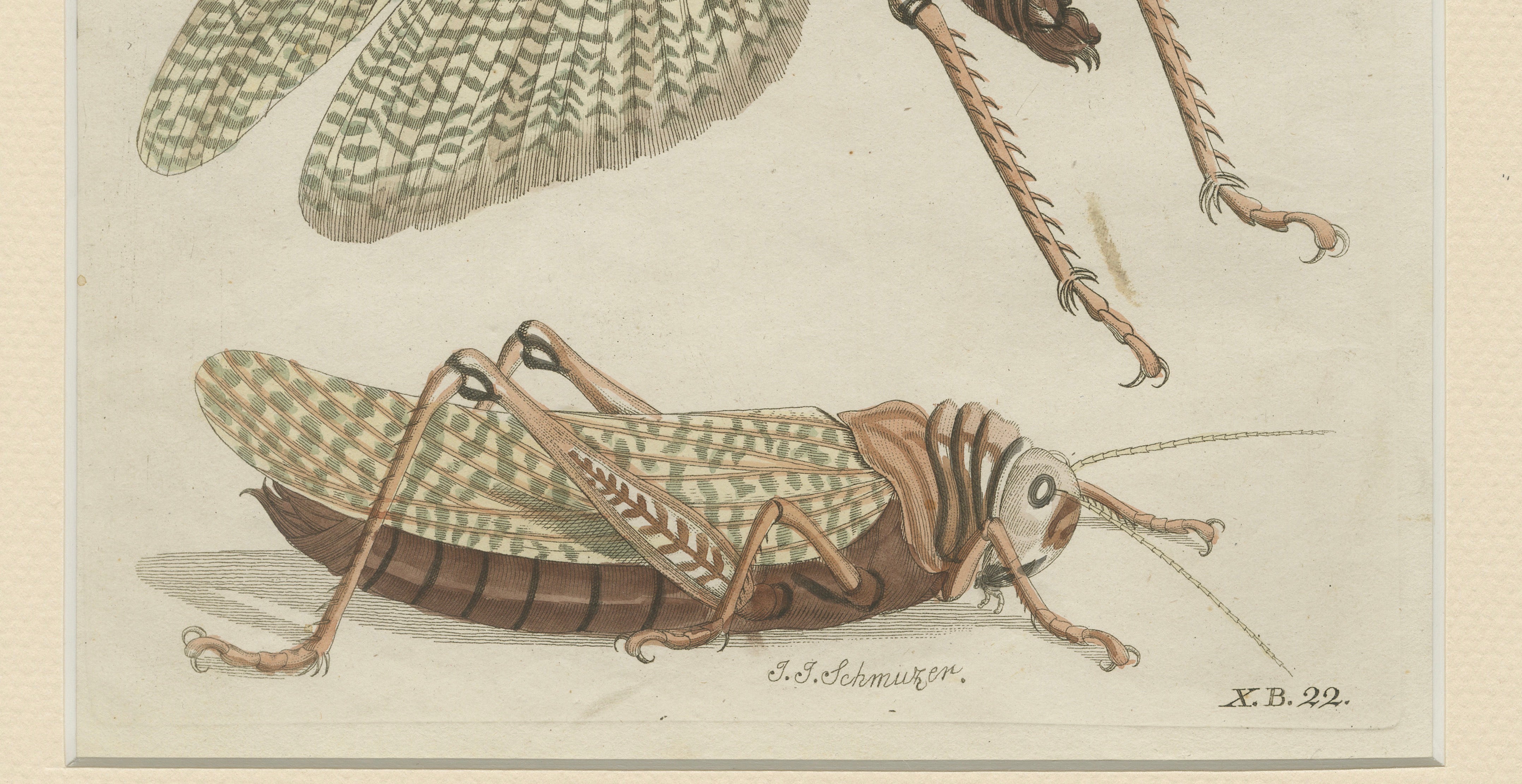
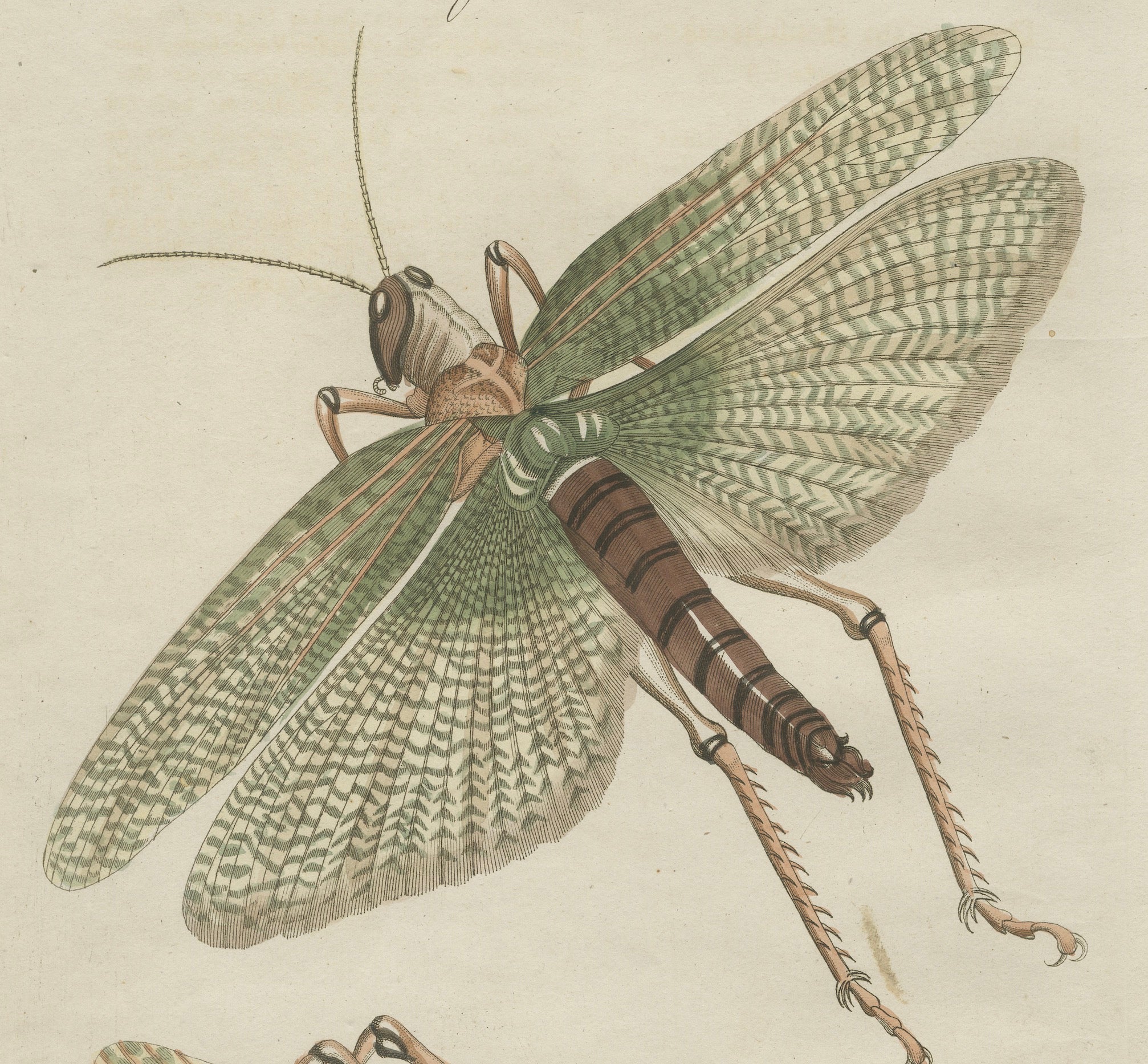
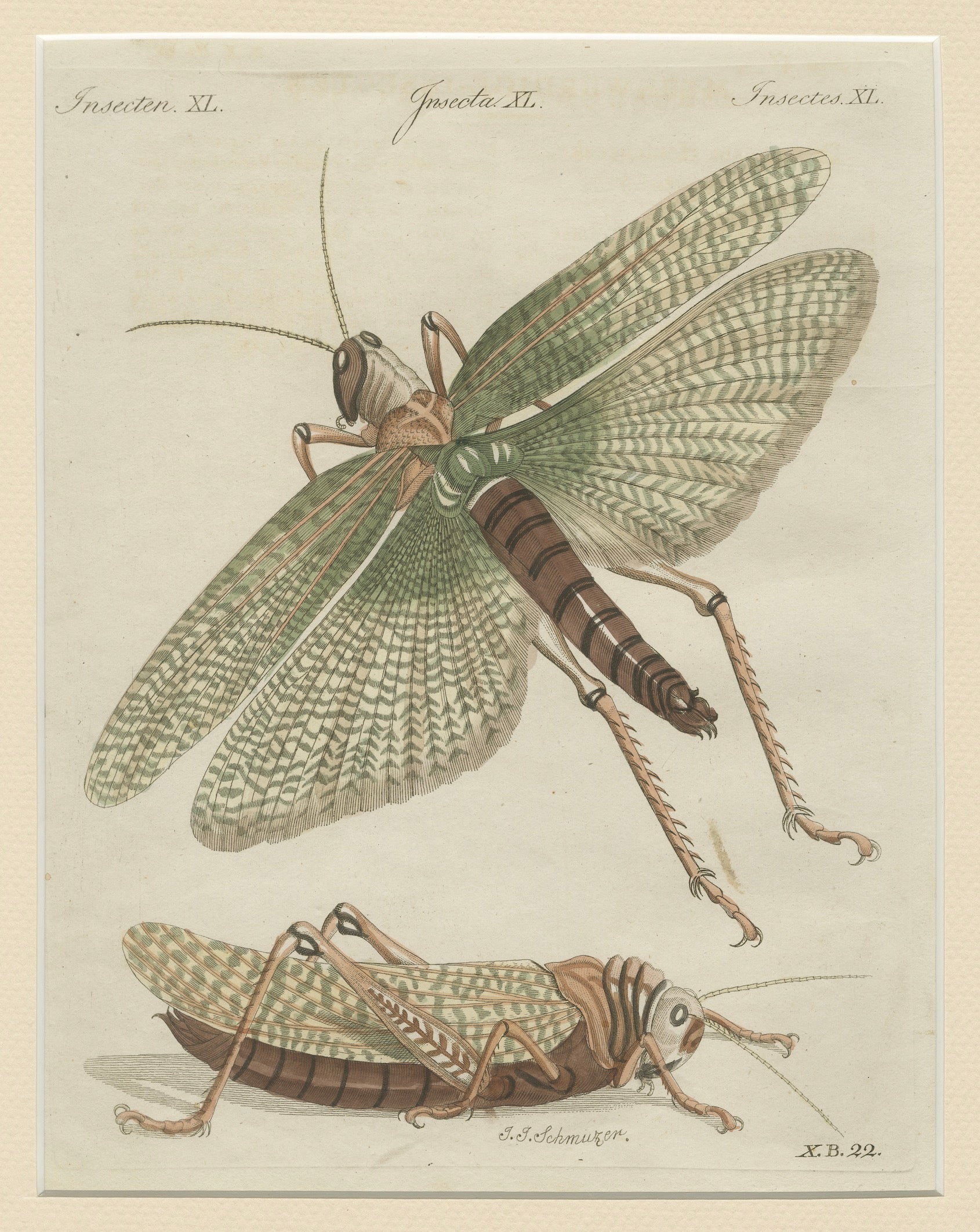
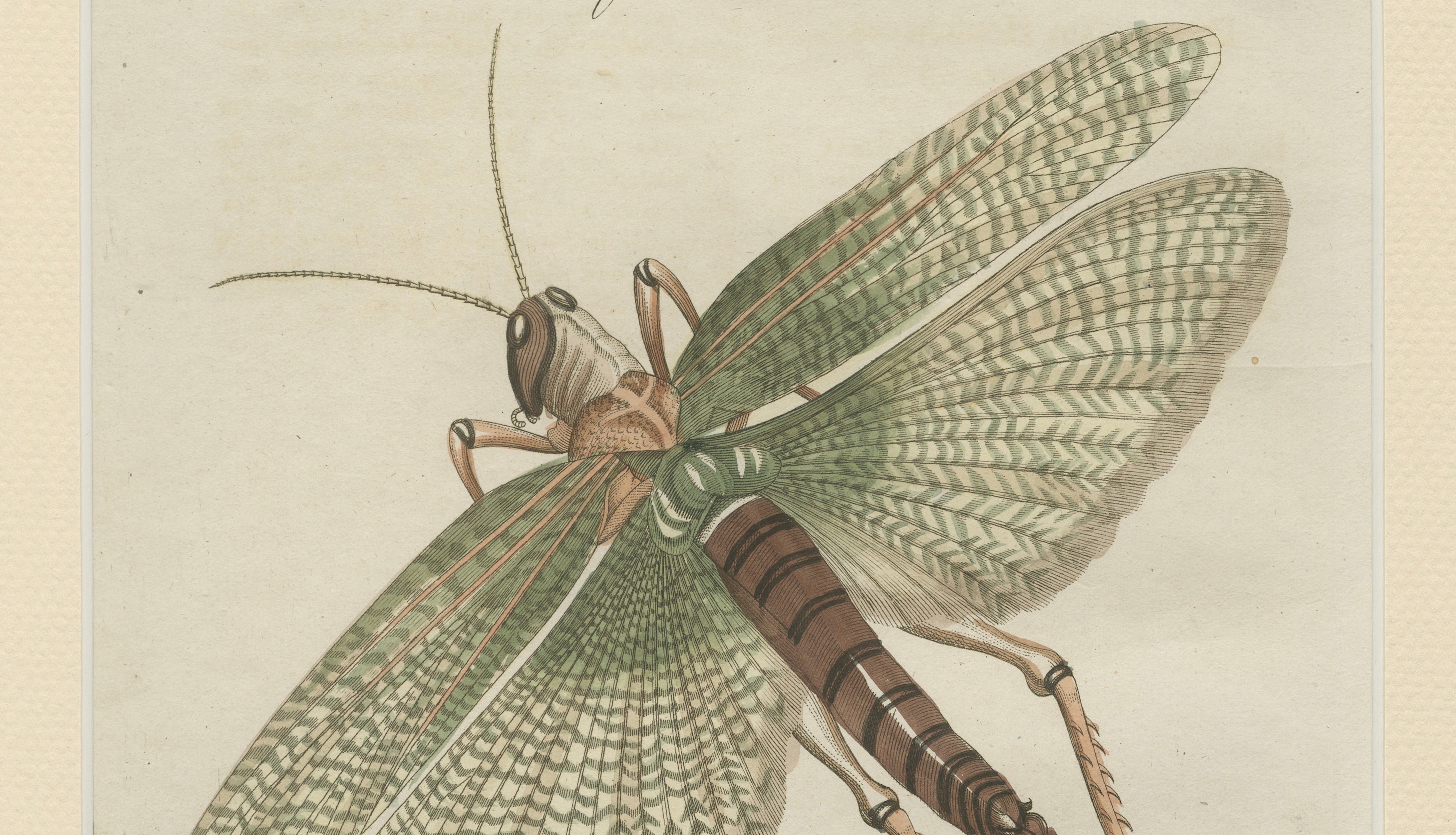
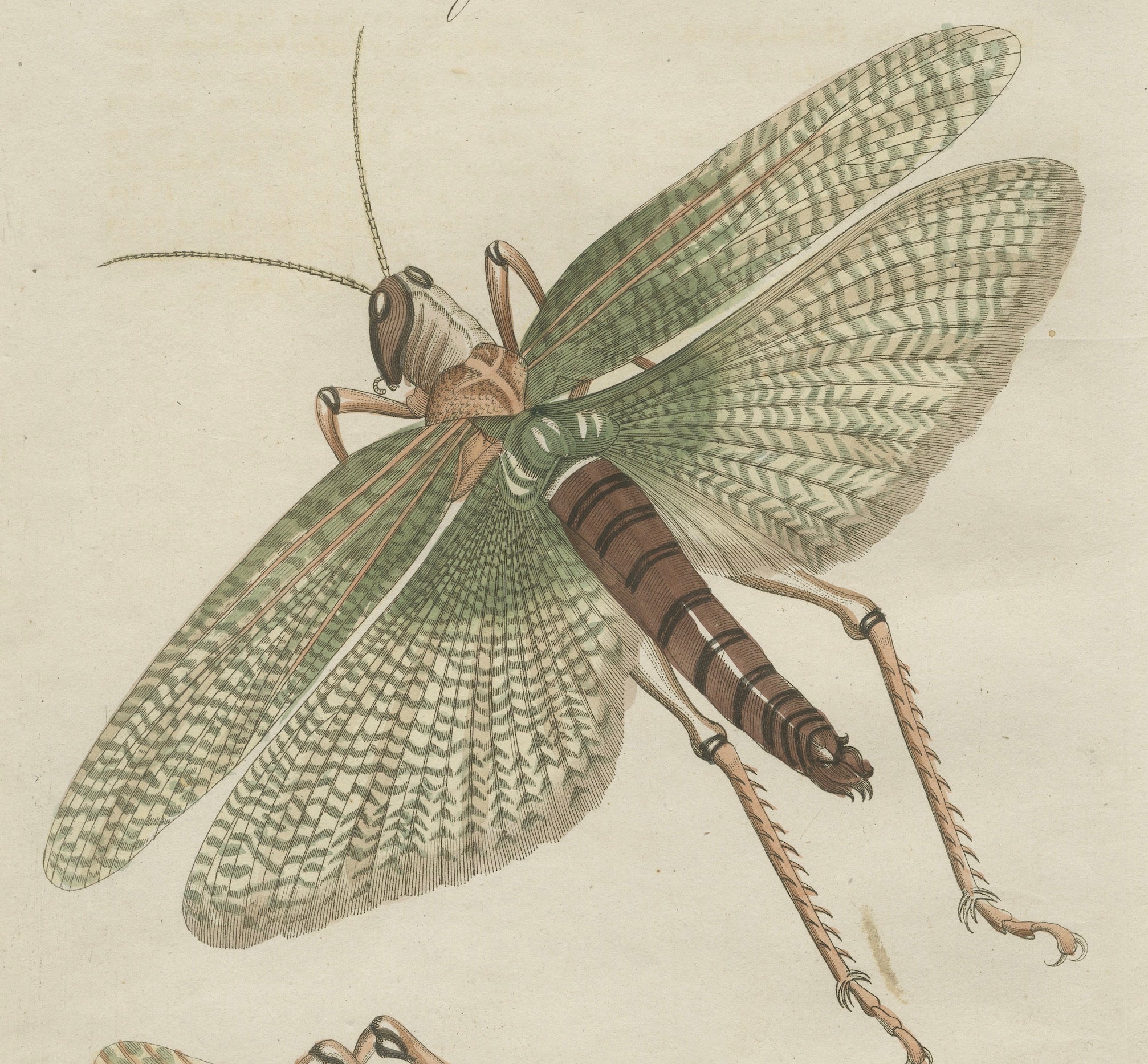
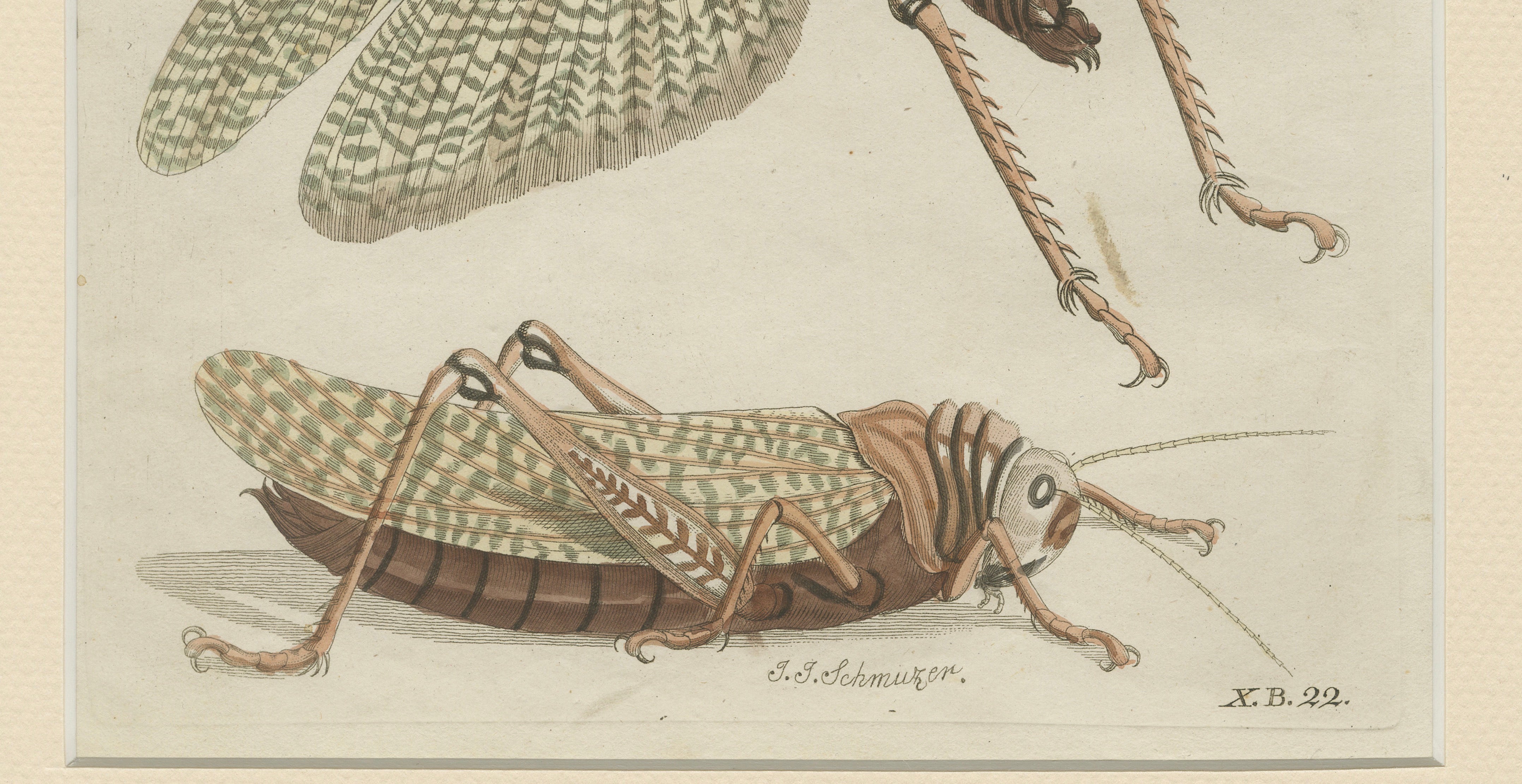
The plate presents the insect in two complementary views: a magnificent flying specimen with all four wings fully extended and a second specimen at rest with its wings folded along the body.
Large Locust / Grasshopper
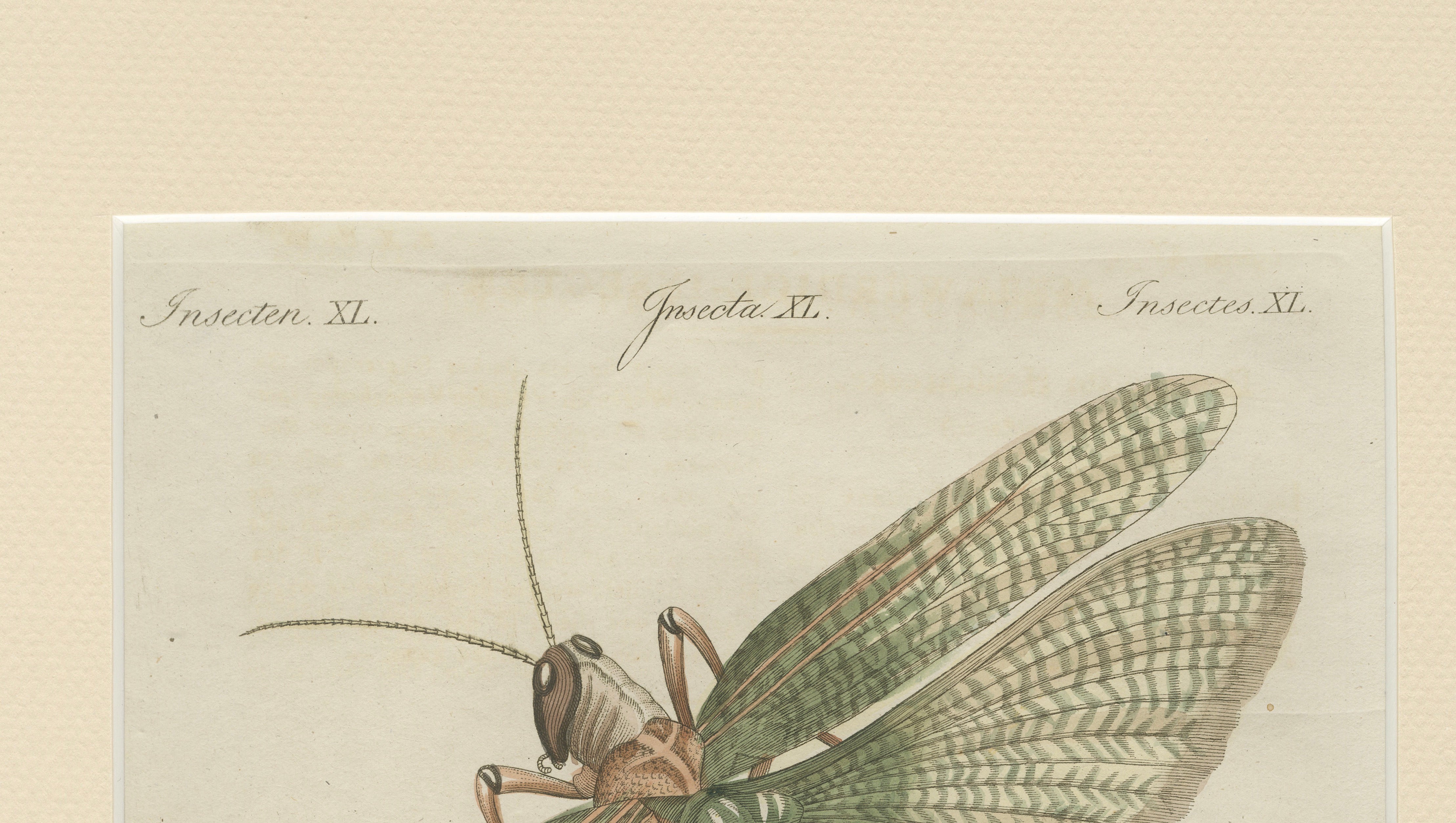
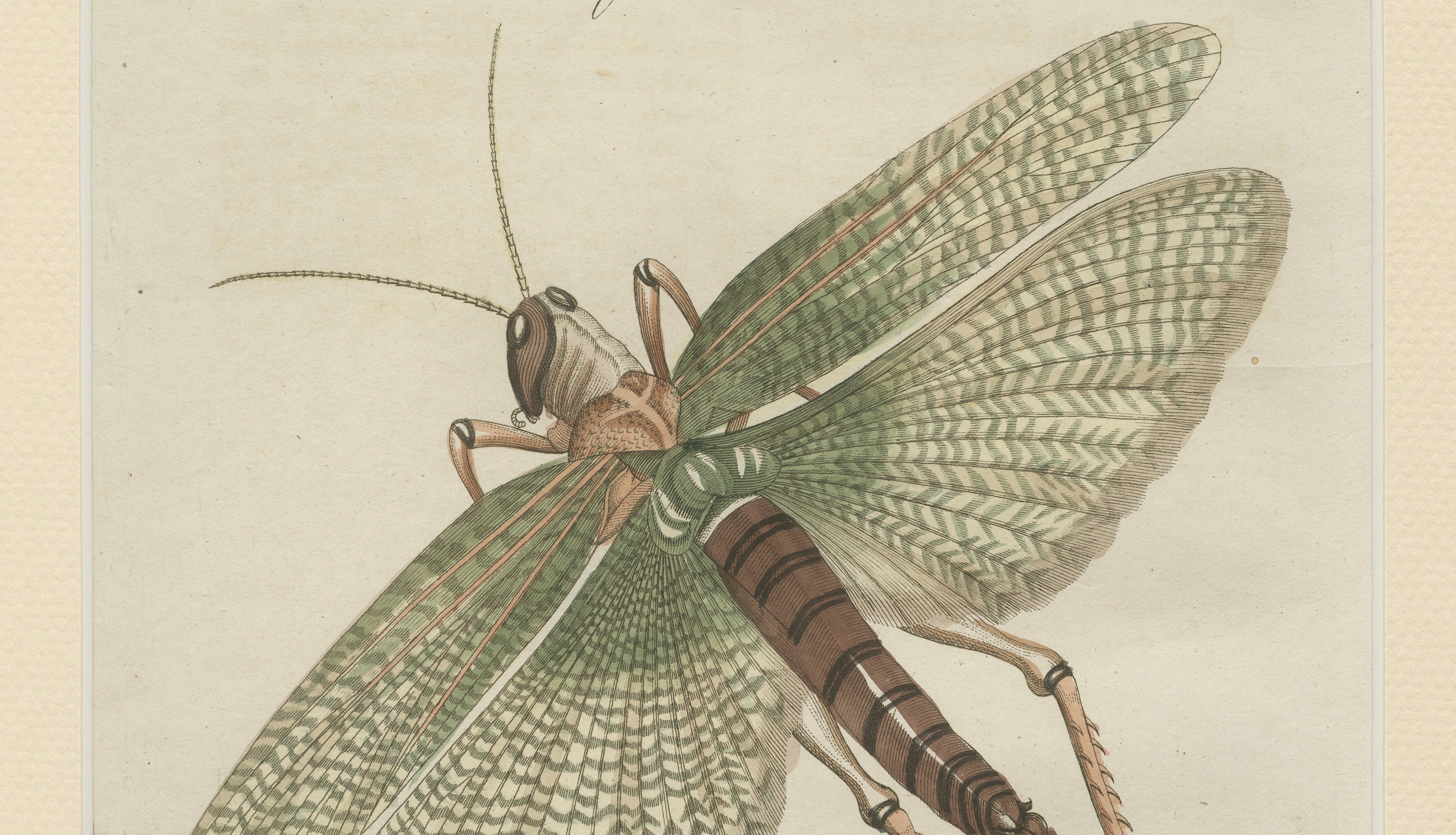
The principal figure dominates the composition and beautifully displays the insect’s remarkable anatomy.
Its powerful hind legs are adapted for jumping, while the two pairs of wings are shown fully extended. Particularly attractive are the large, delicately patterned wings, hand-colored in subtle shades of green, grey, brown and reddish pink.
The second figure shows the same or a closely related grasshopper at rest. This allows the viewer to compare the dramatically expanded flying form with the insect’s much more compact appearance when its wings are folded.
Grasshoppers and locusts belong to the order Orthoptera, an ancient group of insects characterized by powerful hind legs, chewing mouthparts and, in many species, the ability to produce sound.
Locusts are essentially certain species of grasshopper capable of dramatic behavioral changes and, under particular environmental conditions, forming enormous migratory swarms.
For European readers around 1800, large exotic grasshoppers and locusts were particularly fascinating. They were known not only as remarkable natural-history specimens but also through historical and biblical accounts of vast locust swarms.
Friedrich Justin Bertuch
Friedrich Justin Bertuch (1747–1822) was a German publisher, writer and patron of the arts. His monumental “Bilderbuch für Kinder” (Picture Book for Children), first published in Weimar in 1790, became one of the great illustrated educational encyclopedias of the late 18th and early 19th centuries. ([DNB][2])
Its engraved and hand-colored plates introduced young readers to animals, insects, plants, geography, science, technology, antiquity and cultures from around the world.
The plate bears the engraved signature “J. G. Schmuzer” and the reference “X.B.22.”
The combination of unusually large scale, finely engraved wing structure and restrained original coloring makes this one of the more decorative insect plates from the series. The flying specimen has an almost architectural quality, with the four wings spread across most of the sheet.
Technique: Original hand-colored copper engraving
Publisher: Friedrich Justin Bertuch / Industrie-Comptoir
Publication: Bilderbuch für Kinder
Place: Weimar, Germany
Date: Late 18th / early 19th century, circa 1800
Engraver: J. G. Schmuzer
Plate reference: X.B.22
Subject: Large Locust / Grasshopper
Order: Orthoptera
Condition:
Good antique condition with overall age-related toning, scattered light foxing and spotting and minor marks and imperfections consistent with its age. Some faint show-through or offsetting from printed text is visible. The original hand coloring remains particularly attractive, with delicate green, grey, brown and reddish tones.
The engraving is loosely inserted in an acid-free matting board.
Please study the photographs carefully as they form part of the condition description.
Please note: This is an original antique hand-colored copper engraving from around the turn of the 19th century, not a modern reproduction. The print is sold unframed. Framed images or interior views, if shown, are for presentation and inspiration only.
Other companion insect and natural-history plates from Bertuch’s “Bilderbuch für Kinder” are also available separately.
Keywords: Friedrich Justin Bertuch, Bilderbuch für Kinder, locust, grasshopper, giant grasshopper, giant locust, flying locust, Orthoptera, antique grasshopper print, antique locust print, insect engraving, antique entomology, insect anatomy, natural history illustration, hand-colored copper engraving, J G Schmuzer, German engraving, Weimar, circa 1800, original antique print, cabinet of curiosities, Wunderkammer