About this sheet
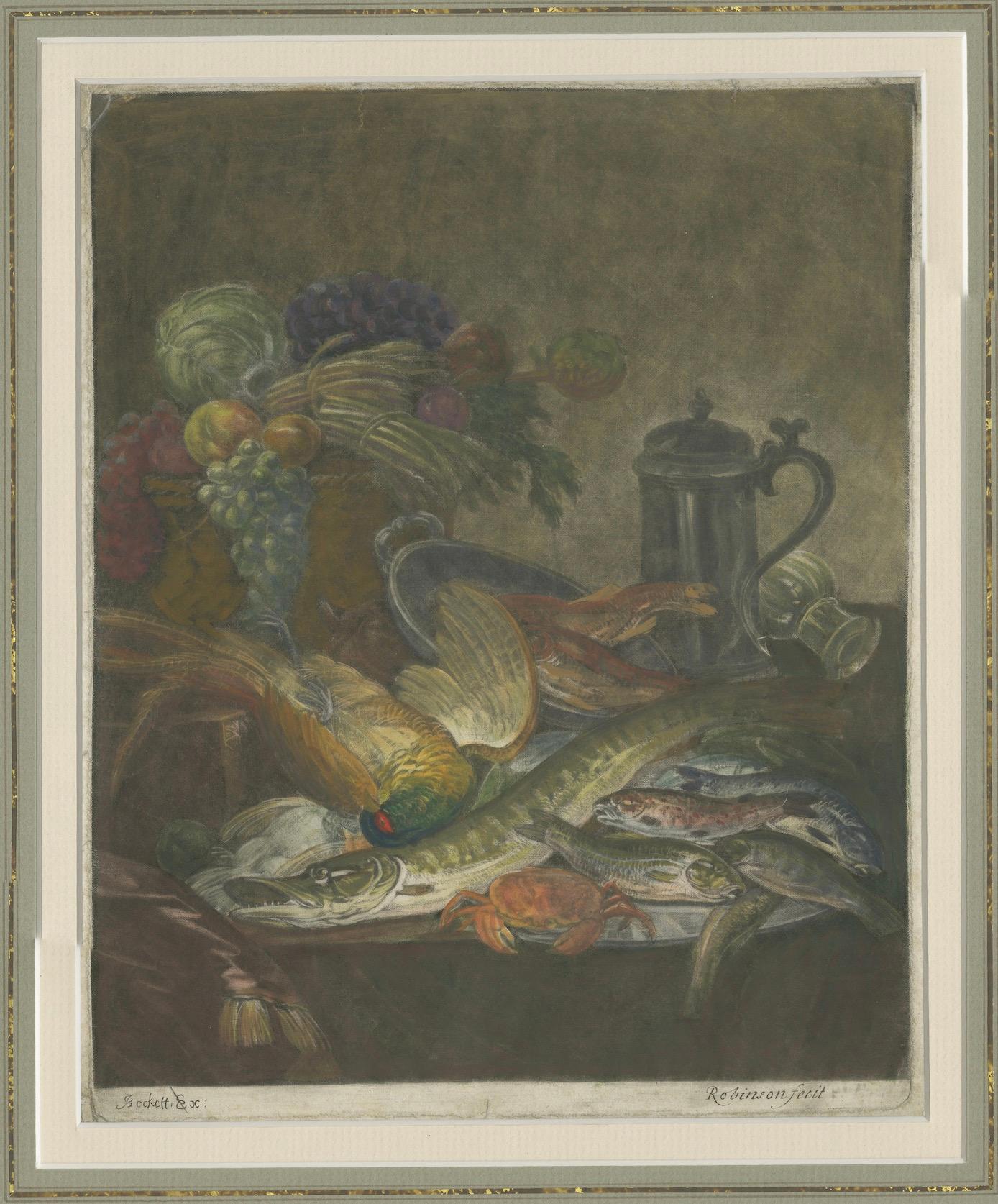
Antique Still Life Print – Fish, Crabs, Fruit and Pewter Jug – Beckett & Robinson, c.1800
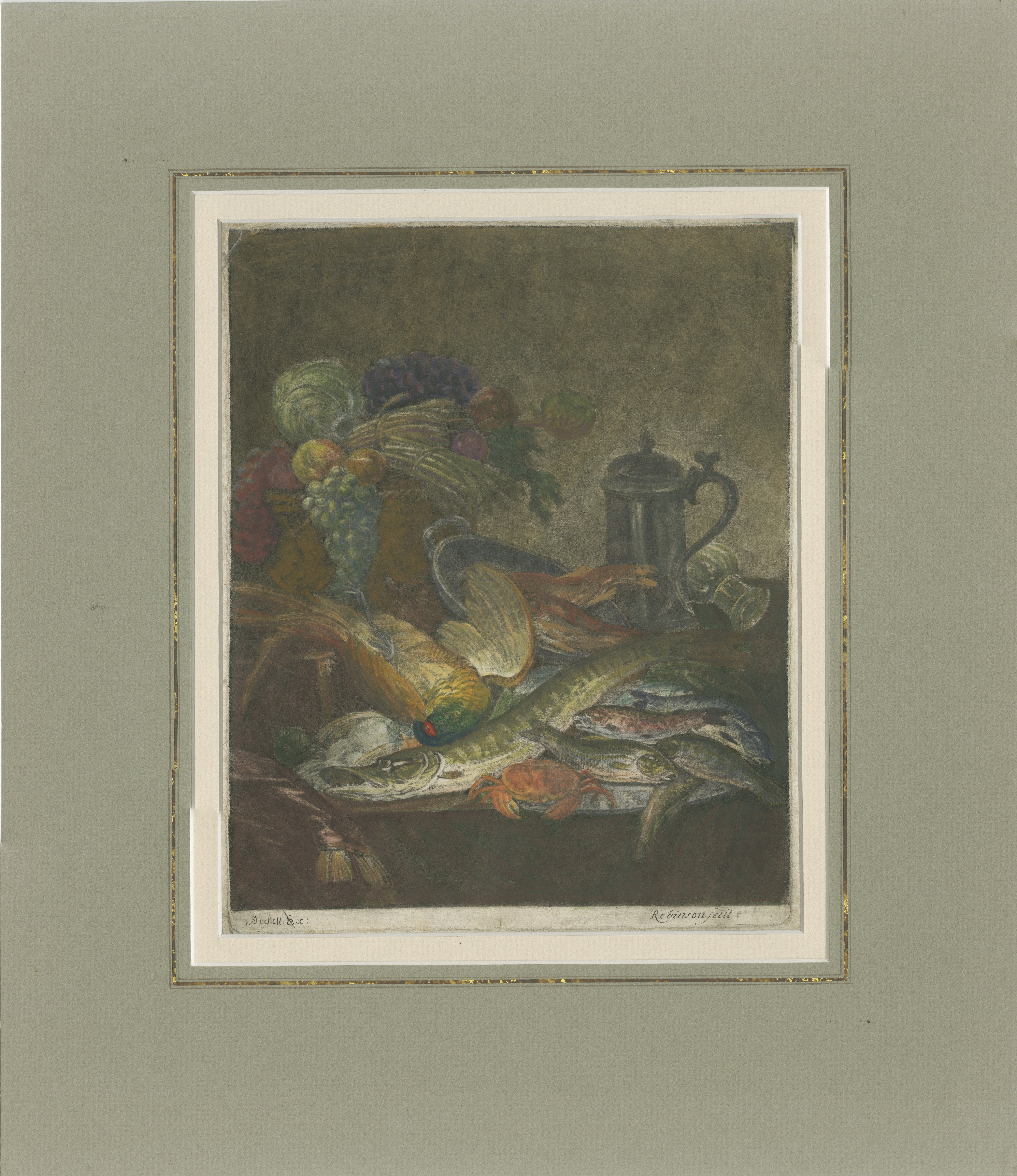
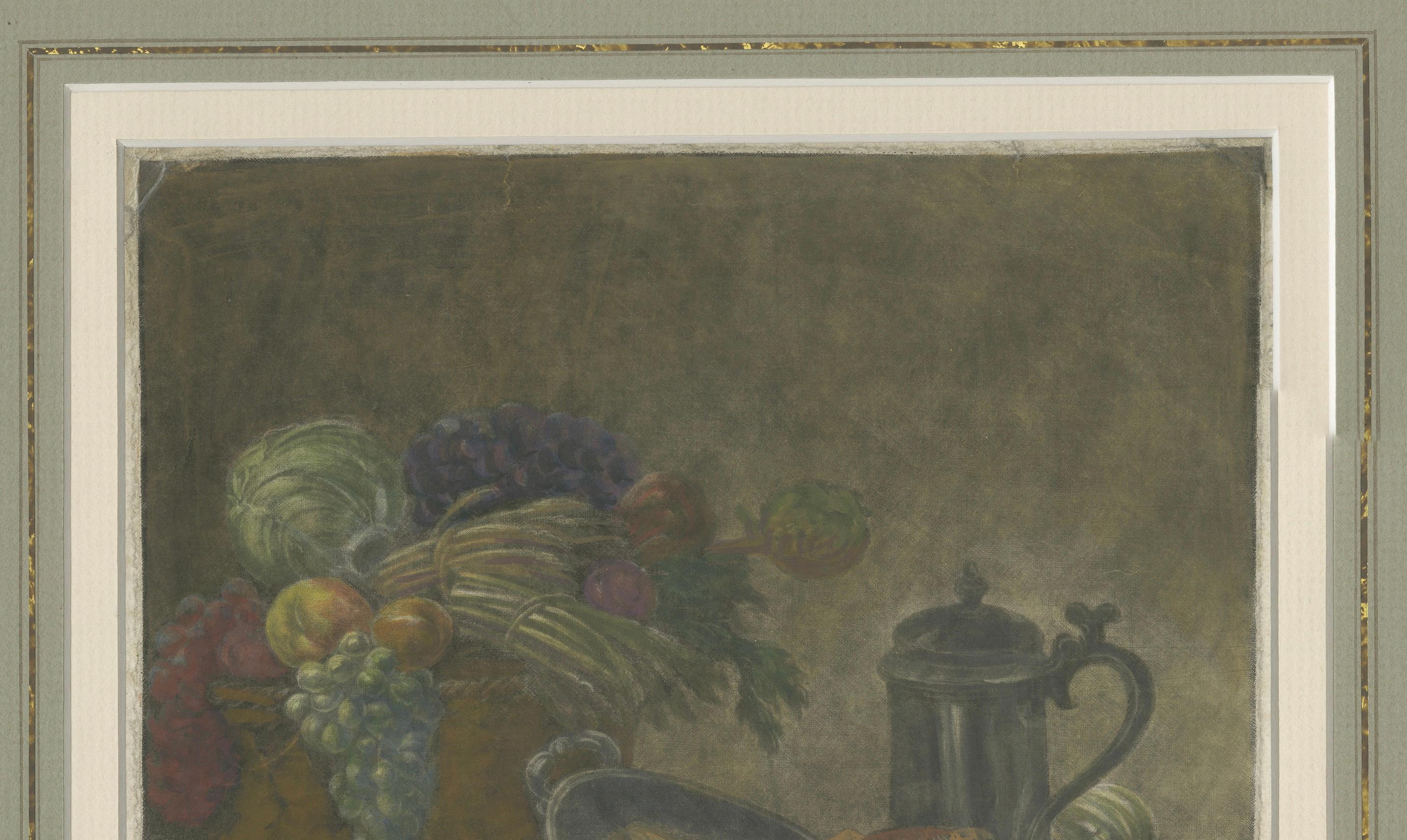
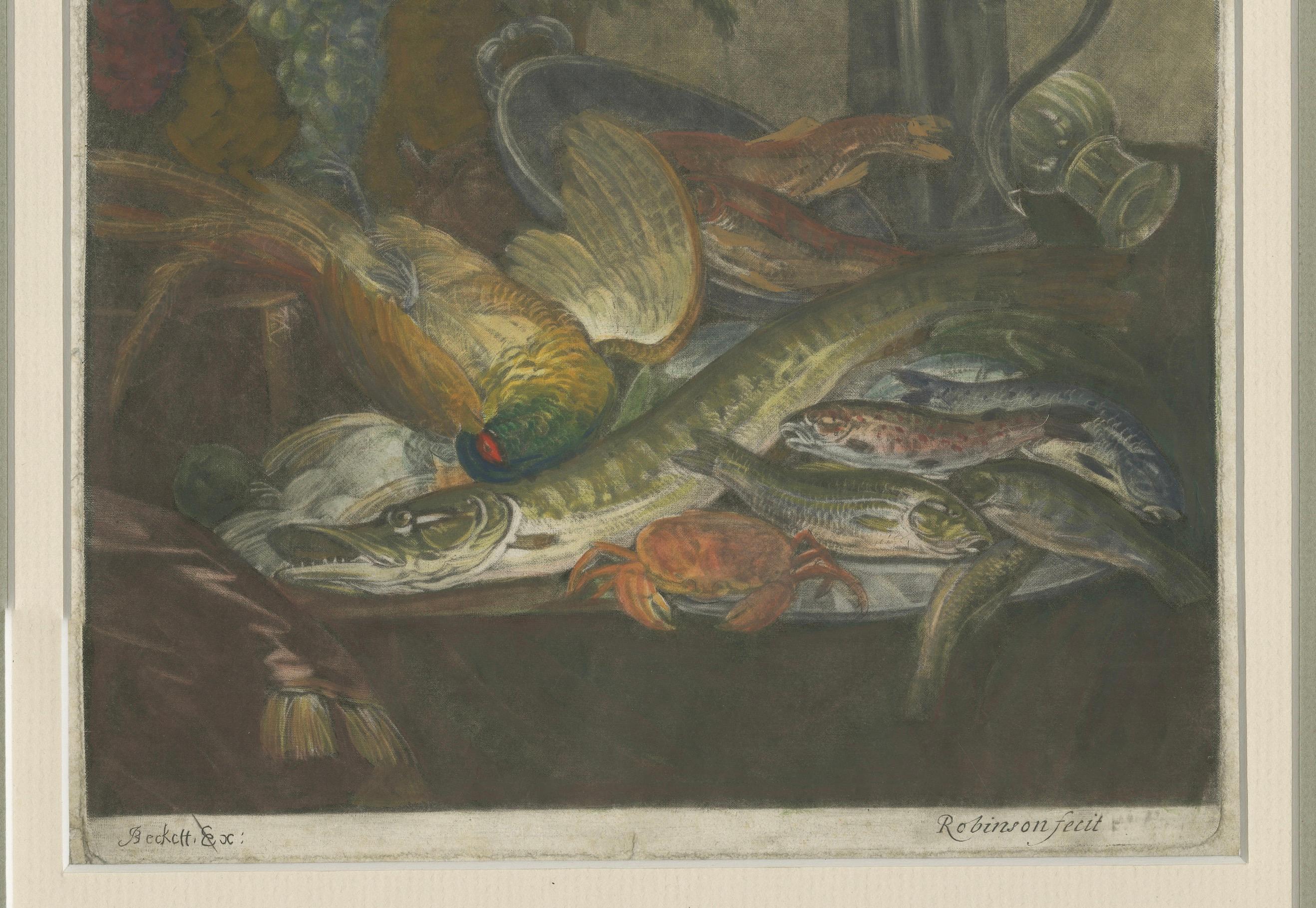
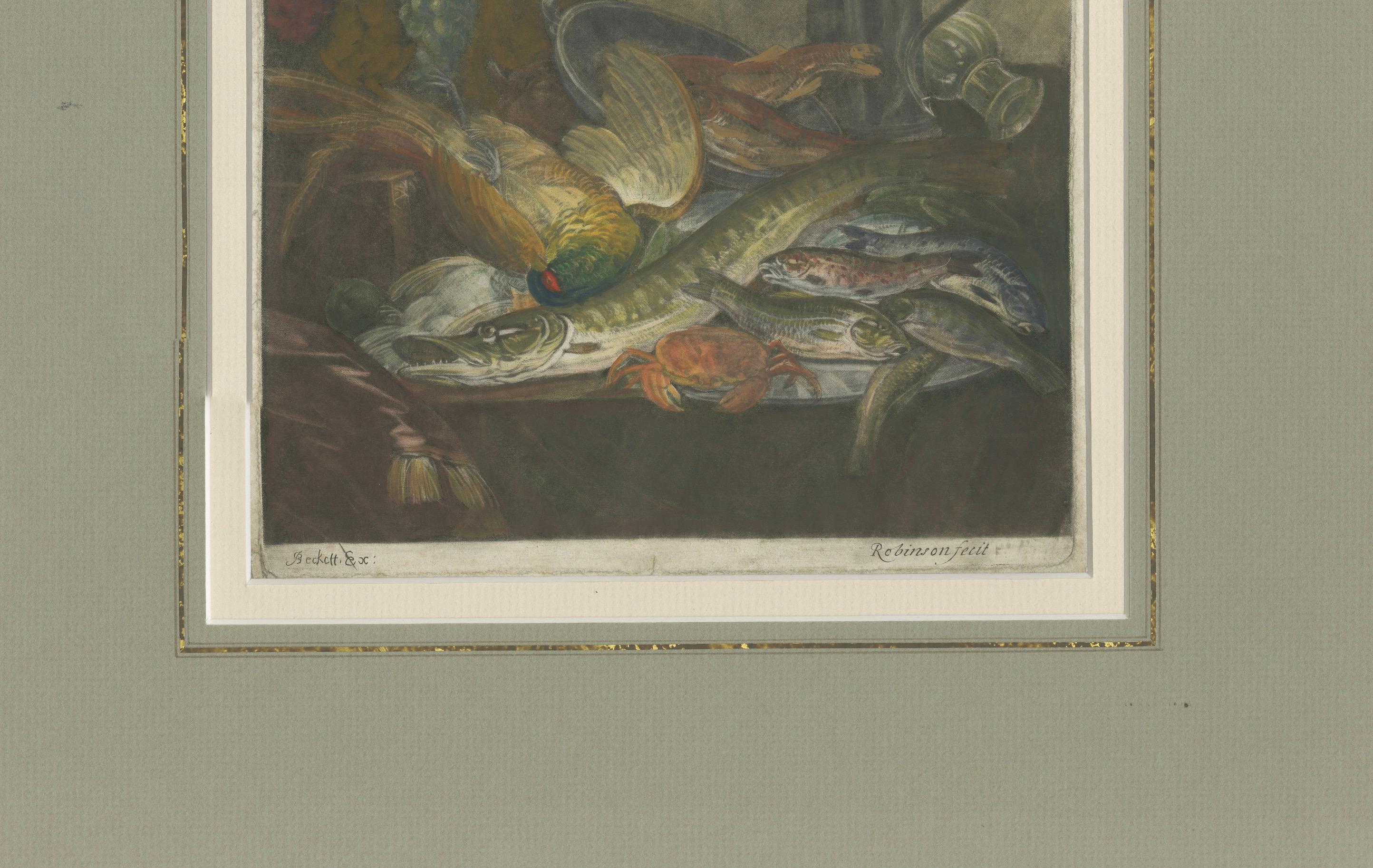
This fine antique stipple and line engraving with original hand coloring presents a dramatic still life composition in the grand European tradition. On the table lies a rich display of freshly caught fish of several varieties, their scales and fins vividly highlighted, alongside crabs and other delicacies of the sea. A brightly feathered bird, positioned prominently in the foreground, adds further color and liveliness to the scene.
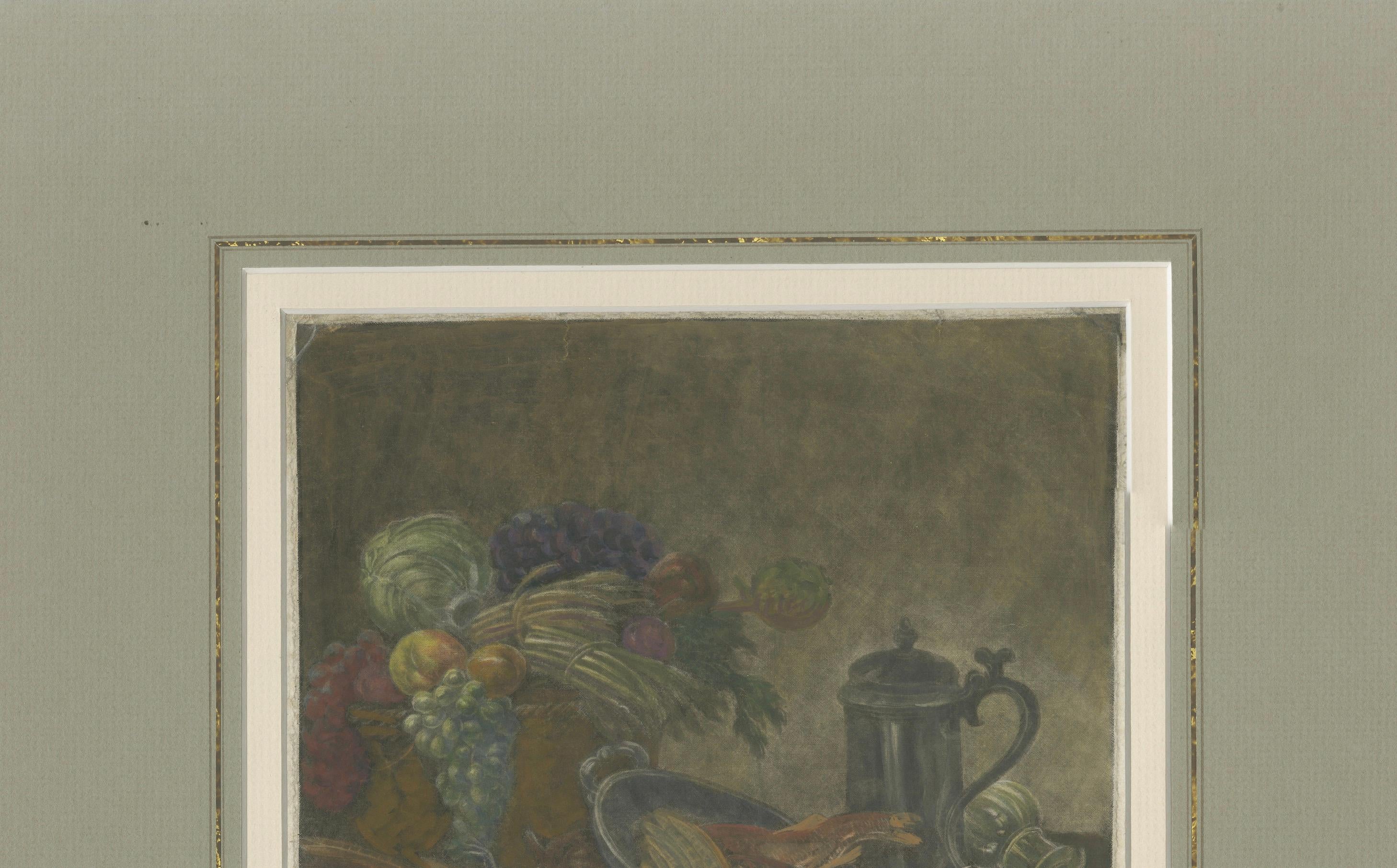
Behind this arrangement, a basket overflows with grapes, melons, and gourds, symbols of abundance and the harvest. At the right, a pewter jug and a glass vessel lend a contrasting metallic sheen, reflecting the light against the softer textures of the natural elements. The scene is completed with a draped cloth, its folds carefully shaded to frame the still life in a dramatic, almost theatrical setting.
The engraving is inscribed “Beckett ex.” and “Robinson fecit,” identifying Beckett as the publisher and Robinson as the engraver. The work reflects the late 18th- to early 19th-century taste for lavish still lifes, continuing the influence of the Dutch and Flemish masters of the Golden Age, but translated into fine printmaking for wider audiences. Such works carried both decorative and symbolic value, representing prosperity, refinement, and the ephemeral nature of earthly pleasures.
Condition summary: Very good condition with strong, well-preserved coloring. Paper is stable with only light toning and a few small age-related marks. No tears or repairs visible. Plate mark is clear. Presented in a later mount with elegant gold lining.
Framing tips: A rich gilt frame will emphasize the baroque qualities and enhance the sense of luxury in the composition. Alternatively, a dark wood frame with a warm-toned mount will balance the colors of the fish and fruit while maintaining a classical character.
Technique: Stipple and line engraving with original hand coloring
Maker: Engraved by Robinson, published by Beckett, c.1800