About this sheet
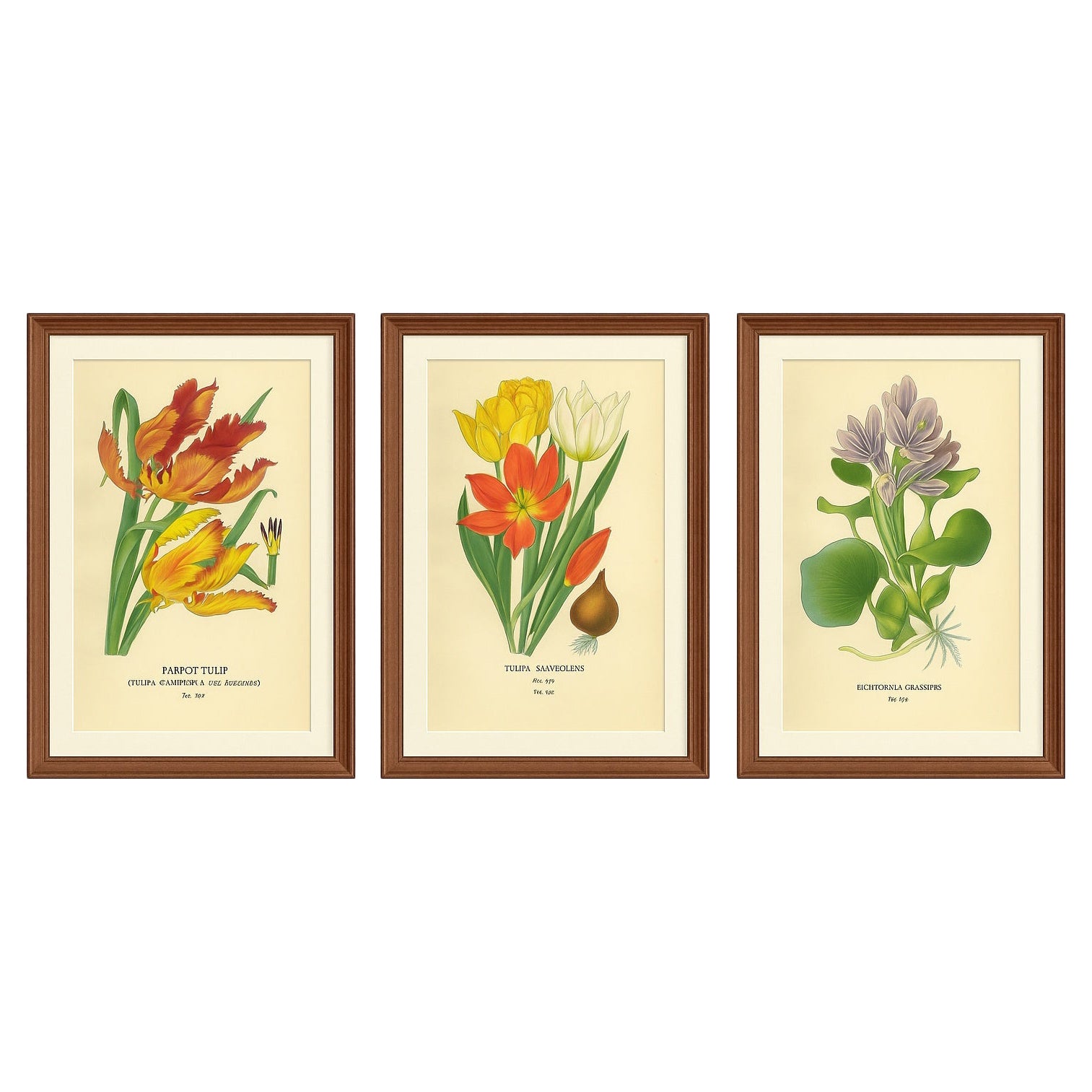
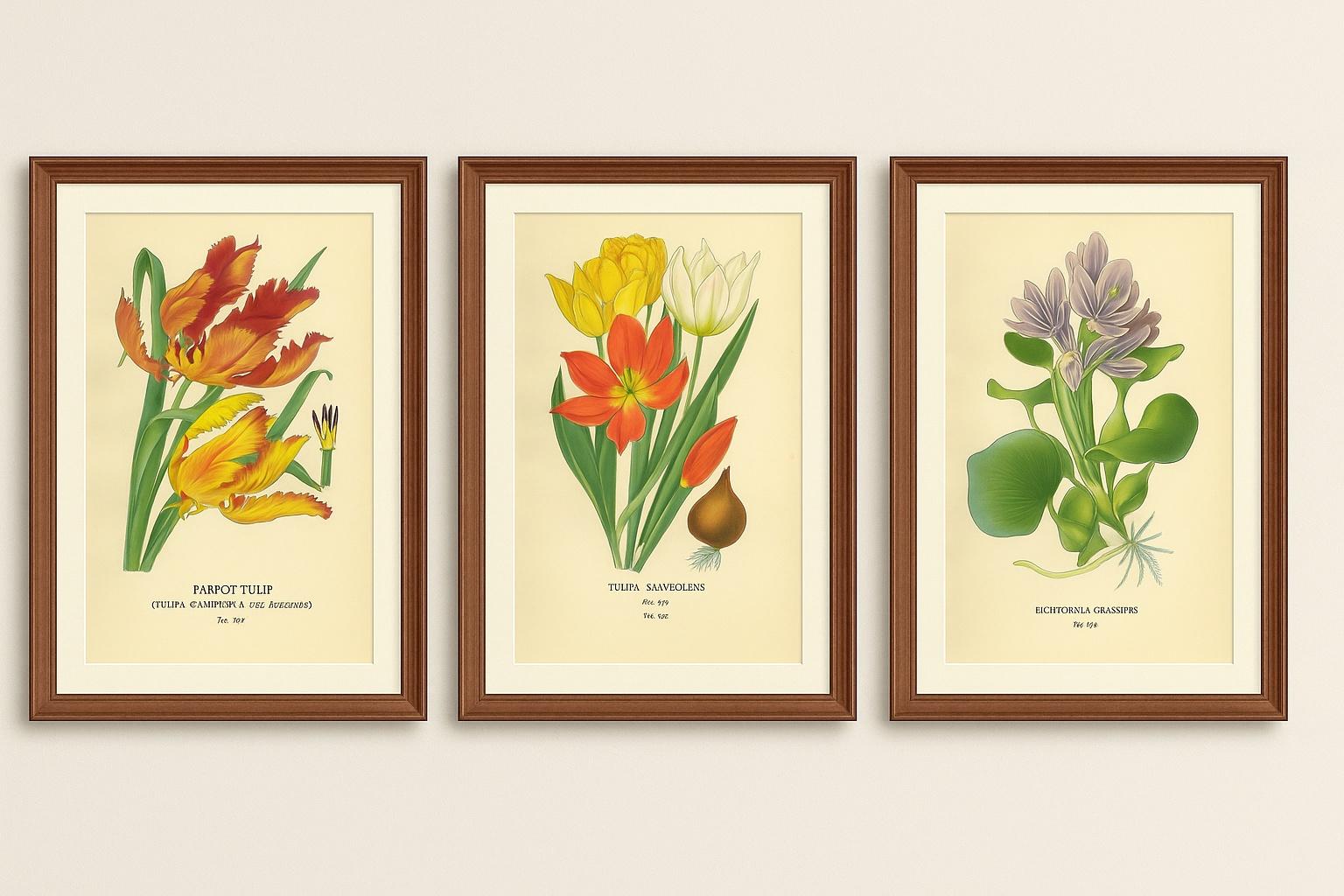
Antique Botanical Prints of Tulips & Water Hyacinth – Set of Three, c.1890
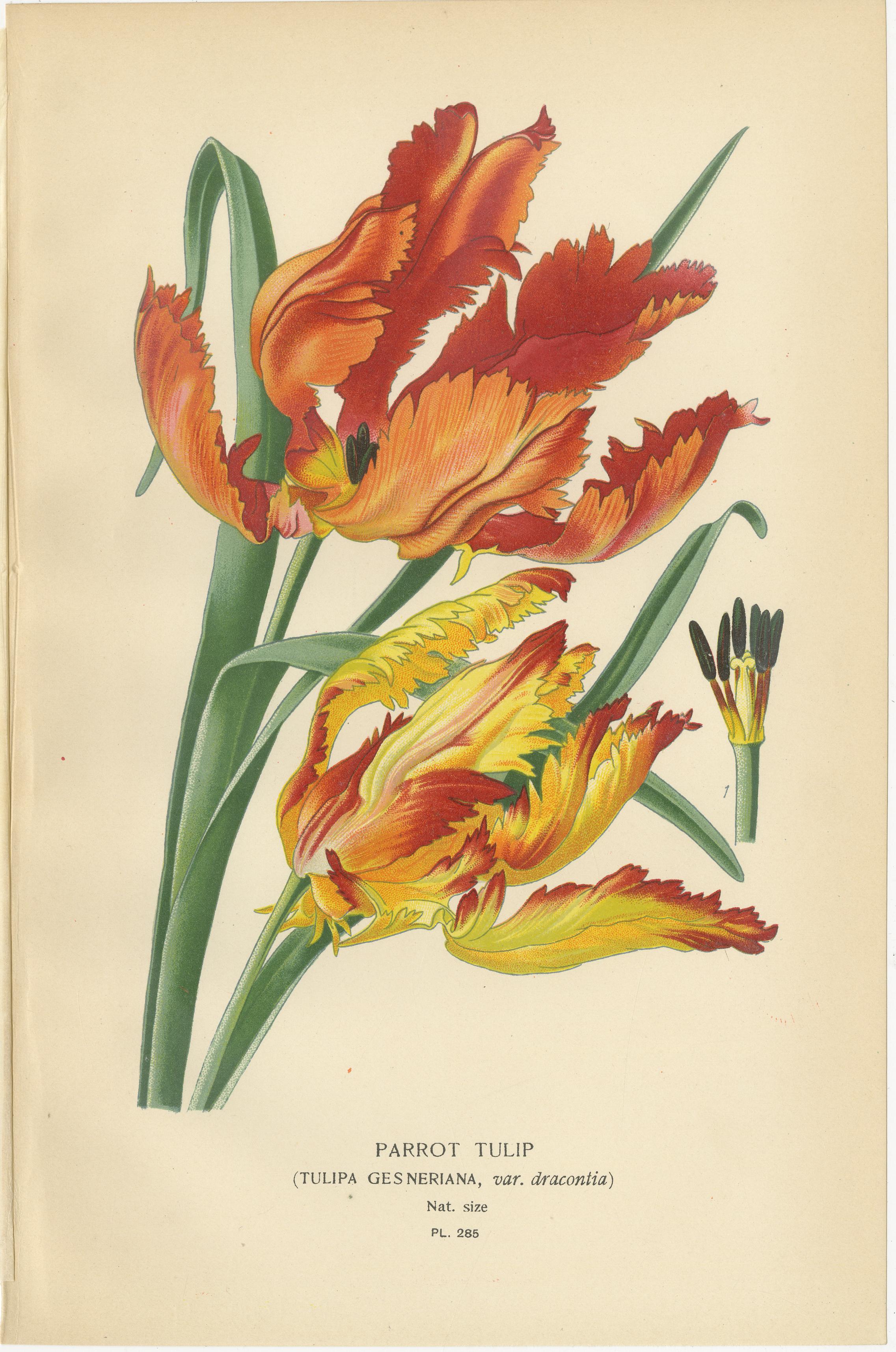
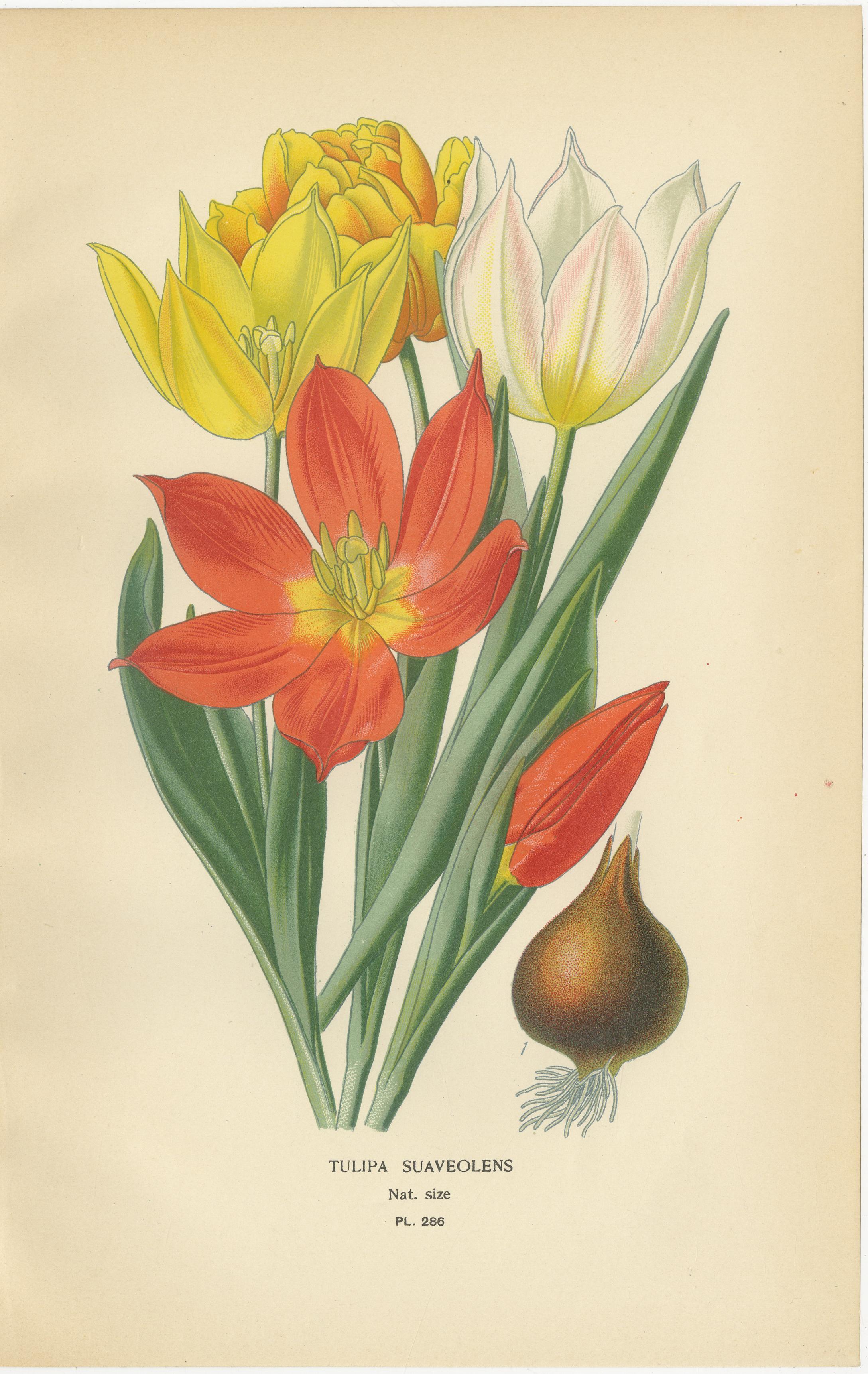
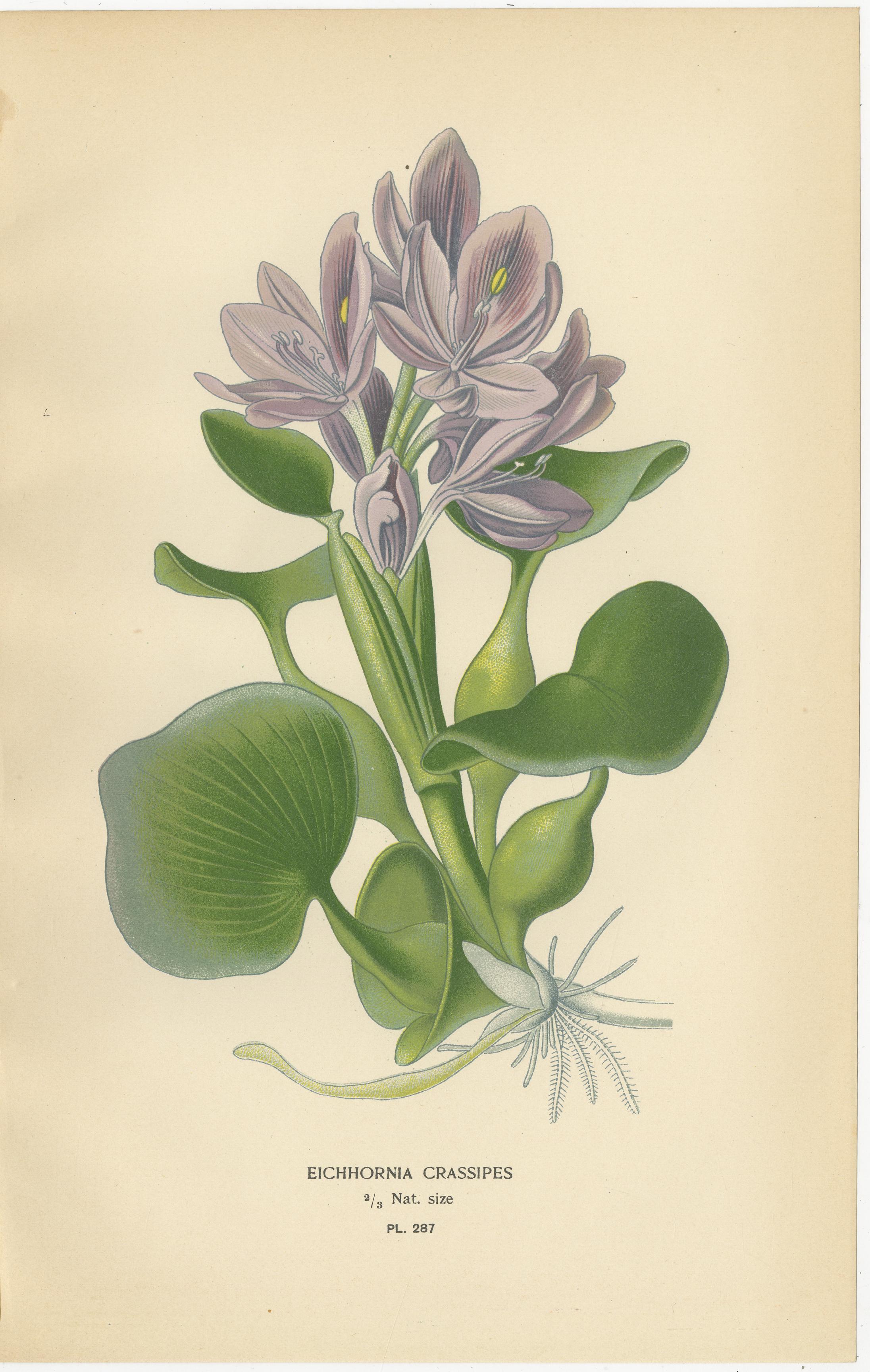
This beautiful set of three antique botanical chromolithographs captures the elegance of tulips and the exotic character of the water hyacinth. The first print features the vibrant Parrot Tulip (Tulipa gesneriana var. dracontia), with fiery orange and yellow petals edged in bold red, a classic 19th-century representation of one of the most spectacular tulip varieties. The second plate depicts Tulipa suaveolens, showing a delightful grouping of tulips in red, white, and yellow tones, accompanied by a detailed bulb rendering, highlighting the botanical accuracy of the illustration. The third plate presents Eichhornia crassipes, the water hyacinth, with its delicate violet blooms contrasted against lush, broad green leaves and elegant trailing roots, capturing the plant’s floating habit.
These prints come from a late 19th-century botanical publication, produced at a time when chromolithography was the favored technique for capturing the vivid colors of natural specimens. The illustrations are not only scientifically precise but also artistic, with fine detailing of bulbs, roots, and floral structures. Together, they reflect the fascination with horticulture and the expansion of botanical knowledge during this period, when collectors and enthusiasts sought both beauty and accuracy in plant illustration.
Ideal for display as a trio, these prints offer a striking combination of bold tulip blooms with the softer elegance of the hyacinth, making them a wonderful decorative set for any interior. Collectors of botanical art and floral history will appreciate their charm, as well as their historical and artistic value.
Condition report: The prints are in very good condition for their age, with only minor toning consistent with late 19th-century paper. Plate numbers visible at the bottom margins. Fine, sharp coloring remains vivid and well-preserved. The frame is not included.
Framing tips: These prints work beautifully as a matched set when framed in simple gilt or dark wood frames with off-white or cream matting. For a more modern look, slim black frames will enhance the strong floral colors, making them stand out as a decorative trio.
Technique: Chromolithography
Maker: Anonymous 19th-century botanical illustrator, published c.1890, Europe