About this sheet
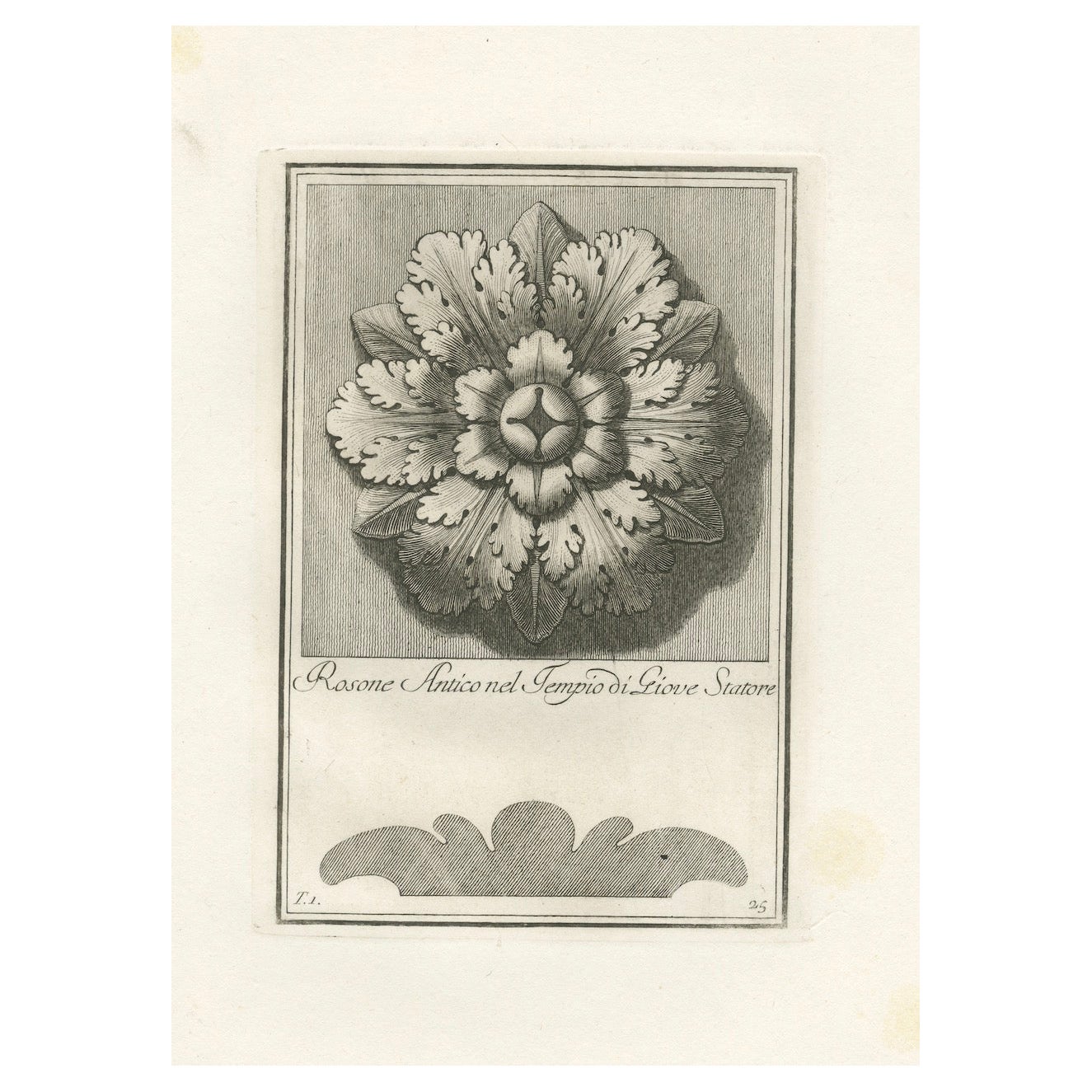
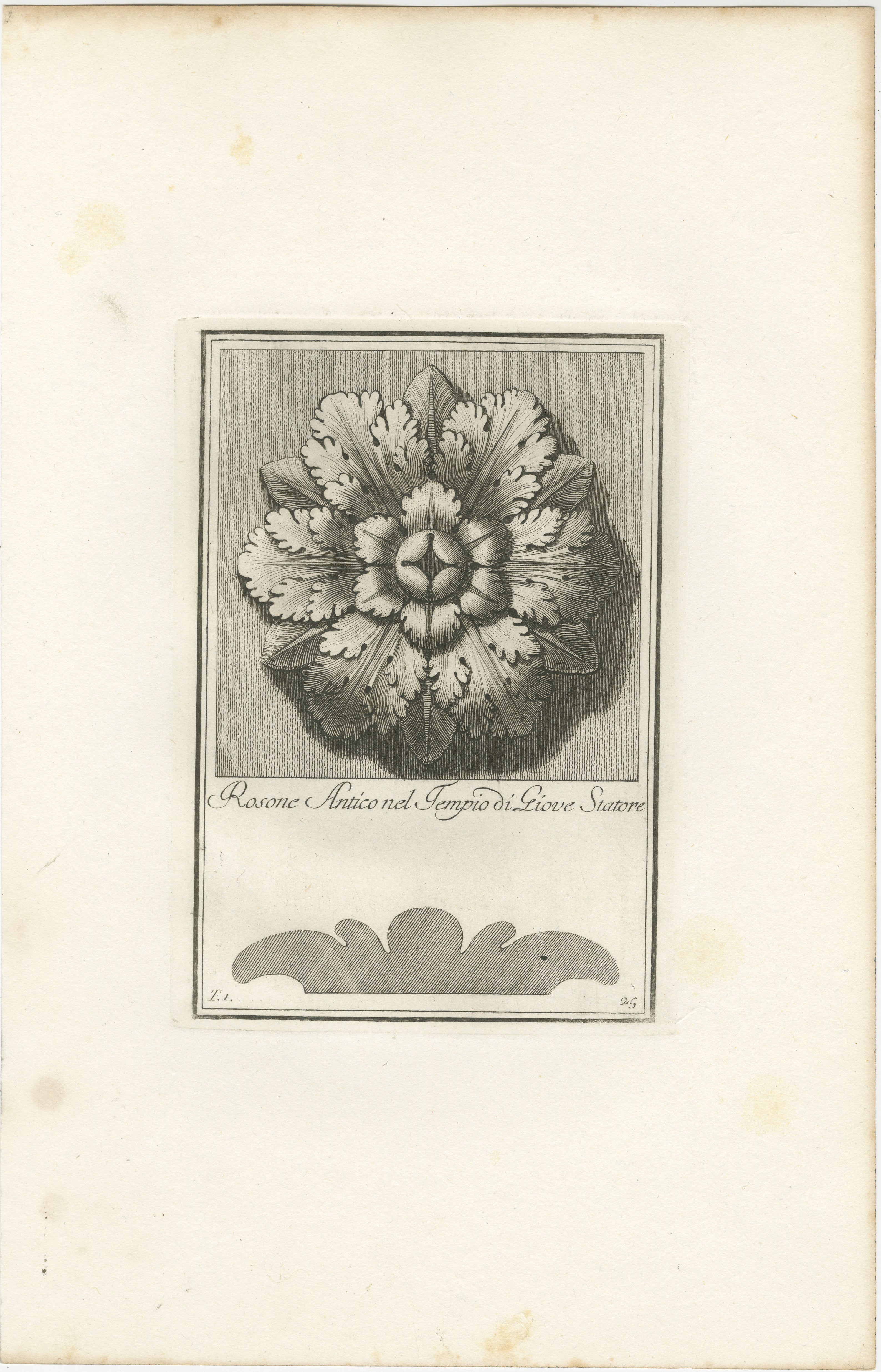
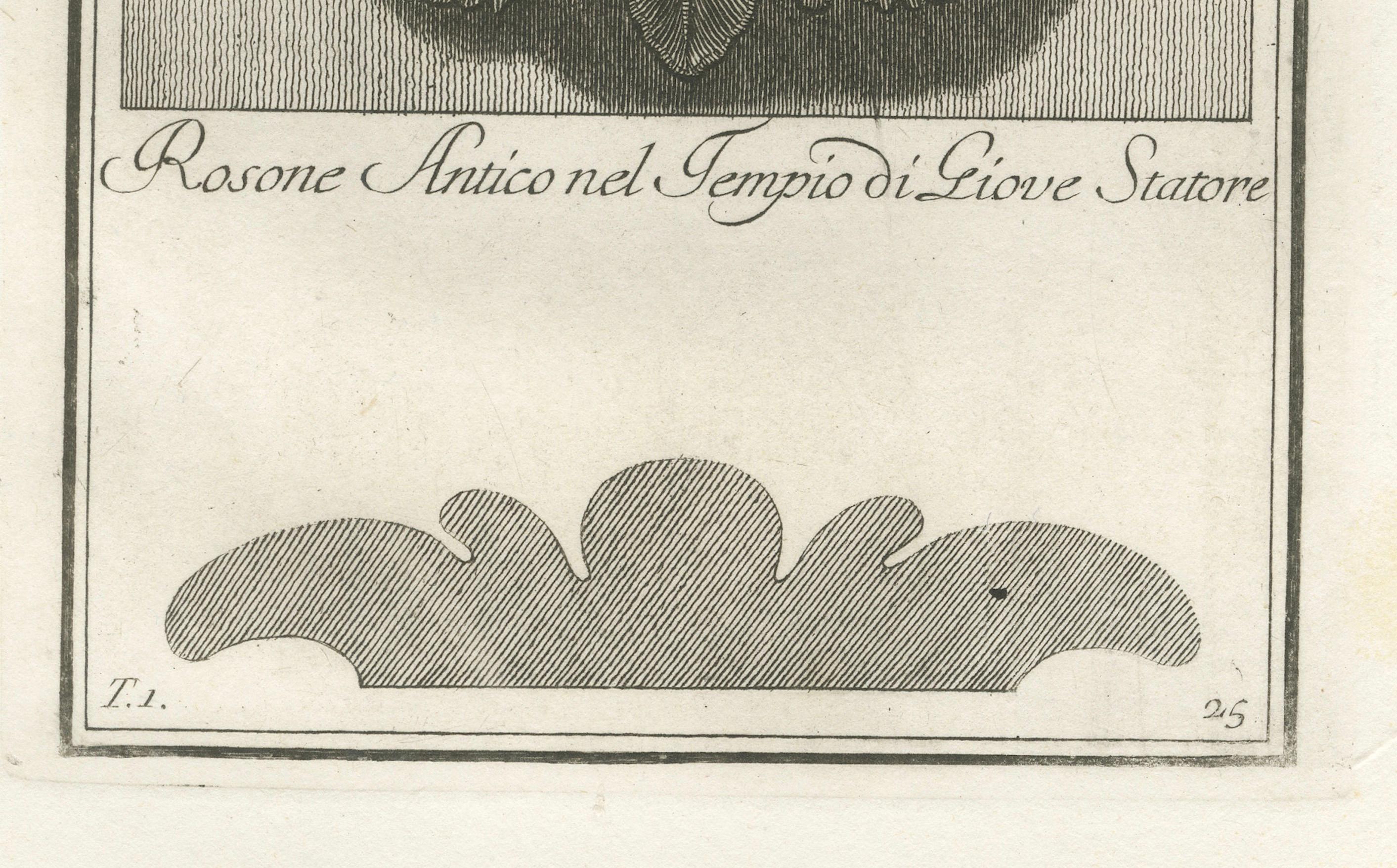
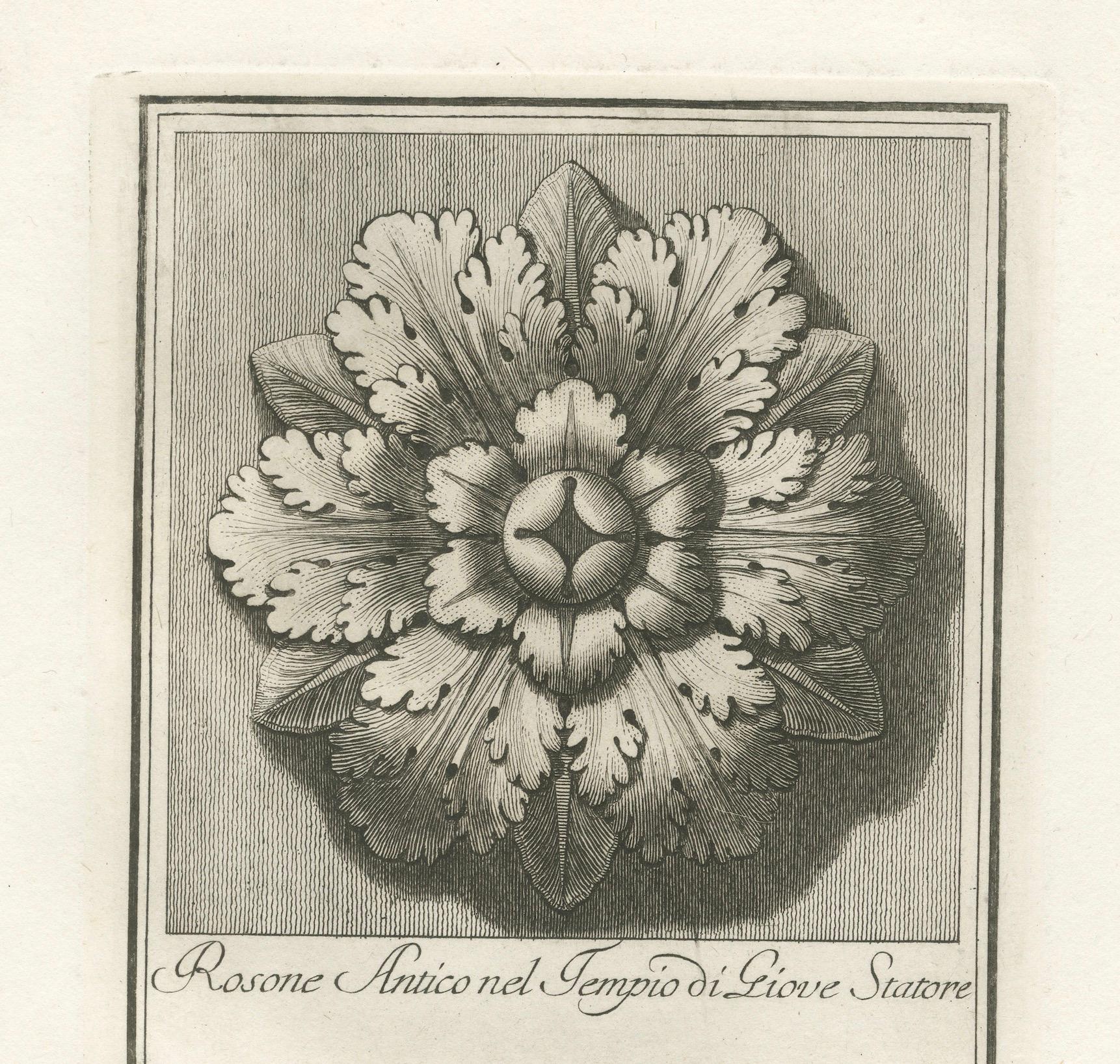
"Rosone Antico nel Tempio di Giove Statore."
A breakdown of the title:
- "Rosone" typically refers to an architectural term for a rose window, which is a circular window with a decorative design reminiscent of a rose. However, given that this is an illustration of a flower, "Rosone" here could possibly refer to the flower's resemblance to the stylized rosette patterns found in architecture.
- "Antico" means "ancient" or "antique" in Italian, suggesting historical significance or an object from the past.
- "nel Tempio di" translates to "in the temple of."
- "Giove Statore" refers to Jupiter Stator, a title of the god Jupiter in Roman mythology. The Temple of Jupiter Stator was a temple in ancient Rome, vowed by Romulus during the battle with the Sabines.
Combining these elements, the title could be interpreted as "Ancient Rosette in the Temple of Jupiter the Stayer." This could indicate that the flower depicted in the print is an artistic representation of an ornamental design found within or associated with the Temple of Jupiter Stator, or perhaps it is a poetic way to describe the flower's grandeur by likening it to something one might dedicate to a temple of Jupiter.
The print made by Carlo Antonini, active between 1777 and 1790, presents an intricate illustration of a floral design, which is labeled as "Rosone Antico nel Tempio di Giove Statore". The print is likely an engraving, a common practice of the time for producing detailed illustrations.
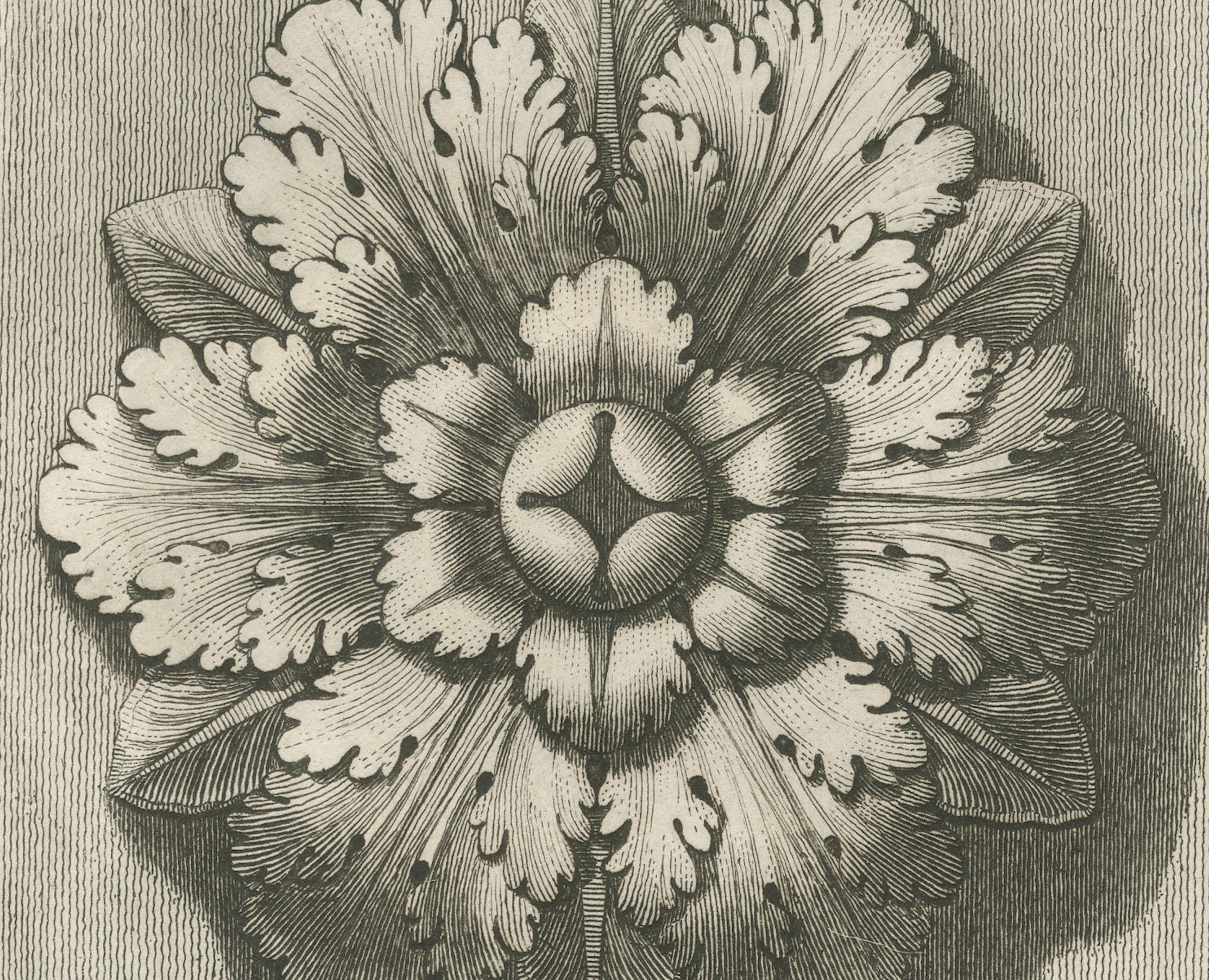
The floral design is highly stylized and symmetrical, typical of the decorative motifs one might find in classical architecture or ancient Roman decoration, which often took inspiration from the natural world and particularly flora. The term "Rosone" might refer to the flower's resemblance to the architectural rosette designs, which are patterned, circular, and ornate, similar to the detailed and layered petals shown in the engraving.
Given the period Carlo Antonini was active, the print would have been created using traditional engraving techniques, where a design was carved into a metal plate with a tool called a burin. After inking, the plate was used to press the image onto paper. This method allowed for fine lines and a high level of detail, as evidenced by the shading and the delicate lines that define the petals and the flower's center.
The inscription "nel Tempio di Giove Statore" suggests a connection to the Temple of Jupiter Stator in Rome, which was one of the ancient Roman temples dedicated to Jupiter as the stayer of flight in war, a protector in battle. This linkage in the title might imply that the design is either a historical representation from the temple, a dedication, or an artistic piece inspired by the motifs found in the temple.
Overall, the print would be characteristic of Antonini's work, reflecting both the aesthetic preferences of the time and the fascination with classical motifs and subjects that were prevalent in the art and culture of the 18th century.