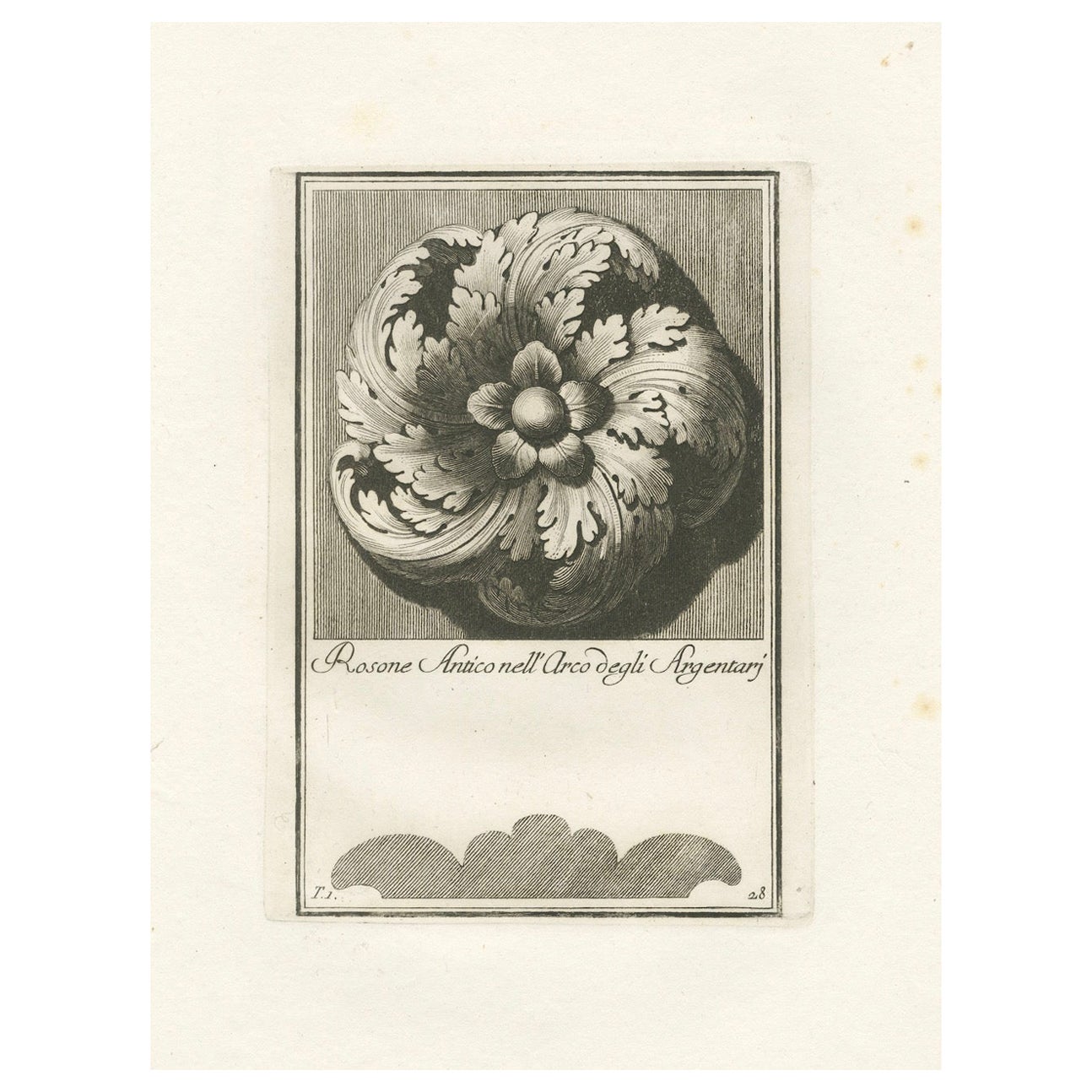
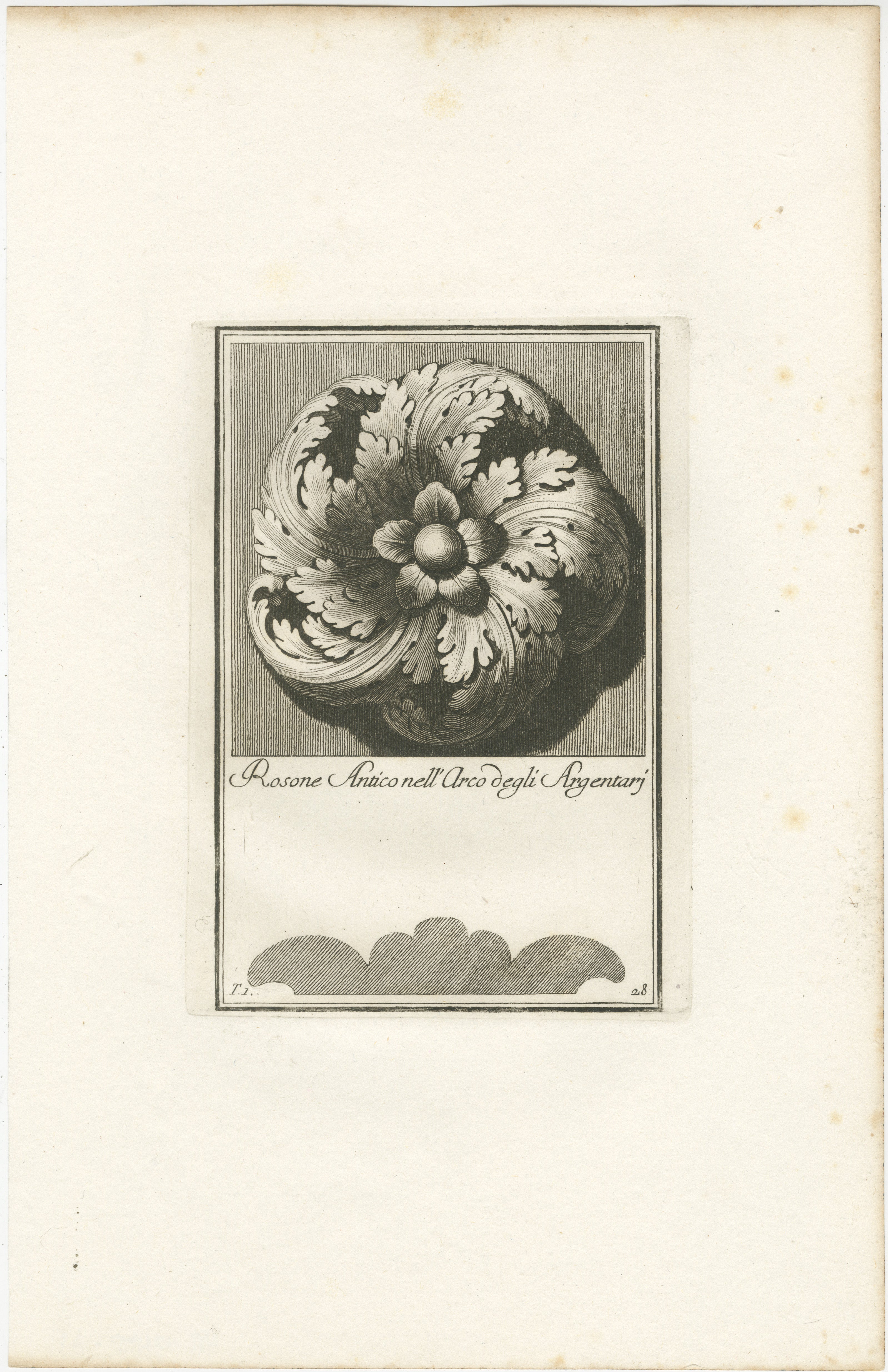
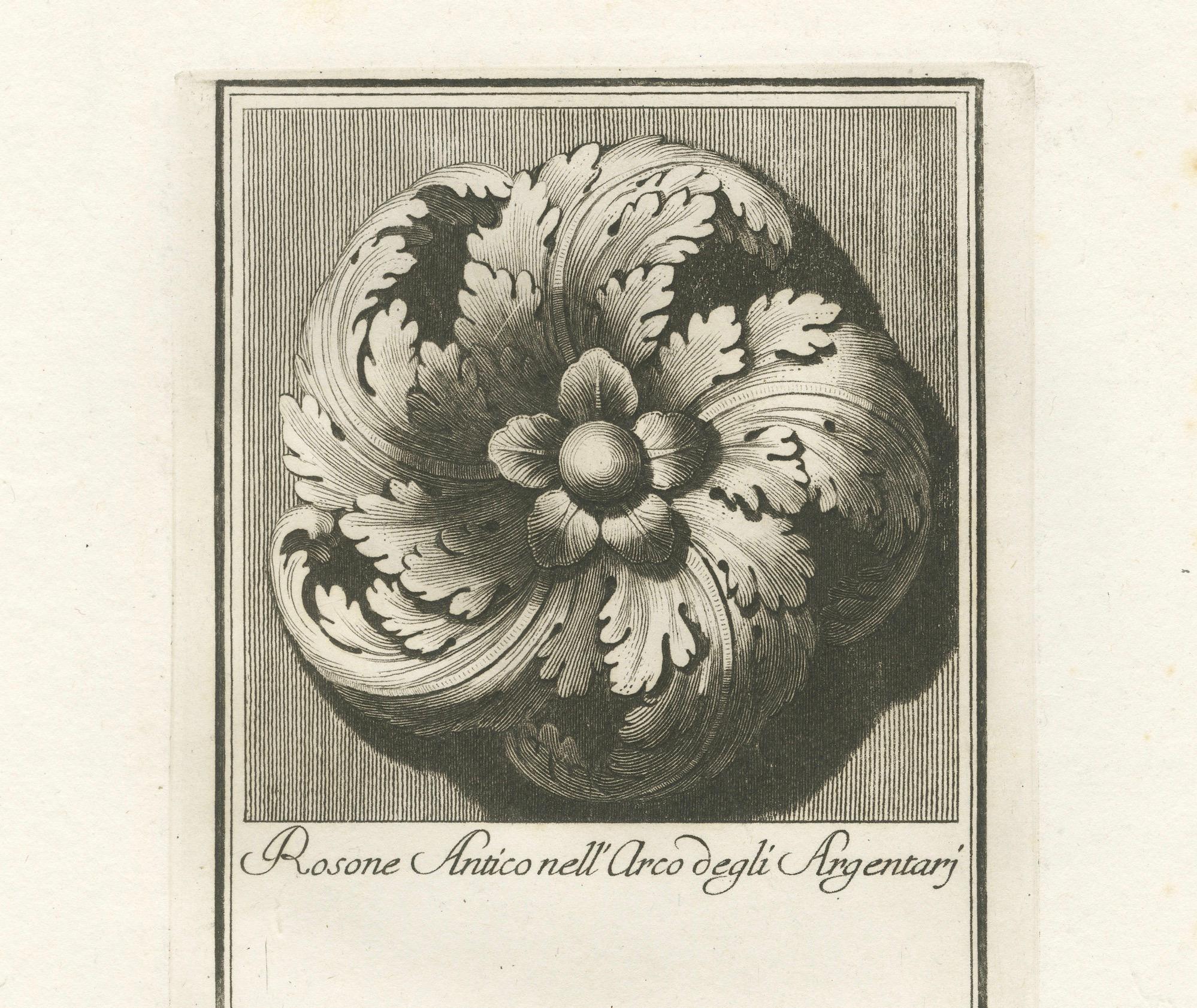
Ancient Rosette in the Arch of the Silversmiths, 1780
€ 220
One of a kind: this is the sheet in the photographs. Ships from Langweer, the Netherlands.
Date
1780
Sheet size
34.5 × 22.3 cm (13.6 × 8.8 in)
Reference
BG-13675-81
Condition
good, given age. General age-related toning and/or occasional minor defects from handling. Please study scan carefully.
About this sheet
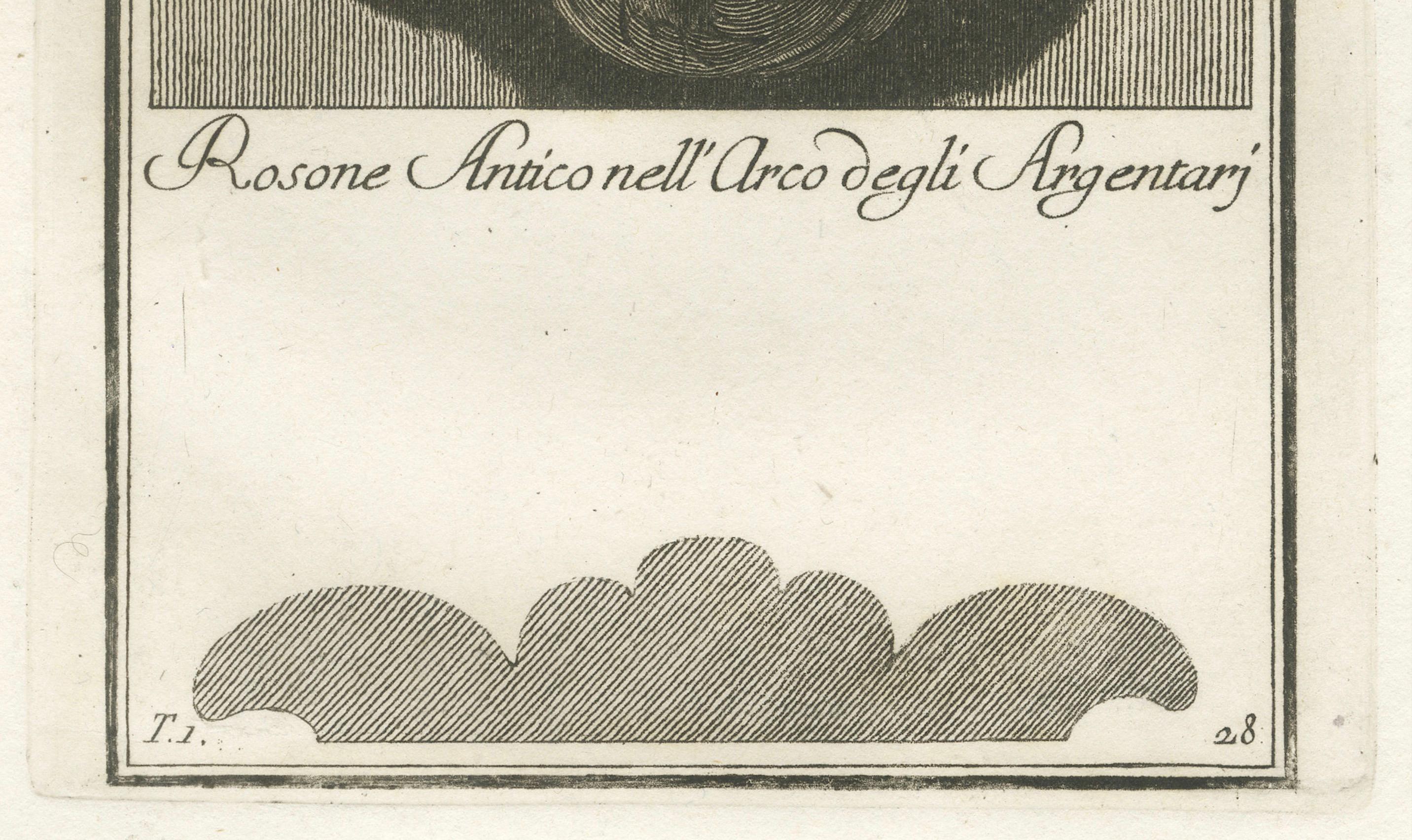
This original antique print is labeled "Rosone Antico nell'Arco degli Argentari," which can be translated as "Ancient Rosette in the Arch of the Silversmiths."
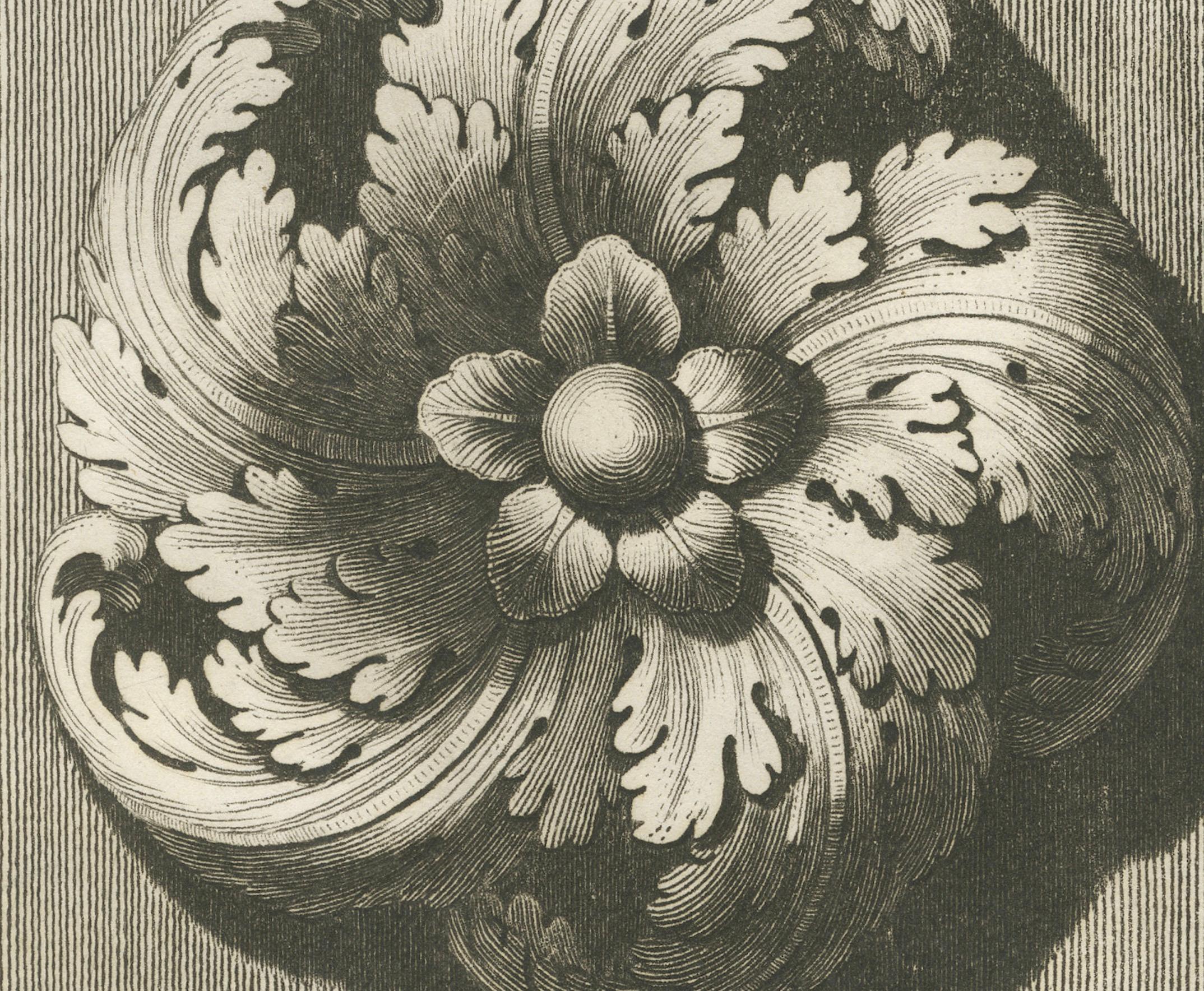
The phrase "Rosone Antico" suggests a depiction of an ornate, rosette-like pattern or design that is considered ancient. This is indicative of the central floral design of the print, which is reminiscent of a rosette, a decorative motif often found in classical and Renaissance architecture and art. Such designs often contain symmetrical patterns radiating outward, similar to the petals of a rose.
The "Arco degli Argentari" refers to the Arch of the Silversmiths, which is an ancient Roman arch located in Rome. It was constructed in the 3rd century and was decorated with reliefs, including floral patterns, by the guild of silversmiths. The inscription suggests that the flower in the print could be a stylized representation of an actual decorative element from this arch, or it may be symbolically linked to it.
This particular print by Carlo Antonini, an Italian engraver active from 1777 to 1790, would have been produced using traditional engraving methods. Such methods involved etching or engraving a metal plate with fine lines and then pressing the plate onto paper to create the print. This process allowed for a high level of detail and precision, which is evident in the intricate shading and delineation of the petals and center of the floral design.
Antonini's work often involved detailed botanical illustrations and architectural engravings, and this print is a fine example of his expertise in combining both interests. The print likely served both decorative and educational purposes, reflecting the Enlightenment-era appreciation for the natural world and ancient cultures. The technical skill required for such a detailed engraving is considerable, and the print would have been valued for both its aesthetic beauty and its representation of historical and cultural motifs.