About this sheet
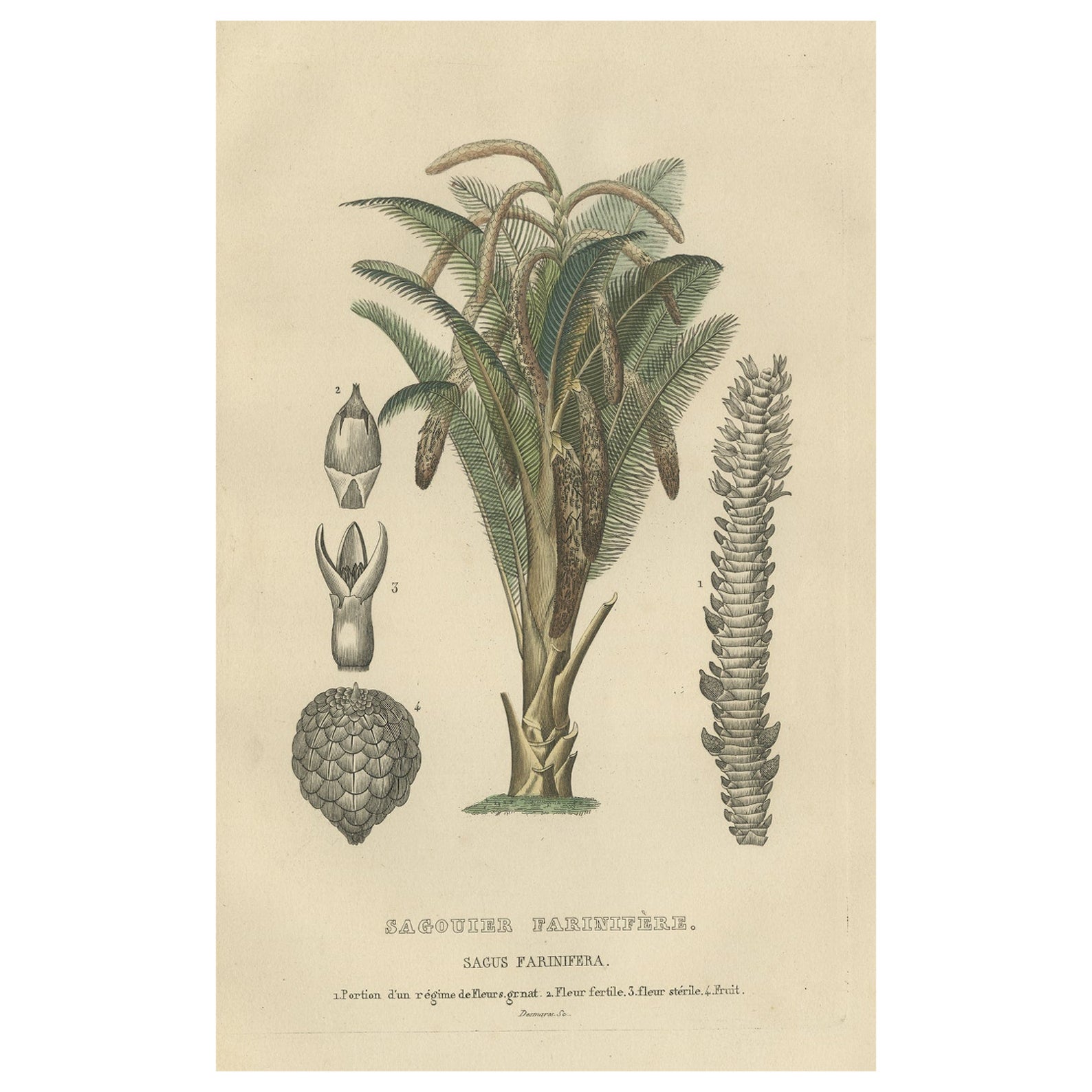
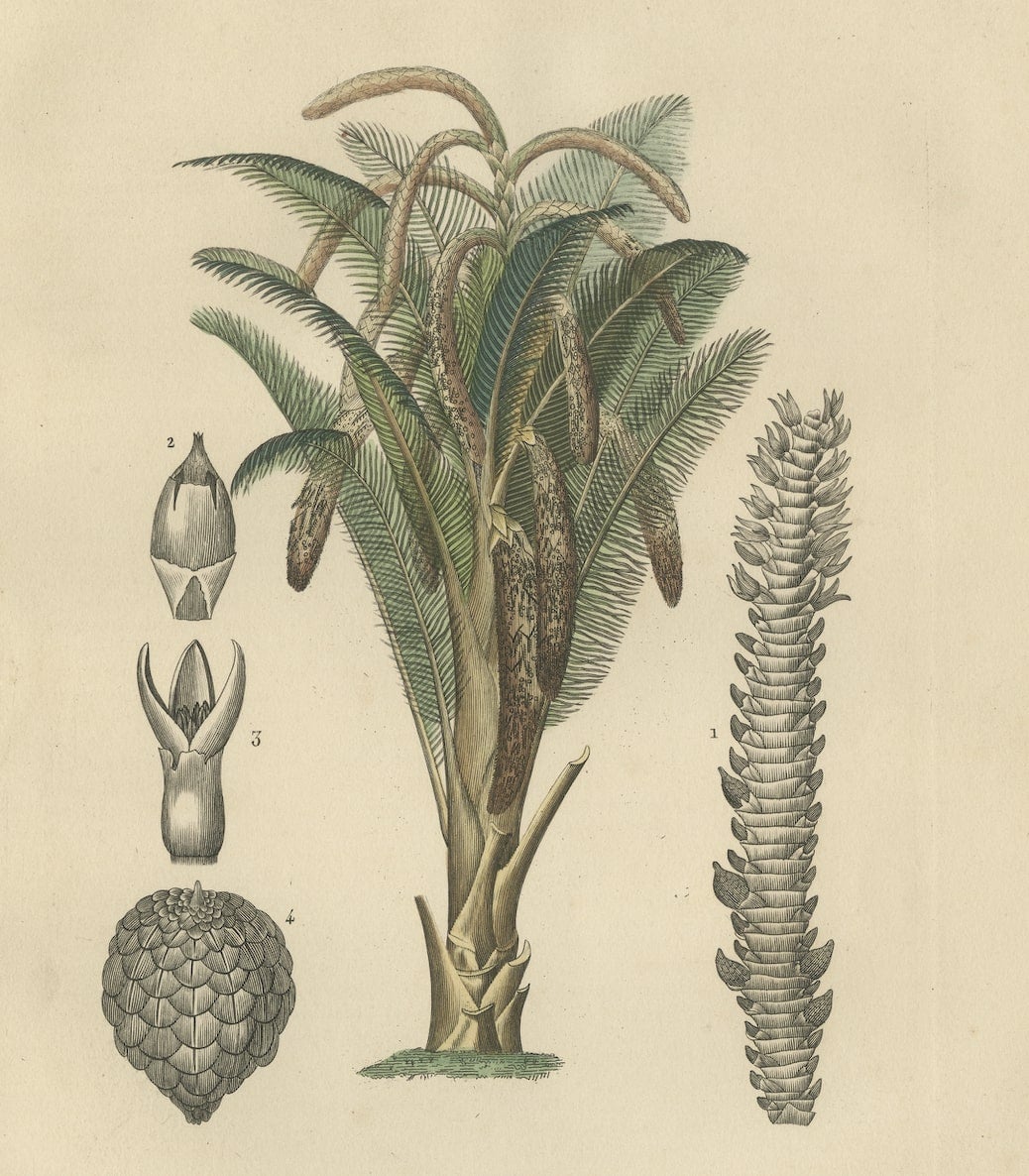
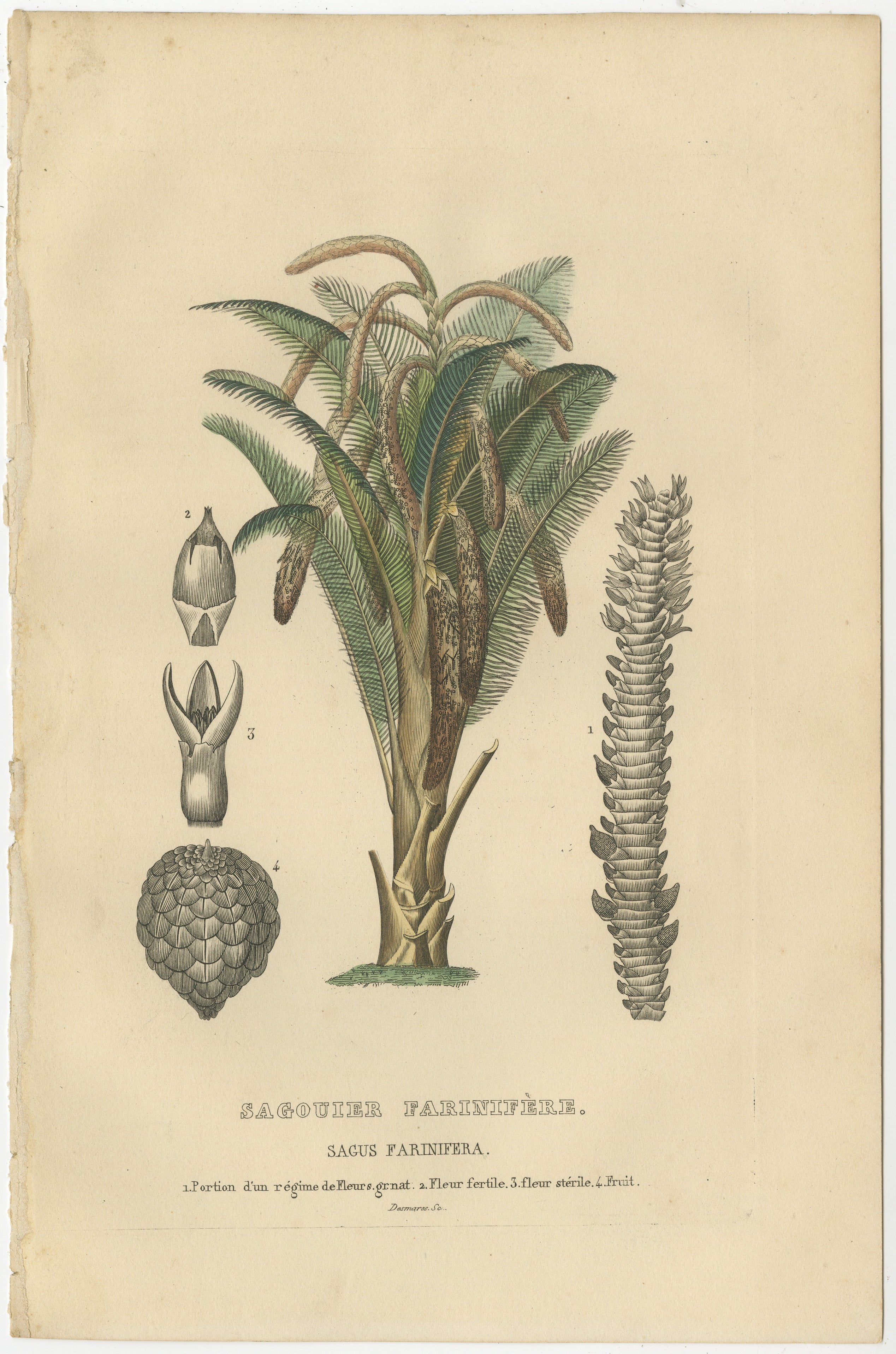
The original engraving you've described, titled "Sagouier Farinifère (Sagus Farinifera)," is a depiction of the sago palm tree. Created by F.J. Desmares after Pierre Auguste Joseph Drapiez (1778-1856), this artwork is an engraving with original hand coloring on wove (vellum) paper.
The sago palm, scientifically known as Sagus or Saguerus farinifera, is a species of palm tree cultivated in tropical areas for its starchy pith, which is processed into sago, a type of food substance.
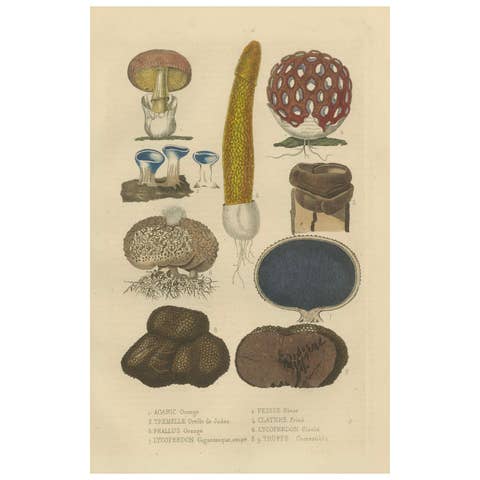
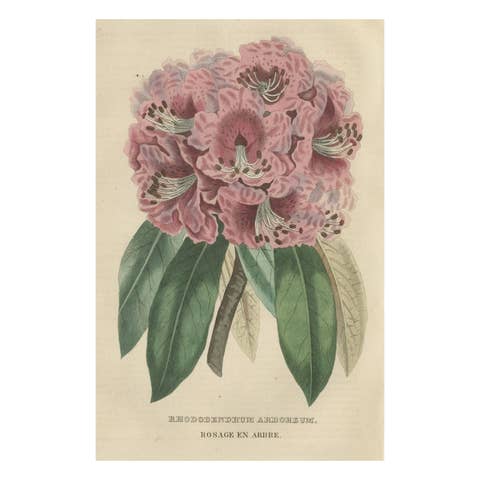
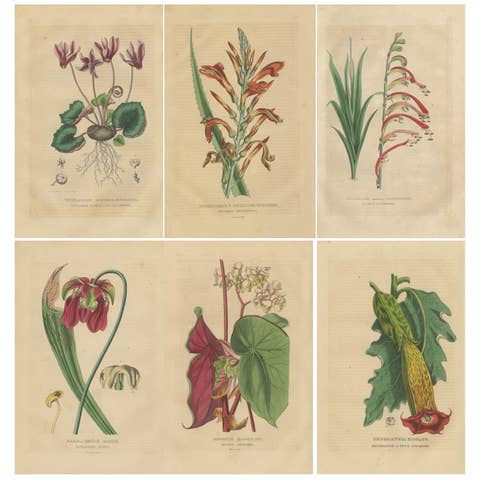
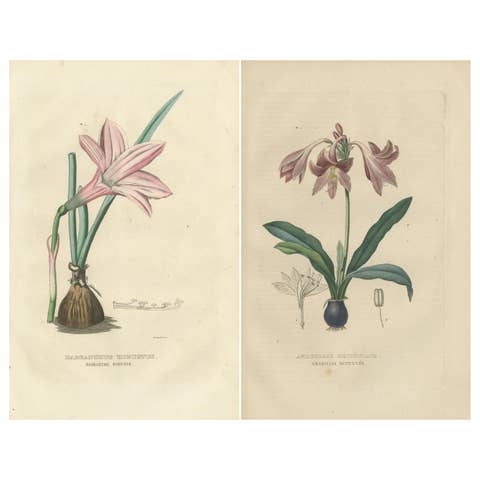
Engravings like this one were common during the 18th and 19th centuries, showcasing botanical specimens with detailed accuracy and often hand-colored to highlight specific features or characteristics of the depicted plant.
This particular artwork is likely an example of botanical illustration, showcasing the visual characteristics of the sago palm tree, and may serve as a historical reference or decorative piece appreciated for its accuracy and artistic presentation.
More info on the book in which it was published:
The 'Dictionnaire Classique des Sciences Naturelles' by Pierre Auguste Joseph Drapiez stands as a remarkable testament to 19th-century natural sciences. Published in Brussels in 1845, this work represents an expansive collation of knowledge, building upon the pioneering works of Buffon, Daubenton, Lacepede, Cuvier, de Jussieu, and other influential naturalists.
The prints within this compendium likely showcase a rich amalgamation of artistic precision and scientific accuracy. Drapiez, himself a Belgian naturalist, would have aimed for detailed representations of flora, fauna, and scientific phenomena, mirroring the illustrative styles prevalent during his time. Given the era's emphasis on illustration, these prints were likely engraved meticulously, possibly portraying intricate anatomical details or lifelike depictions of the natural world.
With Drapiez's background in natural history, the prints might bear testament to his commitment to scientific authenticity, aiming to educate and inspire scholars and enthusiasts alike. These engravings would have complemented the text, offering visual aids that elucidate the concepts and specimens discussed in the volume.
Overall, the prints of 'Dictionnaire Classique des Sciences Naturelles' likely serve as both artistic representations and invaluable scientific resources, encapsulating the essence of 19th-century natural history exploration and documentation.