About this sheet
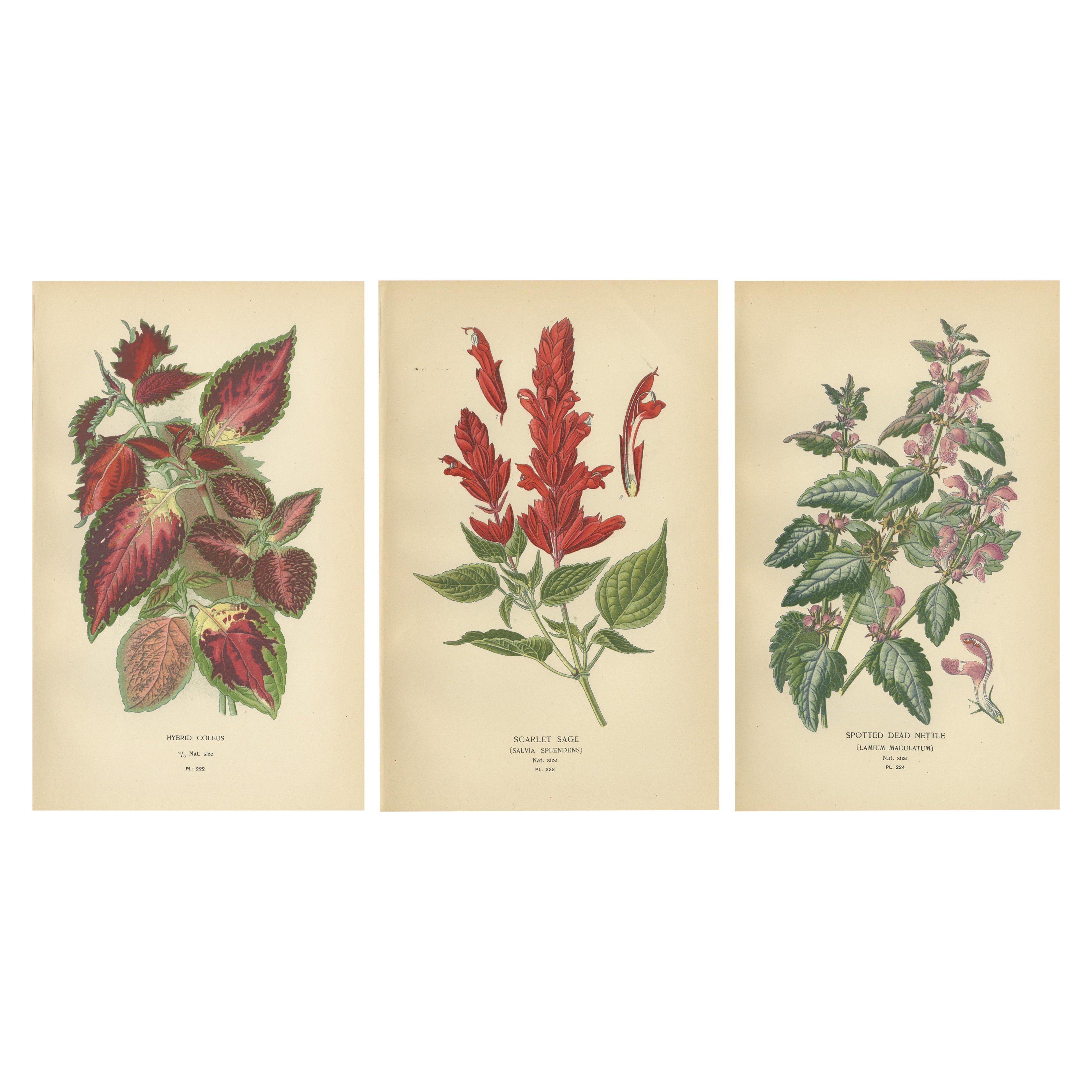
This set of three original botanical prints from 1897 features hybrid coleus (*Coleus hybridus*), scarlet sage (*Salvia splendens*), and spotted dead nettle (*Lamium maculatum*). Published in *Favourite Flowers of Garden and Greenhouse*, these illustrations showcase the meticulous artistry and scientific precision of Victorian botanical works, highlighting the beauty and diversity of these ornamental plants.
In more detail:
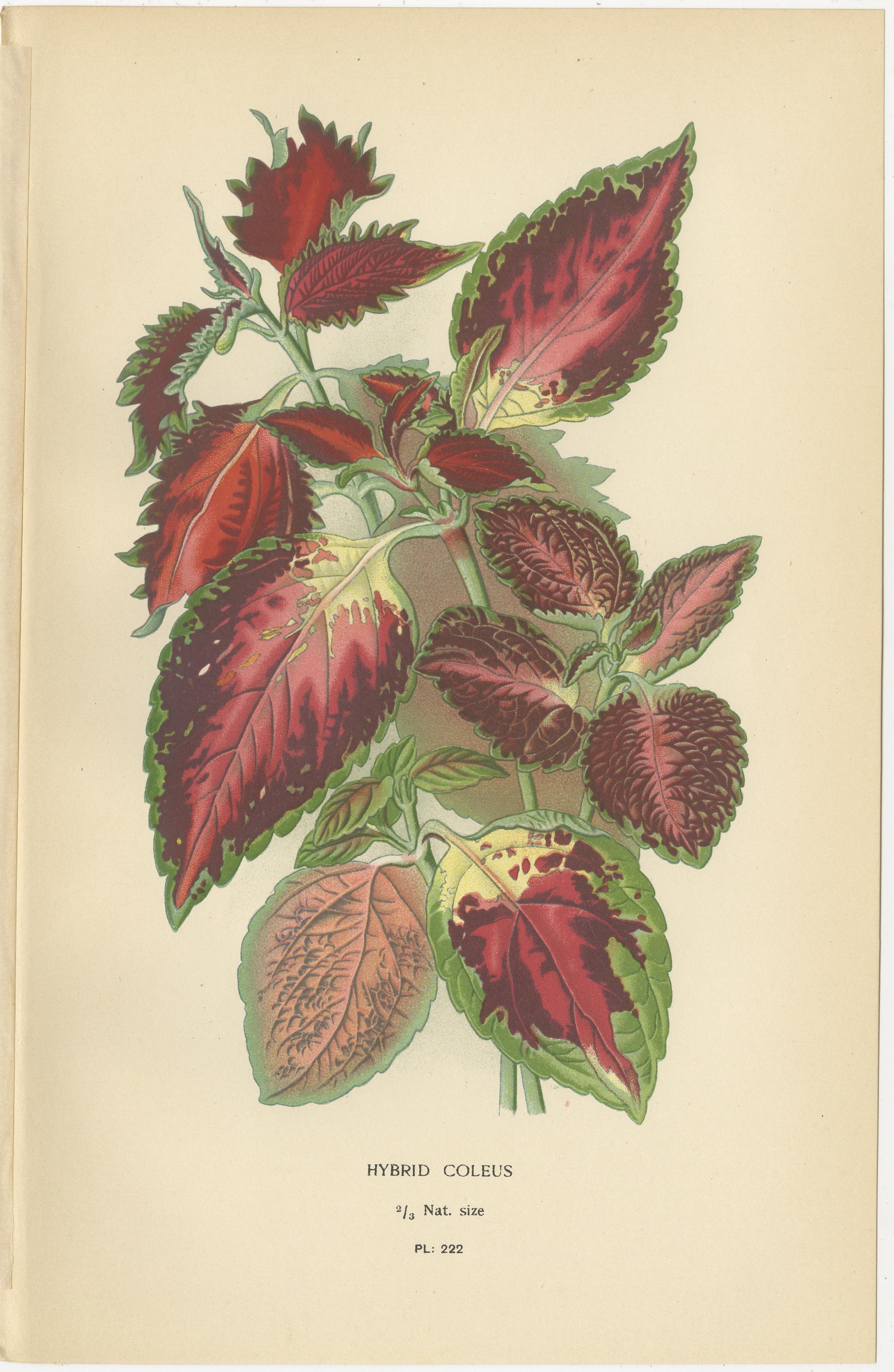
1. Hybrid coleus (Coleus hybridus)
- Common names: painted nettle, flame nettle
- Interesting fact: Renowned for its vibrant, multi-colored foliage, this plant was a popular choice in Victorian gardens for adding dramatic patterns and hues.
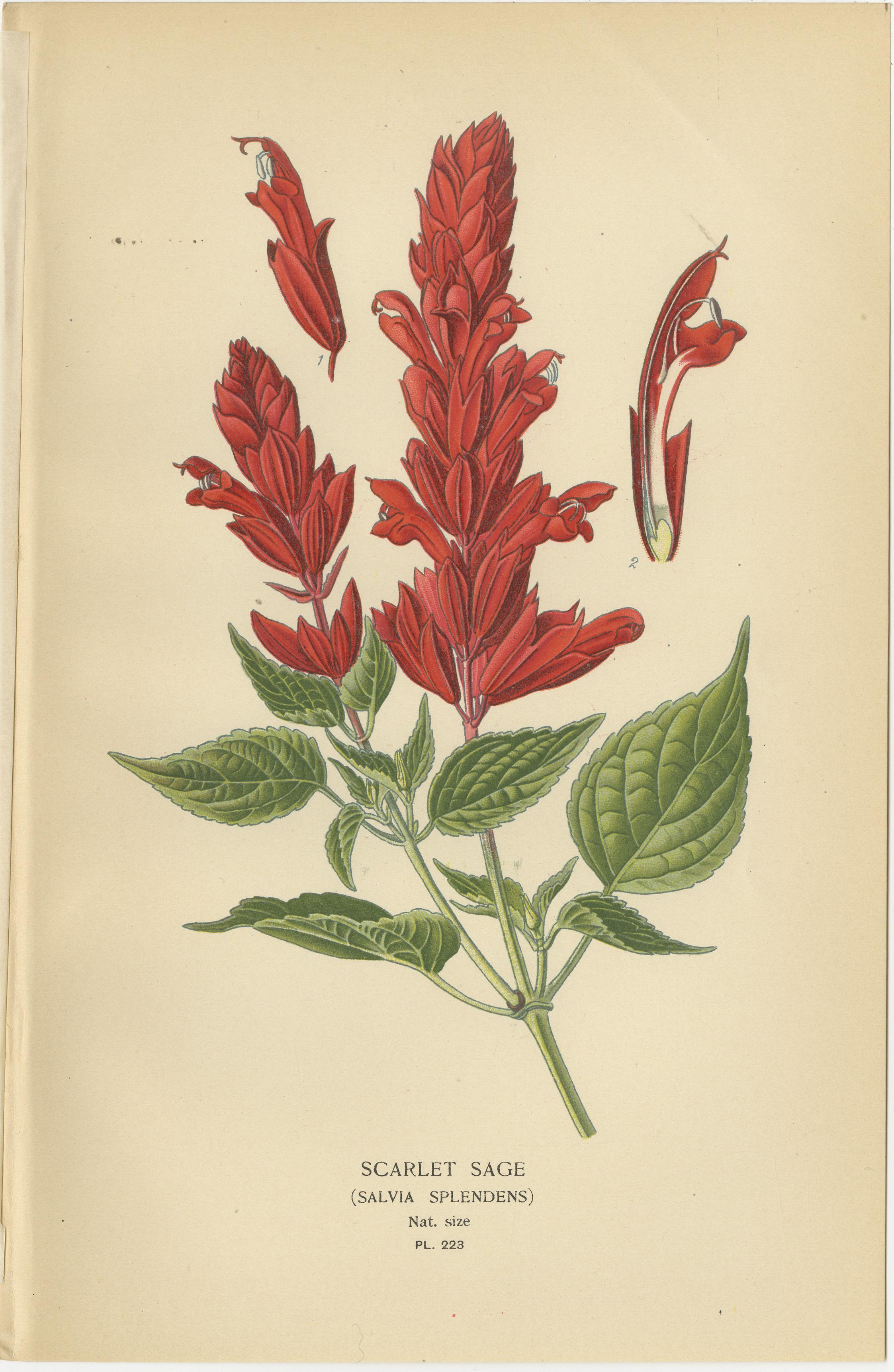
2. Scarlet sage (Salvia splendens)
- Common names: tropical sage, firecracker plant
- Interesting fact: A staple in ornamental gardens, scarlet sage is prized for its bright red flowers, which attract hummingbirds and butterflies.
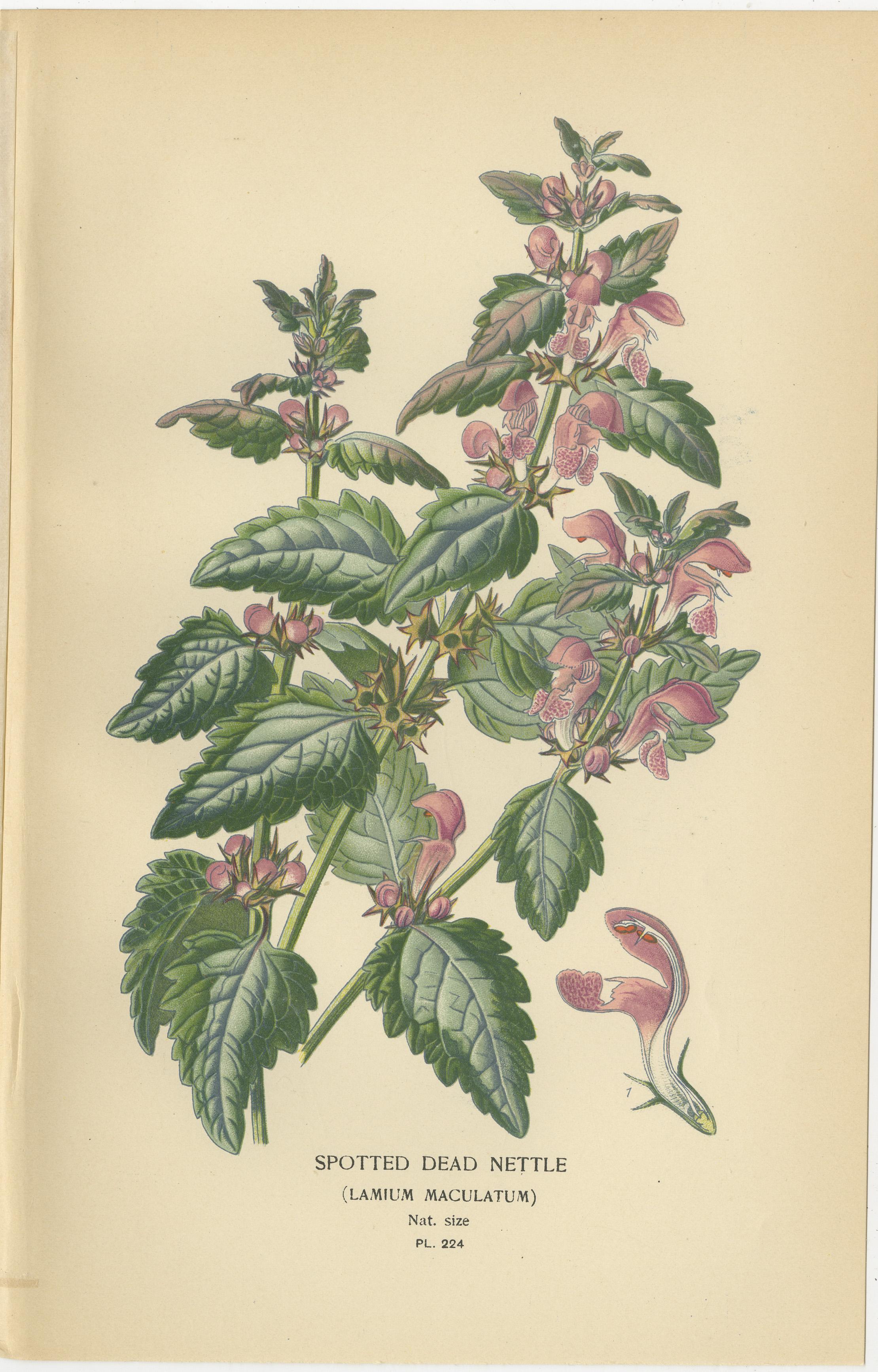
3. Spotted dead nettle (Lamium maculatum)
- Common names: spotted henbit, purple dragon
- Interesting fact: This groundcover is loved for its heart-shaped leaves and soft pink flowers, often used to brighten shaded garden areas.
These plants are celebrated for their bold colors and ornamental value, making them timeless additions to gardens and botanical art collections.
The hybrid coleus print presents an exquisite display of its richly variegated foliage, with leaves in dramatic shades of red, purple, and green. Known for their striking patterns, coleus plants were popular for their decorative appeal. The scarlet sage plate captures the vibrant spikes of red tubular flowers, gracefully arranged against lush green leaves, reflecting its status as a beloved garden favorite. The spotted dead nettle is elegantly illustrated with soft pink flowers and delicately detailed green leaves, showcasing its versatile charm as both a decorative and hardy groundcover plant.
These prints are in excellent condition, with sharp lines and vivid colors beautifully preserved for over a century. Ideal for framing, they make a sophisticated addition to any home, office, or gallery. Perfect for collectors of antique botanical art, gardeners, or lovers of historical decor, these works offer a timeless celebration of nature’s intricate beauty and the artistry of 19th-century botanical illustration.