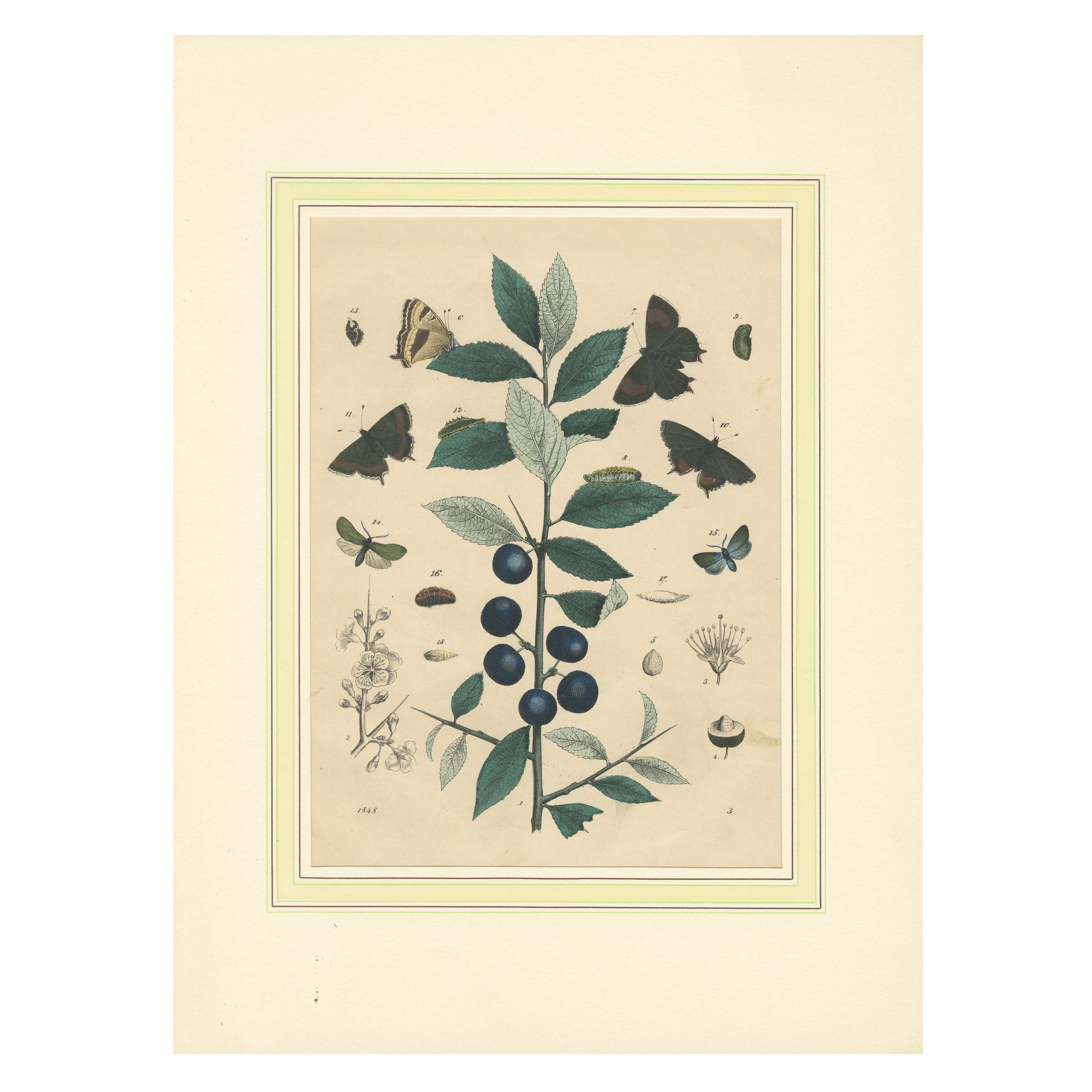
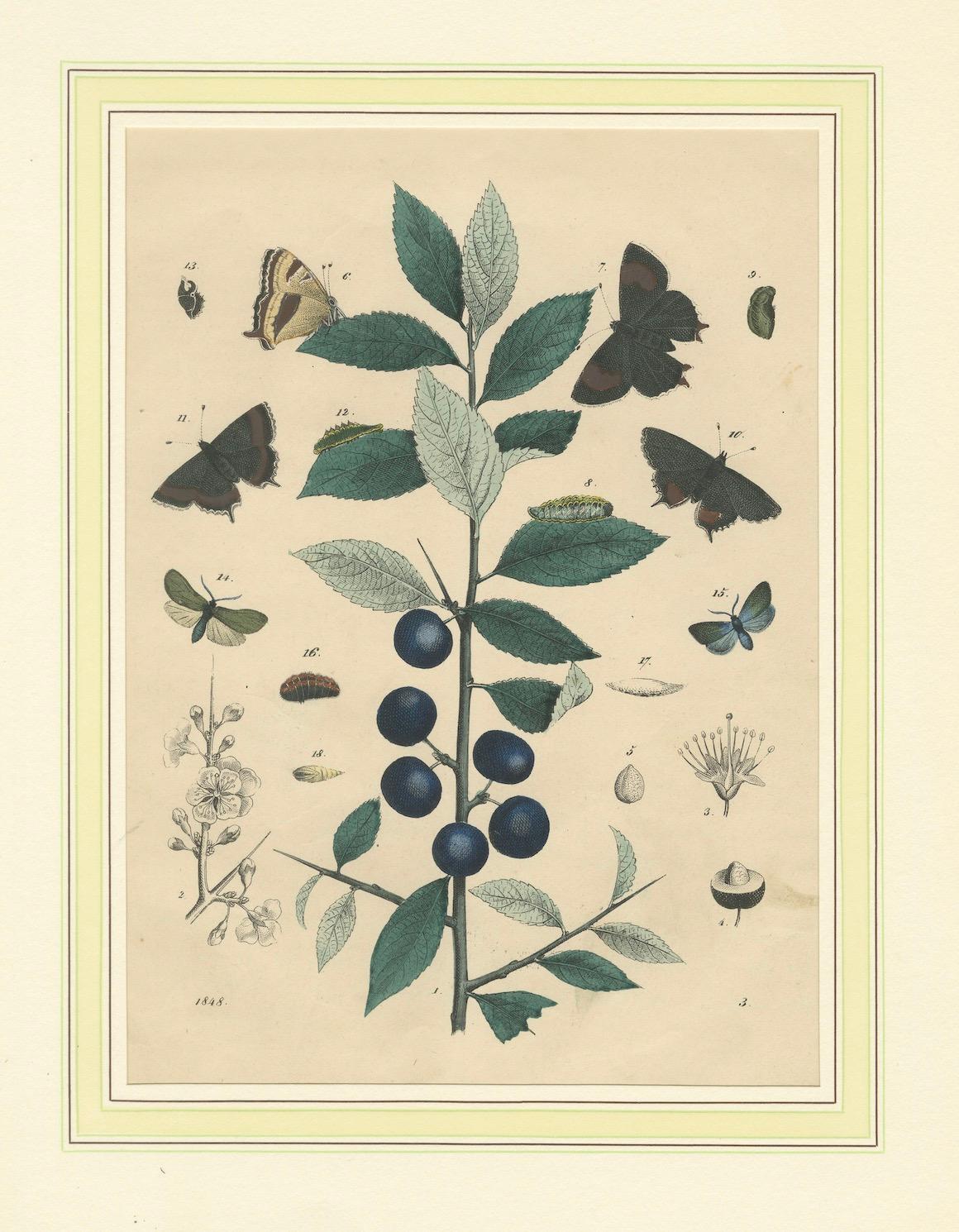
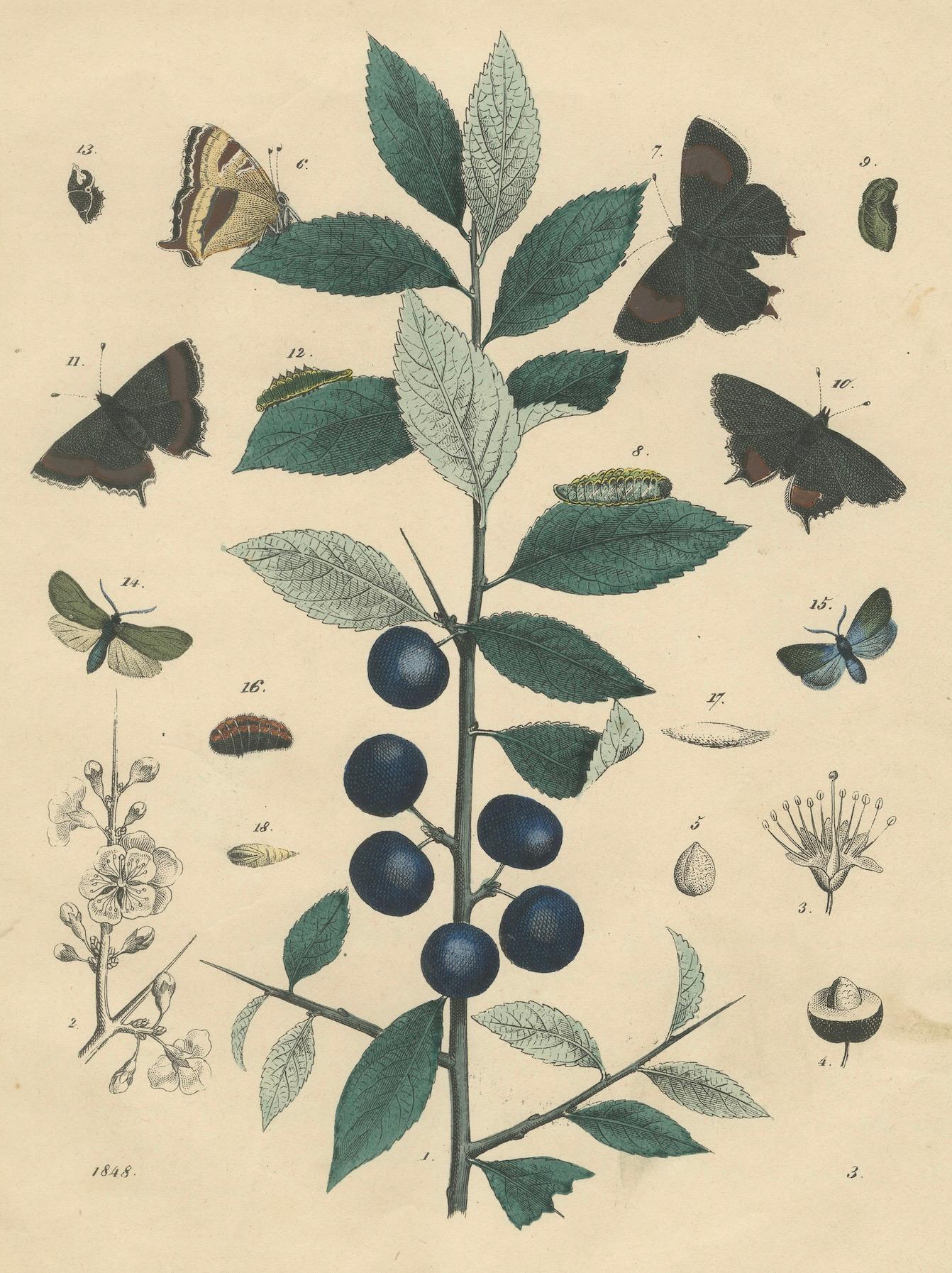
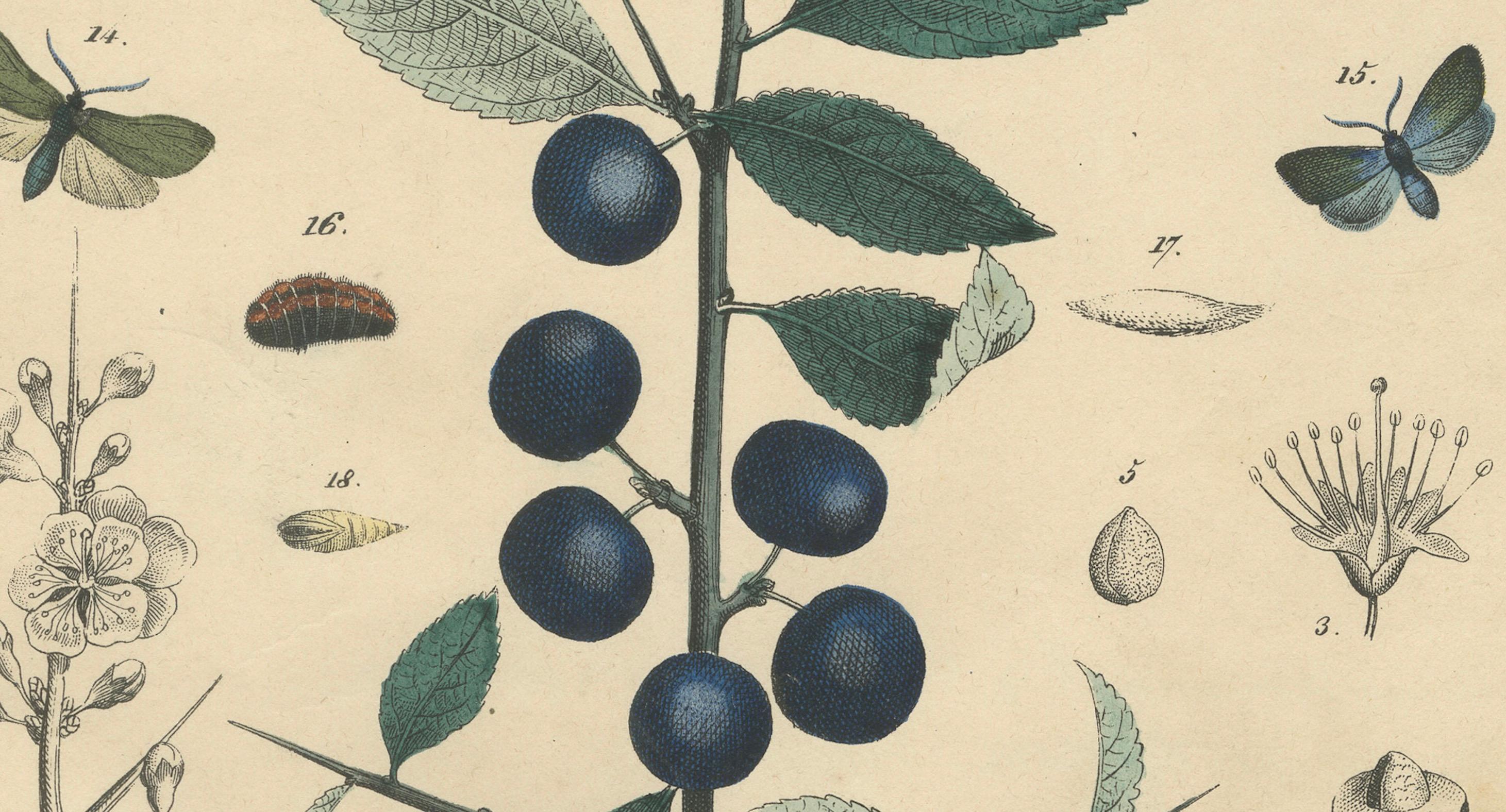
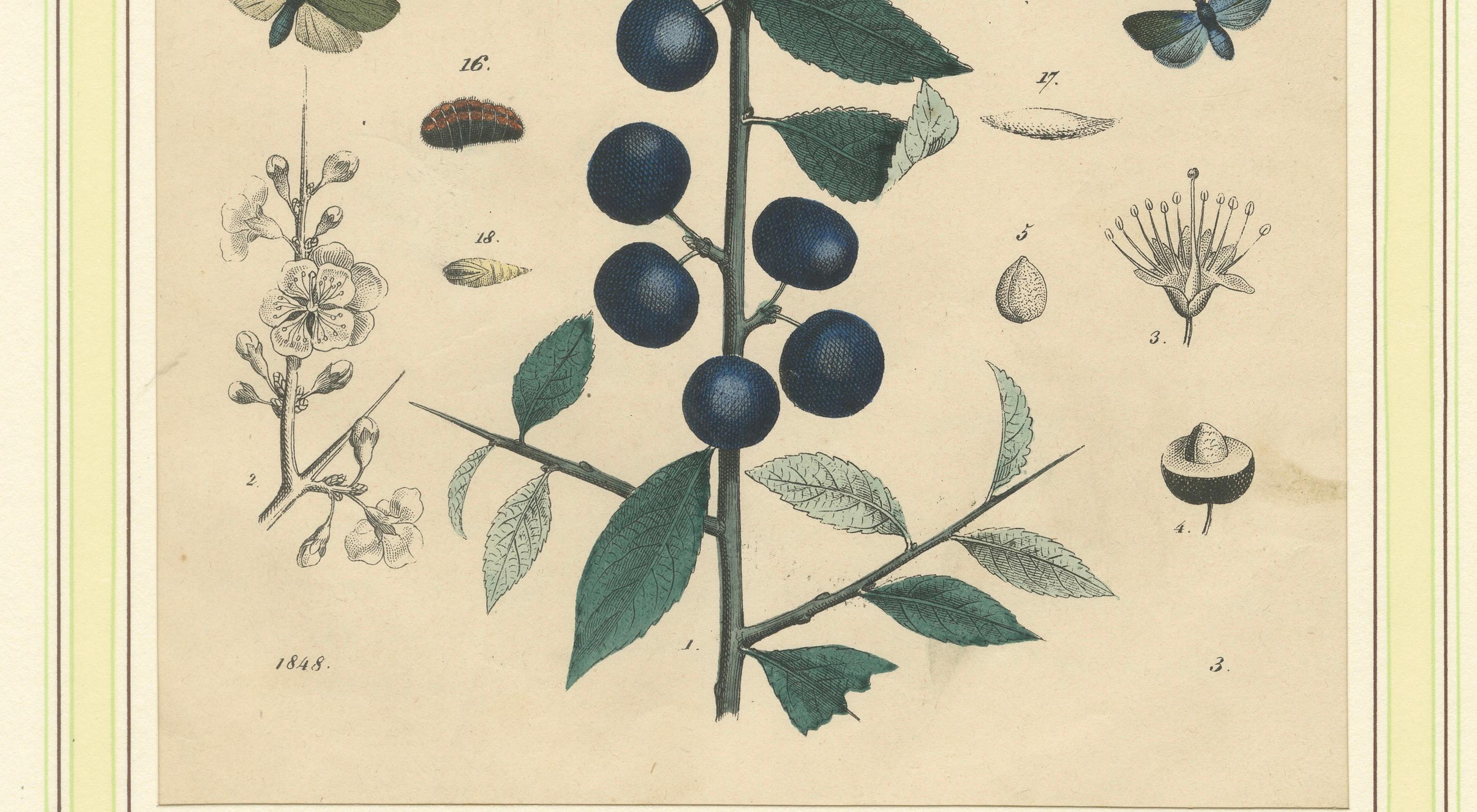
1848 Hand-Colored Lithograph of Butterflies, Caterpillars and Blackthorn Plant
€ 140
One of a kind: this is the sheet in the photographs. Ships from Langweer, the Netherlands.
Date
1848
Sheet size
34.8 × 25.9 cm (13.7 × 10.2 in)
Condition
Good
Reference
BG-13836-97
Condition
Good condition. The hand-coloring remains vivid and well-preserved, with minimal age-related toning. Minor foxing in the margins but not detracting from the image's beauty. The lithograph is mounted on a cream-colored mat with green borders.
About this sheet
This stunning hand-colored lithograph from 1848 features an elegant composition centered on the blackthorn plant (Prunus spinosa), a native European shrub renowned for its delicate blossoms and dark blue fruits. The artist meticulously illustrates the plant in full detail, including its blooming flowers, ripe berries, and seed structure, creating an enchanting botanical study.
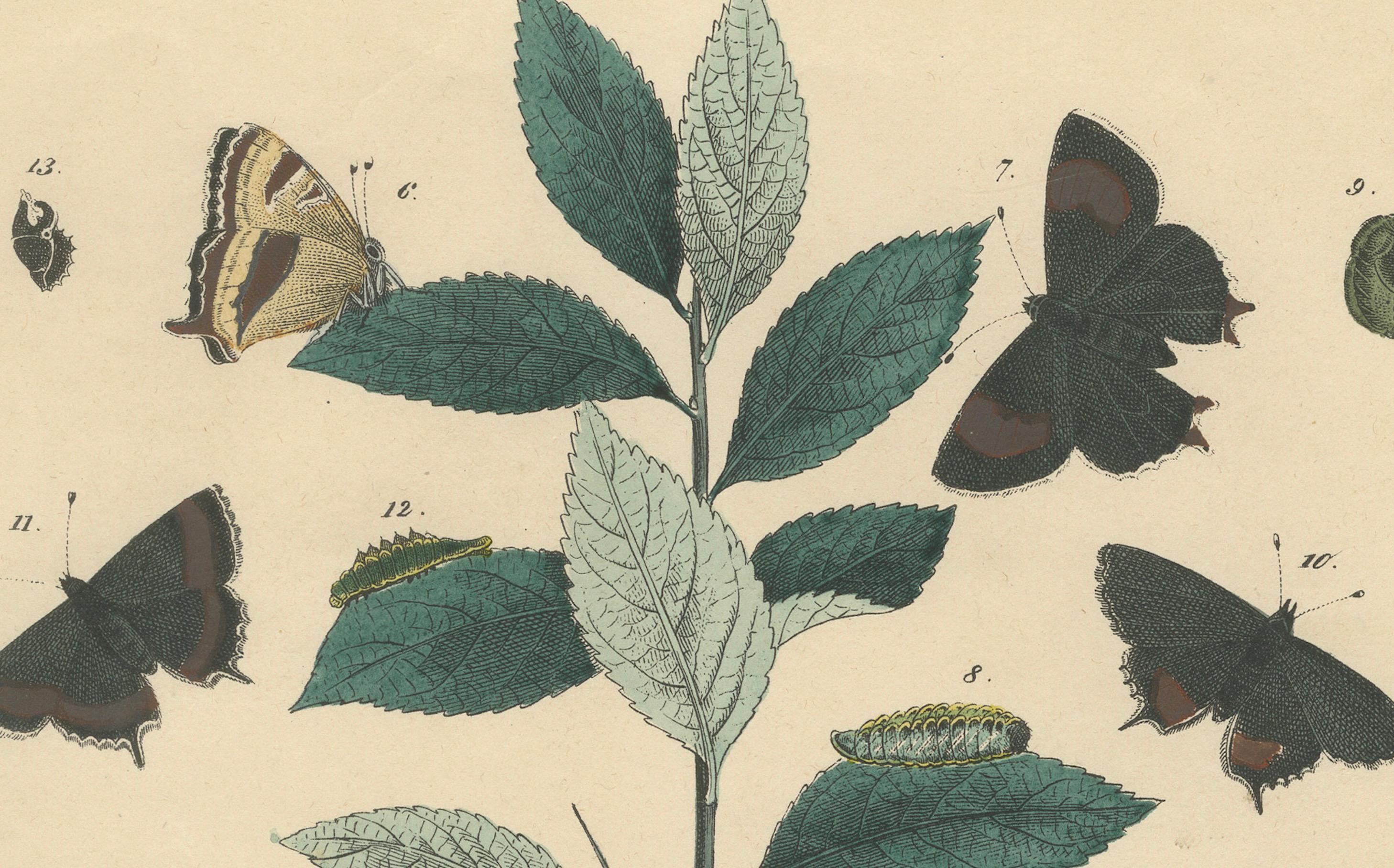
Surrounding the plant are various stages of butterfly life cycles, including vibrantly colored butterflies, caterpillars, and pupae. Among the depicted species, a striking yellow and brown butterfly, a deep black and red butterfly, and a delicate green moth are featured. Each insect is rendered with remarkable precision, emphasizing their diversity and relationship with the blackthorn plant as a host species.
This print is not only a visually appealing piece of art but also a scientifically valuable depiction of ecological interdependence. It provides insight into the life cycles of butterflies and the plants they depend on, making it a wonderful addition to any collection focused on entomology or botanical illustration.
Condition Report: The hand-coloring remains vivid and well-preserved, with minimal age-related toning. A few minor spots of foxing are visible in the margins but do not detract from the image's beauty. The lithograph is mounted on a cream-colored mat with green border accents, enhancing its presentation and making it ready for framing.
This lithograph is a perfect blend of art and science, appealing to collectors, nature enthusiasts, and those seeking a decorative yet educational piece of 19th-century natural history.