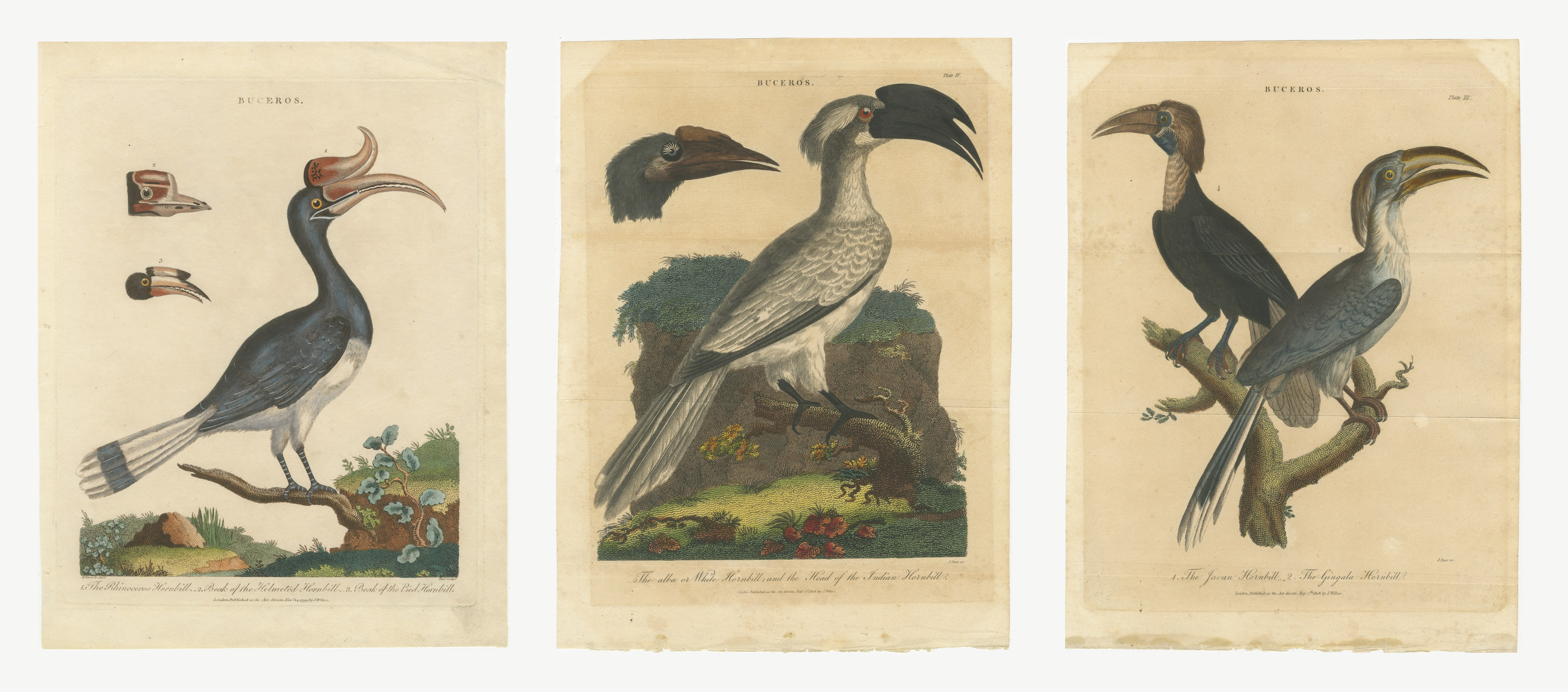
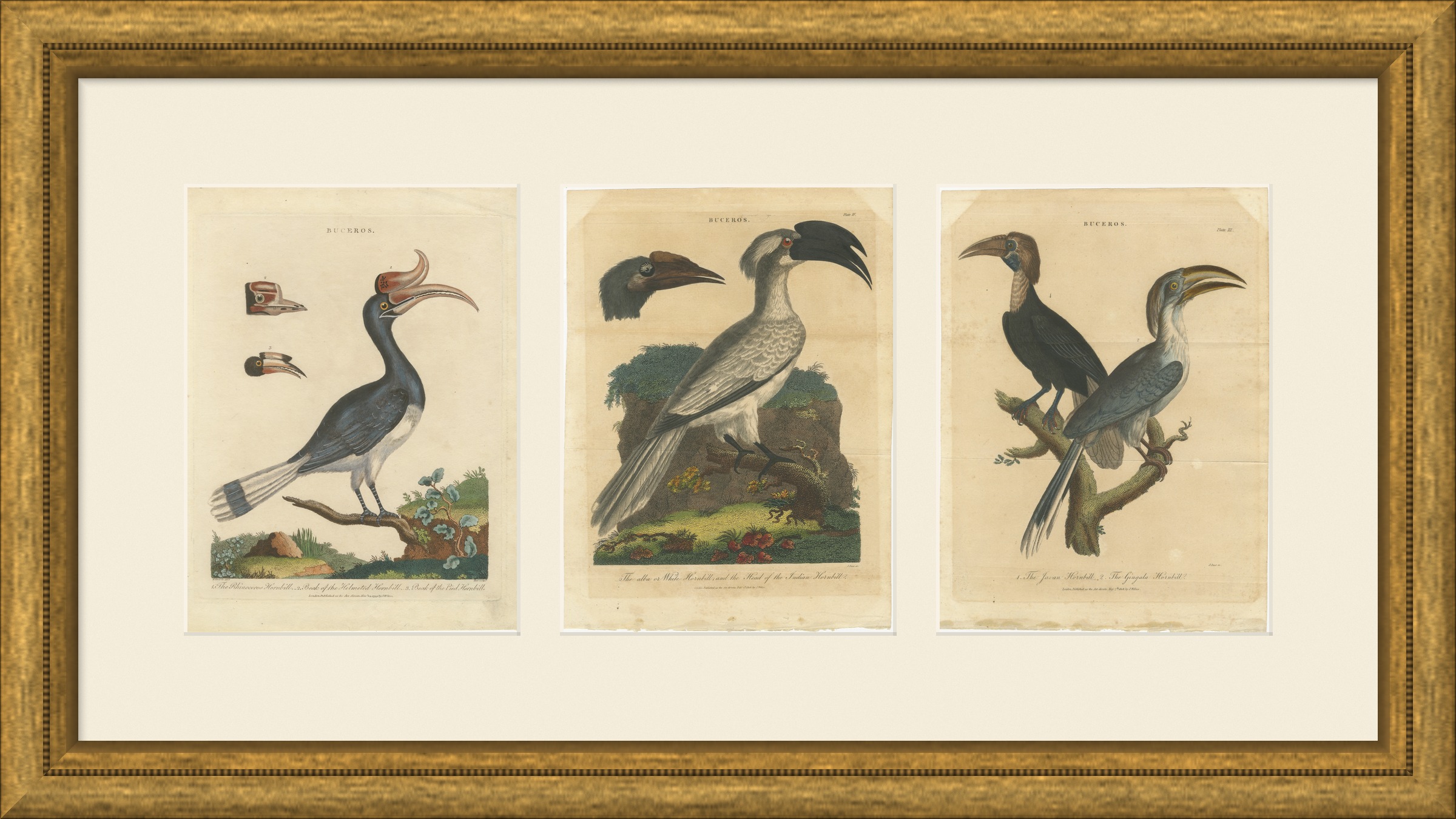
Three Hand Colored Hornbill Prints, Buceros, circa 1810
€ 930
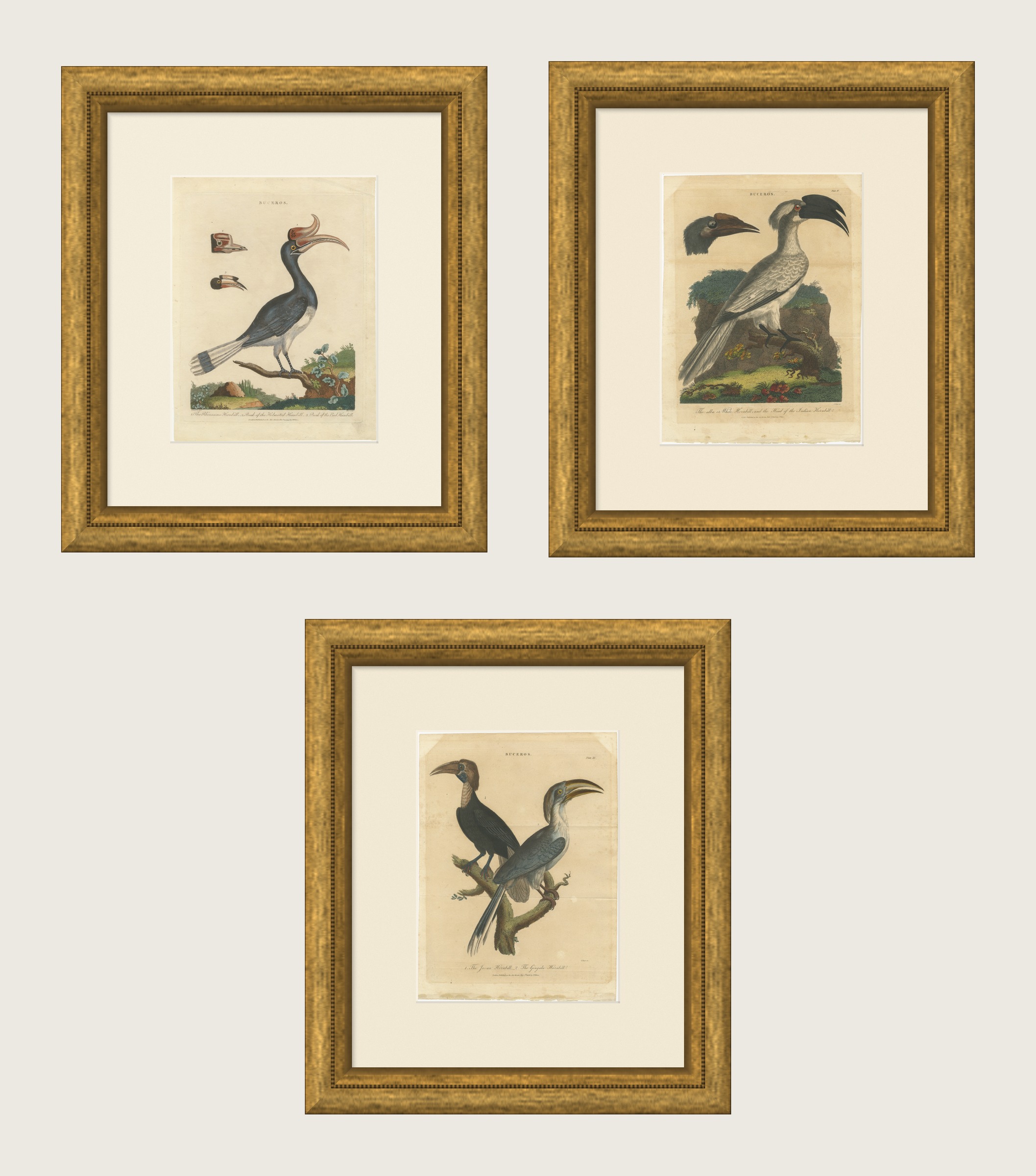
Original antique · The actual sheet photographed · Certificate of authenticity on request · Sold unframed · Worldwide shipping from € 15 (rates)
Date
circa 1810
Mapmaker / artist
John Pass, engraver, attributed
Publisher
Published in London
Technique
Copper Engraving
Coloring
Original hand color
Sheet size
28.5 × 22 cm (11.2 × 8.7 in)
Condition
Good
Reference
BG-14450-1
What the condition grades mean
Excellent
Bright and clean, with no faults worth mentioning.
Very good
Only light signs of age, such as faint toning.
Good
Normal signs of age for a sheet of this period: toning, some foxing, small marks or neat old repairs.
Fair
Clear faults such as staining, tears or repairs, priced to match.
Every fault we see is written in the condition note, and the whole sheet is shown uncropped in the photos.
Condition
Light uneven toning, browner towards the edges. Marked handling soiling along the edges of two of the three sheets. Scattered foxing in the margins of all three sheets. Slight wear at the corners of all three sheets.
About this sheet
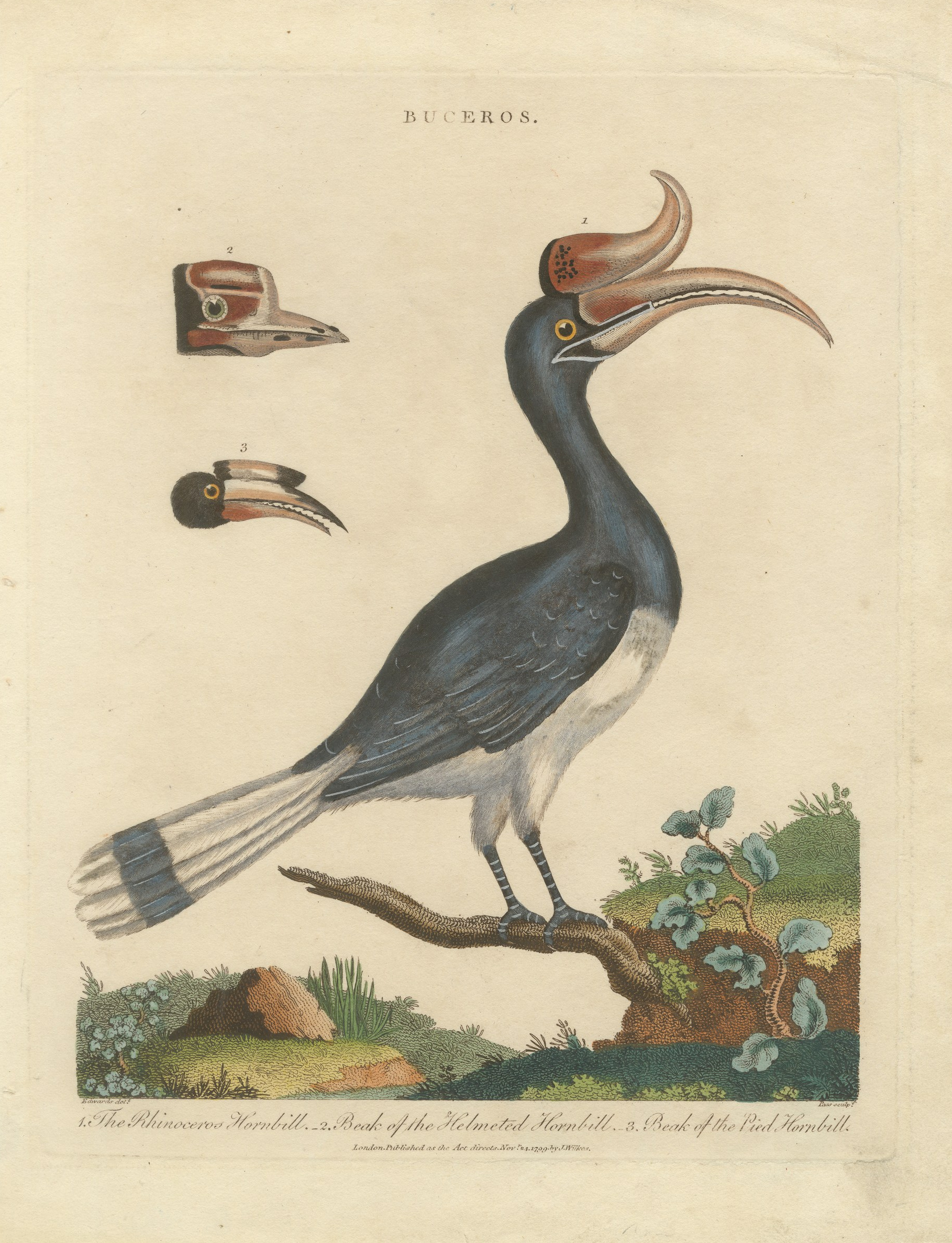
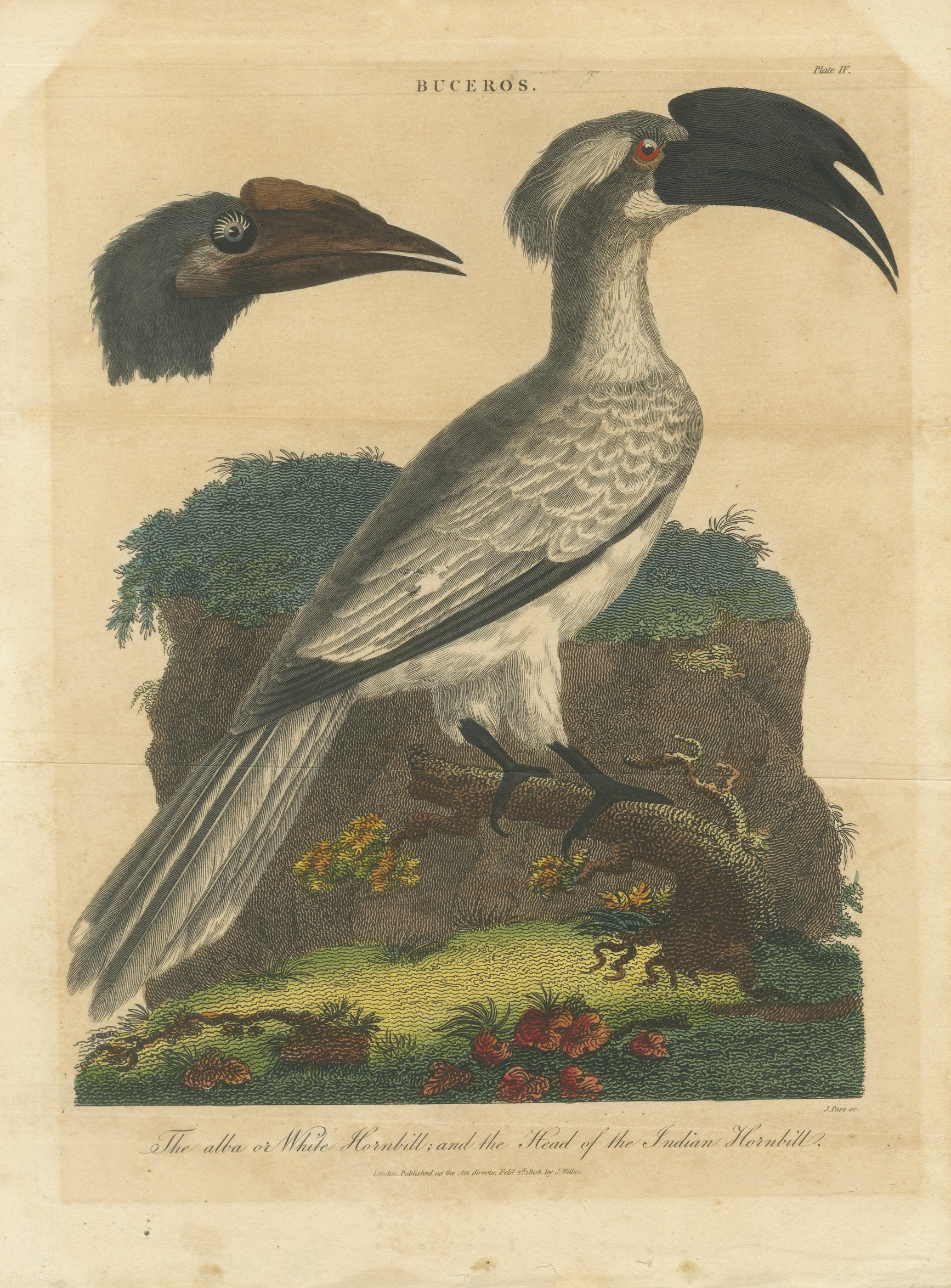
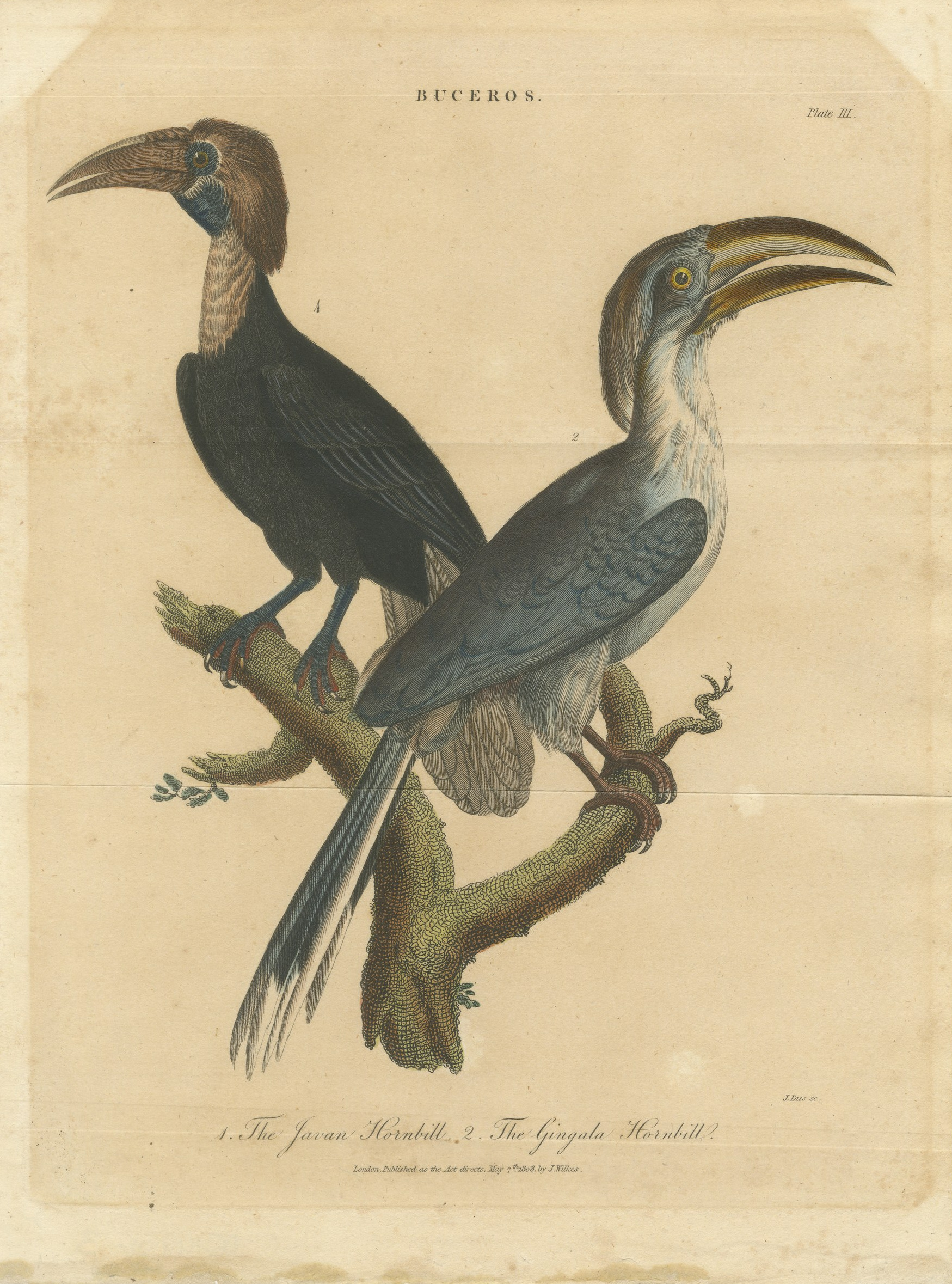
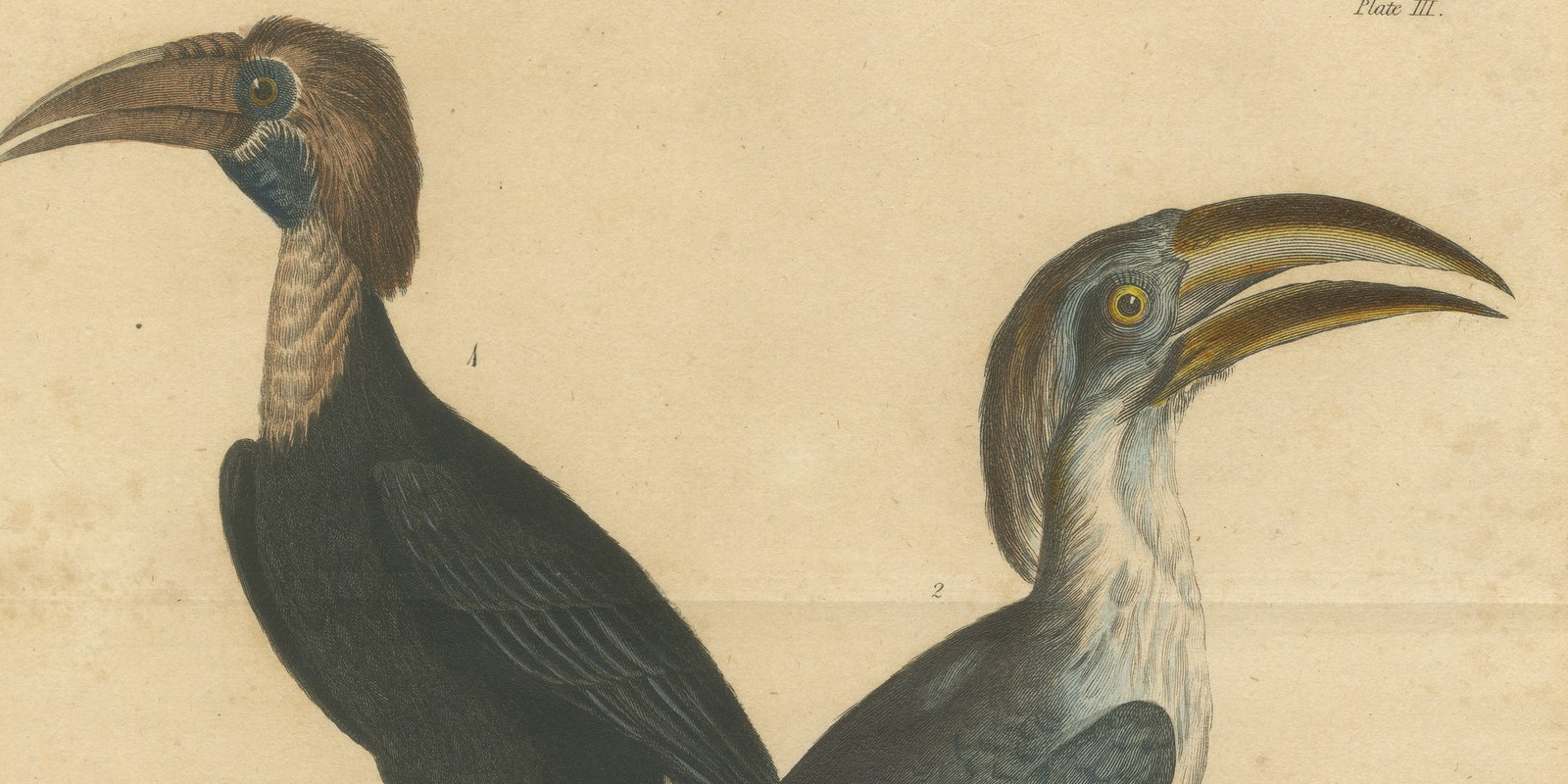
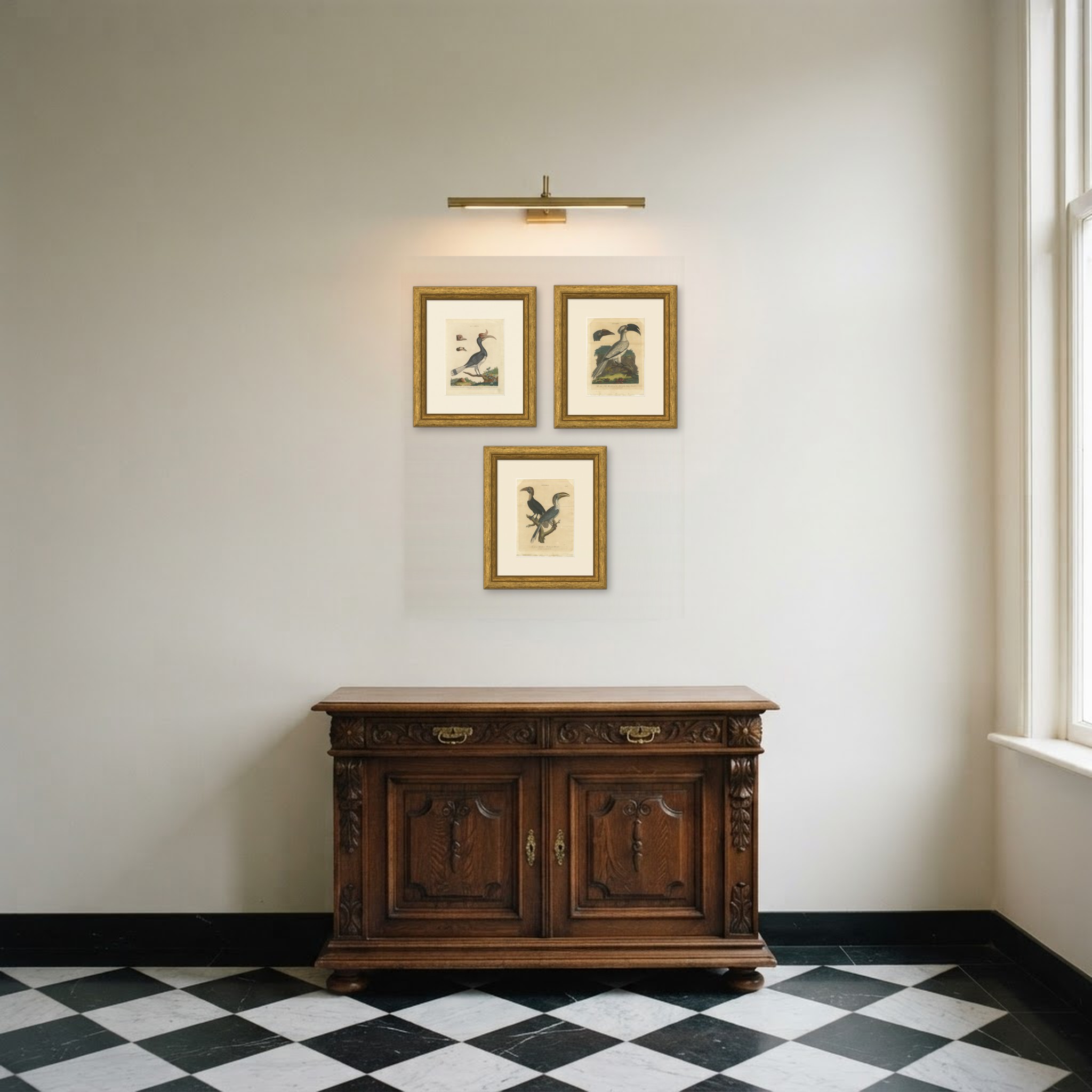
A set of three original antique hand colored engravings of hornbills, sold together and not separately. Each sheet is headed BUCEROS in capitals in the upper margin and names its birds in the lettering beneath: the rhinoceros hornbill with the beaks of the helmeted and pied hornbills, the white hornbill with the head of the Indian hornbill, and the Javan hornbill with the Gingala hornbill. The coloring is applied by hand in the English manner, with the plumage worked up in washes of slate, cream and brown and the great bills and casques picked out in red, cream and yellow. They are three original sheets sold together as one lot, and the set is never split.
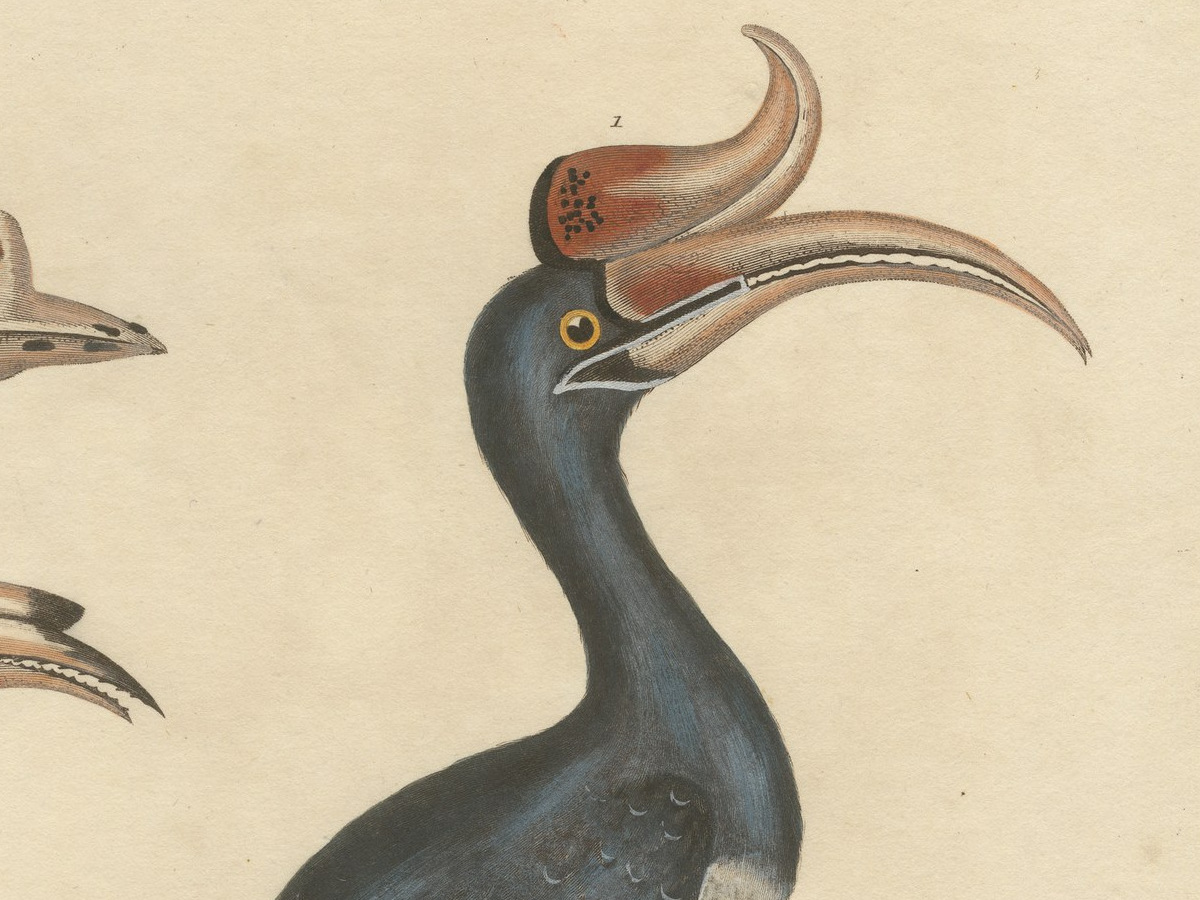
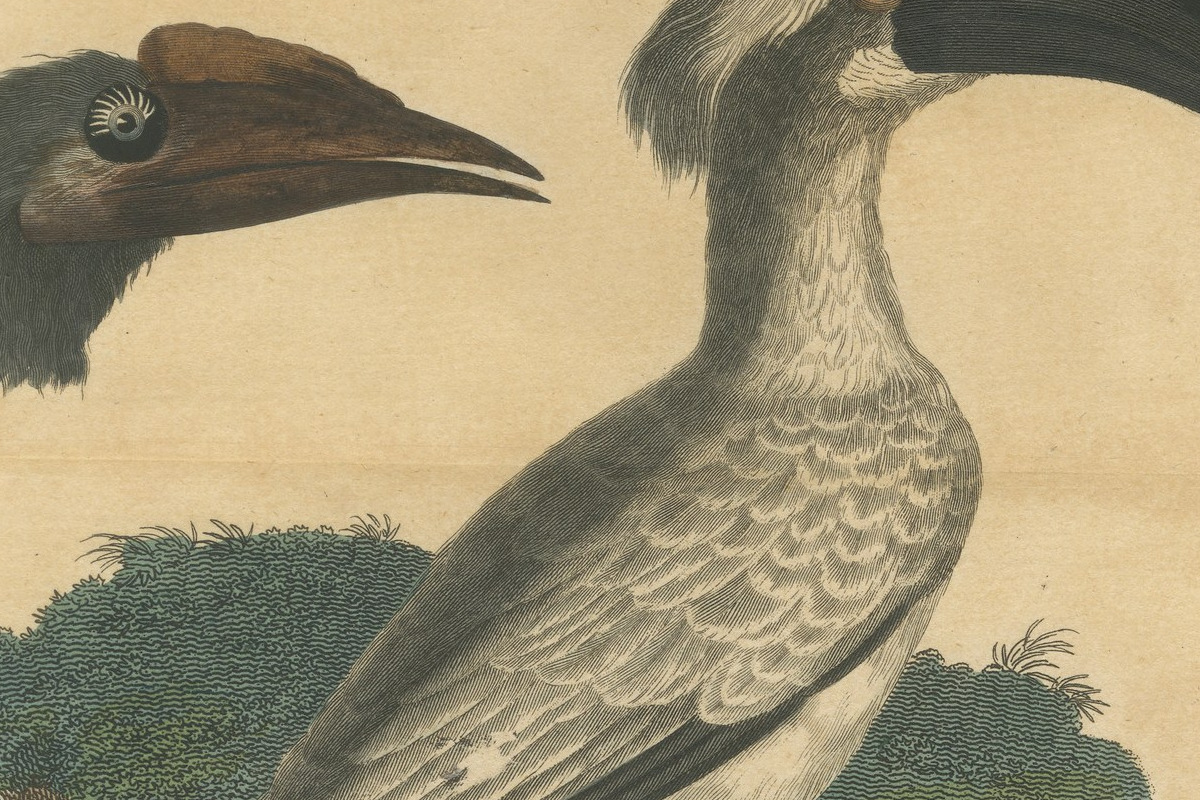
The first sheet gives the rhinoceros hornbill itself, a great slate blue and white bird perched on a mossy branch with the red and cream casque curving up over its bill, and sets beside it two detached studies of the beaks of the helmeted hornbill and the pied hornbill. The second shows a pale crested bird standing on a green bank scattered with red flowers, with a dark head study of the Indian hornbill set above it, the great bill and casque drawn in brown and black. The third puts two birds on one branch, the Javan hornbill with a buff head and a long tail and the Gingala hornbill below it with a blue gray back and a yellow bill, both lettered beneath and the plate numbered III at the upper right.
Hornbills caught the European imagination as soon as the first skins reached London, because nothing else looks remotely like them: the casque above the bill is a hollow horn structure that serves as a resonating chamber. Plates of them were engraved for the English encyclopaedias and natural histories of the first decade of the nineteenth century and colored by hand in the workshops that served the London book trade. The birds shown here come from Borneo, Java, India and Ceylon. Hornbills are closely tied to Southeast Asia, where the rhinoceros hornbill is the state bird of Sarawak and the helmeted hornbill a protected species. Three sheets of them, matched in size and format and with their great bills turned different ways, make a far better wall group than any one alone. They suit a study, a dining room or a hallway.
Light uneven toning, browner towards the edges. Marked handling soiling along the edges of two of the three sheets. Scattered foxing in the margins of all three sheets. Slight wear at the corners of all three sheets.
These are original antique prints, not modern reproductions. This item is sold unframed. Any framed or interior images are shown for presentation and inspiration only, unless the listing explicitly states that the item is sold framed.