About this sheet
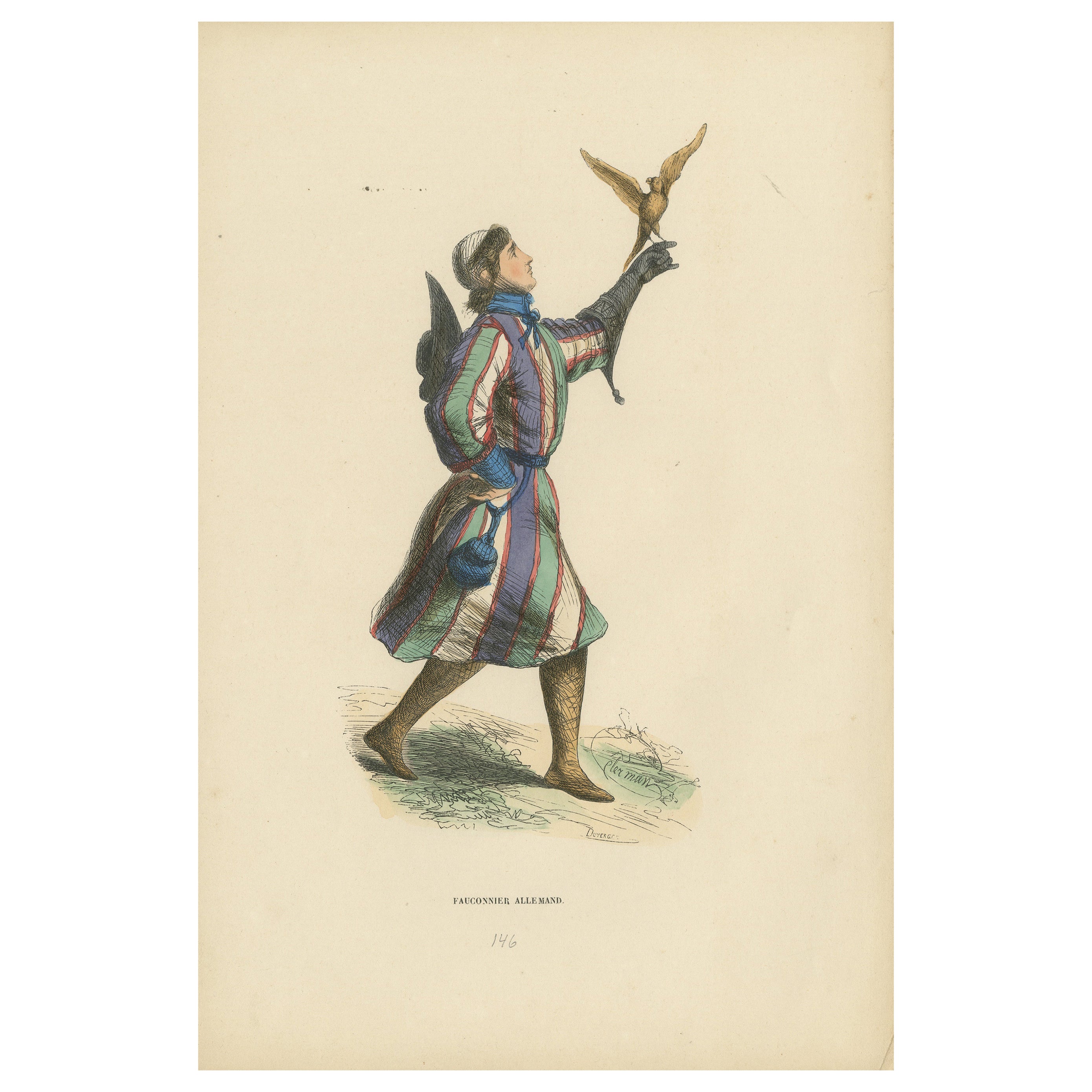
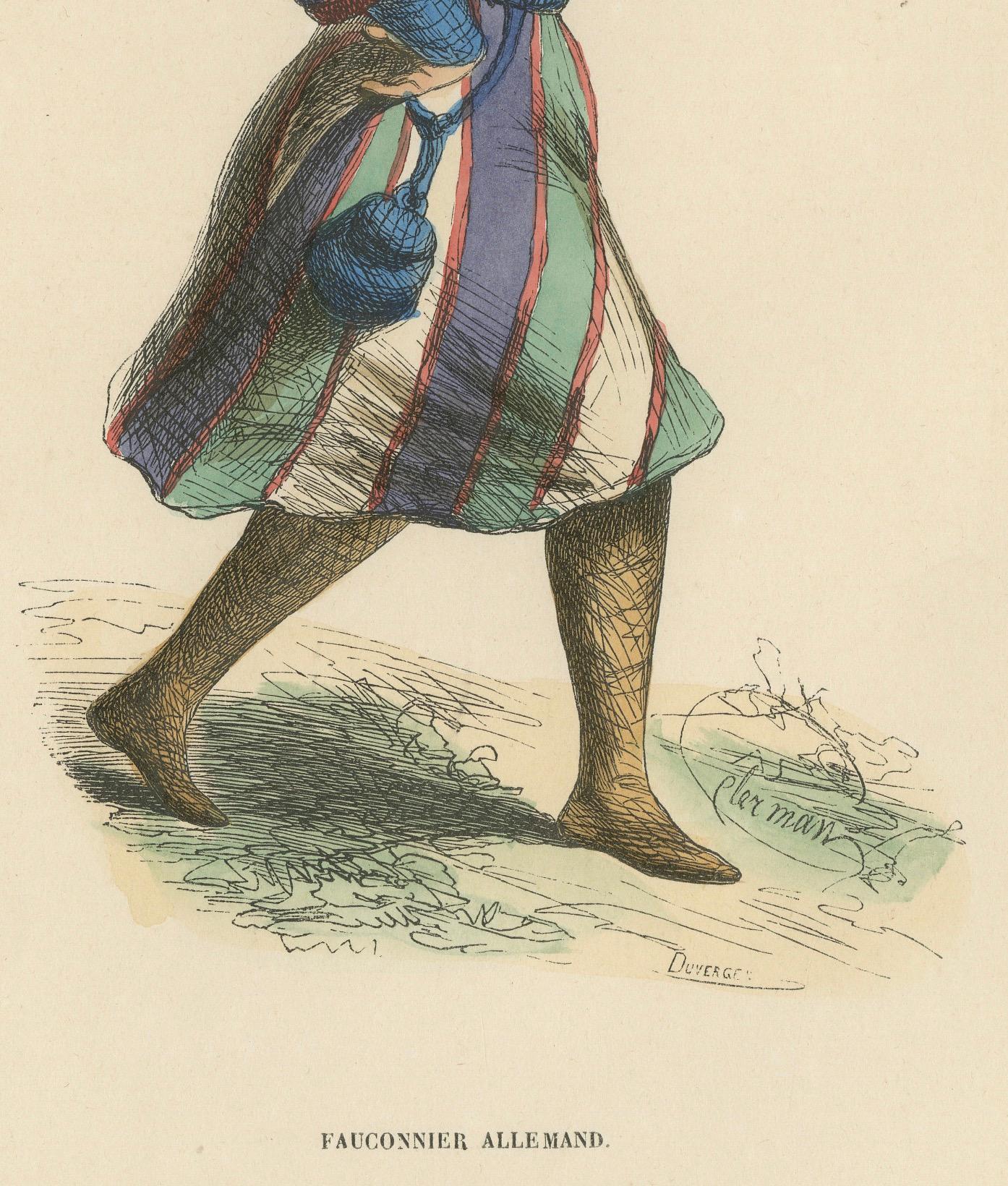
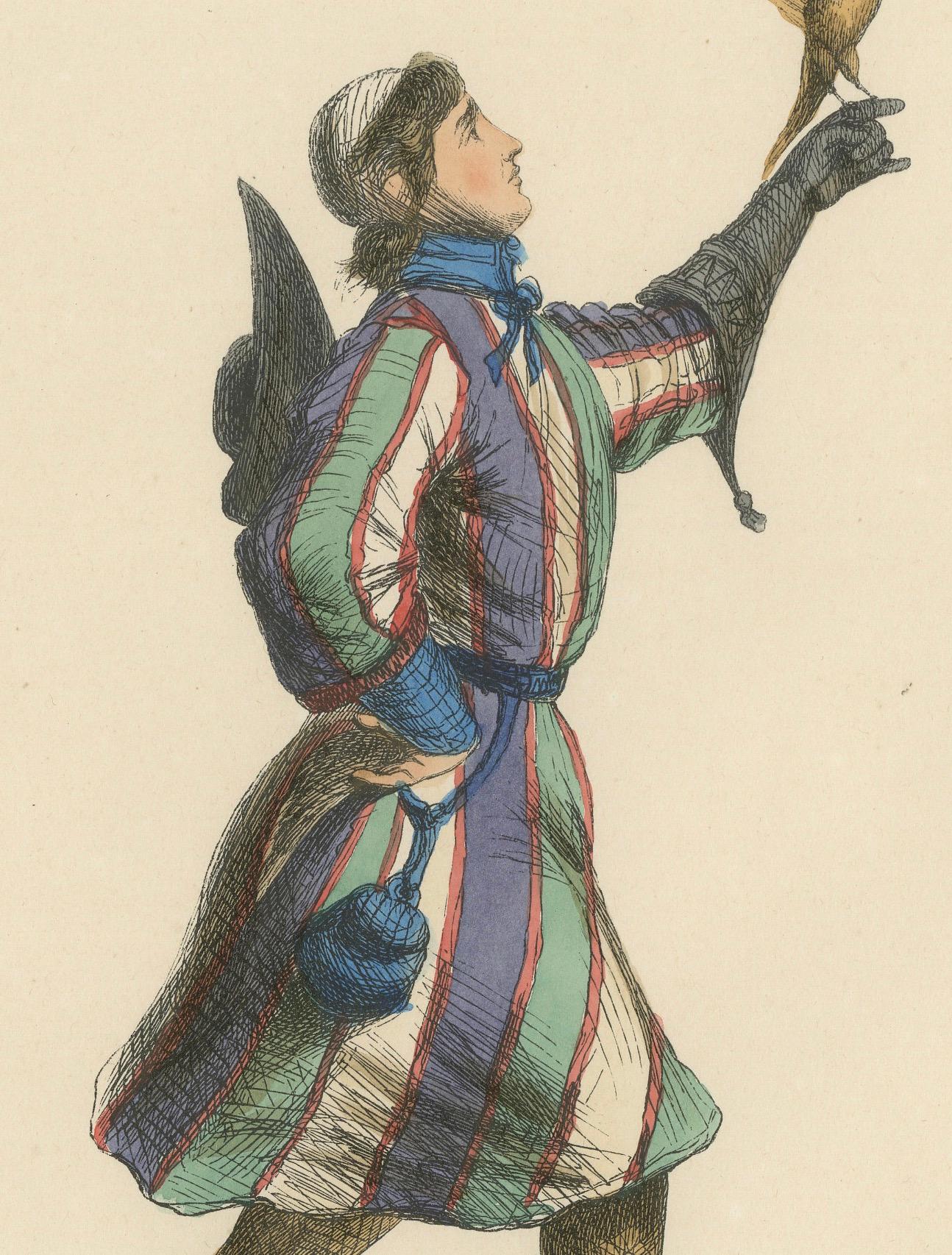
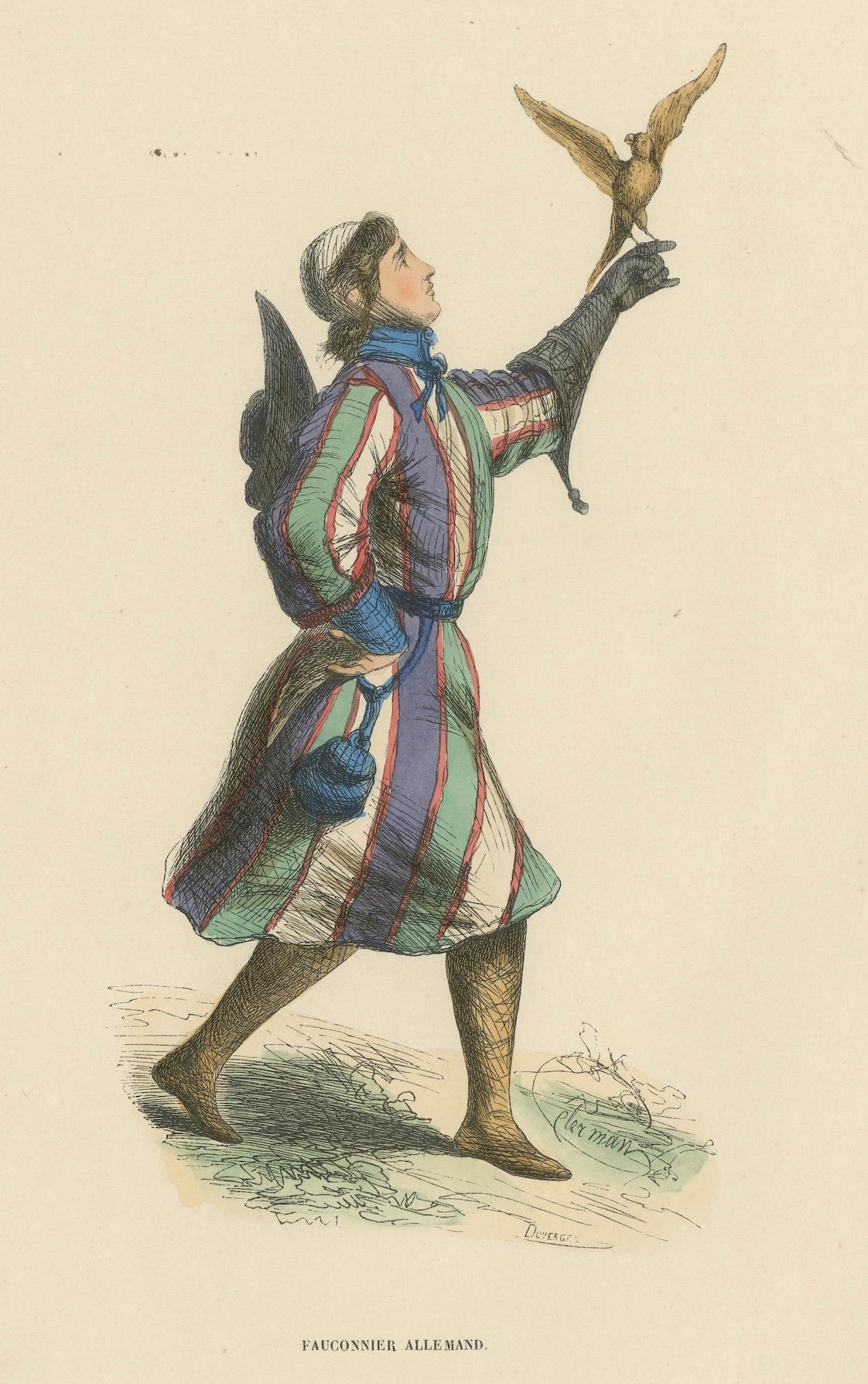
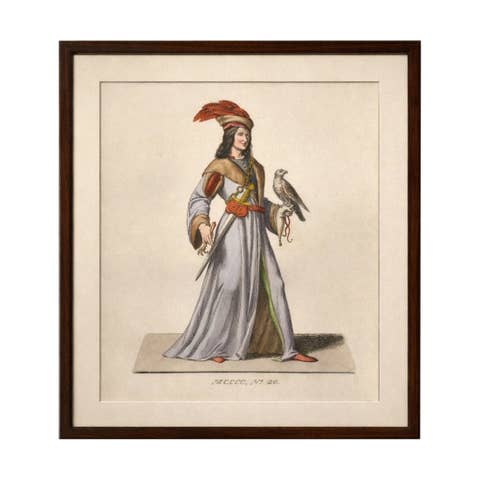
This lithograph from "Costume du Moyen Âge," produced in 1847, showcases a German falconer in the midst of his craft. Falconry, a popular sport and status symbol among the nobility, is depicted here with historical accuracy and artistic detail. The falconer is dressed in a multi-colored striped tunic, cinched at the waist, which allows for freedom of movement necessary for handling his bird of prey.
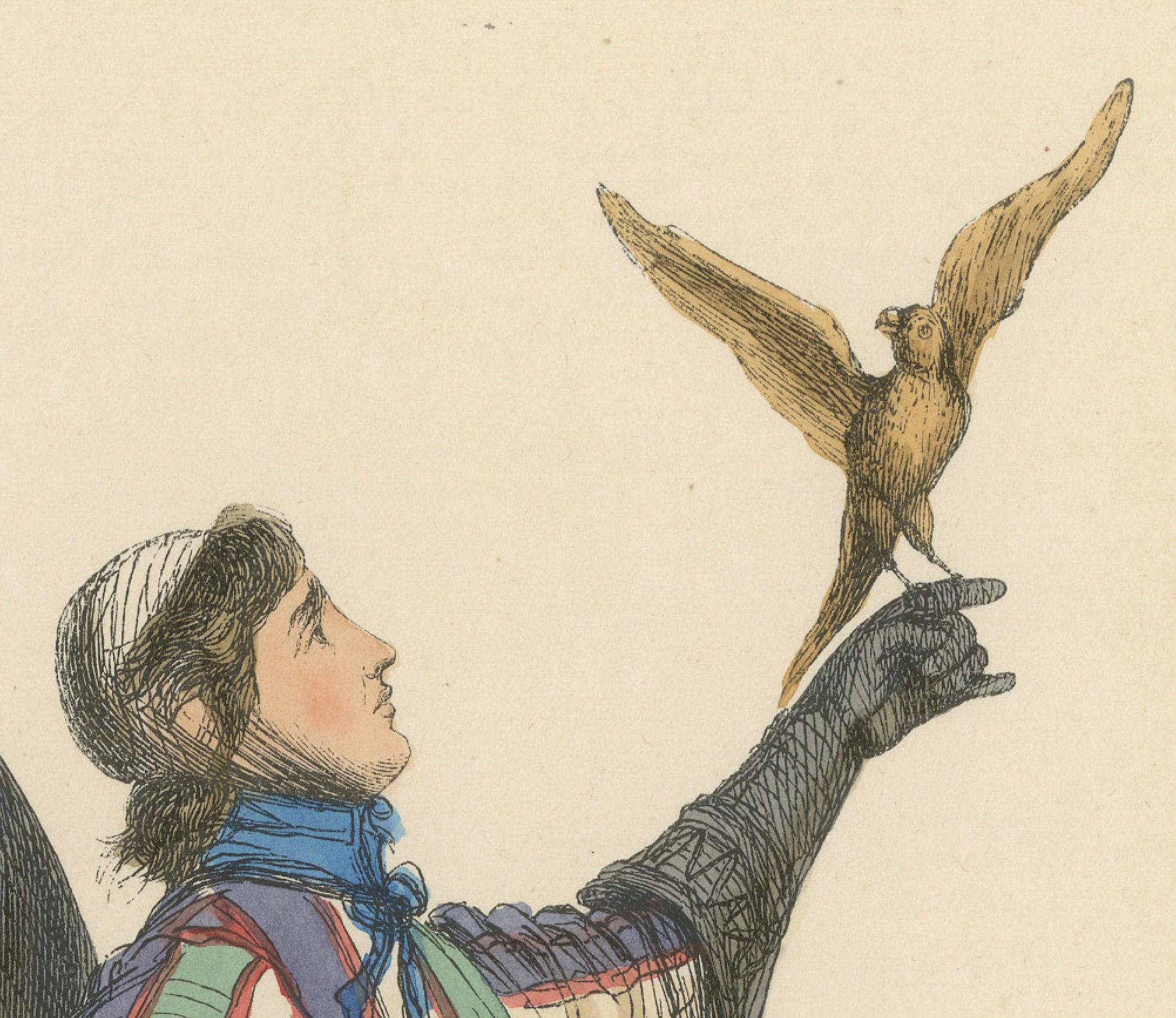
He is captured in the act of releasing his falcon, which is shown stretching its wings, ready to take flight. The falconer's attire includes a protective glove on his left hand to prevent injury from the falcon's talons, a practical component of the falconer's equipment. His expression is one of focus and anticipation, watching his bird ascend into the sky.
The striped tunic is topped with a short cape in a bold red, and his leggings are a contrasting dark color, tucked into simple shoes suitable for outdoor activity. His head is covered with a cap that matches his tunic, completing the ensemble.
The background is understated, providing a neutral setting that draws attention to the falconer and his vibrant attire. This lithograph not only represents the attire of a falconer from the period but also captures the essence of falconry as a noble pursuit, emphasizing the close relationship between the falconer and his bird, as well as the skill and training involved in this medieval pastime. The image is a celebration of the historical tradition of falconry, highlighting its importance in cultural and social contexts of the Middle Ages.
The colors have a nice glow over them. Historically, egg whites, known as glair, and sometimes egg yolk were indeed used in illumination and painting, particularly in manuscripts, to give colors a brighter appearance and to add a sheen or gloss to the work. This technique was quite common during the Middle Ages and into the Renaissance.
Egg whites can be applied as a varnish over pigments to enhance their brightness and to protect the colors. This application could make the colors appear more vivid and also add a slight glossy sheen to the surface of the image.
Egg yolk, on the other hand, was commonly used as a binding agent in paint. It forms the basis of tempera paint, a medium that was widely used before the advent of oil painting. Egg yolk helps to create a durable and long-lasting color that adheres well to various surfaces.
In the context of the print from 1847, it's less likely that egg whites or yolks were used directly on the print, as by that time, commercial printing processes would have been more advanced and less reliant on such manual methods. However, if this print is a representation of an earlier style or is meant to mimic the appearance of hand-painted manuscripts, the original artists might have employed techniques or materials that gave a similar effect to those achieved with egg-based binders and varnishes.