About this sheet
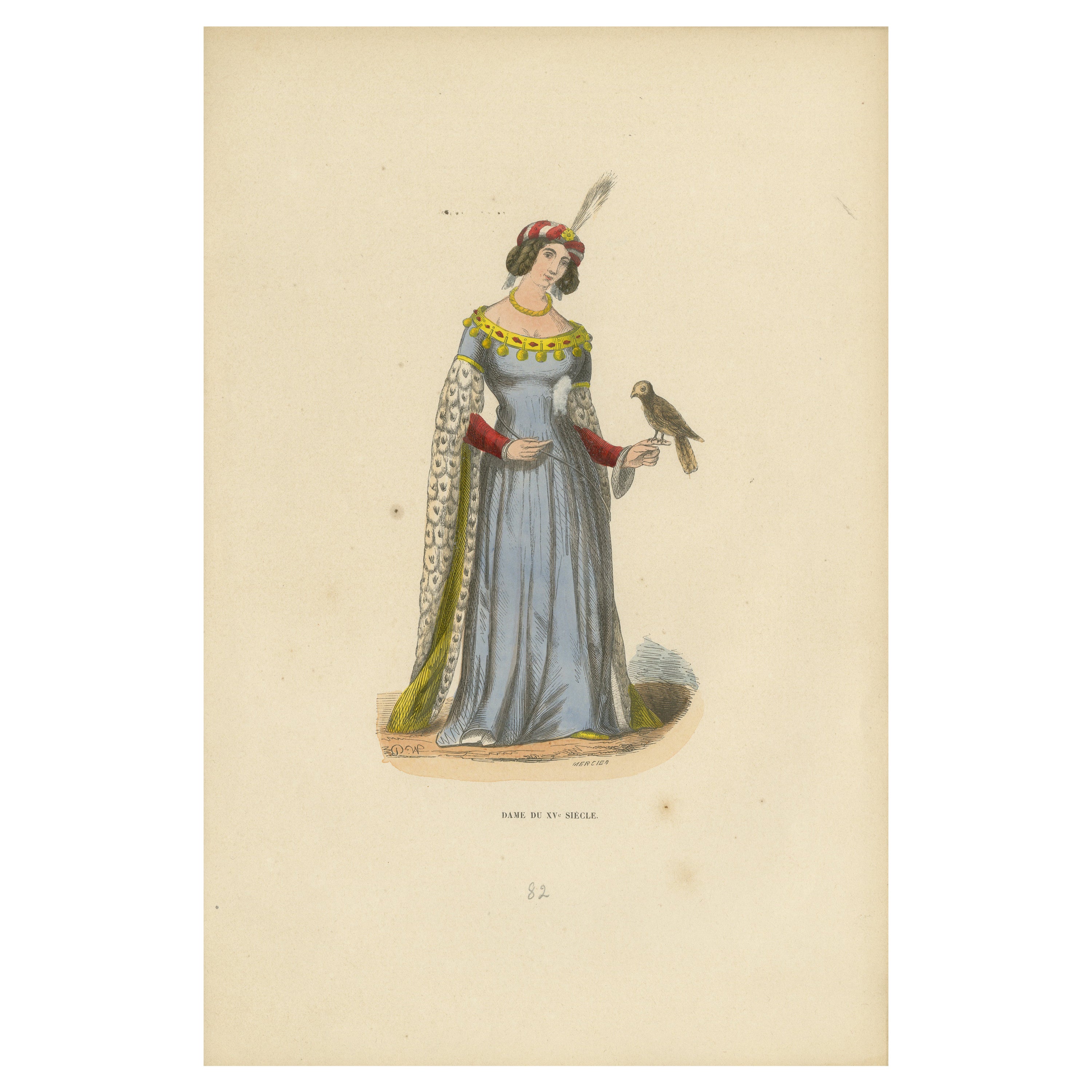
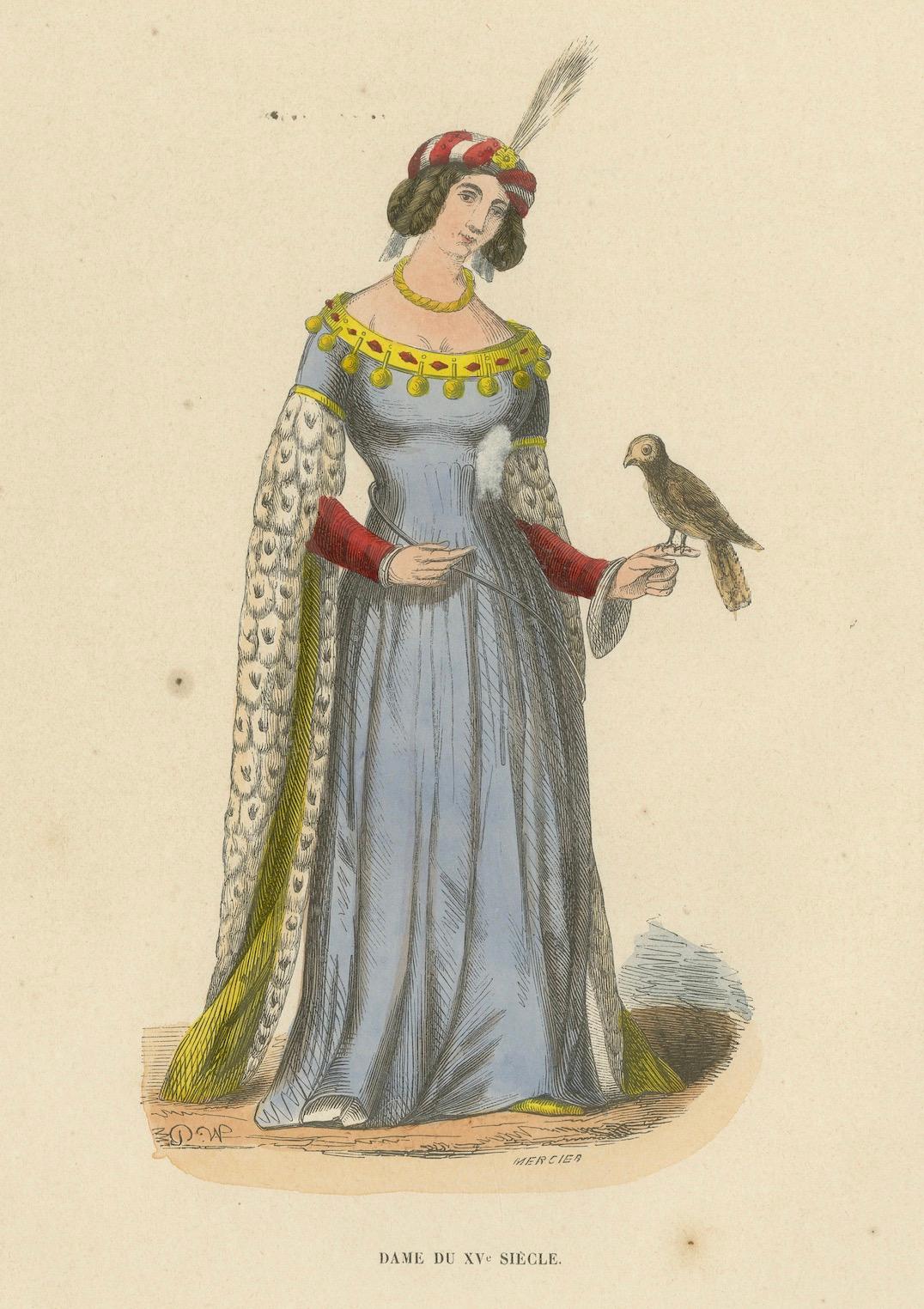
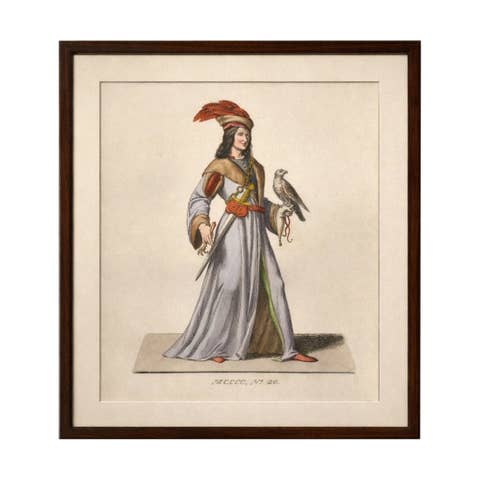
This print captures the noble pastime of falconry, a sport historically associated with the aristocracy, through the poised image of a 15th-century noblewoman. Her attire is a beautiful amalgamation of fashion and function, reflecting her status and the leisure activities of the time.
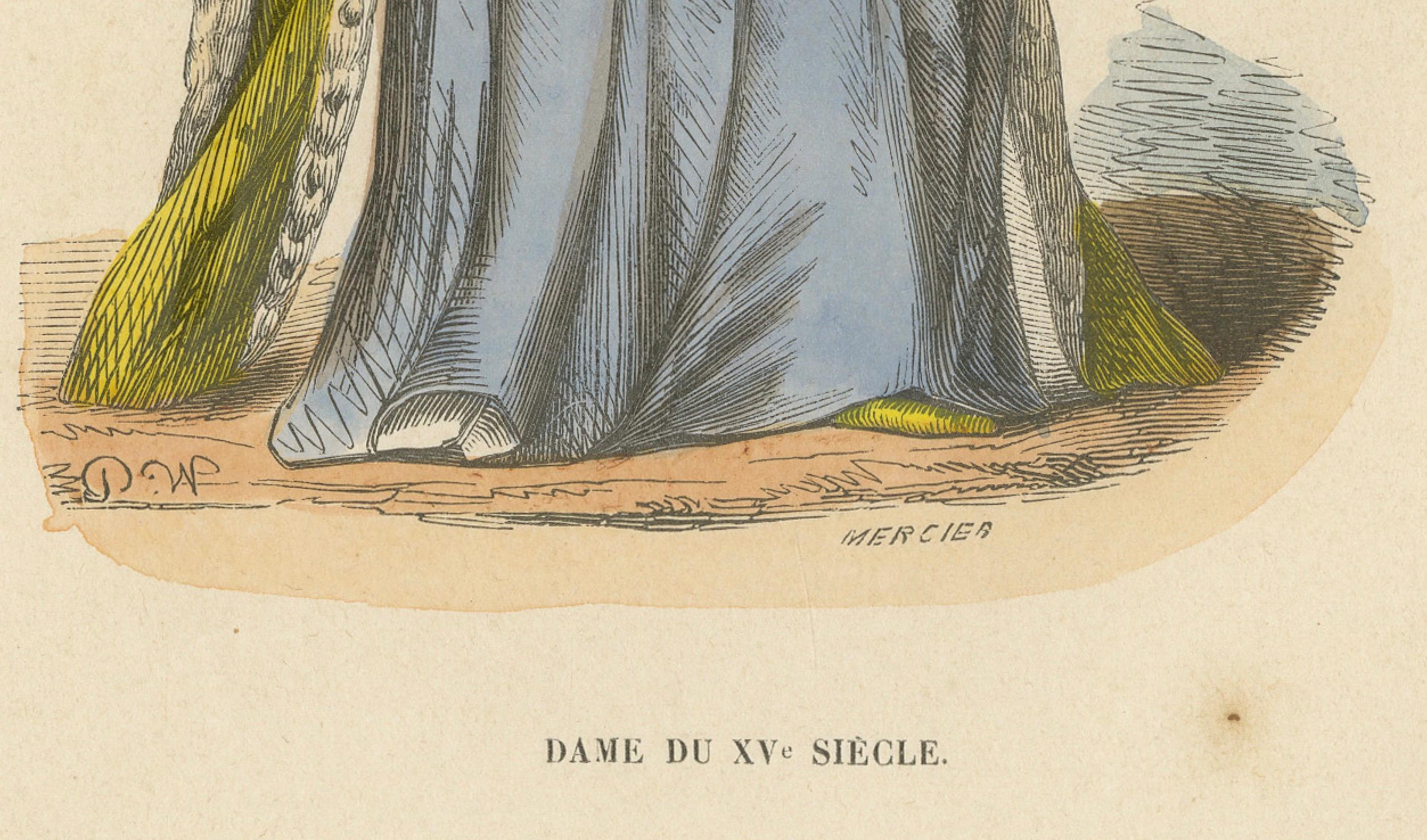
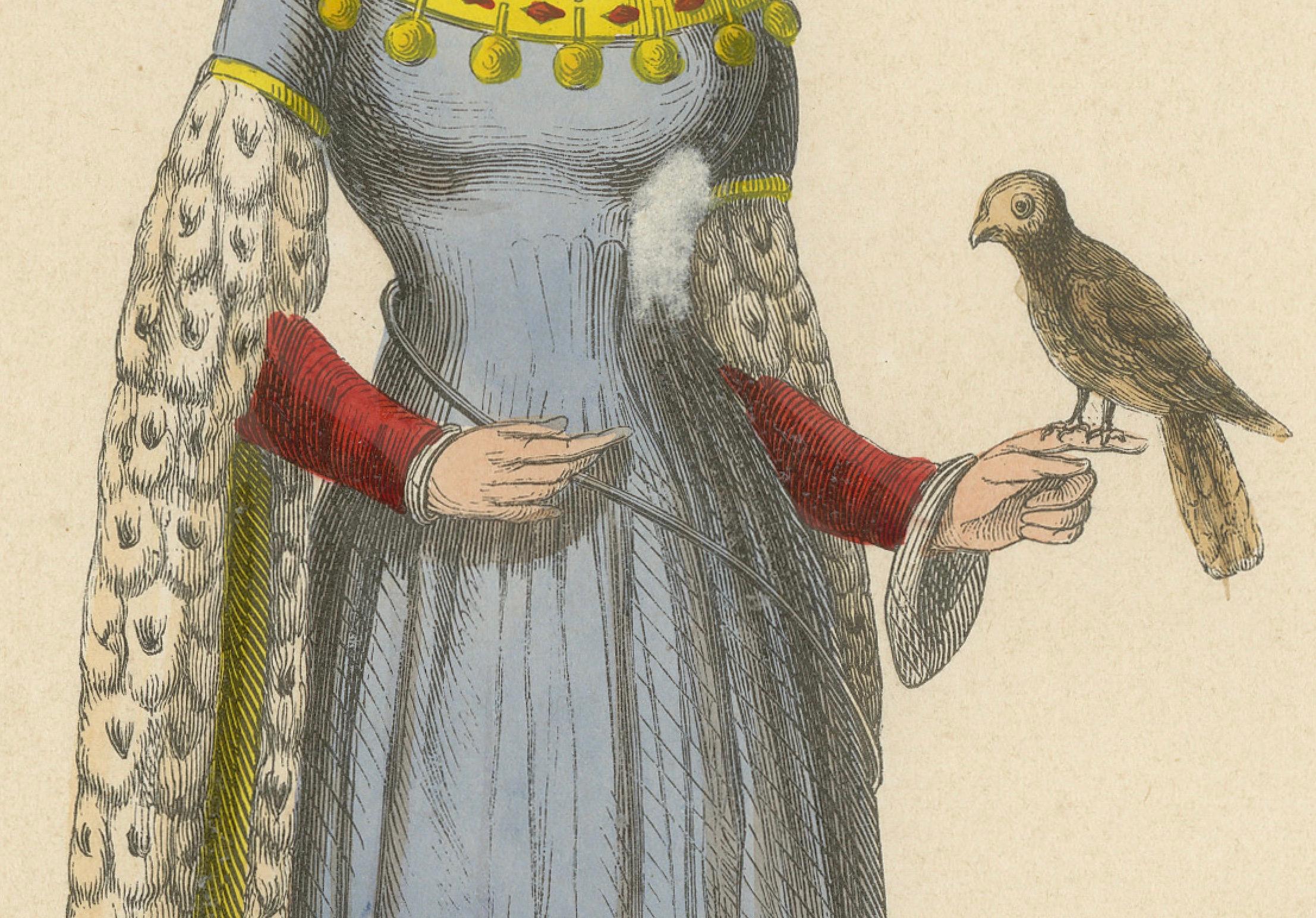
The lady is elegantly dressed in a long, flowing gown in a soft shade of blue, suggesting a serene and composed demeanor. The gown features a fitted bodice, a common style of the era, which then cascades into a full skirt, signifying her noble standing. The sleeves of her gown are adorned with what appears to be fur trim, adding a layer of luxury and warmth.
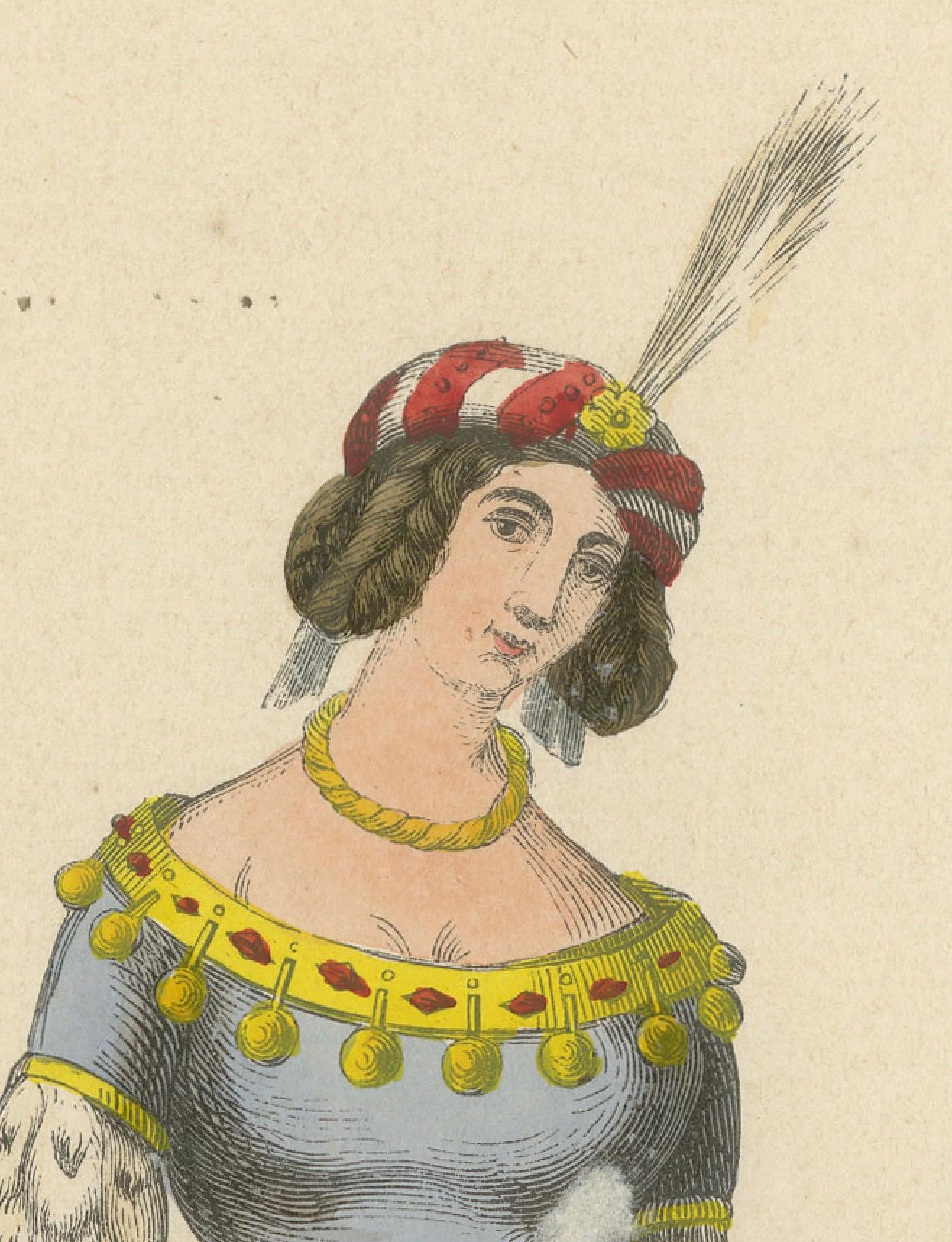
Over her shoulders, she wears a cloak patterned with a feather motif, a subtle nod to her avian companion. The cloak's design is intricate, likely woven from fine materials, and it is fastened with a decorative collar of golden bells, which could serve the practical purpose of tracking the falcon in flight.
On her head, she sports an ornate headdress that includes a feather, a stylish element that also symbolizes her engagement with the sport of falconry. Her gentle expression and the careful manner in which she holds the bird on her outstretched hand denote a sense of calm mastery and a bond with the creature.
In her other hand, she carries a small lure or a piece of meat used in training the bird, suggesting her active role in the falcon's handling and care. Her posture and the bird at rest on her arm portray a moment of quiet before the action of the hunt.
This image beautifully illustrates the grace and skill of a noblewoman engaged in the art of falconry, a sport that was as much a social pastime as it was a display of status and the intimate connection between humankind and nature during the 15th century.
The colors have a nice glow over them. Historically, egg whites, known as glair, and sometimes egg yolk were indeed used in illumination and painting, particularly in manuscripts, to give colors a brighter appearance and to add a sheen or gloss to the work. This technique was quite common during the Middle Ages and into the Renaissance.
Egg whites can be applied as a varnish over pigments to enhance their brightness and to protect the colors. This application could make the colors appear more vivid and also add a slight glossy sheen to the surface of the image.
Egg yolk, on the other hand, was commonly used as a binding agent in paint. It forms the basis of tempera paint, a medium that was widely used before the advent of oil painting. Egg yolk helps to create a durable and long-lasting color that adheres well to various surfaces.
In the context of the print from 1847, it's less likely that egg whites or yolks were used directly on the print, as by that time, commercial printing processes would have been more advanced and less reliant on such manual methods. However, if this print is a representation of an earlier style or is meant to mimic the appearance of hand-painted manuscripts, the original artists might have employed techniques or materials that gave a similar effect to those achieved with egg-based binders and varnishes.