About this sheet
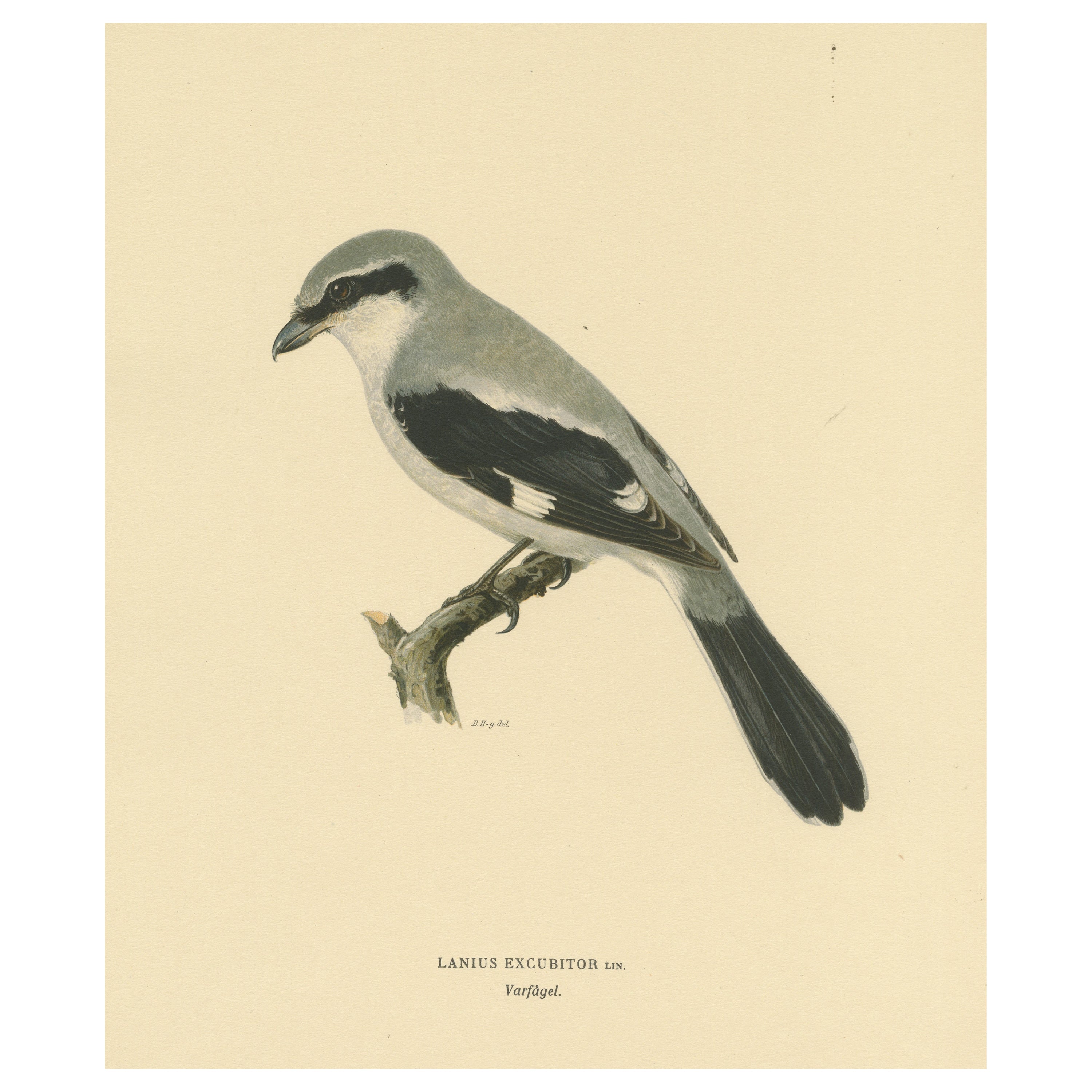
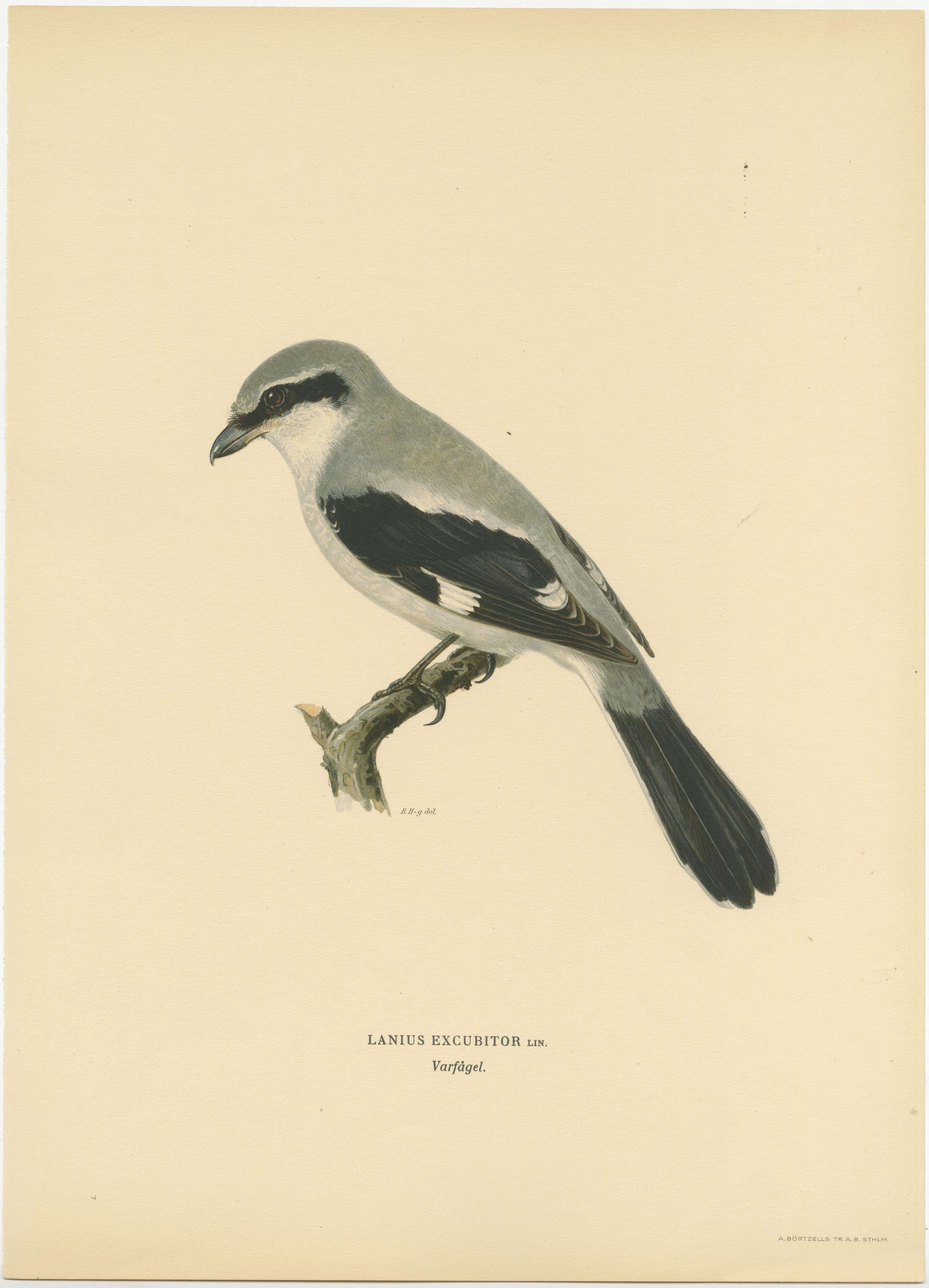
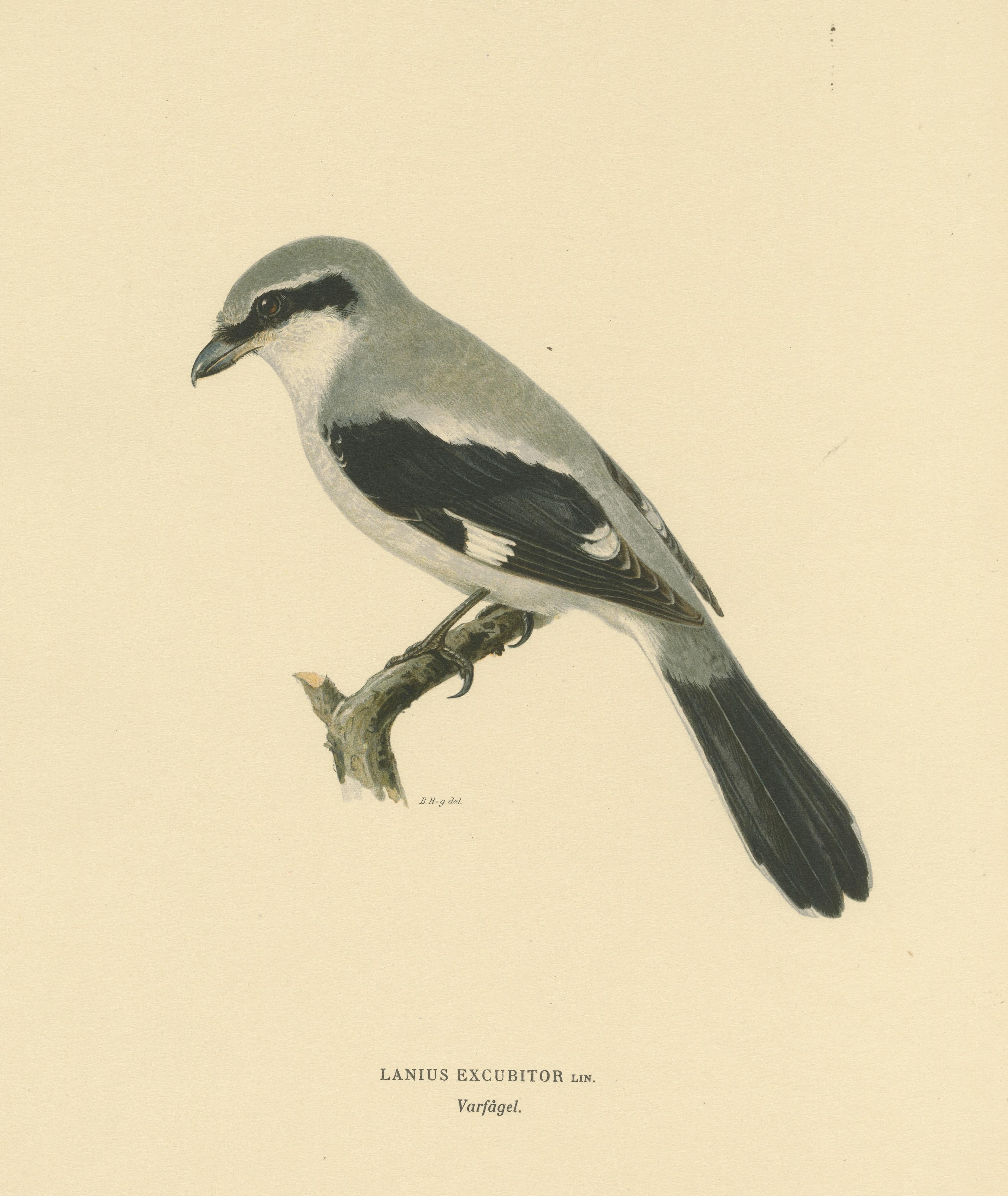
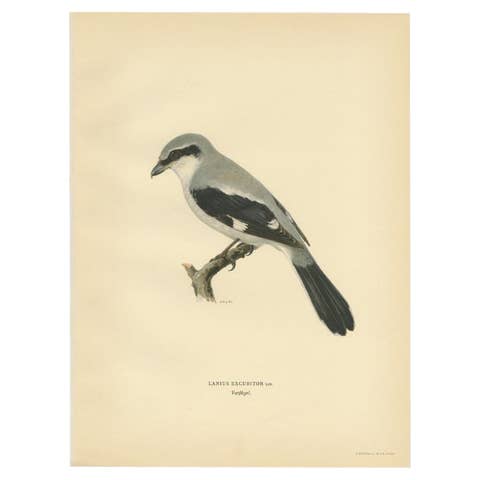
Antique bird print titled 'Lanius Excubitor'. Old bird print depicting the great grey shrike. This print originates from 'Svenska Foglar Efter Naturen Och Pa Stenritade' by Magnus von Wright. Magnus von Wright (13 June 1805 – 5 July 1868) was a Swedish-Finnish painter and educator. In addition to bird illustrations, he was also known for his landscapes.
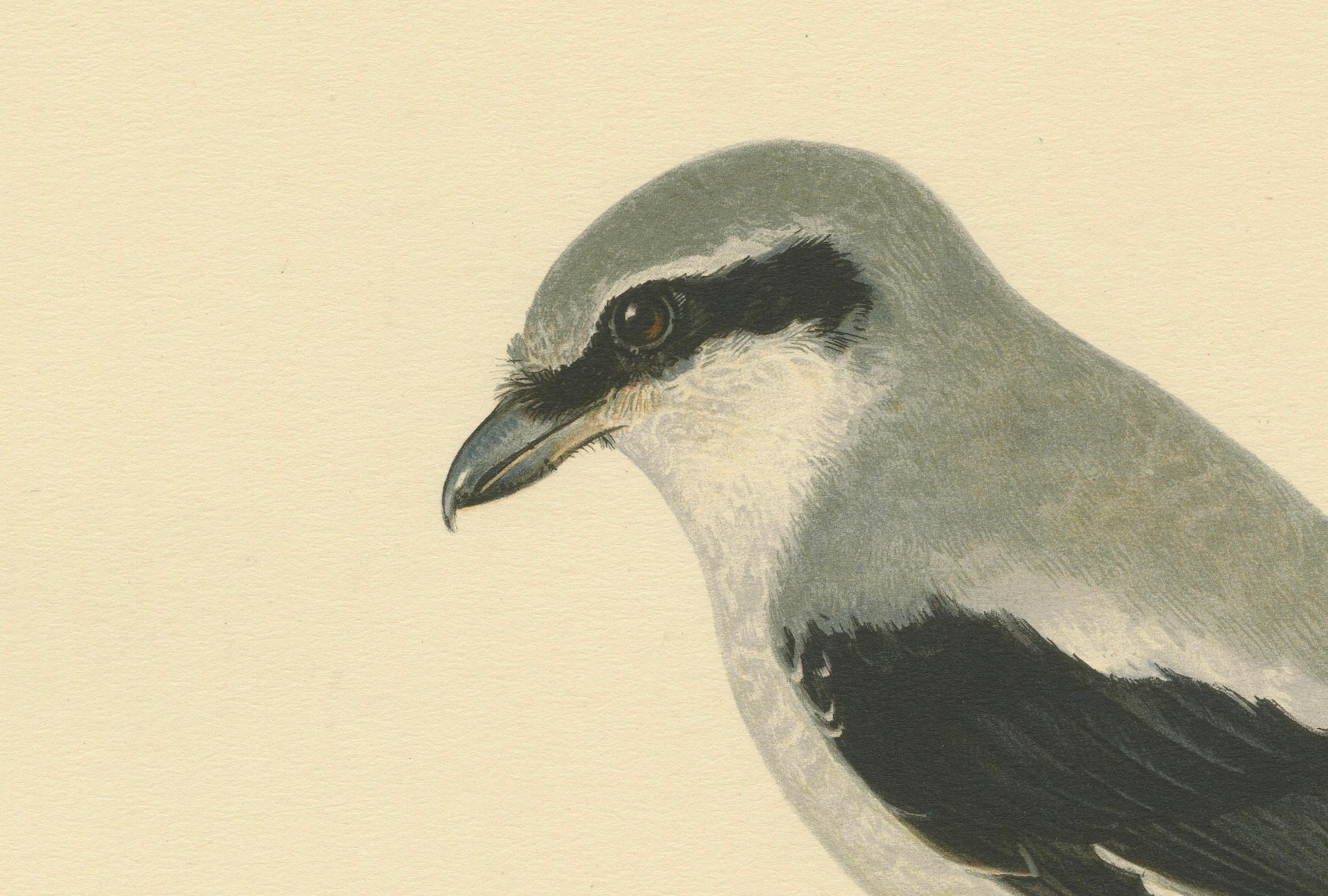
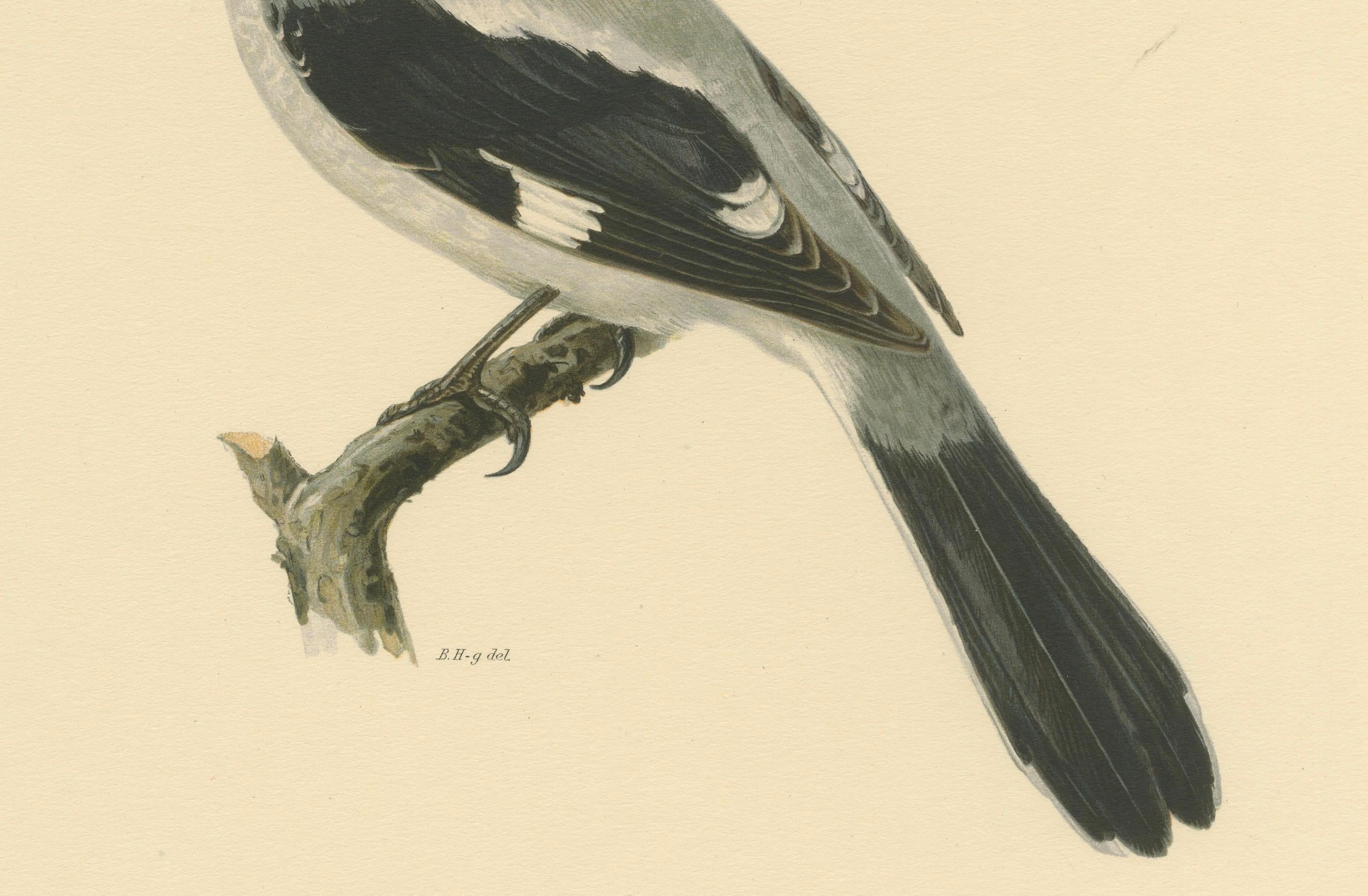
The print features the Great Grey Shrike, *Lanius excubitor*, a bird known for its distinctive appearance and interesting behaviors. The illustration by Magnus von Wright appears to be a faithful and detailed portrayal of the species. The bird is shown in profile with its prominent hooked bill that is characteristic of shrikes. The Great Grey Shrike has a gray back and head, a white underbelly, and black markings that extend from the eye area along the side of the head, resembling a mask. It also has a long black tail with white edges and black wings with white primary patches.
As for the bird itself, the Great Grey Shrike is fascinating for several reasons:
**Habitat:**
- They inhabit open landscapes with scattered trees and shrubs, such as farmland edges, plantations, and roadside verges.
**Behavior:**
- Shrikes are sometimes called “butcher birds” due to their unique feeding habits. They are known to impale their prey on thorns, spikes of barbed wire, or sharp twigs. This grisly larder is used to hold the prey items as they eat or to store food for later consumption.
- Despite its songbird-like appearance, it is a fierce predator, capable of hunting insects, small birds, rodents, and lizards.
**Breeding:**
- They are monogamous birds, and their breeding territory can be quite large. They are also known to vigorously defend their nesting area.
- The nest is often built in a dense shrub or a tree where the female lays a clutch of eggs which both parents help incubate and rear.
**Migration:**
- Great Grey Shrikes in northern regions are migratory, traveling to warmer climates during the winter, while those in milder regions may be resident year-round.
**Conservation:**
- The conservation status of the Great Grey Shrike varies by region, but habitat loss has affected some populations.
This detailed and vivid depiction by Magnus von Wright would contribute significantly to the natural history literature of the time by offering a precise visual reference for ornithologists and nature enthusiasts. His works, like this one, not only serve scientific interests but also preserve the beauty of these species through the artistry of his illustrations.
More about the maker of the print:
Magnus von Wright was a prominent figure in the field of natural history illustration in Scandinavia during the 19th century. Born in Sweden, but Finnish by nationality, he was one of the Wright brothers—all of whom were talented artists and scientists. His brothers, Wilhelm and Ferdinand, were also recognized for their contributions to the field of natural history.
**Artistic Career:**
- Magnus was primarily self-taught as an artist, developing his skills through careful observation and representation of nature.
- His artistic style was defined by meticulous attention to detail and an effort to accurately depict the subjects of his work, as seen in his ornithological studies.
- Alongside his individual works, he collaborated with his brother Wilhelm on several important publications.
**Contributions to Ornithology:**
- Magnus's work was instrumental in documenting the avian species of Finland and Sweden. His illustrations provided not only aesthetic enjoyment but also important scientific records.
- His most notable work, "Svenska Foglar" (Swedish Birds), was a pioneering piece in terms of the realistic portrayal of birds in their natural habitats.
**Educational Influence:**
- He worked as a teacher, imparting his knowledge and passion for nature to his students.
- Magnus also worked at the University of Helsinki, further cementing his position as an educator.
**Legacy:**
- Magnus von Wright is remembered not only for his contributions to art and science but also for his role in fostering an appreciation of nature in the Nordic countries.
- His works continue to be celebrated for their precision and beauty and remain valuable for their scientific significance.
As an individual, Magnus von Wright was part of a cultural movement that sought to explore and document the natural world through art. His legacy endures in the rich tradition of Scandinavian natural history illustration, and his works continue to be appreciated for their historical value and artistic merit.