About this sheet
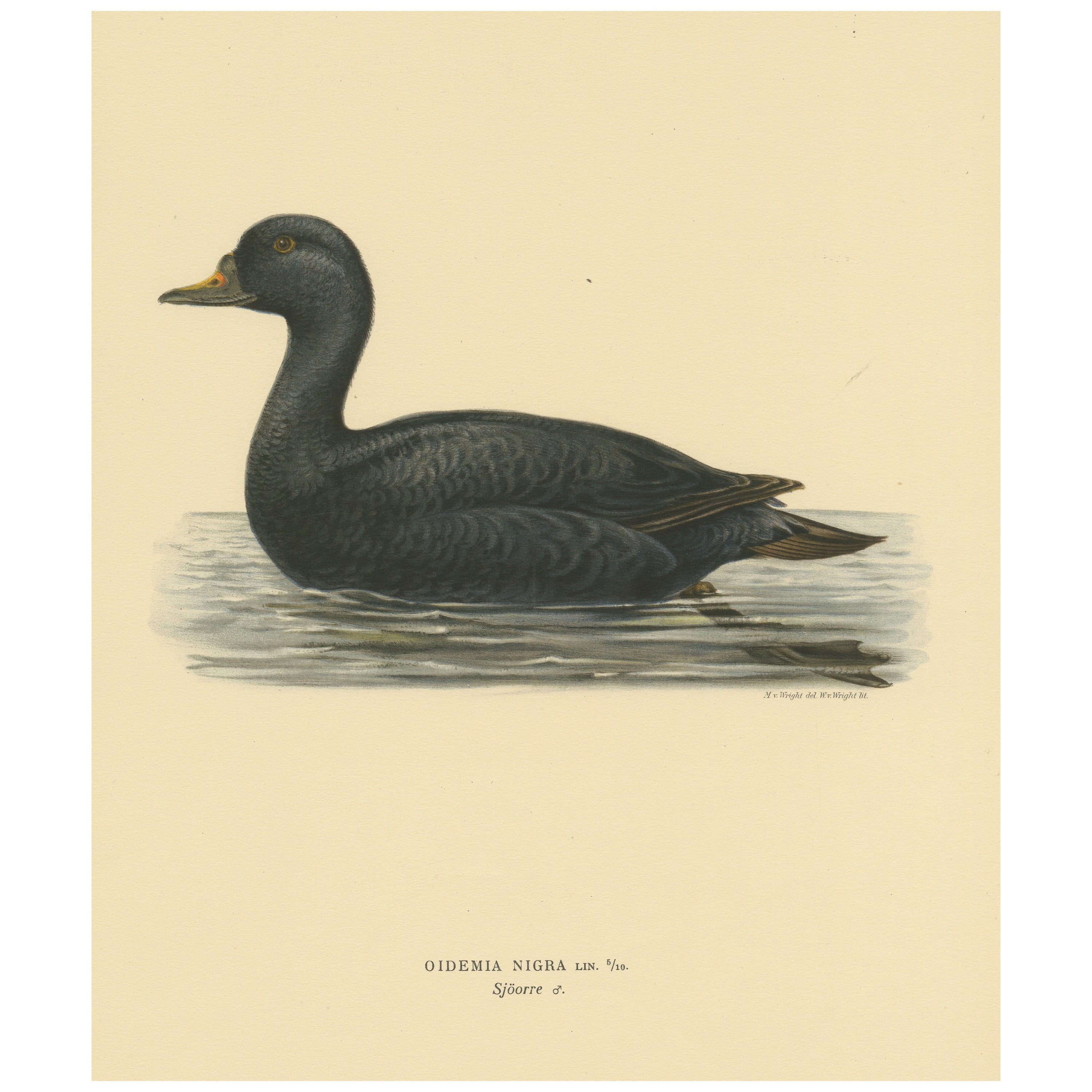
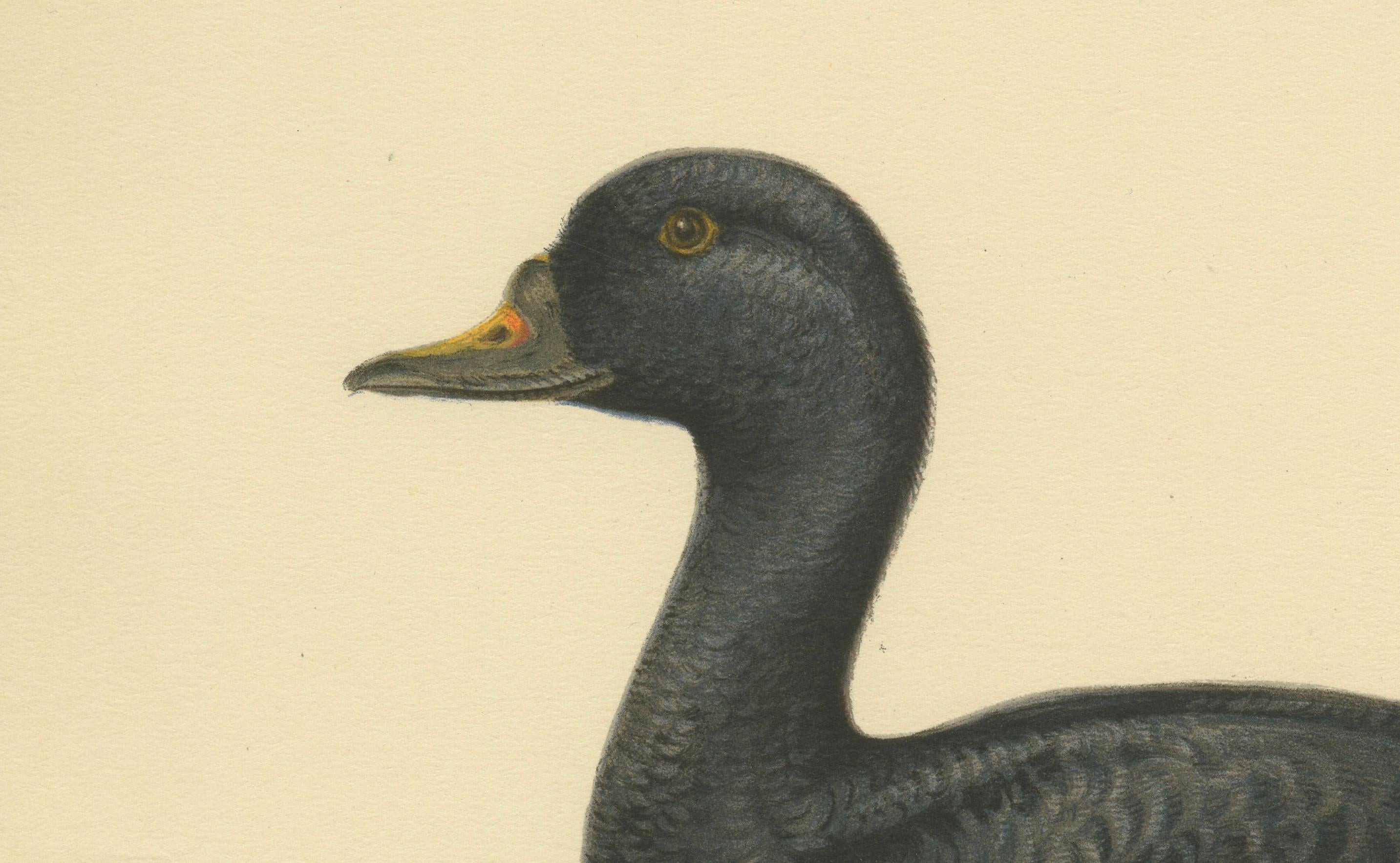
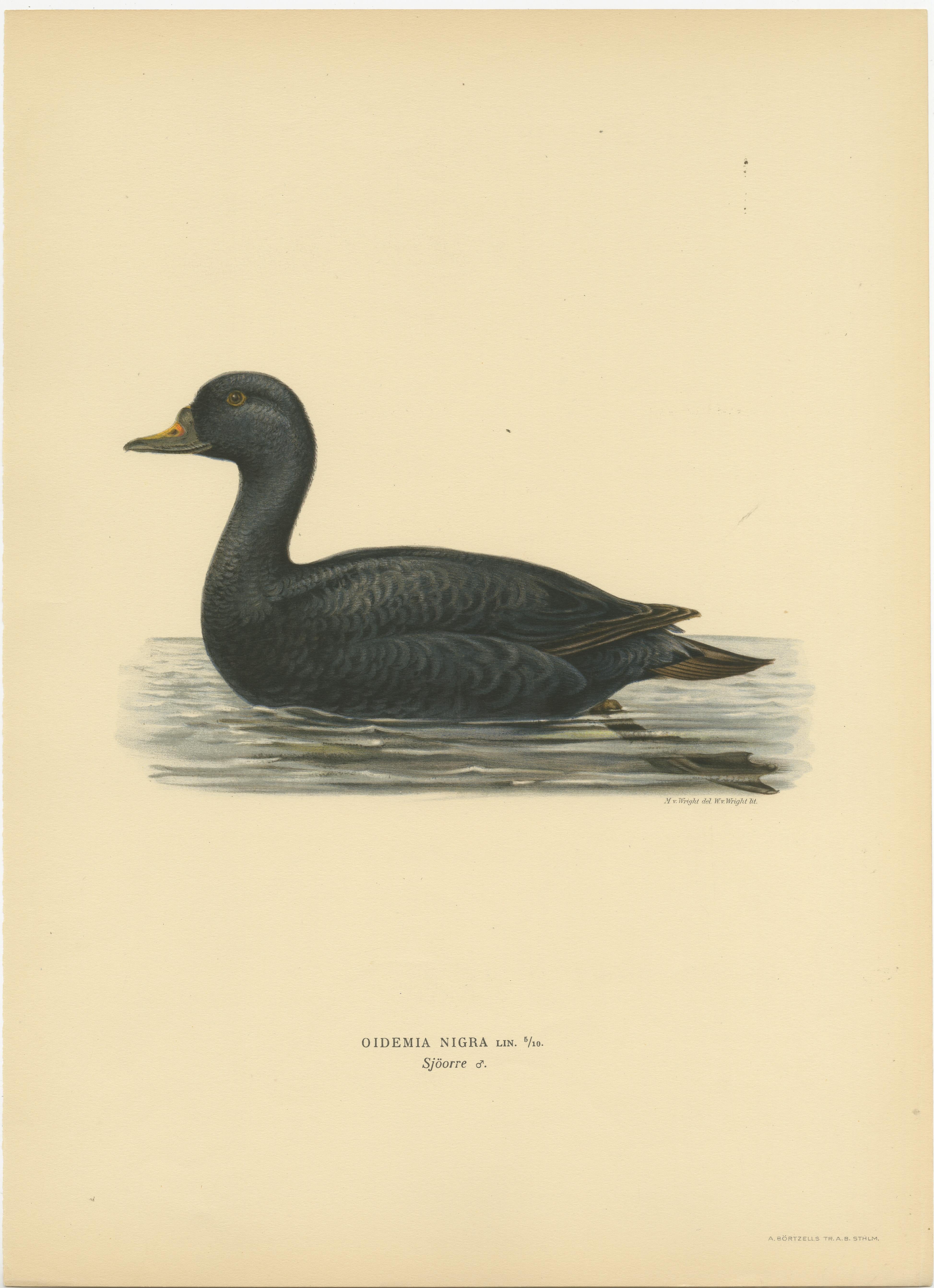
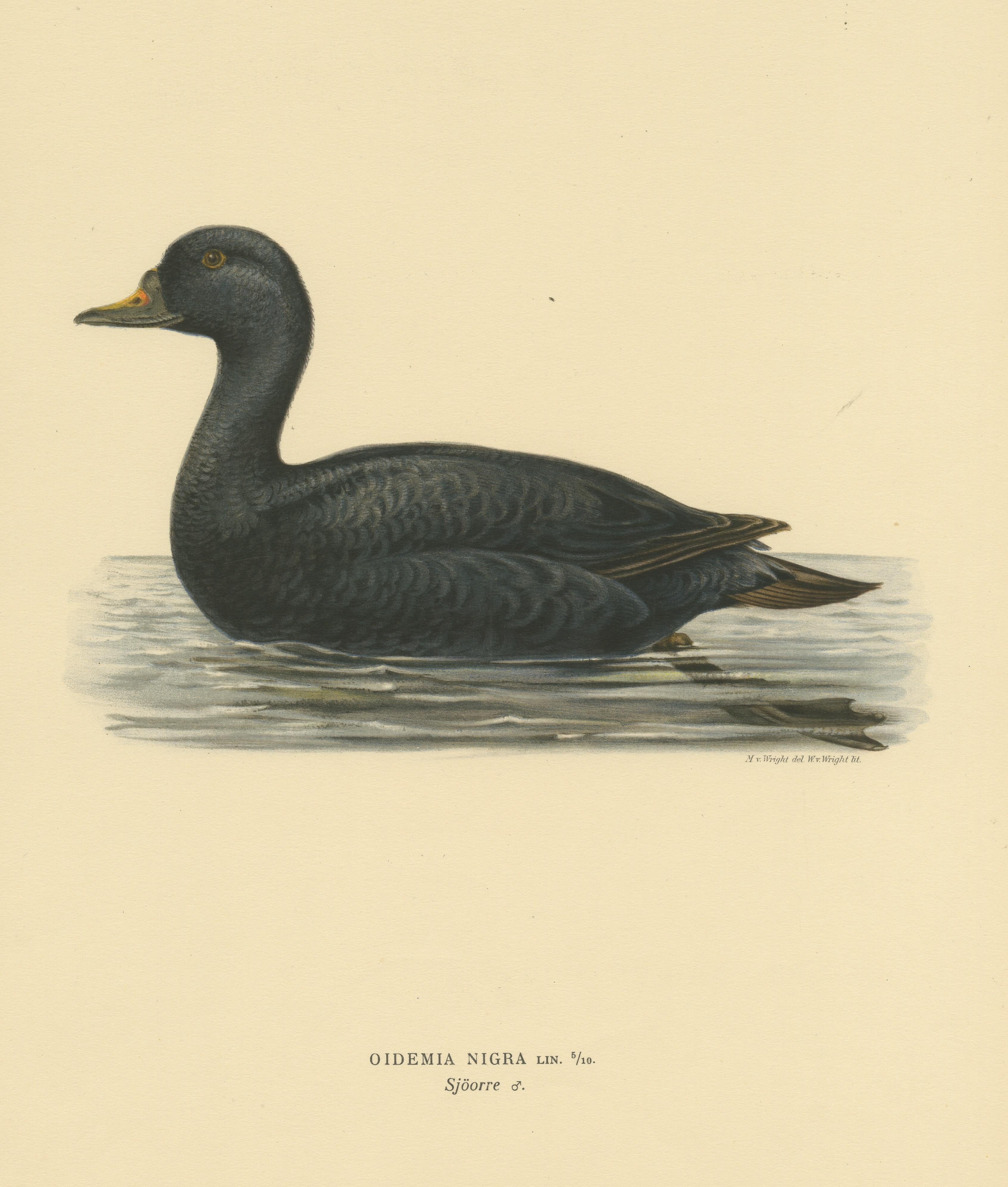
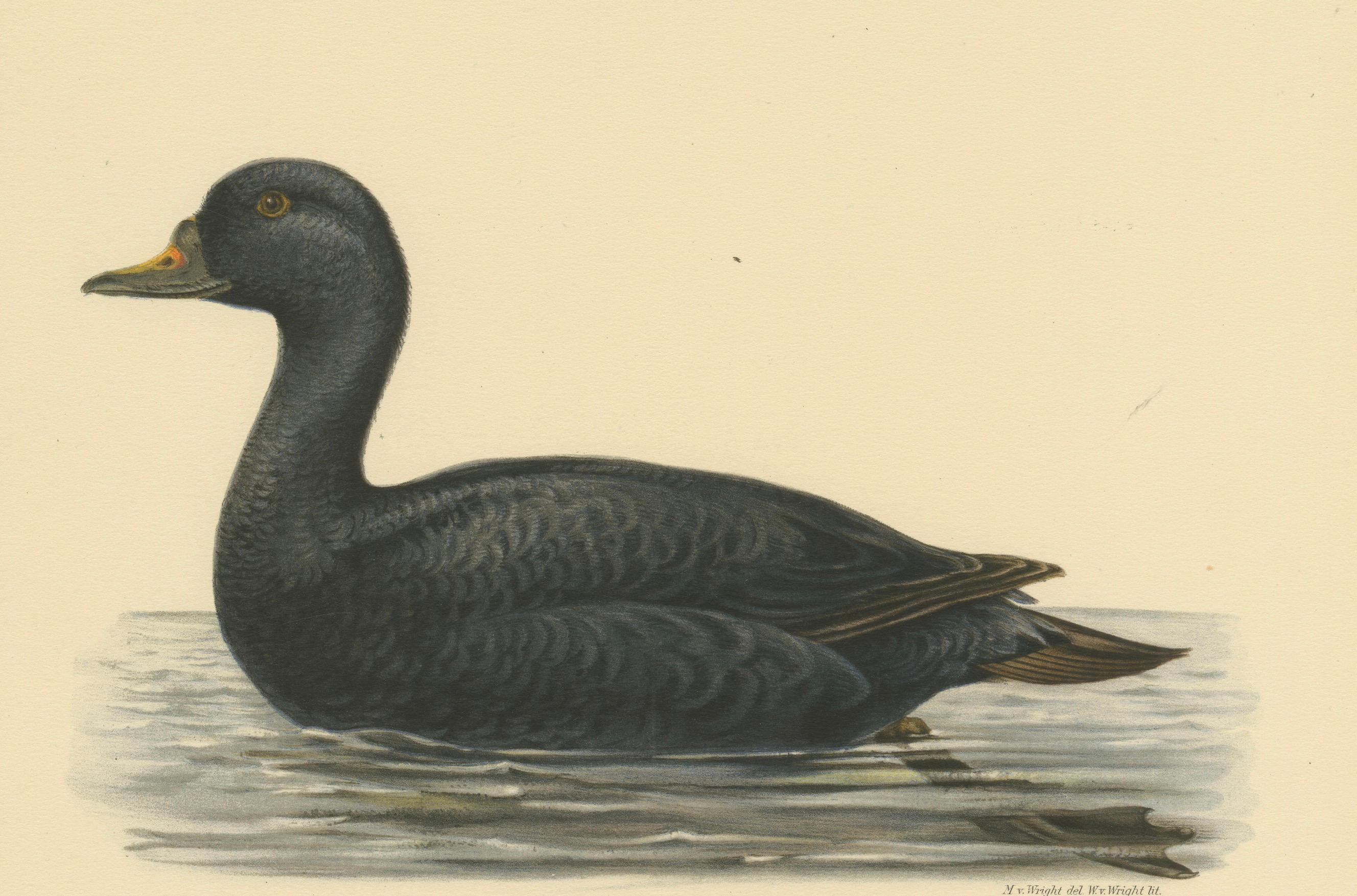
This print depicts the Black Scoter, a sea duck scientifically named Oidemia nigra, in a profile view as it floats on the water. The illustration is precise, capturing the bird's distinct all-dark plumage and the notable yellow knob at the base of the bill, which is a characteristic feature of the male Black Scoter.
As with other works by Magnus von Wright, the image is marked by a keen attention to detail. The feathers are rendered with care, showing varying shades of black and grey that convey the bird's texture and volume. The water ripples gently around the bird, suggesting calmness and the natural habitat in which the Black Scoter would be found.
The inscription "Sjöorre," which means "Black Scoter" in Swedish, along with the scientific name, indicates that this illustration is part of von Wright's broader work on Swedish birds. The background is minimalistic, focusing the viewer's attention entirely on the subject, which is a common feature in Wright's ornithological illustrations. This reflects the typical style of natural history illustrations of the 19th century, where the goal was to document and share knowledge of species in a way that was both scientifically valuable and aesthetically pleasing.
The Black Scoter is known for its breeding habits in the far northern reaches of Europe, Asia, and North America, and this image likely served as a reference for naturalists and bird enthusiasts of the time. Von Wright's work in 'Svenska Foglar Efter Naturen Och Pa Stenritade' remains an important historical record of avian species in the Nordic countries.