About this sheet
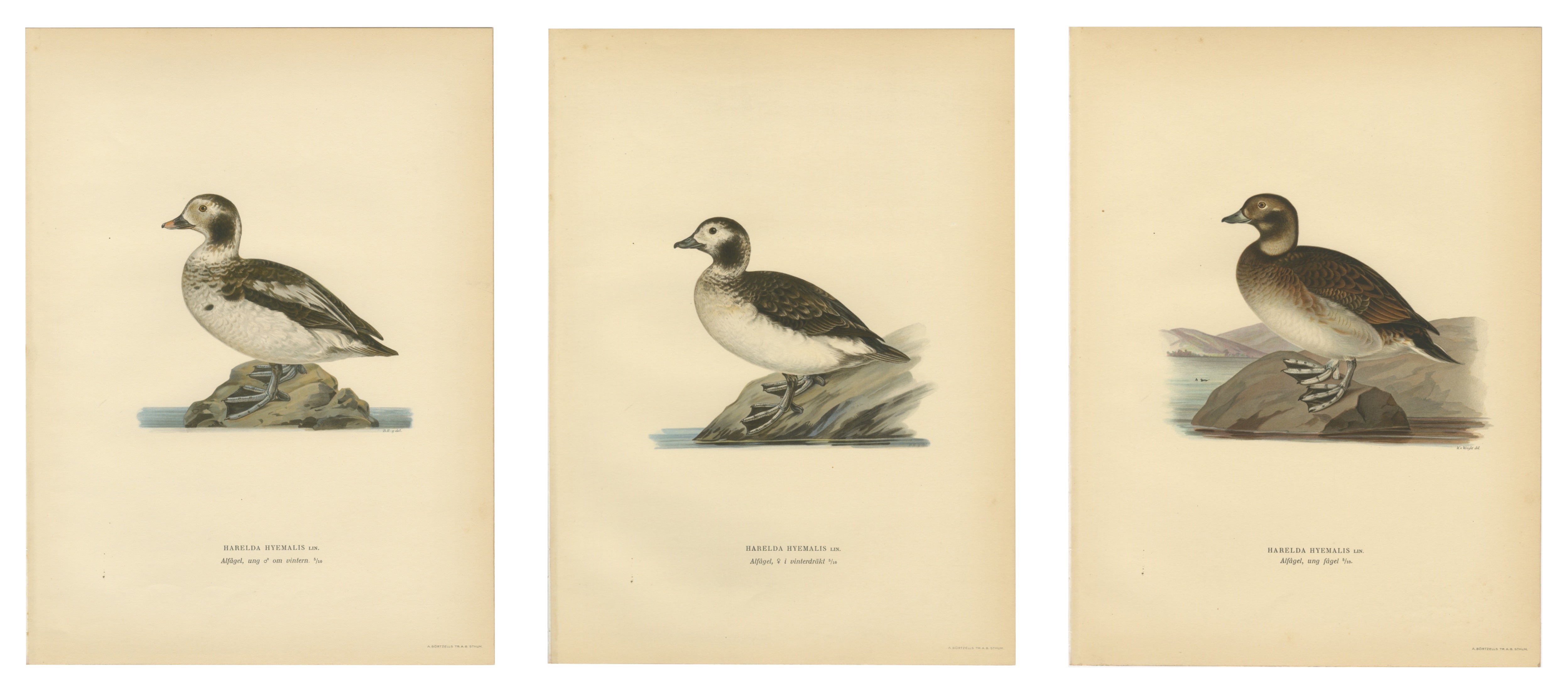
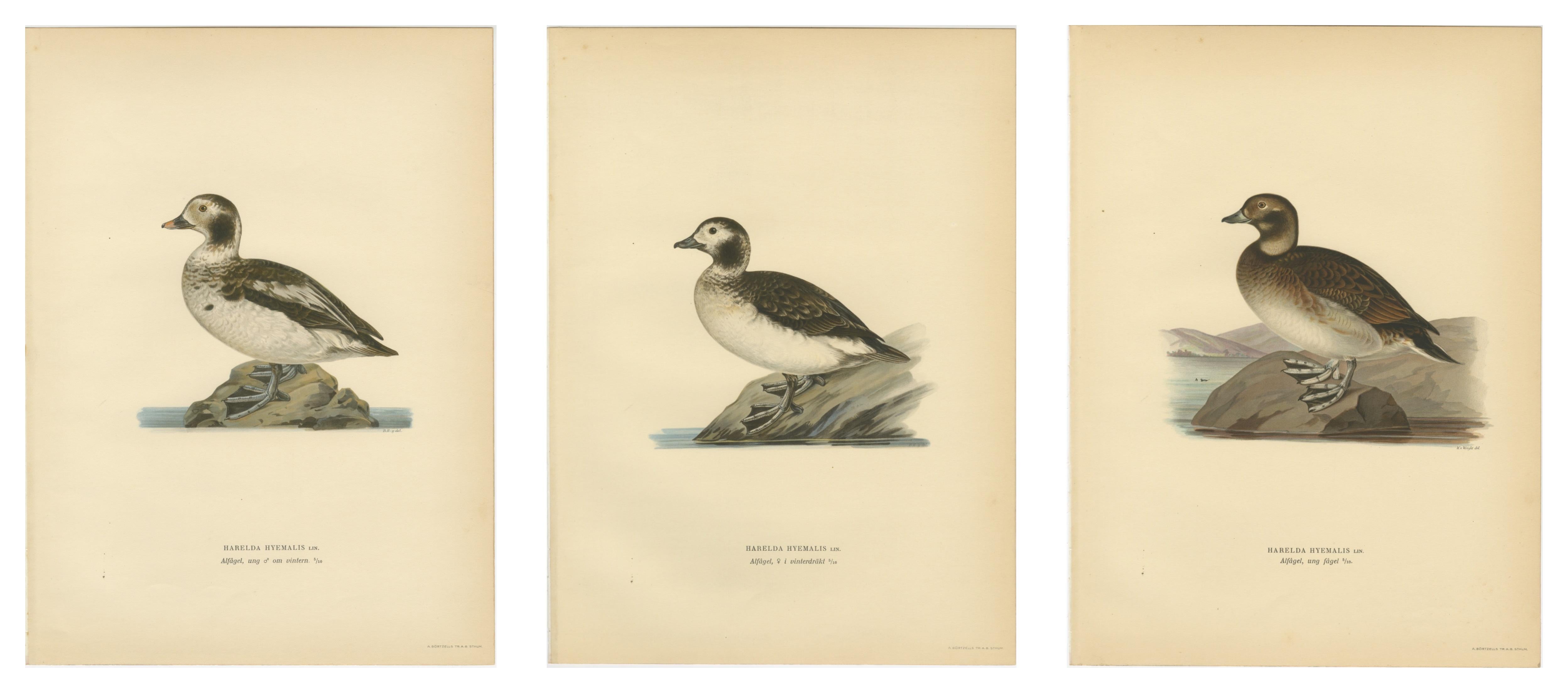
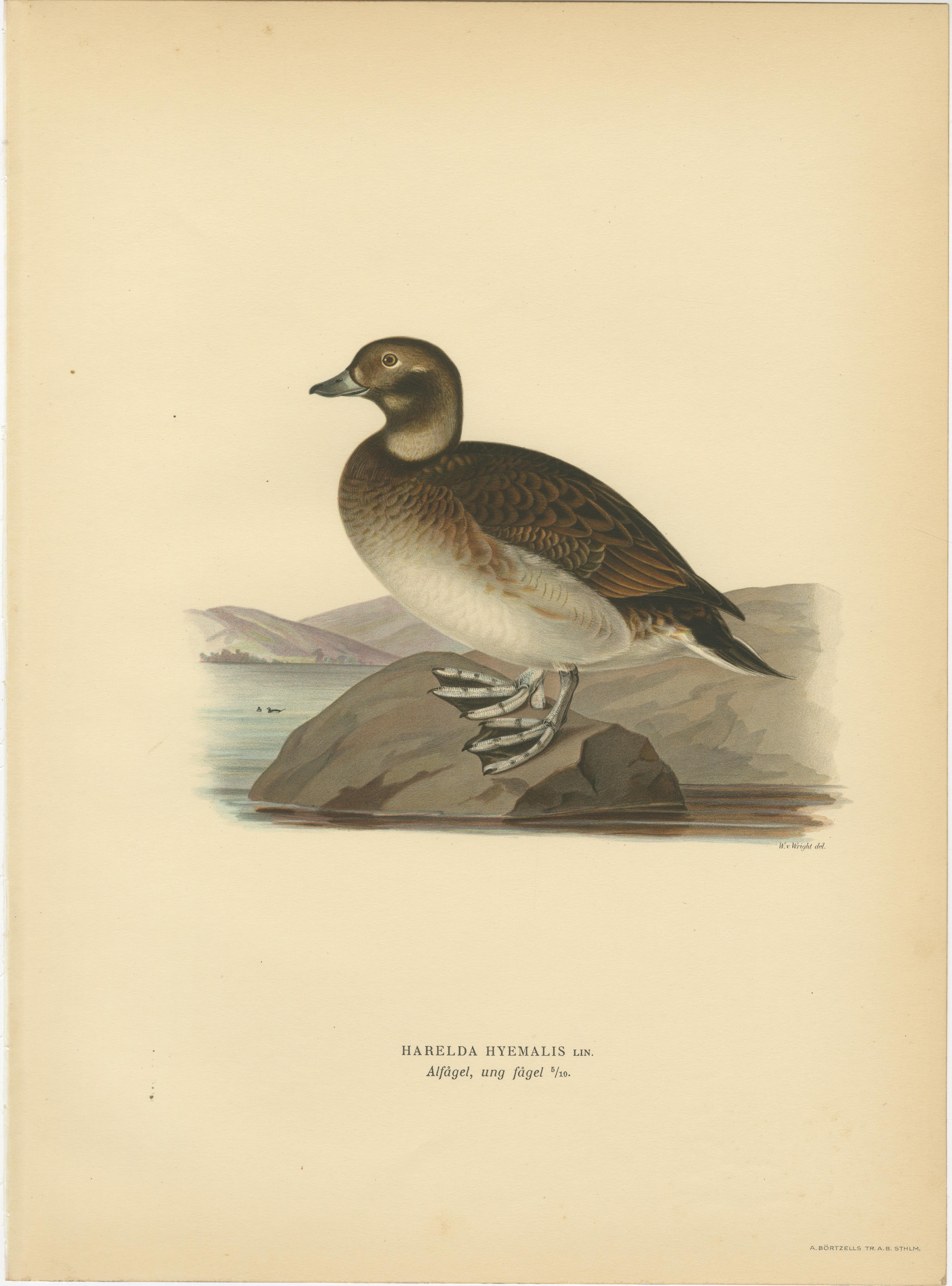
This elegant set of three Scandinavian ornithological lithographs depicts the Long-tailed Duck, one of the most distinctive northern sea ducks of the Arctic and sub-Arctic regions. The prints originate from the Swedish natural history publication Svenska Fåglar Efter Naturen Och På Sten Ritade, published in Stockholm in 1929 by A. Börtzells. This celebrated work represents one of the most refined Scandinavian bird illustration series of the early twentieth century, combining scientific precision with the restrained decorative style typical of Nordic natural history art.
The species illustrated is Harelda hyemalis, the historical scientific name for the Long-tailed Duck, now known as Clangula hyemalis. In Swedish the bird is called Alfågel. The Long-tailed Duck is a characteristic bird of northern coastal waters, especially around Scandinavia, Iceland, Greenland, and Arctic North America. It is particularly well known for its elegant shape, complex seasonal plumage changes, and long central tail feathers that give the species its English name.
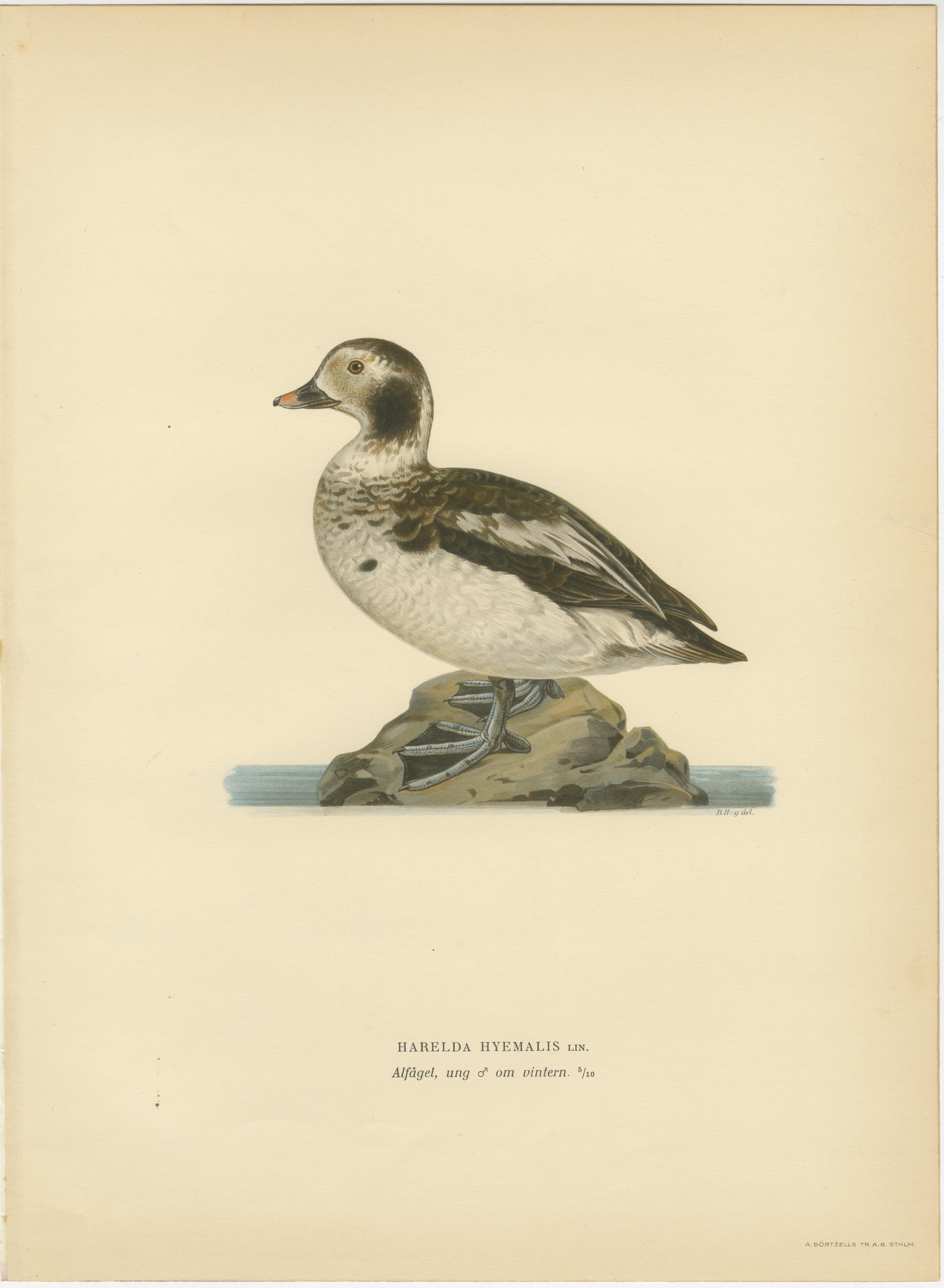
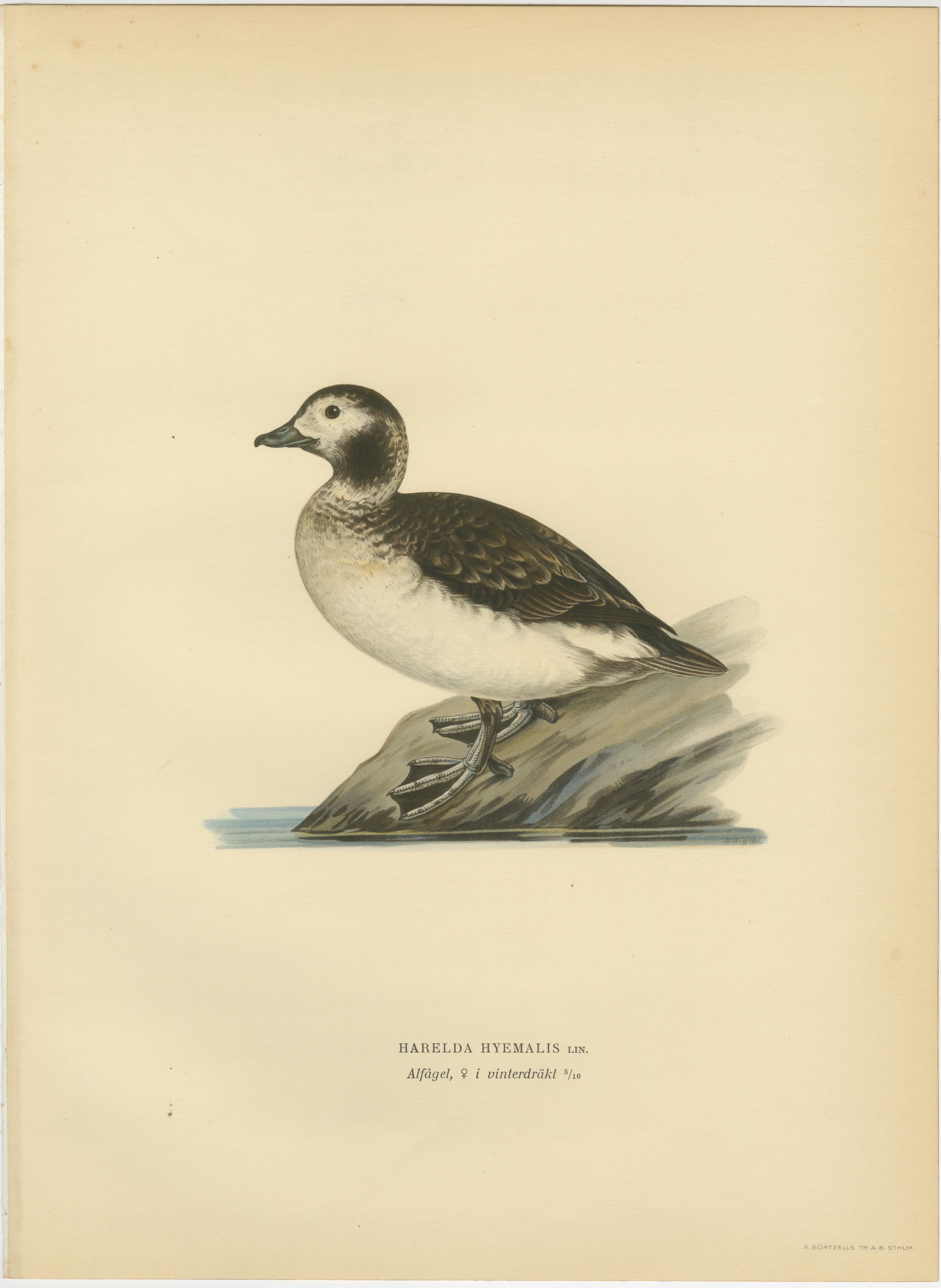
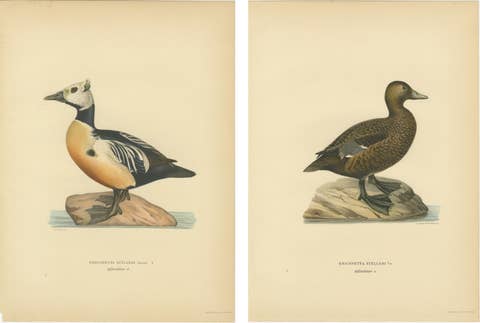
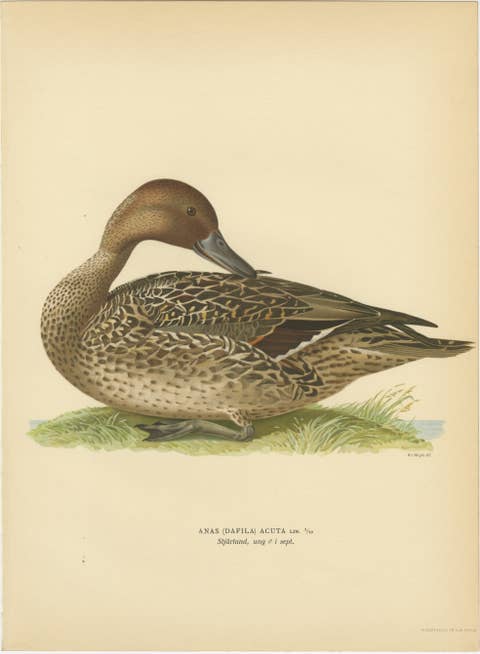
The three plates present different plumage stages of the species. One lithograph shows a young male in winter plumage, characterized by soft grey-brown feather patterns and a subtle contrast between the darker head and lighter body. A second plate illustrates the female Long-tailed Duck in winter plumage, displaying the delicate mottled feather structure typical of the species during the colder months. The third plate depicts a juvenile bird perched on a rock near the shoreline, offering a slightly warmer brown coloration and a fuller view of the bird’s form and feather structure.
The artist carefully renders the soft feather textures, the rounded body shape, and the distinctive lobed feet that make sea ducks strong divers. The compositions remain simple and balanced, placing the bird prominently against the warm ivory background, a hallmark of Scandinavian ornithological illustration.
Long-tailed Ducks are among the deepest diving sea ducks, capable of reaching impressive depths while searching for mollusks and crustaceans along coastal seabeds. Their haunting calls and graceful movements across cold northern waters have made them a well-known presence in Arctic marine environments.
Printed using fine color lithography, the plates show delicate tonal transitions and exceptional clarity in the feather detailing. Beneath each image appear the Latin scientific names together with Swedish captions describing the bird’s plumage stage, reflecting the scientific and educational purpose of the publication.
Displayed together, the three lithographs form a harmonious natural history grouping. Their subtle colors and elegant compositions make them ideal for coastal interiors, Scandinavian-style homes, studies, libraries, or natural history collections.
These are original color lithographs printed at the time of publication in 1929 and are not later reproductions.
Condition:
Good condition for their age with gentle age toning to the paper and occasional small spots in the margins. The printed images remain clean and well preserved.
Framing tips:
These prints frame beautifully as a coordinated set of three with generous ivory mats and simple walnut or Scandinavian oak frames. They work particularly well displayed side by side or within a larger natural history gallery wall.
Technique: Color lithographs
Maker: A. Börtzells, Stockholm, Sweden, 1929