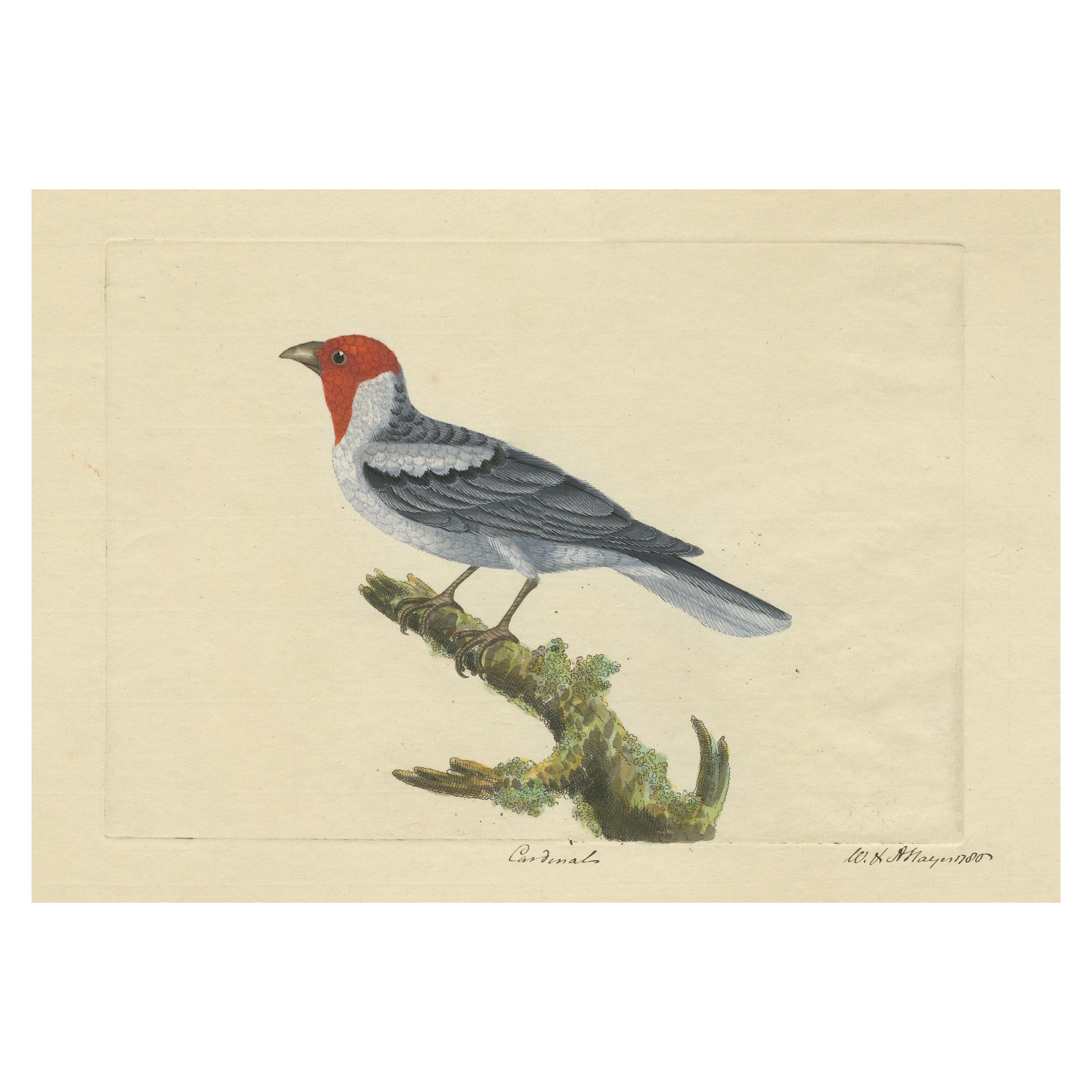
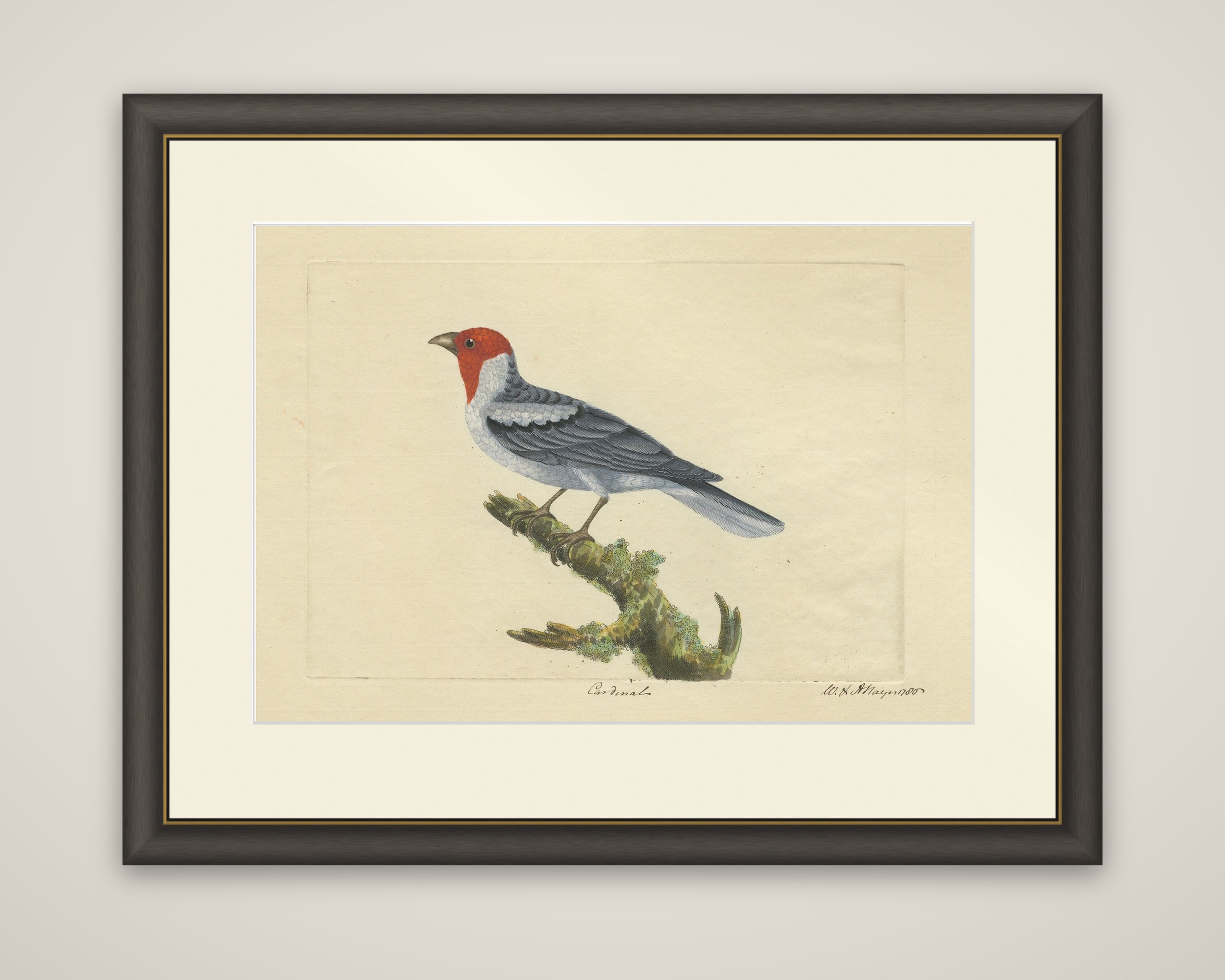
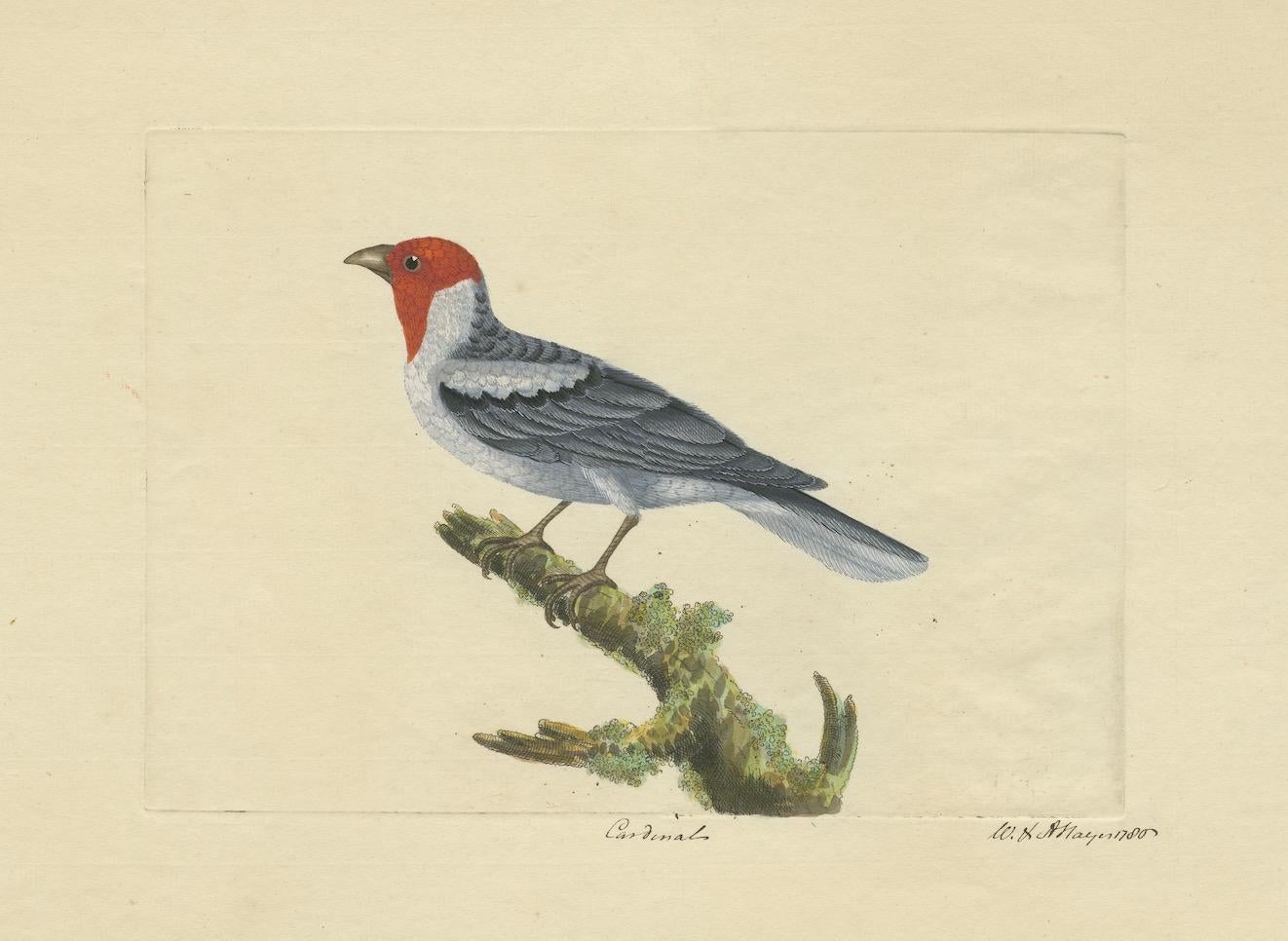
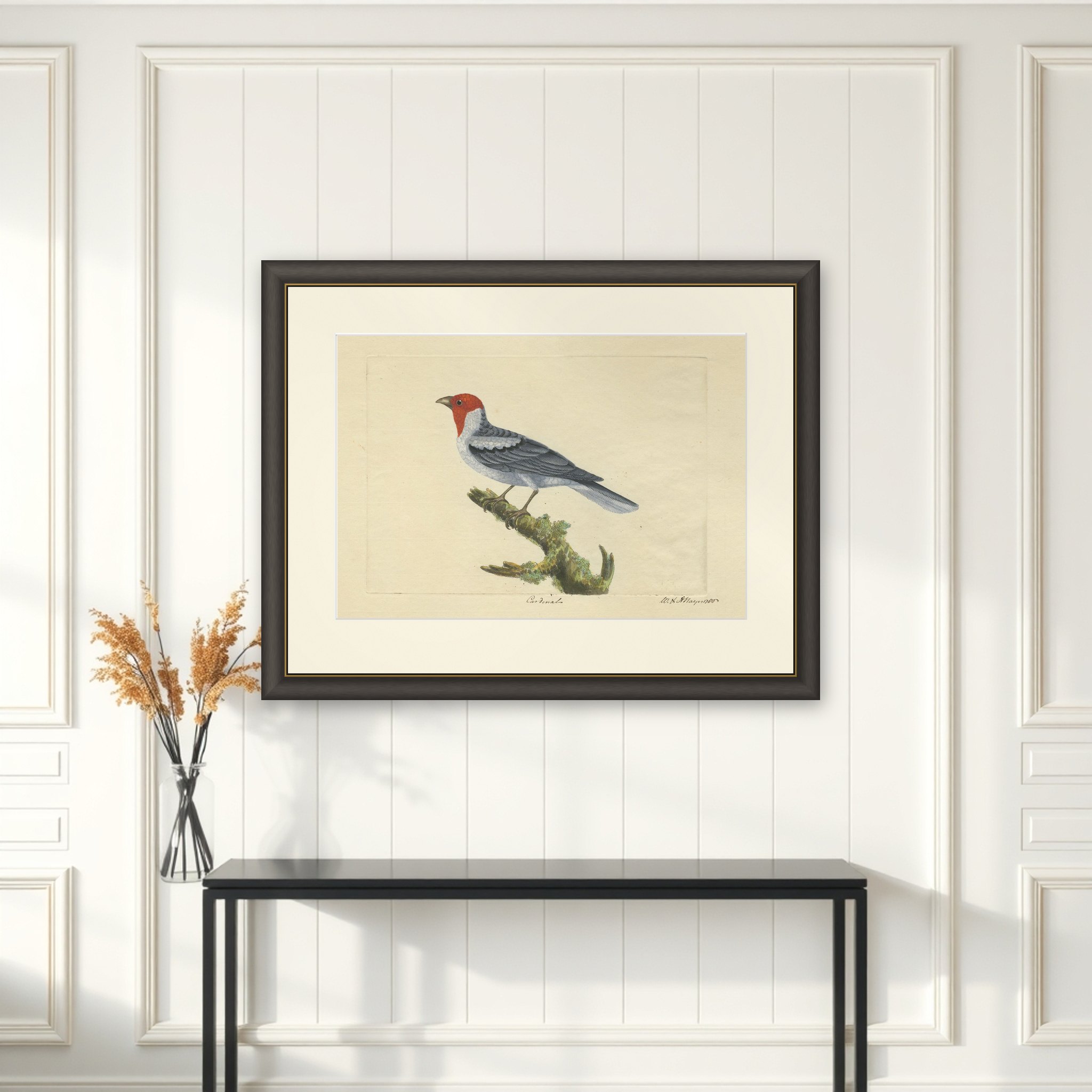
Red-Crested Cardinal - Antique Hand-Colored Print with William Hayes Sign, 1780
€ 2 400
Original antique · The actual sheet photographed · Certificate of authenticity on request · Sold unframed · Worldwide shipping from € 15 (rates)
Date
1780
Sheet size
37.5 × 54.5 cm (14.8 × 21.5 in)
Condition
Good
Reference
BG-13674-14
What the condition grades mean
Excellent
Bright and clean, with no faults worth mentioning.
Very good
Only light signs of age, such as faint toning.
Good
Normal signs of age for a sheet of this period: toning, some foxing, small marks or neat old repairs.
Fair
Clear faults such as staining, tears or repairs, priced to match.
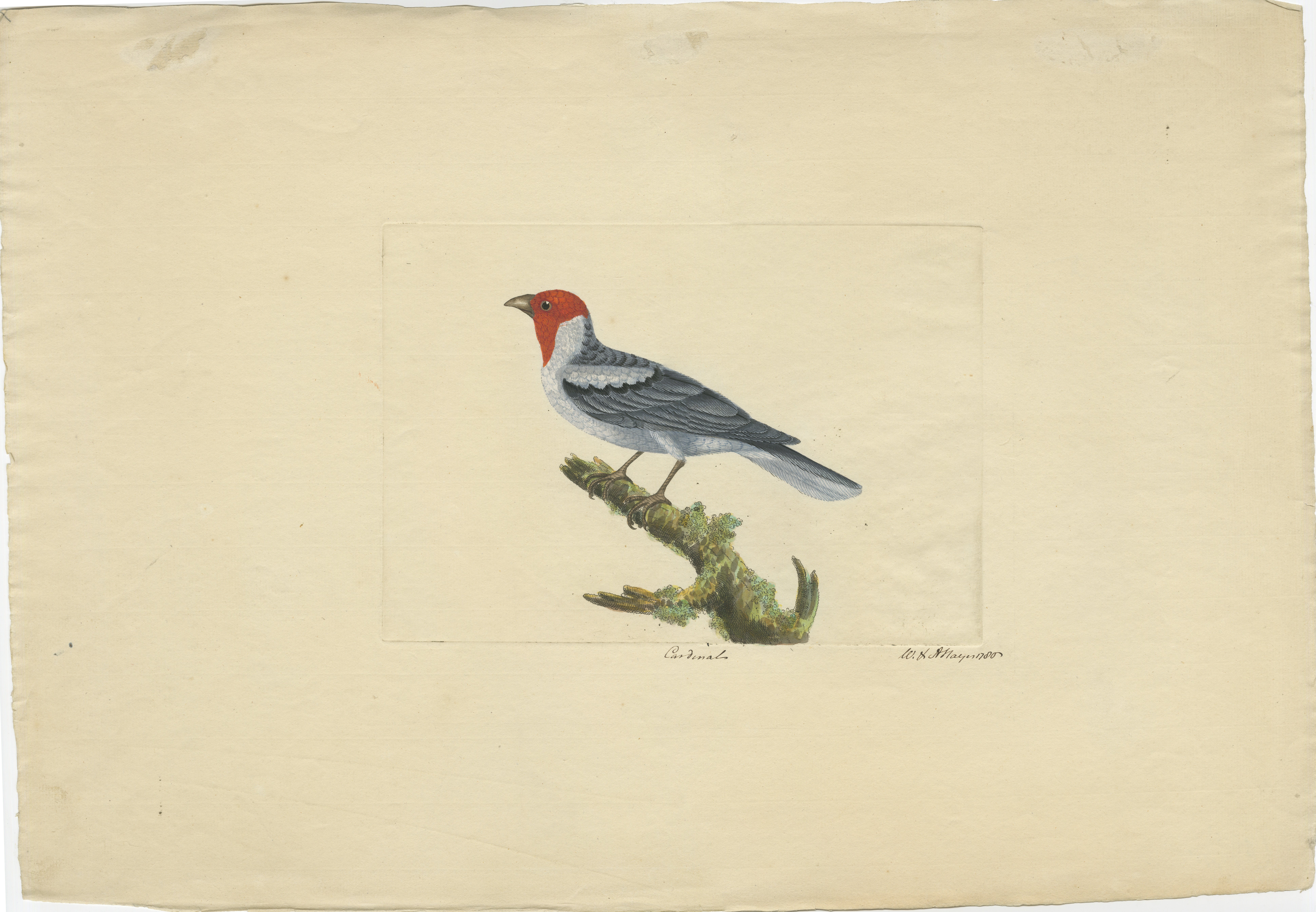
Every fault we see is written in the condition note, and the whole sheet is shown uncropped in the photos.
Condition
Very good impression on cream wove paper with wide margins and a strong plate mark. Delicate overall age tone; a faint unobtrusive crease near the lower margin; a tiny rust speck well outside the image at left. Colors remain bright and unfaded.
About this sheet
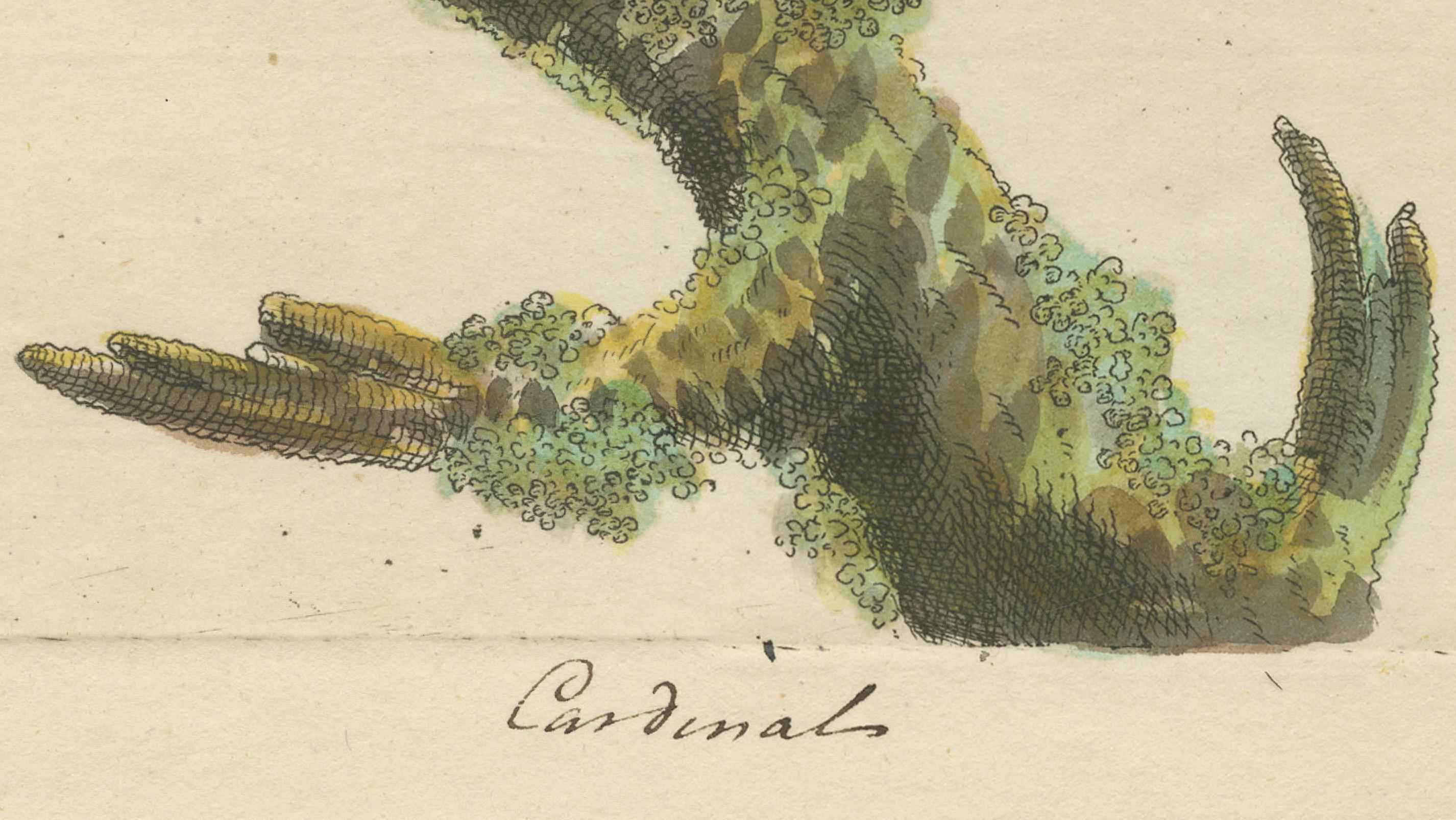
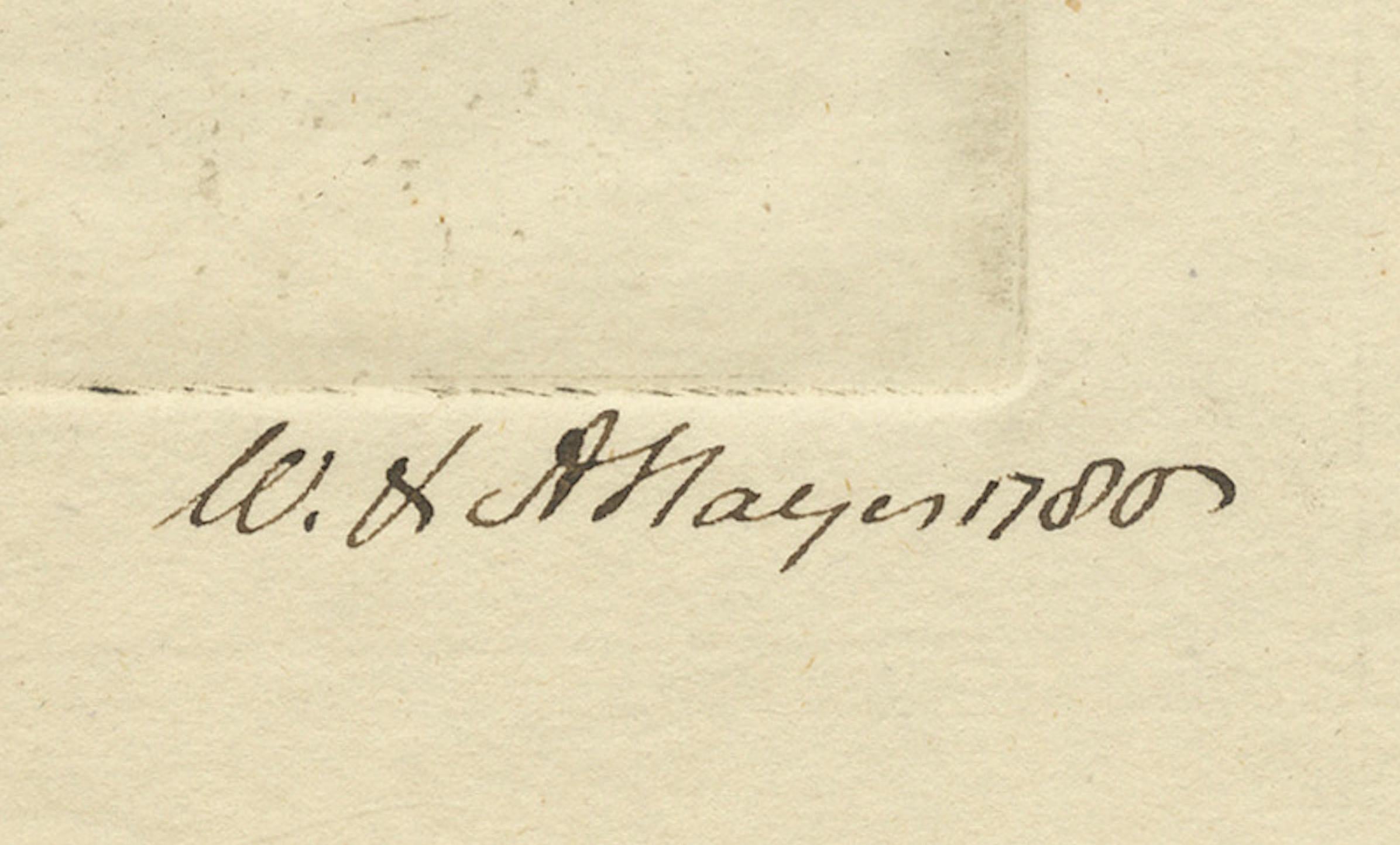
Red-crested cardinal, an original hand-colored copper engraving by William Hayes, signed "W. Hayes 1780" at the lower right and inscribed "Cardinal" at the lower left in the artist's own hand. The bird is identified as Paroaria coronata.
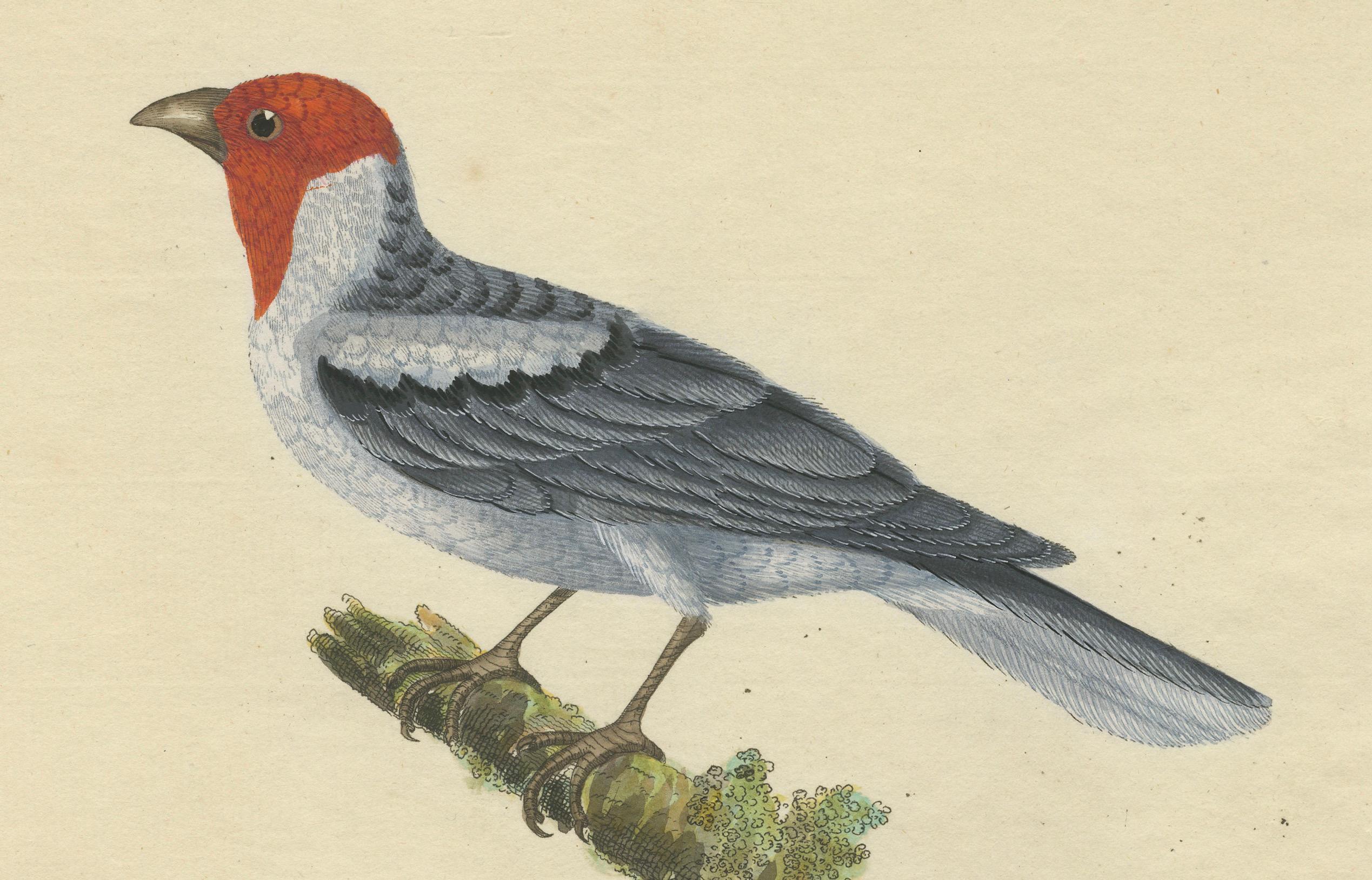
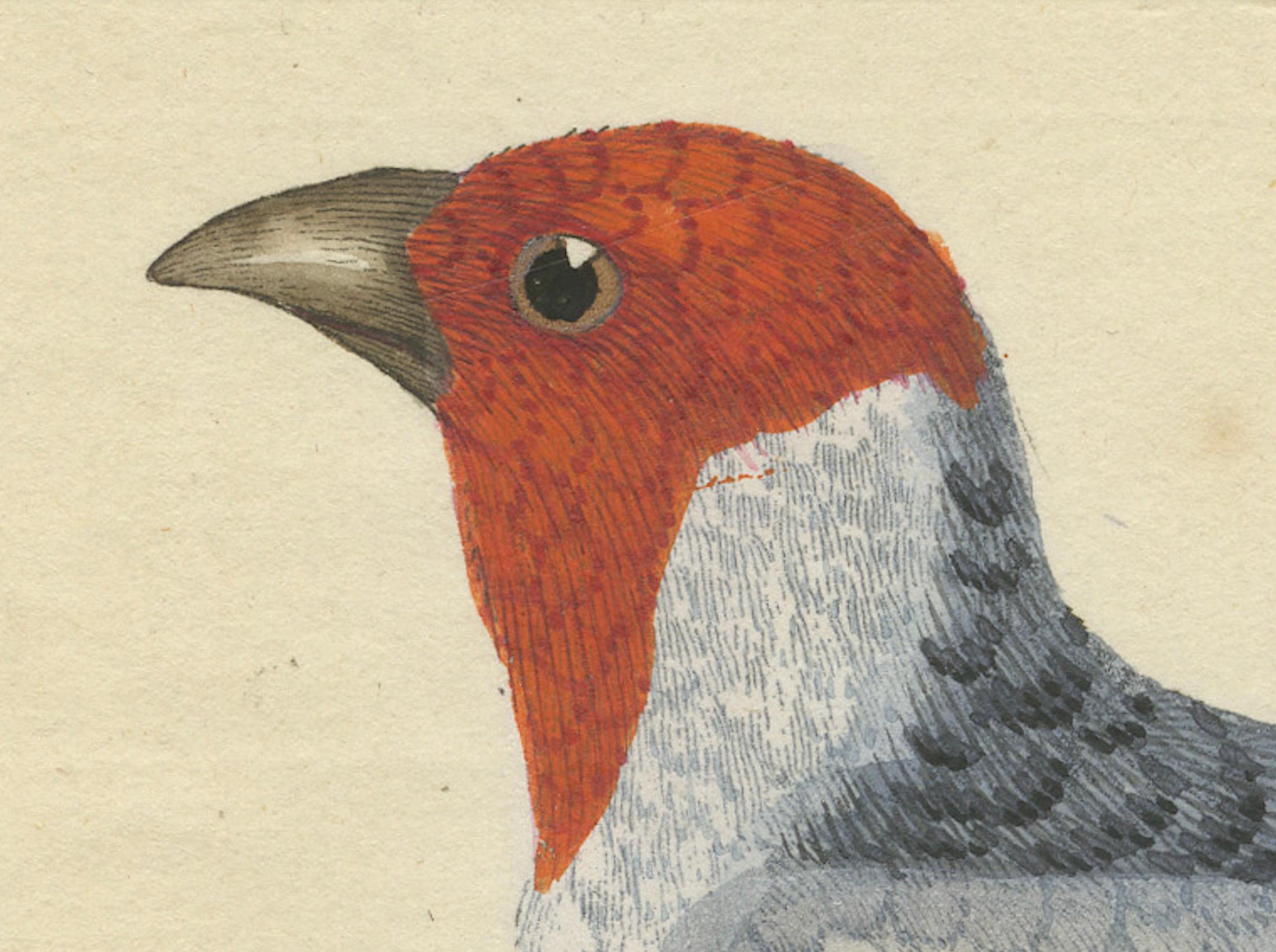
The cardinal perches on a lichen-covered branch, drawn at close to life size on an open sheet with no background. Its head and bib are vermilion, the back and wings slate gray with pale pearly edging on the shoulder feathers, the breast pale gray and the bill short and dark. The fine hatching on the wing feathers and tail gives the plumage its texture, and the transparent watercolor is laid thinly over it.
William Hayes (1735 to 1802) was a self-taught English bird painter who drew from live or freshly preserved birds in private collections, including the menagerie of the Duchess of Portland and later that of the Child family at Osterley Park. The bird is not the Northern Cardinal of North America but a South American species imported to Europe as an aviary bird in the late eighteenth century.