Feathers of Europe: A 18th Century Detailed Study of Finches & Bramblings, 1780
€ 260
One of a kind: this is the sheet in the photographs. Ships from Langweer, the Netherlands.
Date
1780
Sheet size
21.3 × 26.5 cm (8.4 × 10.4 in)
Reference
BG-13674-41
Condition
good, given age. Some minor soiling.General age-related toning, creasing and/or occasional minor defects from handling. Please study scans carefully.
About this sheet
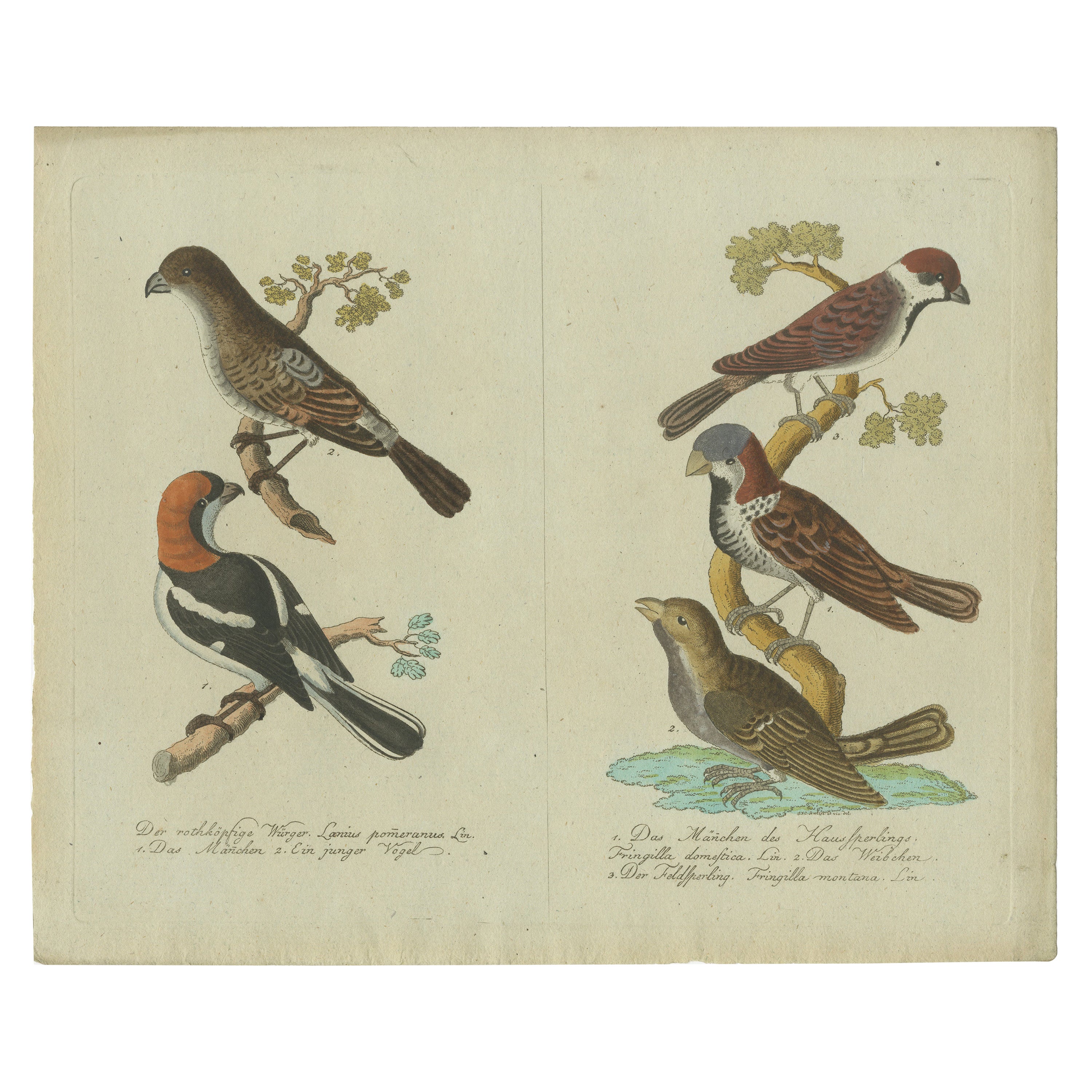
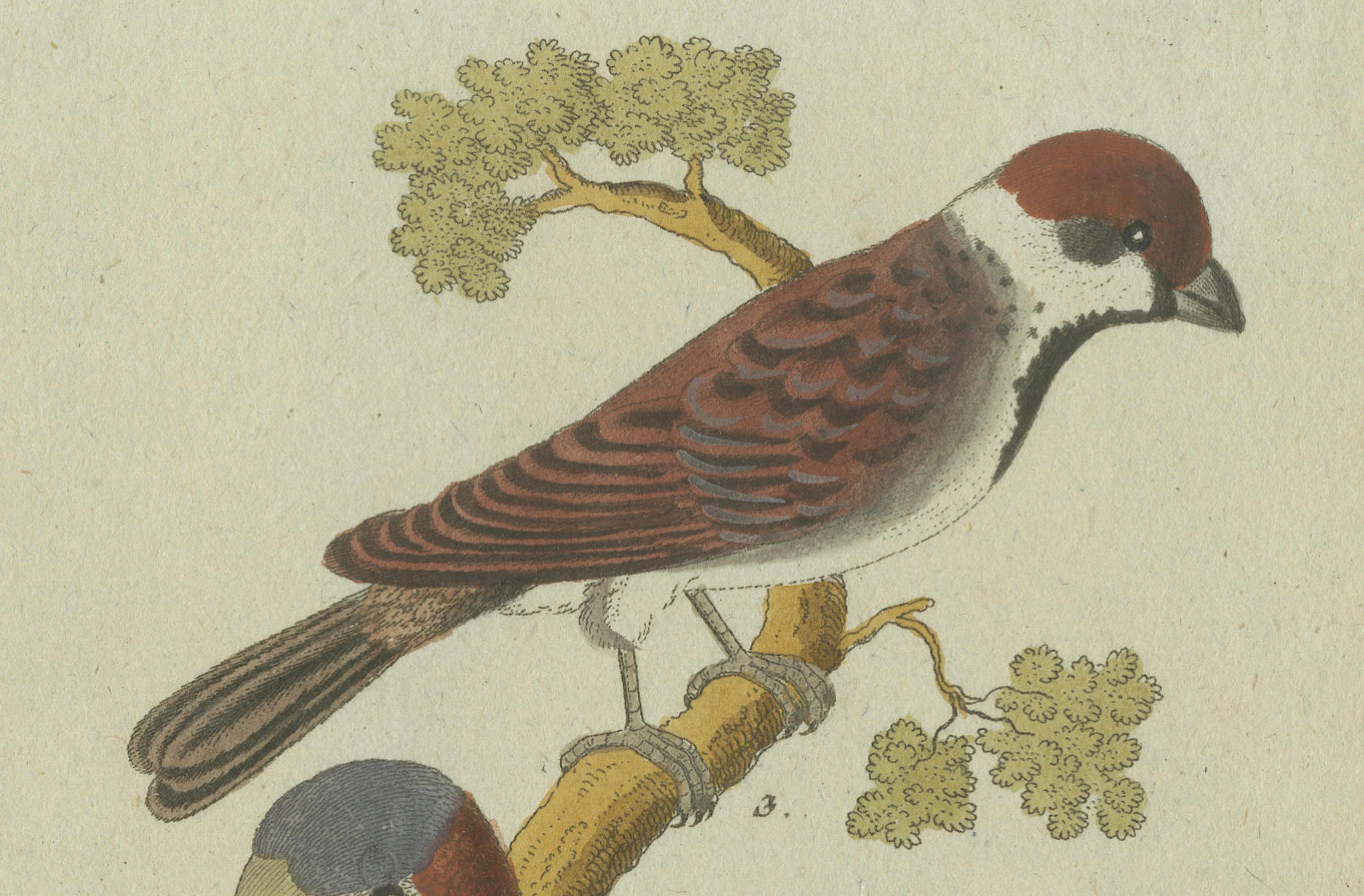
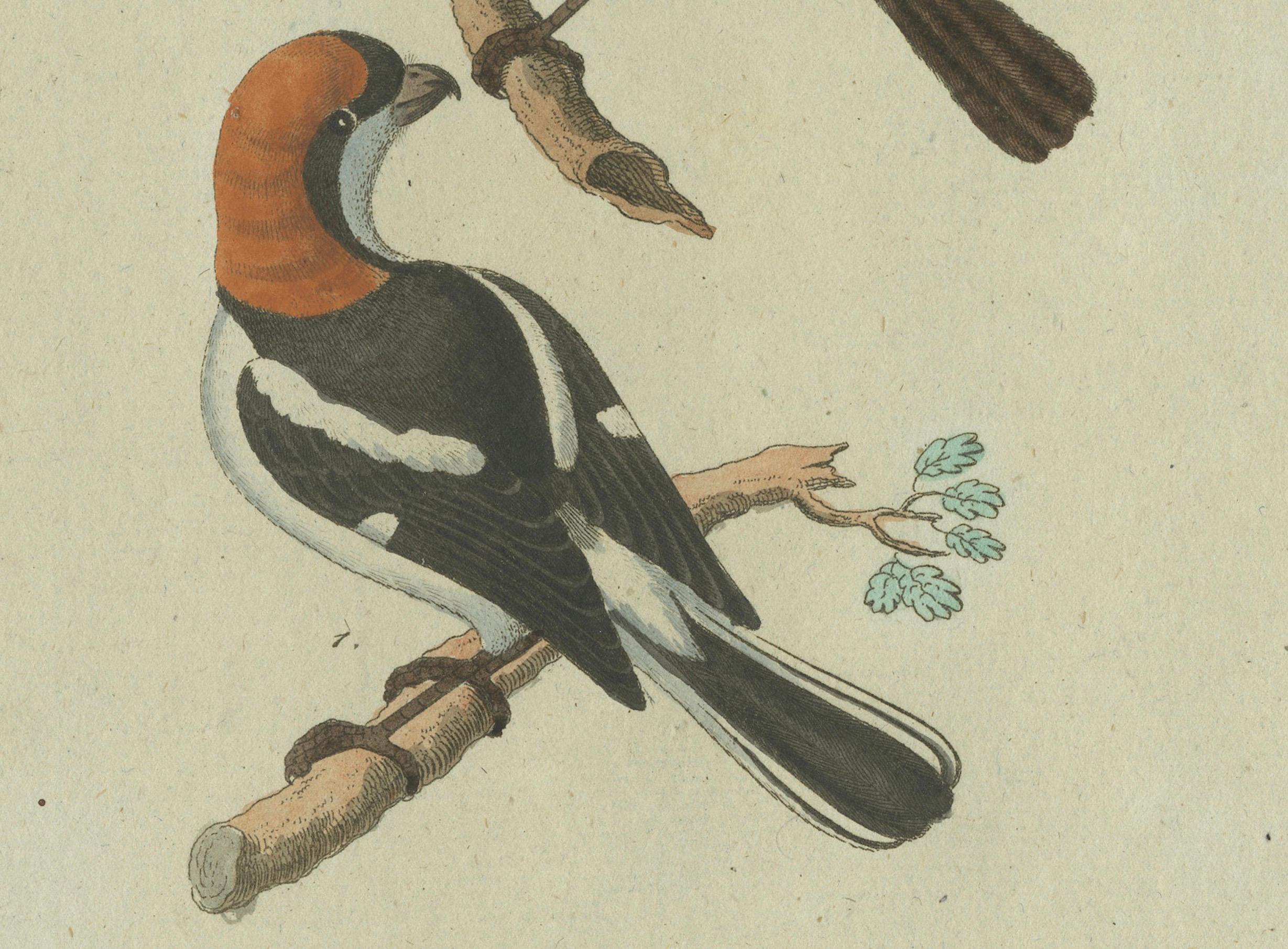
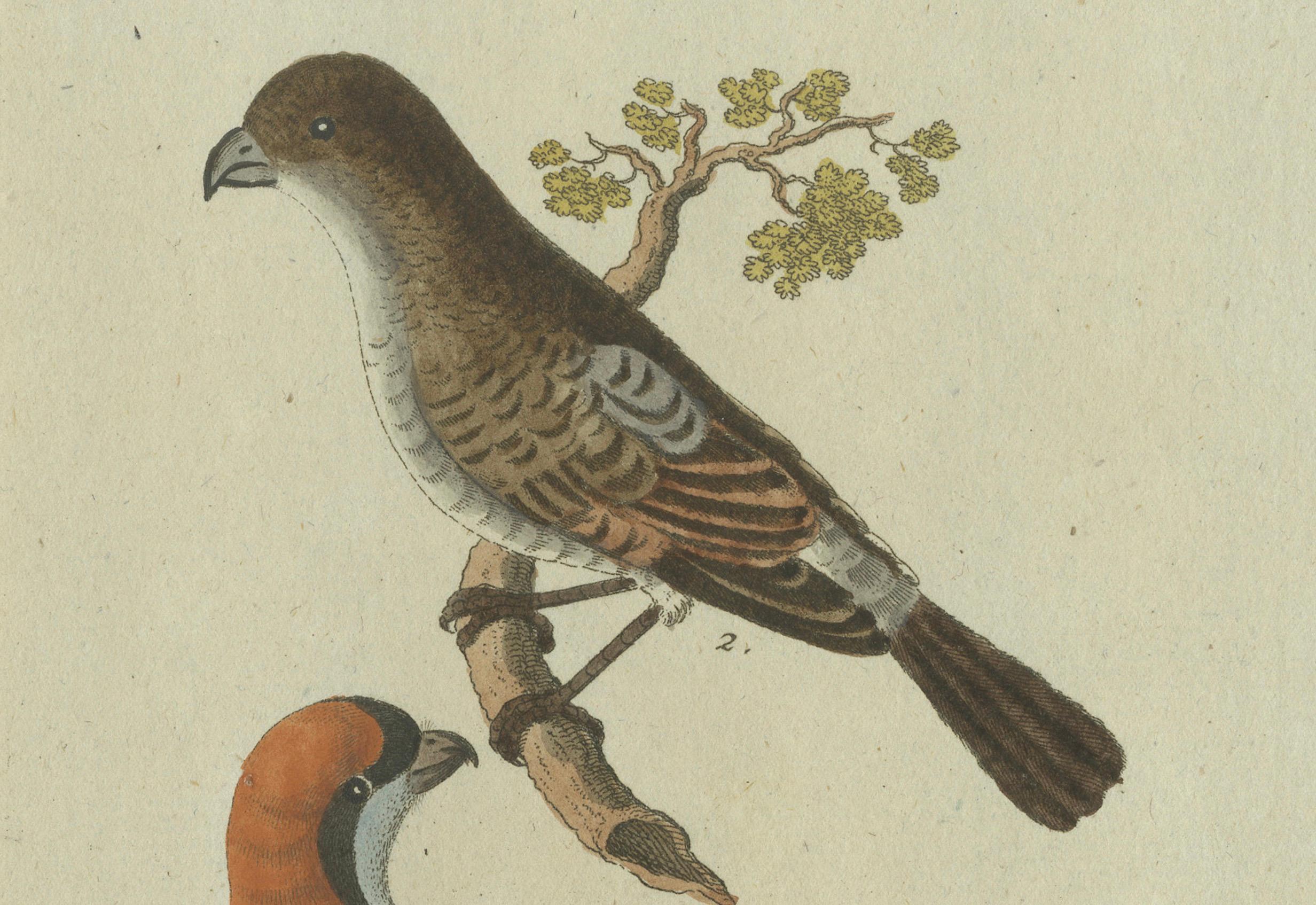
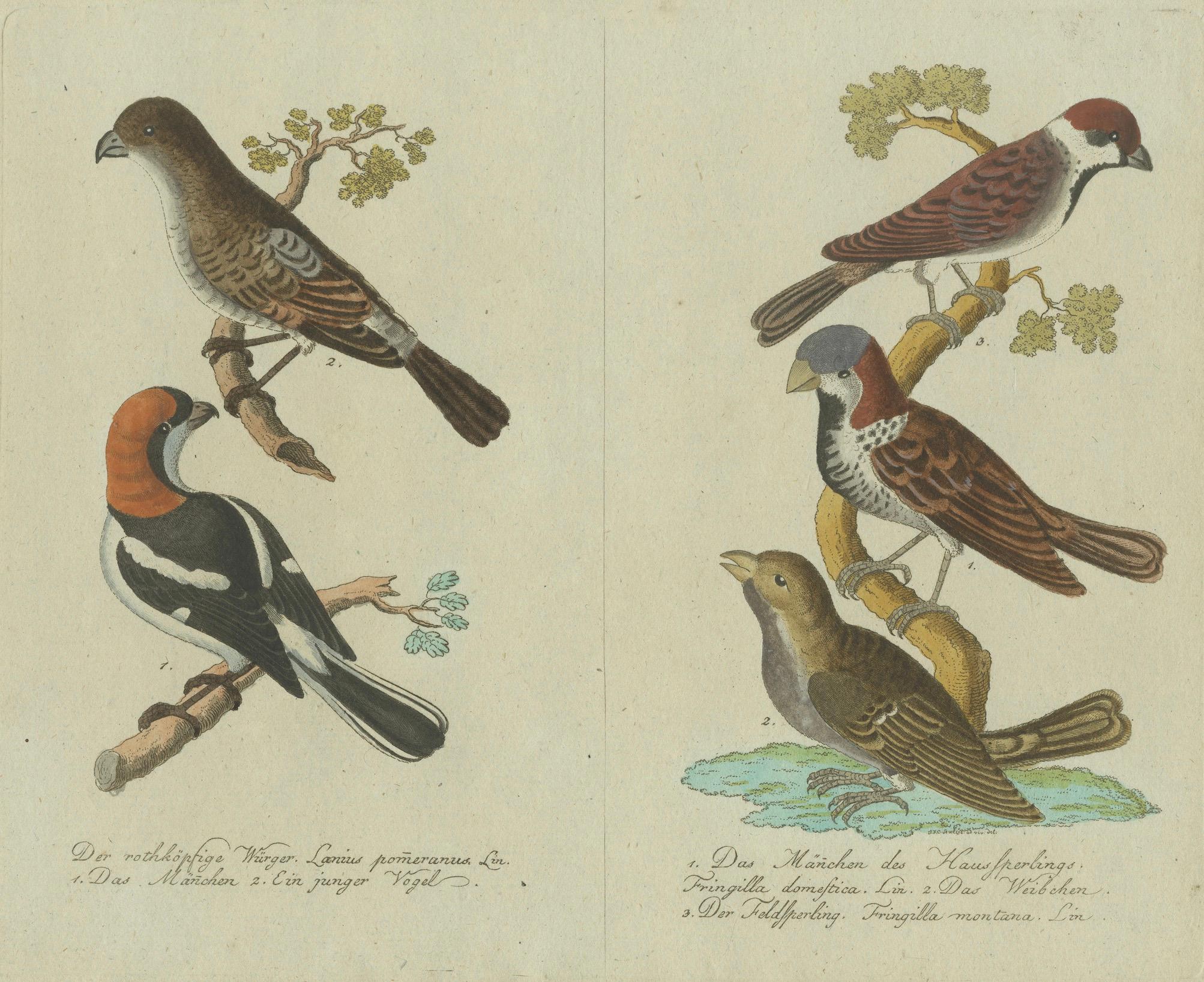
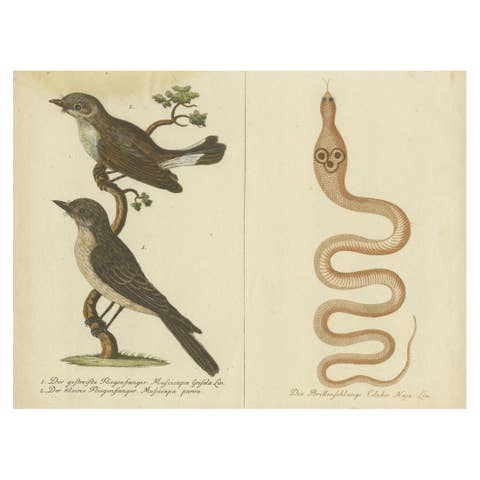
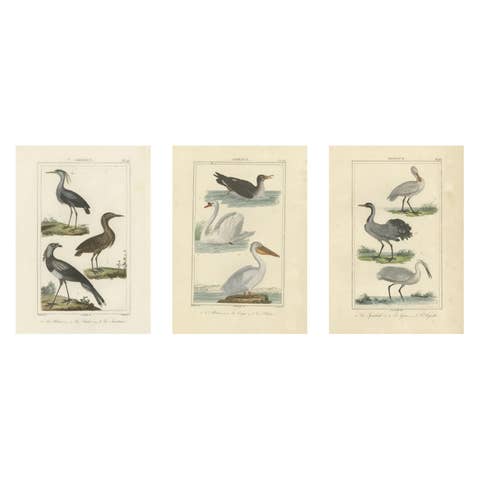
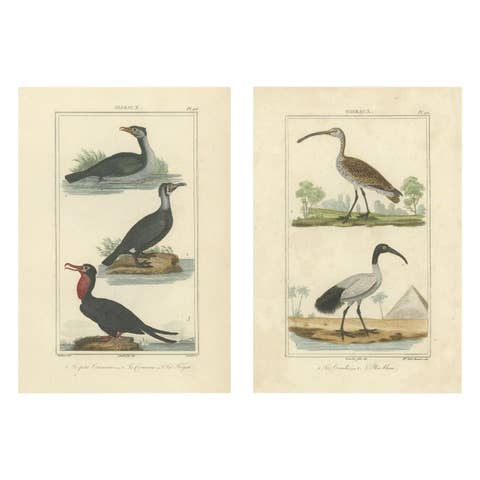
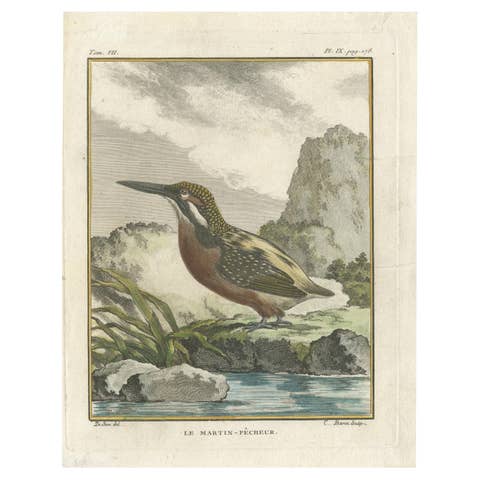
Original hand-colored engraving with various bird species, depicted in a detailed and naturalistic style characteristic of 18th-century scientific illustrations.
Description of Birds in the Illustration 1. Left Panel: - Labeled in German as "Der mittlere Fink von grösser" which translates to "The larger middle finch." This could likely be referring to a type of finch larger than common species, possibly a chaffinch or a similar bird. - Labeled as "Der rothkopfige Fink" which translates to "The red-headed finch." This likely refers to a species with a distinctive red head, resembling characteristics of some finch species known for red or orange head markings.
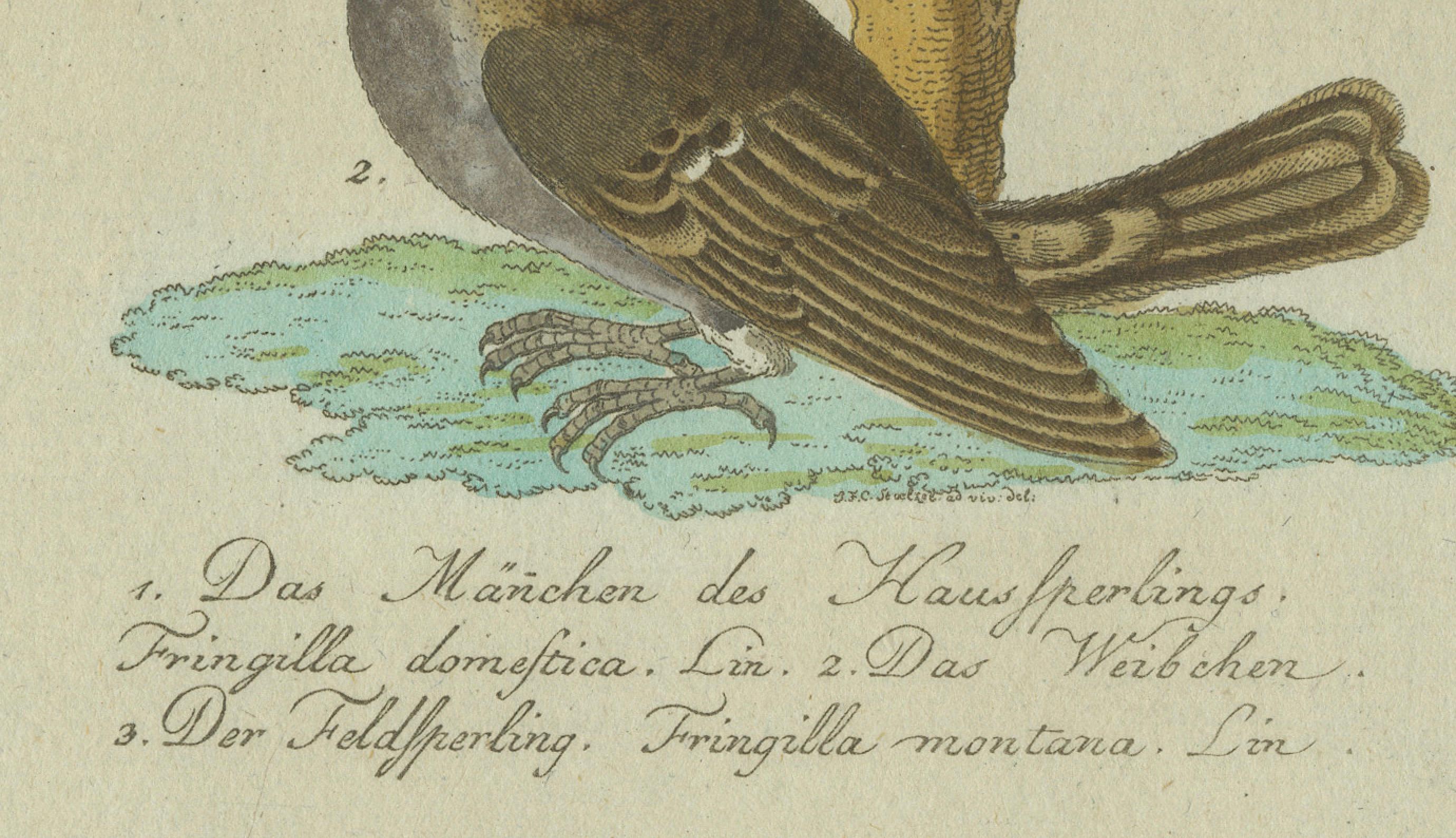
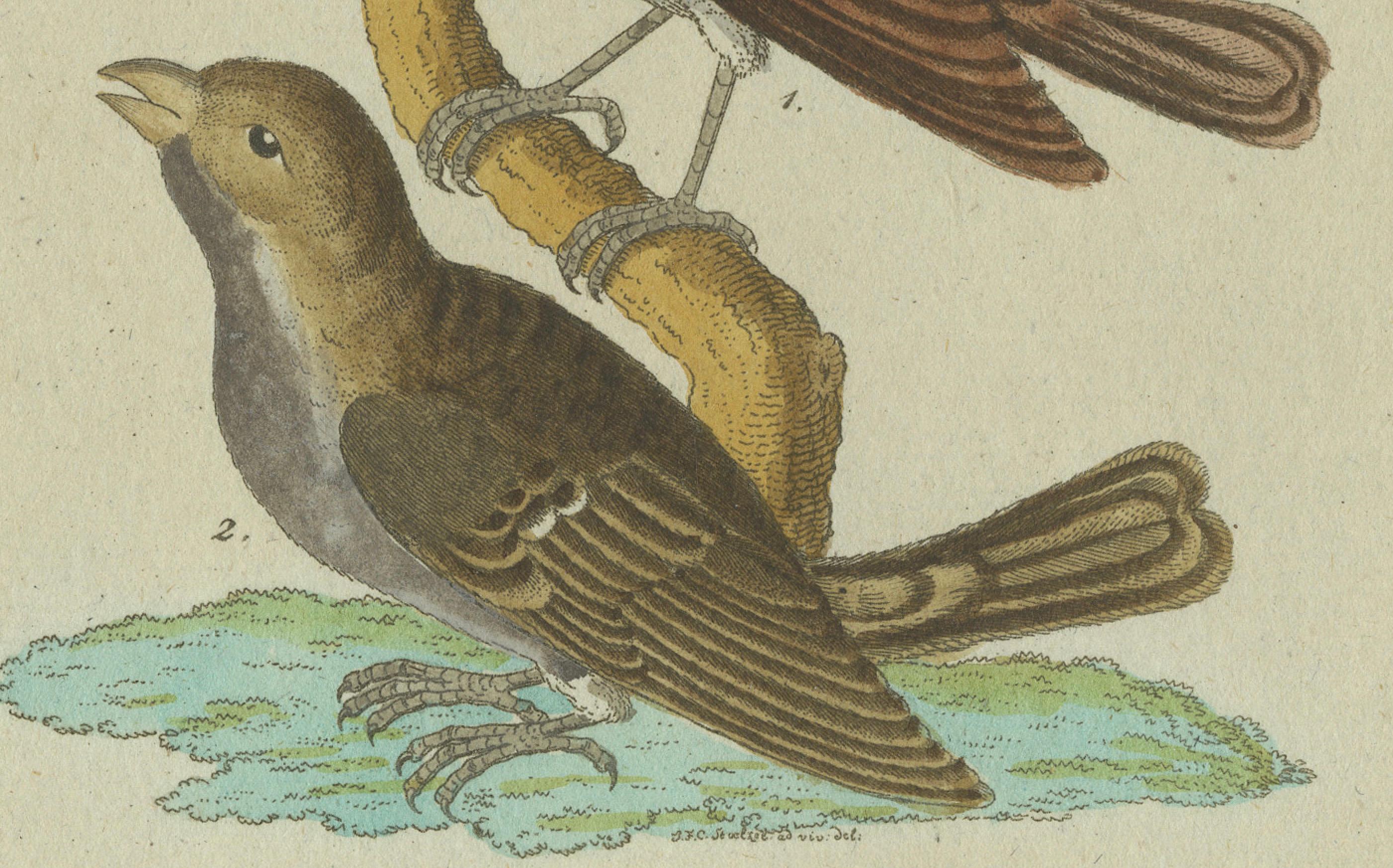
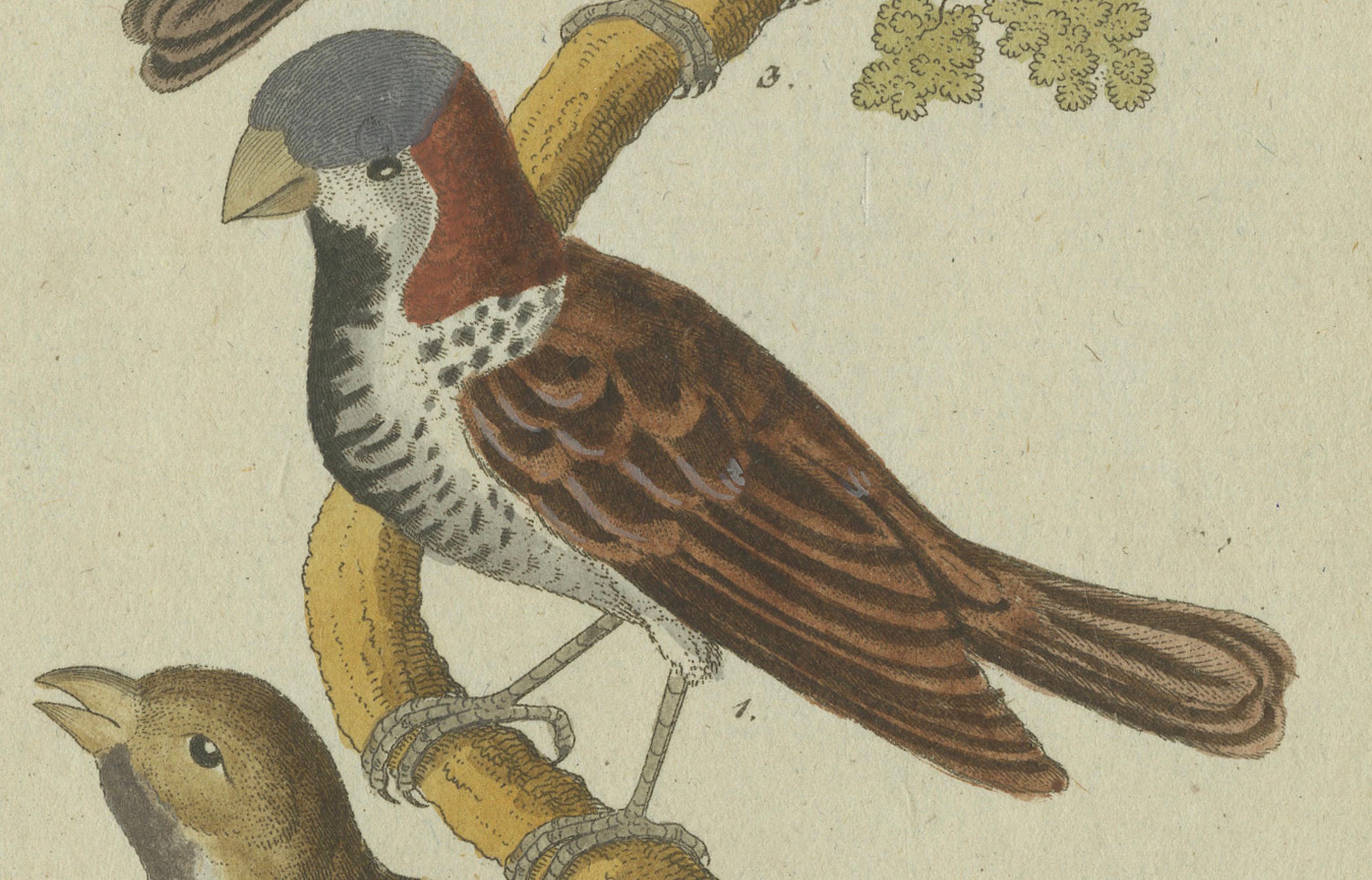
2. Right Panel: - Labeled as "Das Männchen der Klauffinken" which translates to "The male of the Hawfinch." Hawfinches are known for their robust beak and striking features. - Labeled as "Das Weibchen" which translates to "The female" indicating it is the female counterpart to the male hawfinch, typically showing less vibrant plumage. - Labeled as "Der Kaffernfink, Fringilla montana Linn." translates to "The brambling, Fringilla montifringilla." Bramblings are migratory birds known for their distinctive colors during the breeding season.
Artistic and Scientific Value - Detail and Accuracy: Each bird is rendered with attention to the defining characteristics such as plumage coloration and patterns, beak shape, and overall posture, which are crucial for species identification. - Coloring Technique: The hand-coloring is meticulous, enhancing the visual appeal and aiding in the differentiation of species, sex, and age variations within the depicted birds. - Educational Purpose: Illustrations like these served an important role in ornithological studies, providing a visual reference that helped naturalists and bird enthusiasts learn about species variations and classifications.
Maker of the Engravings - Artistic Execution: The precise artist and engraver might not be specified, but the work reflects the high standards of European natural history illustration of the time, possibly produced by or under the direction of naturalists and illustrators who were part of scientific expeditions or academic studies. - Historical Context: These engravings would have likely been part of a larger scientific catalog or publication aimed at disseminating knowledge about European avian species to a broader audience.