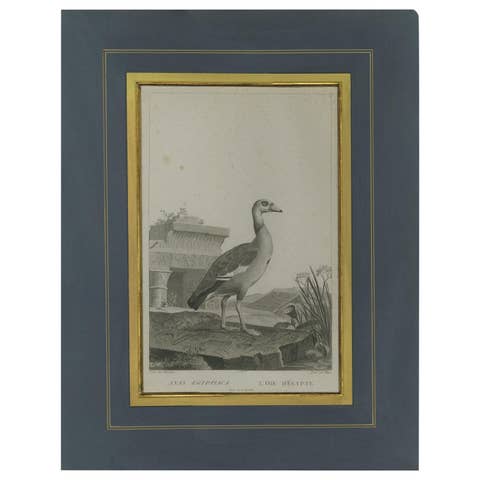
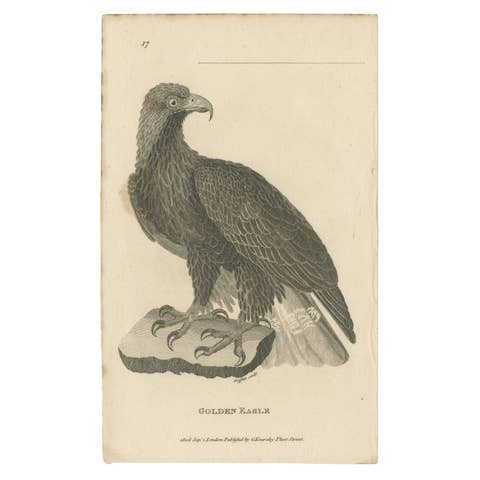
Rare Engraving of a Natterer’s Nightjar – Ornithological Illustration, ca.1808
€ 330
One of a kind: this is the sheet in the photographs. Ships from Langweer, the Netherlands.
Date
1808
Sheet size
34.5 × 25 cm (13.6 × 9.8 in)
Reference
BG-14049-5
Condition
Very good condition with minor toning and scattered foxing, mainly in the margins. Colors are well-preserved and crisp.
About this sheet
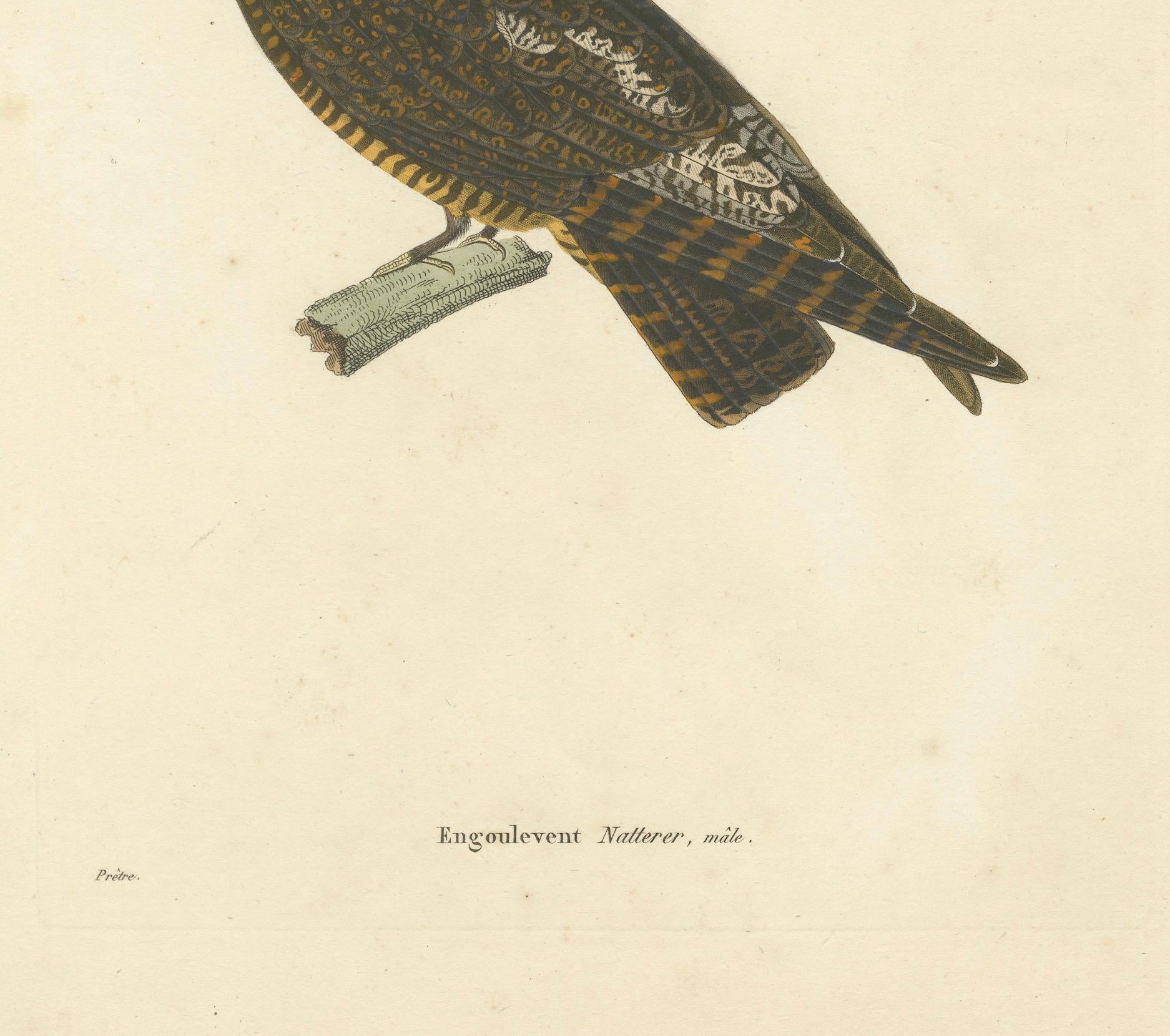
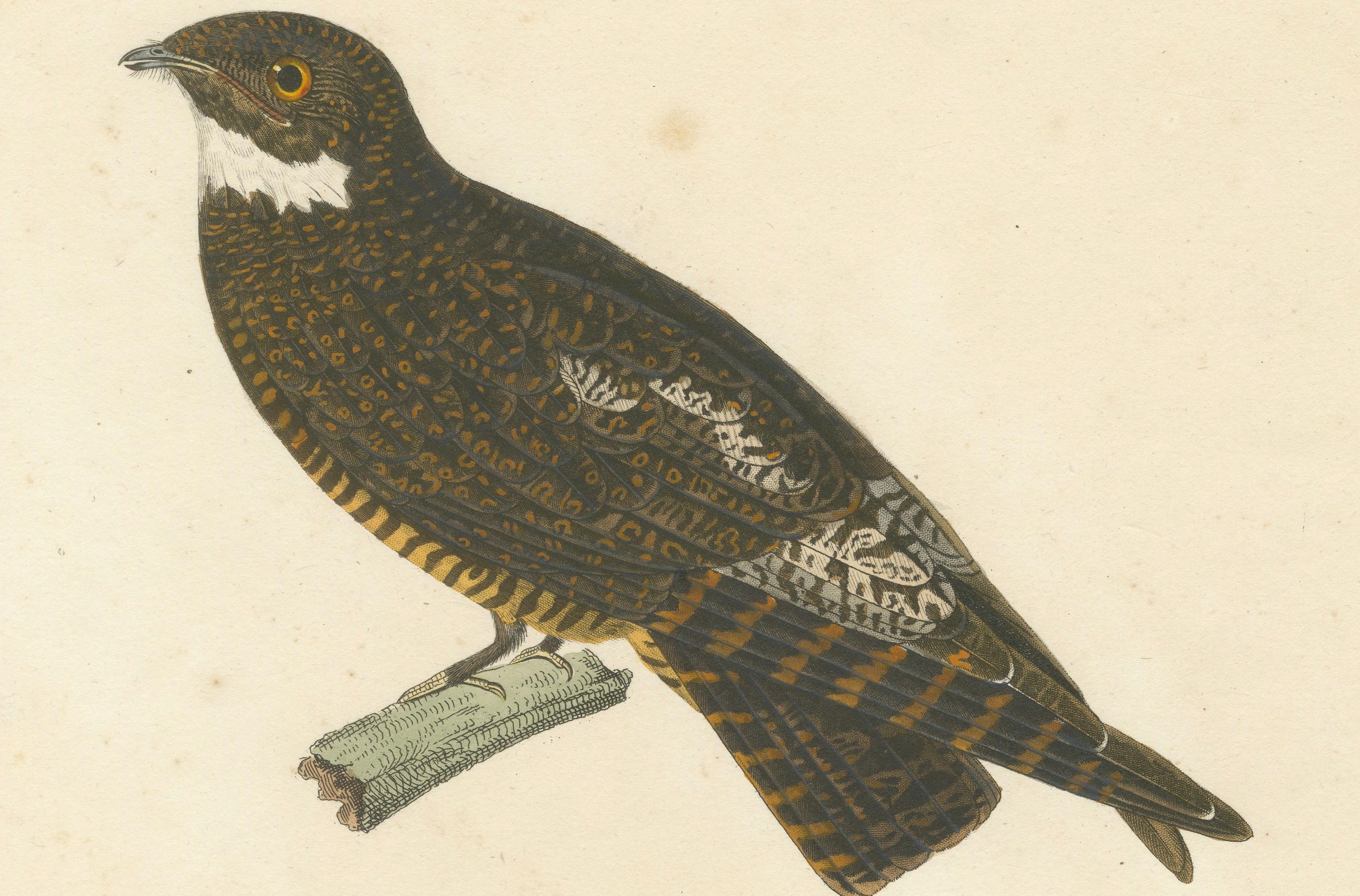
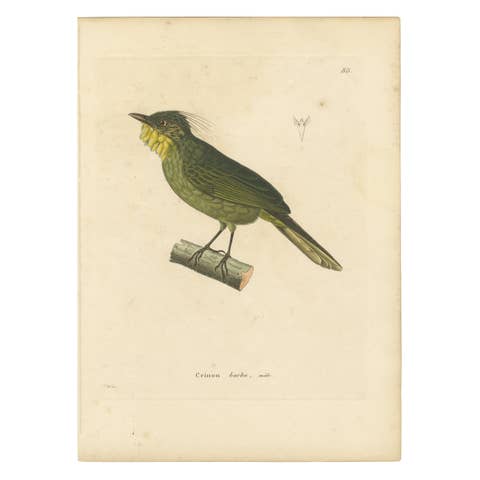
This stunning hand-colored engraving, titled 'Engoulevent Natterer, mâle', is a superb example of early 19th-century ornithological illustration. It originates from 'Histoire Naturelle des Oiseaux de Paradis et des Rolliers', a highly regarded natural history publication directed by the Dutch zoologist Coenraad Jacob Temminck and published between 1806 and 1808. The print was illustrated by Jean-Gabriel Prêtre, one of the most respected bird artists of his time, known for his detailed and lifelike representations of exotic species.
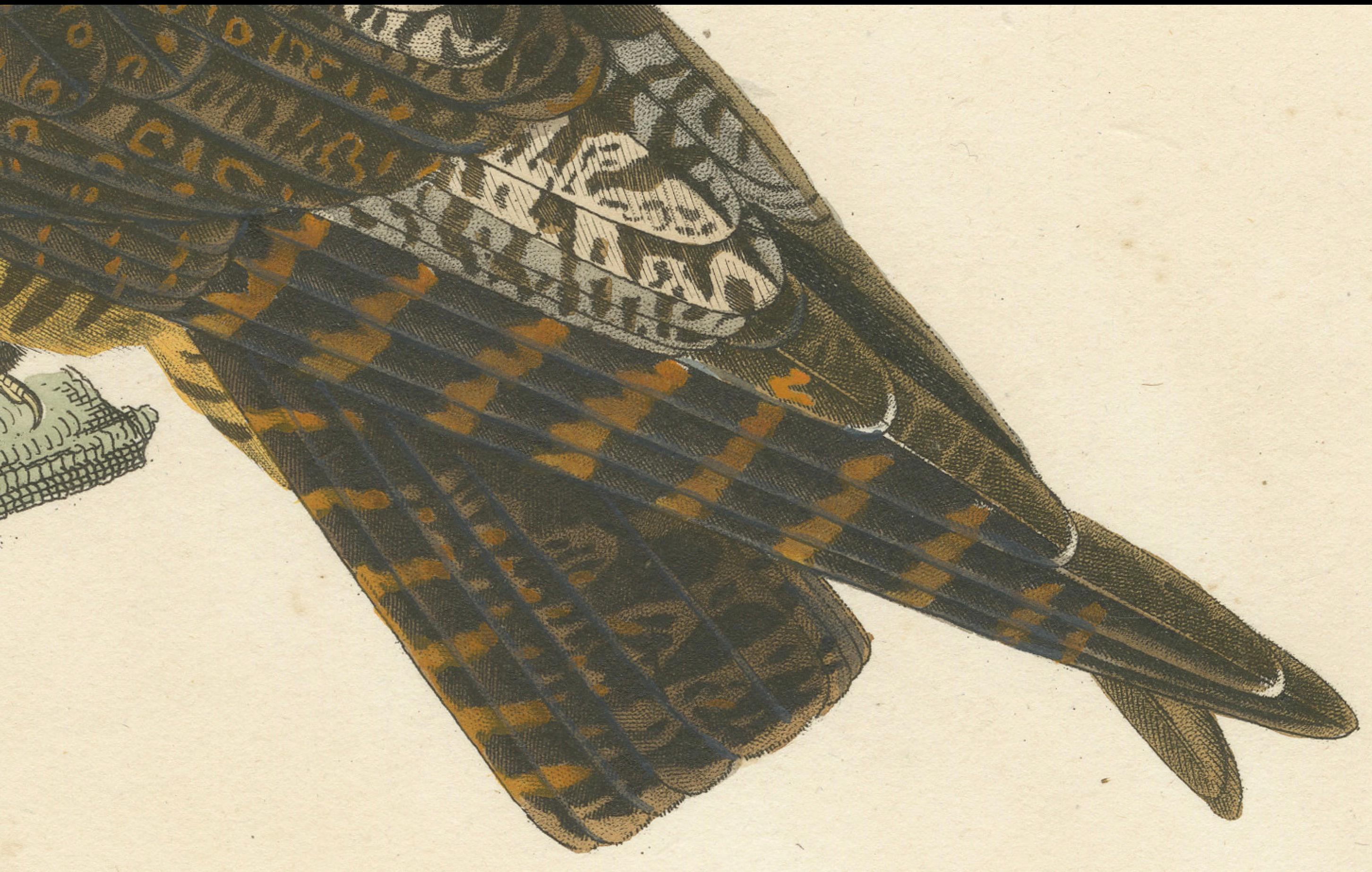
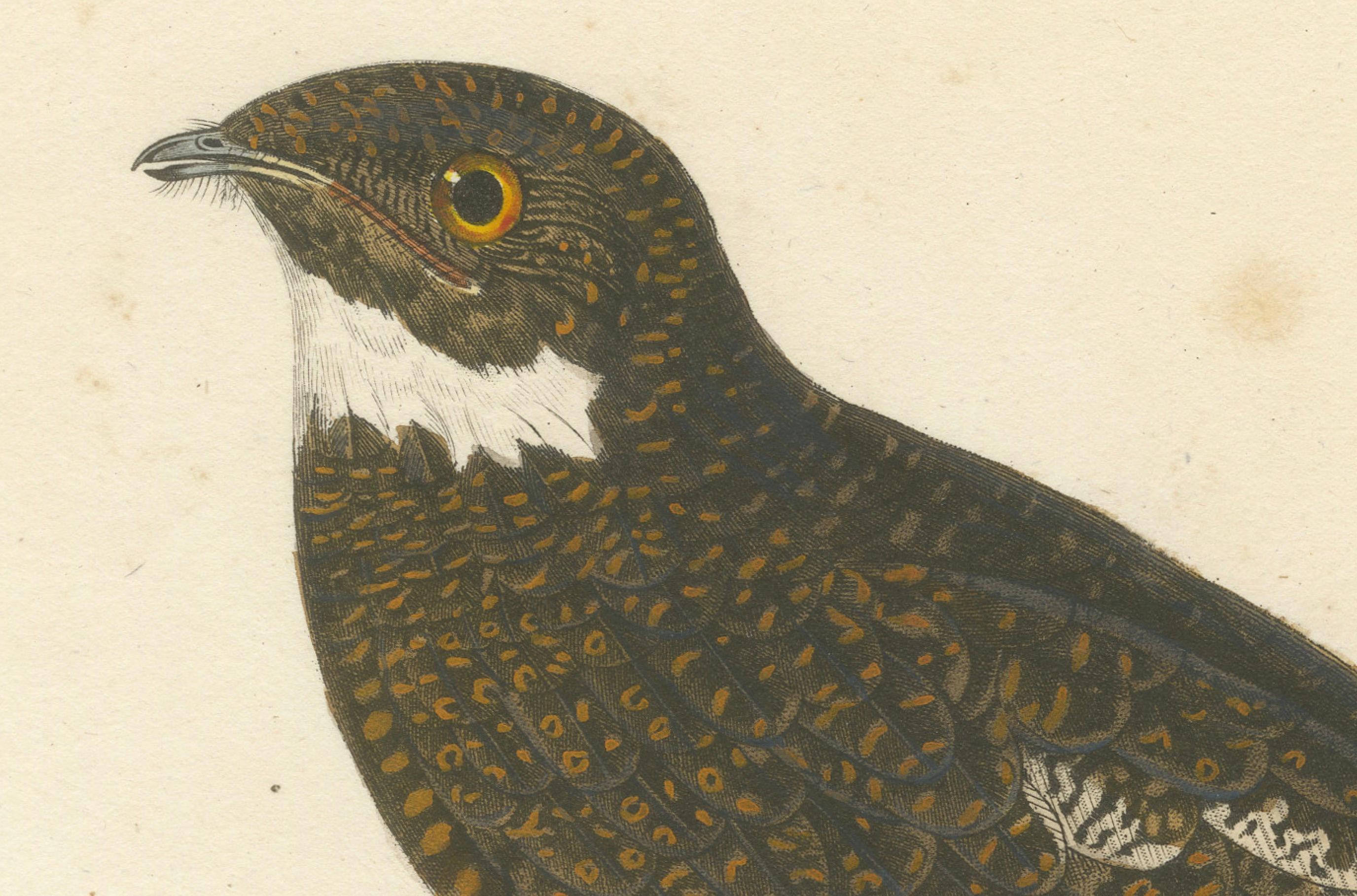
Depicted in remarkable detail, this print showcases a Natterer’s nightjar (Hydropsalis nattereri), a nocturnal bird known for its intricate mottled plumage, which provides exceptional camouflage in its natural habitat. The carefully rendered feather patterns display a beautiful mix of earthy browns, oranges, and grays, highlighted by delicate barring on the wings and tail. The characteristic white throat patch and the bird’s bright yellow eye stand out against the dark body, capturing its distinctive appearance. The engraving also includes a small anatomical study of the bird’s beak, a common feature in scientific ornithological prints of the period.
The image was created using copperplate engraving, a highly skilled process where the design was etched onto a metal plate, inked, and transferred onto fine paper. Each print was then hand-colored with watercolors, ensuring a vibrant, unique finish. These ornithological prints were highly valued for their combination of scientific accuracy and artistic beauty, making them desirable collector’s pieces.
Condition: Very good condition with minor toning and scattered foxing, mainly in the margins. Colors are well-preserved and crisp.
Matting and Framing Tips: A dark wood or gold frame would complement the warm tones of the bird’s plumage, while a cream or soft beige archival mat will provide contrast. Using museum-quality glass is recommended to protect the delicate hand-colored details, if budget allowsa.