Ornithological Splendor: The Senegal Firefinch and Bengalese Finch Birds, 1837
€ 90
One of a kind: this is the sheet in the photographs. Ships from Langweer, the Netherlands.
Date
1837
Sheet size
13 × 17.5 cm (5.1 × 6.9 in)
Reference
BG-13535-4
Condition
good, given age. Some soiling and eneral age-related toning and/or occasional minor defects from handling. Please study scan carefully.
About this sheet
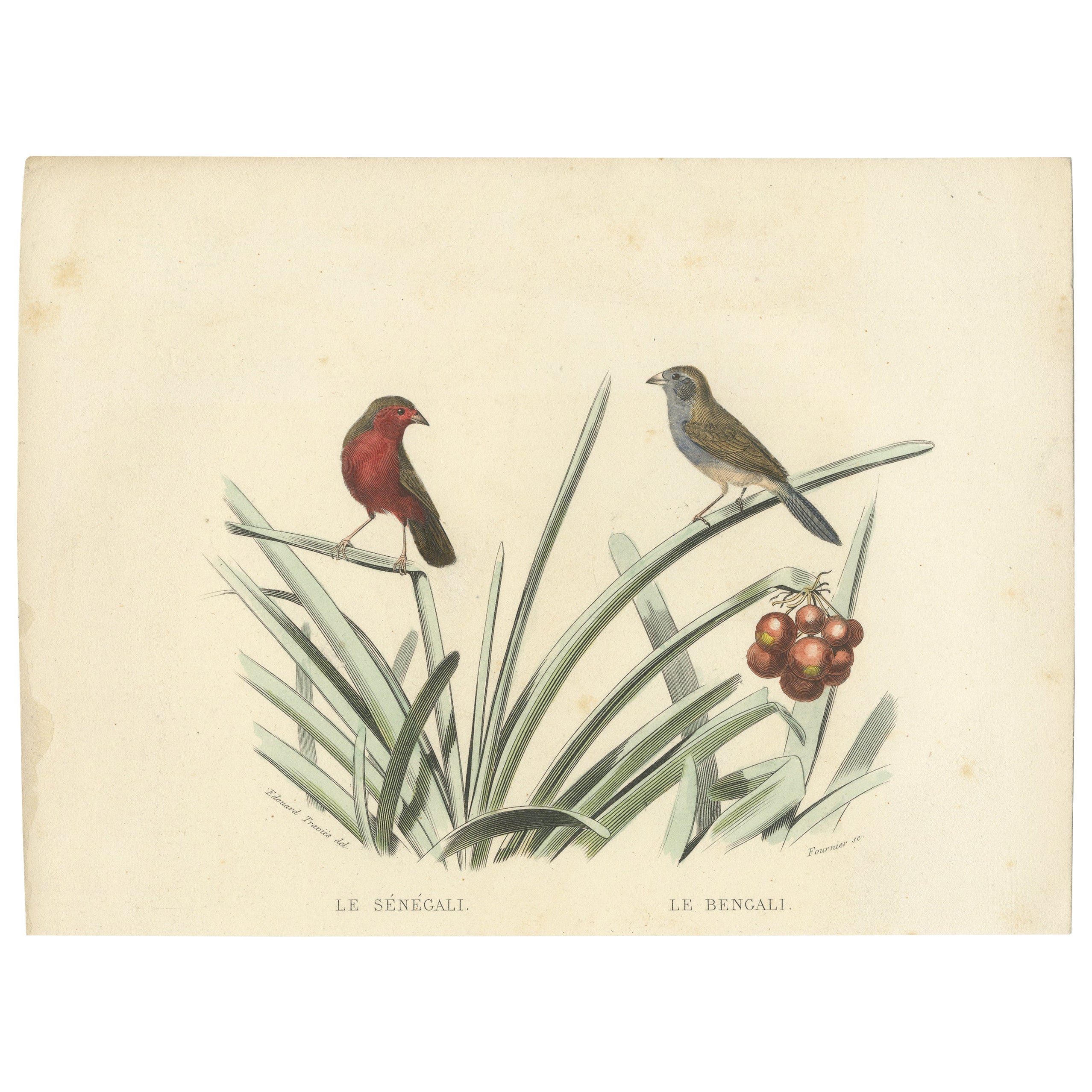
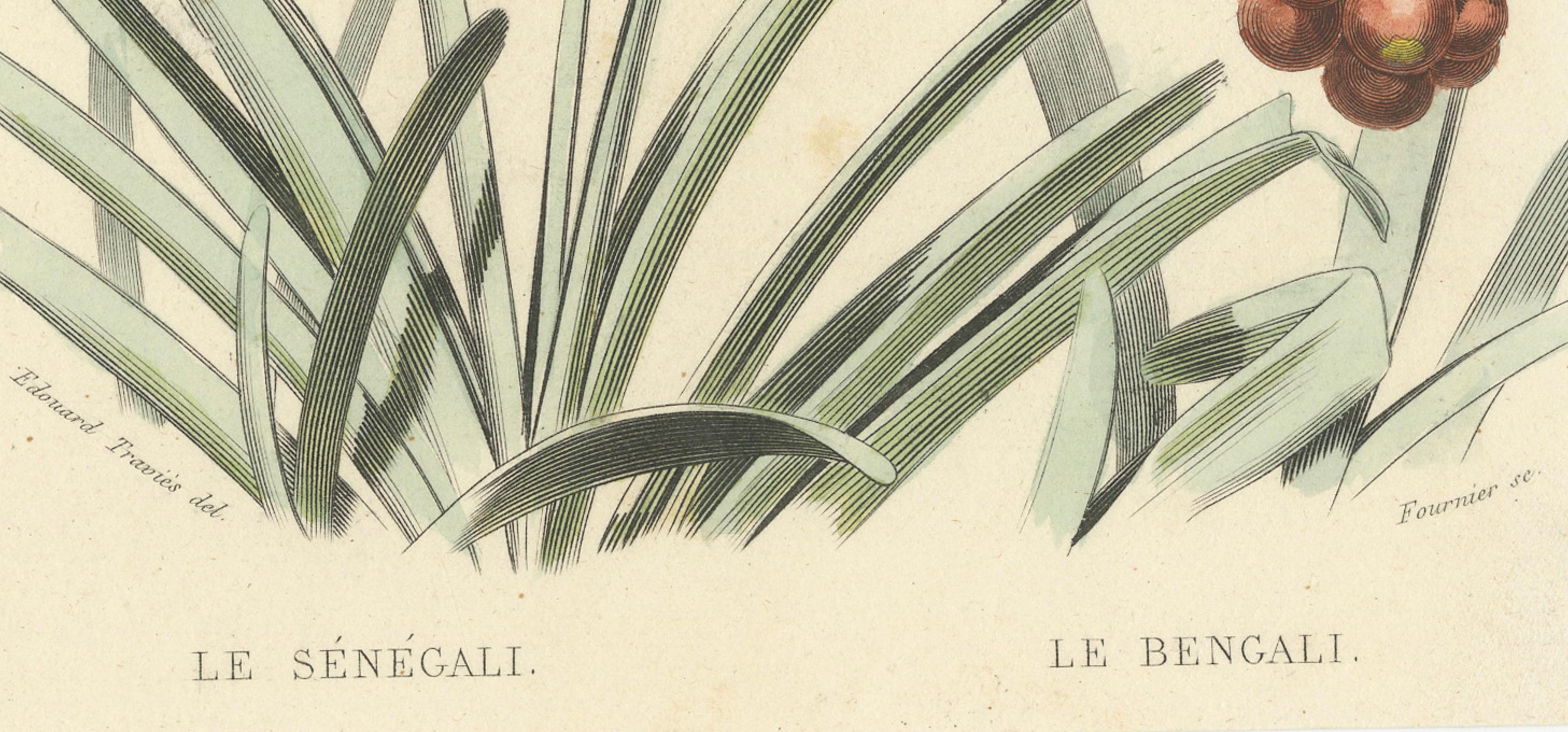
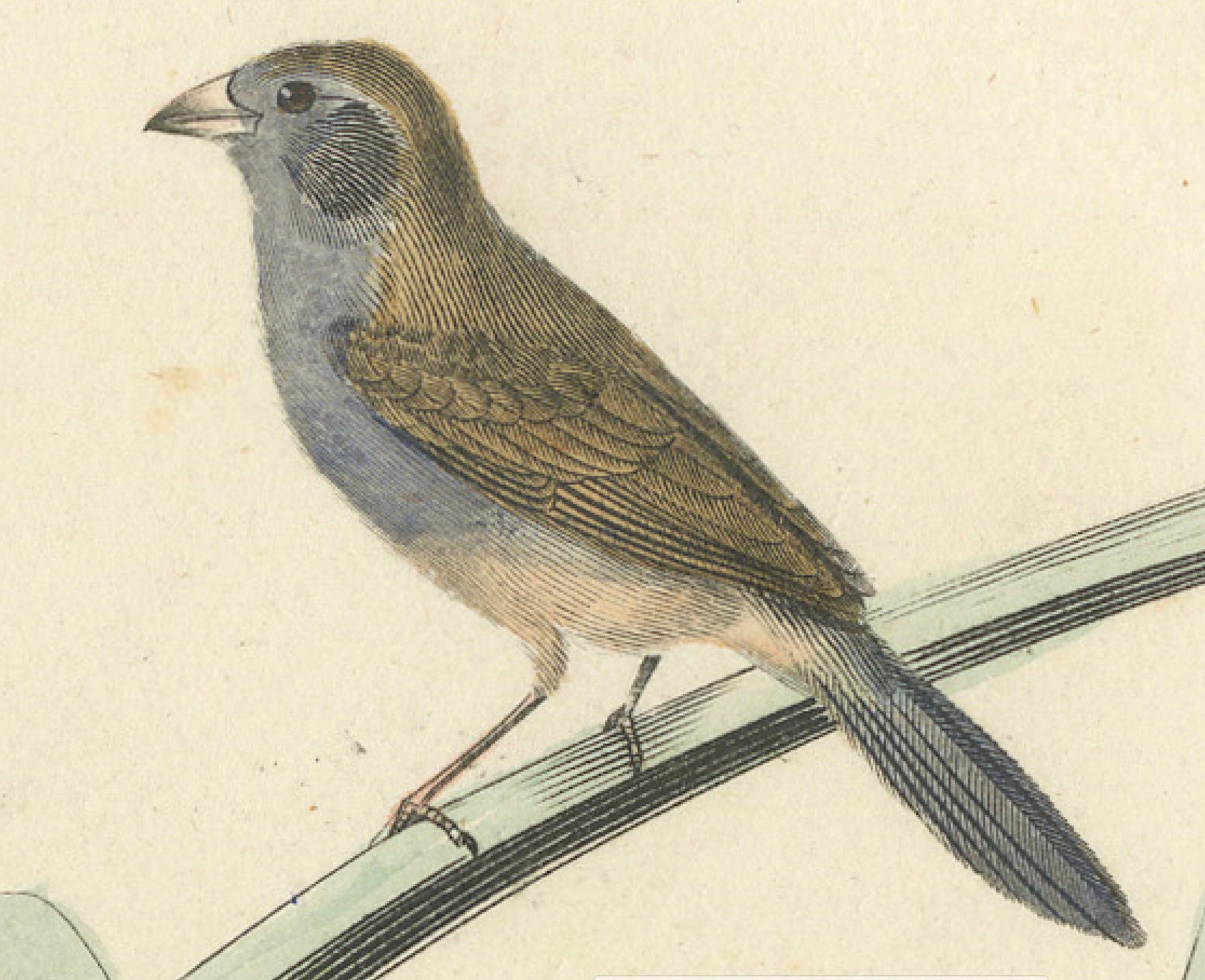
This hand-colored engraving, originally created around 1837 for Buffon's "Natural History of Animals," is a beautiful illustration from the celebrated collection designed by Édouard Travies and engraved by Fournier. Published by Furne in Paris, this piece is part of a series that showcases the rich diversity of avian species.
Birds Featured:
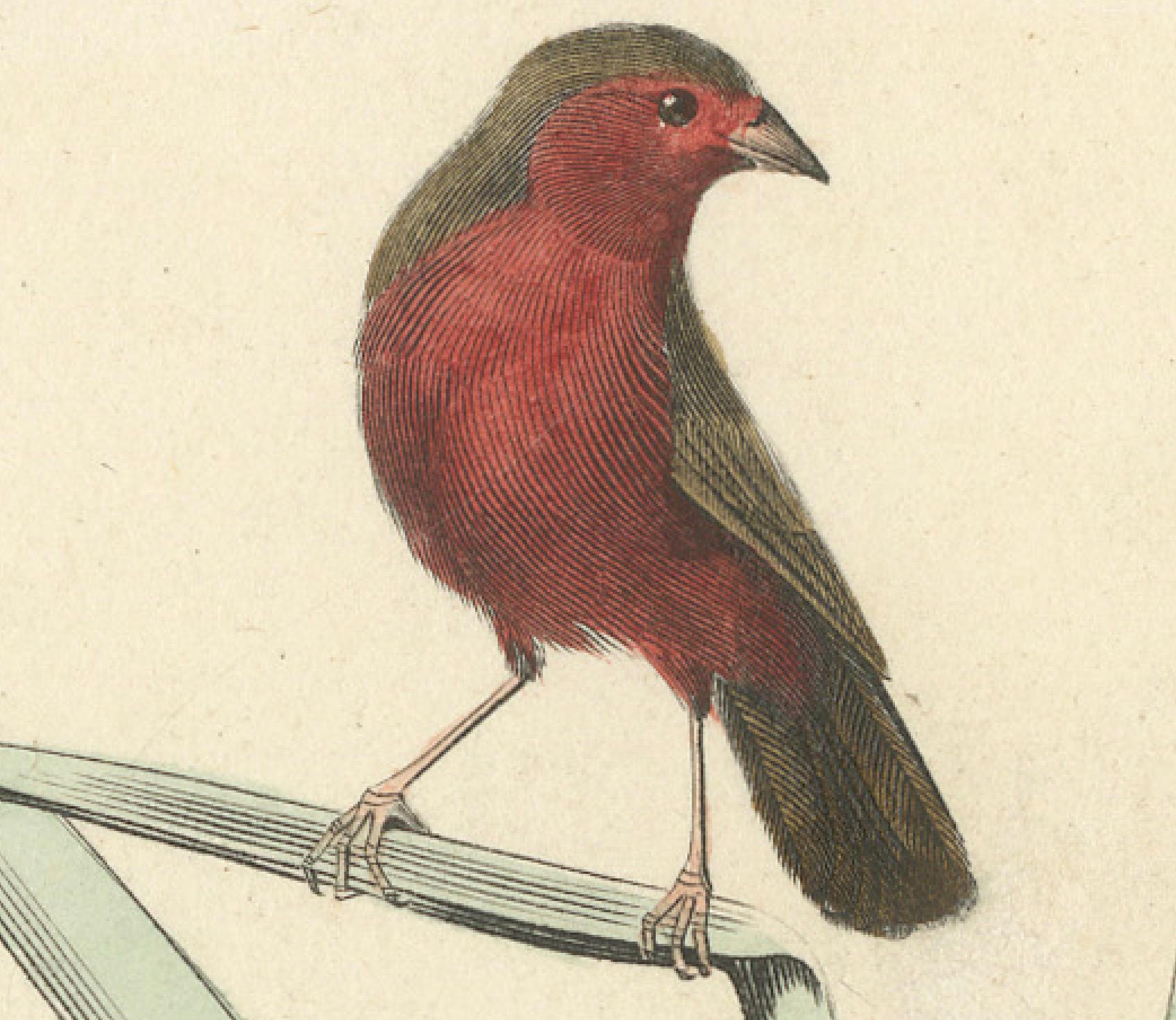
1. **Le Sénégal (Senegal Firefinch)**
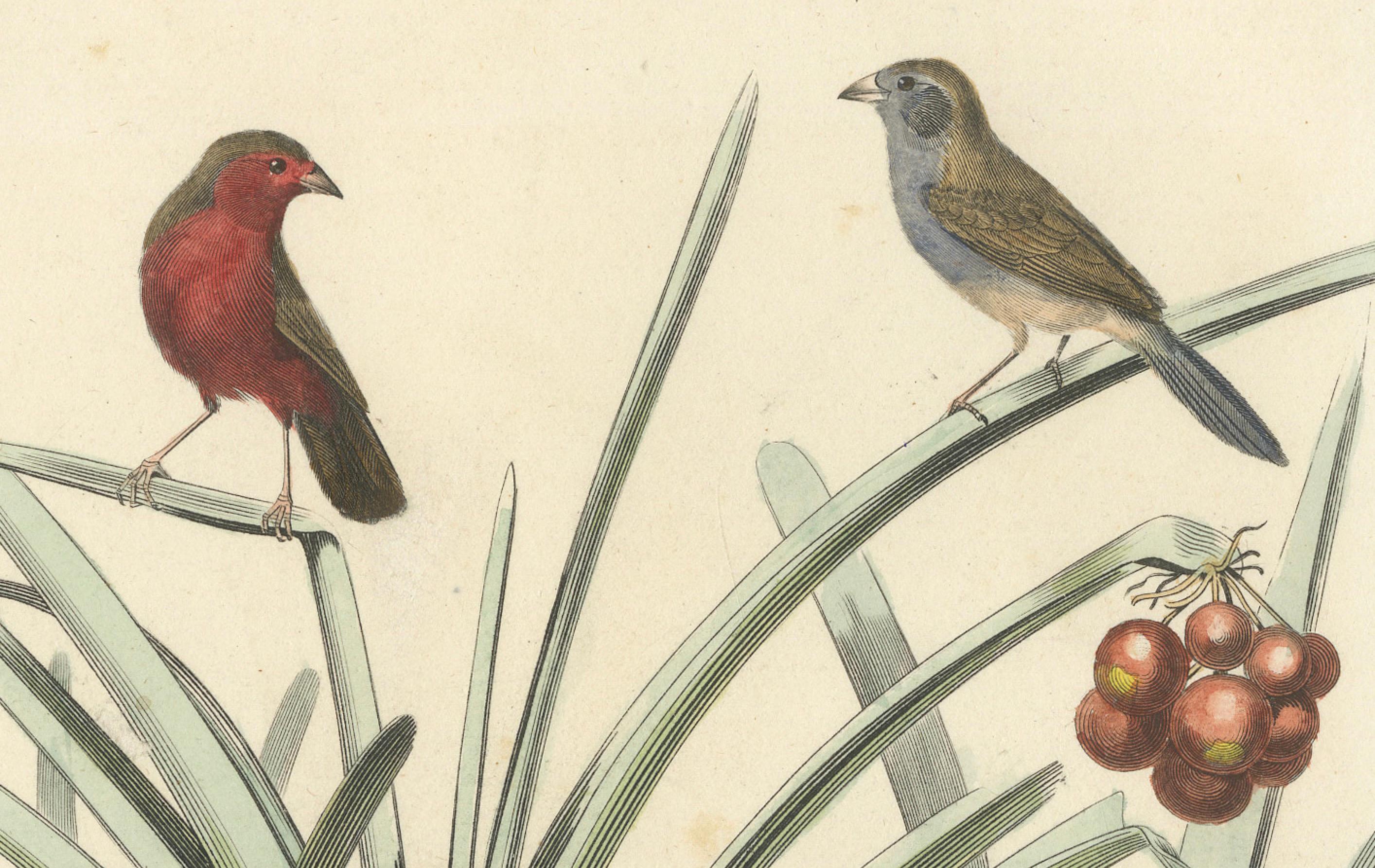
The Senegal Firefinch is a small, vibrant bird native to Africa. Males are characterized by their striking red plumage, which covers most of their body, including the head and chest, contrasting with darker wings and tail. These finches are often found in pairs or small groups, feeding on seeds and insects. Their bright color and social behavior make them a favorite among bird enthusiasts.
2. **Le Bengali (Bengalese Finch)**
The Bengalese Finch, also known as the Society Finch, is a domesticated bird that has been bred for various plumage patterns. This particular engraving depicts the Bengalese Finch with a subtle and delicate color palette, featuring a mix of grey, brown, and white tones. These finches are known for their gentle disposition and adaptability, often kept as pets and bred in captivity. They thrive in social environments, which is why they are called "Society Finches."
Artistic and Historical Context:
This print exemplifies the meticulous artistry of Édouard Travies and the engraving skills of Fournier. The composition is not just scientifically accurate but also artistically pleasing, capturing the essence of the birds' natural habitat. The use of hand-coloring adds a depth and vibrancy that brings the subjects to life, showcasing the high level of craftsmanship typical of the period.
Overall Significance:
The print is a testament to the collaboration between naturalists and artists in the 19th century, aiming to document and celebrate the natural world in both scientific and aesthetic terms. This work serves as a valuable piece of history, reflecting the rich tradition of ornithological illustration and the enduring legacy of Buffon's contributions to natural science.