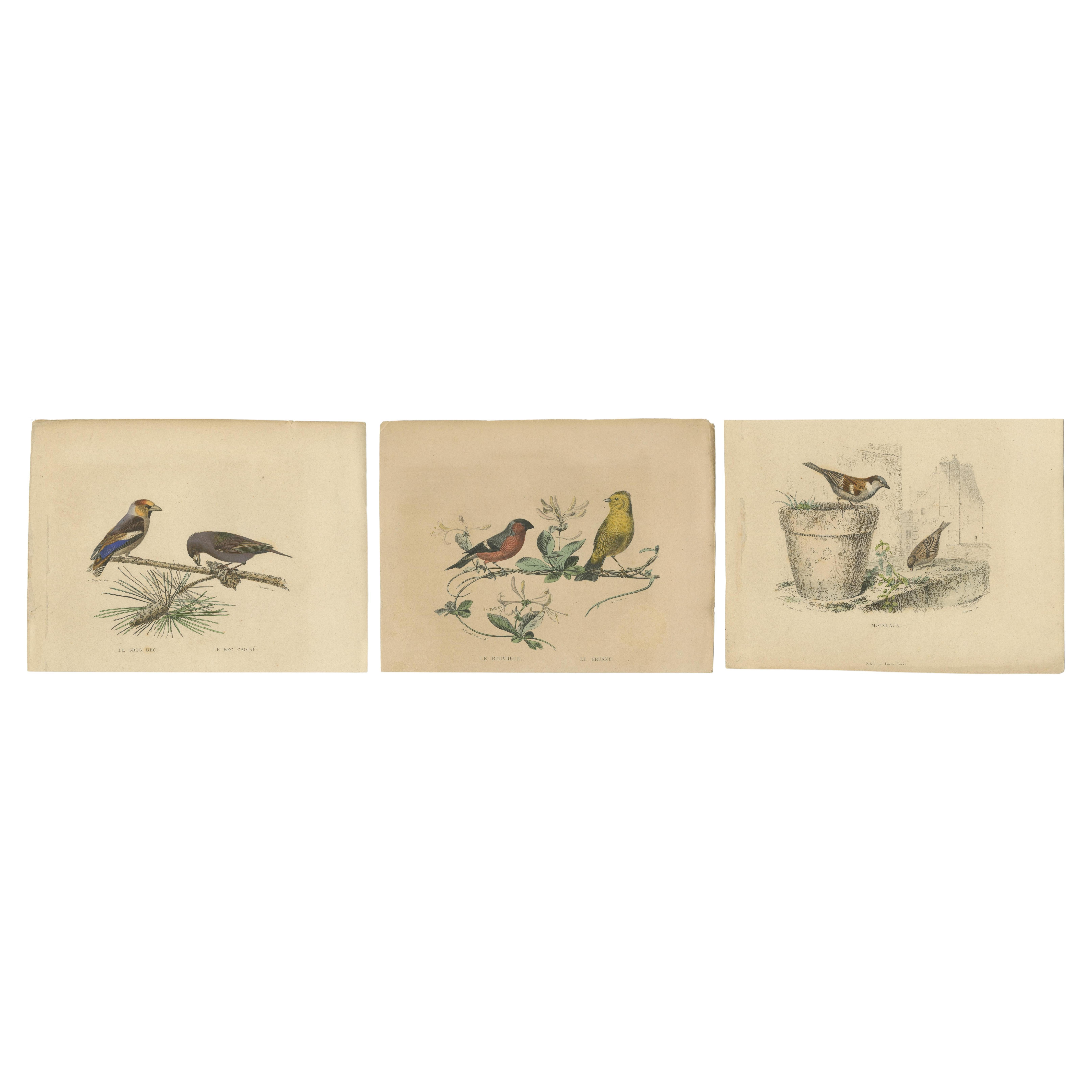
About this sheet
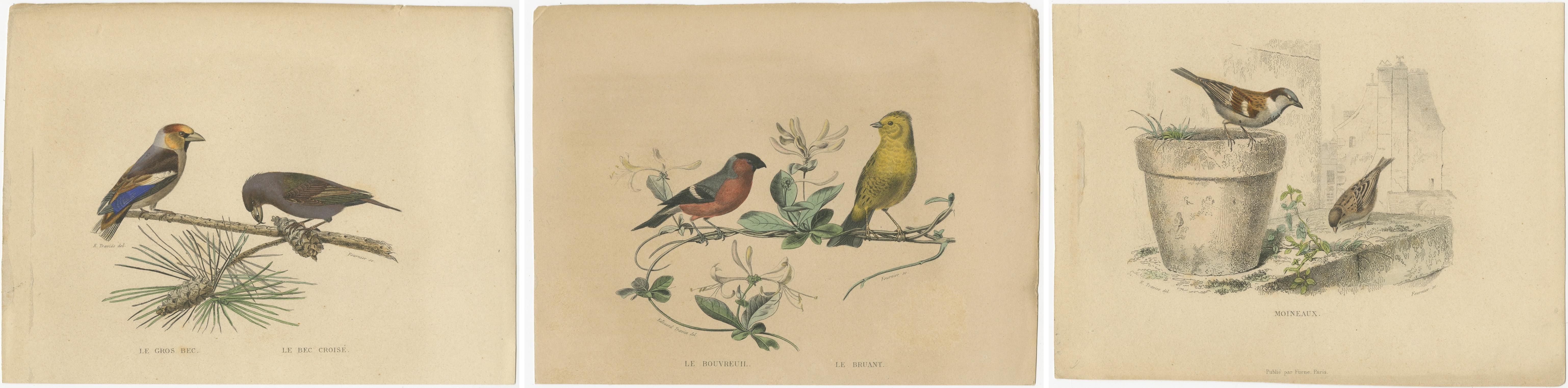
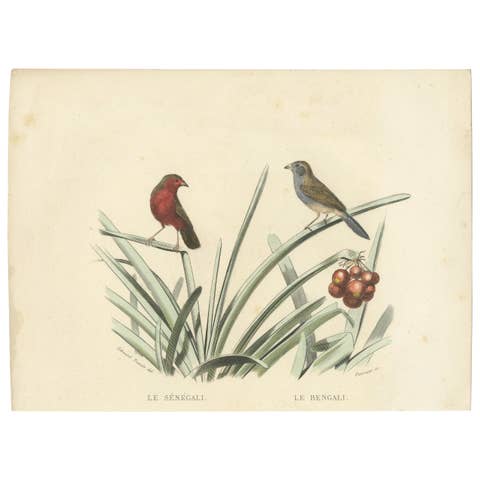
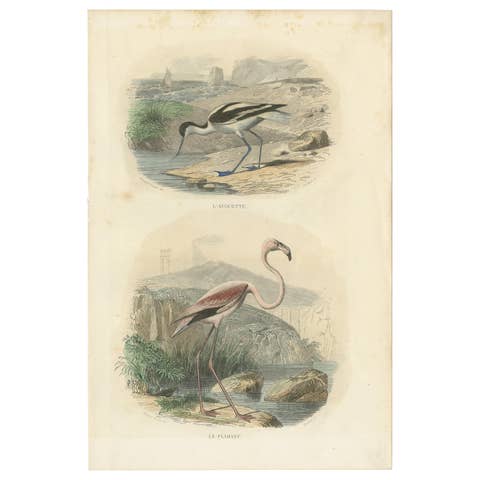
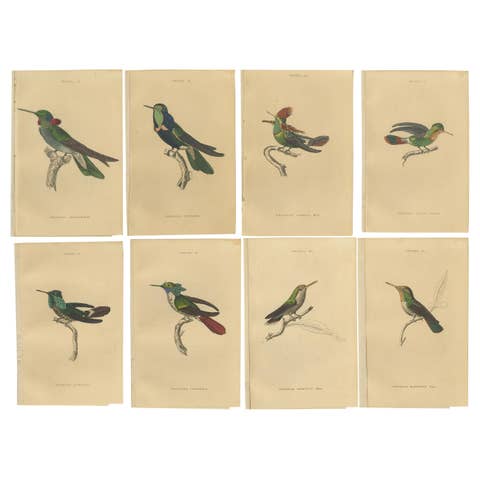
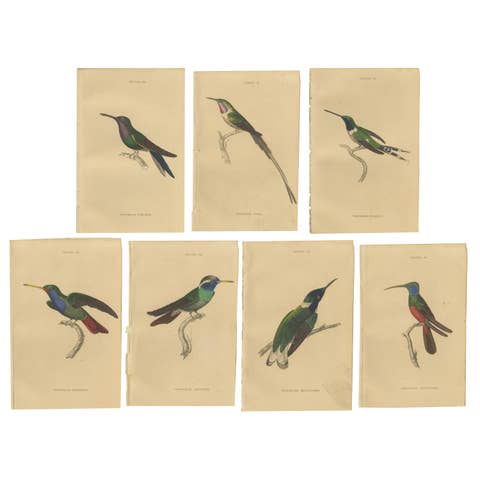
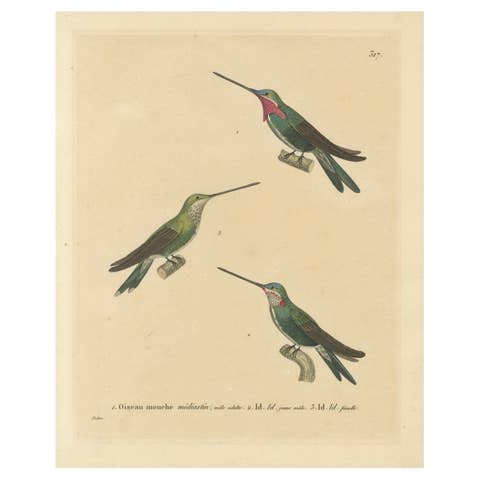
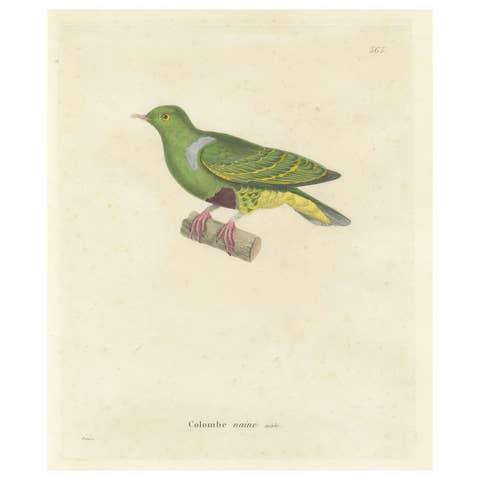
Original hand-colored engravings from around 1837. They are from Buffon's "Natural History of Animals" books. The designer of these beautiful illustrations is Édouard Travies (1809-1869), and they were engraved by Fournier.
Here are the translations and detailed descriptions again, with the historical context included:
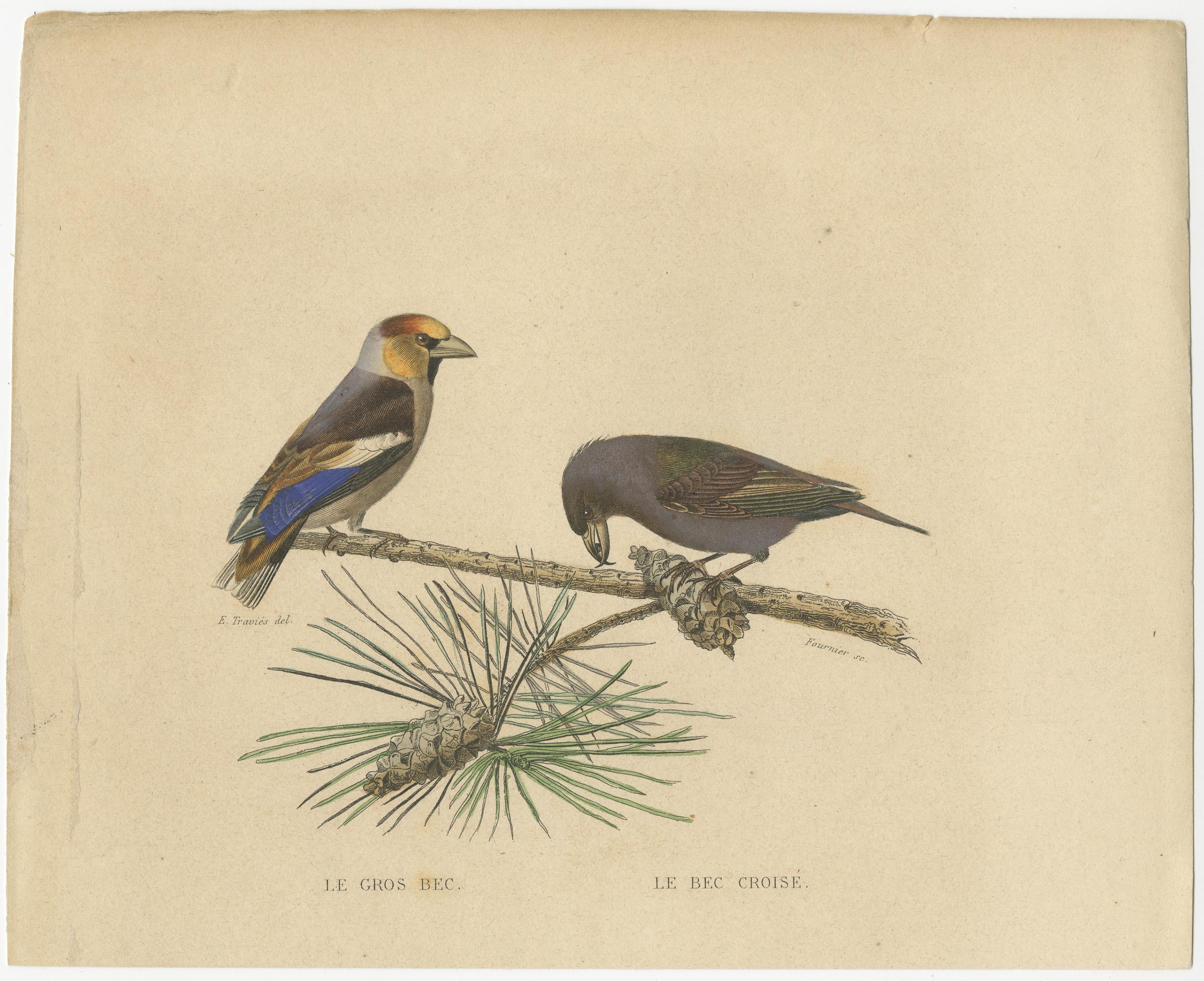
1. **Le gros bec (Hawfinch)**
The Hawfinch is a robust bird with a large, powerful beak designed for cracking hard seeds. It has a striking appearance with a reddish-brown head, black bib, and white-tipped tail. Its wings are a combination of blue and black feathers. This bird is often found in woodlands and gardens where it feeds on seeds, fruits, and buds.
This bird was illustrated by Édouard Travies and engraved by Fournier, showcasing the detailed and vibrant artistry typical of the 19th century hand-colored engravings.
2. **Le bec croisé (Crossbill)**
The Crossbill is characterized by its unique crossed mandibles, used to extract seeds from conifer cones. Males typically exhibit a reddish or orange plumage, while females are more greenish or yellowish. They inhabit pine forests and are known for their specialized feeding habits.
This engraving, like others in the collection, captures the intricacies of the bird's form and function, reflecting the naturalistic and scientific interests of Buffon's era.
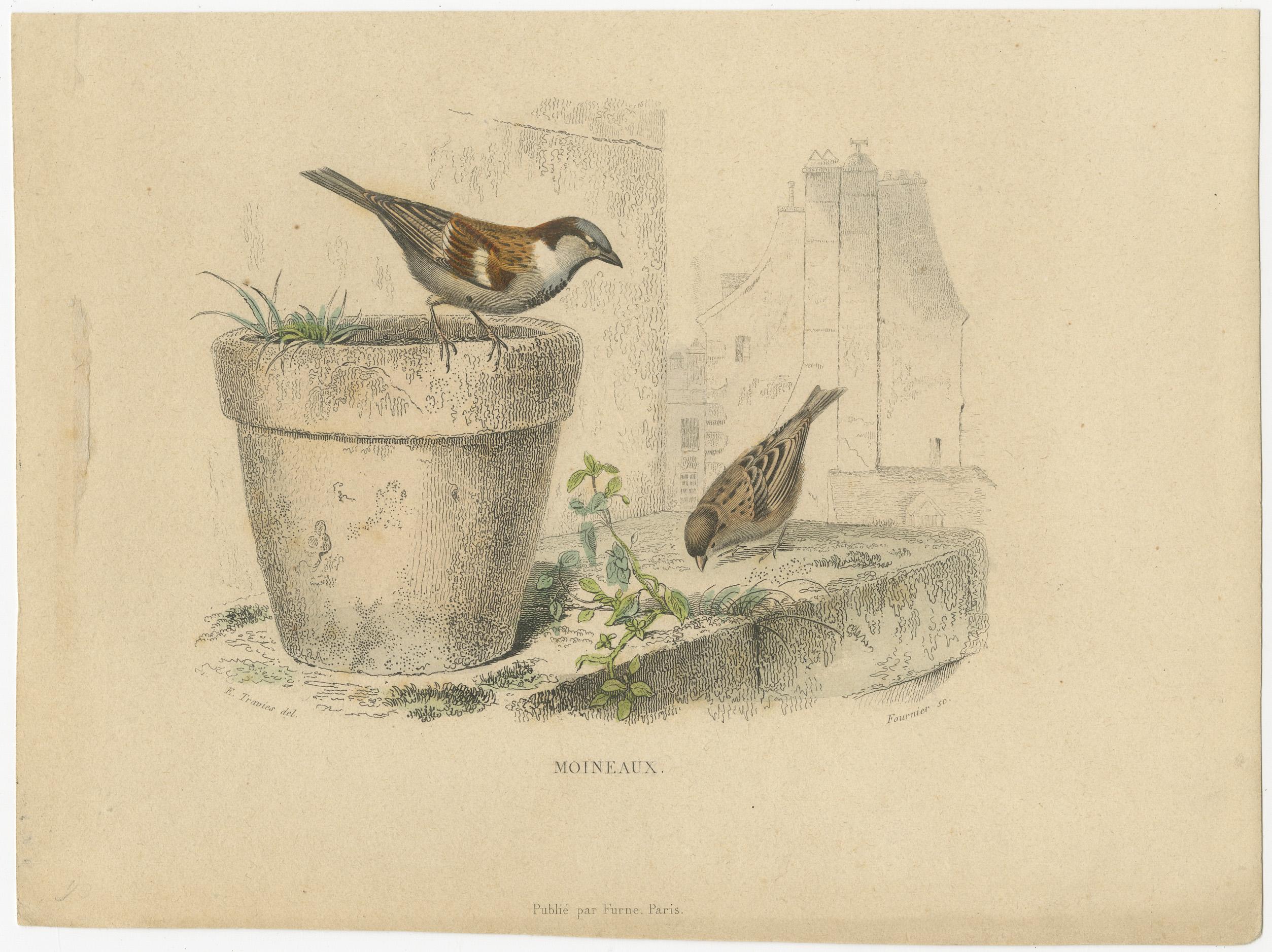
3. **Moineaux (Sparrows)**
Sparrows are small, plump birds with brown and grey feathers. Common in urban and rural areas, they are known for their social behavior and cheerful song. House Sparrows, in particular, have a grey crown, white cheeks, and a black bib in males, with females being more uniformly brown.
These engravings emphasize the everyday beauty of common birds, an aspect celebrated in Buffon's work and brought to life by Travies' detailed illustrations.
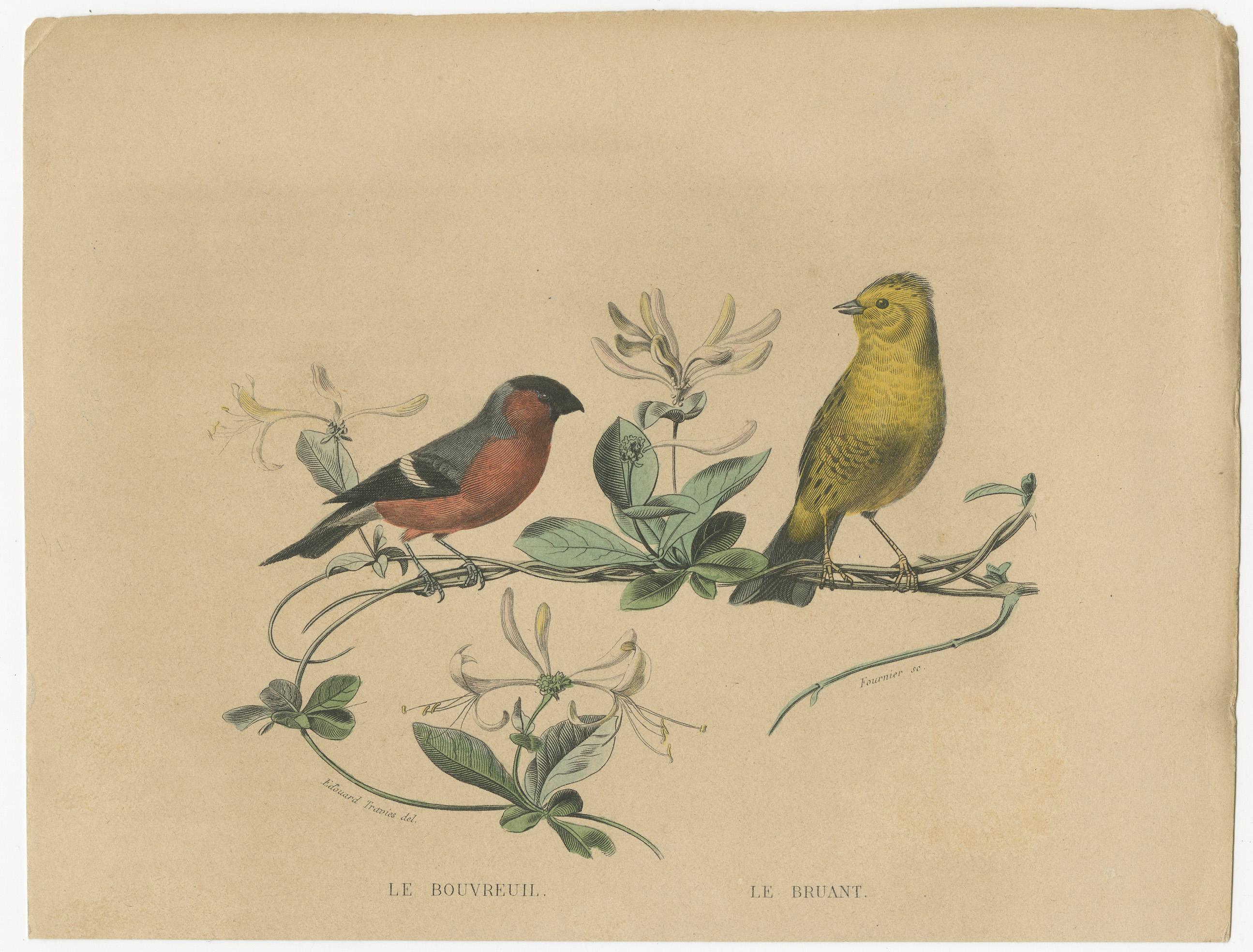
4. **Le bouvreuil (Bullfinch)**
The Bullfinch is a stout bird with bright red underparts and a black cap, wings, and tail in males, while females have a greyish-brown coloration. They are known for their soft, mournful song and preference for feeding on buds of fruit trees.
This print highlights the Bullfinch's vibrant colors and gentle nature, showcasing Travies' skill in capturing both the beauty and the scientific details of the species.
5. **Le bruant (Bunting)**
Buntings are small to medium-sized birds with colorful plumage. The Yellowhammer, a common bunting, has bright yellow underparts, head, and rump with brown streaked wings and back. They inhabit open countryside and are known for their distinctive, repetitive song.
This engraving is a fine example of the detailed and artistic representation of bird species that were important to Buffon's comprehensive study of the natural world.
The prints were part of a series published by Furne in Paris, contributing to Buffon's "Natural History of Animals." The collaboration between Buffon, Travies, and Fournier resulted in a visually stunning and scientifically valuable collection of illustrations.
These engravings not only serve as beautiful works of art but also as historical documents that reflect the scientific and artistic endeavors of the 19th century.