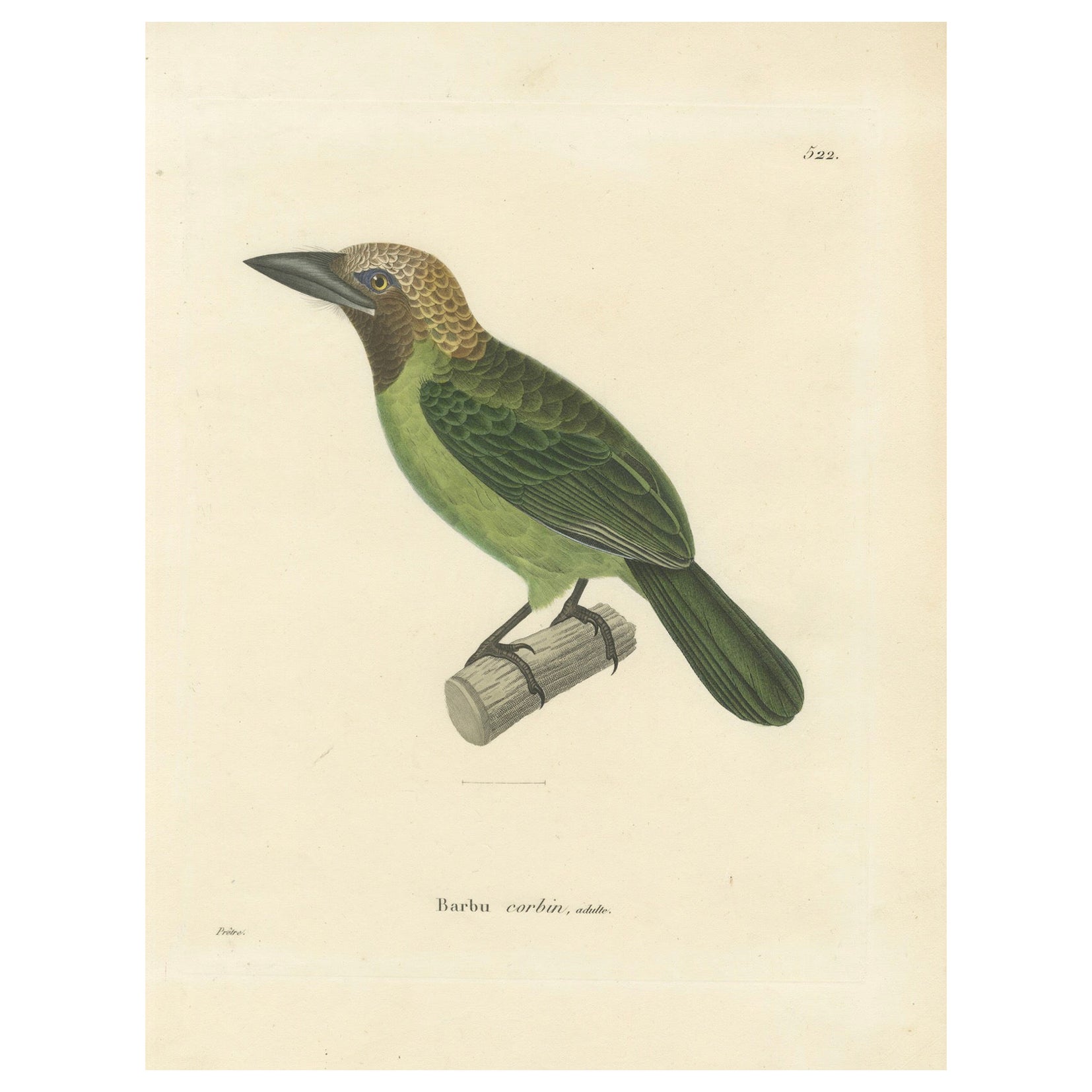
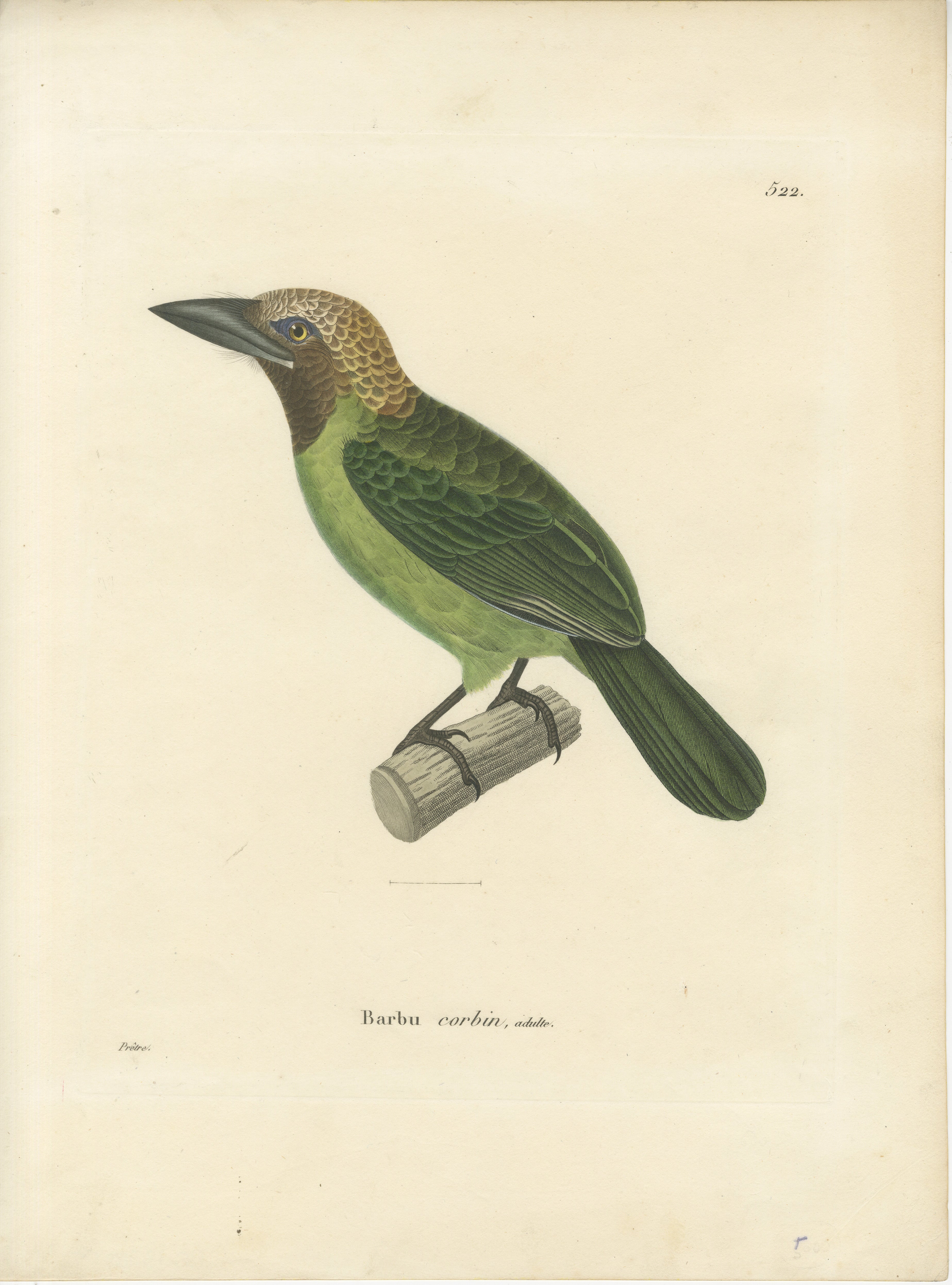
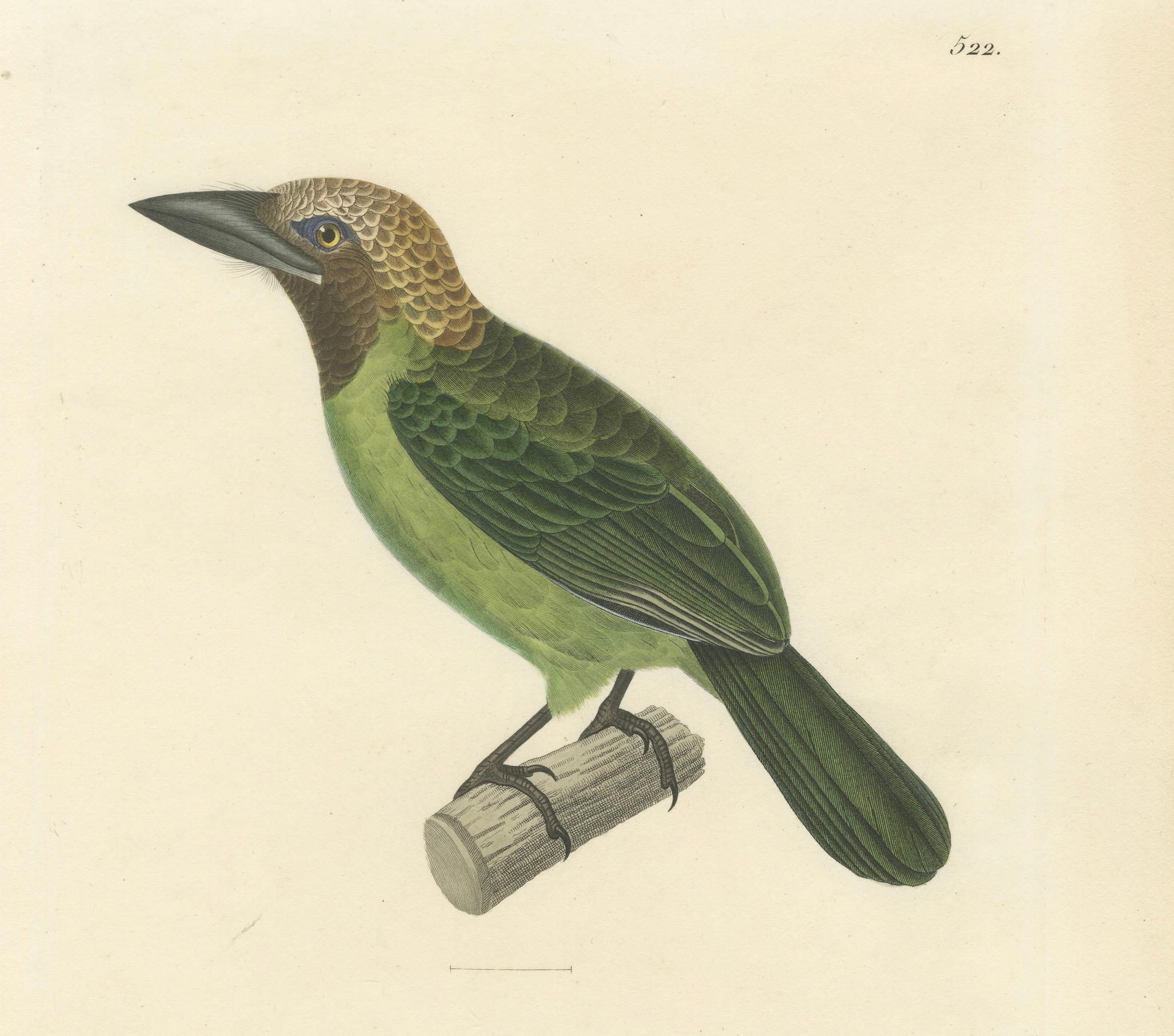
Ornithological Illustration of the Adult Corbin Barbet (Barbu corbin), 1838
€ 540
One of a kind: this is the sheet in the photographs. Ships from Langweer, the Netherlands.
Date
1838
Sheet size
35 × 26 cm (13.8 × 10.2 in)
Reference
BG-13750-7
Condition
very good, given age. Some light soiling. General age-related toning and/or occasional minor defects from handling. Please study scan carefully.
About this sheet
This illustration features a bird labeled "Barbu corbin, adulte," which translates to "Adult Corbin Barbet."
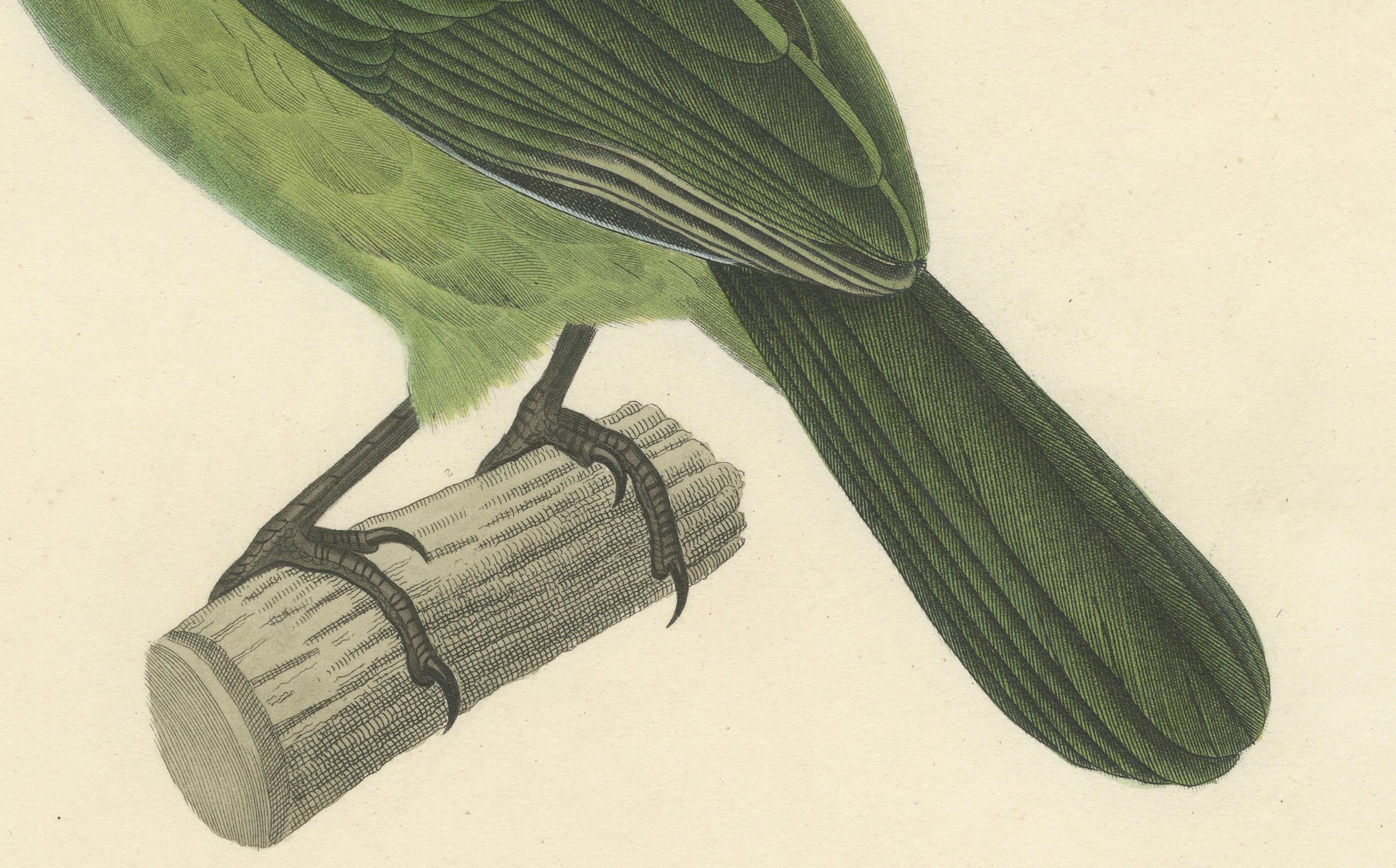
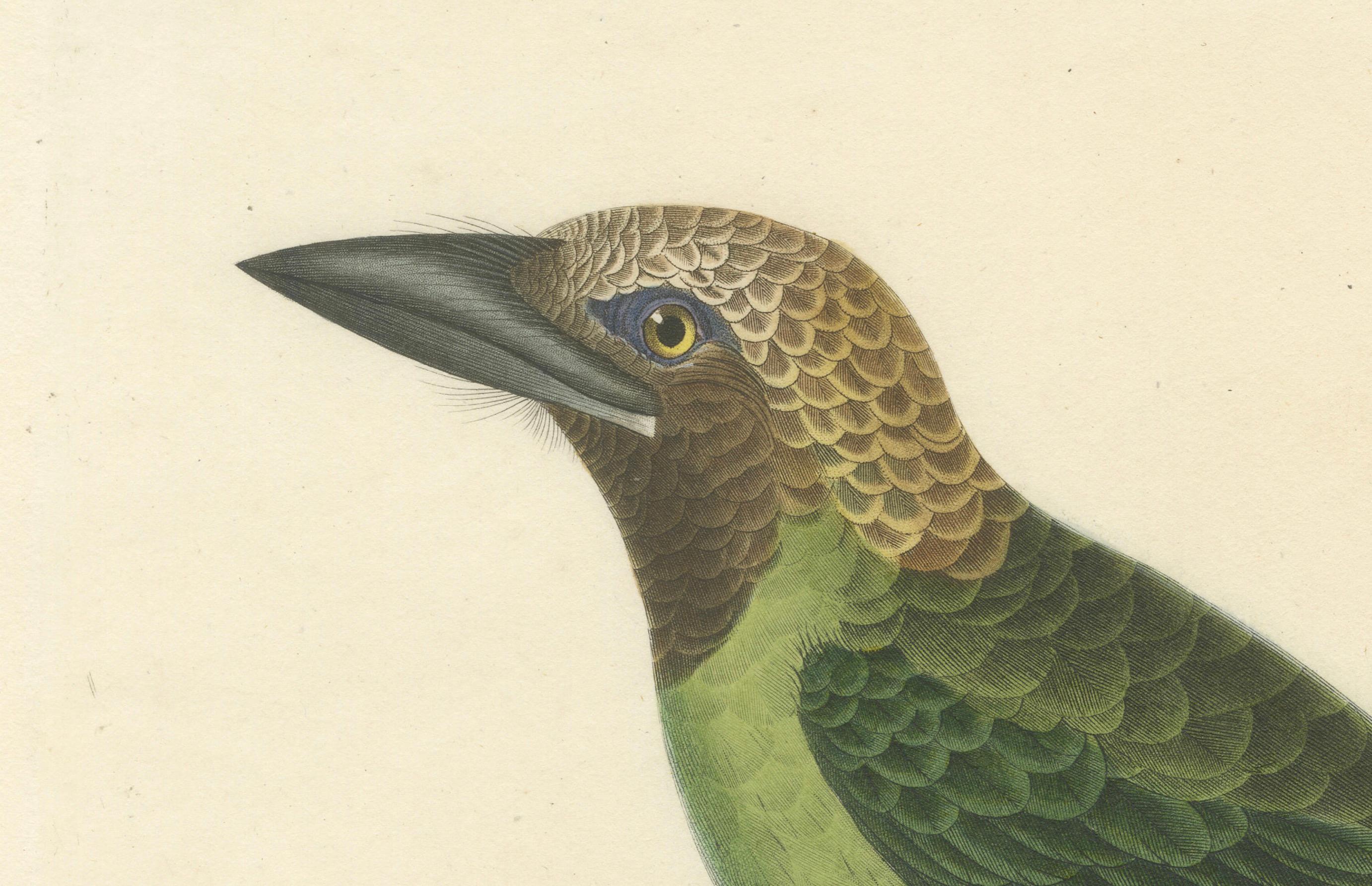
Description of the Print: - The bird is perched on a small branch, showcasing its distinct features. It has a robust, black beak and predominantly green plumage with detailed scaling patterns on its head and chest. The feathers on its wings and tail are darker green, providing a striking contrast. The illustration captures the texture and coloration of the bird's feathers with great precision, typical of the high-quality ornithological prints from this period.
About the Artists:
**Nicolas Huet (1770–1830)**: - A renowned French natural history illustrator. - Known for his precise and lifelike depictions of birds and other animals. - Contributed significantly to various ornithological publications of his time.
**Jean Gabriel Prêtre (1768–1849)**: - A Swiss-born natural history painter who worked primarily in France. - Recognized for his detailed and accurate representations of zoological and botanical subjects. - Collaborated with many leading naturalists and illustrated numerous scientific works.
Habitat of Barbets: - Barbets are typically found in tropical and subtropical regions. They inhabit forests, woodlands, and scrub areas, thriving in environments with dense foliage and abundant fruiting trees. - The specific label "Barbu corbin" suggests it might refer to a particular barbet species, though without a precise scientific name, it is challenging to determine its exact range. Generally, barbets are found in Africa, Asia, and tropical America, often in areas that provide ample food resources such as fruits and insects.
This print, part of the "Nouveau recueil de planches coloriées d'oiseaux" published in 1838, exemplifies the high level of detail and scientific accuracy characteristic of Huet and Prêtre's work. Their illustrations contributed significantly to the study and appreciation of ornithology in the 19th century.