Old Original Engraving of the Female The Black-faced Bunting, 1794
€ 440
Original antique · The actual sheet photographed · Certificate of authenticity on request · Sold unframed · Worldwide shipping from € 15 (rates)
Date
1794
Sheet size
30 × 24 cm (11.8 × 9.4 in)
Condition
Good
Reference
BG-13636-6
What the condition grades mean
Excellent
Bright and clean, with no faults worth mentioning.
Very good
Only light signs of age, such as faint toning.
Good
Normal signs of age for a sheet of this period: toning, some foxing, small marks or neat old repairs.
Fair
Clear faults such as staining, tears or repairs, priced to match.
Every fault we see is written in the condition note, and the whole sheet is shown uncropped in the photos.
Condition
Good, patina rich original hand-colored engraving. General age-related toning / dirt around the edges from handling. Edges rough with small tears and folds, especially the corners. Study scans carefully.
About this sheet
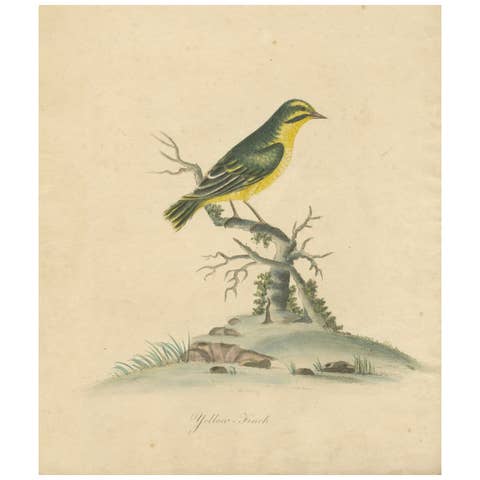
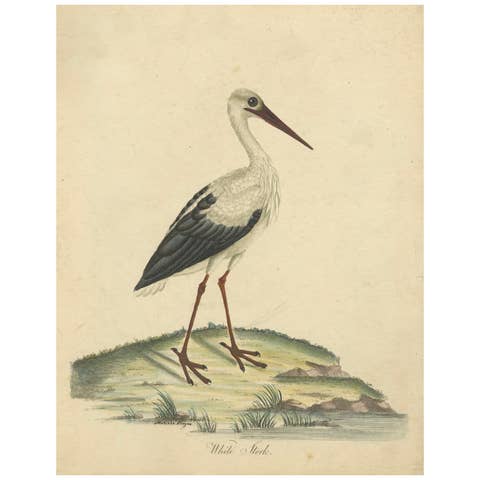
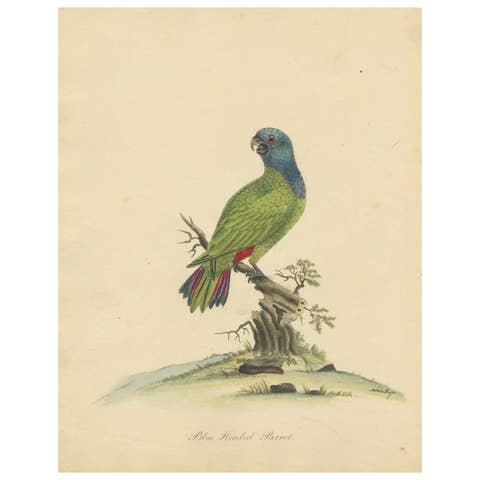
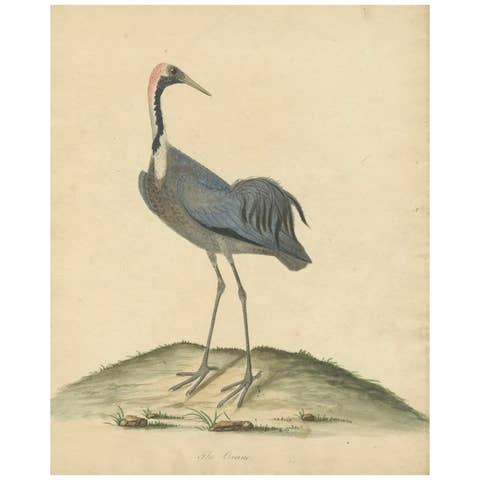
"Subtle Beauty: The Black-faced Bunting (Female)" This hand-colored copperplate engraving is a piece from the illustrious collection by William Hayes and Matilda Hayes, known for their detailed bird illustrations in "Portraits of Rare and Curious Birds" from Osterly Park. This particular engraving was first published in the 1794 edition and subsequently included in the 1817 edition, which was released to benefit the Hayes family.
The image features a female Black-faced Bunting, perched delicately on a twisted branch. Her plumage is a study in muted elegance, with intricate patterns of brown and beige feathers, detailed with subtle crescent-shaped markings and a soft, understated gray that graces her chest and underparts. Her namesake black face is captured with a gentle fidelity, highlighting the distinctive facial markings of this species.
The bunting's stance is one of quiet observation, set against a softly rendered backdrop that suggests a peaceful, grassy knoll. The simplicity of the setting serves to emphasize the natural beauty and the fine details of the bird's appearance. The paper, bearing the marks of time, contributes an antique charm to the engraving, enhancing its historical and artistic value. This work is a celebration not only of the artistry of the Hayes family but also of the understated beauty of the natural world, preserved through the ages in this serene portrayal.