Late 18th-century Hand-Colored Copperplate Engraving of the Yellow Finch, 1794
€ 440
Original antique · The actual sheet photographed · Certificate of authenticity on request · Sold unframed · Worldwide shipping from € 15 (rates)
Date
1794
Sheet size
30 × 24 cm (11.8 × 9.4 in)
Condition
Good
Reference
BG-13636-5
What the condition grades mean
Excellent
Bright and clean, with no faults worth mentioning.
Very good
Only light signs of age, such as faint toning.
Good
Normal signs of age for a sheet of this period: toning, some foxing, small marks or neat old repairs.
Fair
Clear faults such as staining, tears or repairs, priced to match.
Every fault we see is written in the condition note, and the whole sheet is shown uncropped in the photos.
Condition
Good, patina rich original hand-colored engraving. General age-related toning / dirt around the edges from handling. Edges rough with small tears and folds, especially the two top corners. Study scans carefully.
About this sheet
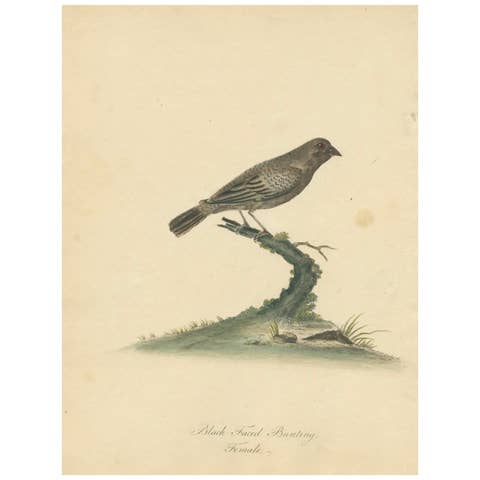
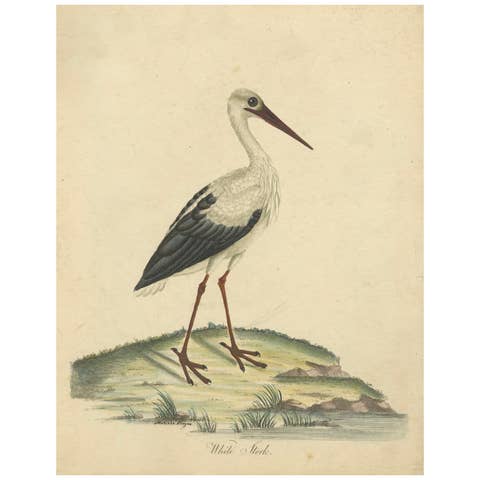
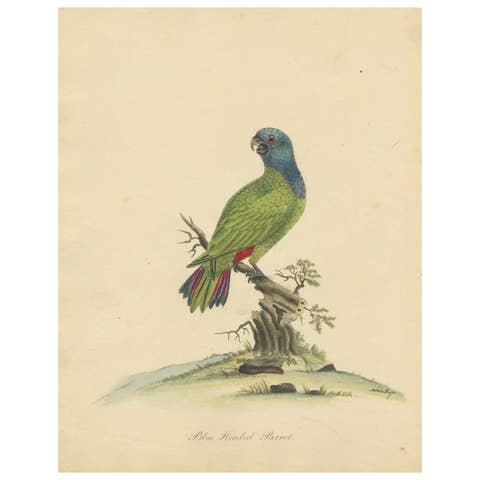
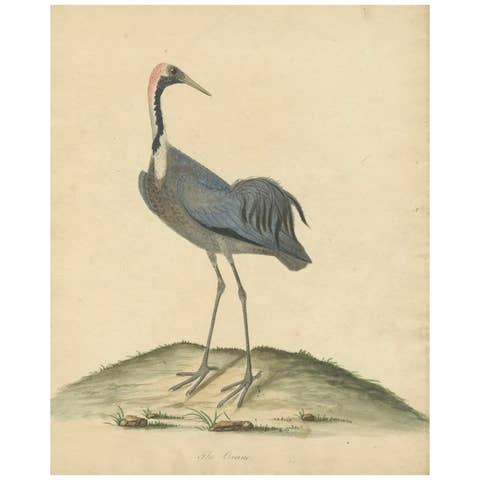
Featured in this late 18th-century hand-colored copperplate engraving is the Yellow Finch, a charming depiction from the series by William Hayes and Matilda Hayes.
This illustration is part of their accomplished work found in "Portraits of Rare and Curious Birds" that graced the collection at Osterly Park and was first published in 1794 by Bulmer of London. It also appeared in a subsequent edition in 1817 to support the Hayes family.
This Yellow Finch is portrayed in mid-song atop a barren branch, its body a symphony of vibrant yellow hues accented with olive-green markings. The bird's attentive gaze and open beak suggest a moment captured in the midst of its melodious call. It stands against a backdrop of serene landscape, with soft brush strokes suggesting grass and stones, providing a naturalistic setting that complements the bird's bright plumage.
The craftsmanship of the Hayes family is evident in the fine detail and delicate shading of the feathers, capturing the essence of the Yellow Finch with scientific accuracy and artistic flair. The aging paper on which the bird is immortalized lends an air of antiquity, bridging centuries of ornithological study and appreciation. This piece not only showcases the artistic talent of the period but also serves as a valuable record of the bird species that were admired and studied by naturalists and enthusiasts of the time..