About this sheet
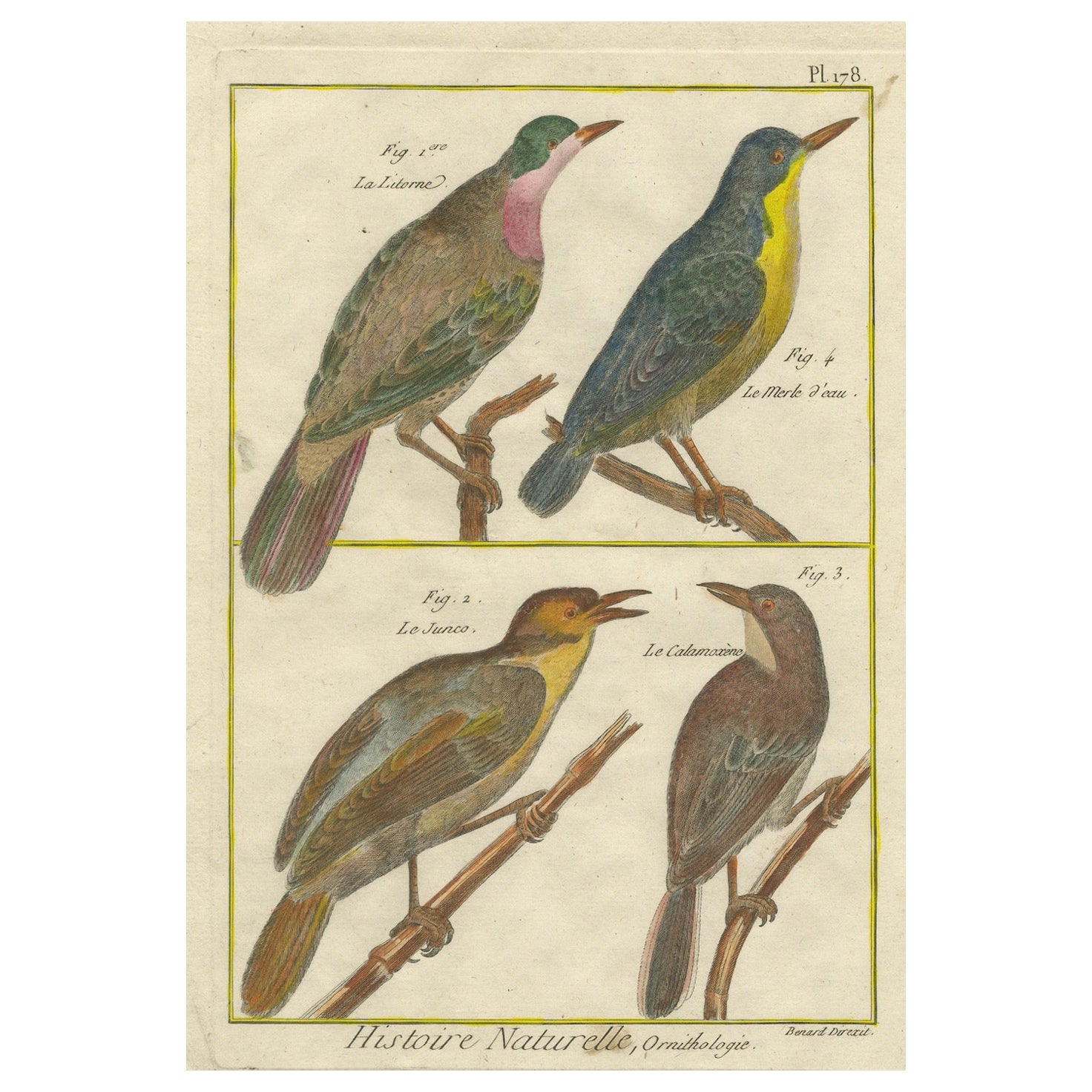
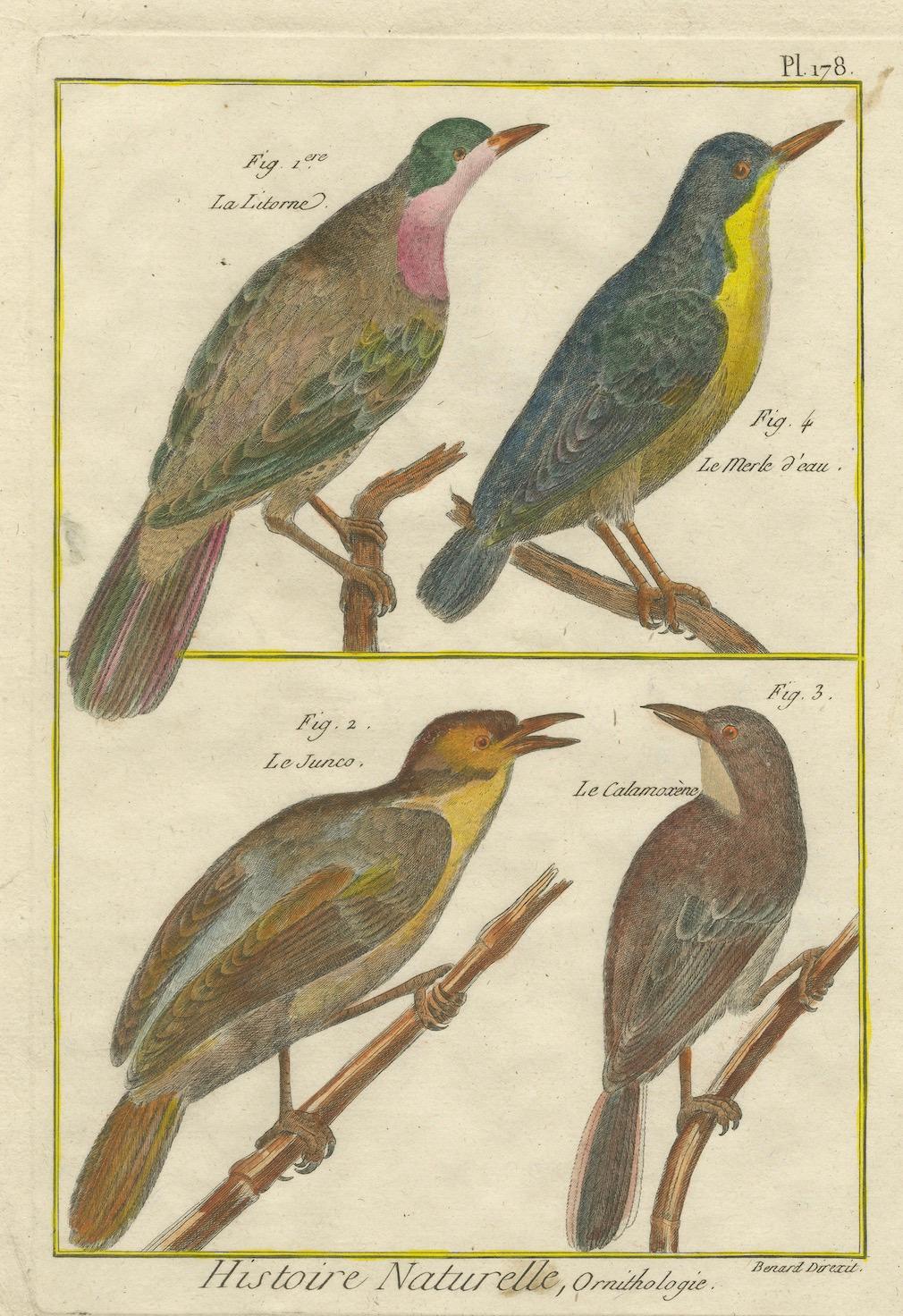
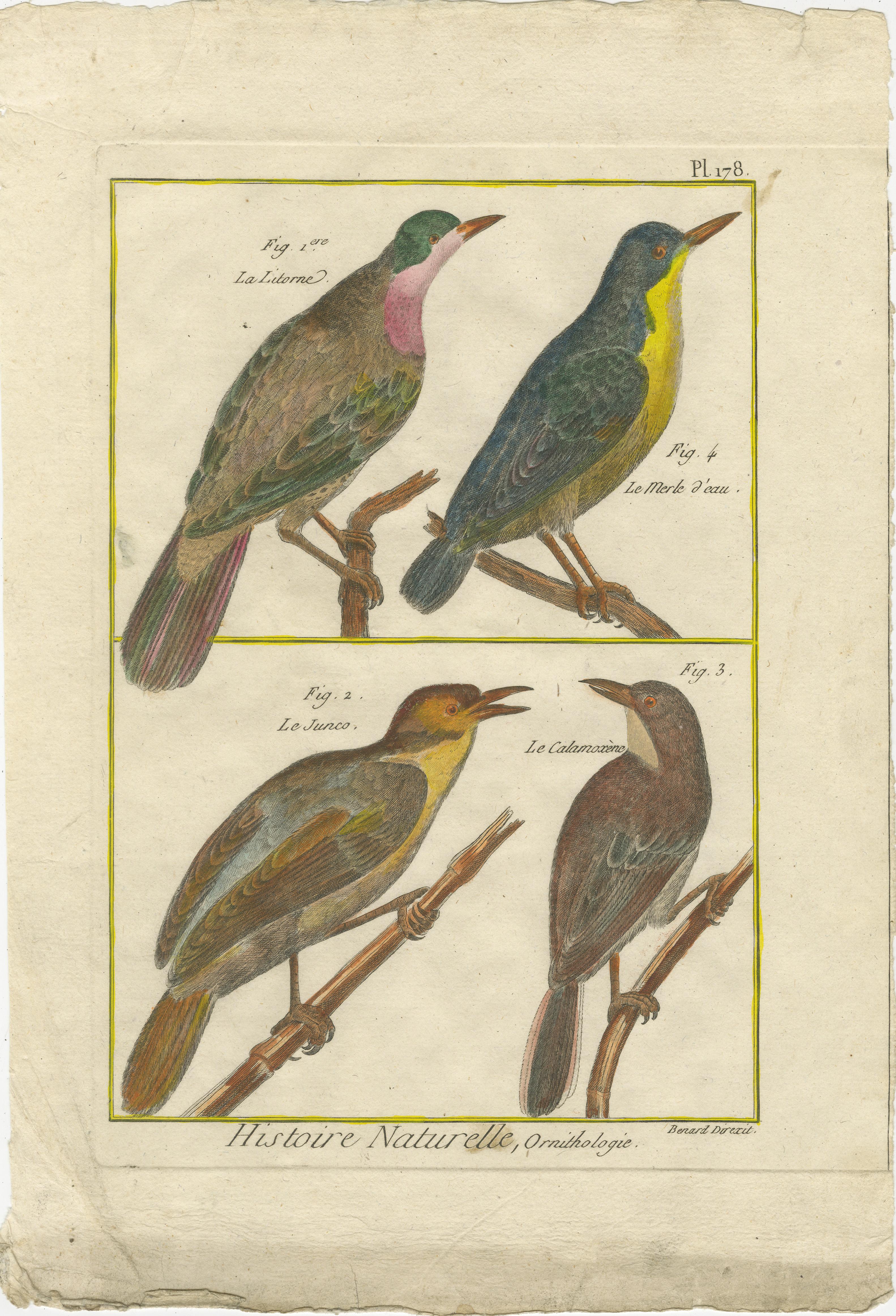
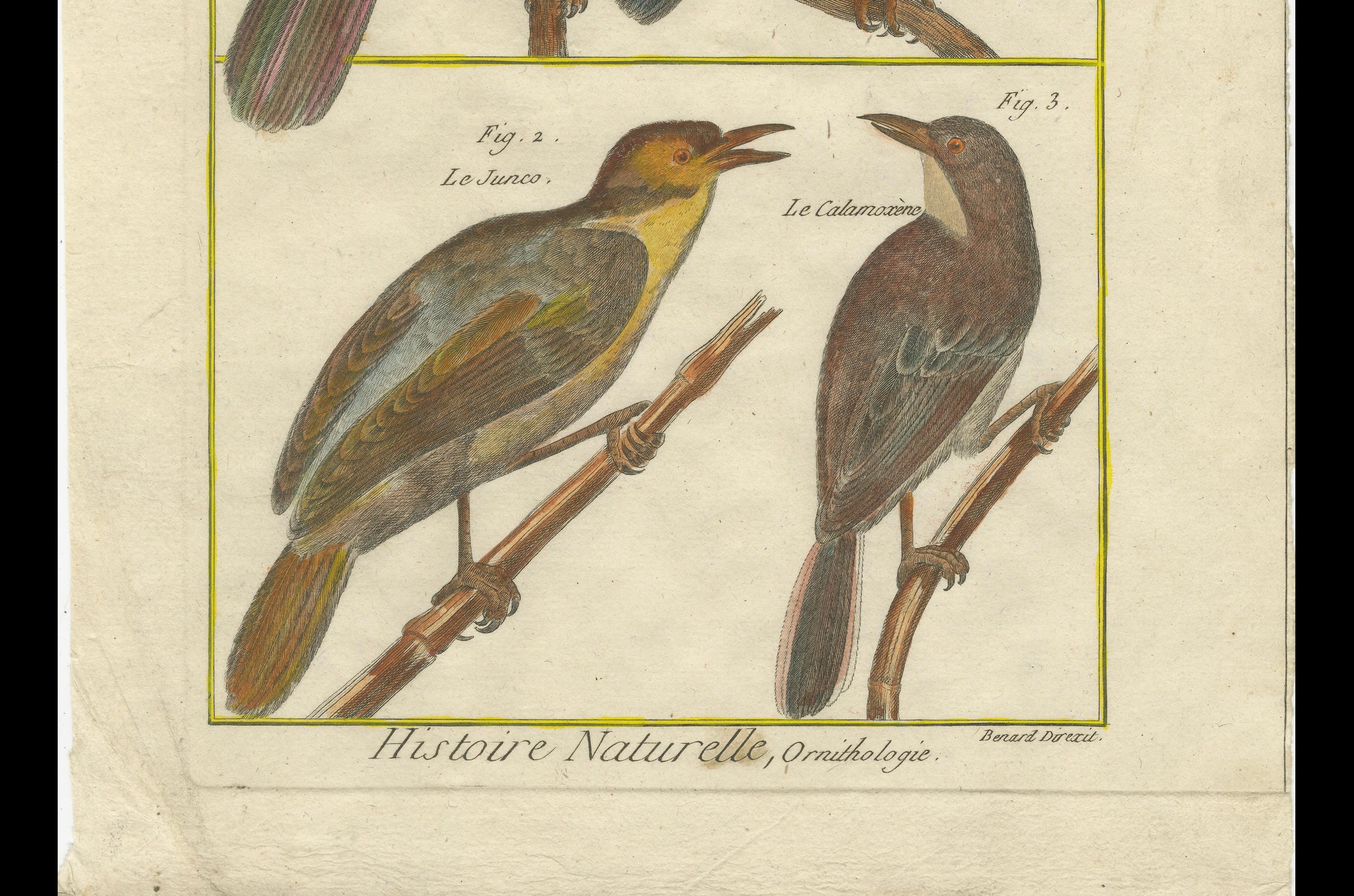
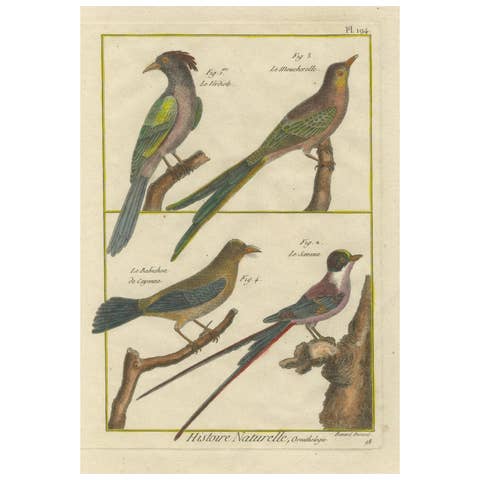
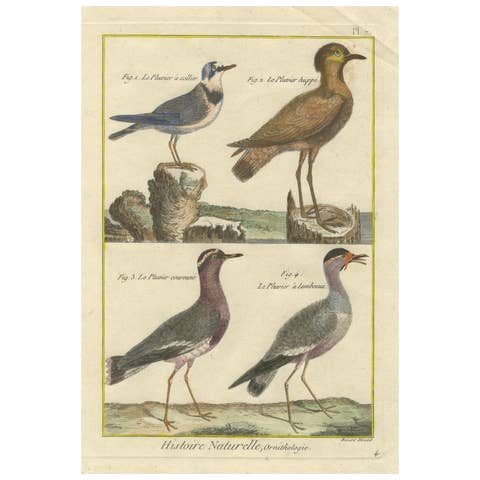
This hand-colored engraving is attributed to Robert Benard (1734-1786) and originates from the *Encyclopédie Méthodique*, published around 1790. It showcases four different birds, depicted with meticulous engraving techniques and enhanced by vibrant hand coloring. This was typical for Enlightenment-era natural history illustrations, providing both scientific value and aesthetic appeal.
Birds Depicted (Translation and Descriptions):
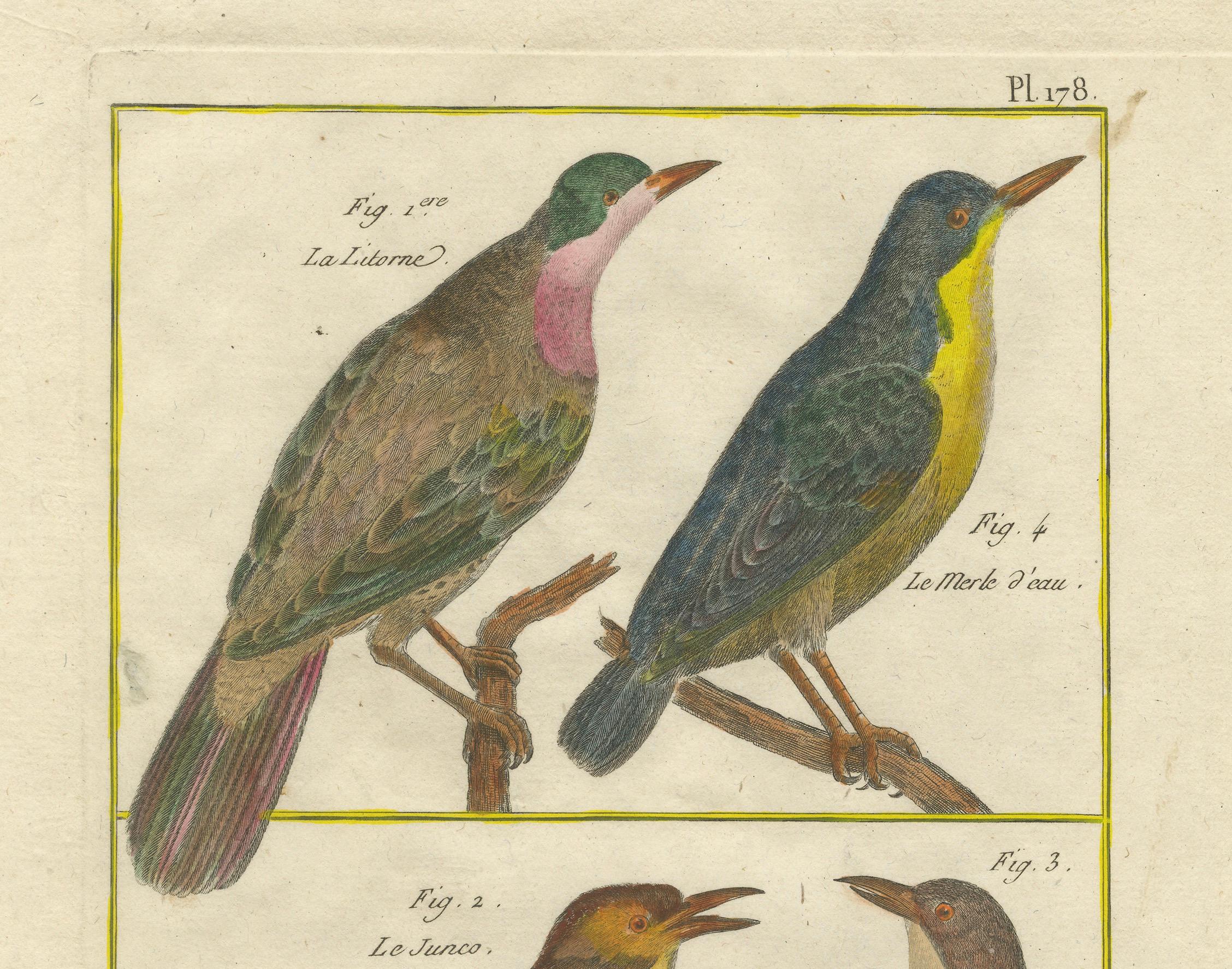
1. Fig. 1: La Litorne (Fieldfare):
- The Fieldfare (*Turdus pilaris*) is a migratory thrush species native to Europe and Asia. The bird is illustrated with distinct coloration, showcasing a brown back, grey head, and patches of pink on its chest. It inhabits woodlands, pastures, and parks and can be seen migrating to southern Europe during the winter. The hand-colored details in the engraving emphasize its fine feather texture.
2. Fig. 2: Le Junco (Dark-eyed Junco):
- This bird refers to the *Junco hyemalis*, commonly known as the Dark-eyed Junco. It is primarily found across North America, especially in coniferous and mixed forests. The engraving illustrates its subtle gray and brown plumage, and the bird is perched, with its beak slightly open, suggesting song. These birds are known for their migratory habits, often seen in the winter in North America.
3. Fig. 3: Le Calamoxine (Possible Reed Warbler):
- The bird in figure 3 seems to resemble a reed warbler (*Acrocephalus* species), although the term "Calamoxine" might be an antiquated or regional name. Reed warblers are small, brownish birds often found in wetlands, especially around reed beds. They are known for their melodious song and are spread across Europe, Asia, and Africa. The engraving’s detailed approach to the bird's feathers, tail, and posture reflects its typical perching behavior in marshy environments.
4. Fig. 4: Le Merle d'eau (Water Blackbird or Dipper):
- This bird is likely the Dipper (*Cinclus cinclus*), known for its unique ability to dive into streams and rivers in search of insects. Dippers are found in Europe, North Africa, and parts of Asia, typically inhabiting fast-flowing rivers and streams. The distinctive yellow and black plumage, as shown in the engraving, captures the bird's vibrant appearance. The artist emphasizes the contrast between the bird’s dark and bright tones, a characteristic feature of dippers.
Current Habitat and Conservation Status:
- Fieldfare: Common across Europe and Asia, often found in temperate woodlands and agricultural lands. It migrates southward in winter and is not currently under significant threat.
- Dark-eyed Junco: Widely distributed across North America, especially in forested regions. It is a common bird with stable populations.
- Reed Warbler: Inhabits reed beds and wetlands across Europe, Asia, and Africa. Most species have stable populations, although habitat destruction can pose a threat.
- Dipper: Found near clean, fast-flowing rivers in Europe, North Africa, and Asia. It is a bird with stable populations but can be affected by water pollution.
Printmaking Technique:
As with the first print, the copperplate engraving technique was used here. The fine, detailed lines were incised into a copper plate, ink was applied, and then the plate was pressed onto paper, transferring the ink from the engraved lines. After printing, the images were hand-colored with watercolor paints to bring out the exotic and specific characteristics of the birds, making them both scientifically useful and visually appealing to readers of the *Encyclopédie Méthodique*.
This particular piece exemplifies how 18th-century naturalists documented species they encountered or learned about from explorers. By presenting these birds in hand-colored engravings, they contributed significantly to public knowledge of distant ecosystems and bird species not commonly seen by European audiences at the time.