About this sheet
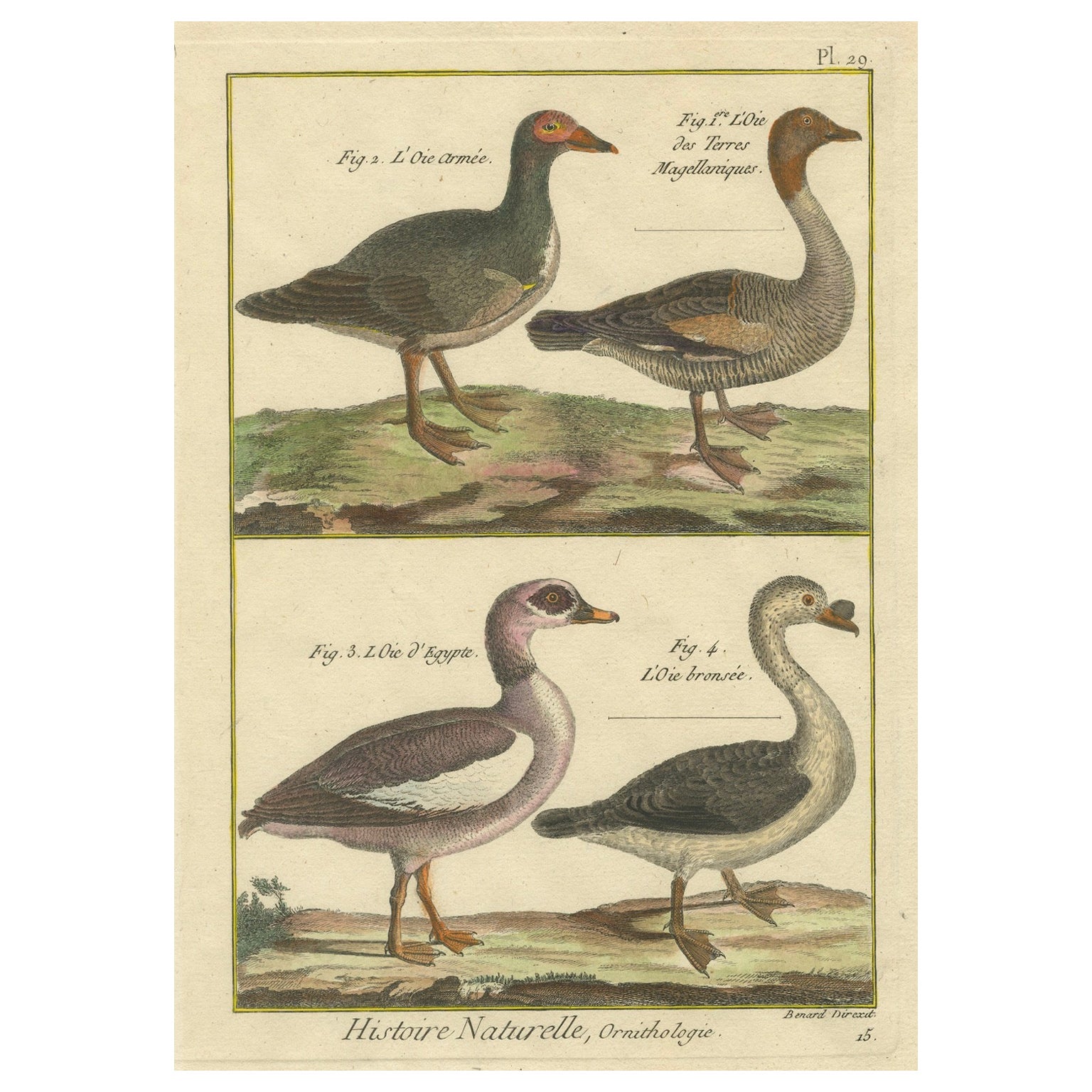
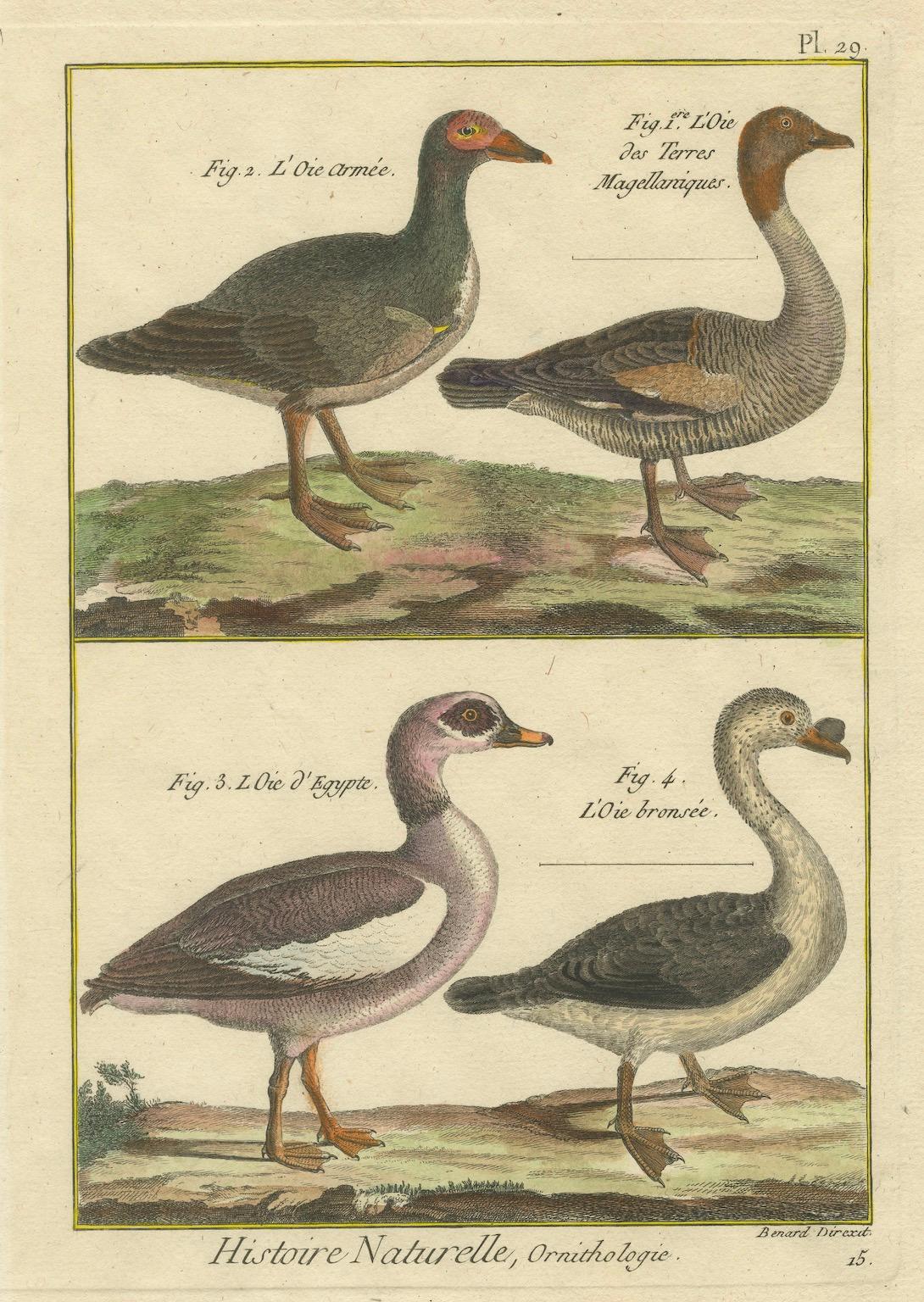
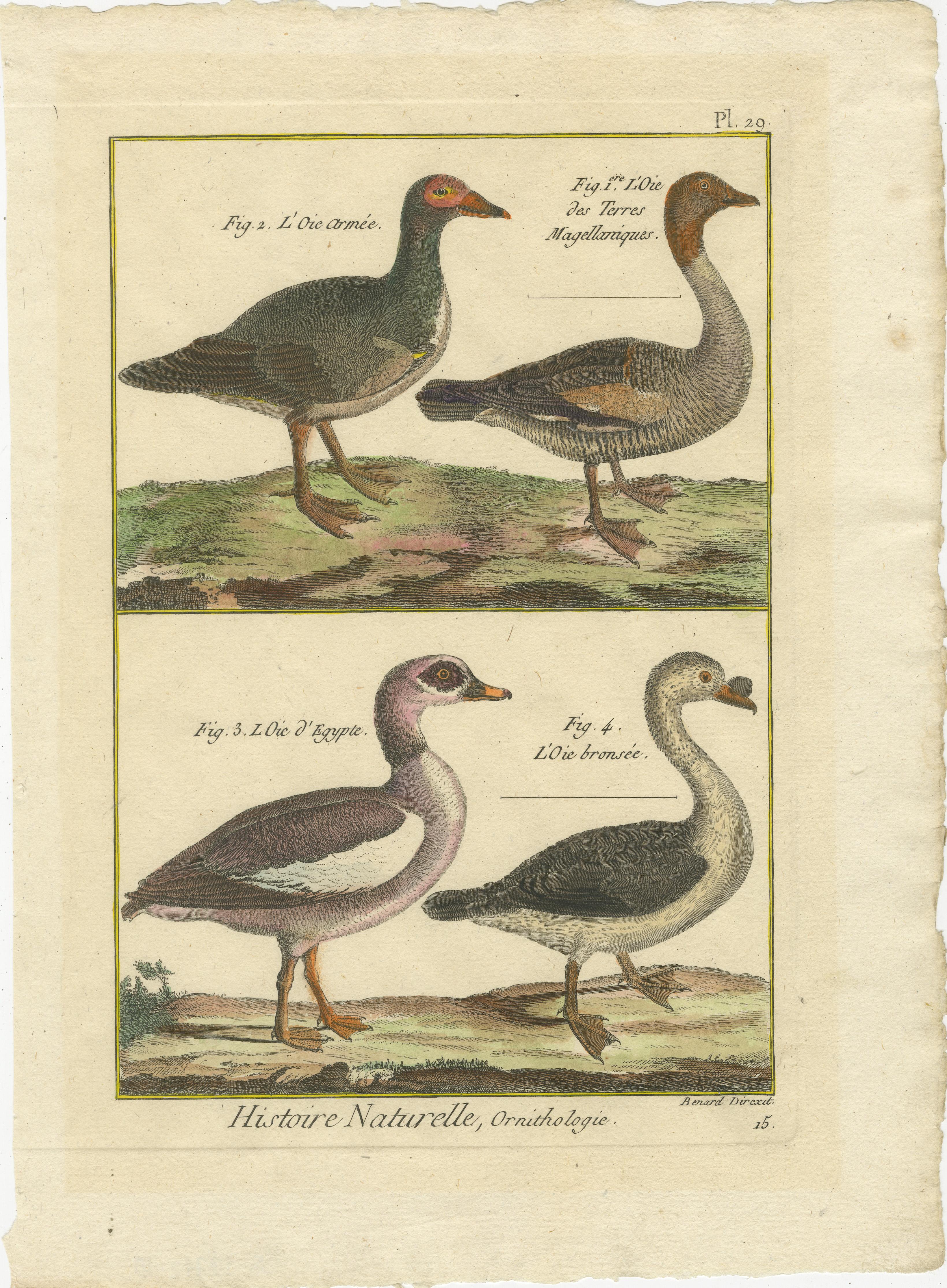
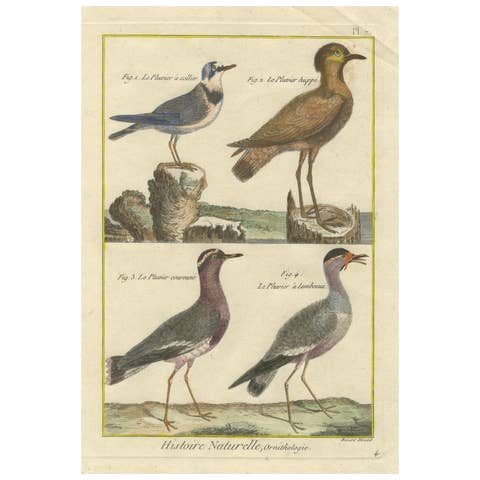
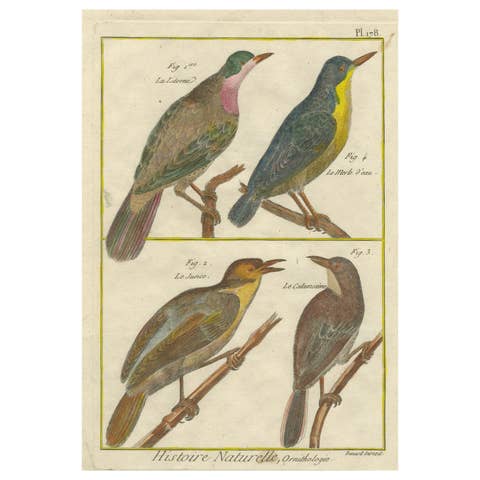
This engraving is a hand-colored copperplate print by Robert Benard from the *Histoire Naturelle*, part of the *Encyclopédie Méthodique*, circa 1790. It depicts various species of geese (*Oie*), highlighting their global diversity and distinctive features.
Birds Depicted (Translation and Descriptions):
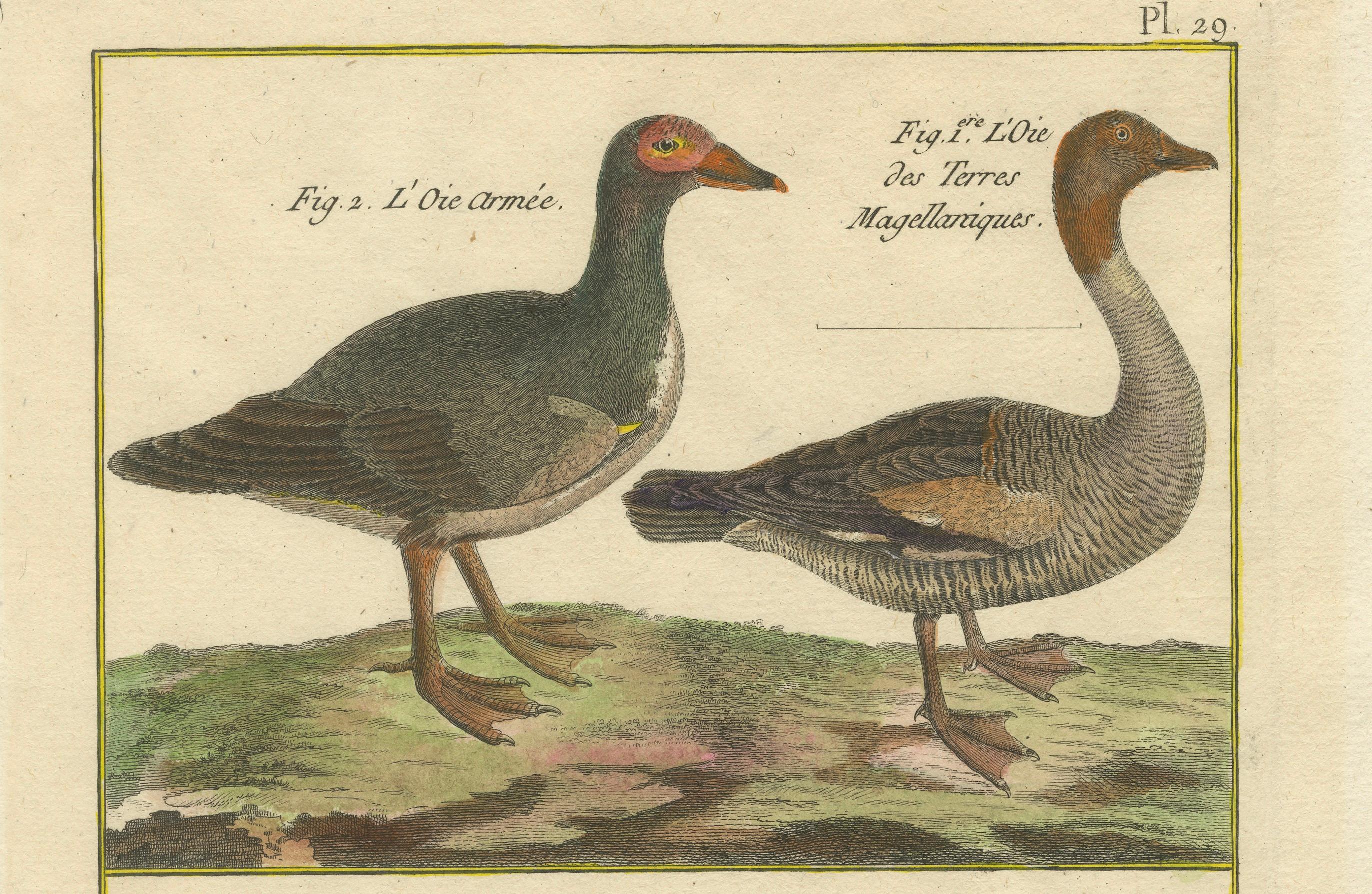
1. Fig. 1: L'Oie des Terres Magellaniques (Magellanic Goose):
- This bird represents the Magellanic Goose (*Chloephaga picta*), a species found in southern South America, particularly in Argentina, Chile, and the Falkland Islands. The engraving shows a goose with brown and white plumage, emphasizing its large size and robust nature. These birds are typically found in grasslands and along shorelines.
2. Fig. 2: L'Oie Armée (Spur-winged Goose):
- This bird is the Spur-winged Goose (*Plectropterus gambensis*), found in sub-Saharan Africa. It is notable for its large size and the spurs on its wings, which it can use in defense. The engraving accurately captures the bird’s dark plumage and imposing stature. It is often found near freshwater lakes and wetlands.
3. Fig. 3: L'Oie d'Egypte (Egyptian Goose):
- This is the Egyptian Goose (*Alopochen aegyptiaca*), a species native to Africa, particularly along the Nile River in Egypt and sub-Saharan Africa. It has distinct reddish-brown markings around its eyes and a pale, buff body. Egyptian geese are often seen near rivers, lakes, and wetlands, and they are known for their territorial behavior.
4. Fig. 4: L'Oie bronzée (Bronzed Goose):
- This bird may represent a species of goose with a bronze-colored sheen or plumage, though the exact species isn't immediately clear from the engraving. It is depicted with a distinctive curved neck and contrasting darker and lighter plumage. This could be a stylized representation of a lesser-known or extinct species.
Current Habitat and Conservation Status:
- Magellanic Goose: Found in southern South America, inhabiting grasslands, wetlands, and coastal areas. It is not currently endangered, though habitat changes could affect local populations.
- Spur-winged Goose: Native to sub-Saharan Africa, this species is common in wetlands and freshwater bodies. It is widespread and not considered under threat.
- Egyptian Goose: Native to Africa, particularly around wetlands, rivers, and grasslands. It has stable populations and is not endangered. This species has also been introduced to parts of Europe.
- Bronzed Goose: If this refers to a species with bronze-like plumage, it could be a stylized or rare species. Without further identification, its conservation status is unclear.
Printmaking Technique:
The copperplate engraving technique is used to create fine, intricate lines that give shape and texture to the birds. The hand-coloring with watercolors enhances the birds' naturalistic appearance, providing depth and contrast. The color palette used reflects the birds' unique plumage and helps convey their real-life characteristics to an 18th-century audience.
This engraving would have served both as an educational tool for naturalists and as an artistic piece that showcased the rich diversity of birdlife, particularly waterfowl species from different continents.