Goliath Bird-Eating Spider and Scorpions: Hand-Colored Engraving, 1792
€ 140
Original antique · The actual sheet photographed · Certificate of authenticity on request · Sold unframed · Worldwide shipping from € 15 (rates)
Date
1792
Sheet size
25.7 × 19.7 cm (10.1 × 7.8 in)
Reference
BG-13292-56
What the condition grades mean
Excellent
Bright and clean, with no faults worth mentioning.
Very good
Only light signs of age, such as faint toning.
Good
Normal signs of age for a sheet of this period: toning, some foxing, small marks or neat old repairs.
Fair
Clear faults such as staining, tears or repairs, priced to match.
Every fault we see is written in the condition note, and the whole sheet is shown uncropped in the photos.
Condition
Vibrant hand-coloring, sharp engraving details, and intact edges. Age-toning and minimal foxing are visible, typical of its age, but do not detract from its beauty. A rare and valuable piece, perfect for collectors or display.
About this sheet
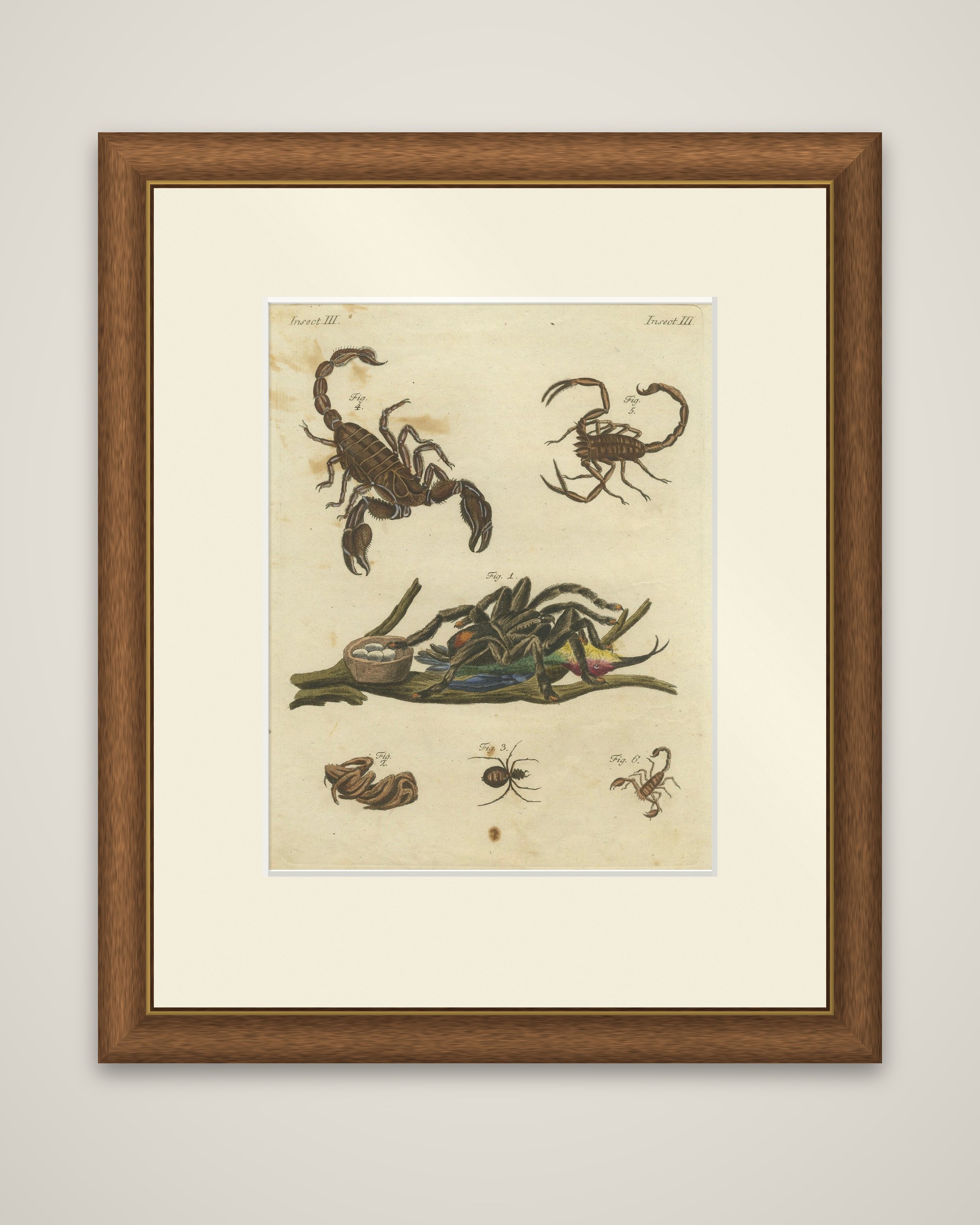
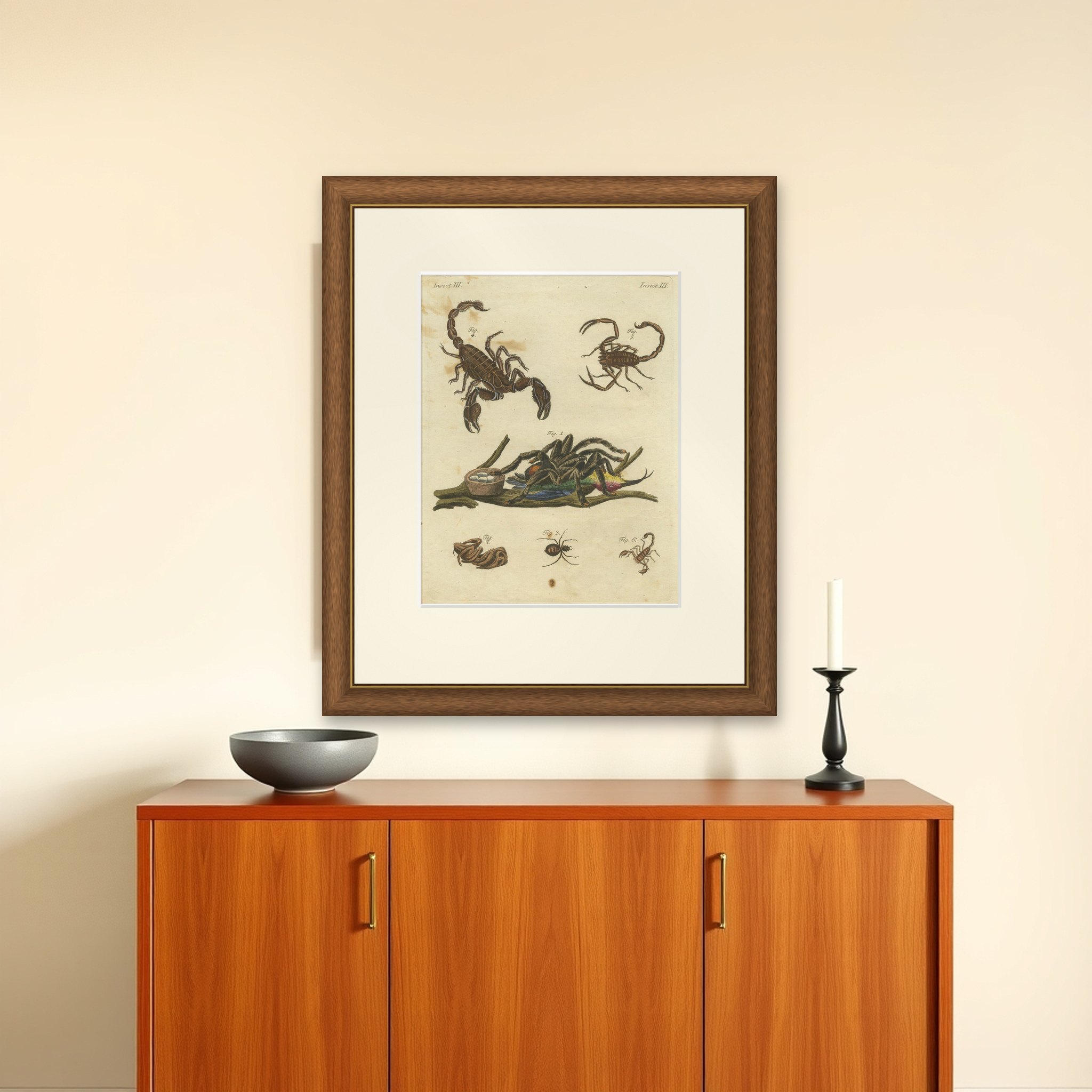
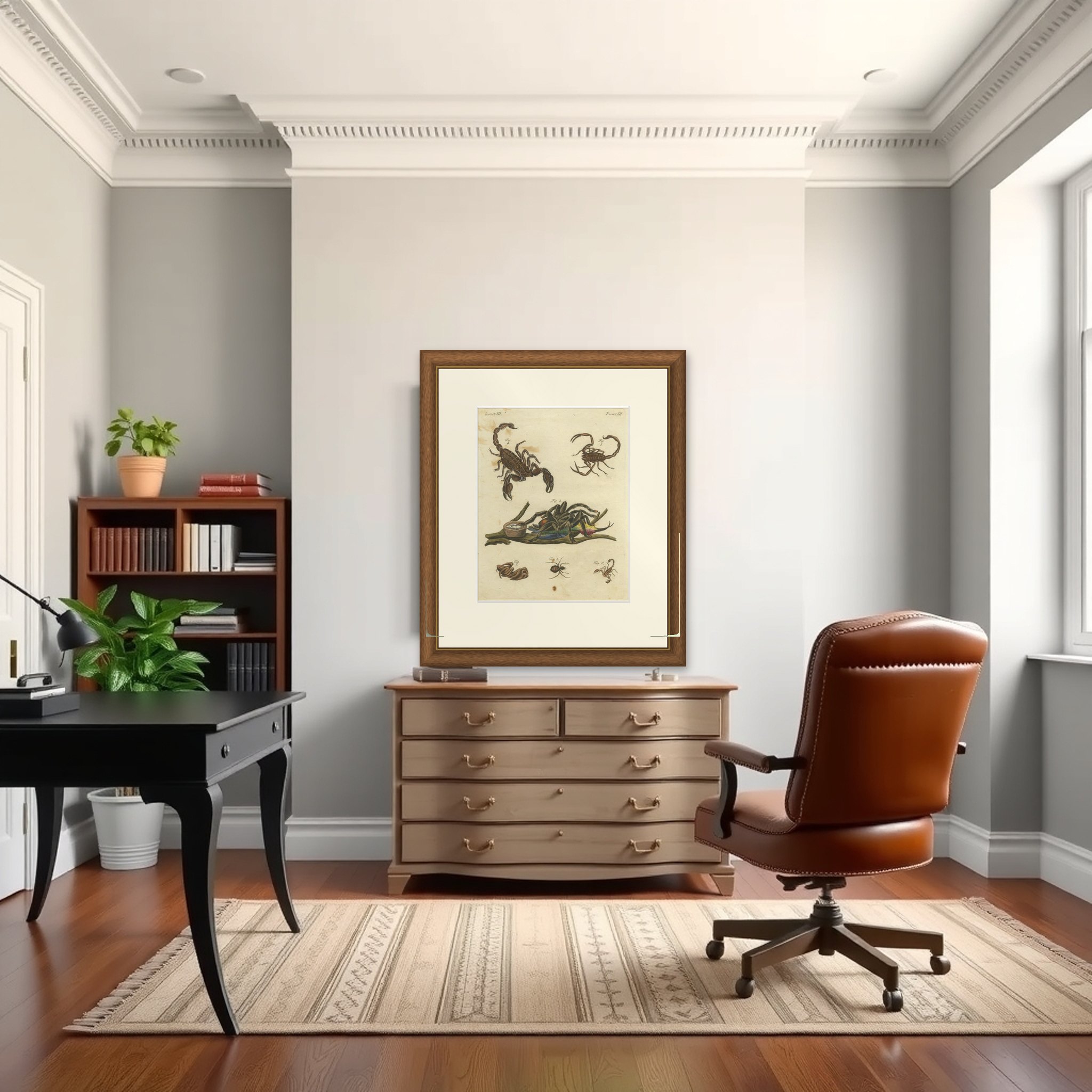
Spiders and scorpions on one sheet, a hand-colored copper engraving from Friedrich Johann Bertuch's Bilderbuch fuer Kinder (Picture Book for Children), dated 1792. The plate is headed "Insect. III." at the upper left and right, and the figures are numbered on the sheet.
Fig. 1 fills the center: a large hairy spider on a branch, holding a hummingbird with a green back and a yellow and red breast in its legs, while a nest with white eggs sits at the left of the branch. This is the Goliath bird-eating spider (Theraphosa blondi), shown in the manner of eighteenth-century travelers' accounts of South America. Smaller figures complete the plate, among them a small round spider (Fig. 3), the orange spider of Curacao according to the old description, and three scorpions: a large dark scorpion with heavy claws at the upper left (Fig. 4), a spread scorpion at the upper right (Fig. 5) and a small pale one at the lower right (Fig. 6). The scorpions are listed as Indian, American and European.
The picture book was published at Weimar in twelve volumes from 1790 to 1830.