About this sheet
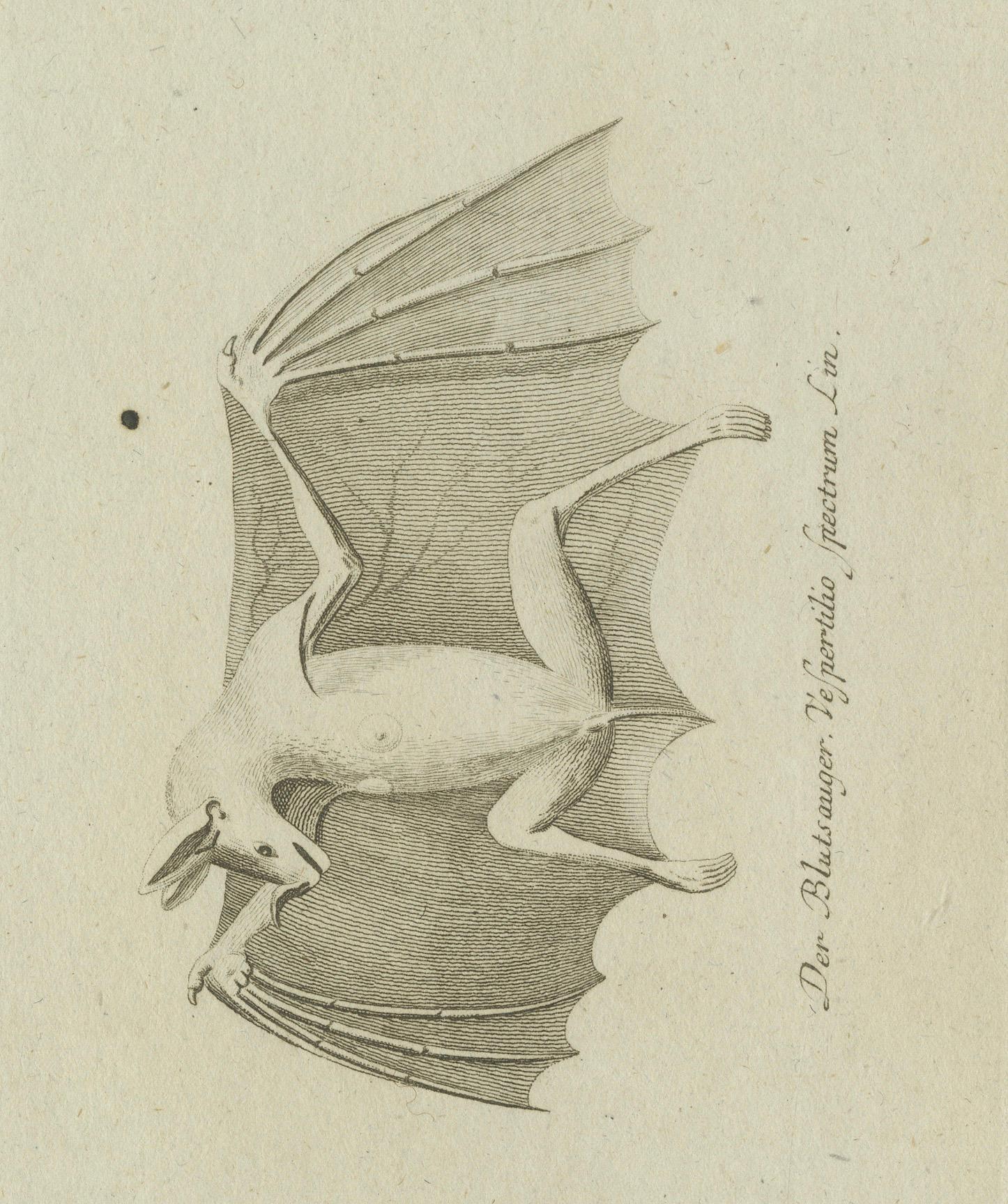
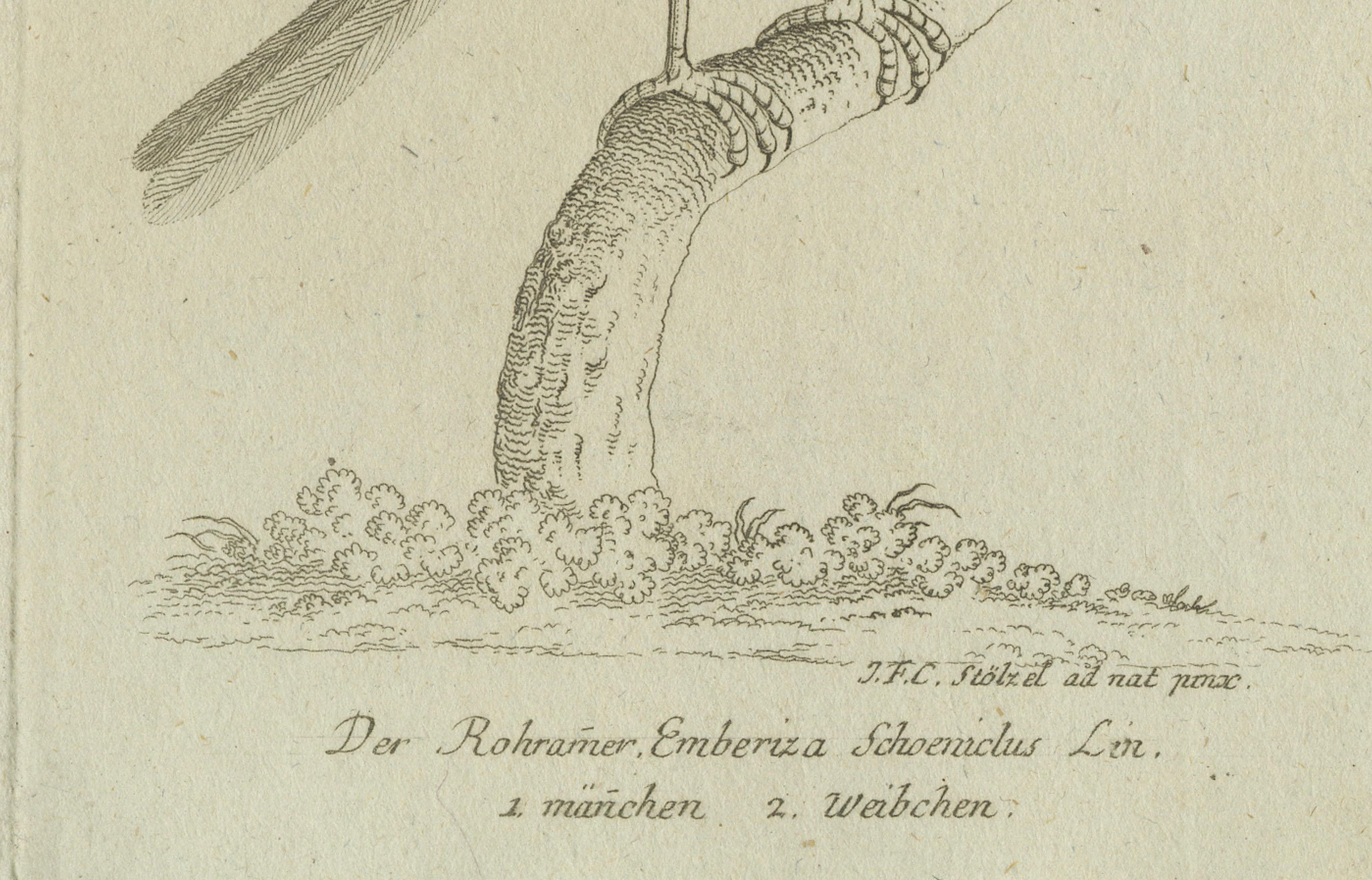
Antique Engraving of Birds and Bat Species, Emberiza schoeniclus & Vespertilio spectrum, c.1800
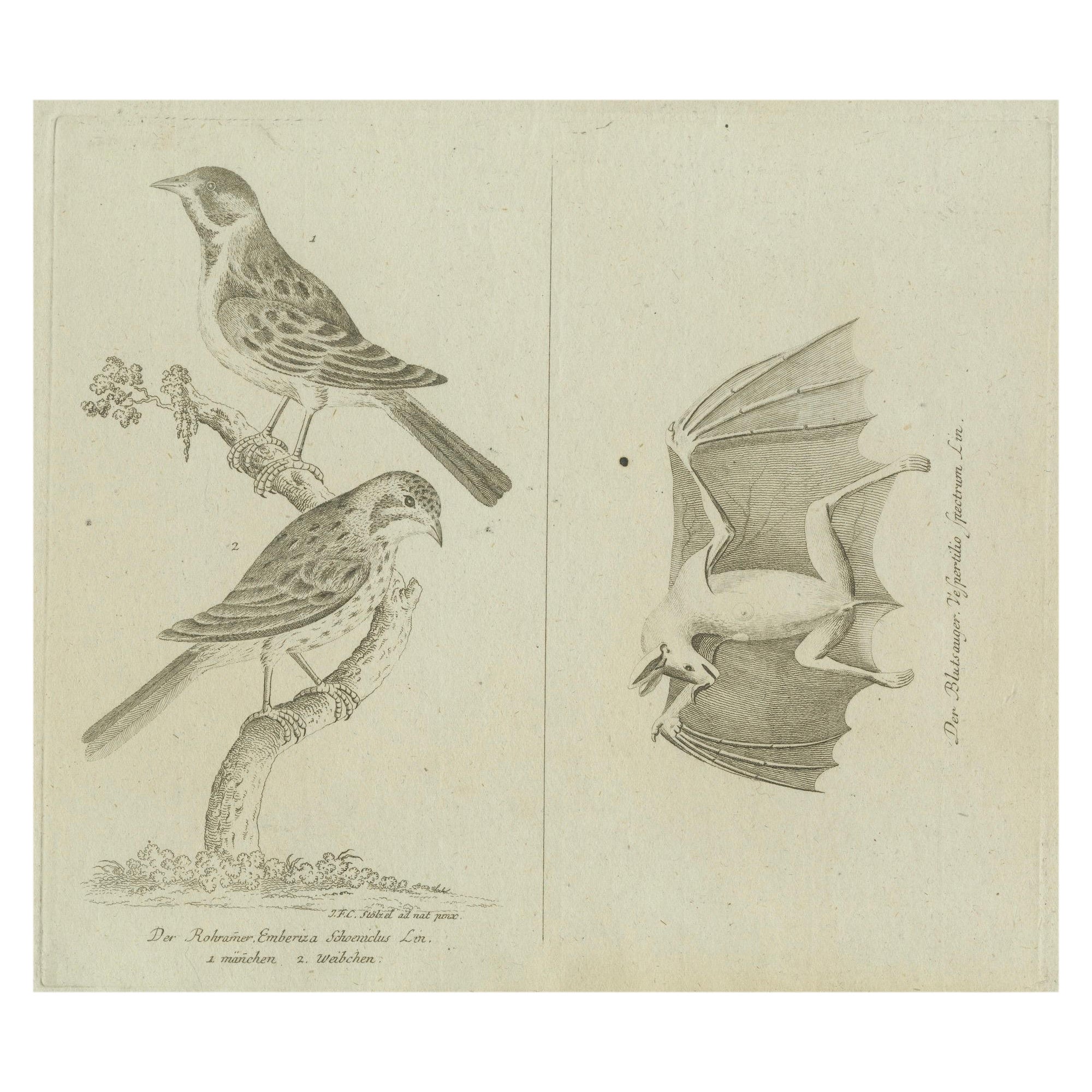
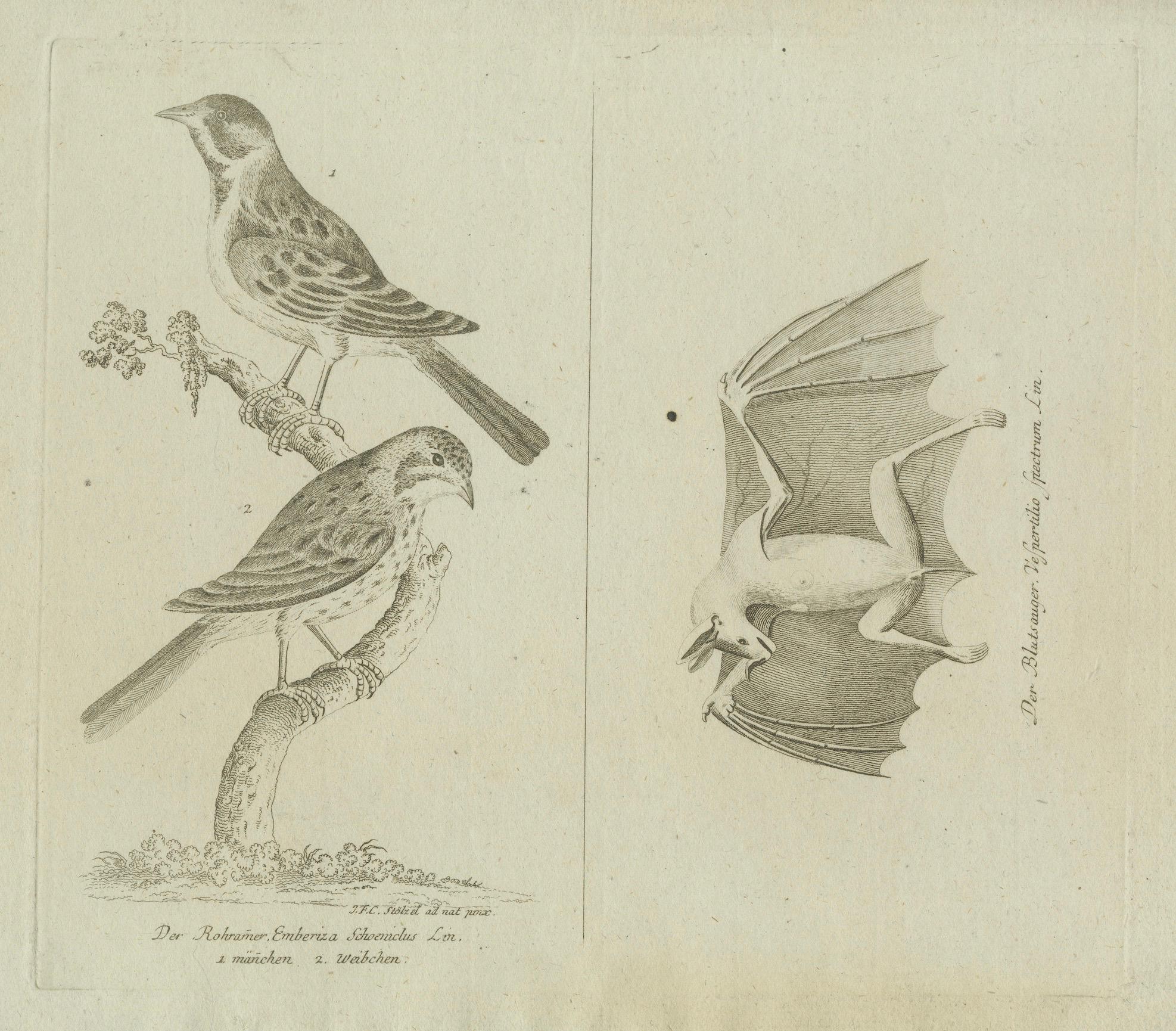
This elegant natural history engraving from around 1800 features two finely rendered ornithological and mammalogical studies — a pair of birds on the left and a bat on the right — executed with remarkable precision and delicacy typical of late 18th- to early 19th-century German natural science illustration.
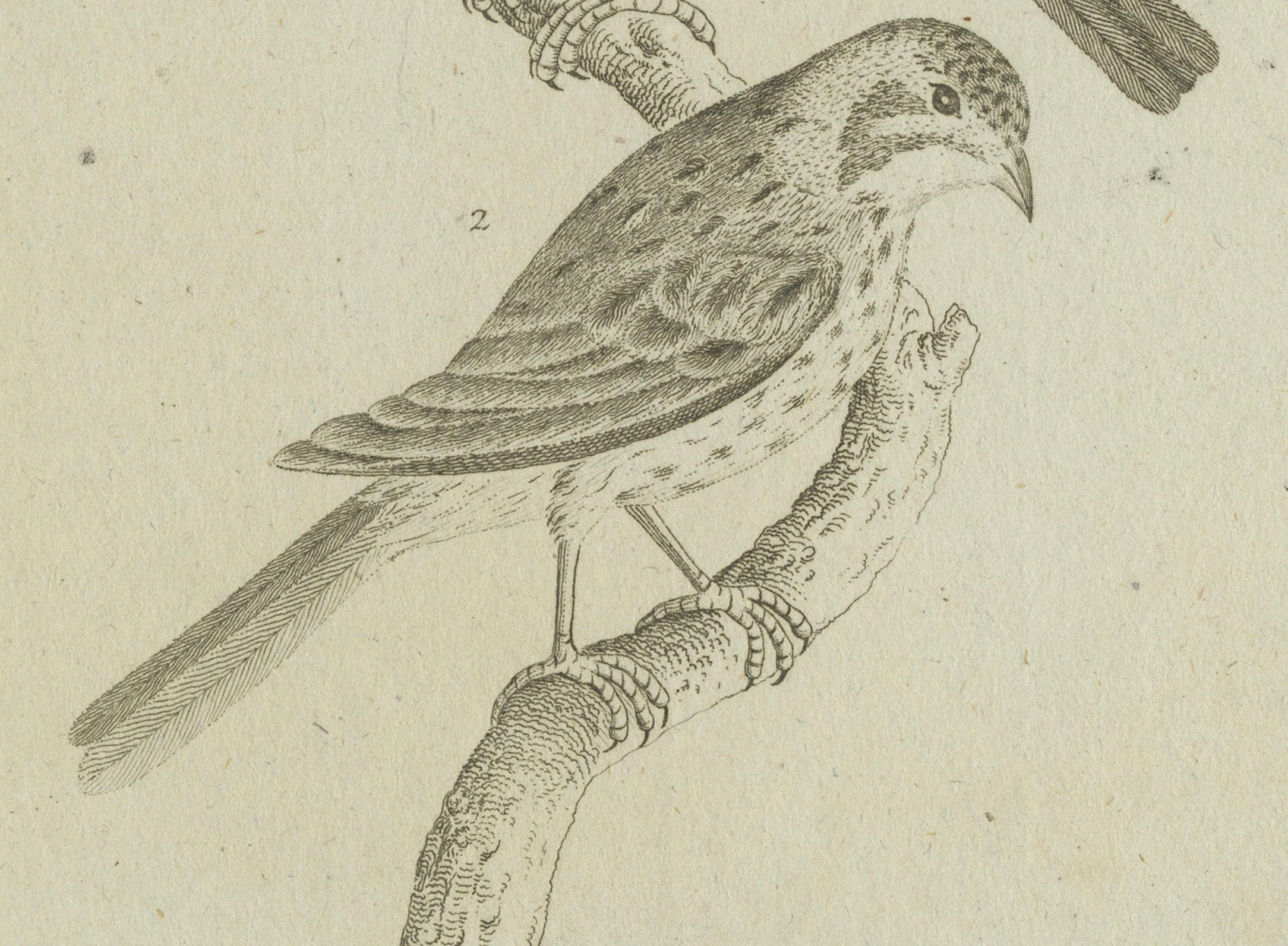
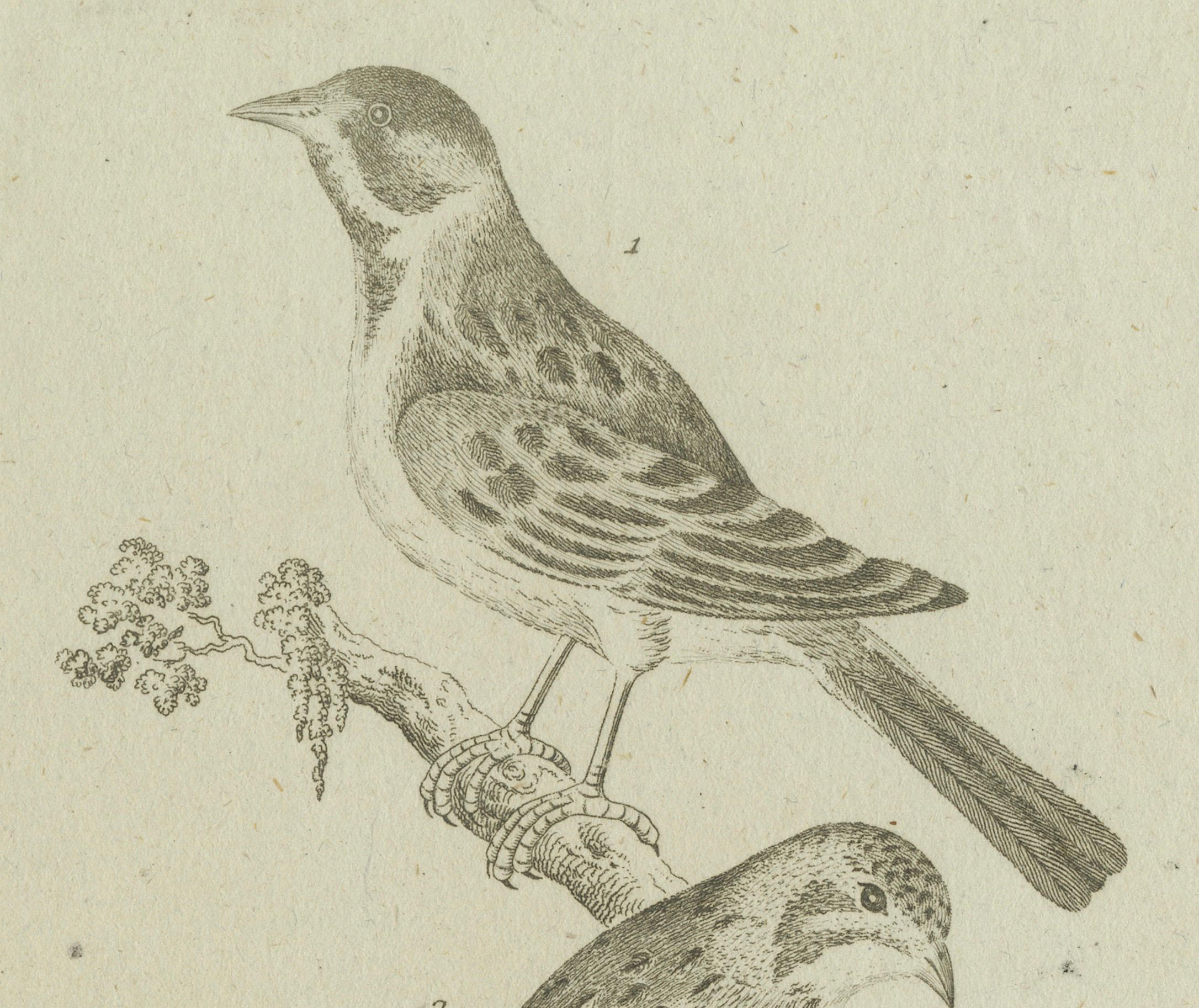
The left composition depicts Der Rohrammer (Emberiza schoeniclus Lin.), known in English as the Reed Bunting. The male (“männchen”) and female (“weibchen”) are shown perched on slender branches, their plumage carefully differentiated in tone and texture to highlight sexual dimorphism. The attention to feather detail and botanical setting reflects the Enlightenment-era pursuit of scientific realism combined with aesthetic refinement.
On the right, the Blauwogen-Fledermaus (Vespertilio spectrum Lin.), or Spectacled Flying Fox, is presented in flight with its wings extended, capturing the dynamic anatomy and expressive motion of the animal. The engraving illustrates both scientific curiosity and artistic skill, emphasizing anatomical precision while maintaining visual harmony.
Such plates were often issued in German zoological encyclopedias or compendia of the period, possibly linked to the works of Gottlieb Tobias Wilhelm, Friedrich Justin Bertuch, or other natural historians who published richly engraved educational atlases. The use of Latin taxonomy alongside German names reflects the influence of Linnaean classification, which had become the universal scientific standard of the age.
Together, these depictions of birds and bat form a striking juxtaposition of daytime and nocturnal life, symbolizing the breadth of the animal kingdom as understood by early naturalists. The restrained elegance of the linework and the balance of composition make this piece not only a document of scientific history but also an appealing decorative print for collectors of natural history art.
Condition report:
Good condition with light age toning and a few minor handling marks consistent with age. Fine impression on laid paper with a clearly visible plate mark and wide margins. No tears or folds.
Framing tips:
A natural or light walnut frame with an off-white or ivory mat will enhance the soft tonality of the paper. For a more classical presentation, use a double mat with a thin dark brown or olive-green inner line to emphasize the refined scientific character of the print.
Technique: Engraving on laid paper
Maker: Anonymous German engraver, circa 1800