About this sheet
Set of Three Antique St. Vincent Engravings after Agostino Brunias, 1818
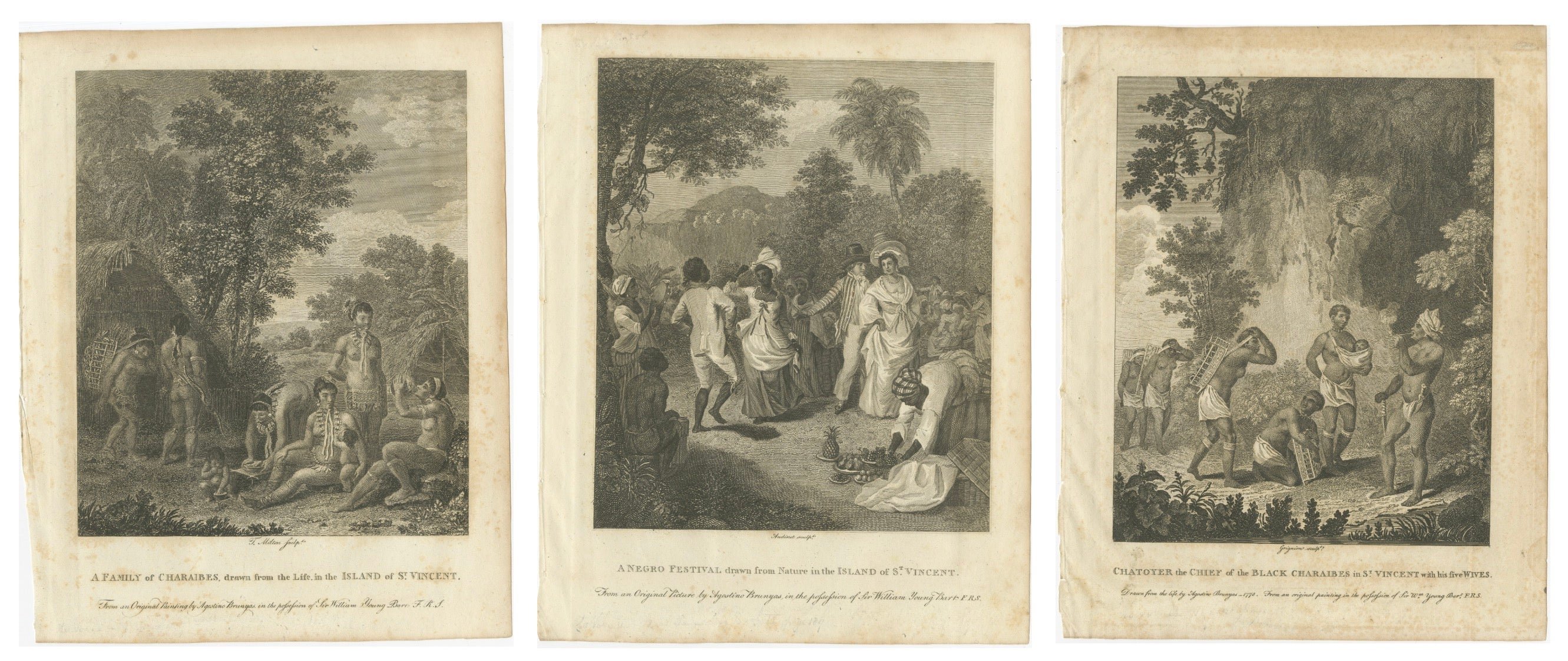
Important matching set of three original antique engravings depicting the people and culture of St. Vincent in the Caribbean, after paintings by Agostino Brunias (c. 1730–1796).
Published in the 1818 London edition of Bryan Edwards' "History of the British West Indies," the three plates provide remarkable early visual records of St. Vincent and its African-descended and Indigenous Caribbean communities.
The set comprises:
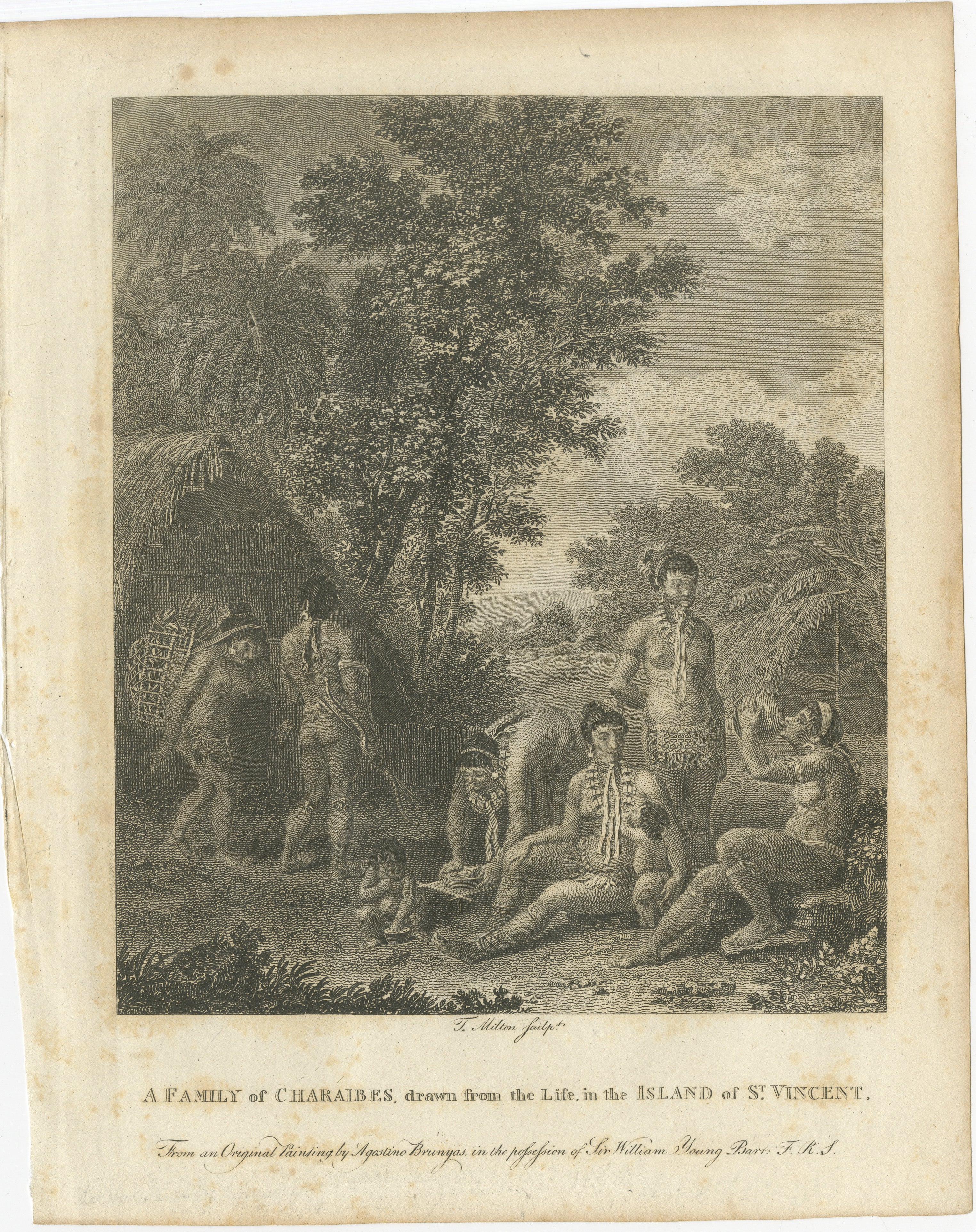
1. A Family of Charaibes, drawn from the Life, in the Island of St. Vincent
An intimate scene depicting a Carib family within a lush tropical landscape. The engraving is after an original painting by Agostino Brunias, then in the collection of Sir William Young, and is engraved by F. Milton.
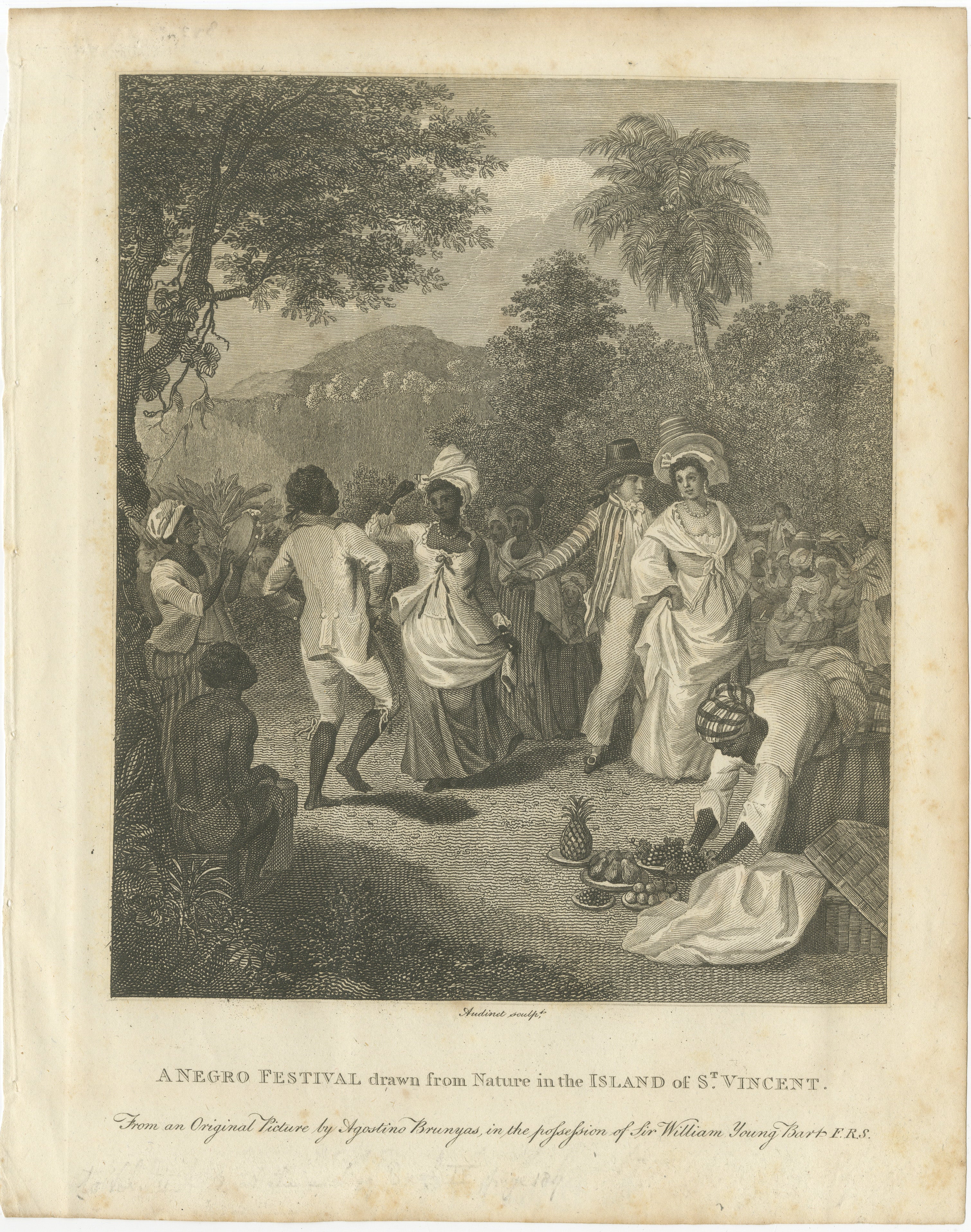
2. A Negro Festival drawn from Nature in the Island of St. Vincent
A lively outdoor gathering showing figures dancing and socializing amid tropical vegetation, with fruit and other goods displayed in the foreground. After an original work by Agostino Brunias from the collection of Sir William Young and engraved by Audinet.
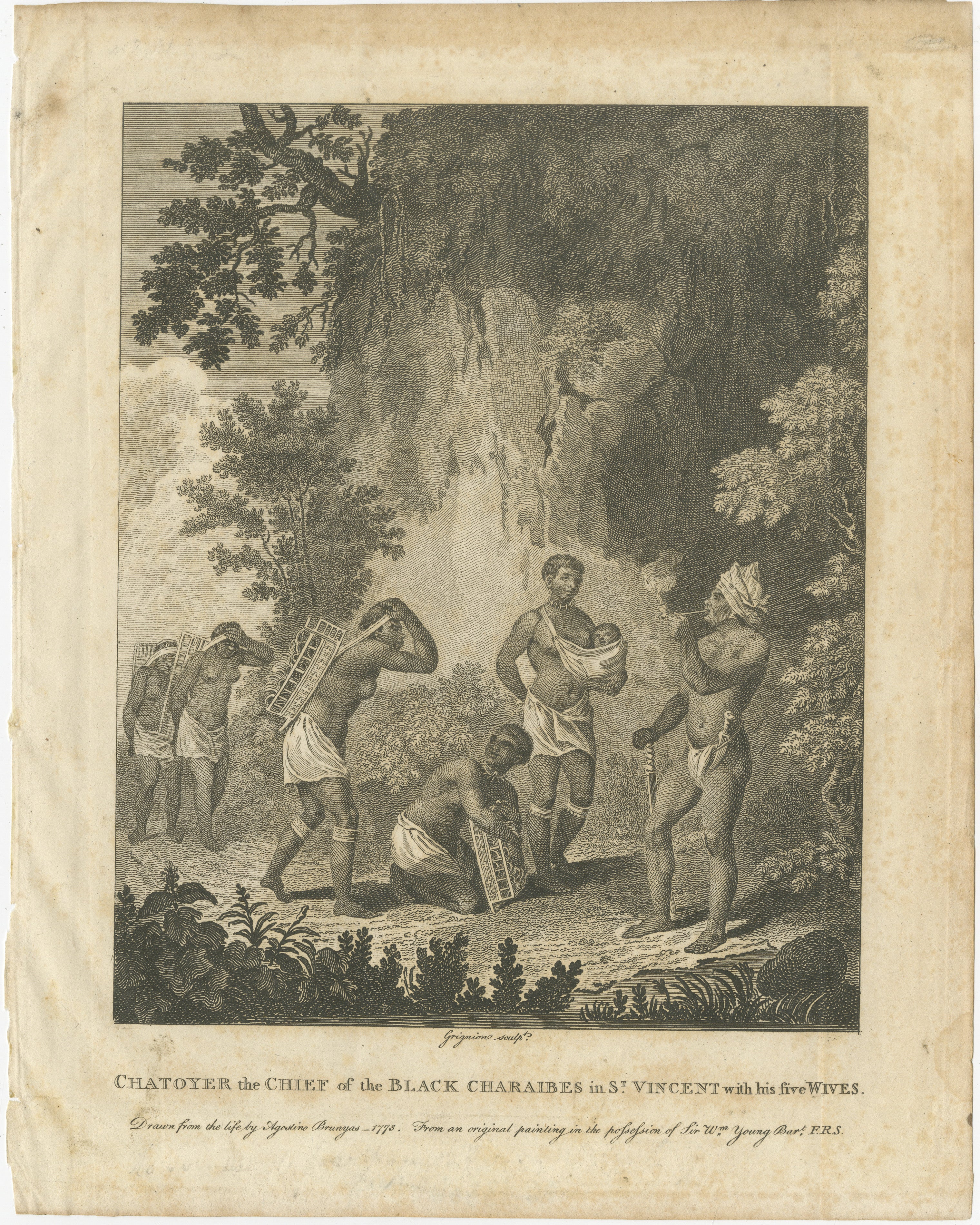
3. Chatoyer the Chief of the Black Charaibes in St. Vincent with his five Wives
The historically most significant plate of the group, depicting Chatoyer with members of his community in a dramatic tropical landscape. The inscription states that the image was "Drawn from the life by Agostino Brunias – 1773" and records the original painting as belonging to Sir William Young. The plate is engraved by Grignion.
Joseph Chatoyer, also known as Satuye, was a prominent leader of the Black Caribs of St. Vincent, ancestors of today's Garifuna people. He became one of the principal leaders of resistance to British colonial expansion on the island and was killed during the Second Carib War in 1795. He is today recognized as a National Hero of St. Vincent and the Grenadines.
Agostino Brunias was an Italian-born artist who worked extensively in the British Caribbean during the late 18th century. He is particularly known for his detailed depictions of Caribbean society, including people of African, European, Indigenous and mixed ancestry. His works are important visual documents of Caribbean life during the colonial period.
The engravings were subsequently included in Bryan Edwards' "History of the British West Indies." Edwards (1743–1800) was a British politician, merchant, plantation owner and historian with extensive interests in Jamaica. His writings are important historical sources but also reflect his position as a defender of the Caribbean plantation system and opponent of abolition.
Together, these three engravings form a particularly compelling historical group relating to St. Vincent, Garifuna and Black Carib history, the African diaspora and the colonial Caribbean.
Artist: After Agostino Brunias (c. 1730–1796)
Engravers: F. Milton, Audinet and Grignion
Author / Publication: Bryan Edwards, History of the British West Indies
Subjects: St. Vincent, Black Caribs / Garifuna, Caribbean society
Technique: Engravings on paper
Origin: London, England
Date: 1818
Period: Early 19th Century
Style: Georgian / Regency
Number of works: 3
Condition:
Good antique condition with visible age-related toning, foxing and scattered spotting. The sheets show varying degrees of staining, minor creasing, edge wear and paper irregularities consistent with their age and removal from the original volumes. The Chatoyer plate has more pronounced overall toning and foxing. The engraved images remain strong and detailed. Please study the photographs carefully as they form part of the condition description.
Other maps and historical engravings from the same 1818 edition of Bryan Edwards' History of the British West Indies are also available.
Three original antique engravings, more than 200 years old. Not modern reproductions.
Sold unframed. Any framed images, compilations or interior views shown are for presentation and inspiration only.