About this sheet
Julius Caesar Portrait, Antique Engraving, Roman History Print, 1826
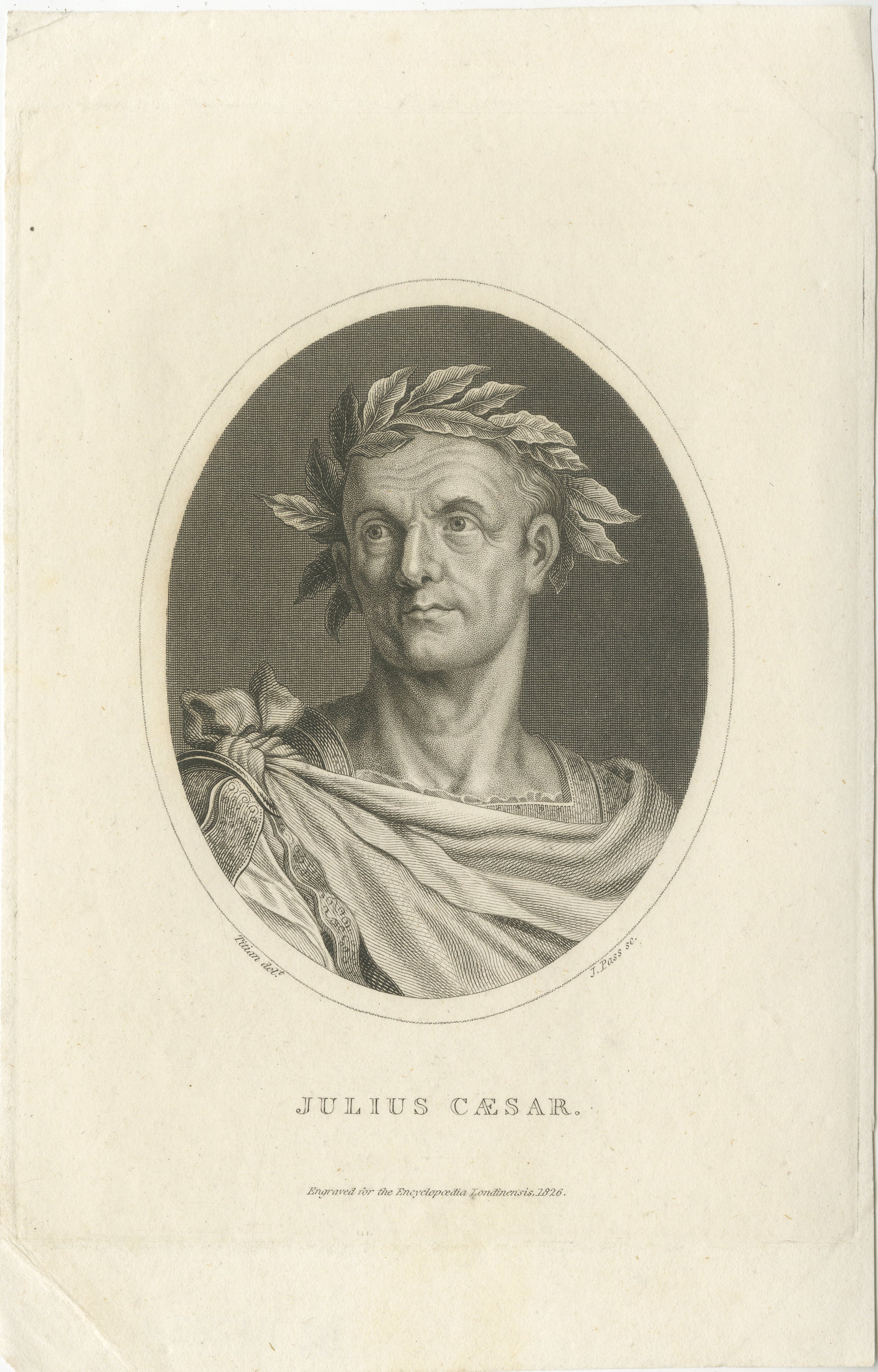
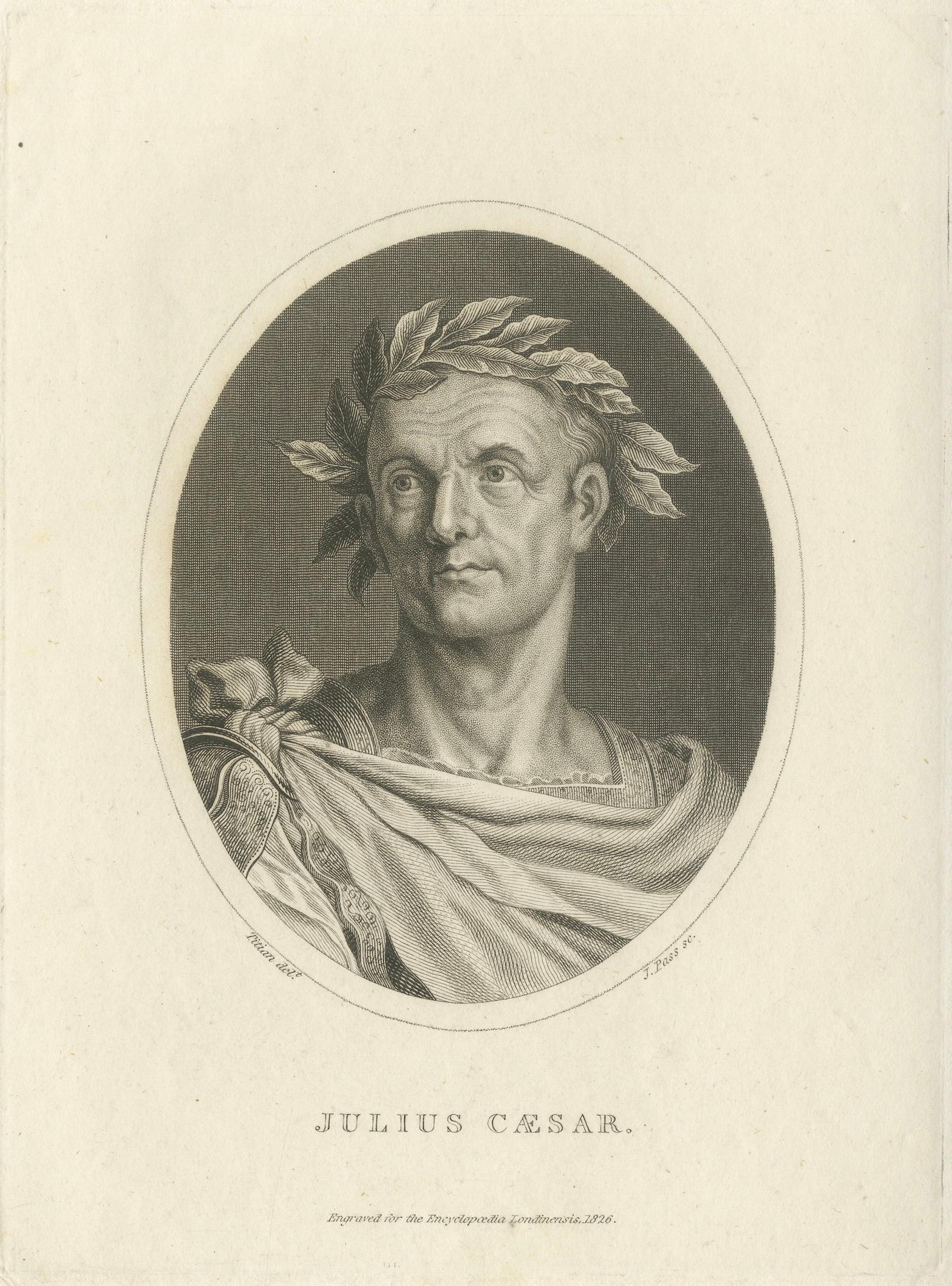
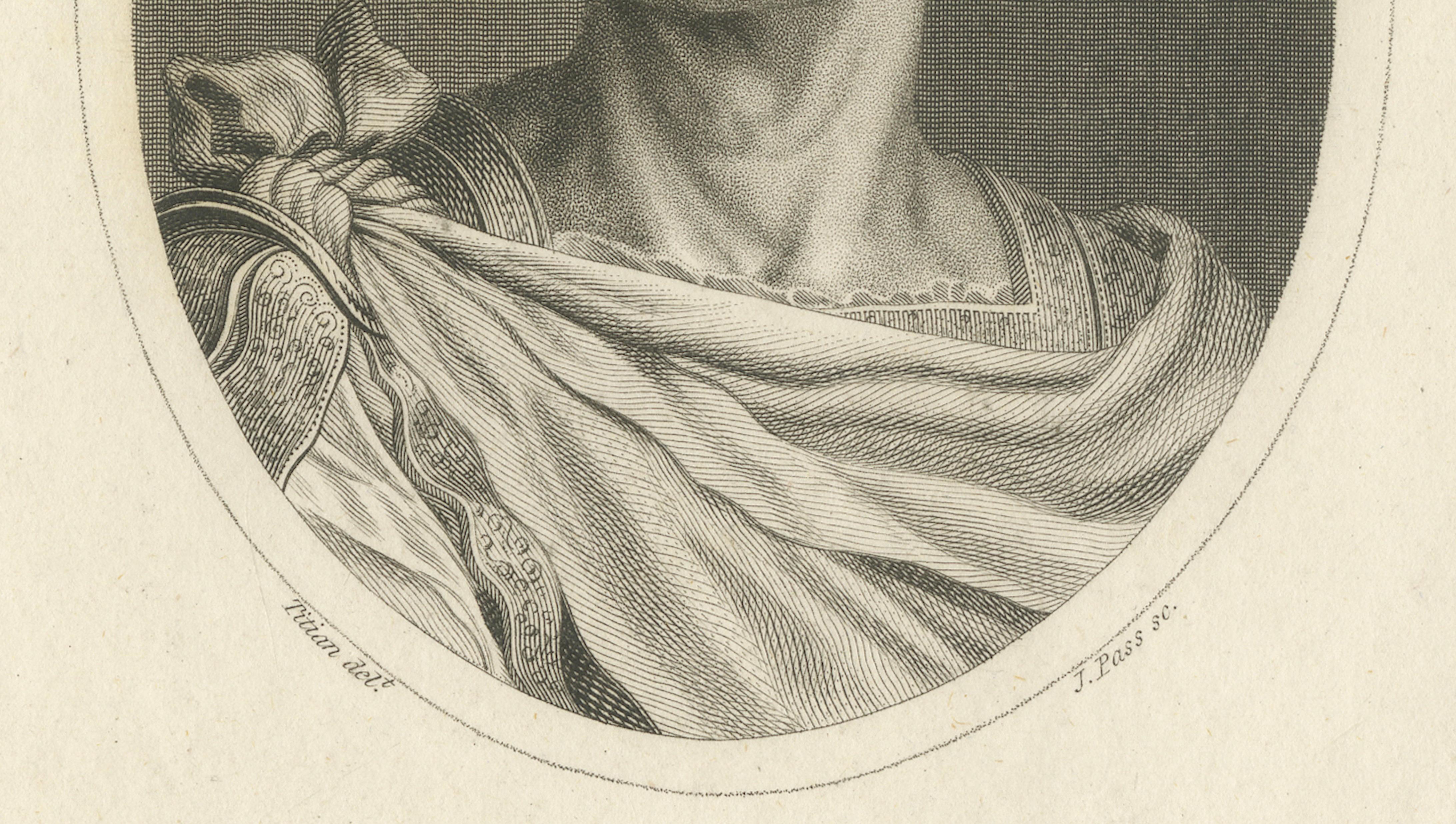
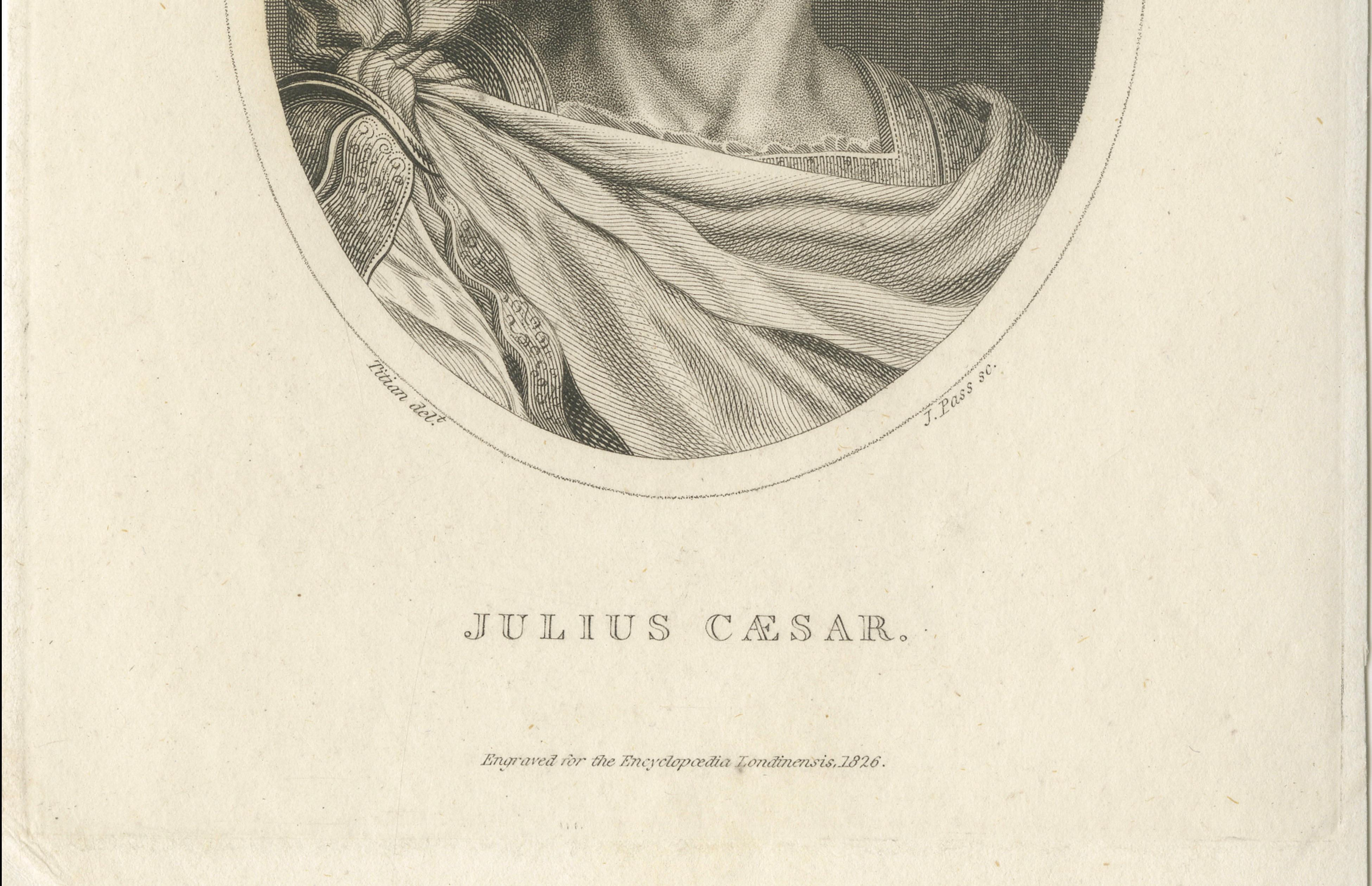
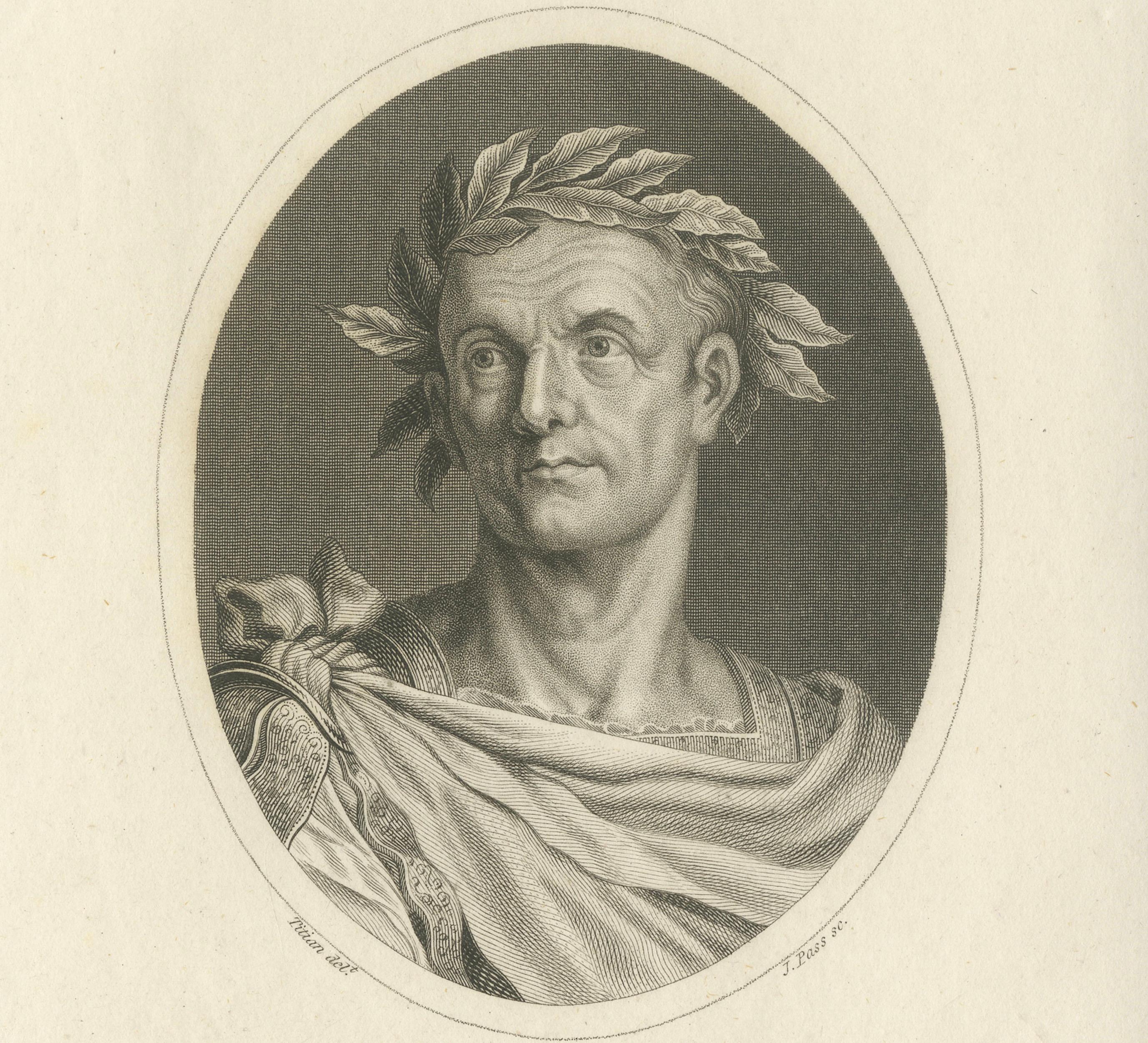
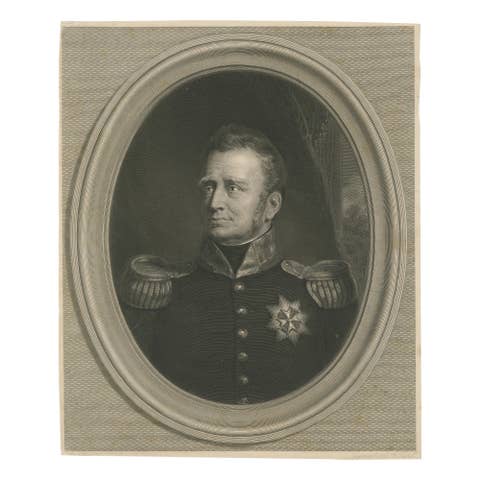
This refined and classically composed portrait of Julius Caesar was engraved in London in 1826 for the Encyclopaedia Londinensis, a major early 19th-century reference work that combined scholarship with finely executed illustrative plates. The engraving is based on a drawing attributed to Titian (“Titian del.”), interpreted and translated into print by the engraver J. Pass (“J. Pass sc.”), demonstrating the enduring influence of Renaissance artistic models on later neoclassical printmaking.
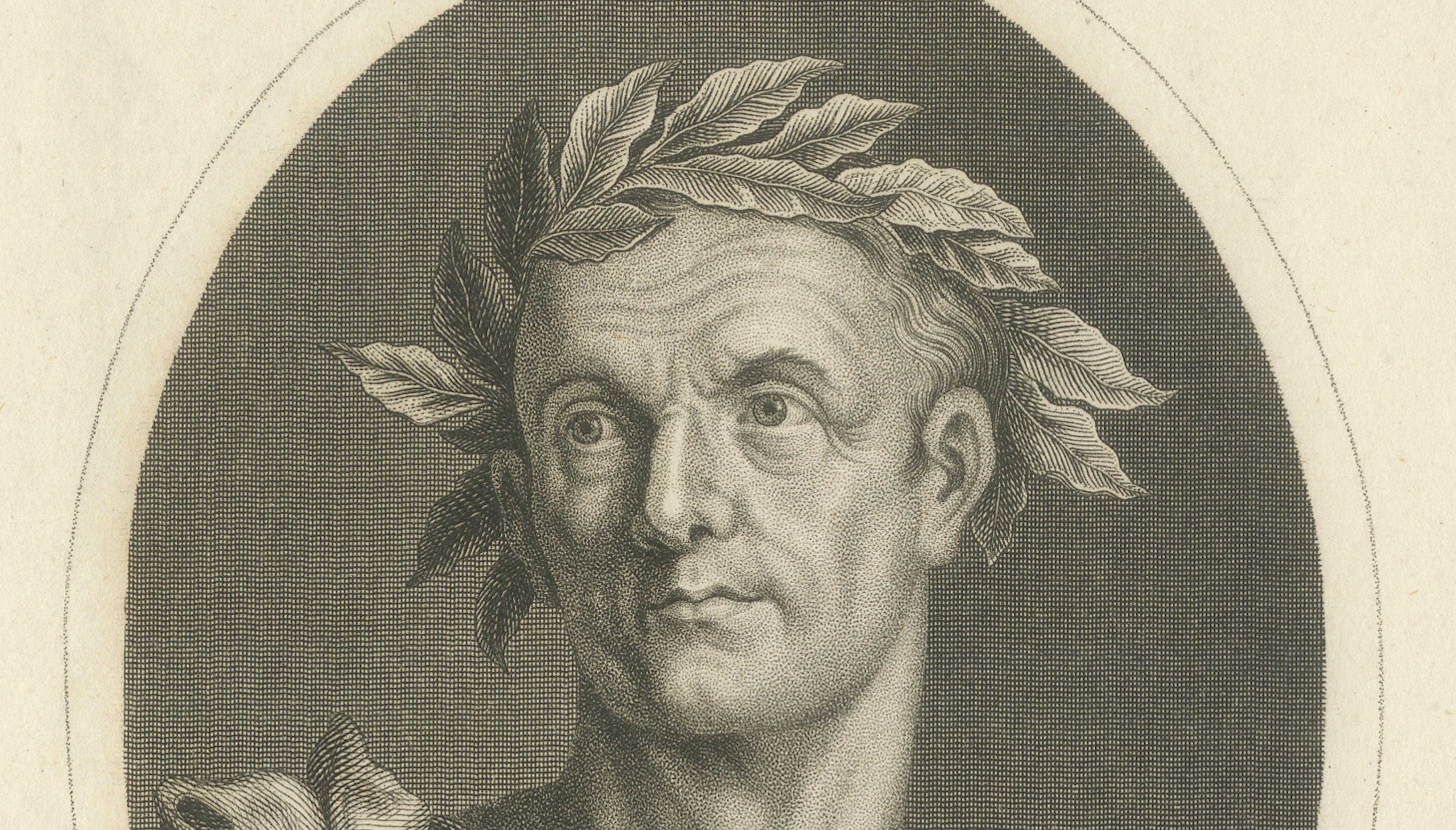
The composition presents Caesar in a dignified bust format, enclosed within an oval frame—a format strongly associated with classical portrait medallions. He is depicted wearing a laurel wreath, symbol of triumph and authority, reinforcing his legacy as one of Rome’s most powerful military and political figures. The draped toga and finely rendered textures of fabric reflect the engraver’s attention to classical detail and academic precision.
Executed in delicate copperplate engraving, the portrait shows a remarkable control of line and tonal variation. The subtle cross-hatching creates depth and volume, particularly in the facial features and the shadowed background, giving the image a sculptural quality reminiscent of ancient Roman busts. This connection between print and sculpture was intentional, aligning with the neoclassical fascination with antiquity that defined the period.
As a historical subject, Julius Caesar represents a turning point in Western history. His conquests in Gaul, consolidation of power, and eventual assassination in 44 BC marked the transition from the Roman Republic to the Roman Empire. Prints such as this were not only decorative but educational, intended to bring the great figures of history into the intellectual and domestic spaces of the 19th century.
A sophisticated and timeless decorative piece, this engraving works beautifully in both classical and contemporary interiors. Its restrained palette and elegant composition make it particularly suitable for studies, libraries, or gallery walls focused on history, portraiture, or neoclassical themes.
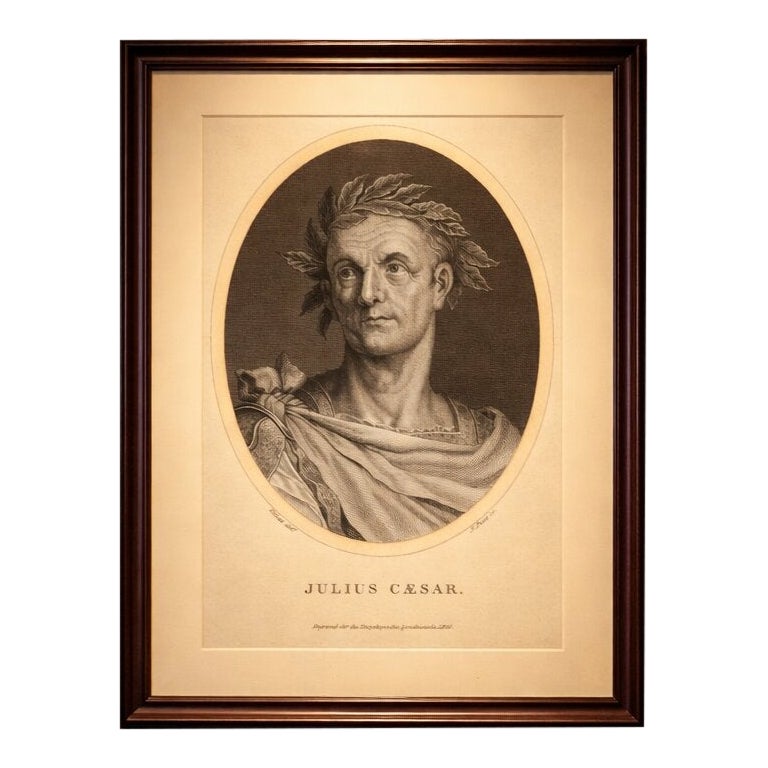
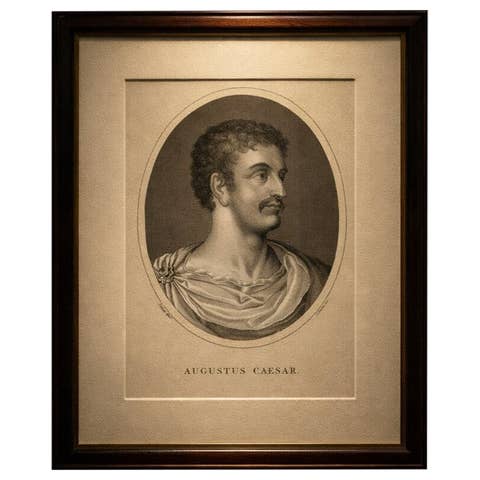
This example is an original antique engraving printed in 1826. It is not a modern reproduction. Any images showing the print framed are for visual inspiration only. The print is supplied unframed.
Condition: Very good, with even toning and minor age-related wear. Light foxing and faint creasing in the margins. Plate mark visible, as expected.
Framing tips: Particularly effective in a dark wood or ebonized frame with a wide ivory mat to echo the classical aesthetic and emphasize the oval composition.