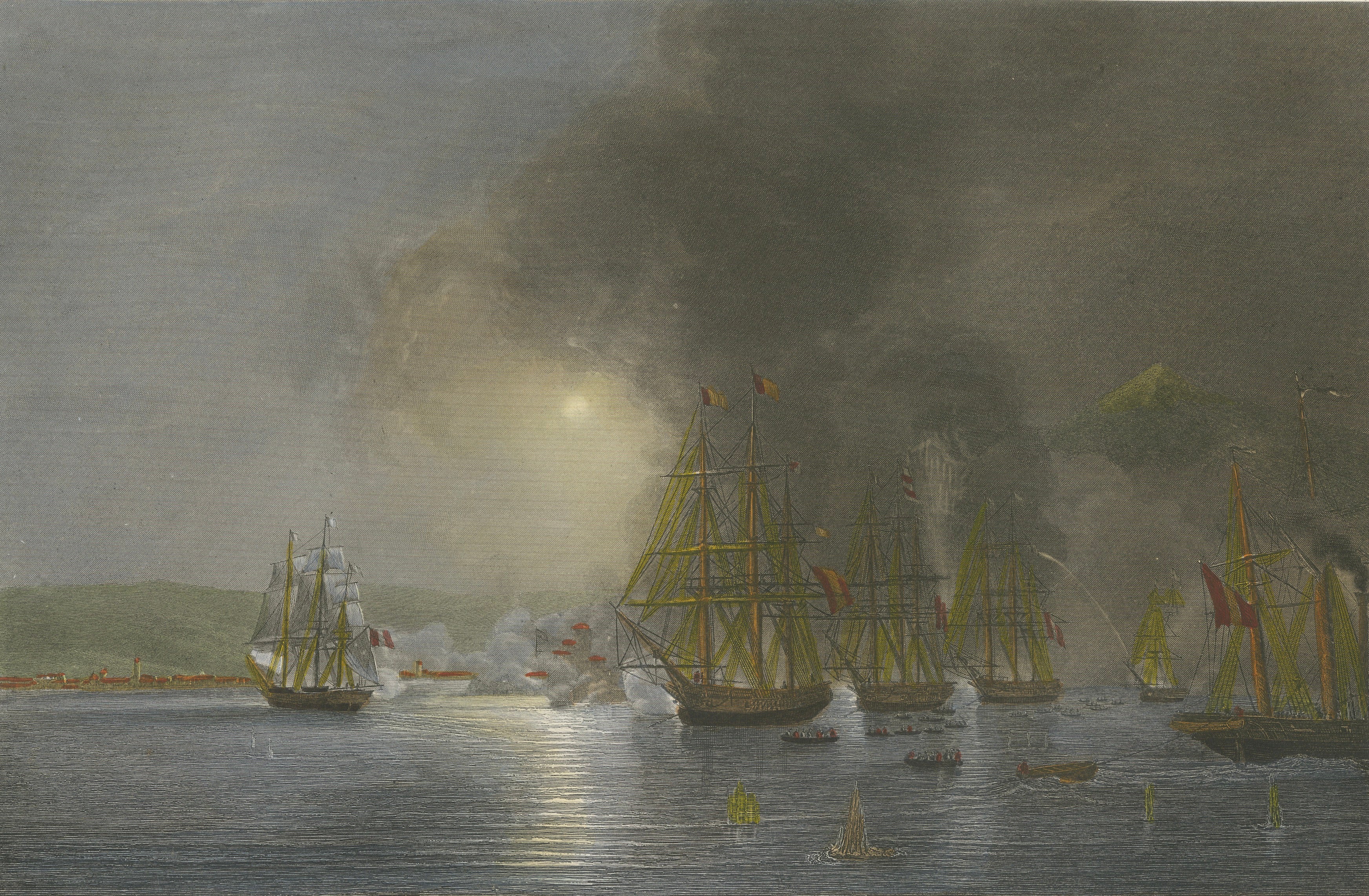
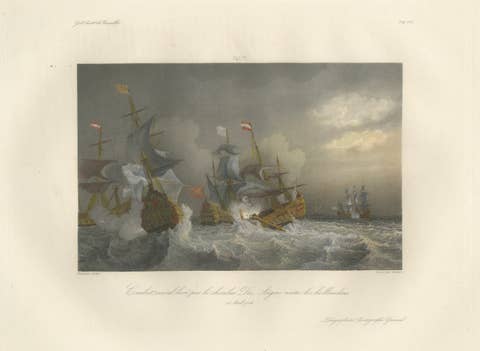
French Capture of San Juan de Ulúa, Mexico after Gudin, c.1840
€ 395
Original antique · The actual sheet photographed · Certificate of authenticity on request · Sold unframed · Worldwide shipping from € 15 (rates)
Date
1840
Sheet size
28.8 × 39.8 cm (11.3 × 15.7 in)
Condition
Good
Reference
BG-14351-5
What the condition grades mean
Excellent
Bright and clean, with no faults worth mentioning.
Very good
Only light signs of age, such as faint toning.
Good
Normal signs of age for a sheet of this period: toning, some foxing, small marks or neat old repairs.
Fair
Clear faults such as staining, tears or repairs, priced to match.
Every fault we see is written in the condition note, and the whole sheet is shown uncropped in the photos.
Condition
Wear consistent with age and use. Good antique condition with overall age-related toning, scattered foxing and spotting, particularly in the broad margins. More noticeable staining is present along the lower margin. Minor marks and handling traces are consistent with age.
About this sheet
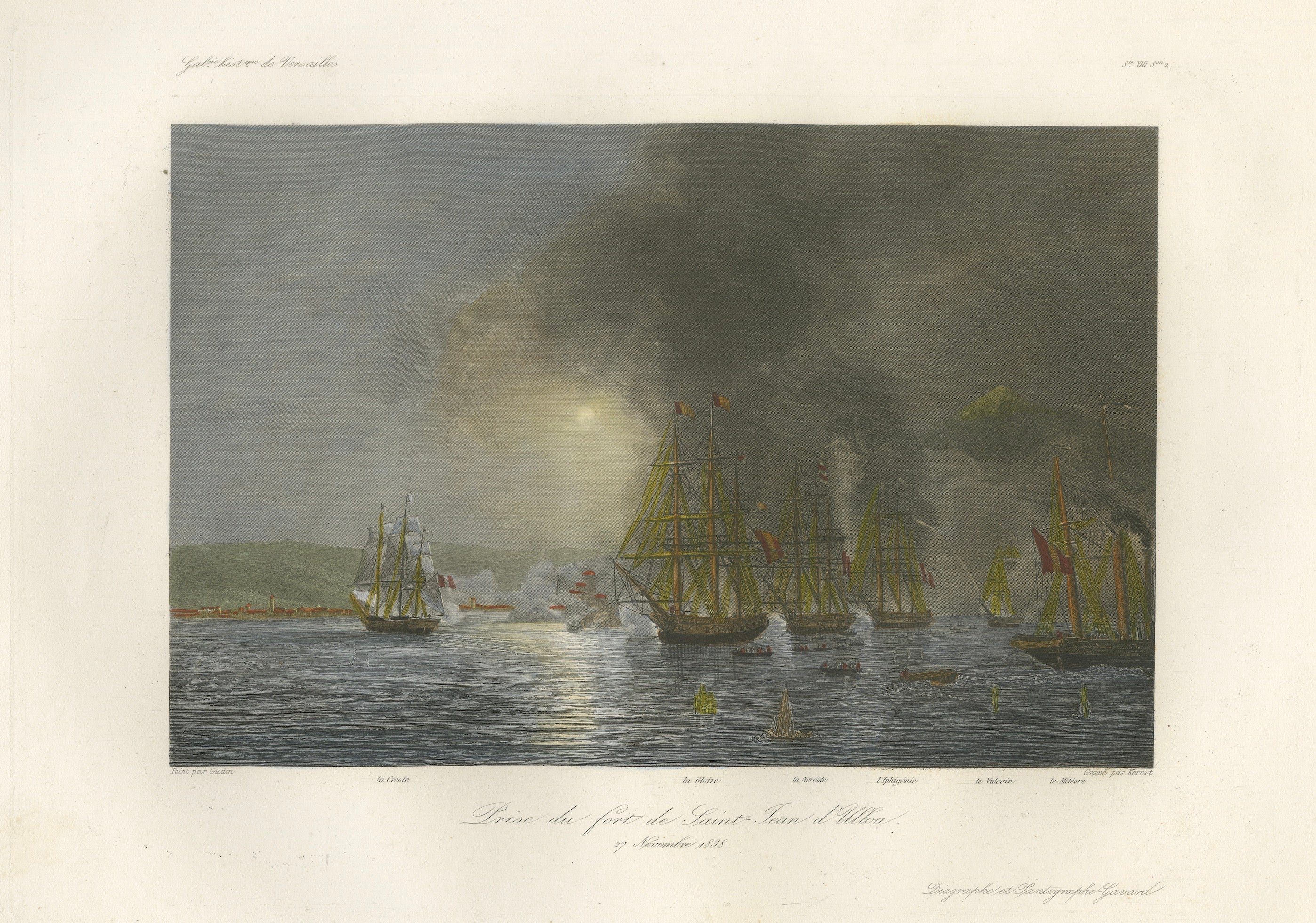
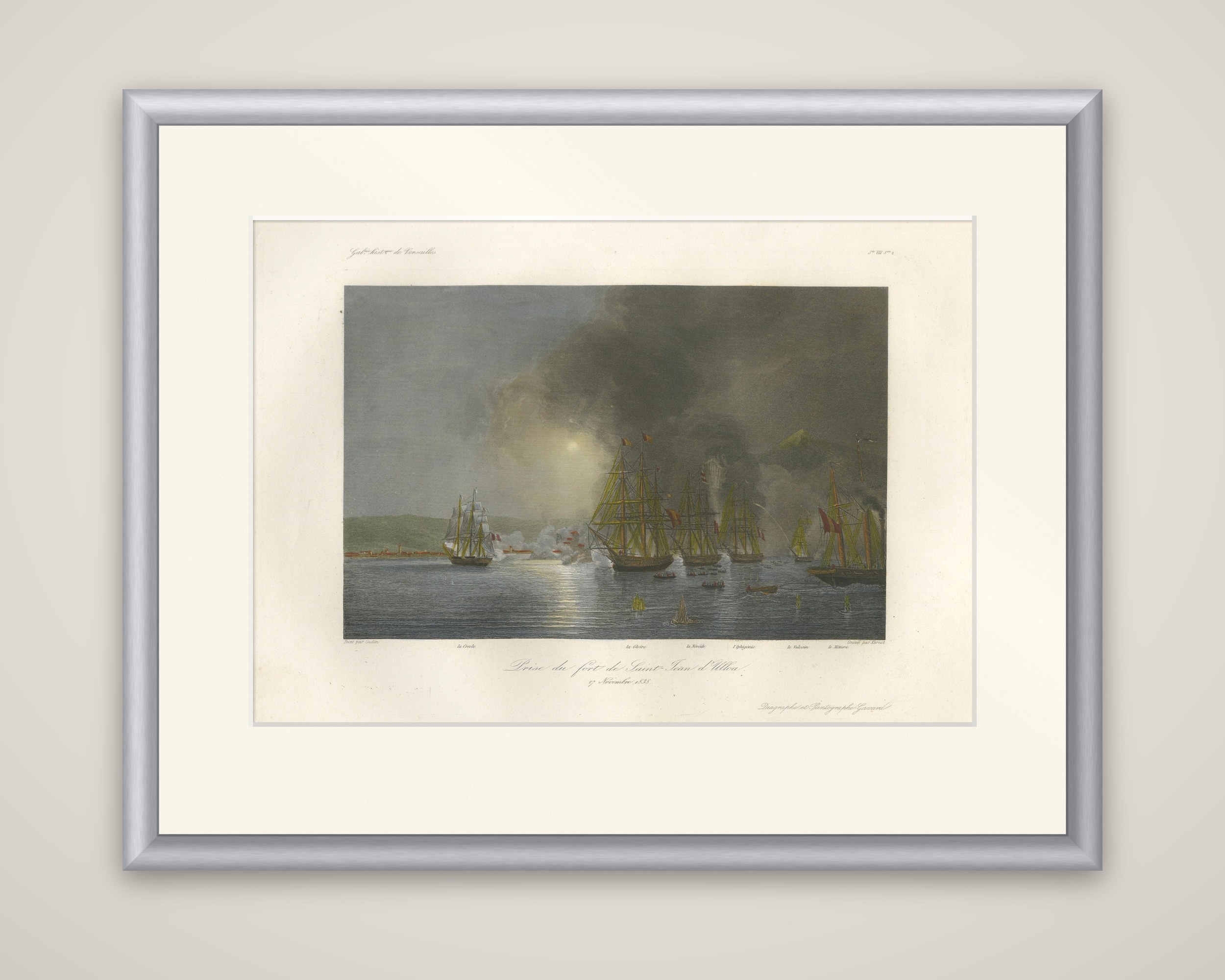
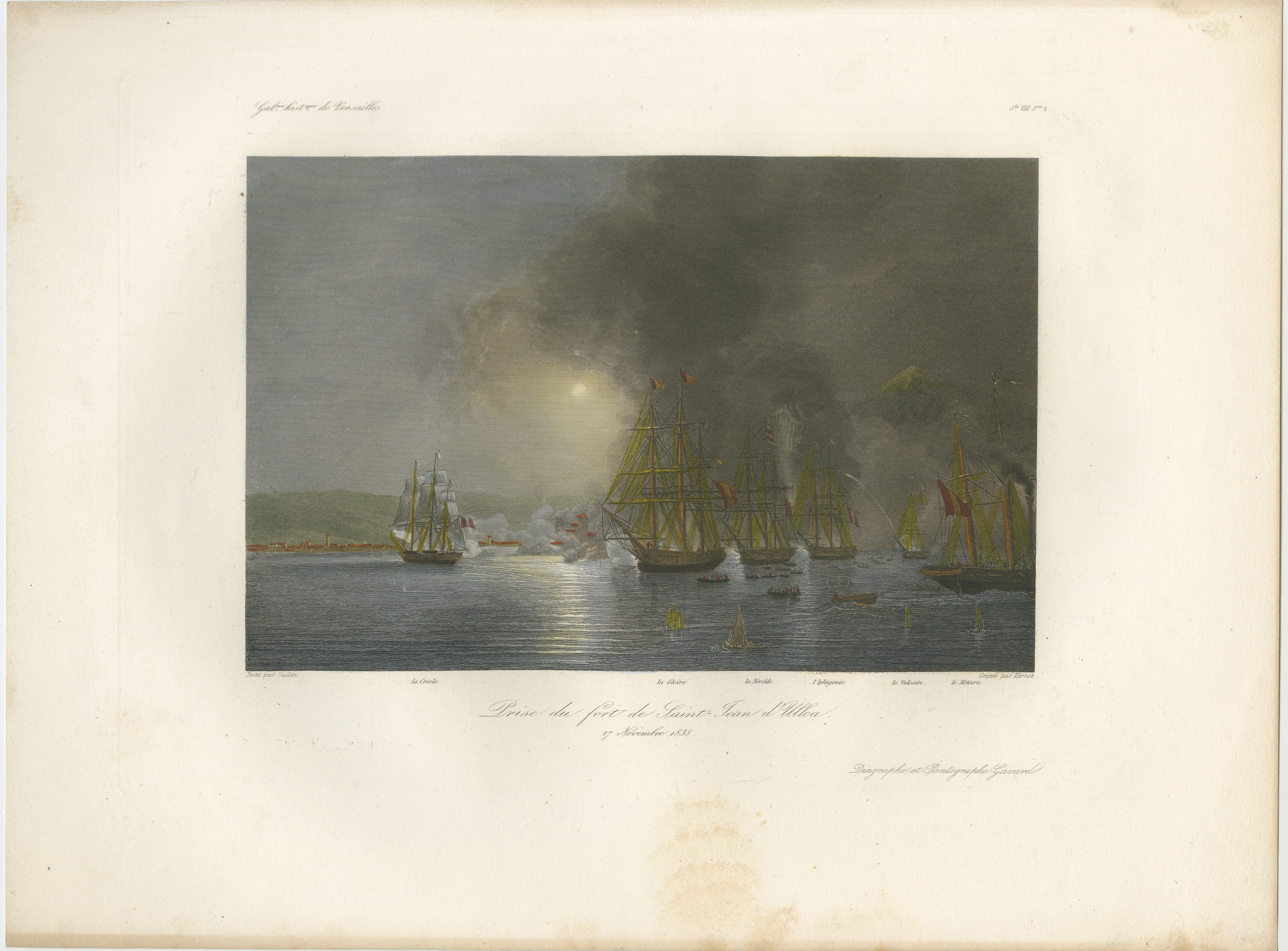
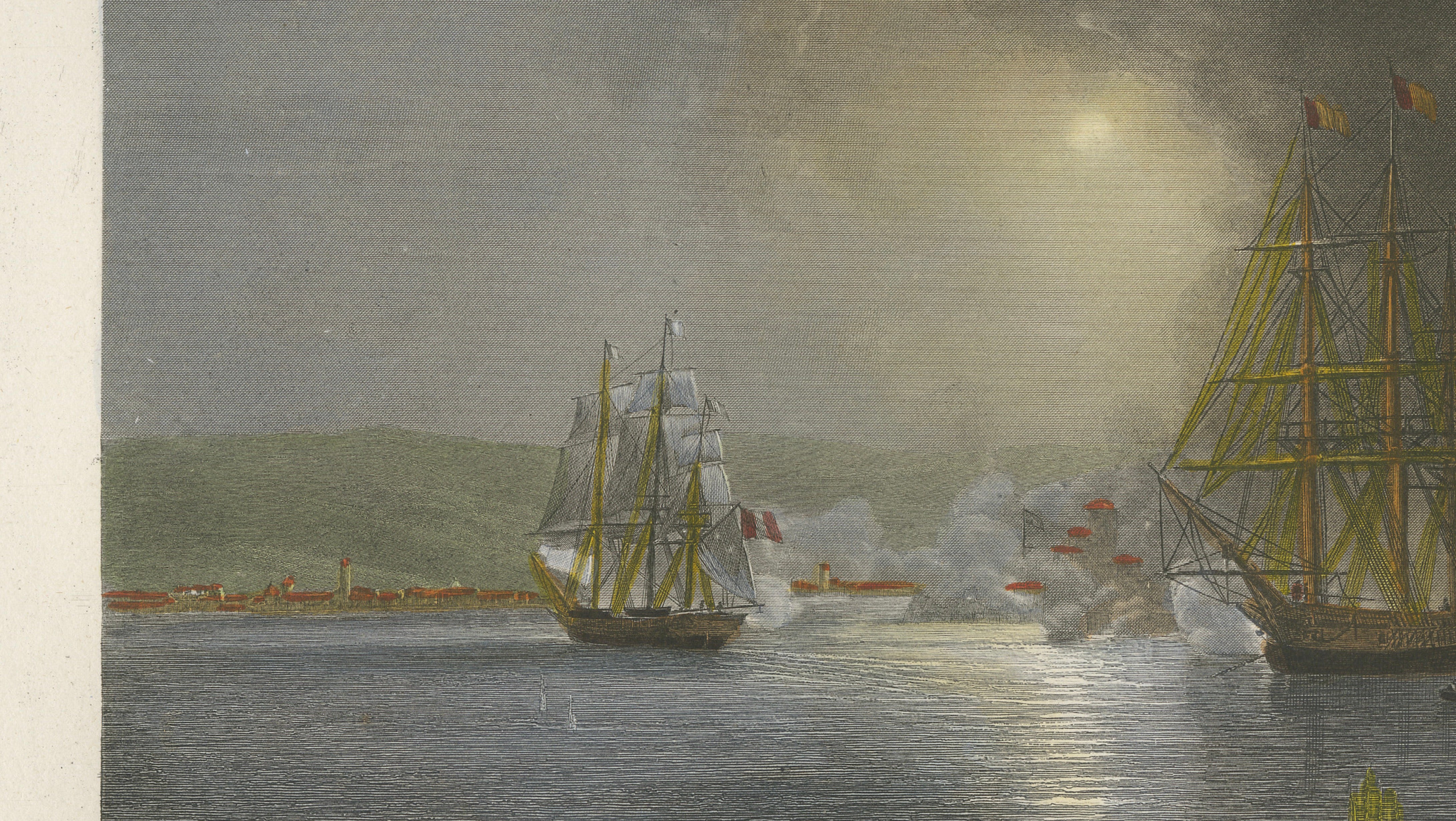
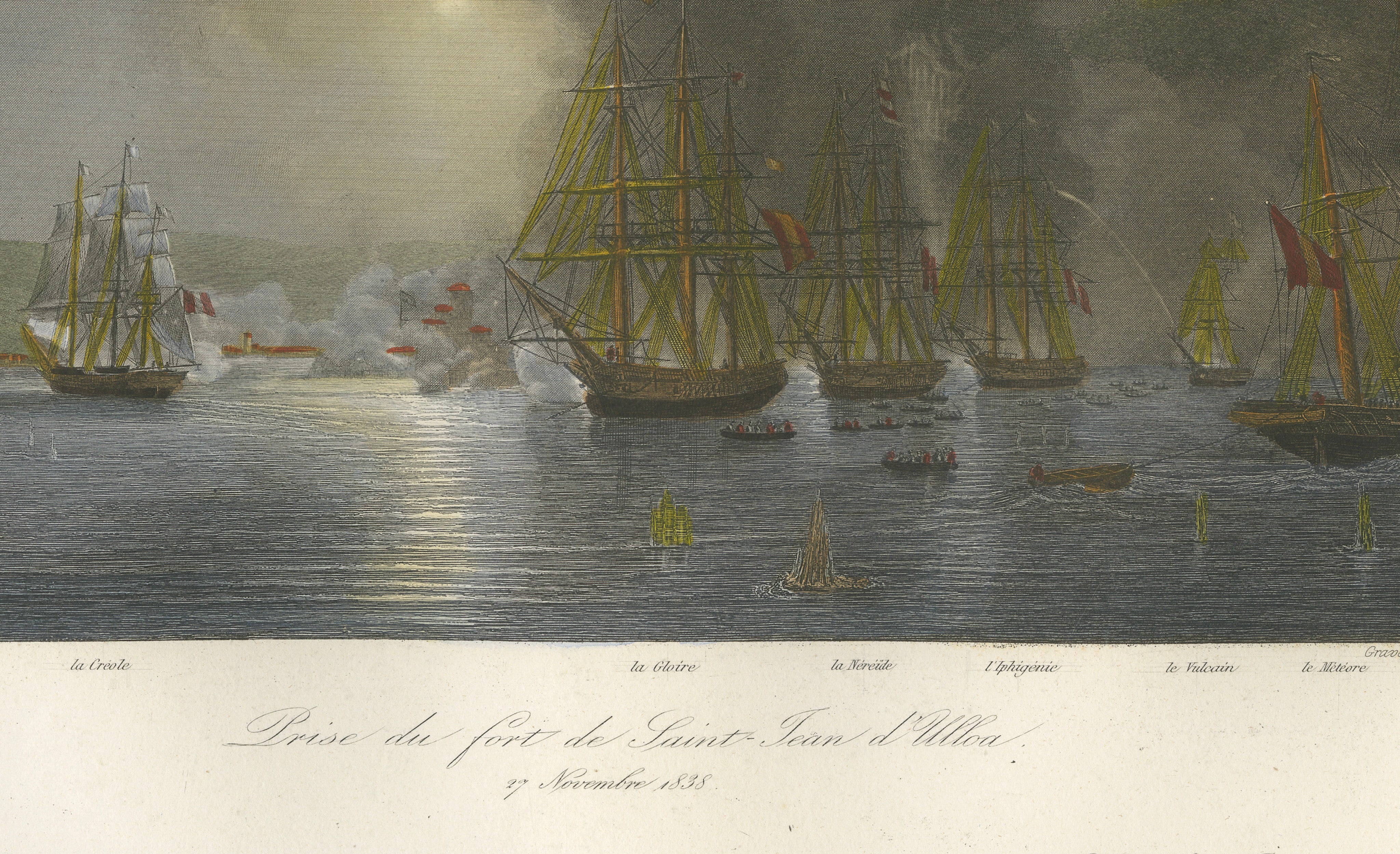
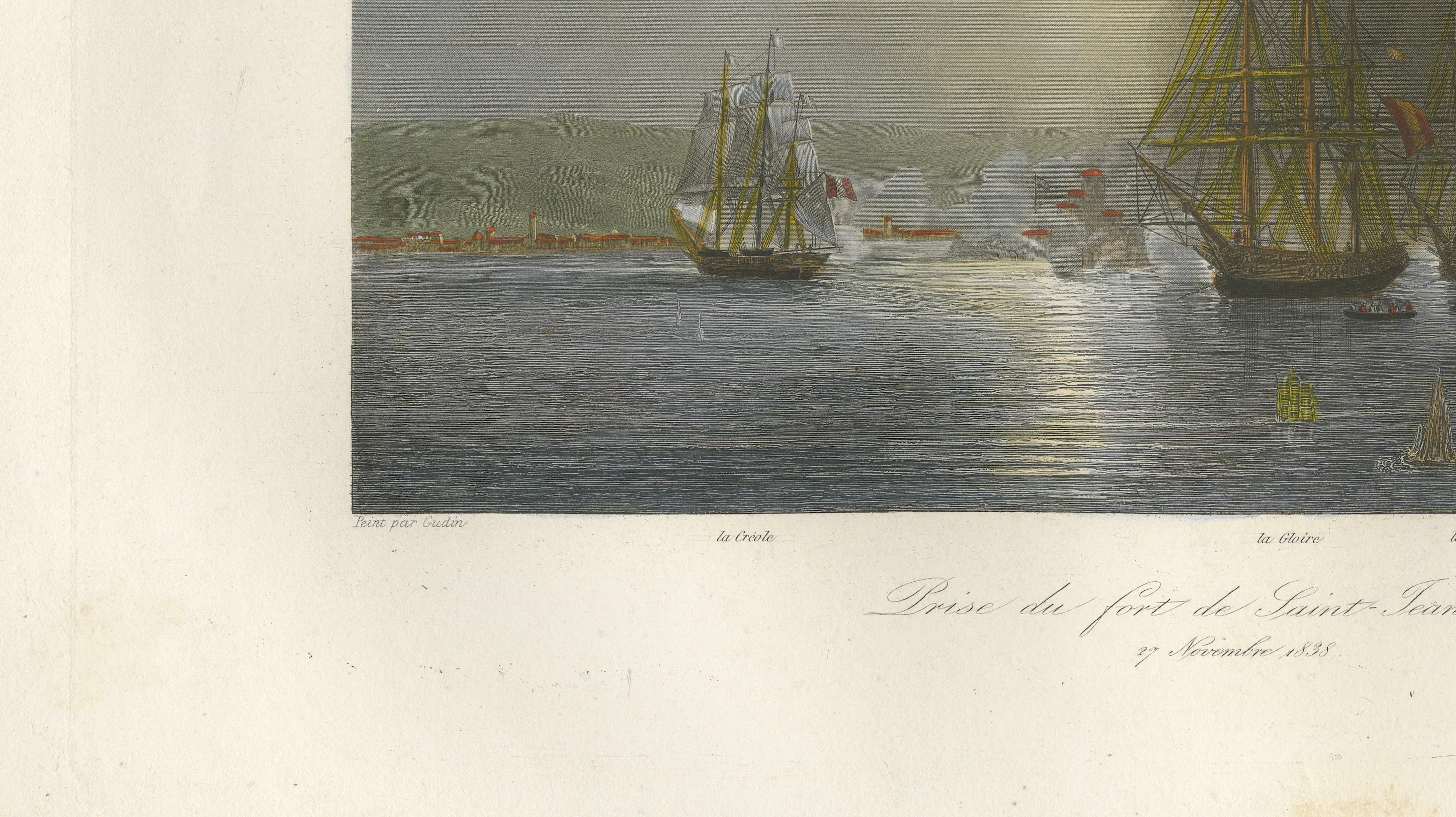
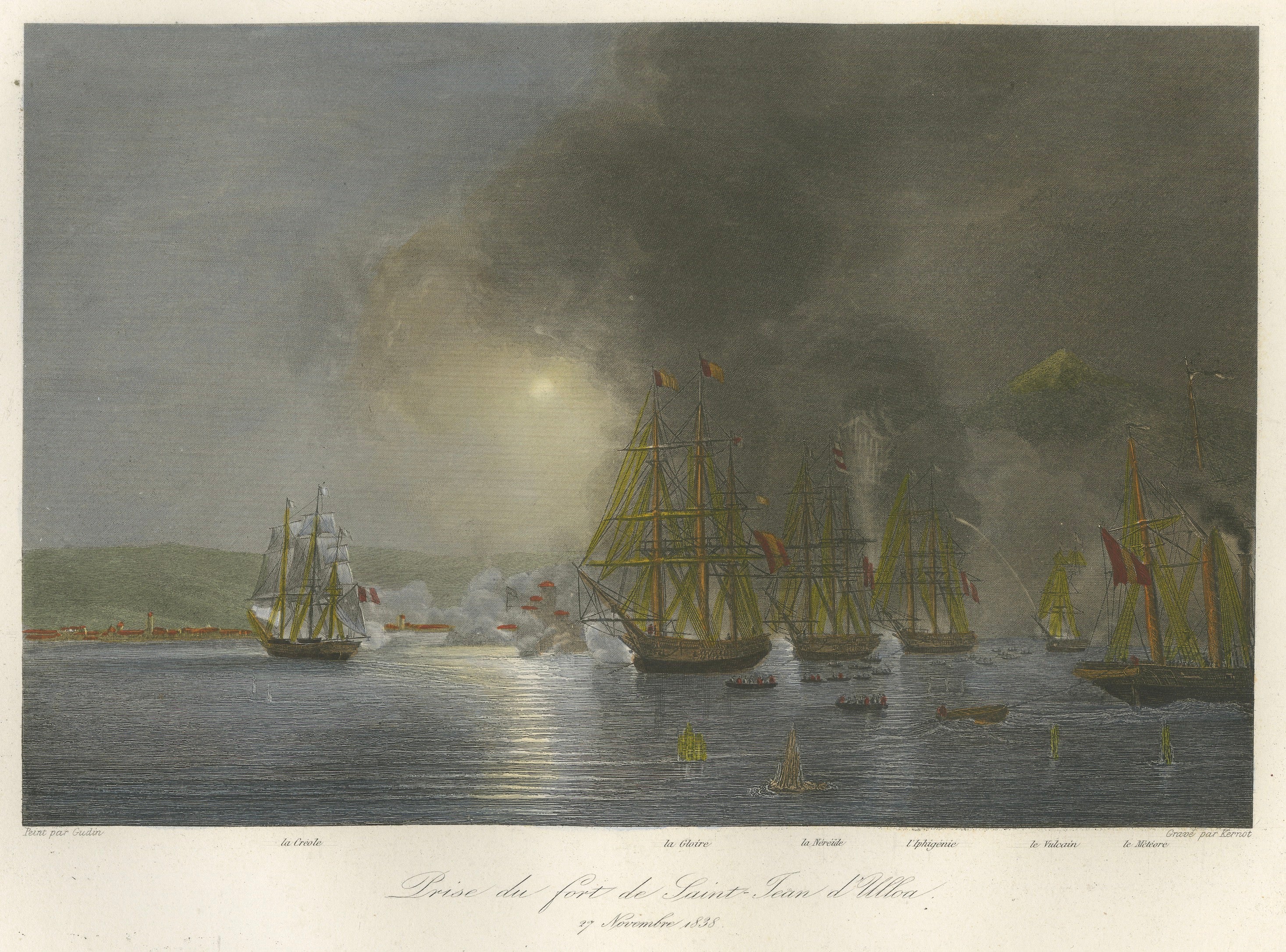
The French assault on the island fortress of San Juan de Ulúa, which guards the harbor of Veracruz, Mexico, on 27 November 1838. This is a steel engraving with hand color, after the marine painter Baron Théodore Gudin (1802-1880) and engraved by James Kernott for the Galerie Historique de Versailles, issued around 1840. The plate title, in French, reads "Prise du fort de Saint-Jean d'Ulloa, 27 Novembre 1838", and the series name appears in the upper margin.
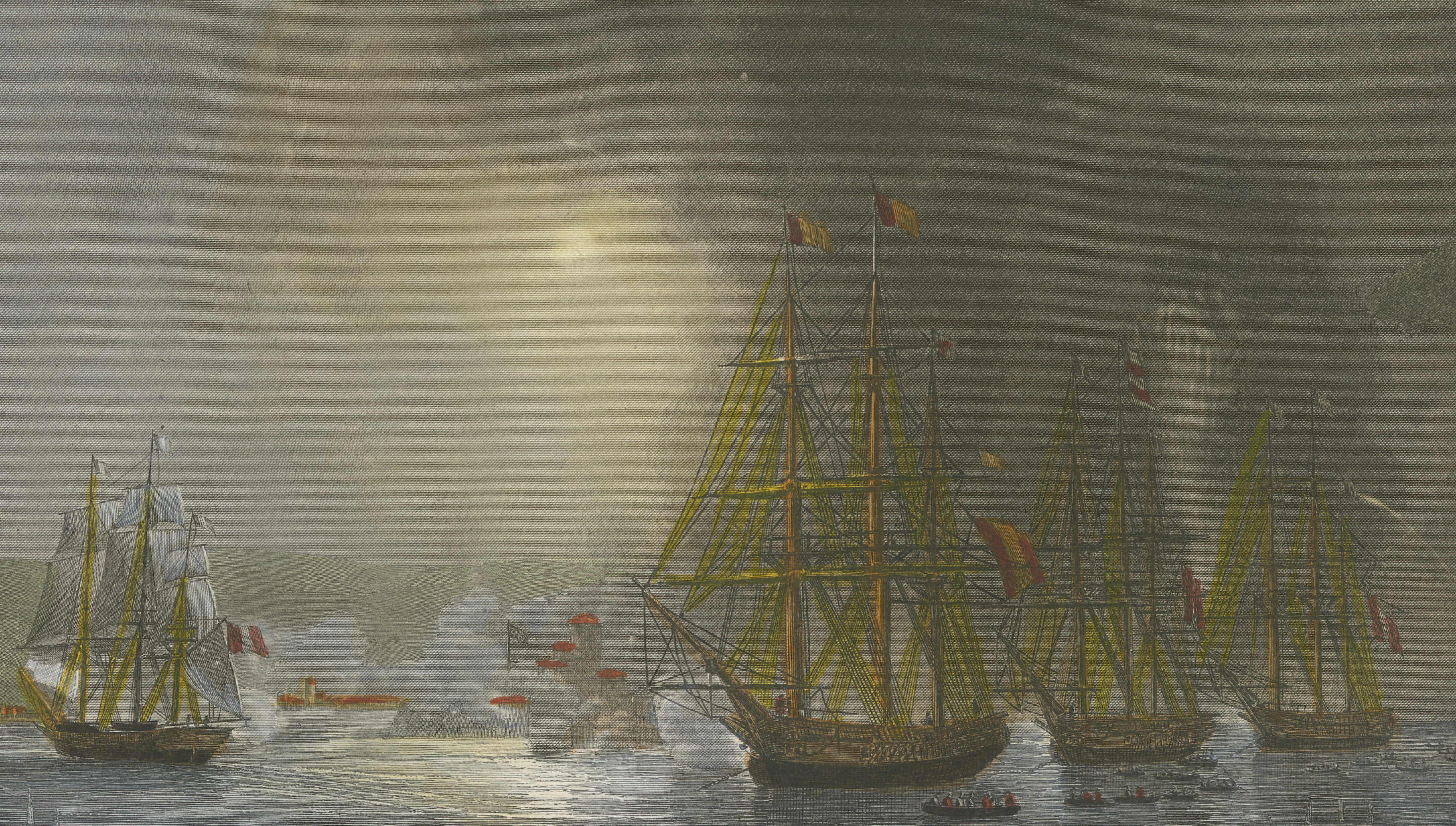
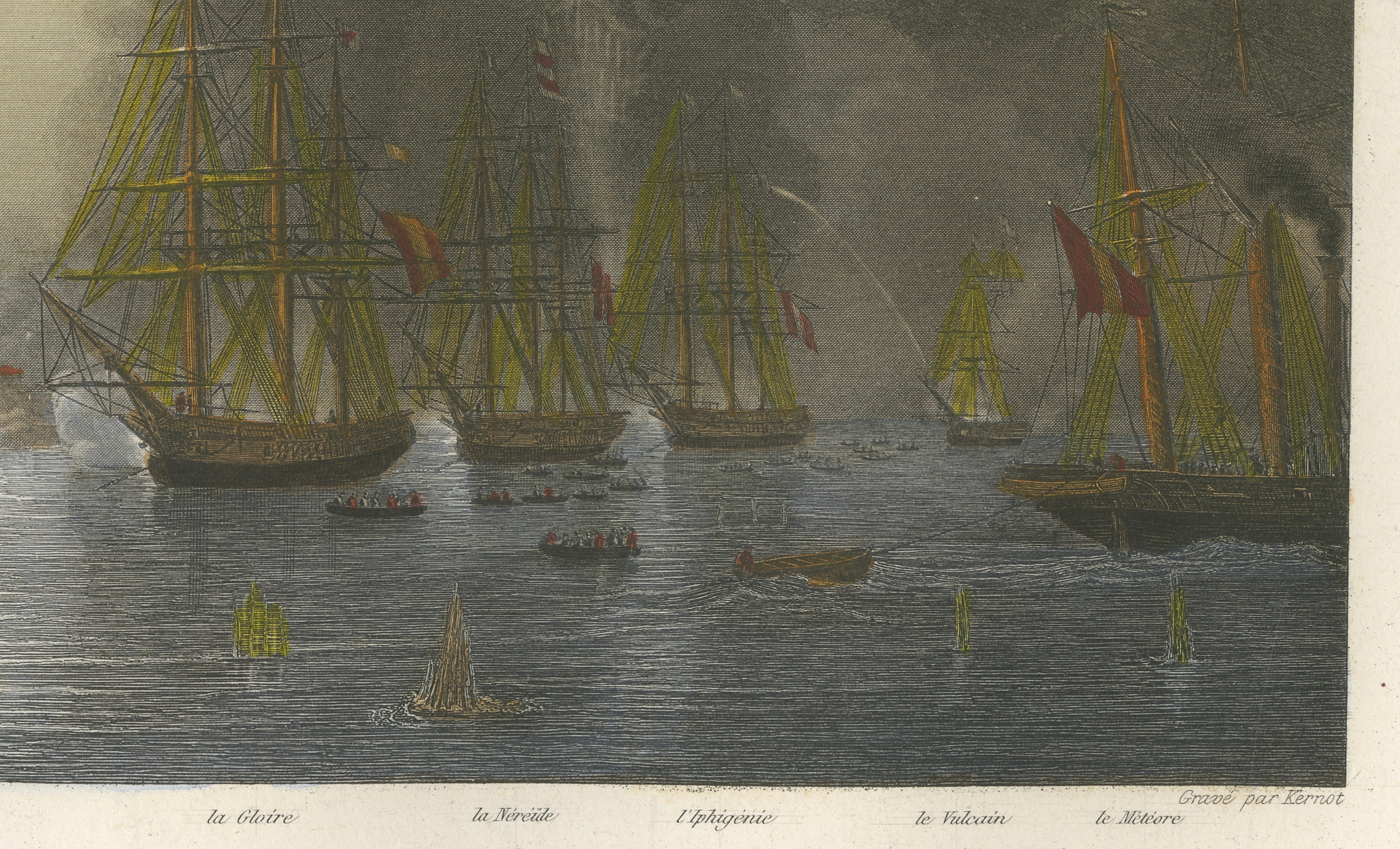
The scene is set at night. A moon glows through heavy gun smoke over the water, French warships under sail stand across the harbor in the center and at the right, and flashes of gunfire break the darkness along the low shore at the left. A distant volcanic cone rises through the smoke at the far right, and small boats dot the lit water. The individual ships are named in small lettering along the lower margin.
The attack was the decisive naval action of the Pastry War between France and Mexico. Gudin was appointed an official Peintre de la Marine in 1830 and was known for naval battles, storms and shipwrecks, subjects that suited a series devoted to the military history of France.