About this sheet
Antique Greek Amphorae with Classical Figures Double-Page Lithograph, 1883
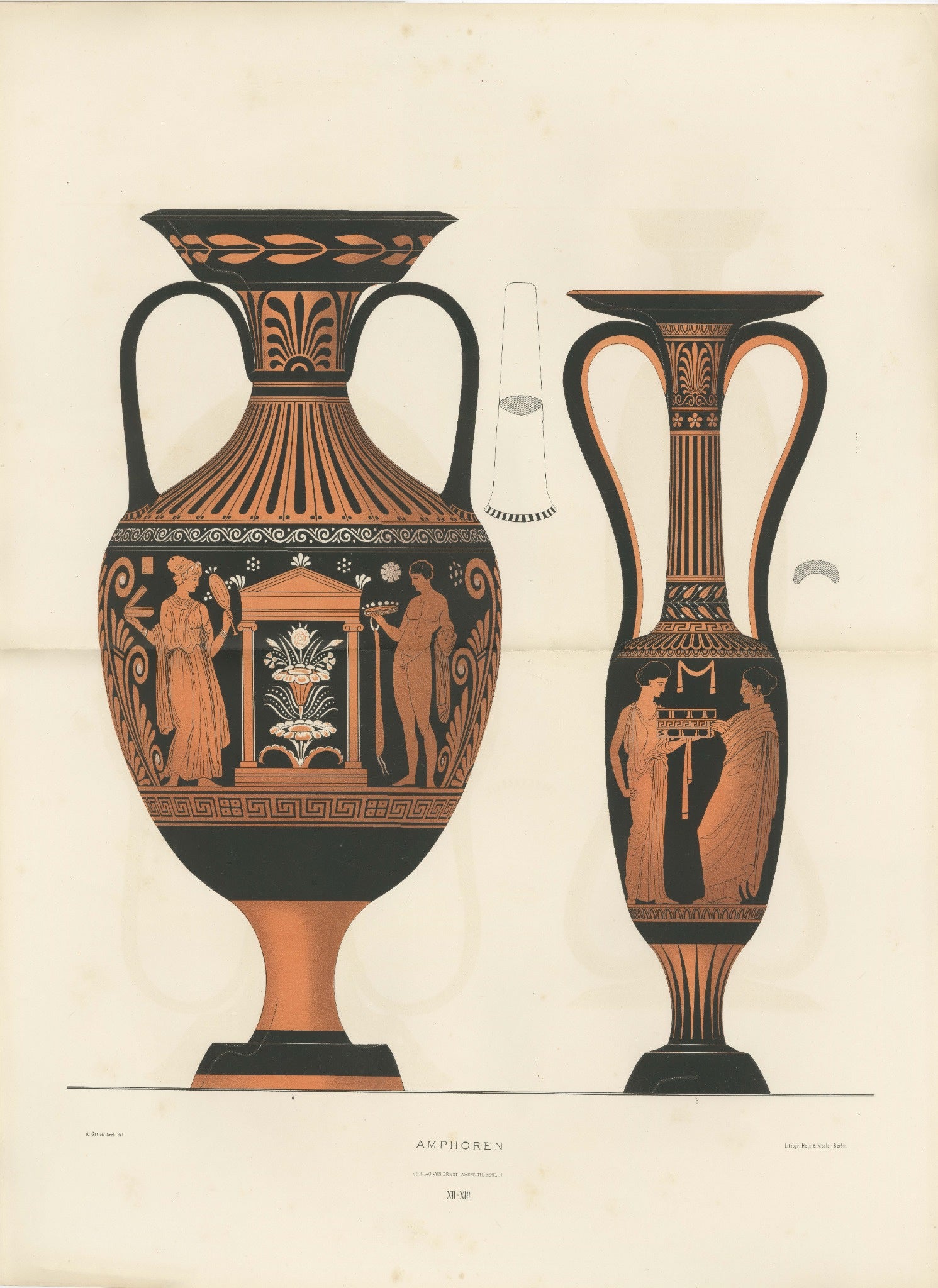
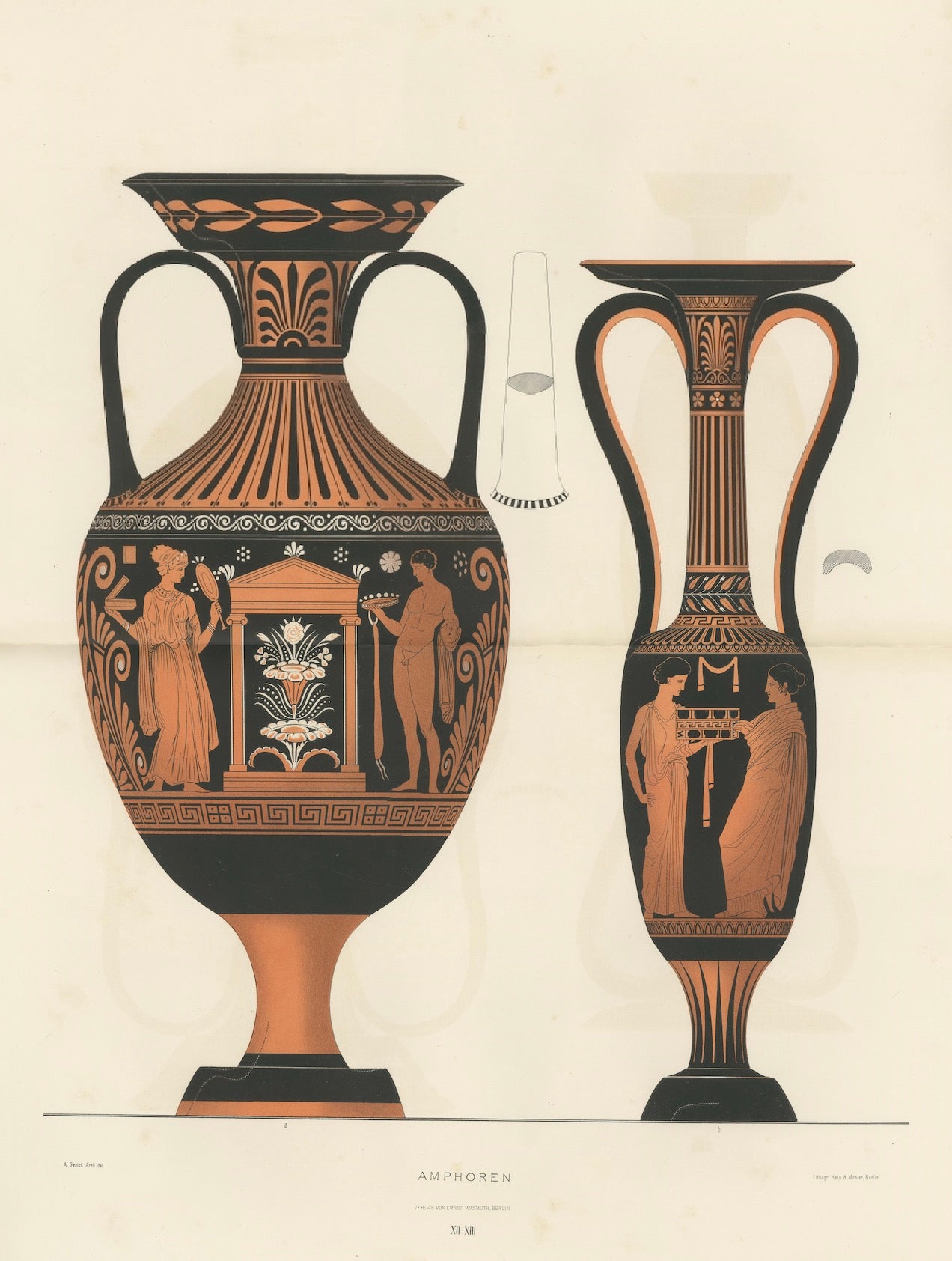
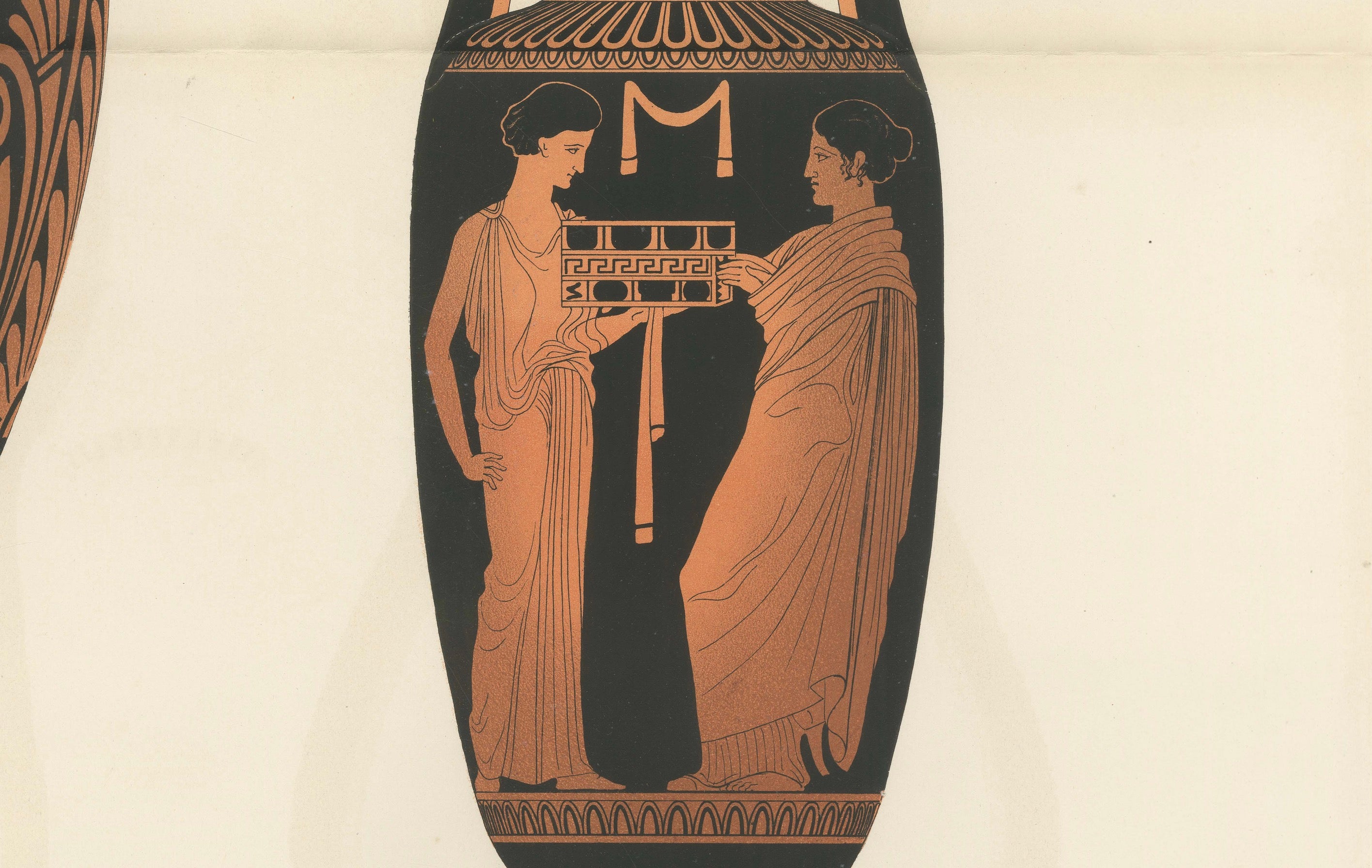
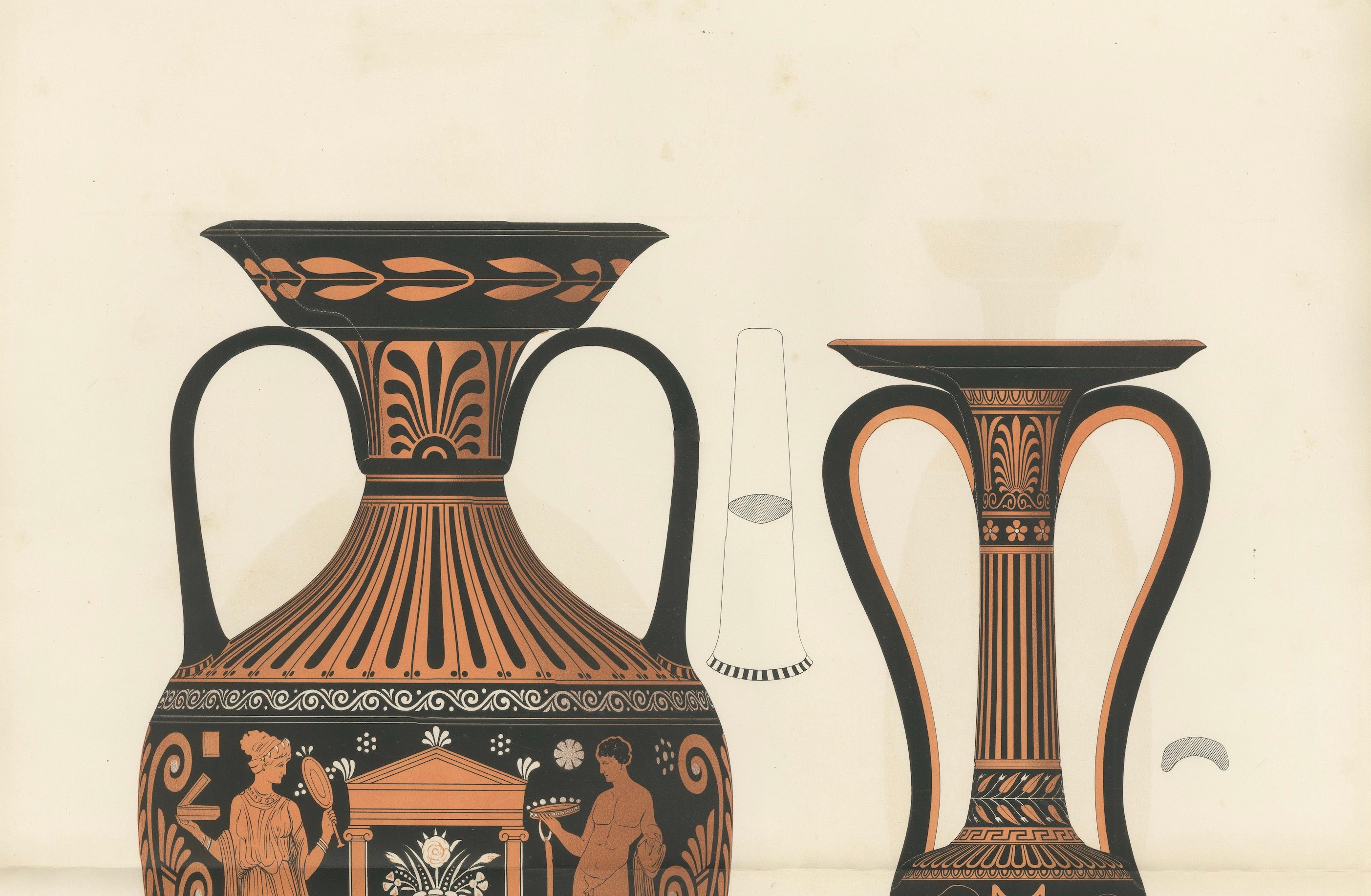
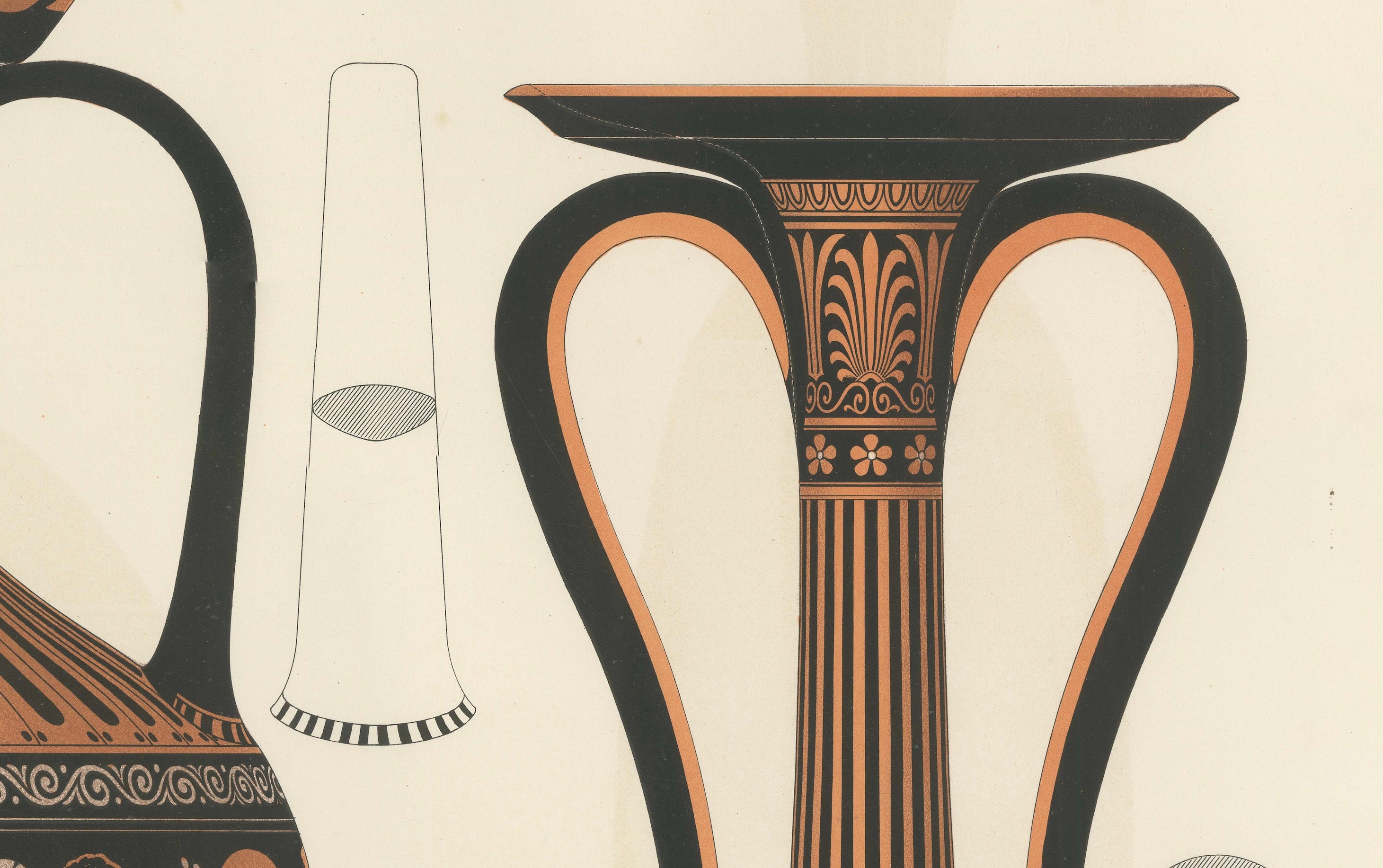
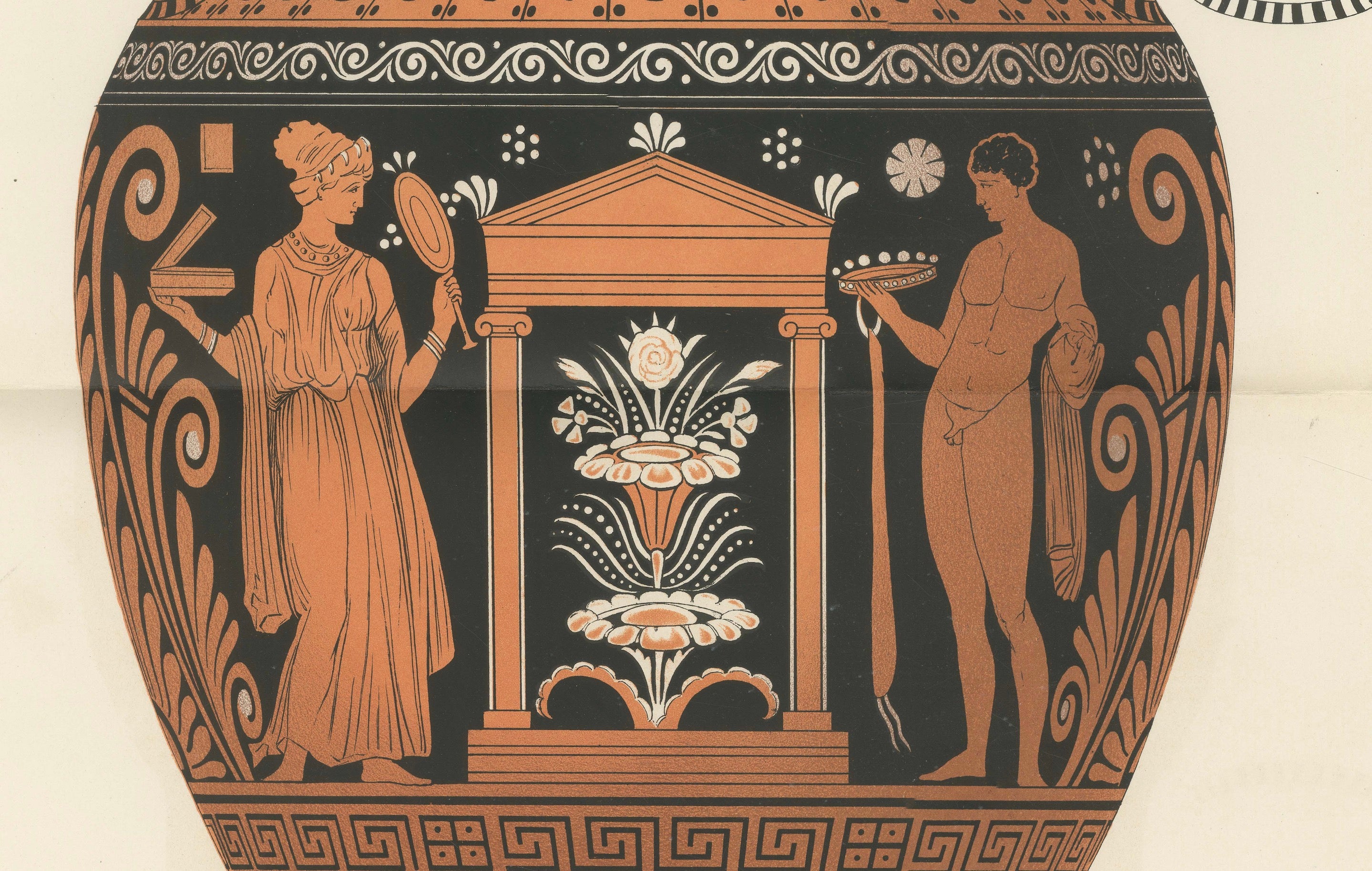
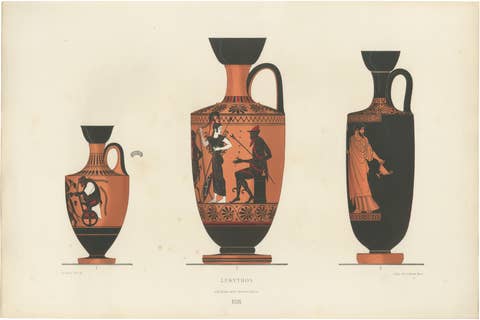
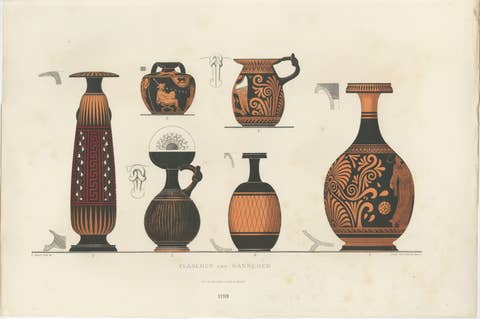
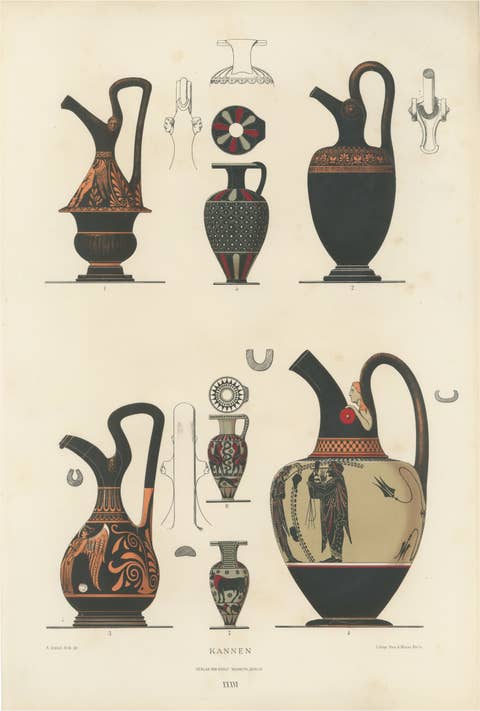
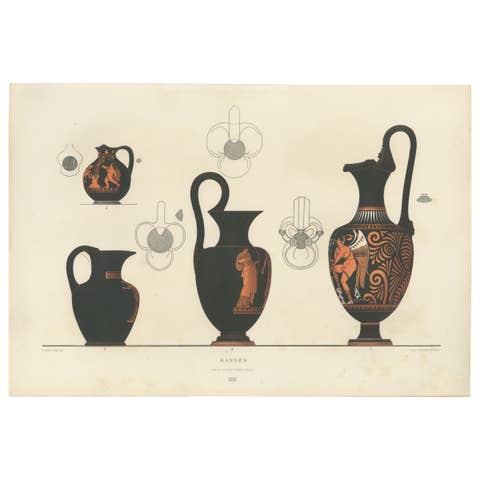
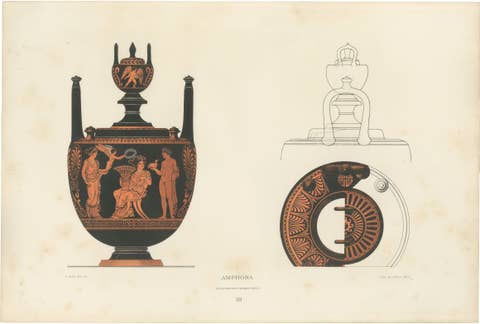
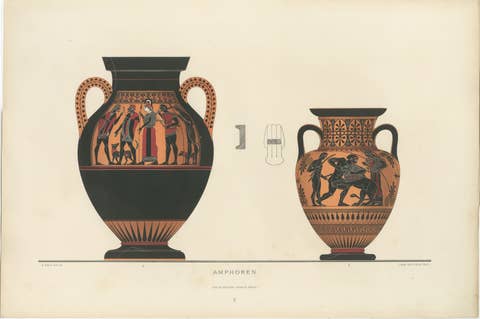
Original antique color lithograph depicting two elaborately decorated ancient Greek amphorae, published in Berlin in 1883 as part of Albert Genick’s monumental work on Greek ceramics.
This impressive double-page plate presents two contrasting amphorae, both richly decorated with classical figures and ornamental motifs.
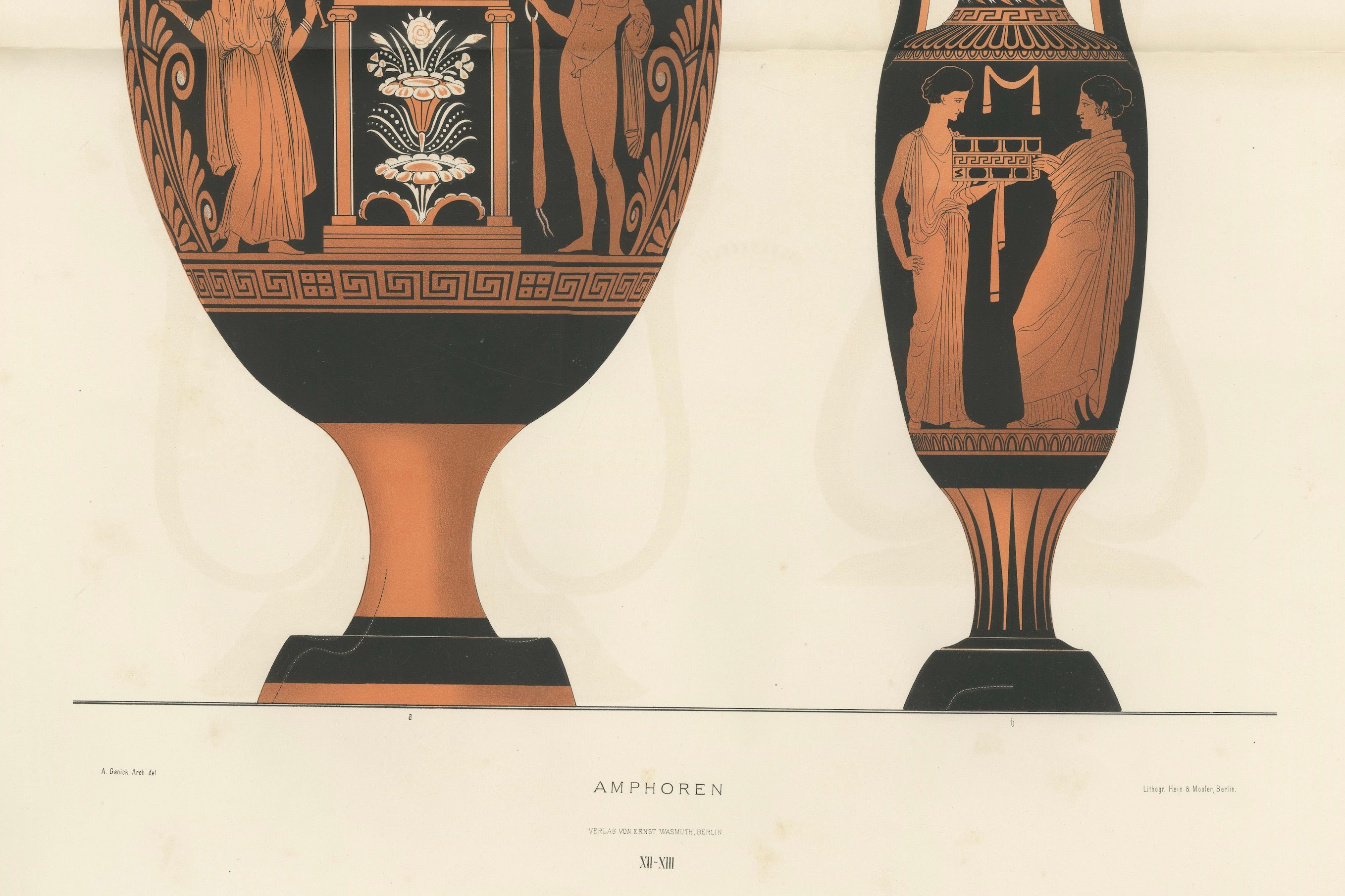
The larger vessel on the left has an elegant elongated form with large handles and a broad figural panel. Two classical figures flank a small architectural shrine or temple containing an elaborate floral composition. The surrounding decoration includes scrolling vegetal ornament, palmettes, geometric bands and a Greek-key meander border. Cream-white highlights add further depth to the predominantly black and terracotta-red palette.
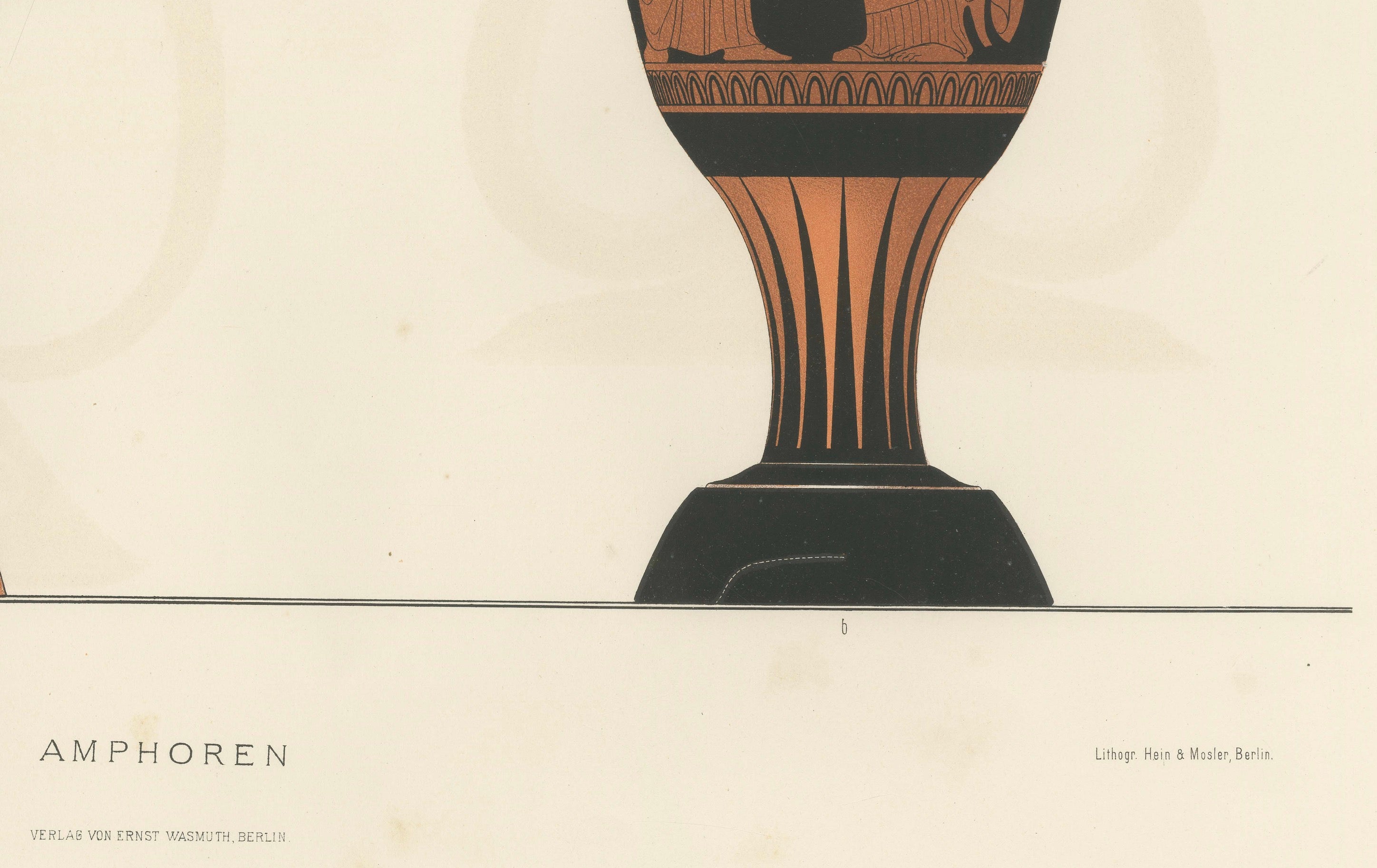
The tall, slender amphora on the right provides an elegant contrast. Its elongated neck is decorated with palmettes and geometric ornament, while the body carries two standing draped figures facing one another across a small architectural or ceremonial element.
Small archaeological detail drawings between and beside the vessels record aspects of their construction, reflecting the scholarly purpose of Genick’s publication.
The combination of two very different vessel forms, architectural decoration, classical figures and strong black-and-terracotta coloring makes this one of the particularly attractive plates from the series.
This is Plate XII–XIII, one of the large double-page plates from the publication. Its substantially larger format gives it considerably greater decorative presence than the regular single plates.
The print originates from the second edition of Albert Genick’s important publication on Greek ceramics, published by Ernst Wasmuth in Berlin in 1883. The complete work comprised 36 color lithographic plates, including four double-page plates, illustrating amphorae, vases, bowls and other examples of ancient Greek ceramic art.
The lithographs were produced by the Berlin printing establishment Hein & Mosler. Albert Genick (1837–1906), a Berlin-trained architect, became particularly known for his precise graphic documentation of ancient ceramics. This publication is regarded as his principal work. Complete examples are rare, and individual plates from the series are increasingly difficult to find.
Creator: Albert Genick (1837–1906)
Publisher: Ernst Wasmuth, Berlin
Printer: Hein & Mosler, Berlin
Plate: XII–XIII
Date: 1883
Edition: Second edition
Technique: Color lithograph
Origin: Germany
Format: Double-page plate
Sheet size: Approximately 68 x 92 cm (26.8 x 36.2 inches)
Orientation: Landscape
Period: Late 19th Century
Style: Neoclassical / Archaeological Revival
Condition:
Very good antique condition. Strong black, terracotta and cream-white coloring with the fine figural and ornamental details remaining well preserved. Original center fold as issued. Light age-related toning with scattered minor foxing and spotting, principally visible in the surrounding margins. Minor wear and slight irregularity along the sheet edges consistent with age. Please study the photographs carefully as they form part of the condition description.
An original antique lithograph printed in 1883, not a modern reproduction.
The print is offered unframed. Any framed or interior images, if shown, are for presentation and inspiration only.
Additional companion plates from Albert Genick’s series are available separately.
Keywords:
Albert Genick, Greek amphorae, Greek amphora, ancient Greek pottery, Greek ceramics, Greek vases, classical figures, double page lithograph, large antique print, amphora print, classical pottery, Greek mythology, classical architecture, Greek temple, archaeological print, classical antiquity, ancient Greece, Greek art, red figure pottery, ancient vessels, Greek meander, Greek key, palmette ornament, neoclassical decor, Archaeological Revival, archaeological illustration, antique lithograph, color lithograph, ceramic art, classical art, Greek Revival, Grand Tour, Ernst Wasmuth, Hein Mosler, Berlin 1883, 19th century print, museum style decor