One of a kind: this is the sheet in the photographs. Ships from Langweer, the Netherlands.
Date
1867
Sheet size
28.5 × 22 cm (11.2 × 8.7 in)
Condition
Good
Reference
BG-12980-33
Condition
Good condition for its age, with slight overall toning and minor scattered foxing mainly in the margins. The paper remains strong with no tears or repairs, and the hand colouring is vivid and well-preserved.
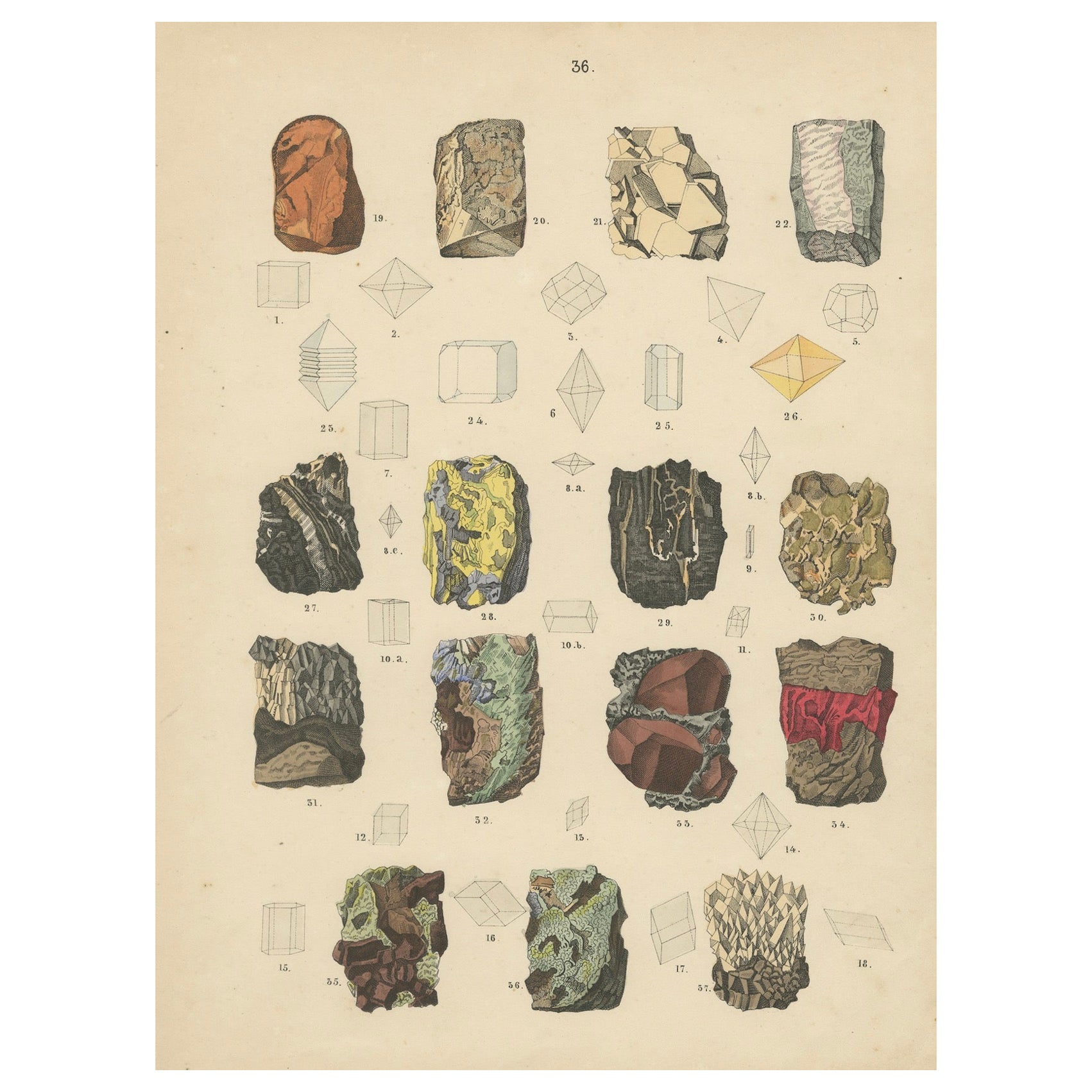
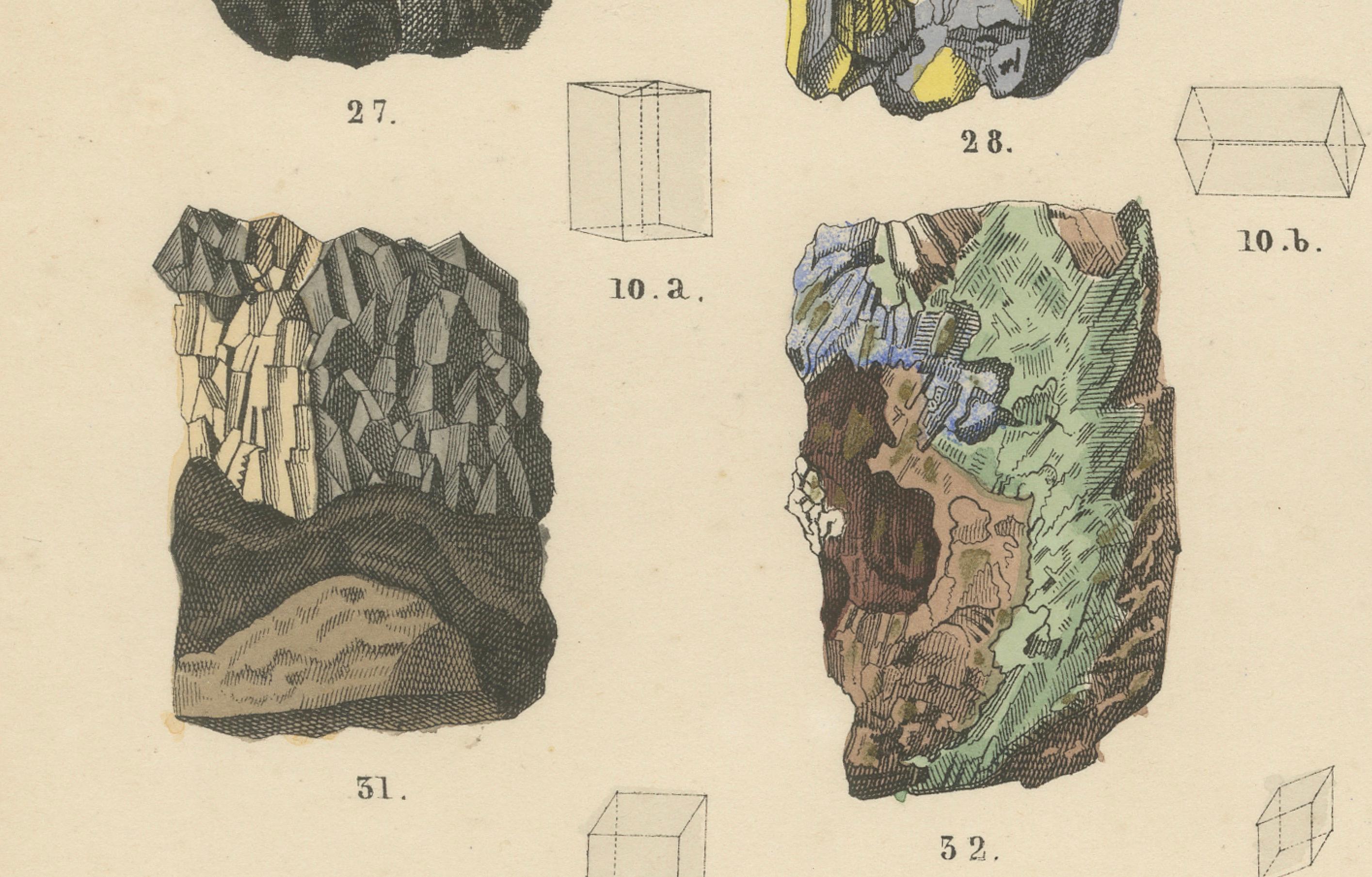
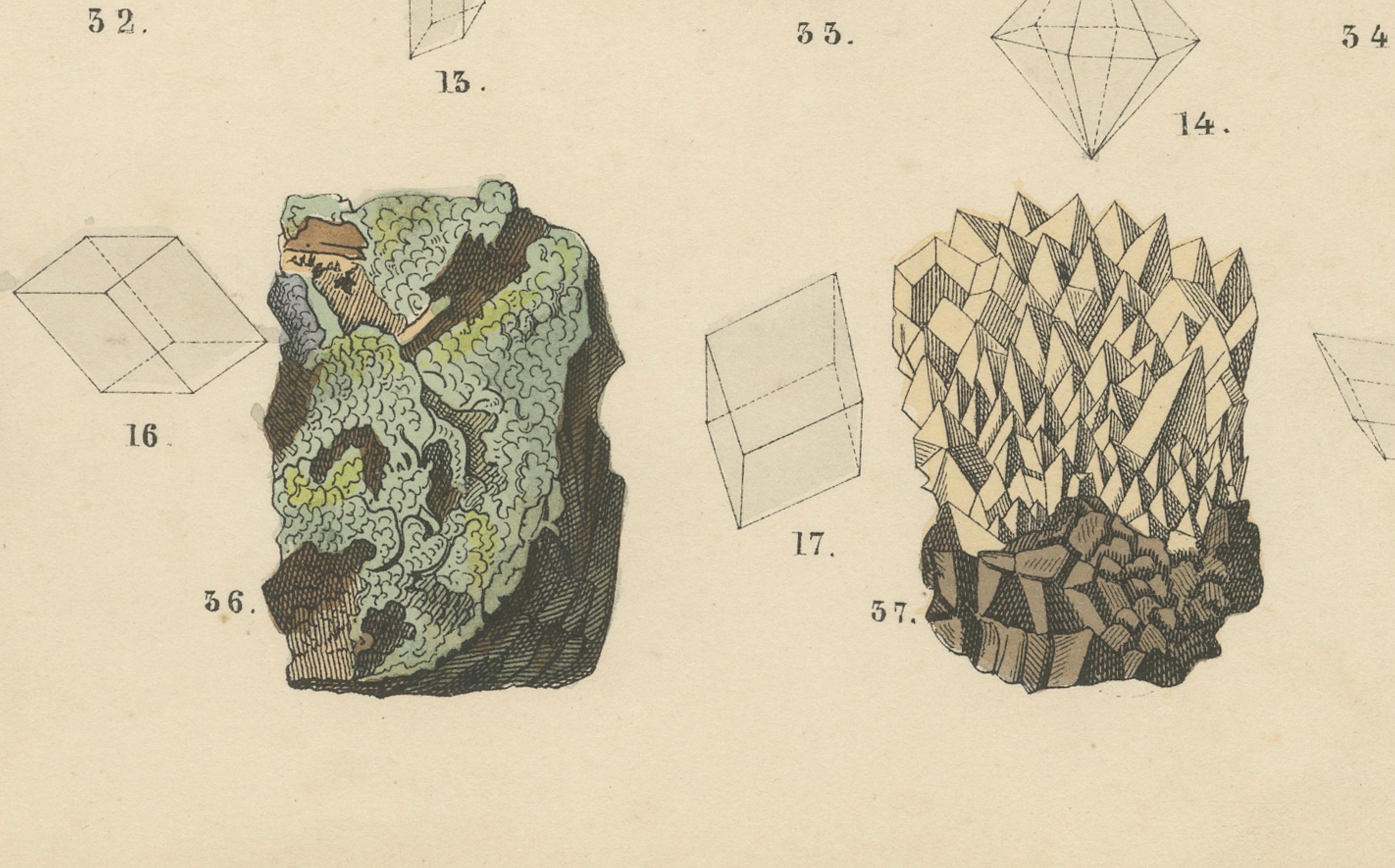
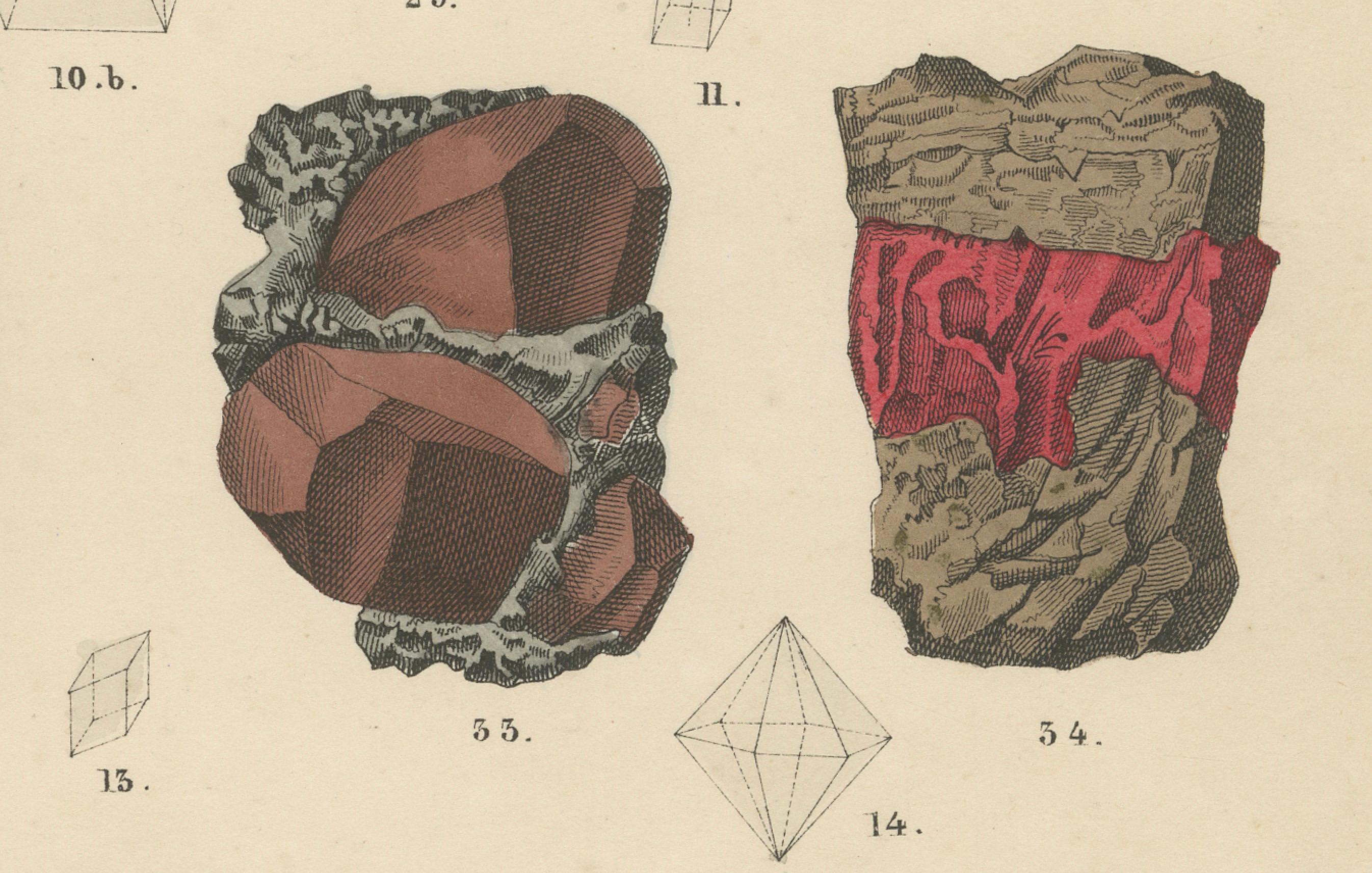
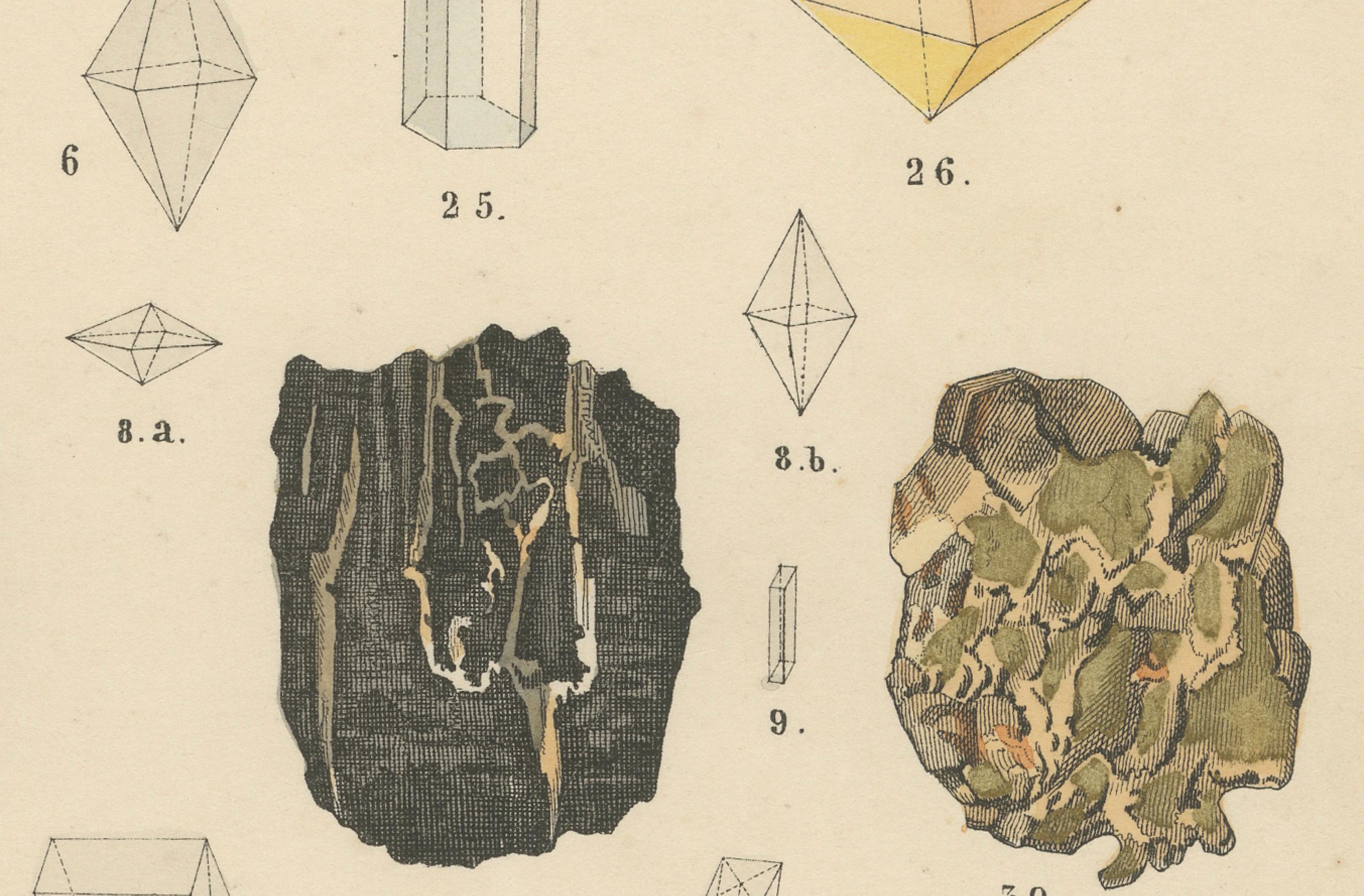
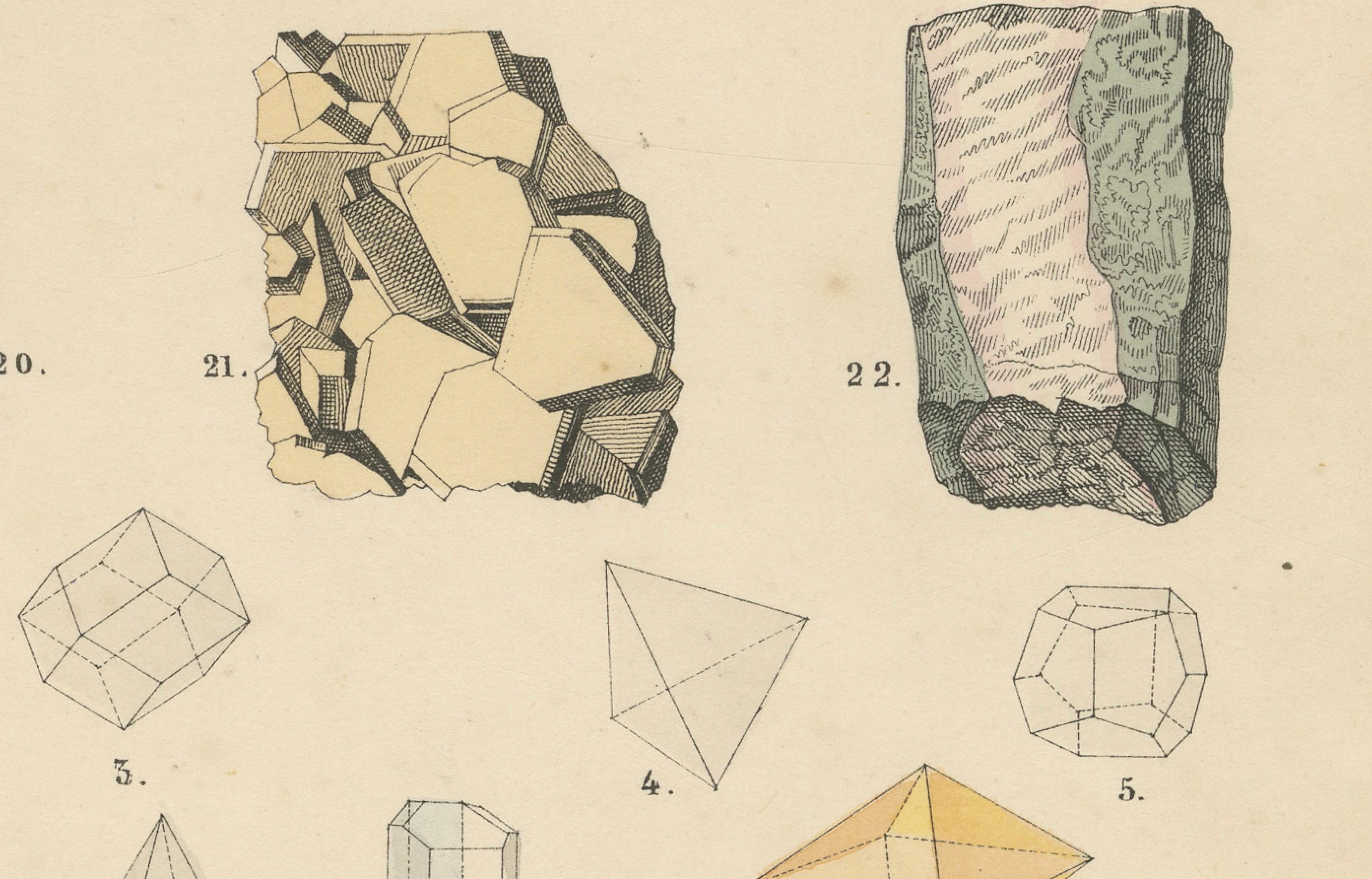
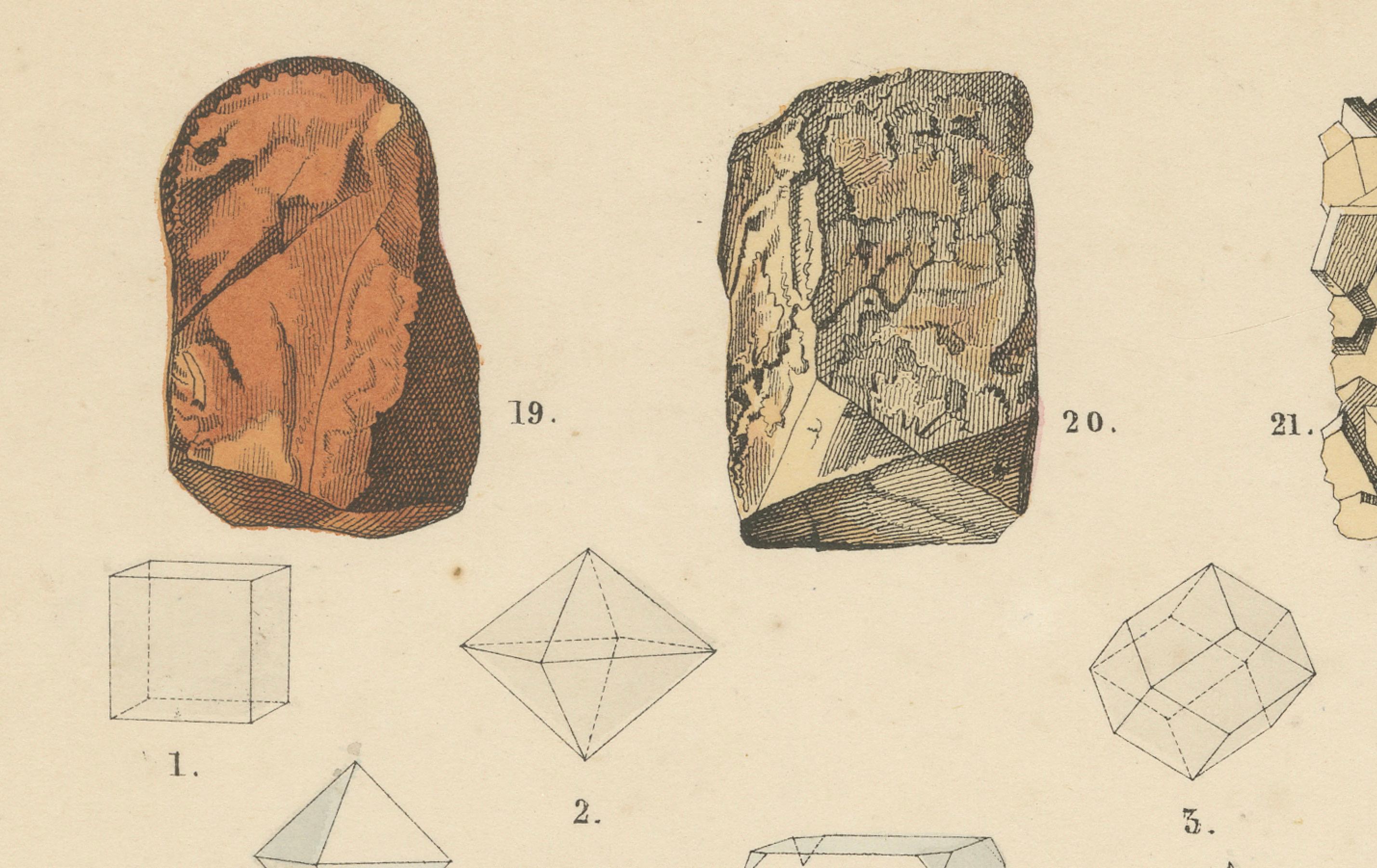
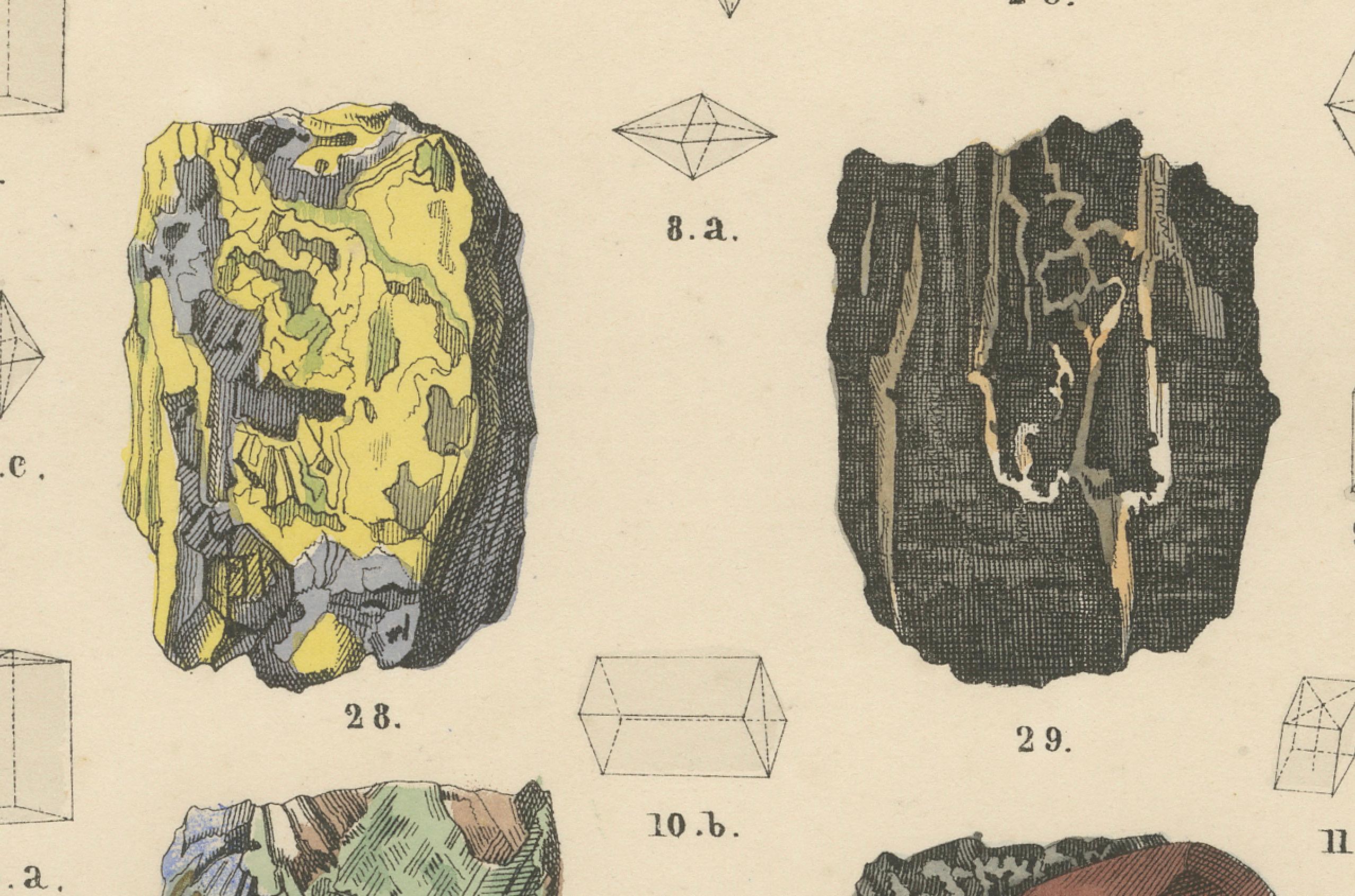
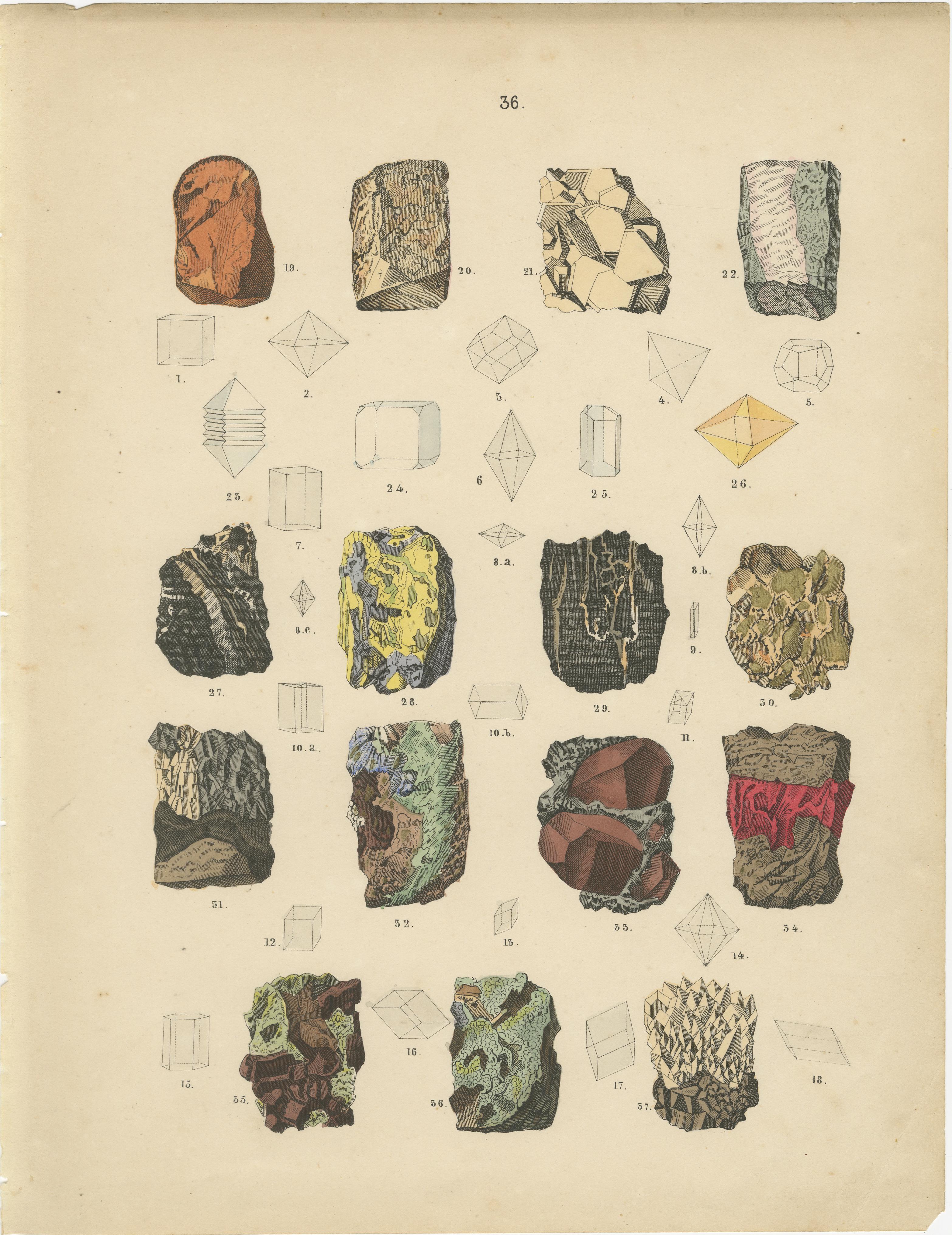
This detailed antique print depicts a variety of minerals, rocks, ores, and crystal shapes rendered in fine hand-coloured engravings. It originates from the Atlas der Natuurlijke Geschiedenis voor scholen en huisgezinnen, adapted into Dutch by T.C. Winkler after Traugott Bromme, and published in Amsterdam by J.C. Loman in 1867. Created for educational use, this plate introduced 19th-century students to mineralogy and crystallography, showing both rock specimens and geometric crystal models.
The labelled figures include:
1–6. Crystal forms and geometric models (various prism, pyramid, and rhombohedron shapes used in mineralogy) 7\. Anthracite coal 8\. Bituminous coal 8a. Jet 8b. Lignite 9\. Sulphur ore 10\. Iron pyrite (fool’s gold) 10a. Iron ore with gangue 10b. Hematite ore 11\. Quartz crystal cluster 12\. Feldspar crystal 13\. Mica 14\. Calcite crystal 15\. Galena (lead ore) 16\. Malachite (copper carbonate) 17\. Rock crystal (quartz group) 18\. Siderite crystal 19\. Red jasper 20\. Petrified wood 21\. Baryte (heavy spar) 22\. Serpentine 23\. Garnet cluster 24–26. Further geometric crystal models showing mineral habit
Produced using copper engraving with meticulous hand colouring, the print shows precise linear details and realistic mineral colours, capturing each sample’s luster, cleavage, and fracture for geological identification. These plates served as essential educational references before photographic mineral guides were widely available.
Condition summary: Good condition for its age, with slight overall toning and minor scattered foxing mainly in the margins. The paper remains strong with no tears or repairs, and the hand colouring is vivid and well-preserved.
Framing tips: Frame this mineralogy print in a black, dark wood, or walnut frame with a cream or off-white mount to enhance its fine engraved details and earthy mineral tones. For traditional settings, a gold frame adds antique warmth and museum-like sophistication. UV-protective glass is recommended to preserve colours and prevent further toning. This antique natural history print will enrich any geology, mineral art, or educational collection with timeless scientific beauty and decorative intrigue.