About this sheet
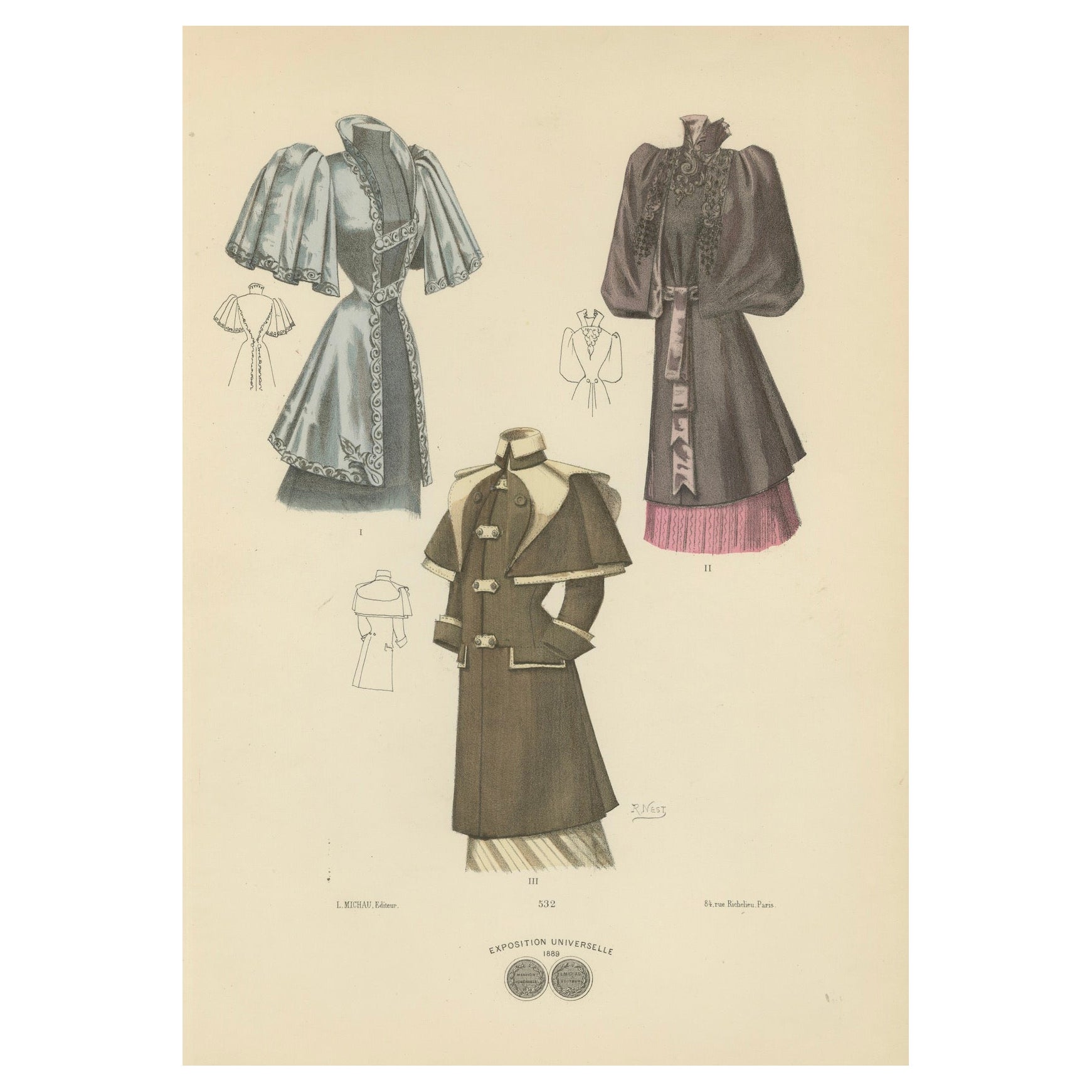
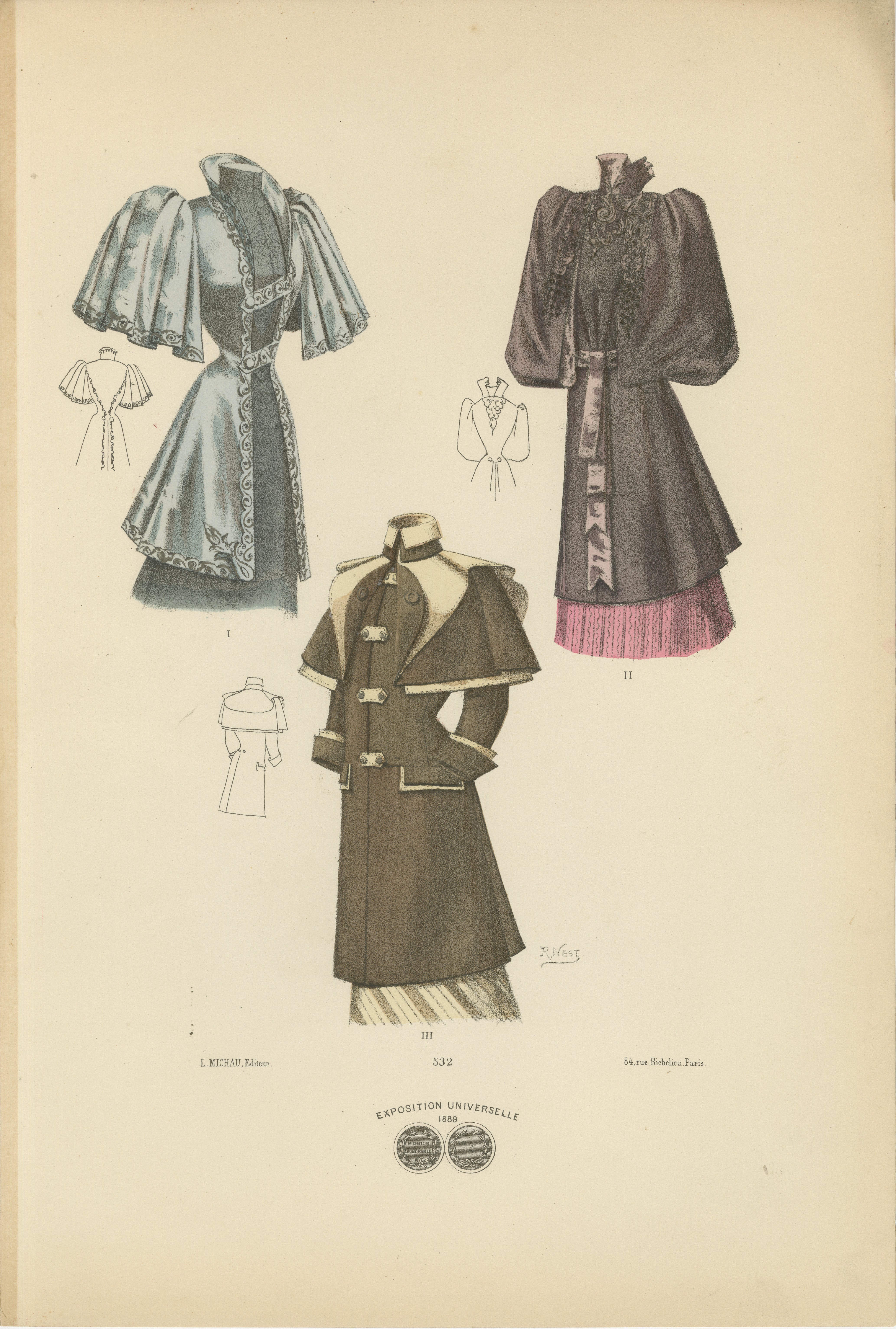
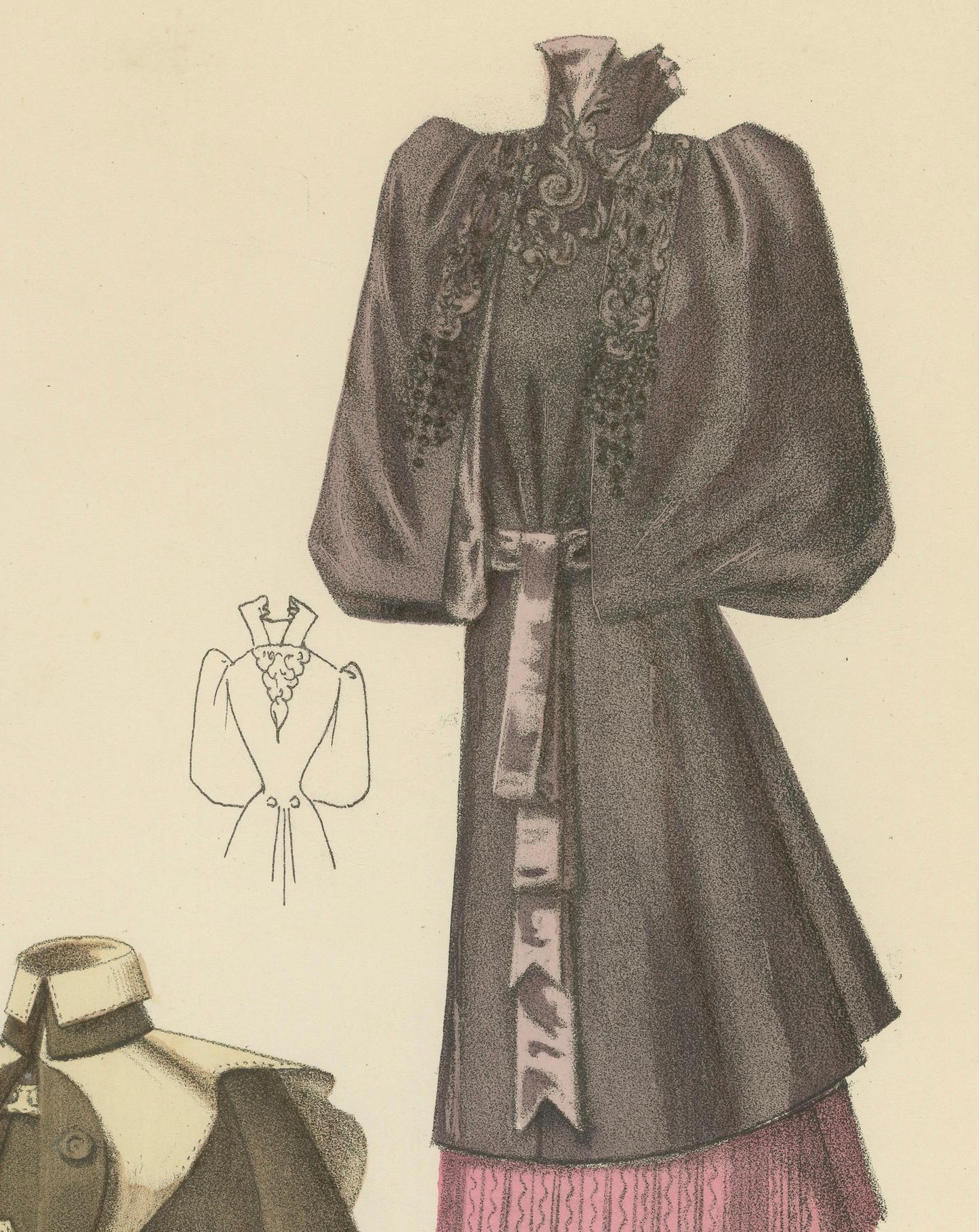
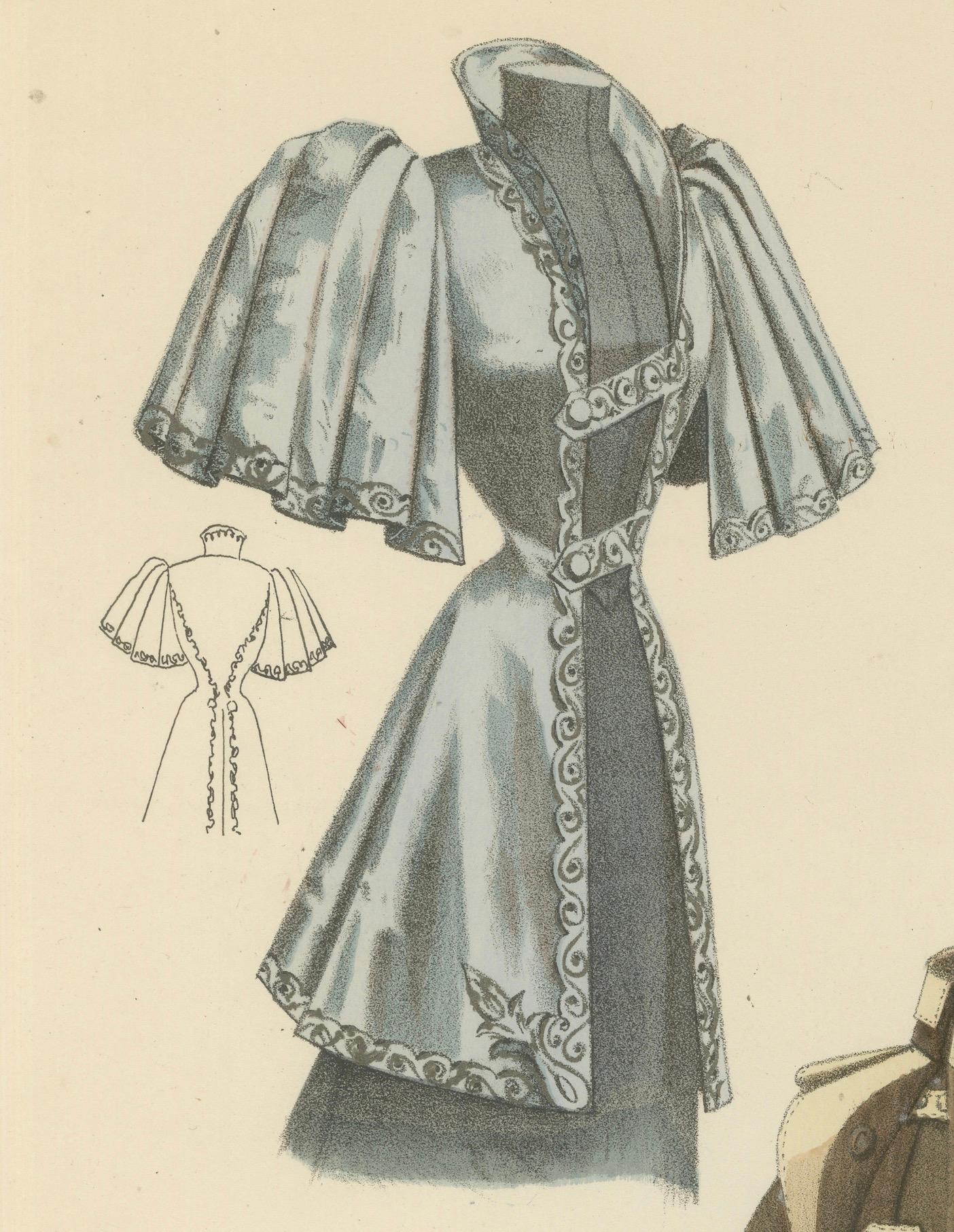
This lithograph showcases three distinct outerwear designs from 1889, representing the diverse and fashionable choices available for women during the late Victorian era. Each coat is depicted in detail, highlighting the unique styles and functional elements of the garments.
1. The first design (top left) features a light blue coat with wide, flared sleeves and intricate decorative trim along the edges. The coat is tailored with a fitted waist and flares out gently towards the hem, creating an elegant silhouette. The ornamental detailing adds a touch of sophistication, making it suitable for both day and evening wear.
2. The second design (top right) is a dark, more formal coat with a high neckline and puffed sleeves that taper into slim cuffs. The bodice is adorned with ornate embroidery or applique work, and a long, narrow sash hangs from the waist. This coat is likely intended for more formal occasions, offering both warmth and style.
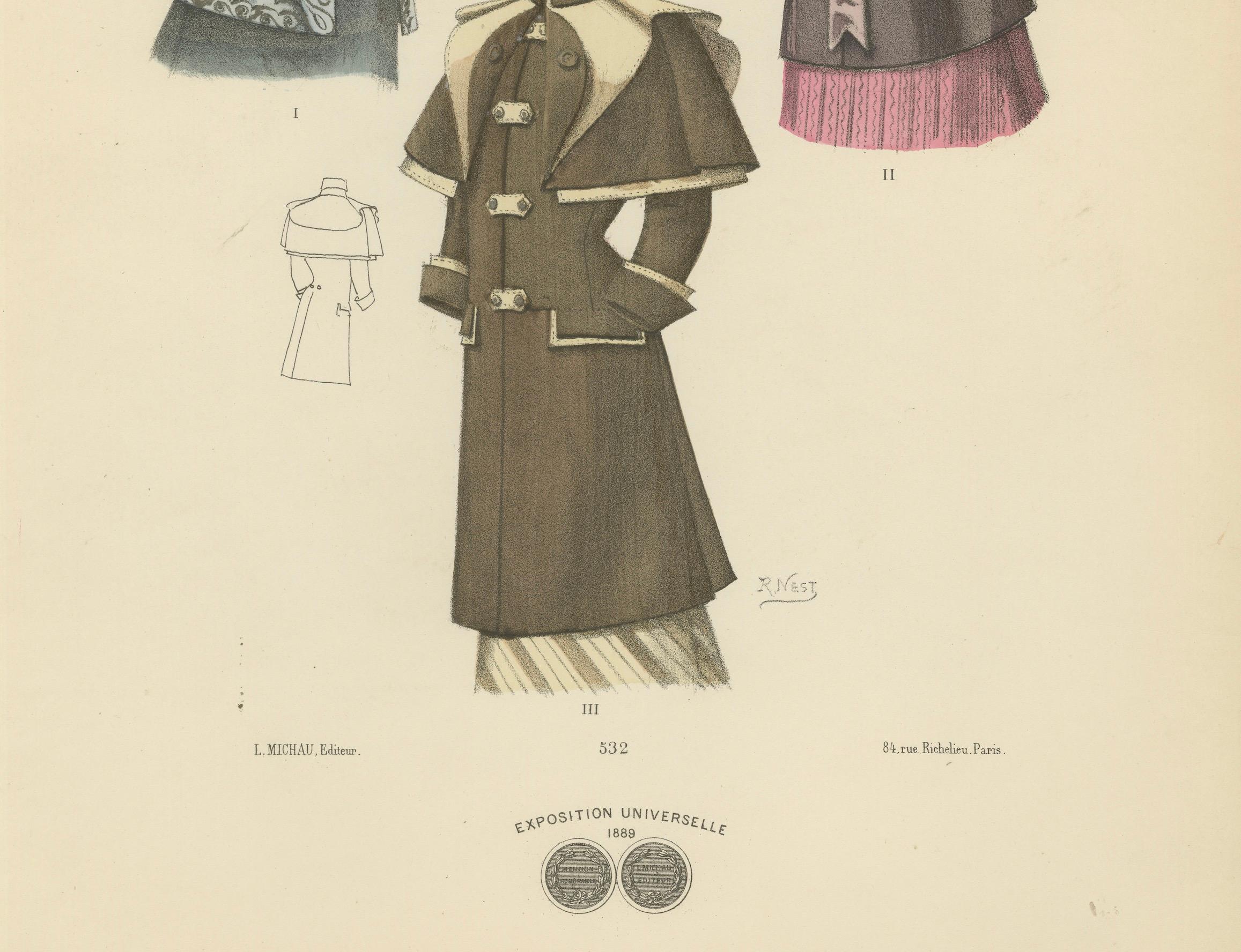
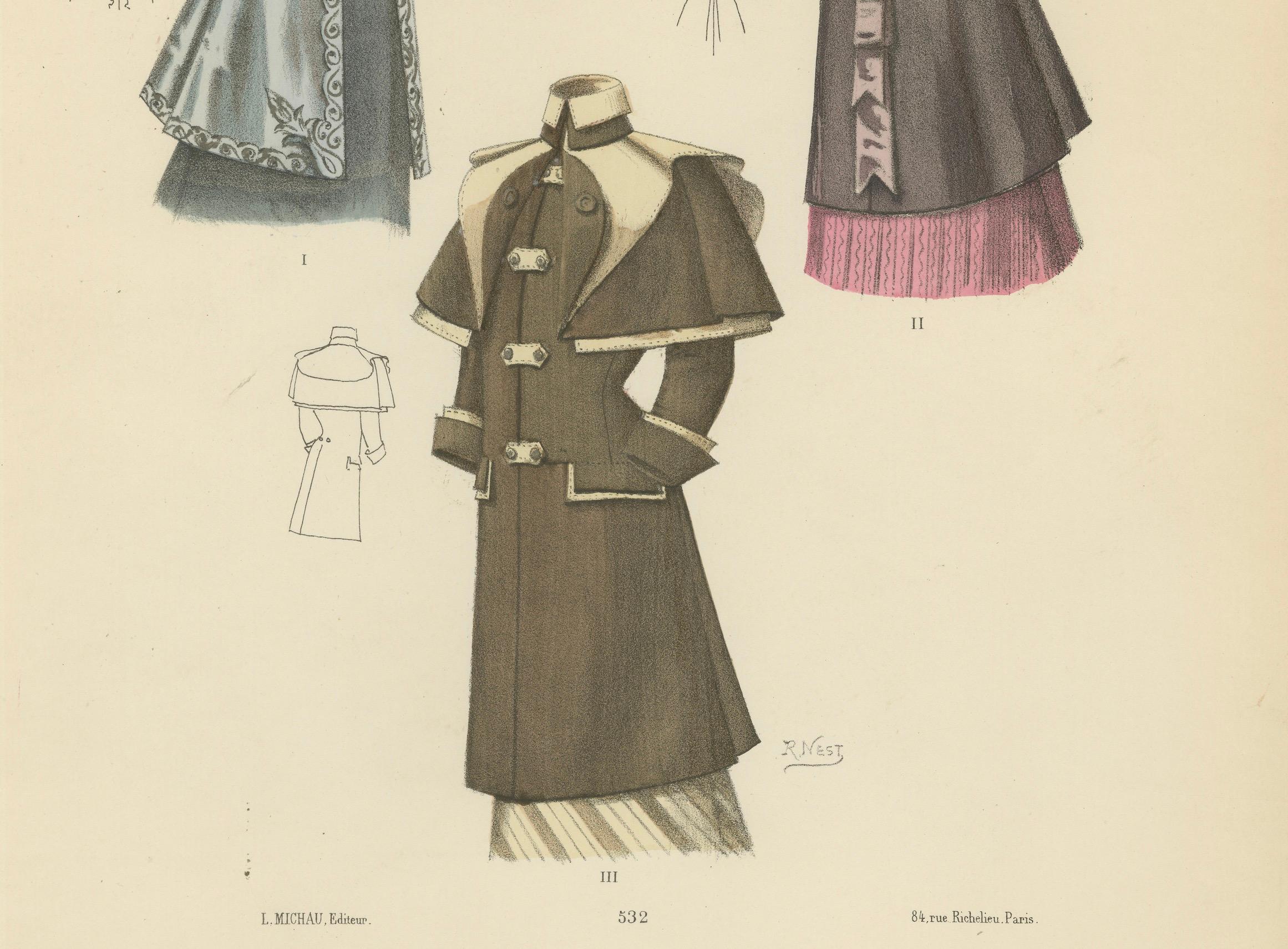
3. The third design (bottom) presents a heavier, more utilitarian coat in a rich brown fabric. The coat is structured with a double-breasted front and a high collar, accented by contrasting trim. It features large, functional buttons and a cape-like layer over the shoulders, which adds to its warmth and protective quality. This coat would be ideal for colder weather, combining practicality with fashion.
Each of these designs is accompanied by a small sketch that provides an additional view or detail of the garment.
This lithograph was produced by L. Michau, a prominent publisher of fashion illustrations during the 19th century. The design of the third coat is credited to R. Nest, as indicated by the signature on the image.
This illustration is part of a series likely created for the Exposition Universelle of 1889, held in Paris. The fashion plates from this collection were designed to showcase the latest trends in women's fashion, particularly in outerwear, reflecting both the practical needs and the elegance expected of high society at the time.
The piece is a lithograph, a popular printmaking technique in the 19th century that allowed for the production of detailed and high-quality images. Lithography involves drawing on a flat surface with a greasy substance, which is then treated to allow ink to adhere only to the drawn areas. This method was particularly favored for fashion plates due to its ability to capture intricate details and subtle color variations, making it ideal for depicting elaborate clothing designs.