About this sheet
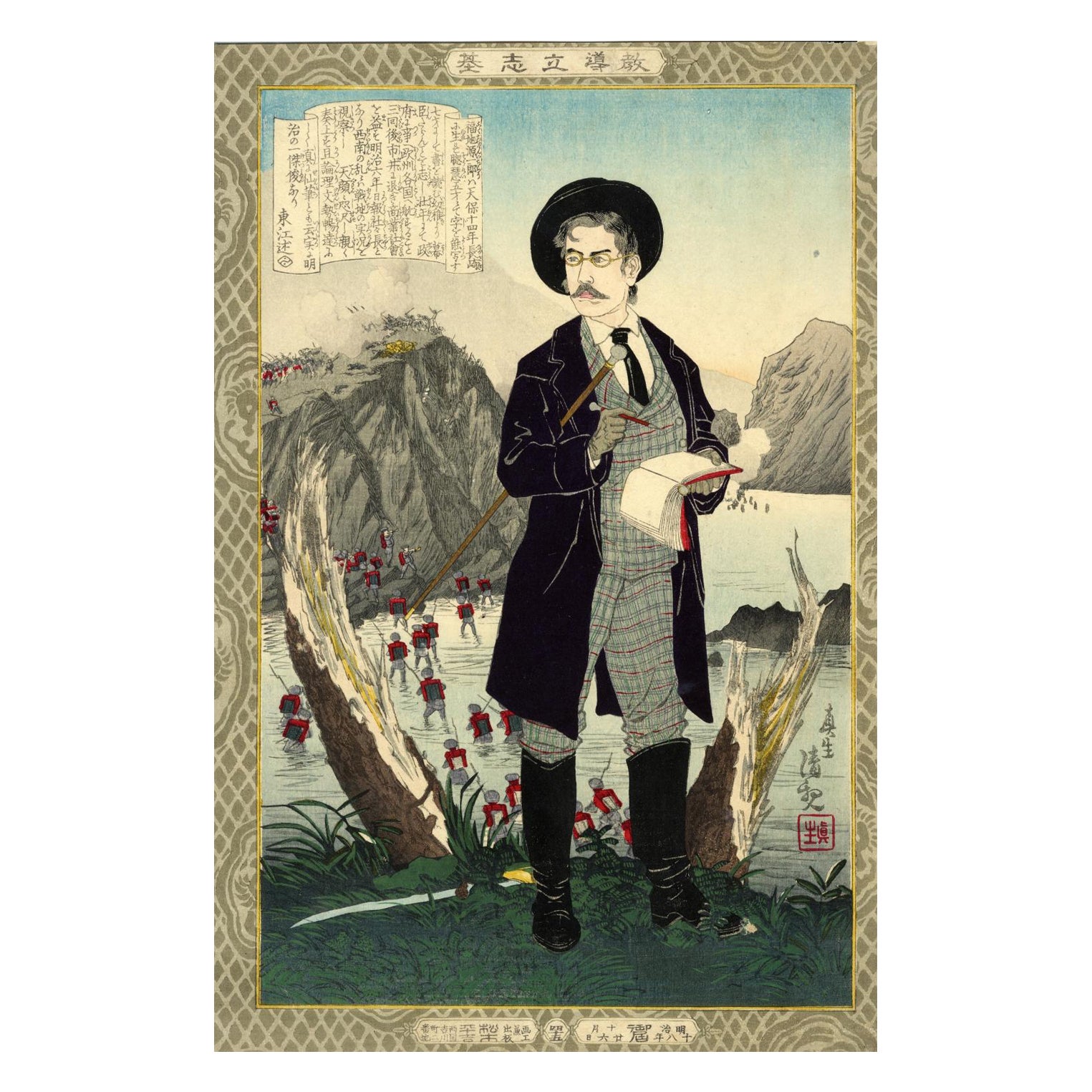
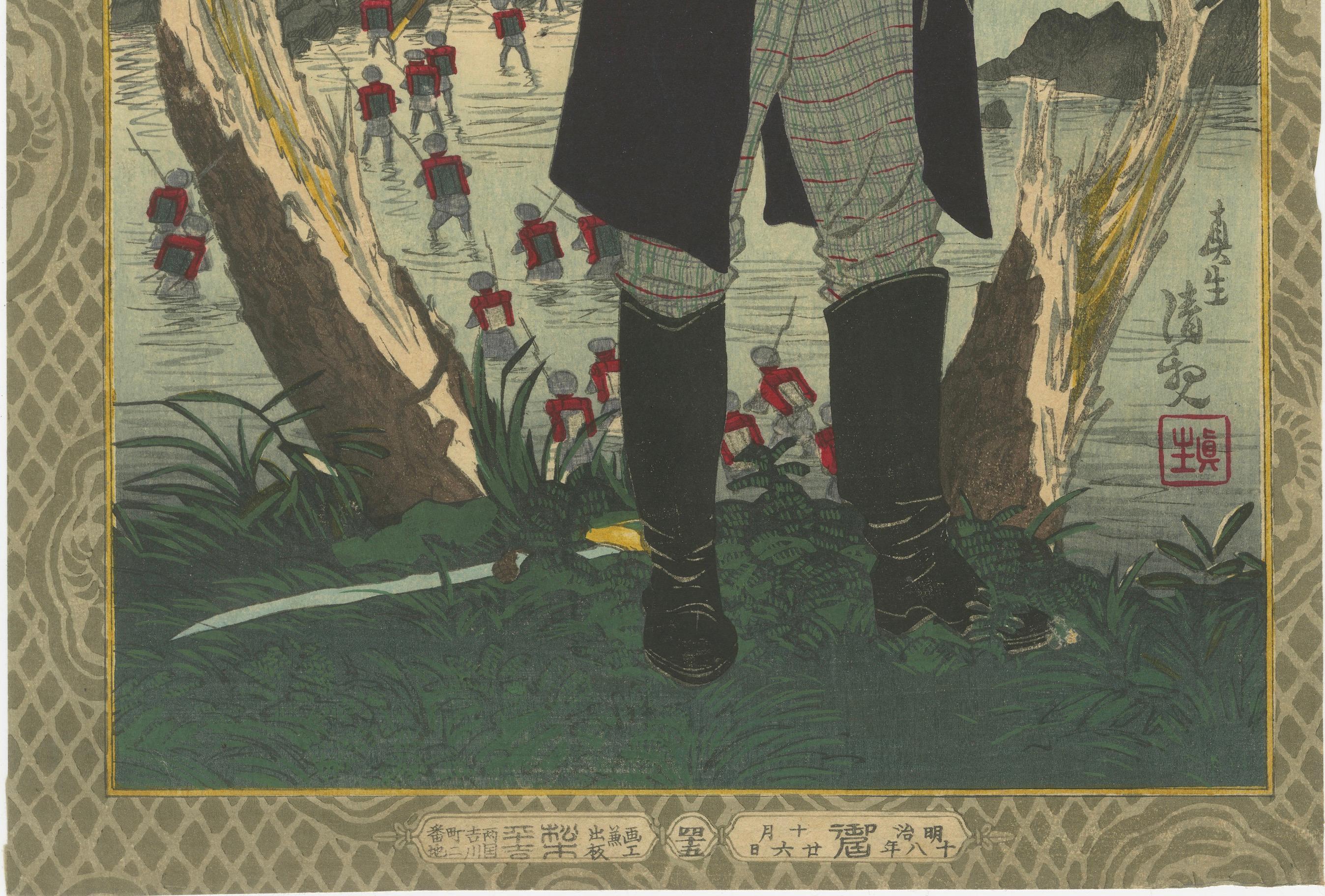
This 1885 color woodblock print, created by the renowned Japanese artist Kobayashi Kiyochika, is part of the series Instructive Models of Lofty Ambitions (Koshi Isshin Kōmei Jijutsu). The print was published by Matsuki Heikichi.
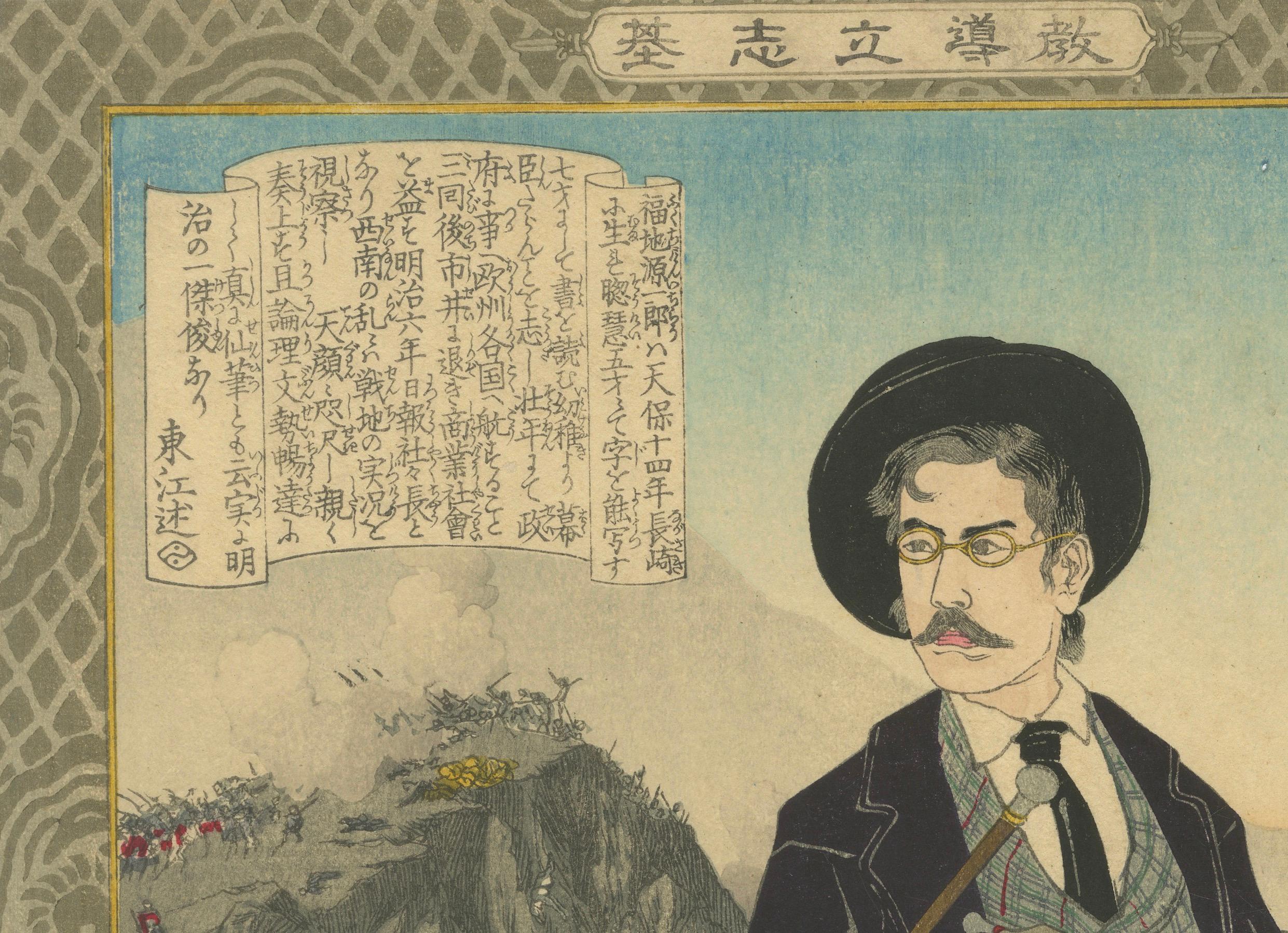
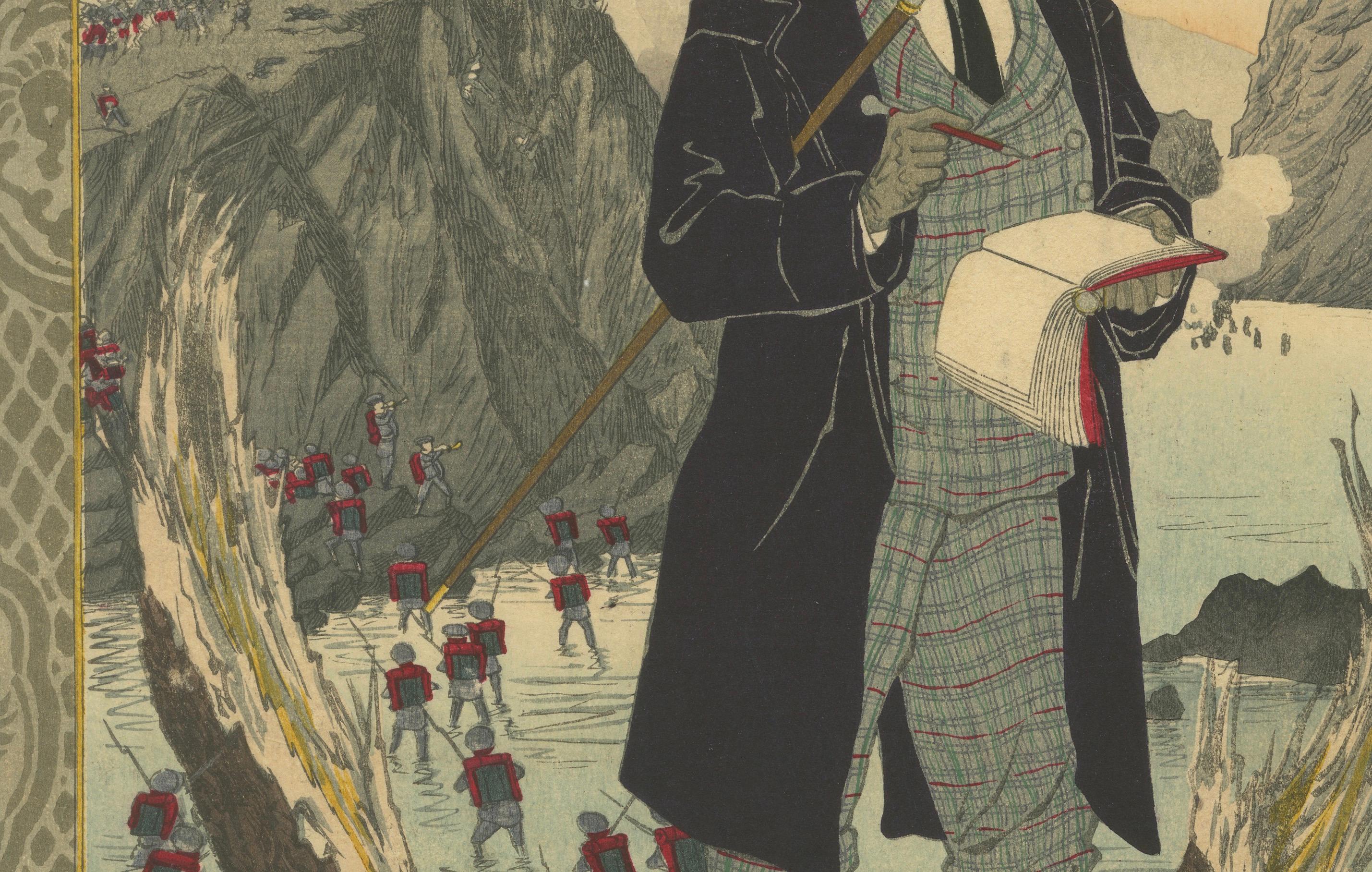
The print portrays Fukuchi Gen'ichiro (1841-1906), a prominent Meiji-era journalist and playwright, who is depicted standing confidently in European attire, pen and notebook in hand, embodying the intellectual and progressive spirit of the Meiji Restoration.
Behind him, the background features a dramatic battle scene, showcasing soldiers crossing a river, symbolizing the clash of tradition and modernization during the period. The rich detail and vibrant colors typical of Kiyochika’s work reflect the heightened sense of nationalism and ambition of Japan’s Meiji period. The print is bordered with a decorative pattern, adding to its elegance and formality.
This piece is a powerful reminder of Japan's transition from a feudal society to a modernized nation, as depicted by one of the foremost artists of the time.
The technique used in this print is ukiyo-e woodblock printing, a traditional Japanese printmaking method that flourished during the Edo period and into the Meiji period. The print by Kobayashi Kiyochika employs the following techniques:
1. woodblock carving: The image is carved into a series of wooden blocks, one for each color used in the print. Each block represents a different section of the design, with precise carving to capture details such as lines, shading, and textures.
2. color application: Multiple color blocks are used to layer the pigments. This print is a nishiki-e, or "brocade print," characterized by its vivid use of multiple colors, applied by hand. Skilled artisans applied color by inking the surface of the woodblock and pressing it onto the paper.
3. registration: To ensure precise alignment of the different layers of color, registration marks, called kento, were carved into the woodblocks. These ensured that each color block was applied exactly in the correct position.
4. hand printing: After the woodblock was inked, it was pressed onto high-quality Japanese washi paper by hand using a tool called a baren. This process allowed for even application of ink and a subtle texture on the final print.
5. detailing and gradation: Fine details in the clothing, facial expressions, and background are achieved through intricate carving and the application of techniques like bokashi, or gradation, where the artist creates a fading effect by blending pigments.
Kobayashi Kiyochika was known for his mastery of this traditional woodblock technique, but he also introduced modern Western elements, such as perspective and lighting, making his work a unique blend of East and West. This print demonstrates his skill in capturing the vibrant colors and intricate details that were hallmarks of ukiyo-e, while also reflecting the modernization of Japan during the Meiji era.